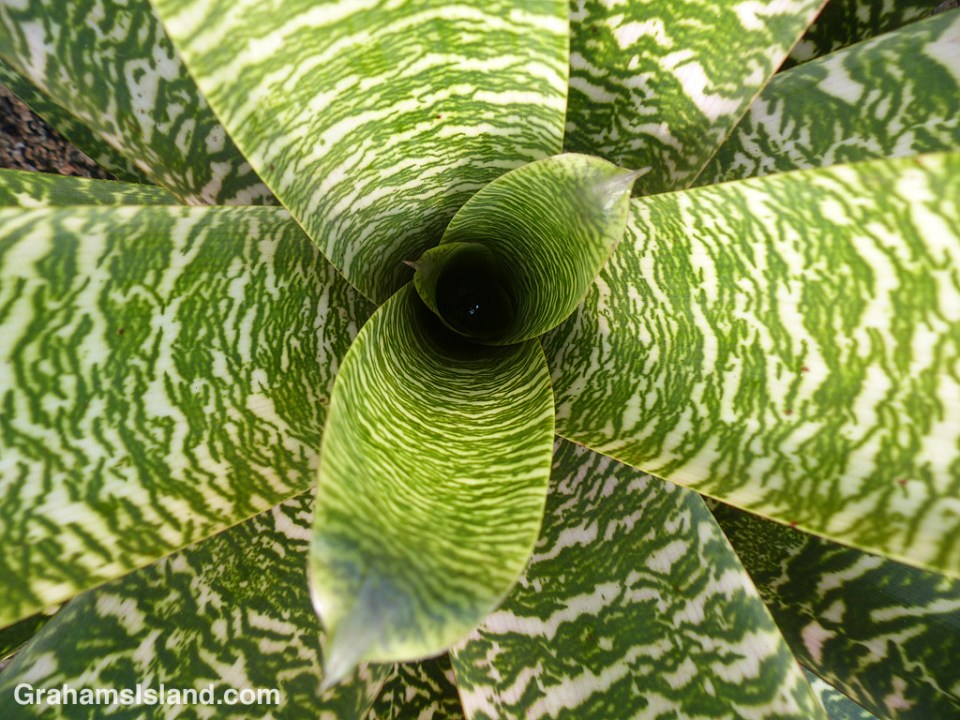
A look into the dark heart of a bromeliad plant. Is that something down there, looking back?

A look into the dark heart of a bromeliad plant. Is that something down there, looking back?
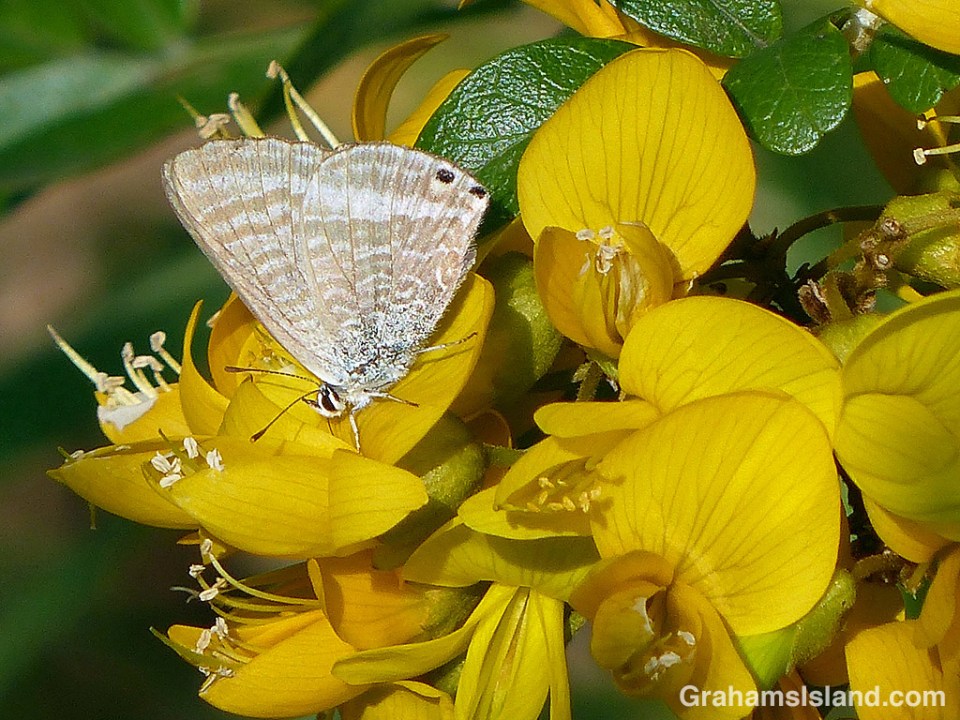
I think this is a long-tailed blue butterfly, otherwise known as the bean butterfly. It’s a pest on beans and peas and also wild legumes. My only question about the identification is that the tail, normally seen where the black spots are, is not visible here. But it’s possible that this butterfly has suffered a bit of damage in that area. Some butterflies look so beaten up that it’s a wonder that they’re able to fly at all.
It’s resting on the flowers of a mamane tree.
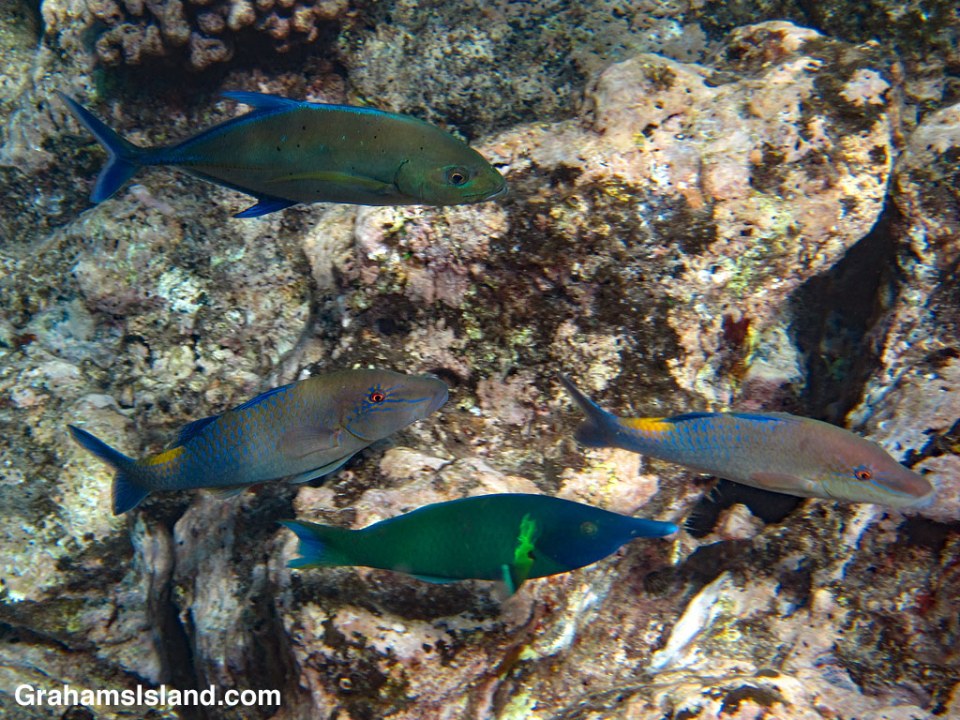
I happened upon this little gang of fish while I was swimming. At the top is a bluefin trevally, in the center a pair of blue goatfish, and at the bottom a male bird wrasse. Trevallies and goatfish regularly hunt together, often in the company of an eel or octopus. They try to flush out or ambush small fish as their prey. The bird wrasse eats mostly marine invertebrates but will also take small fish .
I often see fish like these hunting, but have yet to see any of them snag a meal, though they clearly are reasonably successful hunters.
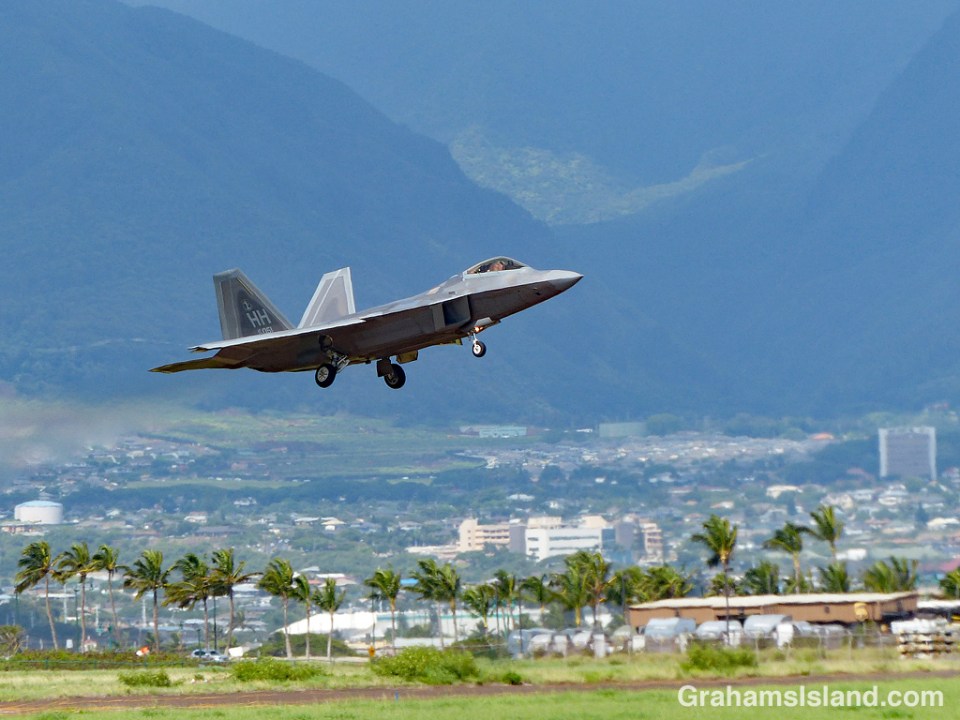
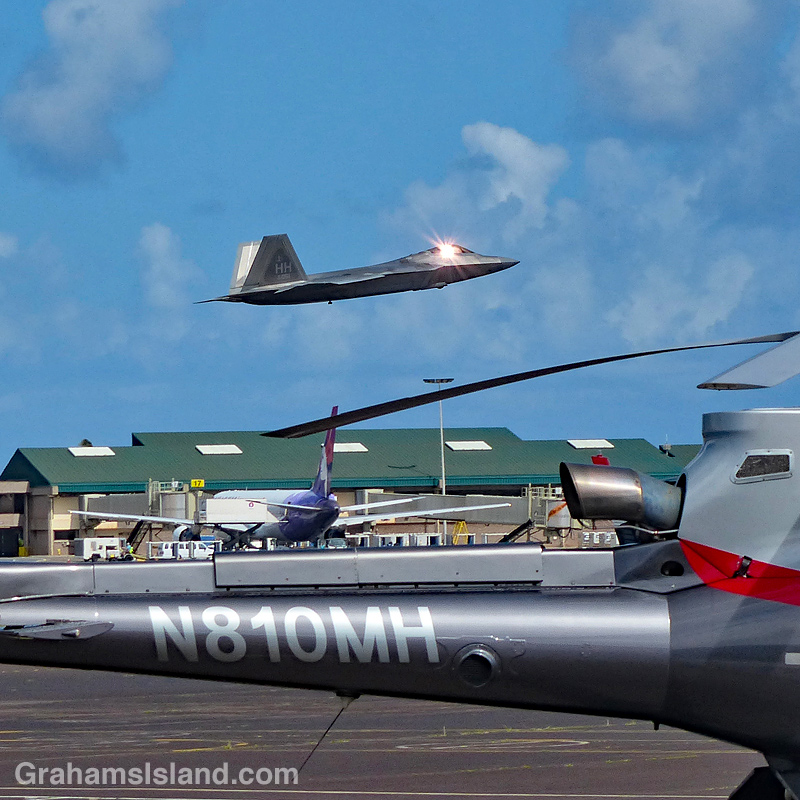 Recently, I took a short jaunt to Maui. By short, I mean I left in the morning and returned at lunchtime and the only place I visited was Kahului Airport. However, while I was there I did get to see this F-22 Raptor make three low-level passes of the airport.
I happened to be outside when it made its first pass. By the time it returned, people had spilled out of offices and workshops, phones pointed at the sky, as it zipped by. And it did zip by. Compared to the rest of the action – commercial planes lumbering in to land, light aircraft wobbling through the wind, helicopters scooting up and around and away – the F-22 was a flash of noise and action.
The F-22 Raptor entered service in the United States Air Force (USAF) in 2005 and the last plane was delivered to the USAF in 2012. It has since been largely supplanted by the F-35 which is considered to be cheaper (relatively speaking) and more flexible.
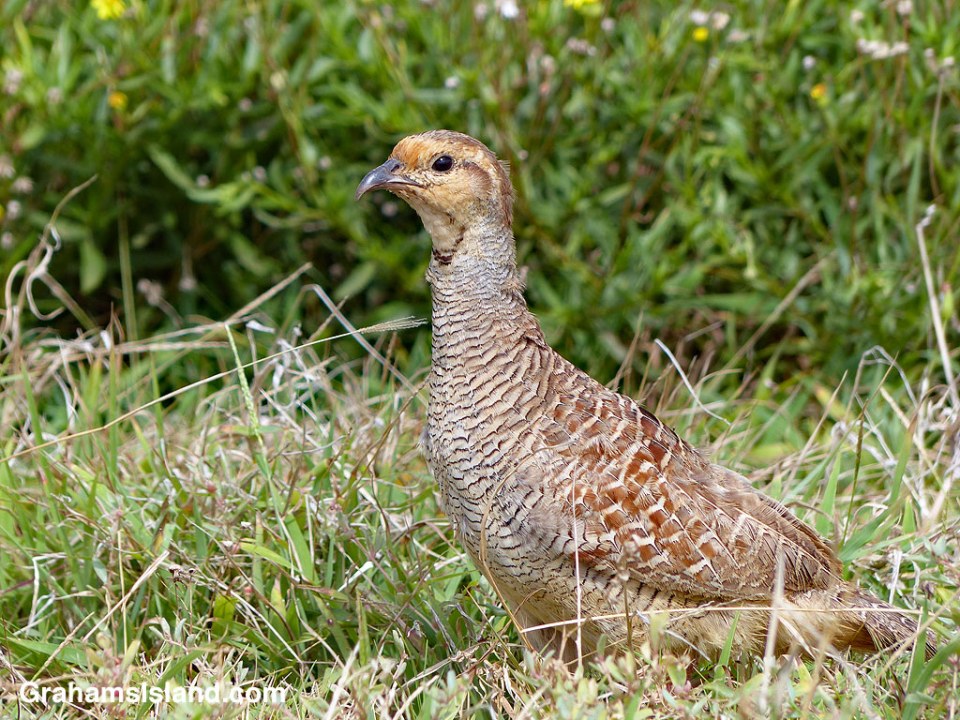
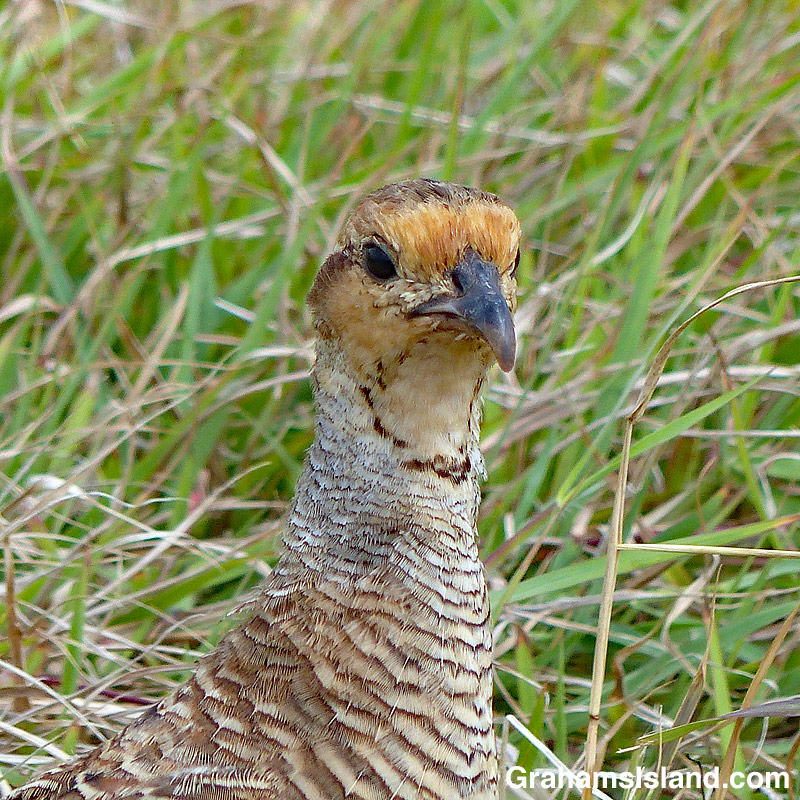 Gray francolins are a favorite bird of mine, not for their loud and raucous call, especially early in the morning, but for their goofy behavior.
They blend in very well in dry, grassy surroundings. I often encounter them when one or more loses it’s nerve and shoots out from cover, which leaves me as startled as the francolin. Sometimes they’ll fly out, but more frequently they take off running. When this happens alongside a fence the bird will run along, pausing occasionally to probe for an escape route, with me calling after it, ‘You can fly you know.’ If it doesn’t find a hole in the fence it will eventually take off, but it’s as if they’ve all been told they can only take off 20 times in their lifetime.
The gray francolin in these photos neither ran nor flew. It stood its ground quite boldly, making sure to keep a sharp eye on me as I edged past trying not to alarm it. When I’d done so it wandered off through the grass looking quite pleased that it hadn’t used one of its 20 airborne escapes.
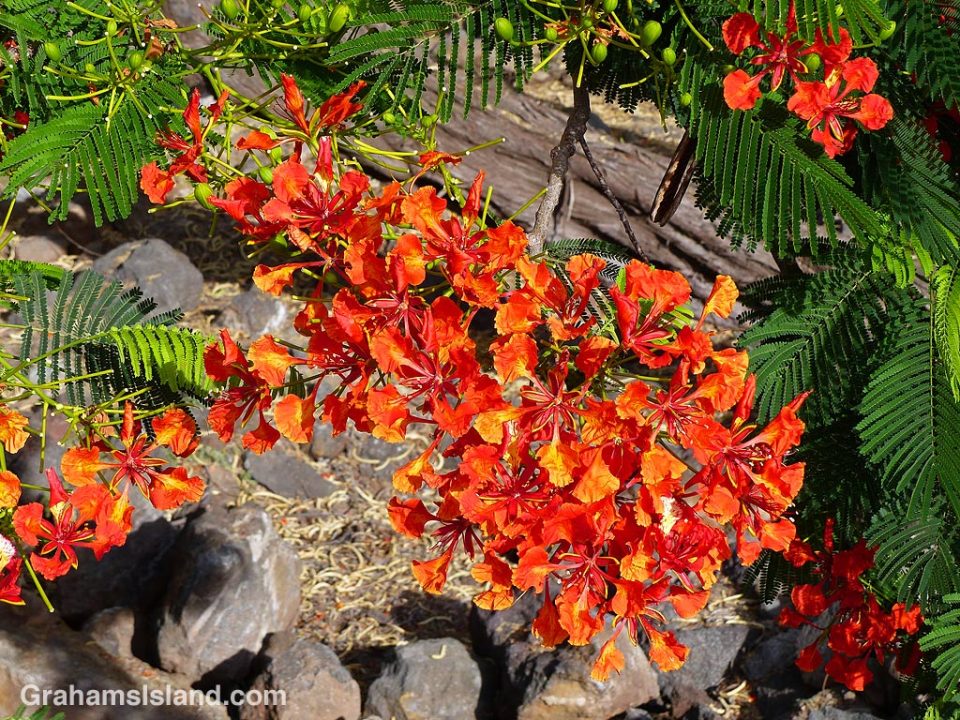
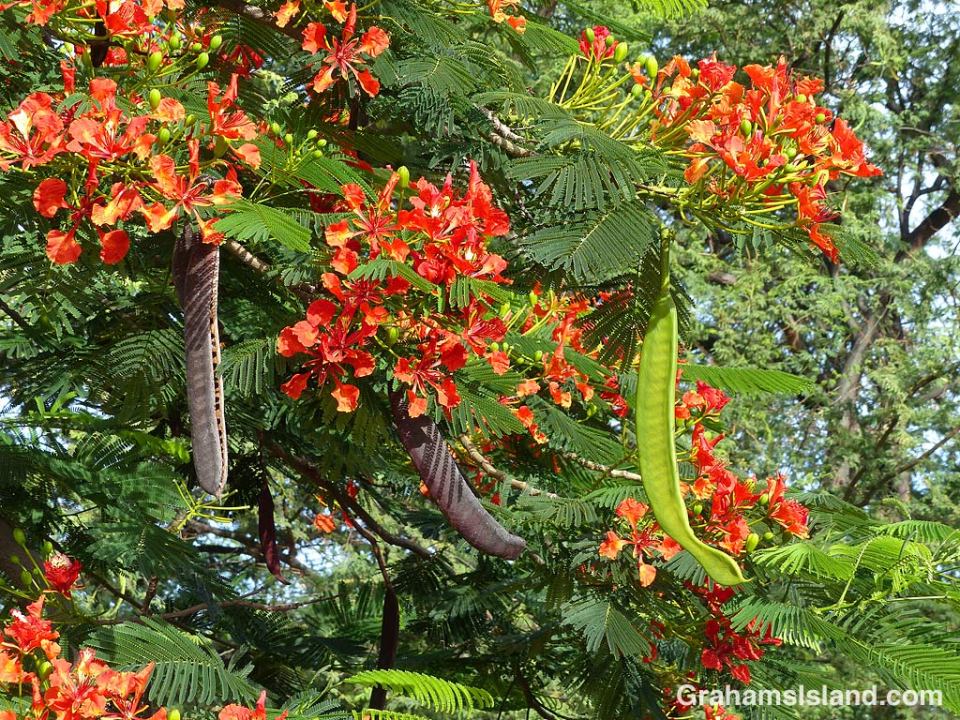
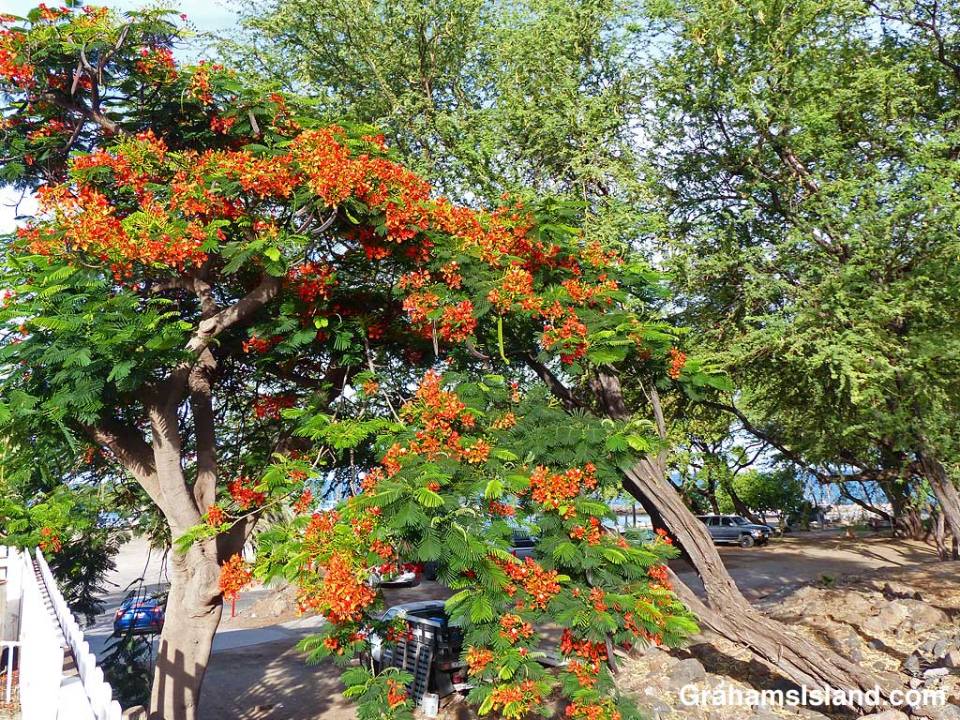
 Royal poinciana (Delonix regia) is also known as the flame tree. As well as producing a stunning array of crimson flowers, it has lacy-looking leaves and produces long, distinctive seed pods.
I noticed this tree, tucked away at the end of a small commercial area in Kawaihae. The top photo shows an array of flowers. The flowers consist of four red petals with a fifth upright petal which is more yellow and white, as in the photo to the right. The photo below shows three of the seed pods which start out green before turning brown. At the bottom is the full tree. It can do well close to the ocean, as this one is, because it’s salt tolerant.
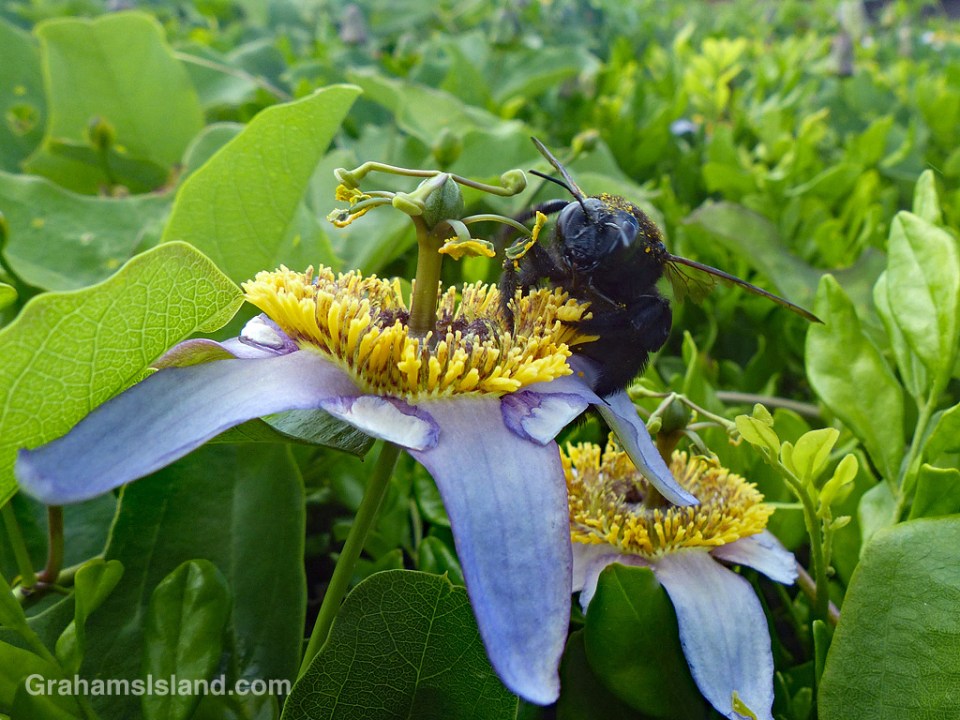
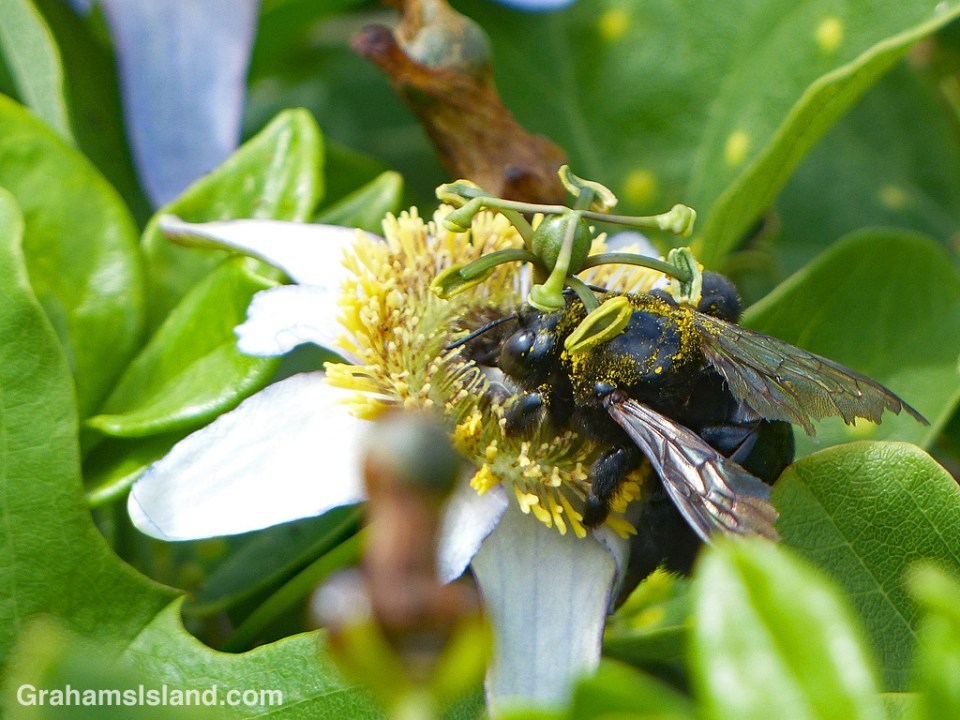
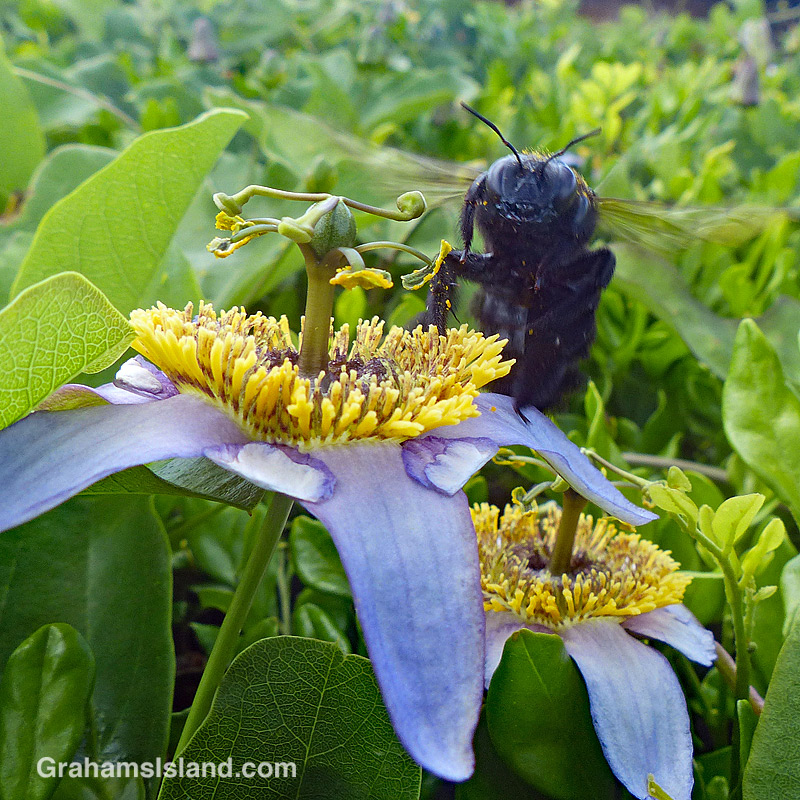 The Sonoran carpenter bee (Xylocopa sonorina) was first recorded in Hawaii around 1874. This black bee is a female. Males are golden orange in color and smaller than the female.
These bees get their name because the females tunnel into wood to create cavities in which to lay eggs and raise their young. The entrance to a nest is usually a neat, half-inch diameter hole in the wood. In the wild, the bees make nests in dead branches or tree stumps, but around human habitation they’ll bore into fence posts, rails, and roof eves. Because of this tunneling habit, these bees are sometimes considered pests, but the damage they cause is far outweighed by their importance as pollinators.
In Hawaii, passion fruits are one of the many fruits and vegetables pollinated by carpenter bees. The bottom photo shows how the bee’s size helps it pollinate the passion fruit’s large flower. It also shows how battered this poor bee’s wings have become. She was still able to get airborne though.

The rising sun begins to illuminate scrubby terrain on the dry side of the Kohala Mountains.

