
Hualalai volcano has an elevation of 8,271 feet (2,521 m). Only the top of the volcano was poking through the clouds on a recent visit to the top of Mauna Kea.

Hualalai volcano has an elevation of 8,271 feet (2,521 m). Only the top of the volcano was poking through the clouds on a recent visit to the top of Mauna Kea.

This female Hawaiian garden spider (Argiope appensa) waits in the center of her web. I love her jewel-like appearance.

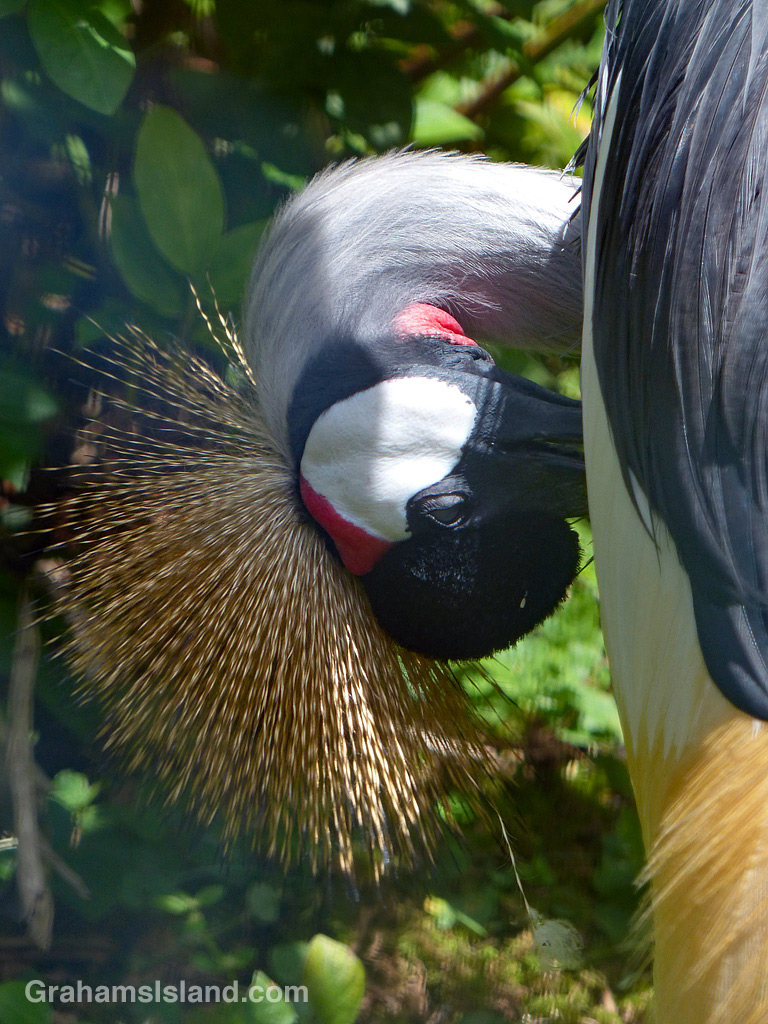
The grey crowned crane hails from eastern and southern Africa. It is decidedly not something seen everyday in Hawaii, unless you visit Pana‘ewa Rainforest Zoo & Gardens just outside Hilo. The zoo bills itself as the only natural rainforest zoo in the United States.
While I was there, this crane was getting in some serious preening.
For more information about Pana‘ewa Rainforest Zoo & Gardens, go to hilozoo.org.
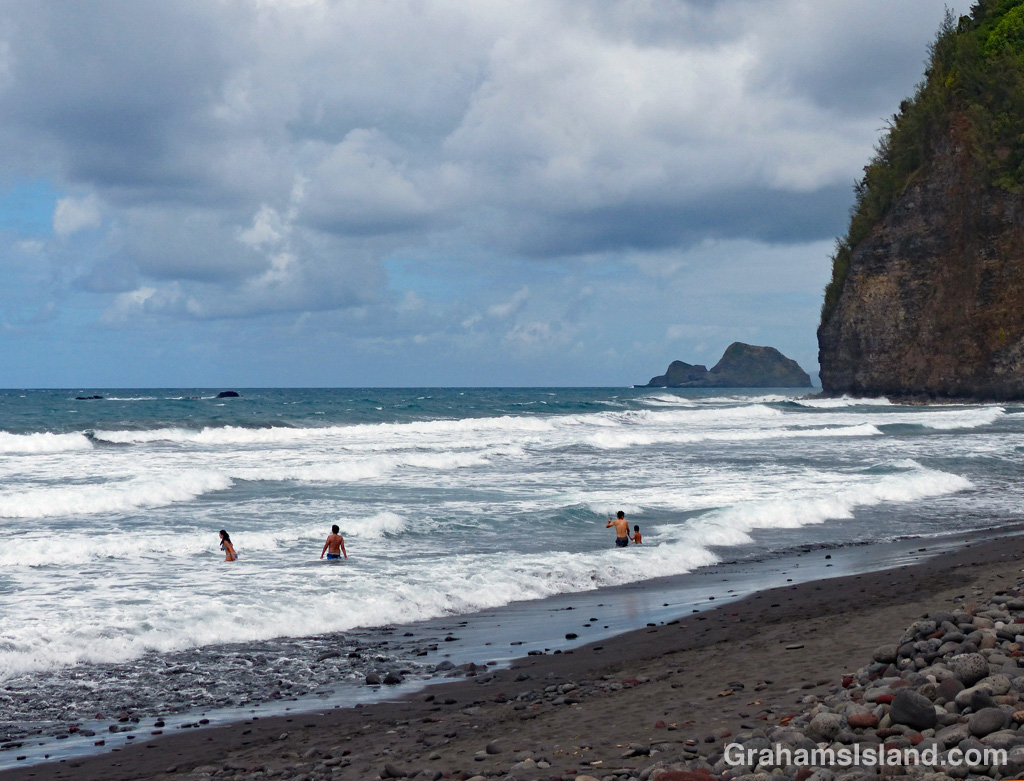
Pololu beach looks like an inviting place to get in the water, especially if you get hot on the hike down. But it’s a very dangerous spot to get in the water with strong rip currents. Local knowledge helps, but even locals get into trouble now and again. One of those places that looks inviting, but only up to a point.

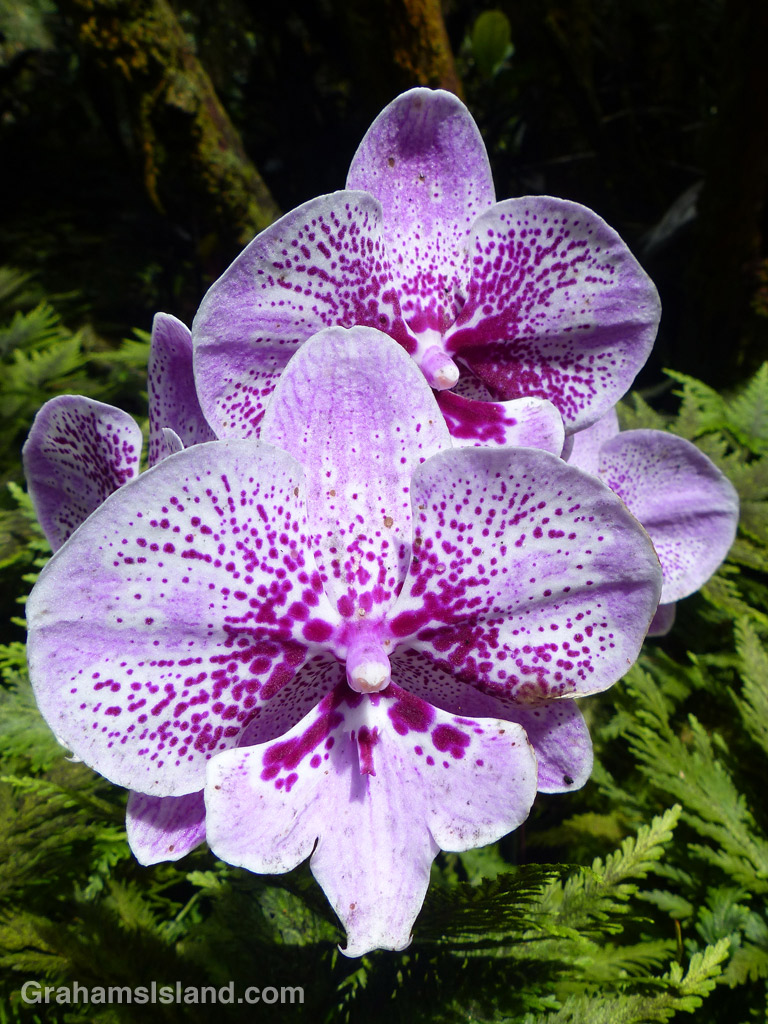
Orchids have a unique flower structure, which this Phalaenopsis orchid shows off.
They’re bilaterally symmetrical, the left and right halves being mirror images. The column in the center of the flower is a fusion of the male and female parts. They have three petals in an inner whorl and three sepals, usually as big as the petals, in an outer whorl.
The lower petal is the lip on which pollinators land. When the flower is in the budding stage, this lip starts out at the top. In most orchids, as the flower opens, it rotates until the lip is at the bottom, a process called resupination. Not all orchids do this. Some remain in the original upside down position and some rotate a full circle until they’re back where they started.
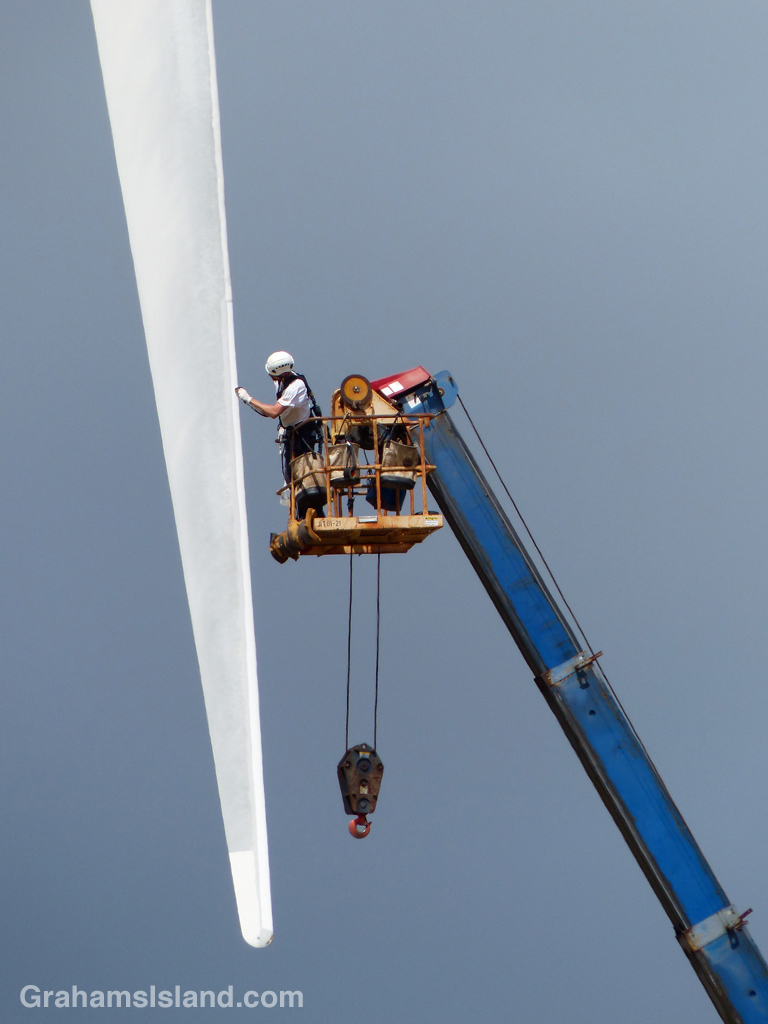
A worker checks out a turbine blade at Hawi Wind Farm. He looked like he was using the kind of tools one would use to patch a ding on a car, which seemed incongruous on such a large machine. But I suppose even small irregularities on the surface of the blade, especially the leading edge, could significantly affect the turbine’s efficiency.

Last year, when I went on the Kama‘āina Observatory Experience, I visited a couple of telescopes. One of them was the James Clerk Maxwell Telescope, a single-dish telescope dedicated to detecting submillimetre radiation.
One of the things I liked about that telescope was the structure of the supporting framework. It reminded me of something found at Ikea, but on a giant scale. If I’d been involved in putting it together, at the end of the day, when congratulations were being bandied about, I’d have been the one saying, “Er, I’ve got a rod and three little hexagonal nuts left over. Where do they go?”

A lot of fish use camouflage, either for defense or for ambushing prey. From a photographic point of view, the nice thing about these kinds of fish are that they’ll remain stationary, relying on blending in, even when I get quite close. The downside, of course, is that it’s really hard to spot them unless they move.
Lately, I’ve been on a bit of a run of noticing some of these fish, moving or not. This stocky hawkfish remained glued to this spot even as I floated a foot or two away. It’s fun to see them on the move because they swim quite fast and then plunk down on a bit of rock or coral and are instantly still.

