

This very small katydid gave me a wary look as I descended the front steps. It had good reason to since katydids have been one of the main munchers of the basil plants. But since those plants are now safe under netting, I tiptoed past without so much as a nasty glare.
Arc-eye hawkfish
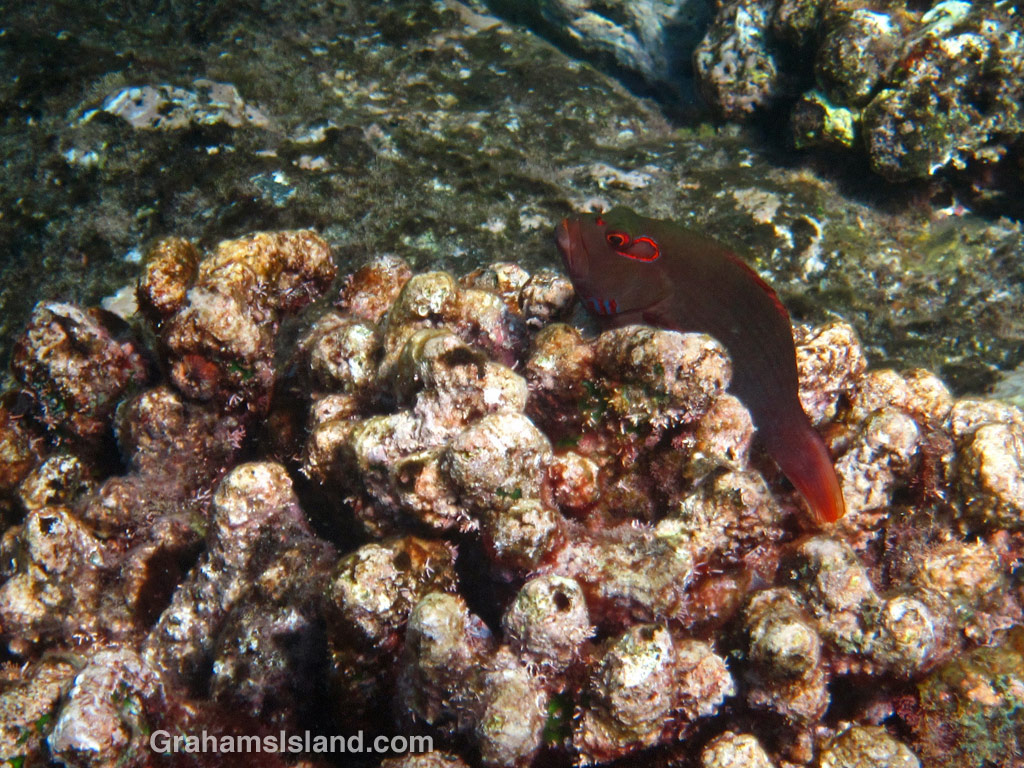
It’s a common sight to see an arc-eye hawkfish perched in a head of coral, well assuming you’re in the water that is. If a predator comes along, they slip deeper into the coral for protection.
There are two patterns to these fish. Sometimes they’re paler than this one and have a distinctive white stripe on the side. One study has shown that the lighter fish tend to inhabit slightly deeper water where the coral is spread farther apart. Both patterns have the arc behind the eyes and the blue and red bars on the gill covers.
Truck stuck

While I always prefer to take smaller, winding roads, such roads taken are not without pitfalls.
The last mile of the journey to Mo’okini Heiau in North Kohala is an uneven dirt road studded with rocks. When the road is dry it can be navigated by almost all vehicles (I saw a smart car there once!). However, care is needed, particularly regarding clearance. Almost every time I walk the road, I see fresh scrapes on the rocks. With rainy weather, the road becomes the territory of 4-wheel drives and jacked-up suspensions.
On this day, the puddles that often form on the road had become lakes. This truck had passed me earlier and when I saw it returning I ducked behind a bank to do a little whale watching and avoid the wave of spray that would surely accompany anything driving through the lake. A few minutes passed. I realized I hadn’t registered the truck passing. It had gone very quiet. So I wandered out to the road again and saw the truck marooned. They’d made it through on the way out, but weren’t so lucky on the way back.
The truck was a 4×4 but not with extra clearance. I think their problem was that the lake was deeper at the far end (in the photo). On the way out, they’d no doubt barreled into the water and their momentum had carried them to shallower waters and out. On the way back, the same approach would have propelled them toward the deep end. I suspect a bow wave built up, slowed them, and allowed water to penetrate parts of the truck that responded unfavorably.
The two young local men seemed quite cheerful. They waded through the muddy water, tried to coax life into the truck. One was on the phone (a miracle to have service there). After they insisted they had everything under control, I walked past on the high bank alongside the road, then turned and took this photo. When I returned a half hour or more later, the truck and its occupants were gone.
Brant goose


Brant geese are rare visitors to Hawaii so it was nice to see this one puttering in the shallows at Kaloko-Honokohau National Historical Park, north of Kona. The rock it’s about to bump into is a Hawaiian green sea turtle. There were probably about a dozen of them there, either resting on the sand or bumping along the reef close to shore.
Oncidium orchid
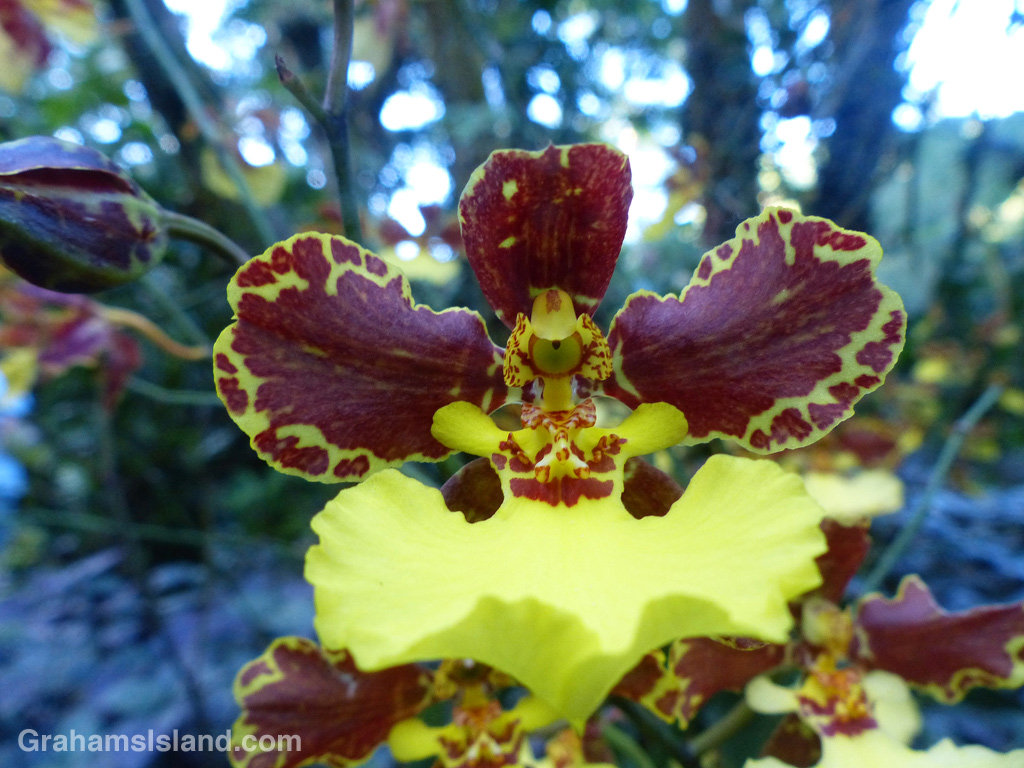
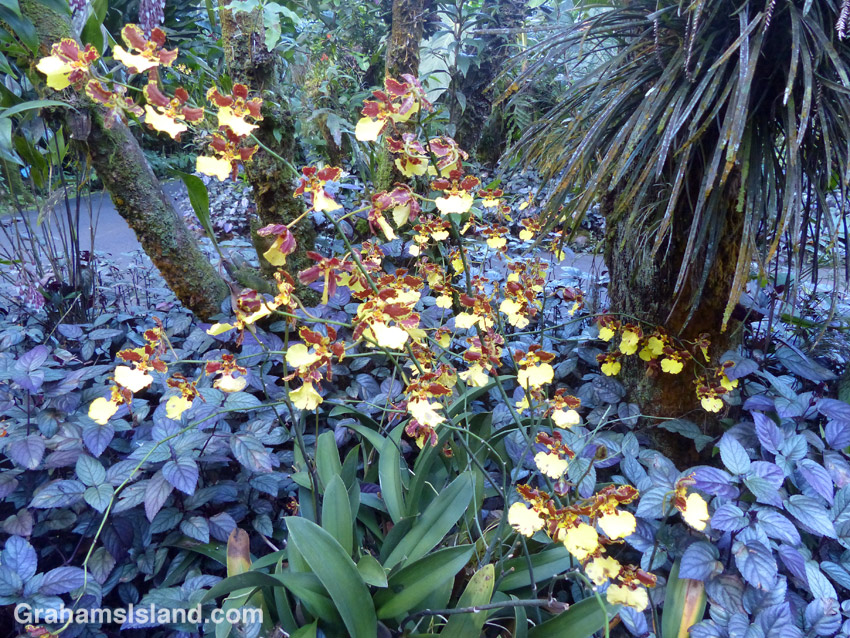
I’m pretty sure this is an oncidium orchid, though I’m not sure which one. There are 400 or so to choose from and I haven’t yet been able to identify it positively. I love seeing the different orchids, but haven’t started down the slippery slope of trying to grow them – yet!
This one was at the Hawaii Tropical Botanical Garden north of Hilo on the east side of the Big Island. For more information about Hawaii Tropical Botanical Garden, go to htbg.com.
Gecko on pink heliconia
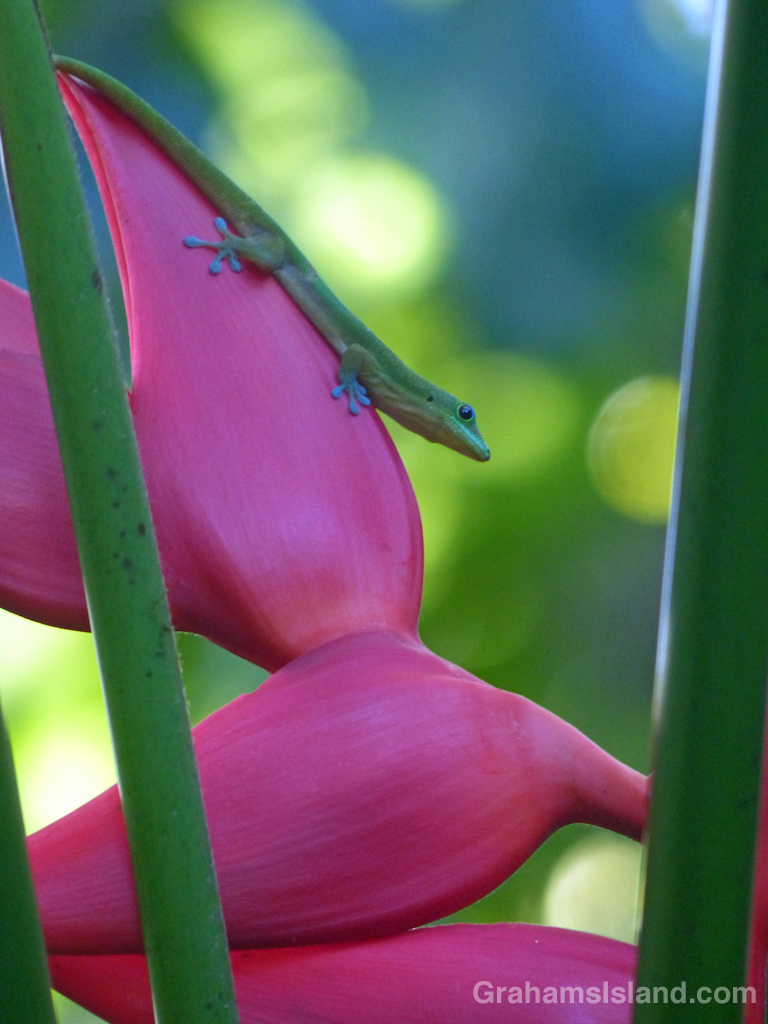
A gold dust day gecko rests on a deep pink heliconia flower.
Cattle egret on a cow
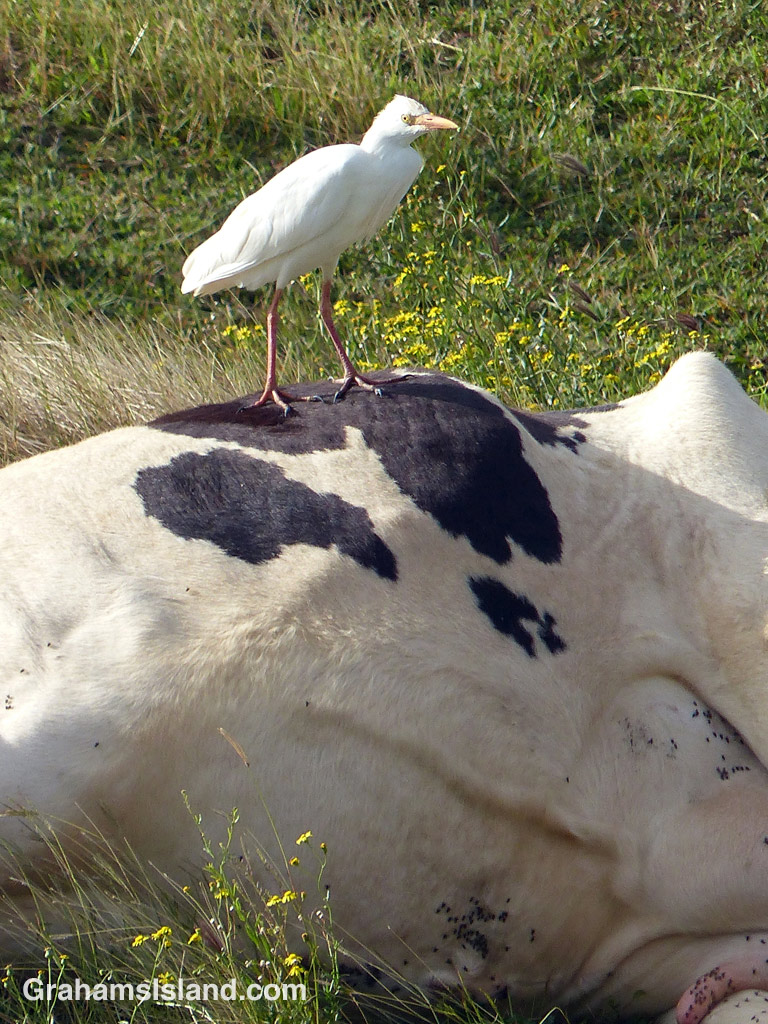
Something about the gleam in this egret’s eye made me think about an old Far Side cartoon where two fishermen are in a boat and one has hooked a cow in the water. The other fisherman says, “It’s gonna be fresh burgers tonight!” Mind you, I think the cow might have had a thing or two to say about that.
Better Days: Hawaiian garden spider
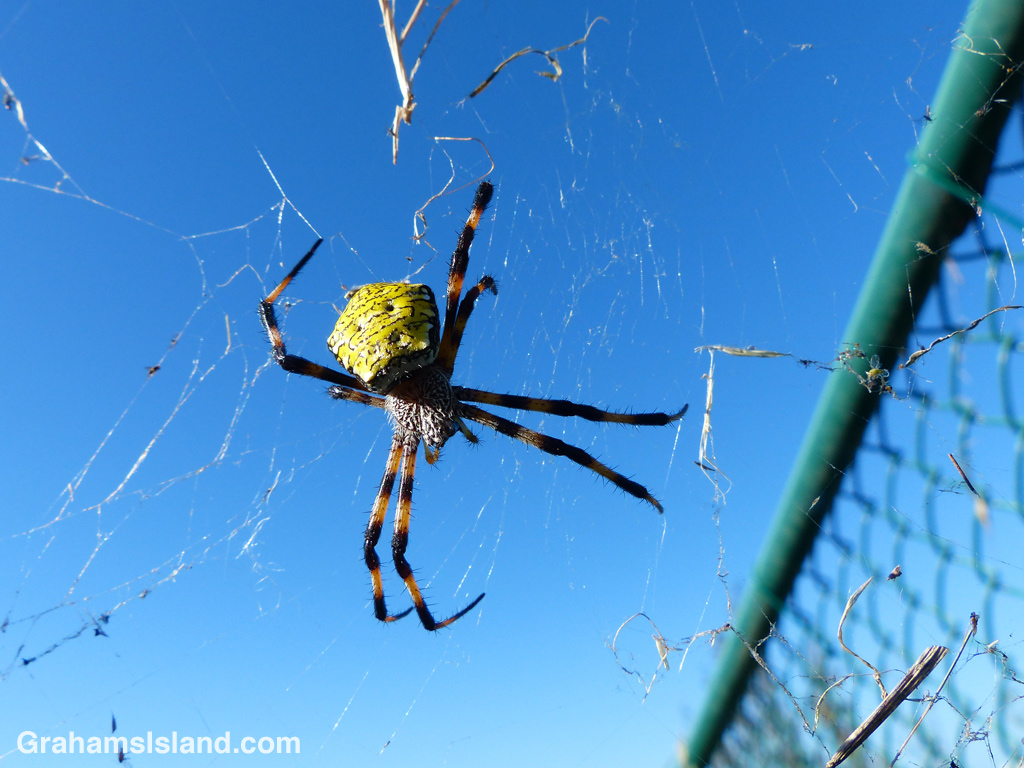
I came across this brightly-colored Hawaiian garden spider, the female of the species, in the late afternoon of a windy day. Her web shows debris that’s been blown in and likely encounters with bugs large and small. The web looks like it’s on its last legs and indeed it is because, at the end of the day, this spider will eat her web (or what remains of it) and start afresh in the morning.

