Humuhumu-nukunuku-ā-pua-a

The Humuhumu-nukunuku-ā-pua-a is the state fish of Hawaii
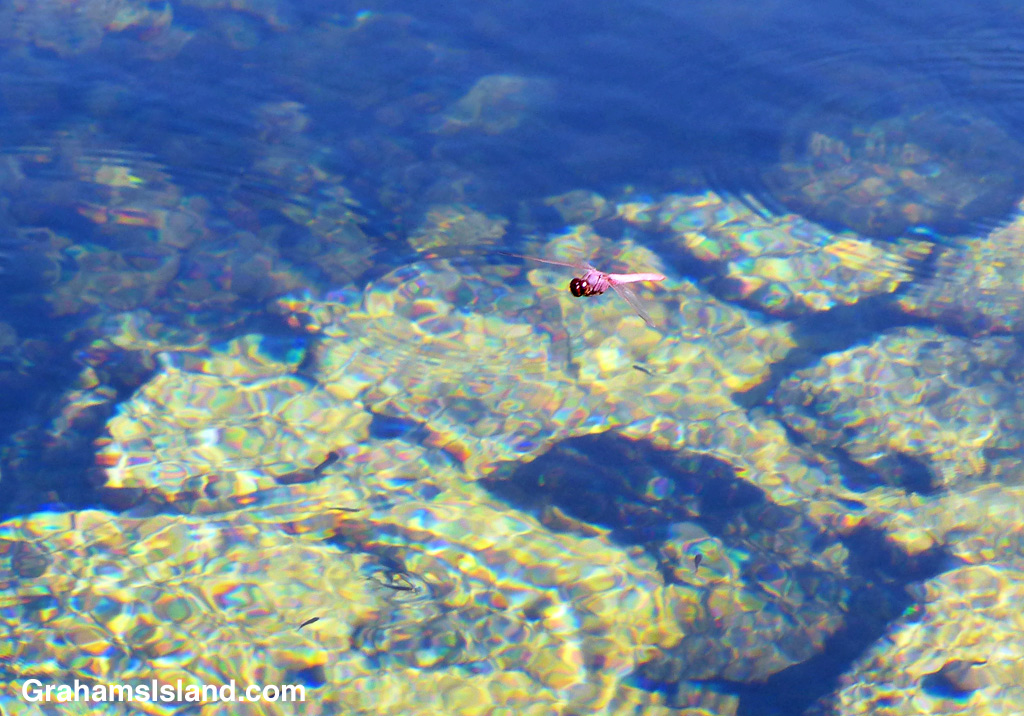
This is the Hawaiian name for the wedgetail triggerfish or picasso triggerfish. It’s also the state fish of Hawaii.

Back in 1984, the legislature decided an official state fish was needed and public input was sought. Eight species made the shortlist to be voted on by the people. Not surprisingly, those of a serious bent thought one of Hawaii’s endemic species should get the nod and lobbied accordingly. But kids liked the humuhumu-nukunuku-ā-pua-a, which gets a line in the song ‘My little grass shack,’ and children’s hula groups, dancing to this song, won people over. It netted nearly twice as many votes as the runner up.

An attempt to ‘Boaty McBoatface’ the result failed and the humuhumu-nukunuku-ā-pua-a was ultimately confirmed as state fish.

In my attempts to identify what I see in the water, I use John P. Hoover’s book The Ultimate Guide to Hawaiian Reef Fishes, Sea Turtles, Dolphins, Whales, and Seals. His website is hawaiisfishes.com.

Sea purslane

The leaves of a sea purslane ground coverA sea purslane flower

This groundcover (Sesuvium portulacastrum), known in Hawaii as ‘Ākulikuli, is common on the coast. It tolerates wind, heat, salt and drought, which means it does well on the coast. The flowers are a pale pink or purple. The green leaves become red or yellow with age, and often look like little fruit drops. Not sure eating them would be a good idea though.

For more information about sea purslane, go to nativeplants.hawaii.edu/plant/view/Sesuvium_portulacastrum.

Sea Purslane growing in a rocky coastal area

To the winner goes the … tail?

A gold dust day gecko with a trophy from a fight.
I saw the gold dust day gecko above on the edge of the roof with a trophy in its mouth. A fish steak perhaps? Lowering my eyes a tad, I spotted the common house gecko below and it wasn’t hard to fill in the blank. These confrontations are a regular occurrence and the day geckos usually win.

For more information about geckos, go to geckoweb.org.

A common house gecko which just lost its tail.

Pu’u Wa’a Wa’a hike

Pu'u Wa'awa'a seen from the trailhead.

Pu’u Wa’awa’a seen from the trailhead over a sea of fountain grass.

This old quonset hut, at the foot of Pu'u Wa'awa'a, was probably an old ranch building.

This old quonset hut, at the foot of Pu’u Wa’awa’a, was probably an old ranch building.

Tamaki Corral was used by the old Pu'u Wa'awa'a Ranch.

Tamaki Corral was used by the old Pu’u Wa’awa’a Ranch. Hualalai is visible in the background, before clouds rolled in.

Pu’u Wa’a Wa’a means “many-furrowed hill.” It’s popularly known as ‘jello mold,’ and is the biggest of several cinder cones on the slopes of Hualalai volcano.

The land is a State Forest Reserve with about 8 miles of hiking trails. The main trail leads to the top of the cone and is about 3 miles each way. The first half follows an old road that passes through a mostly forested area. There’s a good deal of bird life here, more often heard than seen in my experience. The trail then heads up the side of the cone itself in open country, passing old ranch buildings and likely some cattle, horses, sheep and goats.

Once at the top, the views can be tremendous, but an early start is needed. Clouds build up on the slopes during the morning and by midday the view can be fading or gone.

For more information about Pu’u Wa’a Wa’a and its trails, go to puuwaawaa.org.

The smaller Pu'u Iki cone seem from the top of Pu'u Wa'awa'a.

The smaller Pu’u Iki cone seen from the top.

A Mamane tree atop Pu'u Wa'awa'a, with the coast in the distance.

A Mamane tree atop Pu’u Wa’awa’a, with the coast in the distance.