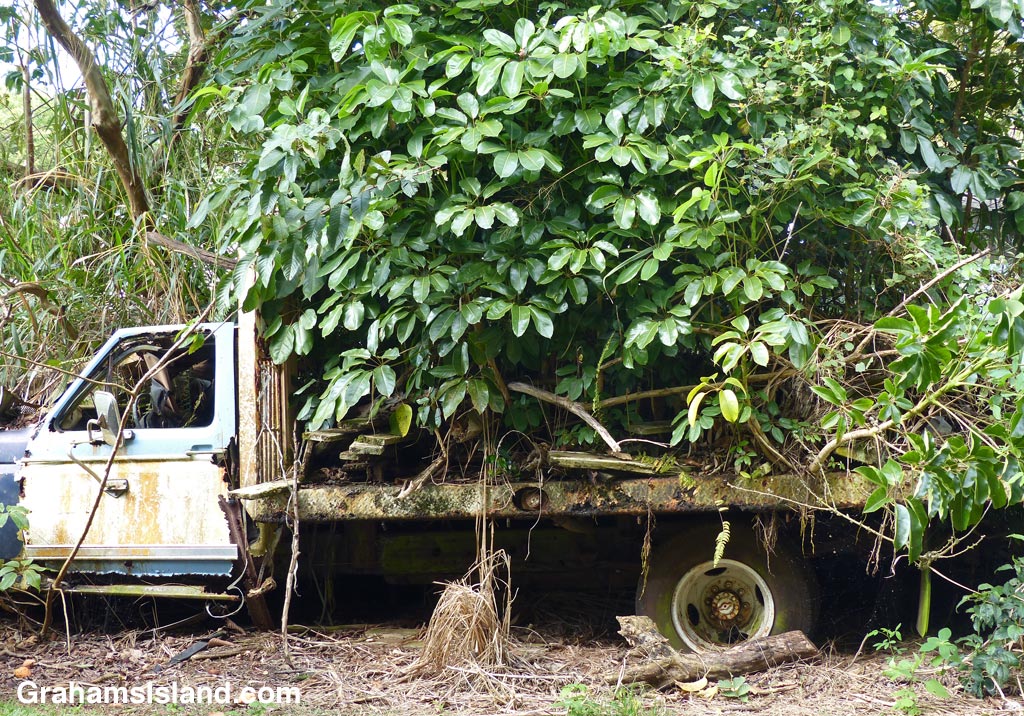
Log yard

Eucalyptus logs at the log yard at Kawaihae.
The Hamakua coast of the Big Island is the first landfall of the northeast trade winds and, consequently, gets a good deal of rainfall. Combined with warm tropical temperatures and good soil, the area is a prime growing area.

One of the crops is eucalyptus trees. The trees grow fast and straight. When they’re harvested they’re trucked to Kawaihae, the port on the west side of the island, to this log yard. They’re stored there until there are enough logs to ship to Asia, which seems to be about every couple of months at present.

I happened to be driving by late one afternoon and was struck by the light on the log ends. As can be seen from the hillside in the background, Kawaihae is one of the driest spots on the island, averaging around 10 inches of rainfall a year.
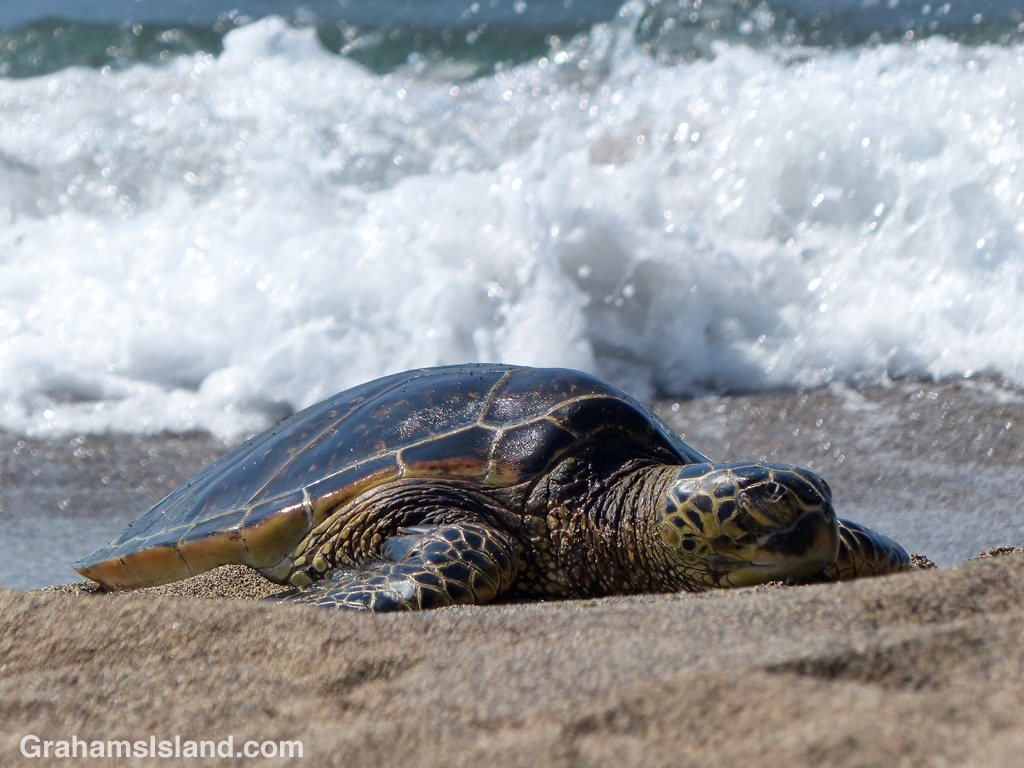
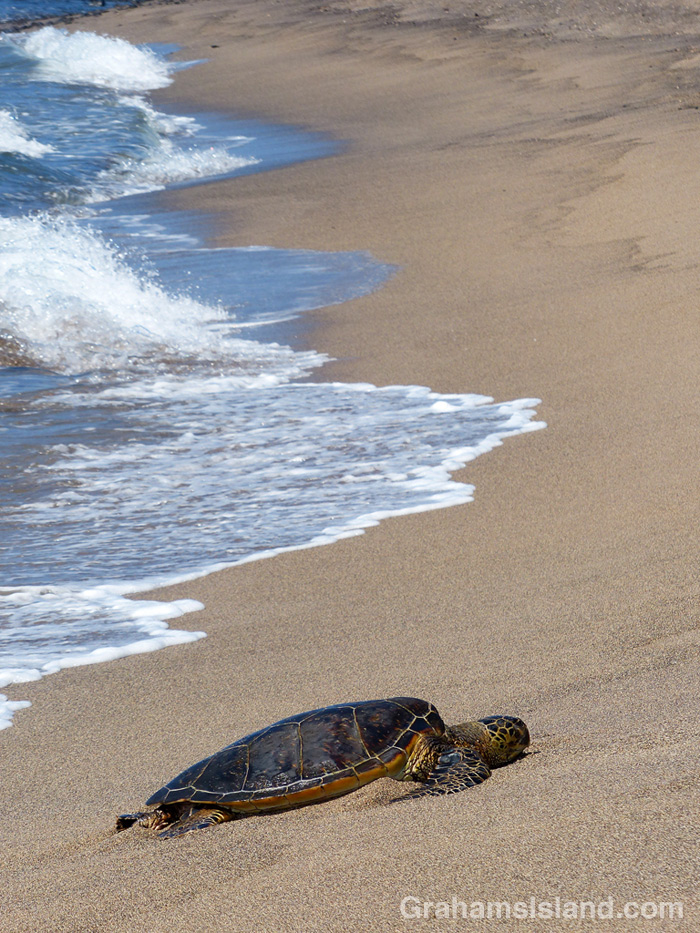
Green Turtle sunbathing

A Hawiian green turtle rests at Kaloko-Honokohau National Historical Park.A Hawiian green turtle rests at Kaloko-Honokohau National Historical Park.
One of the attractions of Kaloko-Honokohau National Historical Park, north of Kailua Kona, is that it’s a popular resting spot for Hawaiian green sea turtles. This turtle was hauled out on a long curve of golden sand known as Honokohau Beach. He had the spot to himself, which is good. People are supposed to stay at least 20 feet away from turtles, but many don’t.

For more information about Kaloko-Honokohau National Historical Park, go to bigislandhikes.com/kaloko-honokohau-park/.

Abstracts: Queen’s Bath fish

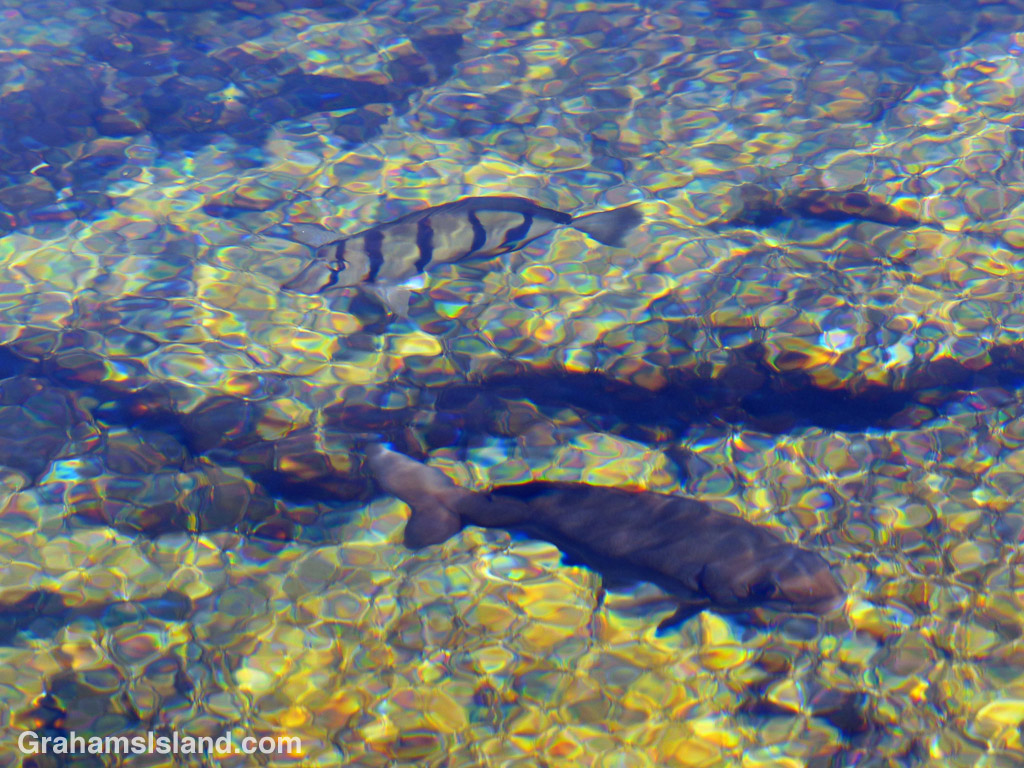
Fish swim in an anchialine pond at the Queen’s Bath in Kaloko-Honokohau National Historical Park.
Kaloko-Honokohau National Historical Park, just north of Kailua Kona, contains a feature known as the Queen’s Bath. This is an anchialine pond, containing a mix of freshwater and saltwater. Freshwater seeps into the pond from rainfall. Saltwater infiltrates through cracks in the lava. Because of this, the water level rises and falls with the tide. I can verify this as I took this, and other photos, sitting on a rock near the water’s edge. Just before I left, I realized my feet were now resting in water, the level having risen.

Anchialine ponds are unique ecosystems and this one contained several fish including these two. The one in the back is a convict tang. Not sure what the other one is. What I liked about the pond is the stained glass effect it created.

For more information about Kaloko-Honokohau National Historical Park, go to bigislandhikes.com/kaloko-honokohau-park/.

Naio

Naio (Myoporum sandwicense) grows on the lower slopes of Mauna Kea.
Naio (Myoporum sandwicense) used to grow in great abundance in Hawaii, but now is much less common. It has some similarities to true sandalwood and was passed off as the latter without much success, leading to it’s other names of false sandalwood or, less sympathetically, bastard sandalwood.

This small tree was found growing on the lower slopes of Mauna Kea.

Cigar wrasse

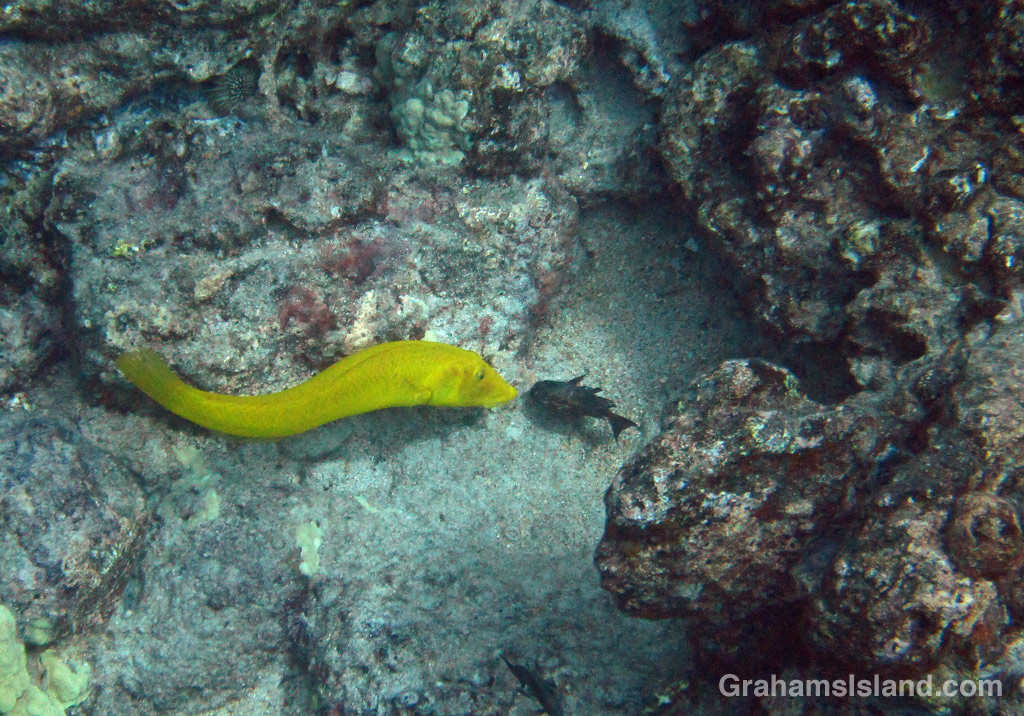
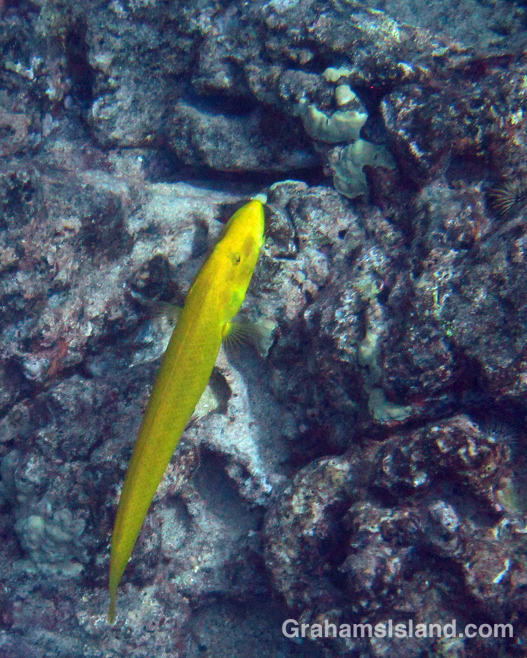
A female cigar wrasse eyes its prey.A female cigar wrasse carries its prey.
Perhaps not the best of photos, but ones that marked a first for me. I am constantly reading about how this fish preys on that fish and that fish preys on this creature, but the only feeding I’d seen is various fish grazing on algae on the coral.

On this day, however, I noticed, a good way below me, this female cigar wrasse with a small fish in her mouth. In the photo above the poor creature has just been dropped in front of her momentarily. In the second photo, the fish is firmly held in the cigar wrasse’s jaws.

The prey looked like some kind of small damselfish, which is interesting because John Hoover notes that cigar wrasse “feed on a variety of invertebrates.” Also of interest is that I mostly see cigar wrasse swimming among shoals of yellow or convict tang. Perhaps I should give them the heads up about the danger in their midst.

In my attempts to identify what I see in the water, I use John P. Hoover’s book The Ultimate Guide to Hawaiian Reef Fishes, Sea Turtles, Dolphins, Whales, and Seals. His website is hawaiisfishes.com.