Tag Archives: Butterflies and Moths

White-lined sphinx moth

Another post based on the theme of this week’s WordPress Photo Challenge, which is ‘Silence.’

I glimpsed this moth flitting by and snapped a couple of photos, one of which is the second shot. I realized this wasn’t something I’d seen before and wanted to get more photos to make identifying it easier, but it had gone to ground and I’d lost track of it. So I waited, scanning the ground without spotting anything. A light breeze ruffled the grass, but otherwise all was silence.

Eventually, having seen no sign of its presence, I gave up, got up and moved on. Within seconds the moth flew by again. This time I followed its flight and saw where it put down. Even then, as I padded towards it, I thought I’d lost it again. But when I zoomed in on the apparently empty spot, the moth appeared, as seen above. No chance I’m spotting this had I not seen it flying.

It’s a white-lined sphinx moth, first recorded in Hawaii in 1877 and now present on all the islands. It’s probably fairly common but it’s the first time I’ve seen one.

Sriracha the Bengal tiger

Sriracha, a female Bengal tiger, paces at Pana‘ewa Rainforest Zoo in Hilo.

This week’s WordPress photo challenge is to choose your favorite photo taken in 2017. I’m going with a photo that I haven’t posted before (though below I offer a few of my favorites that have run).

This is Sriracha, a female Bengal tiger and cousin of Tzatziki, a white male tiger. Both can be found at Pana‘ewa Rainforest Zoo in Hilo. What I like about this photo is those huge paws, the quiet movement, and the sense of great power that could be uncoiled at any moment.

For more information about Pana‘ewa Rainforest Zoo & Gardens, go to hilozoo.org.

As far as favorite photos already posted are concerned, I offer a few here:

Top. A gold dust day gecko drinking from a bird of paradise flower is a blaze of color (posted here).

Second. This photo captures the awesome spectacle of the lava firehose from Kilauea Volcano pouring into the ocean (posted here). Currently, while the flow is still active, lava is no longer entering the ocean.

Third. I was happy to snap the moment a passion vine butterfly laid an egg (posted here). This was taken on the same day as the gecko photo above, so a banner day for me.

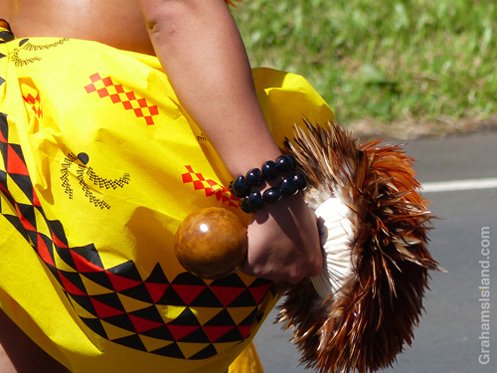
Fourth. I like all the photos in this post for their color and how they capture something of this most Hawaiian of dance (posted here).

Finally, I love this gargantuan blenny for its name, and was very pleased to get this photo, since the fish is apt to dart away and the shallow water was rocking (posted here).

Hawaiian blue butterfly

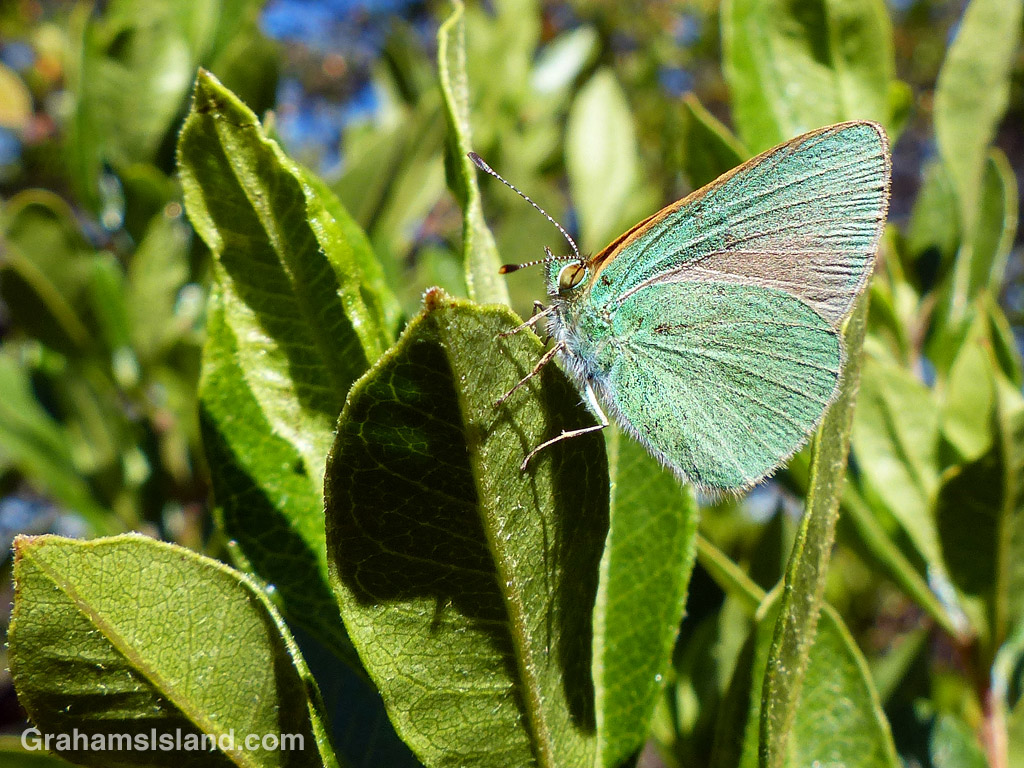
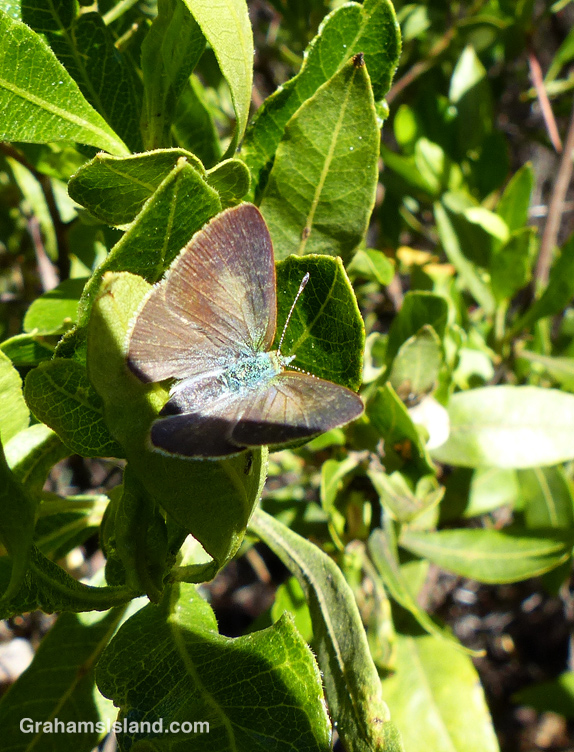
An endemic Hawaiian blue butterfly at the Palila Forest Discovery TrailAn endemic Hawaiian blue butterfly at the Palila Forest Discovery Trail

This endemic Hawaiian blue butterfly was flitting around at the Palila Forest Discovery Trail, on the southwest flank of Mauna Kea. This one is, I think, a female with its bright underside and uniformly brown top.

The butterfly is also known as the Koa butterfly, since its caterpillar feeds on that tree. I don’t think Koa trees are found in the trail area, but ‘A‘ali‘i (Dodonaea viscosa), an indigenous Hawaiian plant, does grow there and that’s another plant the caterpillar will eat.

Hawaiian beet webworm moth

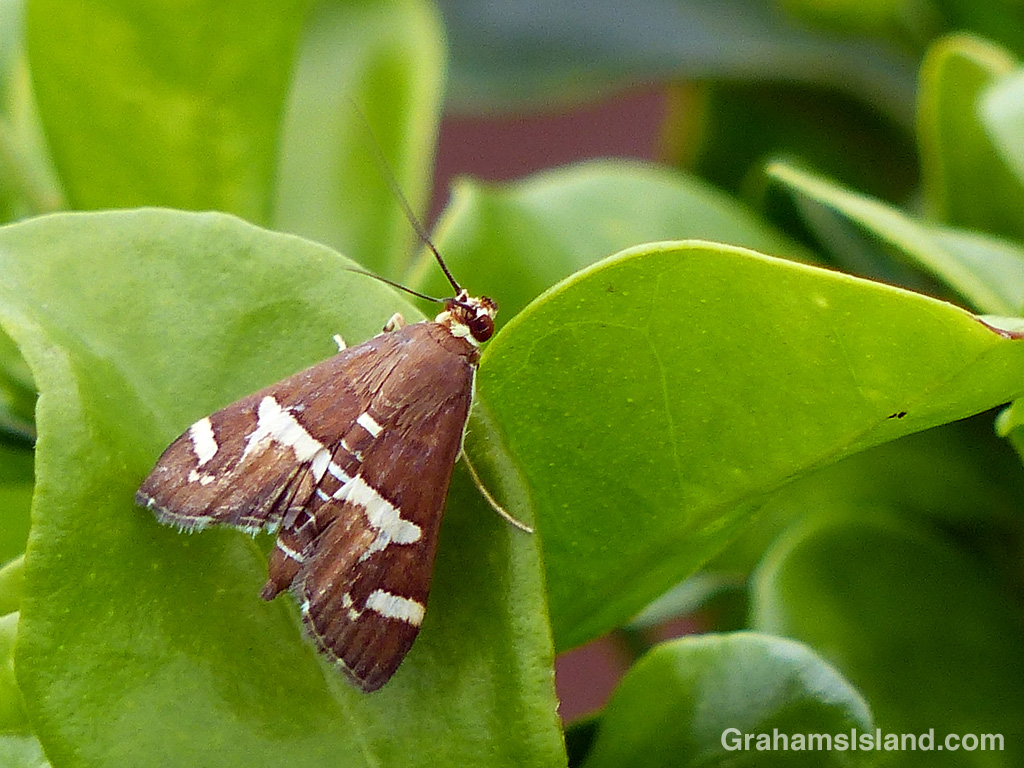
A Hawaiian beet webworm moth rests on a leaf
While Hawaiian beet webworm moth (spoladea recurvalis) sounds quite local, this moth is actually widespread in warm regions of the U.S. and other parts of the world. Also widespread is the damage its larvae does to chard, spinach, weeds in genera Chenopodium and Amaranthus, and of course beets.