Tag Archives: Kawaihae

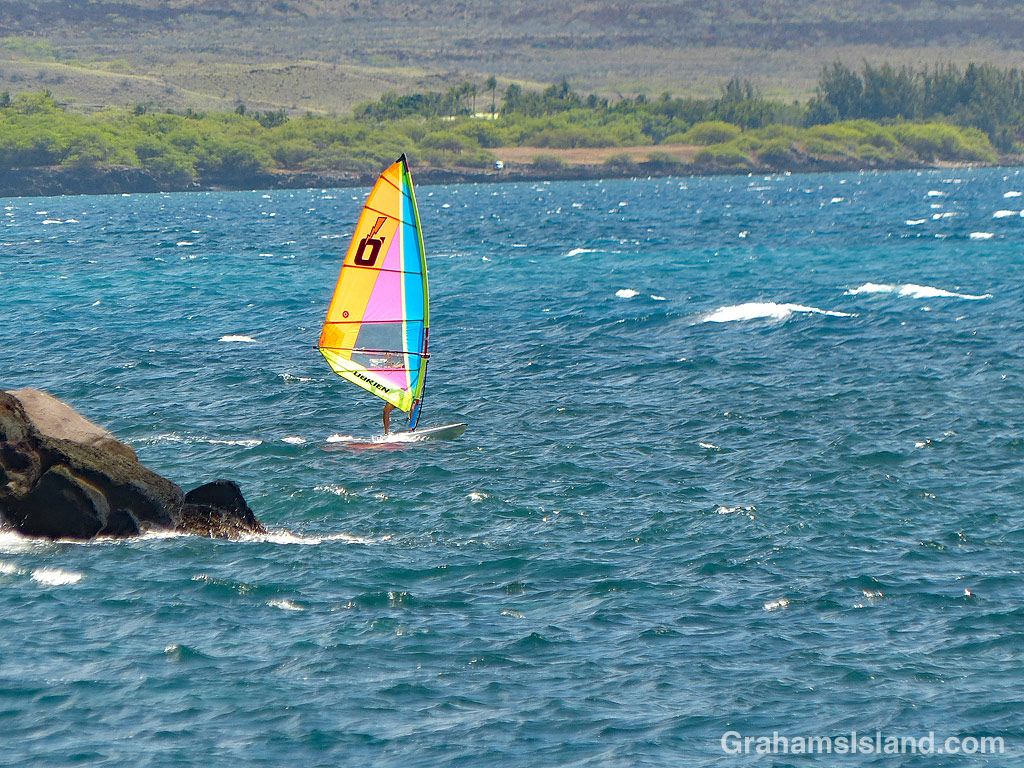
Windsurfer

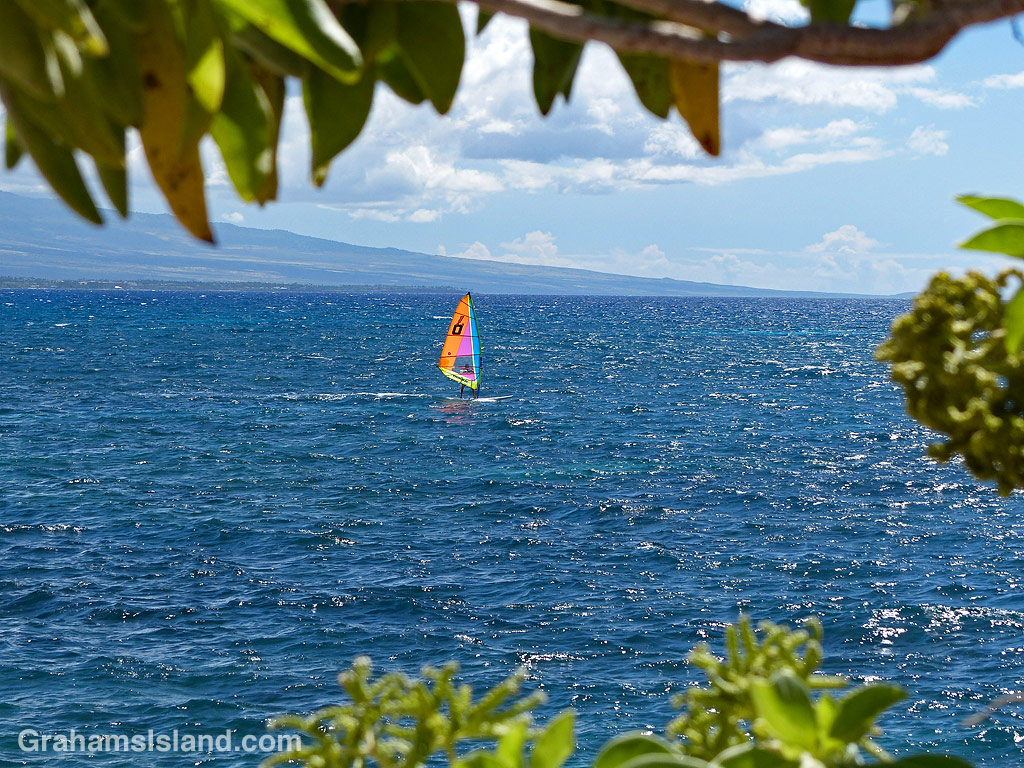
For whatever reason, I don’t see a lot of windsurfers in the waters around the Big Island. This is a bit surprising as there’s lots of water and the wind blows with a good deal of enthusiasm. Perhaps it’s just that most people favor surfing or paddle boarding.

Whatever the reason, I thought I should get photos of this windsurfer working his way along the coast near Kawaihae, since it might be a while before I see the like again.

Posted in response to this week’s Friendly Friday challenge on the theme of ‘Moving.’ See more responses here.

Canoe racers

Canoe racing is part of a resurgence in traditional Hawaiian culture and activities. Before contact with western civilization, canoe racing was widely popular. But missionaries, who were among the early western arrivals on the islands, didn’t like the races and the gambling on them (along with pretty much every other enjoyable activity). Finally, Queen Ka’ahumanu, influenced by the missionaries, banned canoe racing.

In 1875, King David Kalakaua reinstated the sport, leading to renewed participation in the activity. These days, canoe racers come from all walks of life and take part in the sport for the exercise as well as the racing. Many of the boats, based on traditional designs, are made from fiberglass, but most canoe racing clubs have at least one canoe made from koa wood as it would have been in the old days.

In these photos, a group of local women train in a double-hulled canoe, zipping into Kawaihae Harbor ahead of one of the inter-island barges.

Posted in response to this week’s Sunday Stills challenge on the theme of ‘Sports or Hobbies.’ See more offerings here.

Signs: Just ignore them

This week’s Friendly Friday challenge theme is ‘Ignored.’ (See more responses here.) Mulling this over on my drive to work, I thought about speed limits. Like all of you (I’m sure!), I drive at or below the speed limit, but there are lots of people out there who don’t, who just ignore the signs.

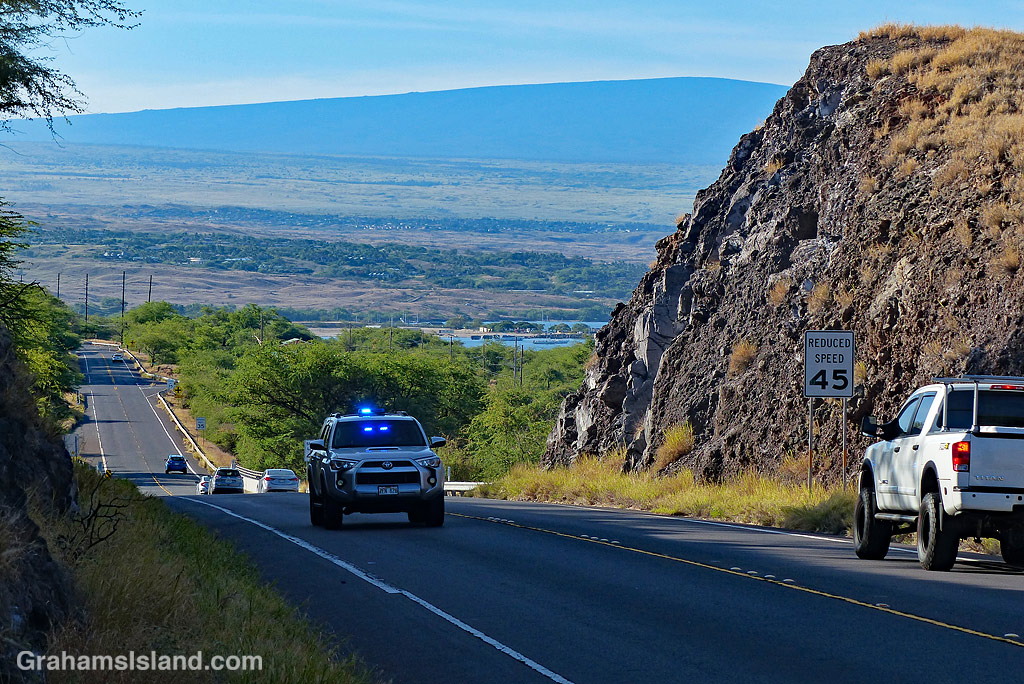
For example, in these photos, in the space of a couple of hundred yards, the speed limit drops from 55 mph, at the top of the little hill, to 45 mph, and then 35 mph at the bottom of the hill. There are people who actually slow to 35 mph by that point, and they run the very real risk of being plowed under by all the other drivers who routinely go 45 mph all the way into Kawaihae, and out again on the other side.

The truth is, driving 5 mph over the speed limit is generally considered acceptable here and won’t get you pulled over. Exceed that leeway and you’re taking a chance. And in Hawaii, the police are hard to spot. Most police officers drive their own cars with no markings and only a little blue light on top. When the police car in the bottom photo sped into view there was a blaze of brake lights from the vehicles heading down the hill. But it was on the way to some other, more important situation.

After I took the photos, I got back into my truck and somehow, and I can’t explain it, by the time I got to the bottom of the hill I was going 45 mph. First time for everything I guess.

Shrapnel

These days, the military conducts exercises at its Pōhakuloa Training Area in the saddle between Mauna Loa, Mauna Kea and Hualālai. At 133,000 acres, it’s the largest such installation in Hawaii or anywhere else in the Pacific.

But during World War II, the military leased 91,000 acres from Parker Ranch, around Waimea and down towards Kawaihae. A temporary base, called Camp Tarawa, was built on this land, and much of the rest of it was called the Waikoloa Maneuver Area. This area was used to train troops for campaigns in the Pacific.

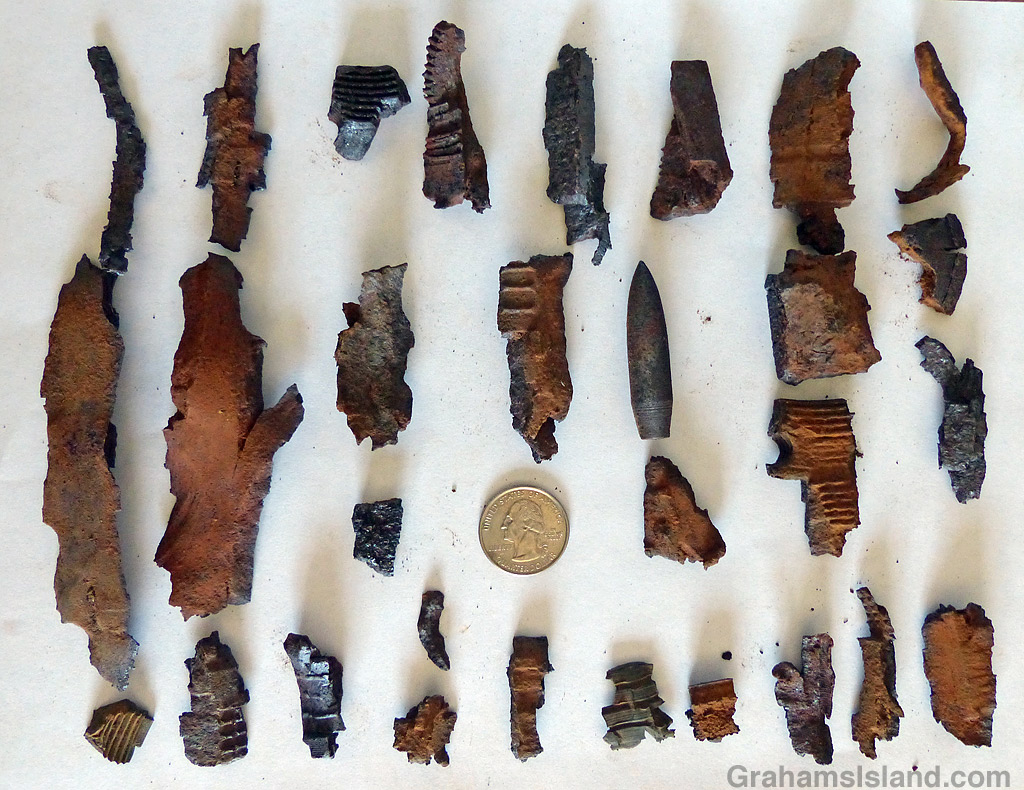
After the war, the land was returned to Parker Ranch. While it was cleared of most munitions, a lot of shrapnel can still be found there today. The top photo shows part of the haul from a half-hour walk through the area. The coin is a U.S. quarter, a little under an inch in diameter. Many of the pieces have lines, grooves, and other marks that might help identify what munitions they were once part of.

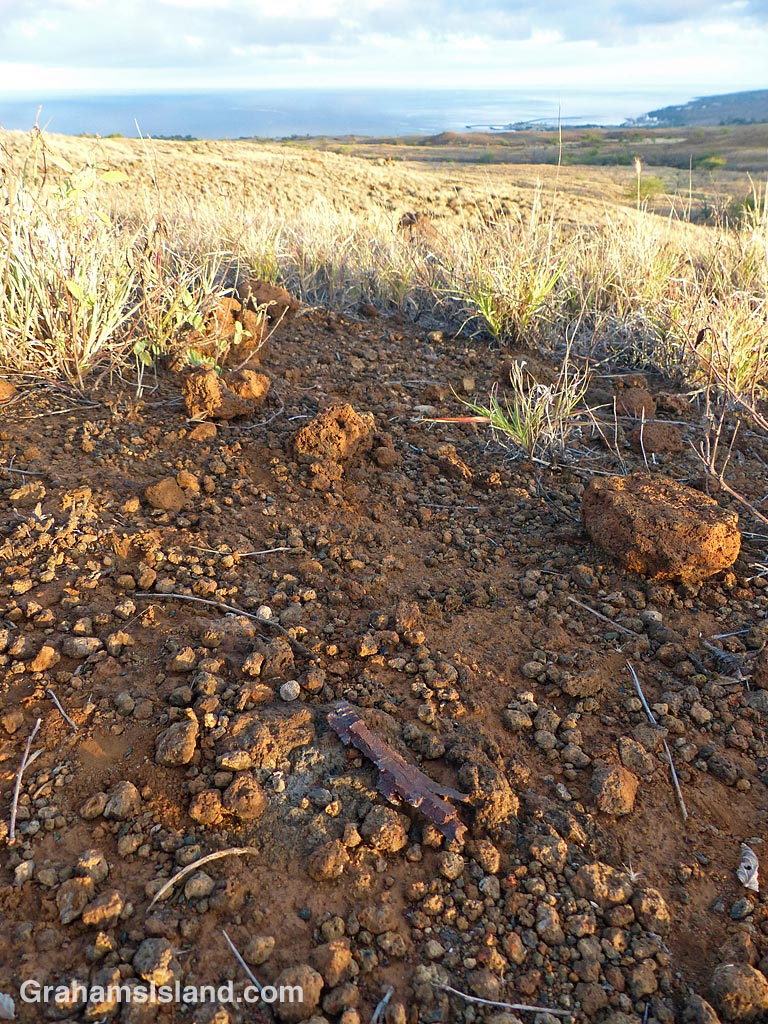
The photo to the right shows a piece of shrapnel lying in the dirt in the scrubby ground that makes up most of this area. Kawaihae Harbor can be seen at the top right. I thought it would be hard to spot shrapnel in this terrain, but it’s surprisingly easy. Shrapnel has a slight, but distinctly different look to the dirt and lava rocks. Pick it up and it’s noticeably heavier than any of the rocks.

Hunting for shrapnel isn’t without risks. Apart from the dangers of wandering around on rough, unstable ground, there’s always a chance of finding something live. Best tread lightly.

Tugs and a barge

A lot of cargo for Hawaii is delivered by ship to Honolulu on Oahu. Cargo for the smaller (in population) islands is then distributed by inter-island barges. One of their ports of call is Kawaihae, on the west coast of the Big Island.

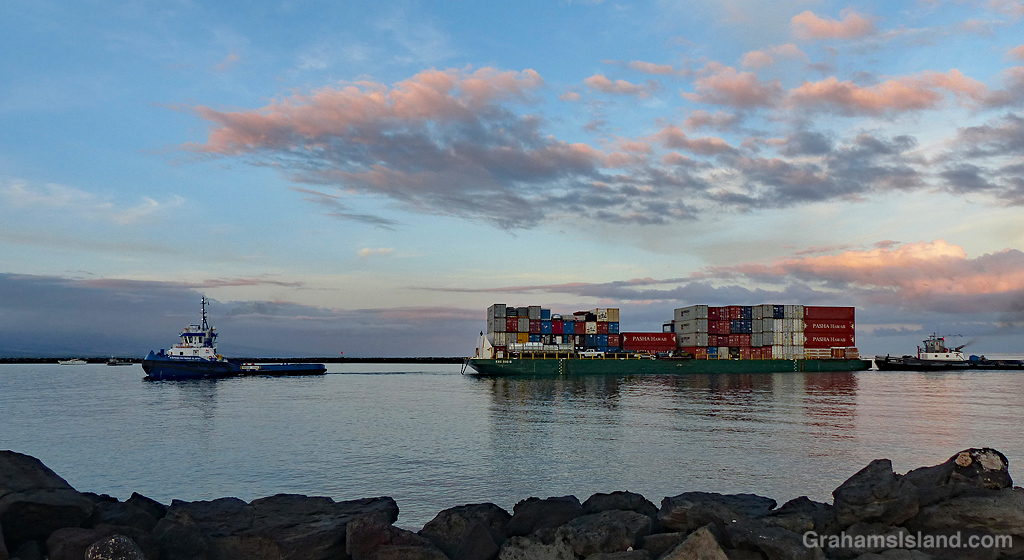
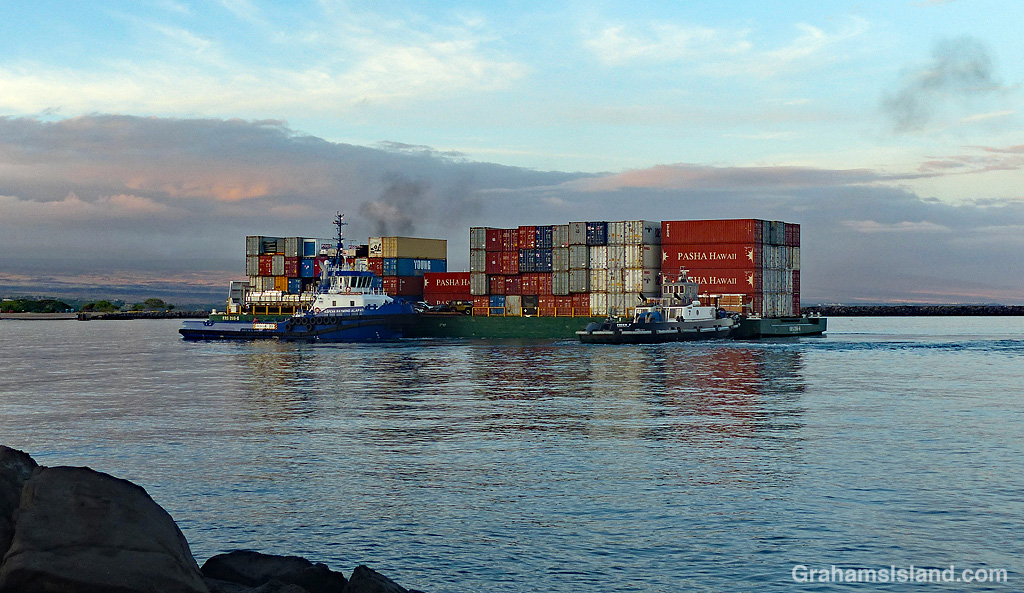
When the tug and barge arrives at the port, a second tug is sent out to hook a line onto the stern of the barge, so that it can help check the momentum of the barge. The tug at the front stops towing and assists in this braking process. Once the barge has pretty much come to a stop, the two tugs push the barge around until it’s alongside the jetty for unloading.

These photos show some of that process. Above: entering the port and slowing down. Below: both tugs begin to push the barge.

Posted in response to this week’s Friendly Friday challenge on the theme of ‘Between the Lines.’ See more responses here.

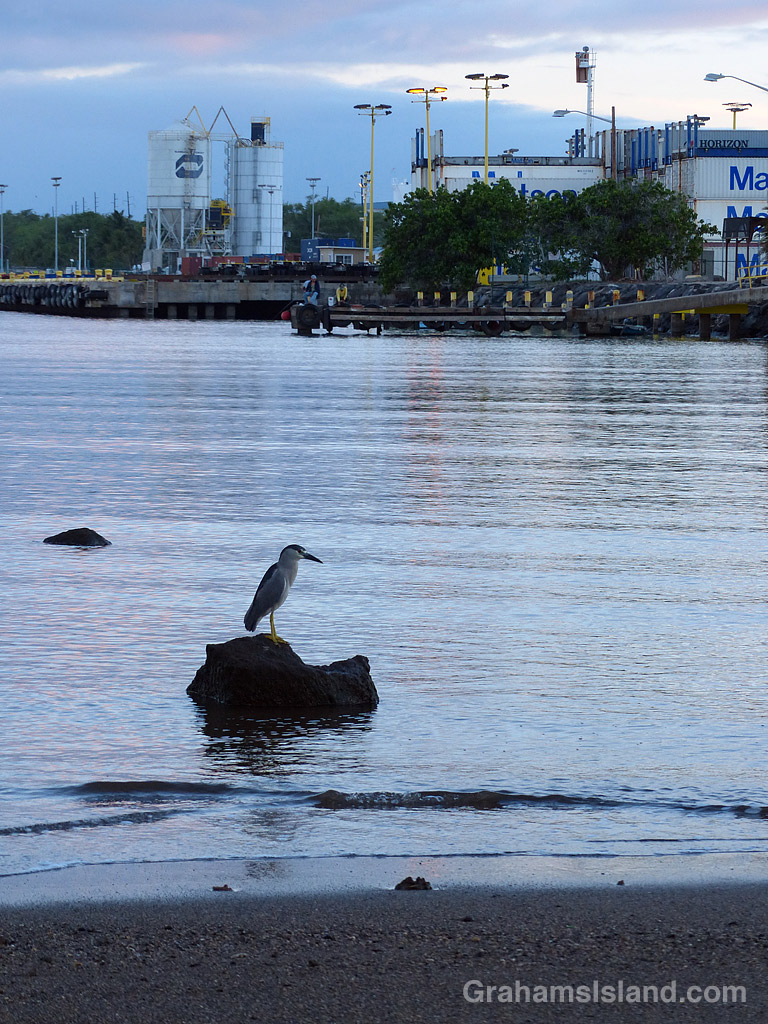
Black-crowned night heron

This week’s Sunday Stills challenge theme is ‘Stillness.’ (See more offerings here.) It made me think of this scene.

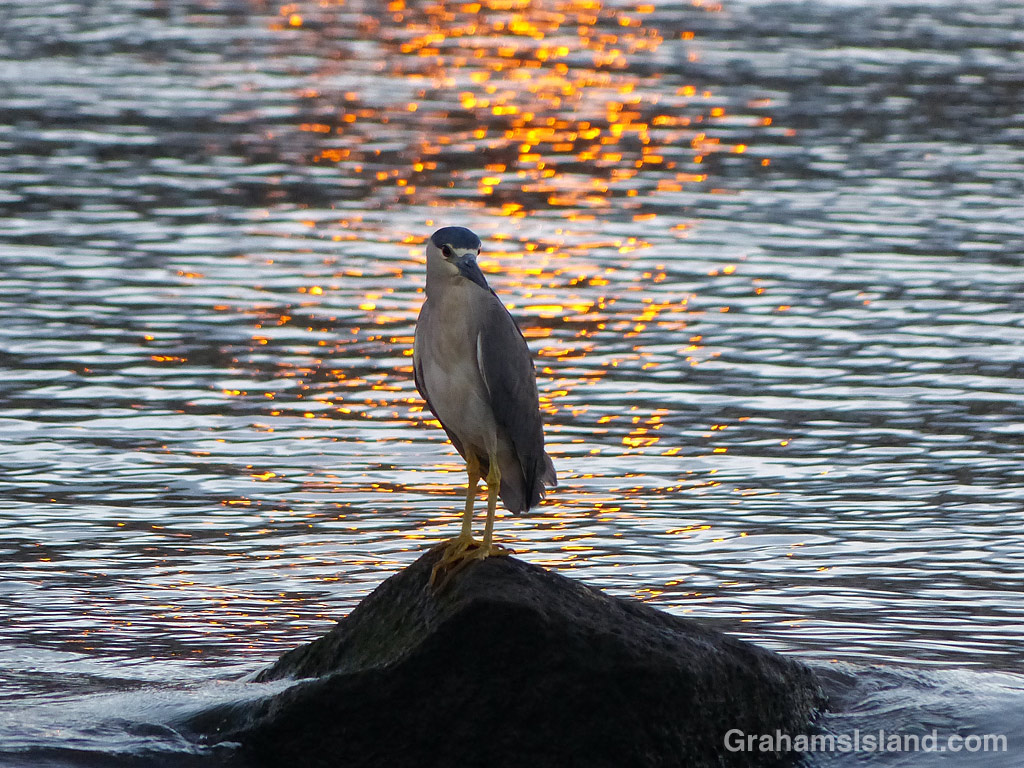
I was out early one morning and stopped by the port at Kawaihae. There wasn’t much going on, but I was happy to see this adult black-crowned night heron perched on a rock in the shallows. It didn’t seem to be actively fishing.

Indeed, the heron remained mostly still. It was just dark enough for the lights of the port to illuminate the rippled waters inside the harbor. The port itself was also quiet. No boats moving, no trucks lining up, no machinery grinding. Just a couple of men fishing off the small boat dock.

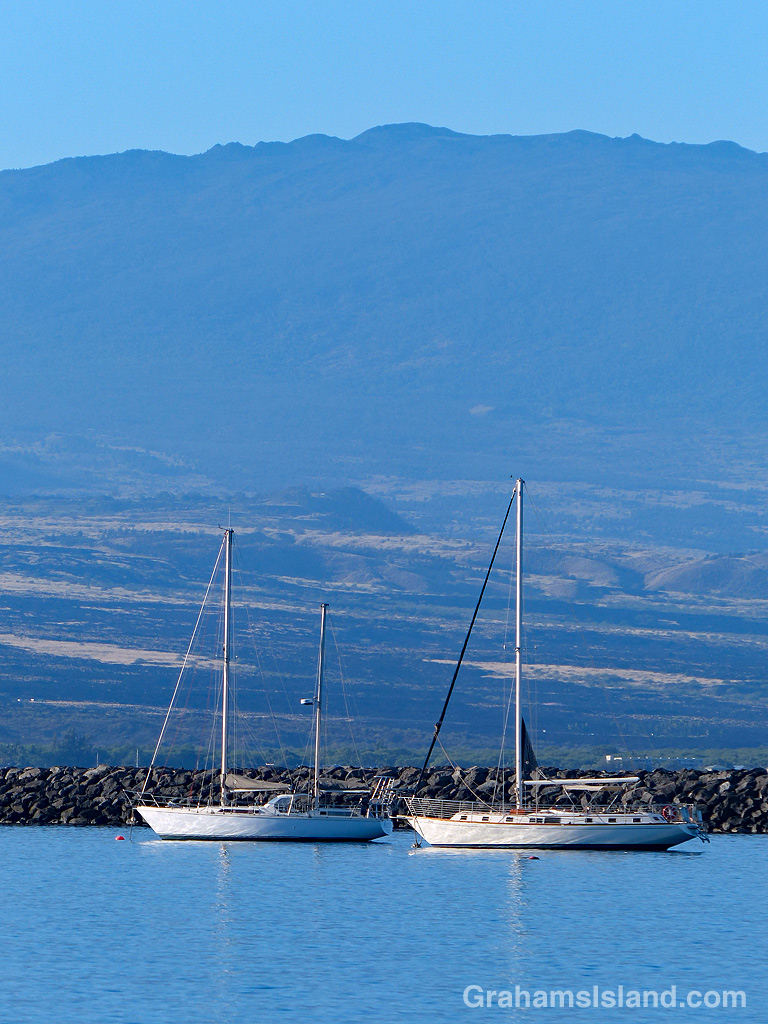
Sailboats in the harbor

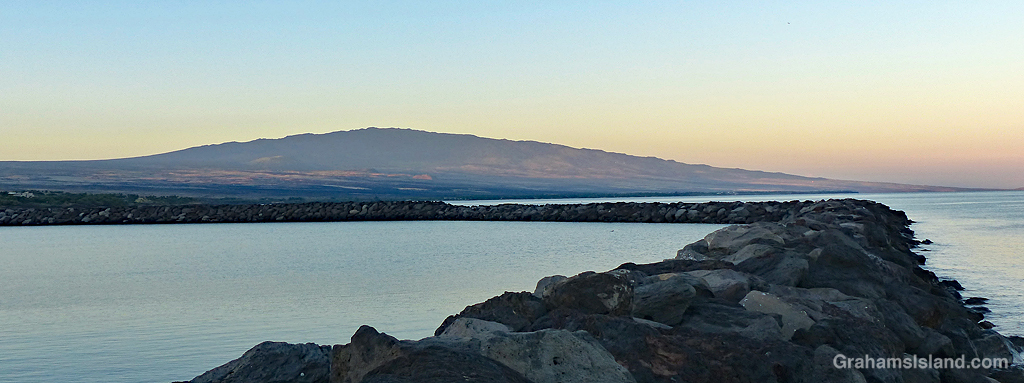
These sailboats were moored in Kawaihae Harbor, with Hualalai volcano in the background.

There is a small boat harbor on the other side of that rock breakwater. It opened in 2014 built after 20-plus years of studies and considerations and general hand-wringing. But since it only has room for a limited number of boats, some still retain their moorages in the port’s main harbor.