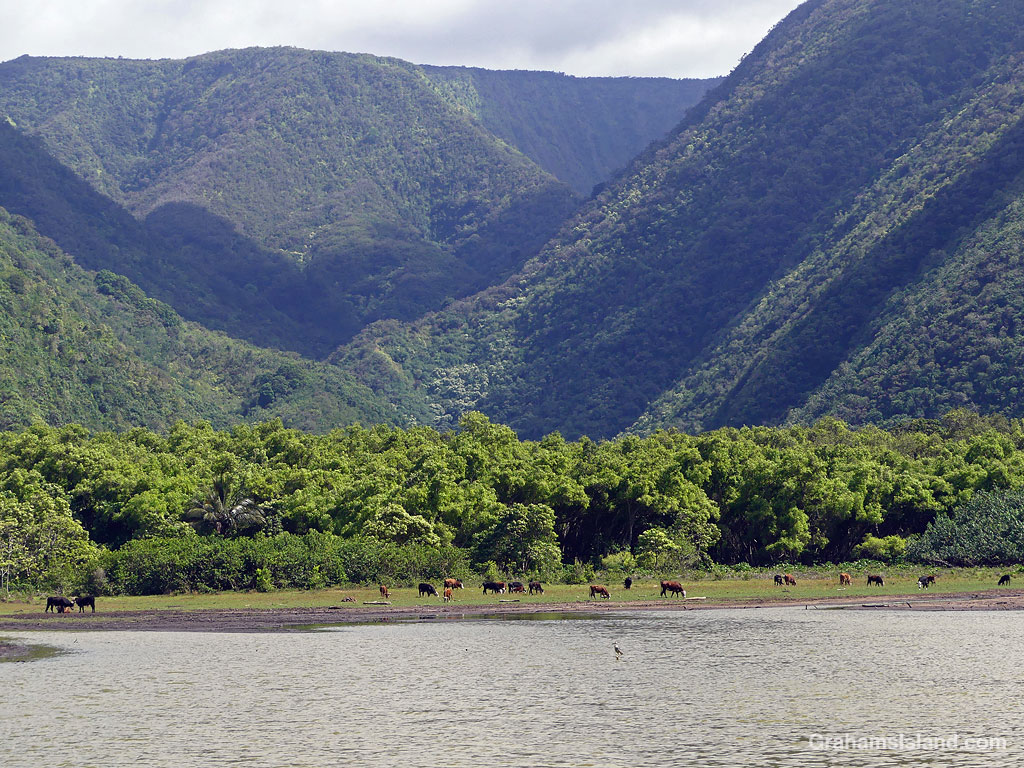
This week’s Sunday Stills challenge theme is ‘Trees.’ See more responses here.
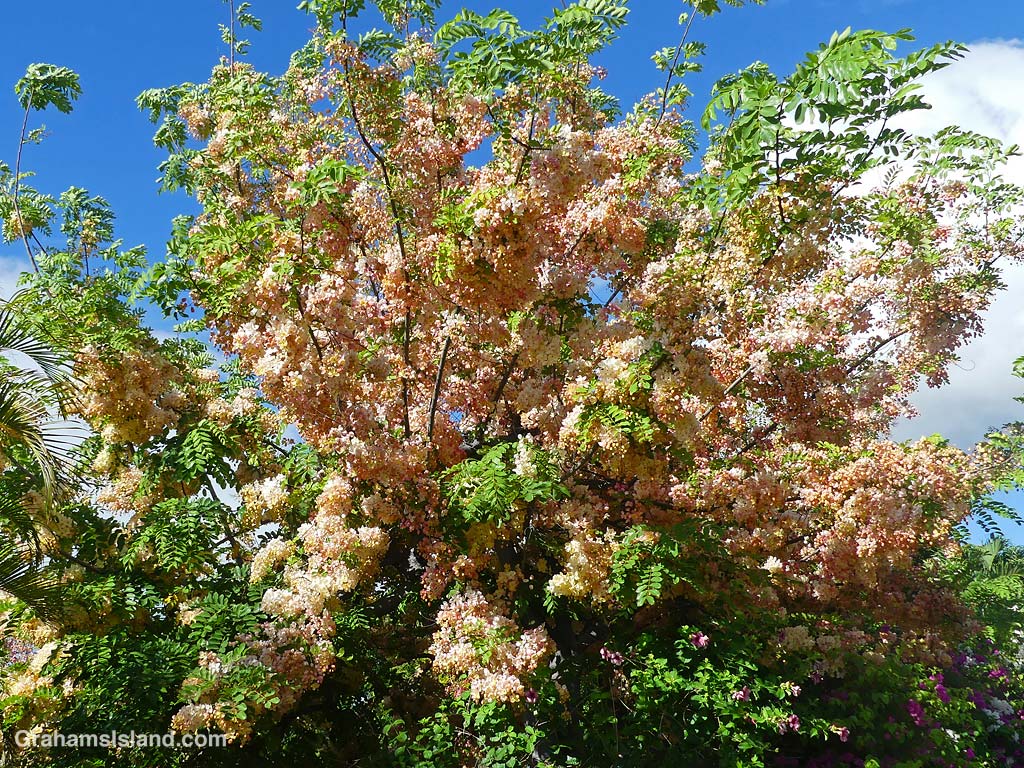
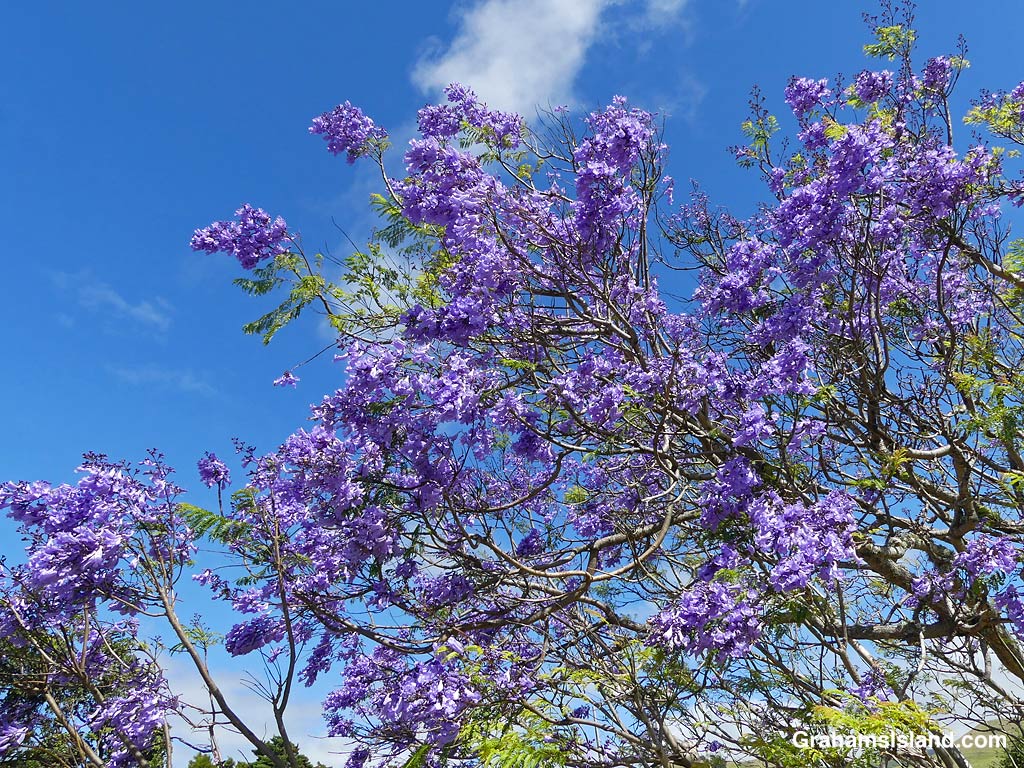
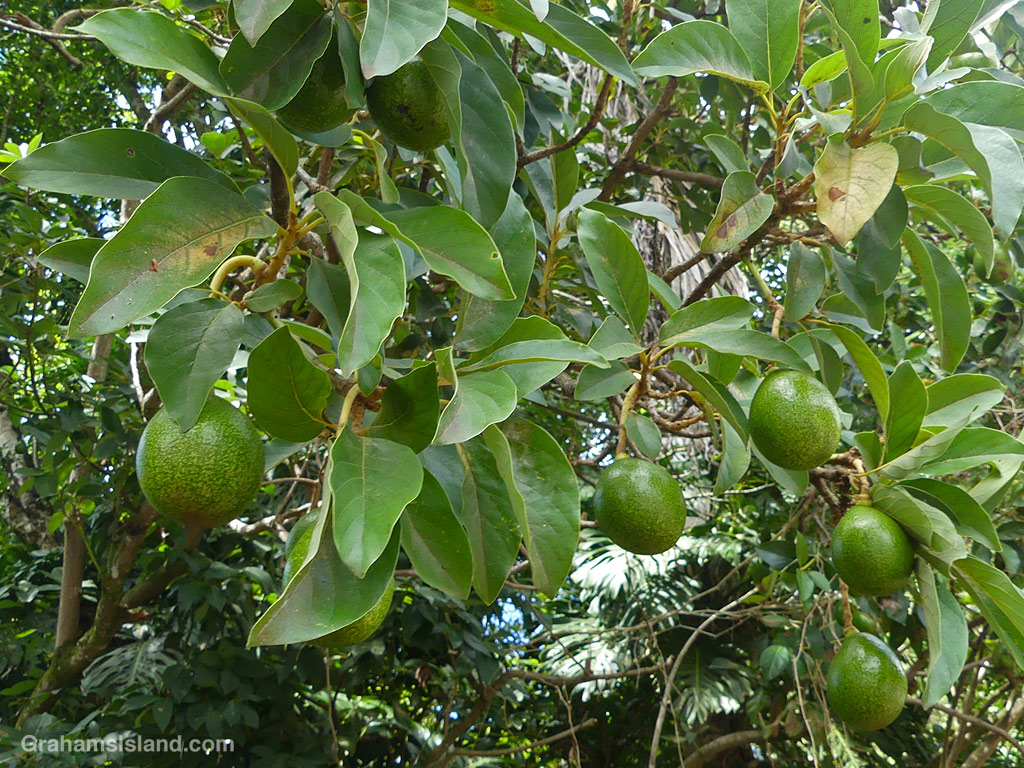
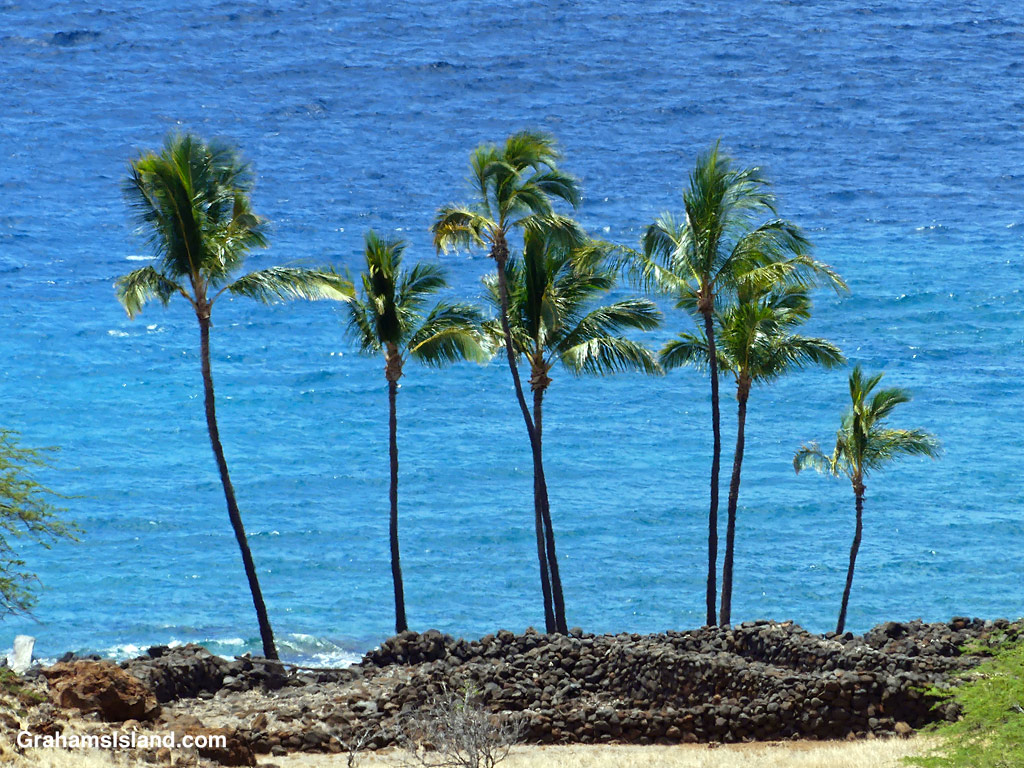

This week’s Sunday Stills challenge theme is ‘Trees.’ See more responses here.
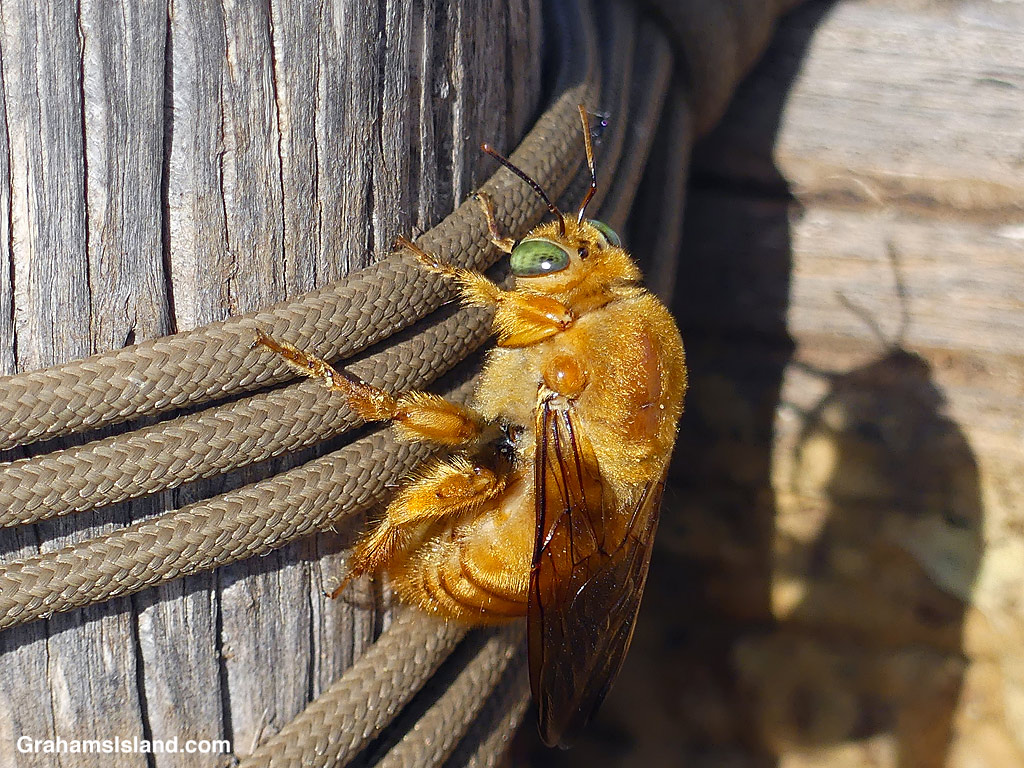
I recently posted (here) phone photos of a female carpenter bee heading for home. Last week, I returned with my camera to see what they were up to, and I was very happy to see this male bee visiting the same home as the one in the previous post.
Male bees are a lovely orange/brown and are smaller than the females, but still pretty big. Another way they differ is that, while female bees have a stinger but rarely use them, male bees don’t have a stinger at all.
I’ve seen a few male bees before, but this is the first time I’ve been able to get photos.
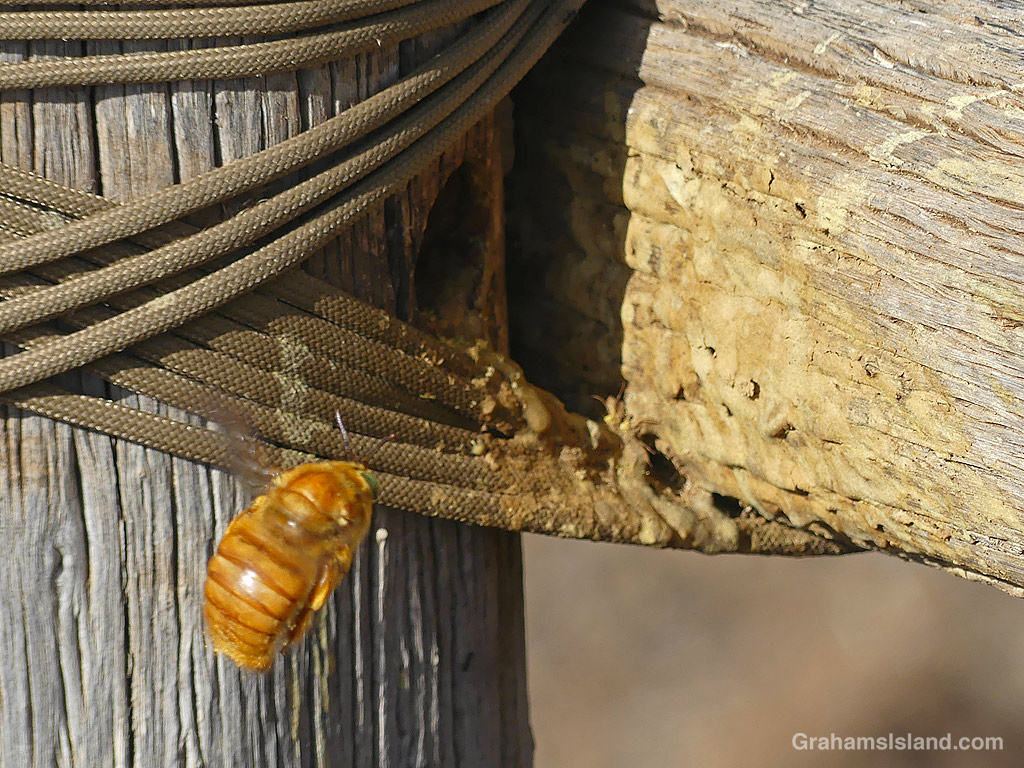
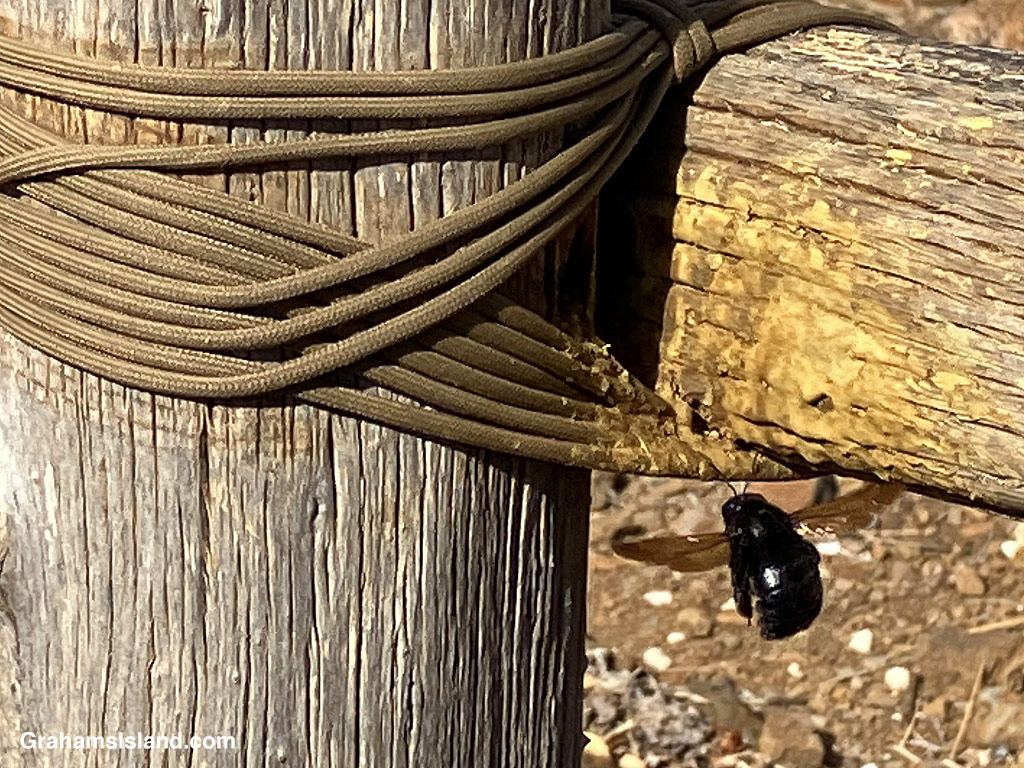
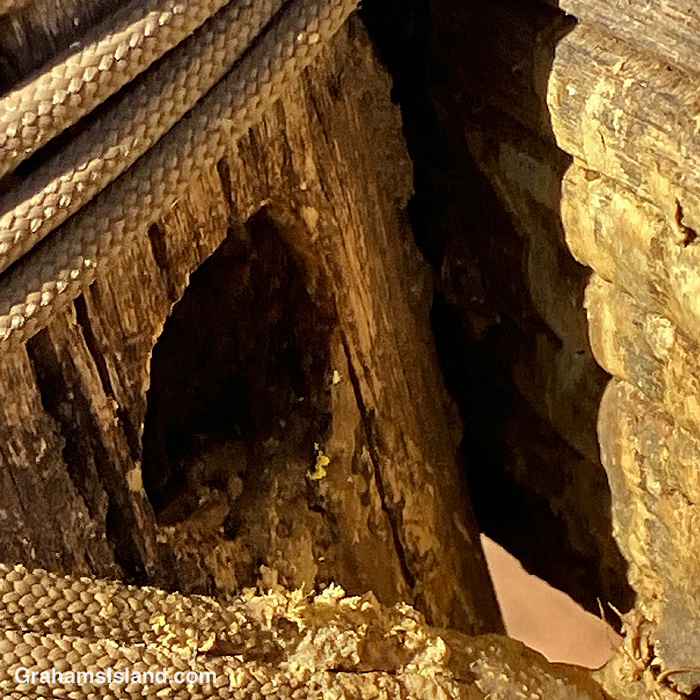
I was at Lapakahi, after a swim, and walked to the lookout there, to see what was happening in the water. As I stood there, a Sonoran Carpenter Bee rumbled towards me and flew back and forth in my vicinity. It was quickly joined by a second bee, coming from the opposite direction.
They weren’t exactly bothering me, but they were persistent, so I took a step or two backwards. This seemed to satisfy one of the bees and I saw it head to one of the wooden rails and disappear. I realized what was going on. I was too close to their homes.
I didn’t have my camera, but got my phone out, located the home of the second bee and took a couple of photos. These female carpenter bees drill tidy holes into any kind of wood to deposit food and lay eggs there.
Eventually, the second bee was satisfied I wasn’t a threat. I was pleasantly surprised that I was able to capture her making, dare I say it, a beeline for home!
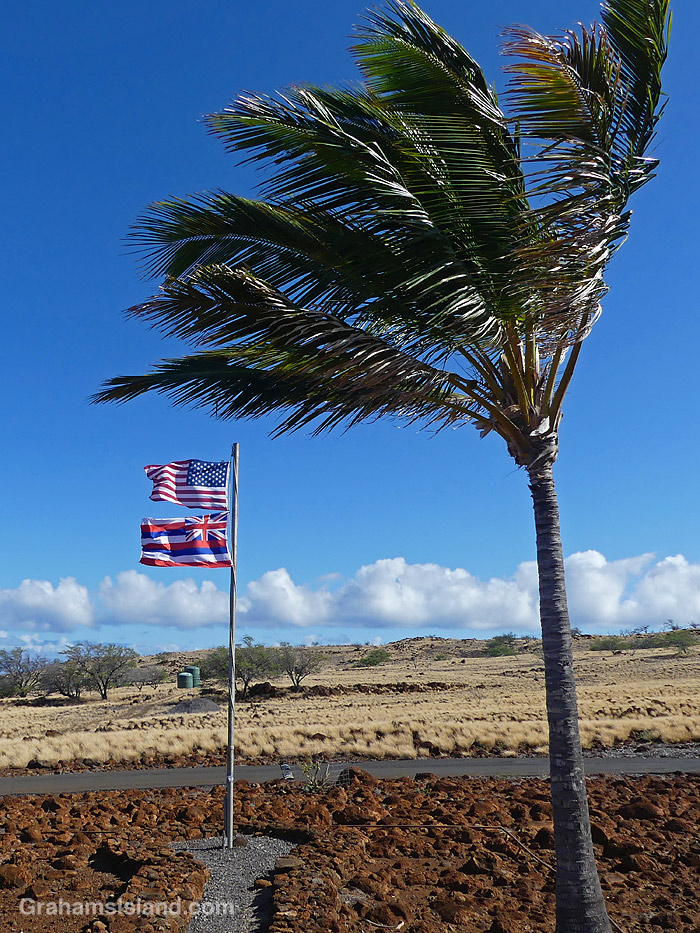
This week’s Sunday Stills challenge theme is ‘Flags.’ See more responses here.
In Hawaii, there are usually two flags flown. The top one here is the well-known national flag. The other is Hawaii’s state flag, the only state flag to contain the flag of another country. But how did the Union Jack get there?
This comes down to interactions, in the early days of western contact with Hawaii, between the British Royal Navy and King Kamehameha, who at that time ruled only the Island of Hawaii, not the whole island chain. Kamehameha already had already taken into his inner circle, and thought highly of, a pair of British sailors who acted as military advisors. Then, in 1794, Captain George Vancouver signed a pact with Kamehameha, which he thought ceded the island to Great Britain. That wasn’t how the Hawaiians interpreted it. They thought it established the island as a protectorate. However, one aspect of this exchange was that a British flag was given to the king and was used as a symbol for the kingdom after Kamehameha went on to unite all the Hawaiian islands.
There’s a story that, when the American war of independence with Britain broke out in 1812, Kamehameha did not want to offend either side and so he designed a flag that incorporated elements of both nations’ flags. However the new design came into being, it became the flag of the Hawaiian nation, though the number of stripes, the colors, and the size of the Union Jack often varied.
It wasn’t until 1845 that the current version became official, with the eight stripes representing the eight main islands of Hawaii.
I’ve lived in Hawaii for more than 12 years and go snorkeling whenever I can. New Year’s Eve was the first time I’d seen a Humpback Whale in the water (here). Yesterday, less than a month later, my wife and I had this even more remarkable encounter.
Walking down to swim at Lapakahi Historical Park, I spotted a humpback not far offshore. When we got in the water, the whale was still there. It wasn’t very active, just milling around, as they sometimes do. Also, in the same general area, was the same woman who had been with us on New Year’s Eve. We swam out and headed in her direction.
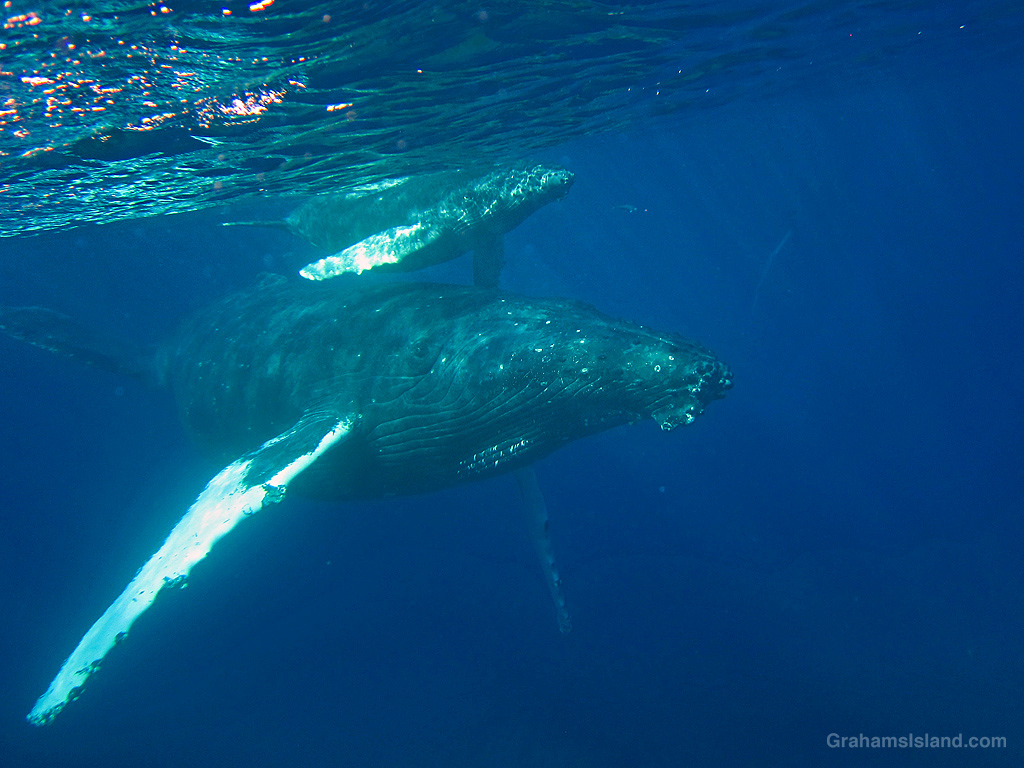
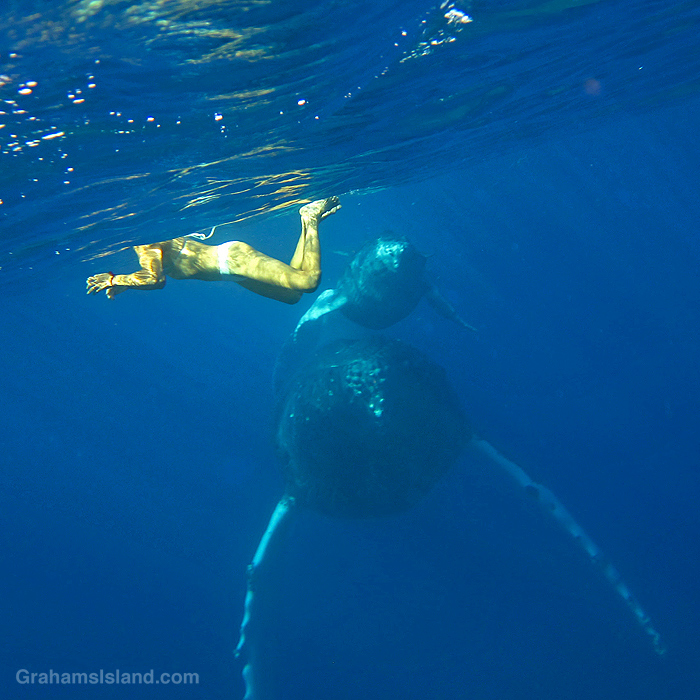
As we got closer, the whale could be seen ahead, still not doing much, but it became apparent it wasn’t alone. The fins of another adult whale could be seen a bit farther out. But that didn’t quite explain the activity I was seeing until I realized that I was seeing a third whale, a calf swimming close to the first whale, which was clearly its mother.
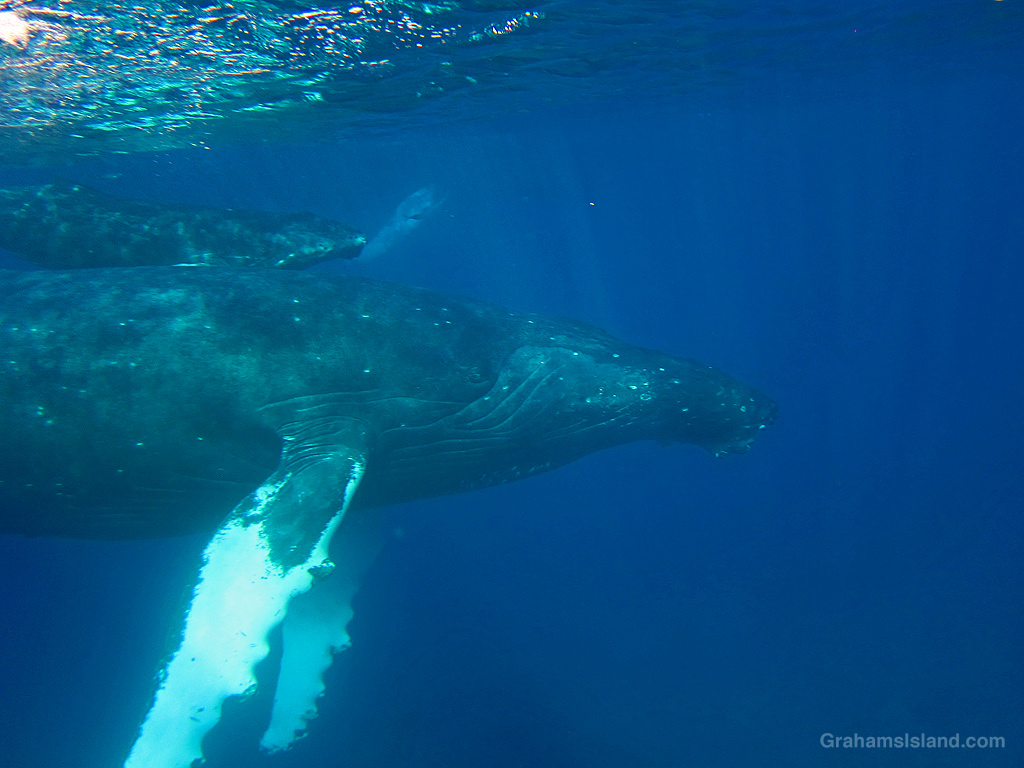
I put the brakes on then as I had no wish to accidentally come between a mother and her calf. But at that point, the whale and her calf turned in our direction. The mother was huge, much larger than the previous whale, and getting bigger by the second, with her calf poised close above her. I have to say, there was a moment there when I was a tad nervous. But she simply continued her turn before heading away with an imperious swish of her tail.
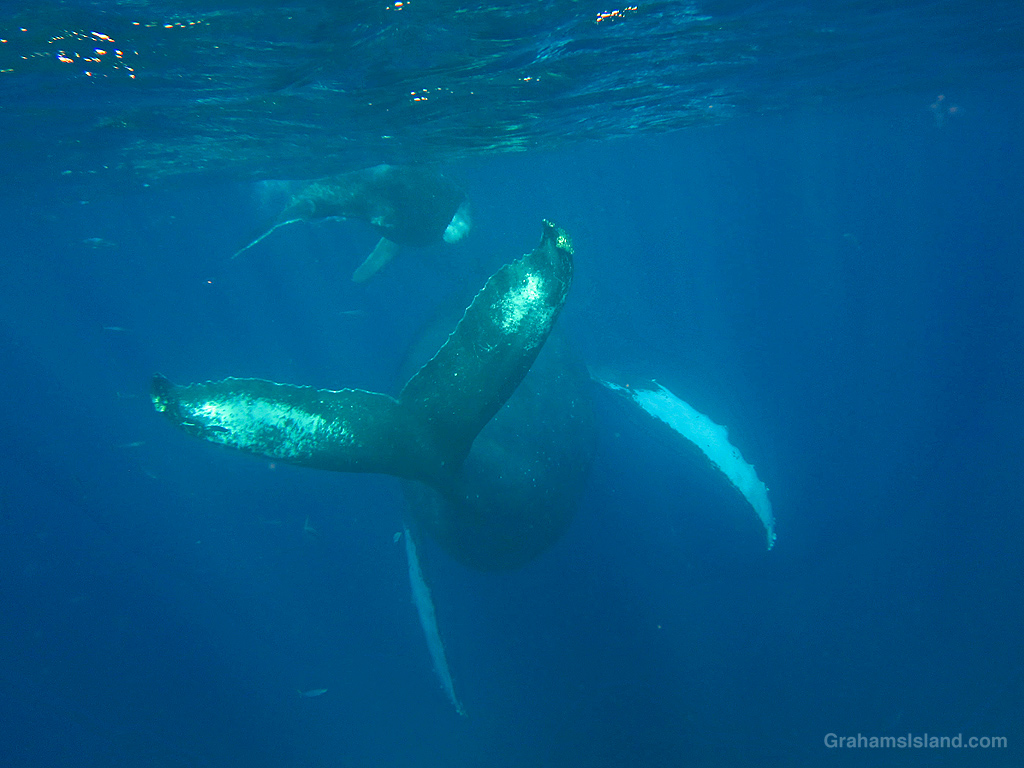
Posted for Becky’s Squares: Geometric. See more responses here. Also for Clare’s Share Your Desktop. See more responses here.
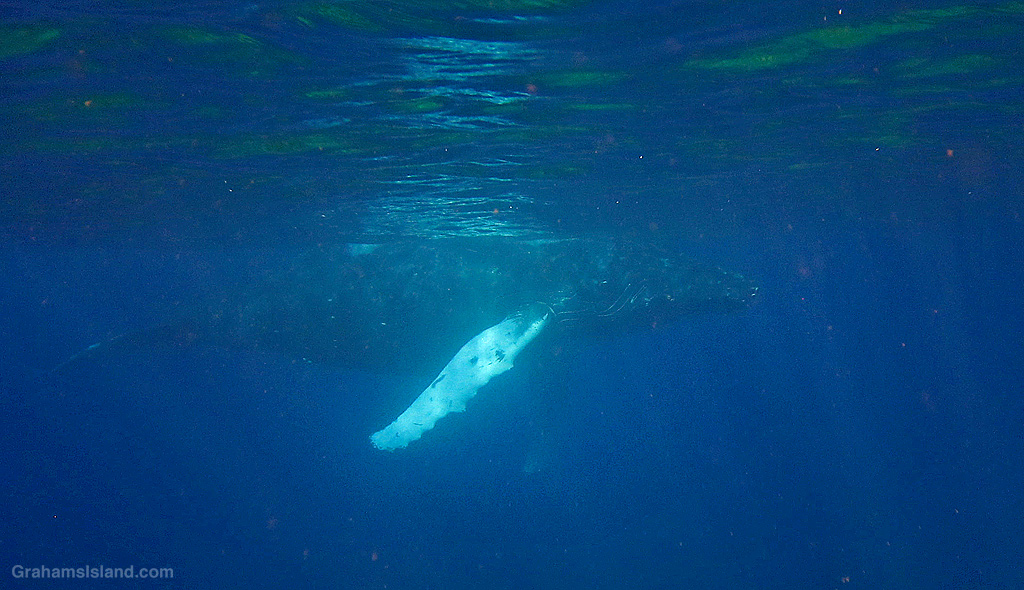
Yesterday, driving into Lapakahi Historical Park to go snorkeling, my wife and I saw a Humpback Whale, close offshore, doing multiple tail slaps. After we parked the car and headed towards down to the shore, the whale was still slapping its tail. By the time we had our gear on and ready to swim, it looked like the whale was done and heading south.
But, as we got in the water, I saw the whale heading north. We swam out, without any thought of seeing the whale. Chances were it would dive and disappear, or move on, or turn around again. But once out toward the edge of the reef, we realized the whale was hanging around and even nudging towards the shore. By this time it was doing fin slaps.
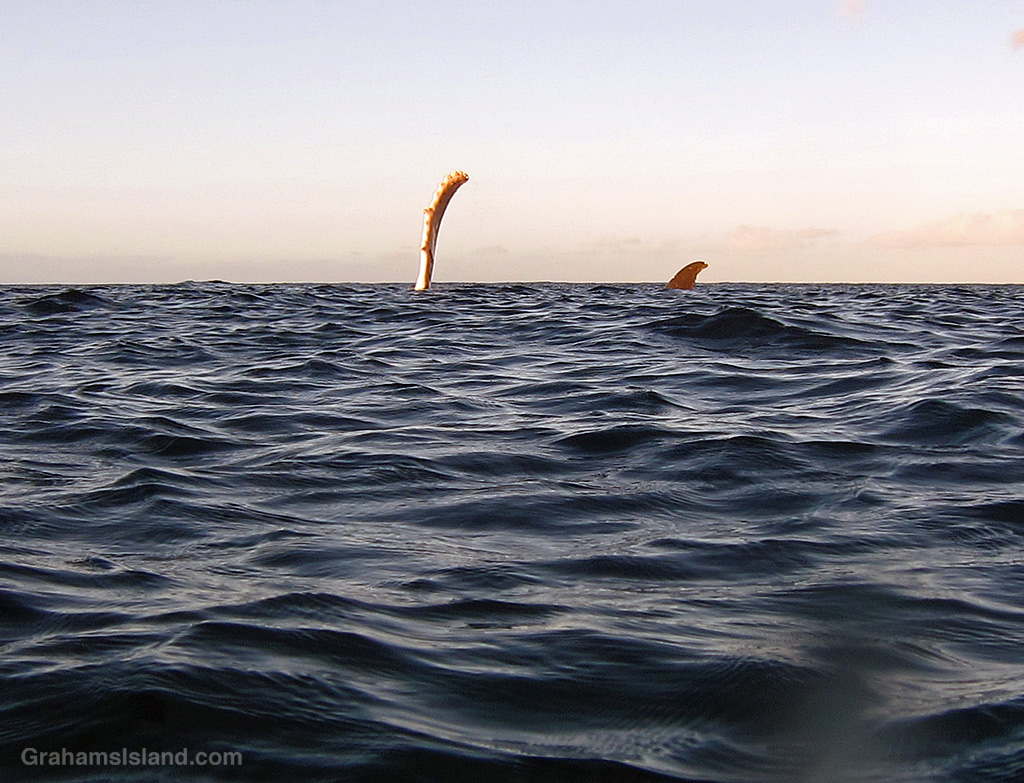
We had never been this close to a whale in the water and the sight of the huge fin reaching up and then slapping the water with a loud thwack was impressive. As we watched, the fins got larger. I dipped my head underwater and could make out the hazy shape of the whale, the first time I’ve ever seen one in the water. Eventually, the whale came into full view and paralleled our course for a few minutes before it eased away, though it remained quite close to shore.
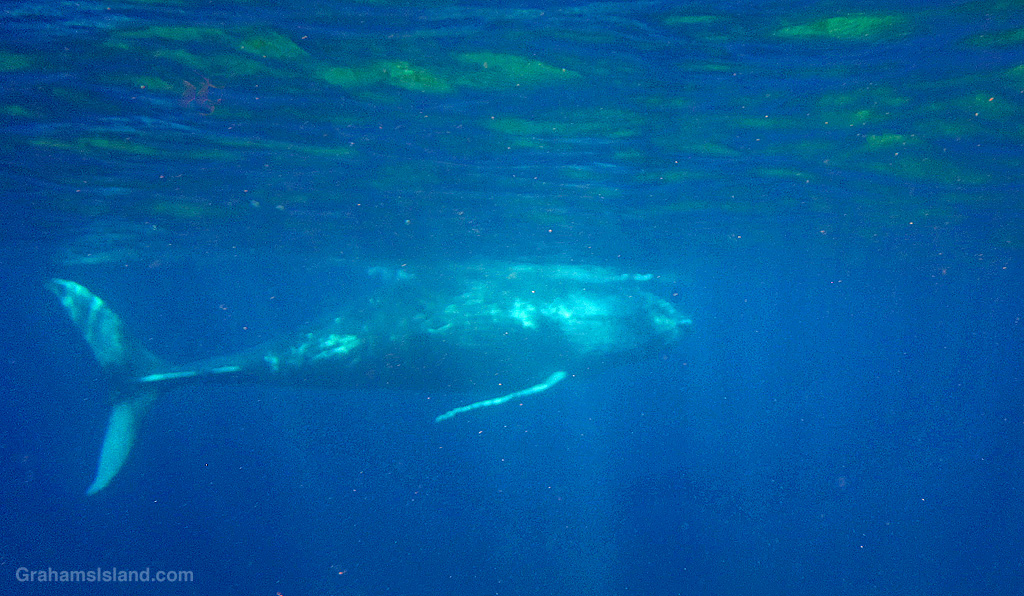
The whole encounter was deeply moving, an end of year gift for us and another swimmer who was there. During that swim, we also saw three reef sharks and later, a pod of dolphins. It says something that those encounters, normally the highlight of any swim, felt anticlimactic!
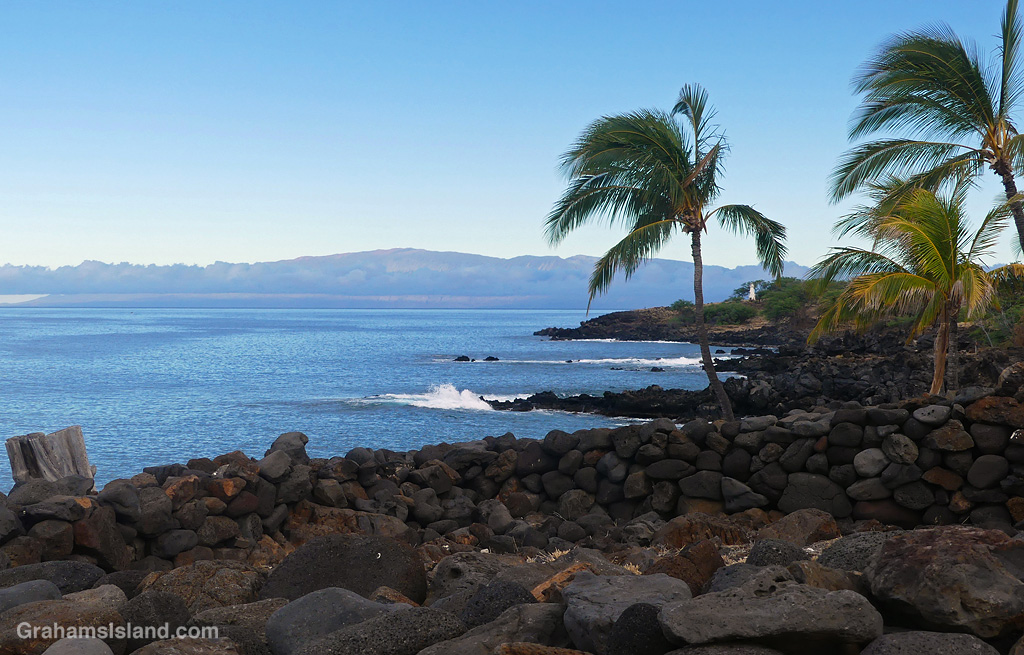
Lapakahi State Historical Park features the remains of an old Hawaiian fishing village. It also has great views of Maui when the weather cooperates.
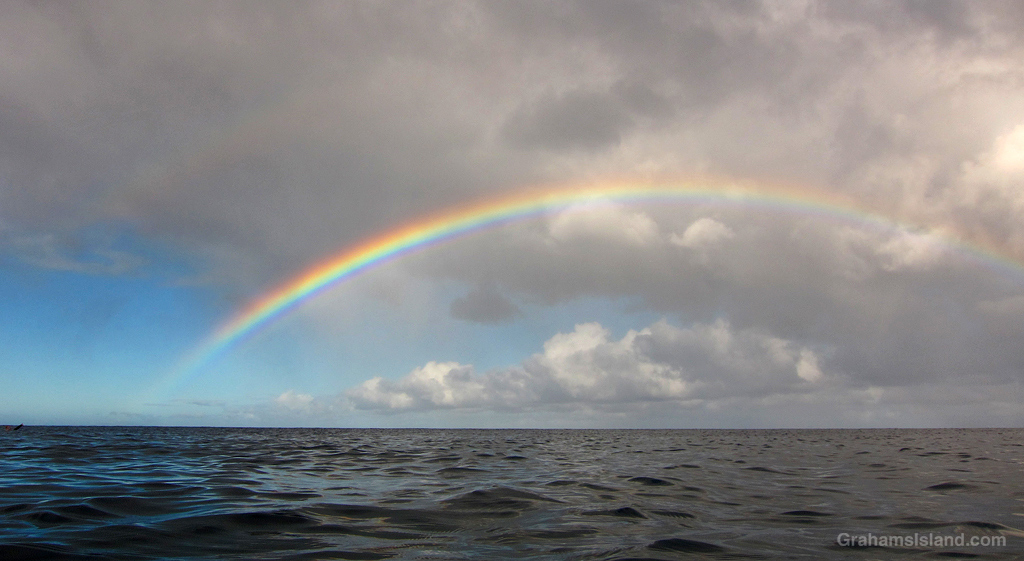
One of the perks of snorkeling here is that there are often rainbows to be seen, such as this one just north of Lapakahi.
 Graham's Island