Tag Archives: Lava

Reclaiming the lava

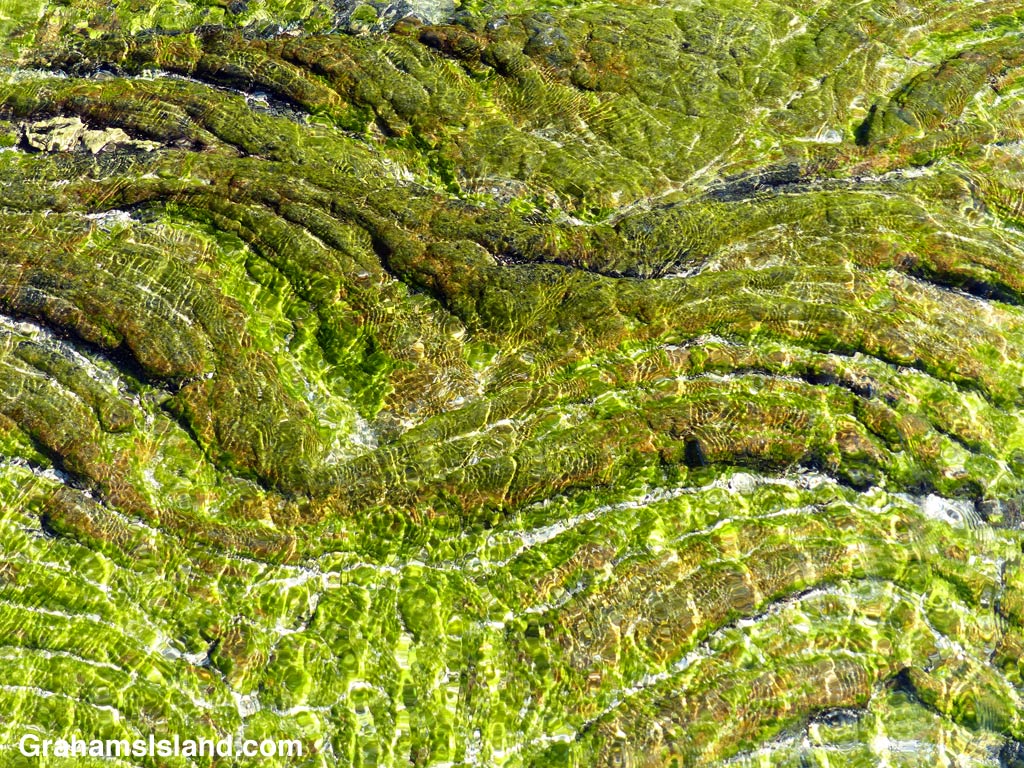
A shrub grows in a lava field
Lava flows make for a stark landscape, but I always find it fascinating to see how, even in such barren ground, nature regains a foothold. Here, a small shrub has taken hold in a crack in the lava. Just below and to the left of it, a fern grows under a ledge.

If there’s enough rainfall, as there is in this spot of the southeast coast of the Big Island, vegetation will begin to take hold in a fairly short while. That’s assuming that a new flow doesn’t happen along and put paid to the process.

Abstracts: Lava dance

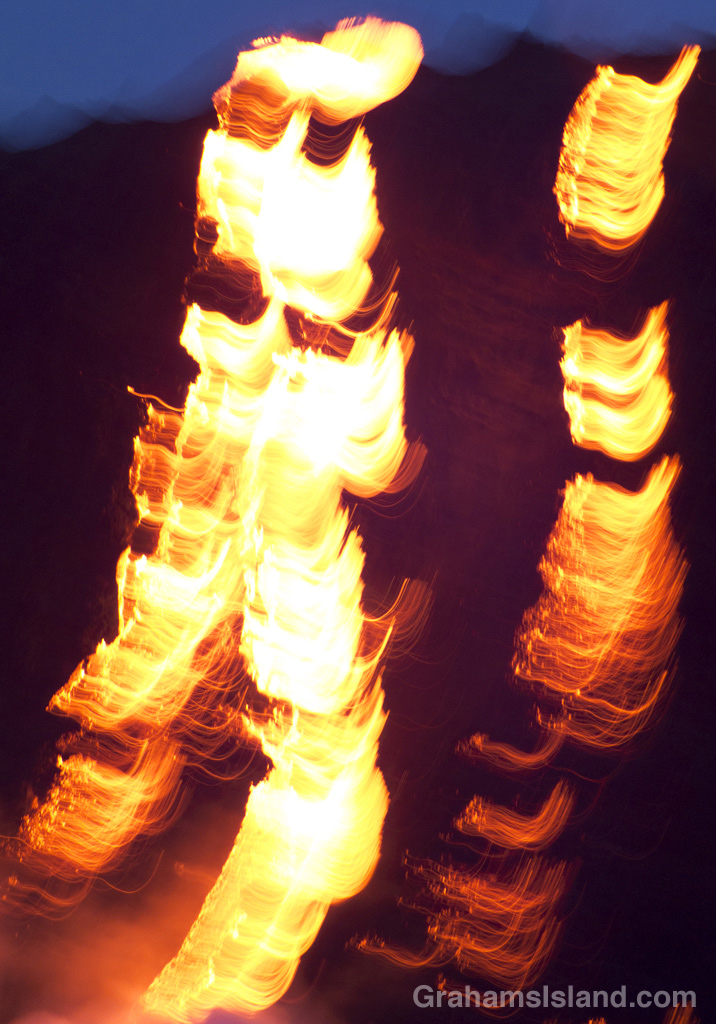
Lava on the move.
I posted here and here about recent trips to see lava entering the ocean from Kilauea Volcano’s Pu’u O’o vent. Not all my photos, taken on a rocking boat in a rolling ocean, turned out. But even the ones that didn’t provided, what I consider, some happy accidents such as this one of dancing lava.

Hike to Kilauea’s lava flow

The Lava Ocean tour boat edges up to the new bench in the ocean, created by the flow from Kilauea volcano.

The Lava Ocean tour boat edges up to the new bench in the ocean, created by the flow.

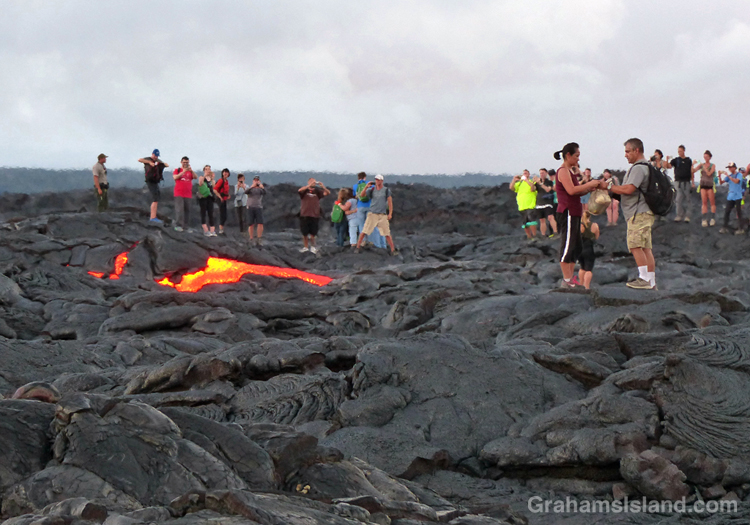
A lava breakout from the Kilauea lava flow.

This photo was taken within a few seconds of this lava breakout beginning. The couple on the right hadn’t yet noticed it.

A lava breakout from the Kilauea lava flow.

The breakout spreads …

A lava breakout from the Kilauea lava flow.

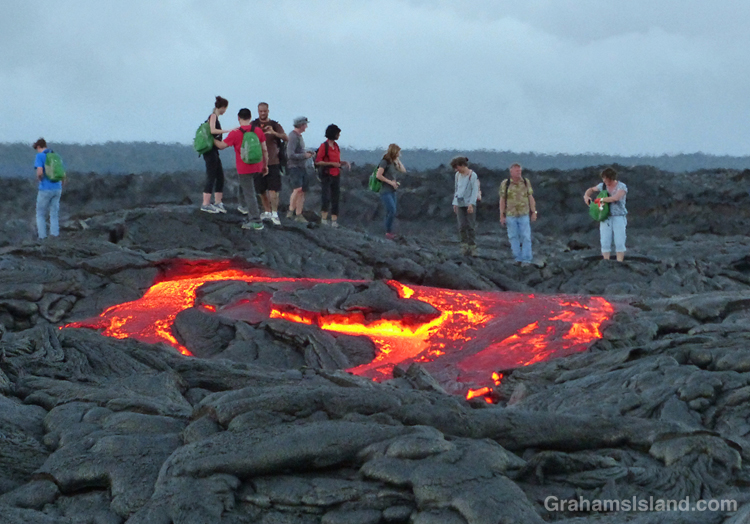
… and extends toward the water. This was about as far as it got while I was there. All these people are standing on the active flow.

Last week, I posted twice (here and here) about a boat trip to see lava entering the ocean from Kilauea Volcano’s Pu’u O’o vent. Since then the ocean entry widened dramatically to more than 700 feet. With all that activity, I thought another hike to the flow was in order. This time, instead of hiking from the viewing area at Kalapana, I decided to go through Hawaii Volcanoes National Park.

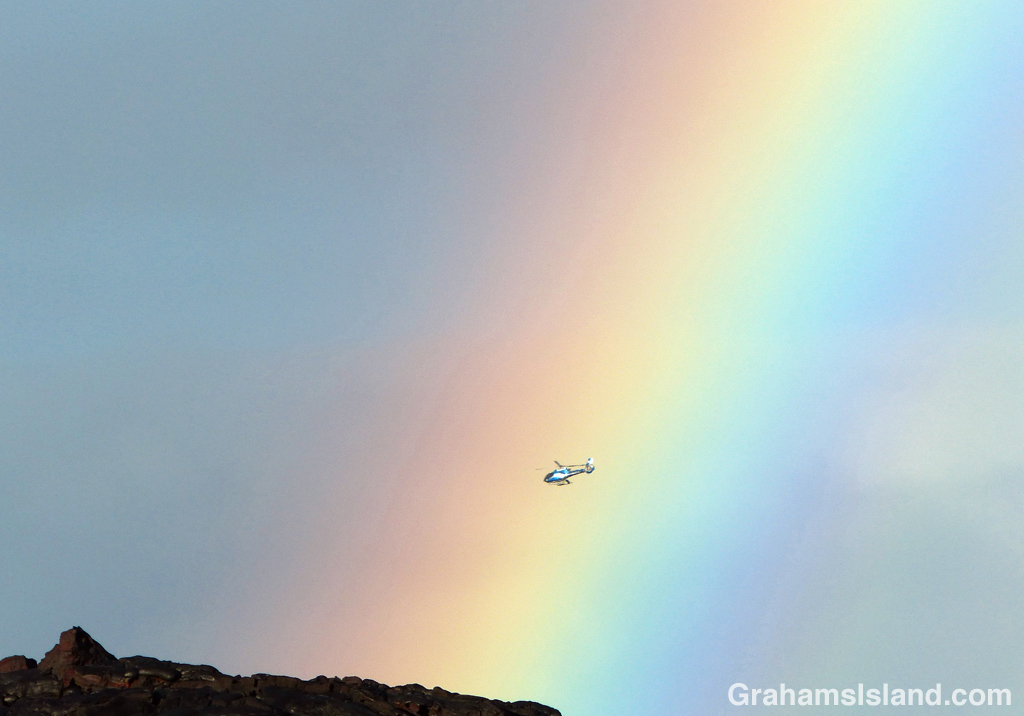
The hike starts on the coast, at the end of Chain of Craters Road. It’s about an 8.5 mile round trip, and follows the emergency gravel road constructed in 2014. While the whole area is a stark covering of old lava flows, I liked seeing ferns and the occasional shrub getting a toe hold in cracks and under ledges. And then, with late afternoon light slanting from behind and rain showers approaching from ahead, a brilliant rainbow lit up the sky.

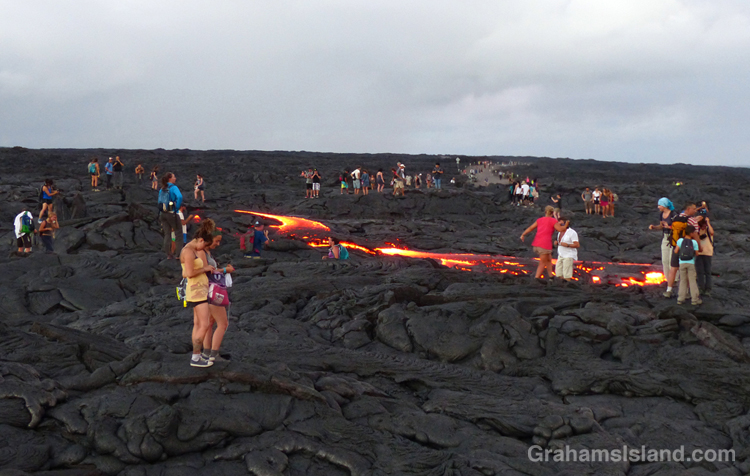
Regarding the current flow, the USGS website notes that “the entire area presents a significant hazard to visitors.” It goes on to list dangers from toxic gasses, explosive events, and unstable ground. So it was with some surprise that when I arrived, I found the flow crawling with people. This wasn’t because it had suddenly stopped and cooled. At the edge, where it crossed the road, the red glow of active lava could be seen. I talked to one of the park rangers keeping an eye on things. He said all they could do was post signs and try and make people understand the dangers. They had roped off some areas and people just stepped over the ropes. It gave me a warm glow to know that, if someone was injured here, that person would understand it was their own fault and wouldn’t turn around and try to sue the park service for millions.

I wandered down the edge of the flow to the cliff where the new bench being formed by the lava could be seen. Then back to the road and I figured, if everyone else is doing it, it must be safe, right? Ha, ha. The thing is, standing next to the flow, the heat was significant, and stepping on to it, it got hotter still. My feet got distinctly toasty, so I took a couple of photos and turned around. A few minutes later, I happened to be looking in the direction of one of the clumps of people standing on a lump of lava. Suddenly, a river a red burst from near the base of the lump. A breakout, and a decent-sized one at that.

Naturally, the people nearest to the breakout quickly moved away from the danger. Ha, just kidding. People rushed toward the lava because, though the surface was obviously unstable and could turn to deadly, molten liquid at any moment, it probably wasn’t going to happen to the lump they stood on. Frankly, it was all a bit surreal.

Later, I saw the ranger I’d talked to earlier doing a brisk trade in fixing the detached soles of shoes – flat tires, he called them – where heat from the flow had melted the glue. As the light dimmed, numerous glowing red patches of lava showed up, speckled with white and yellow flashlights as people meandered through the dark.

It was time to go before someone out there misstepped. I had a three hour drive ahead of me and I didn’t want their screams ringing in my ears.

For more information about Kilauea Volcano and it current eruption, go to hvo.wr.usgs.gov/activity/kilaueastatus.php.
For more information about boat trips to see the lava, go to lavaocean.com.

A rainbow rises over the road to the flow from Kilauea Volcano.

A rainbow rises over the road to the flow.

Kilauea lava reaches the ocean – part 2

Kilauea lava reaches the ocean in the pre-dawn light.

The lava flow lights up the pre-dawn sky.

A photographer gets close to the flow as Kilauea lava reaches the ocean.

Apparently, you can never be too close to get a good photo of the action.

Kilauea lava reaches the ocean with a surge of steam.

The bottom of the flow, where the lava meets the sea. To the right is the beginning of a new black sand beach created by the activity.

Yesterday, I posted about the background to the trip my wife and I made to see lava entering the ocean from Kilauea Volcano’s Pu’u O’o vent. Today, I have a few more photos from the trip.

The Lava Ocean boat was a good-sized double-hulled aluminum boat and we were on the water around 4:30 a.m.. The trip out, in the dark, was uneventful and we arrived at the flow in dim, pre-dawn light. The bright lava glow cut through the darkness. Tiny figures materialized on the cliff top near the flow.

Once at the flow, the boat slowed and made passes back and forth. A couple of smaller boats were also around. Ashore, figures could be seen perched dangerously close to both the flow and the cliff edge. Several had gathered, with their cameras, on a raised knob of lava to one side of the flow. I hoped those photographers knew the risks they were taking. From their standpoint, they’d know they were near the edge, but from our vantage we could see that the knob they stood on was sharply undercut, a prime candidate to crash down at any time.

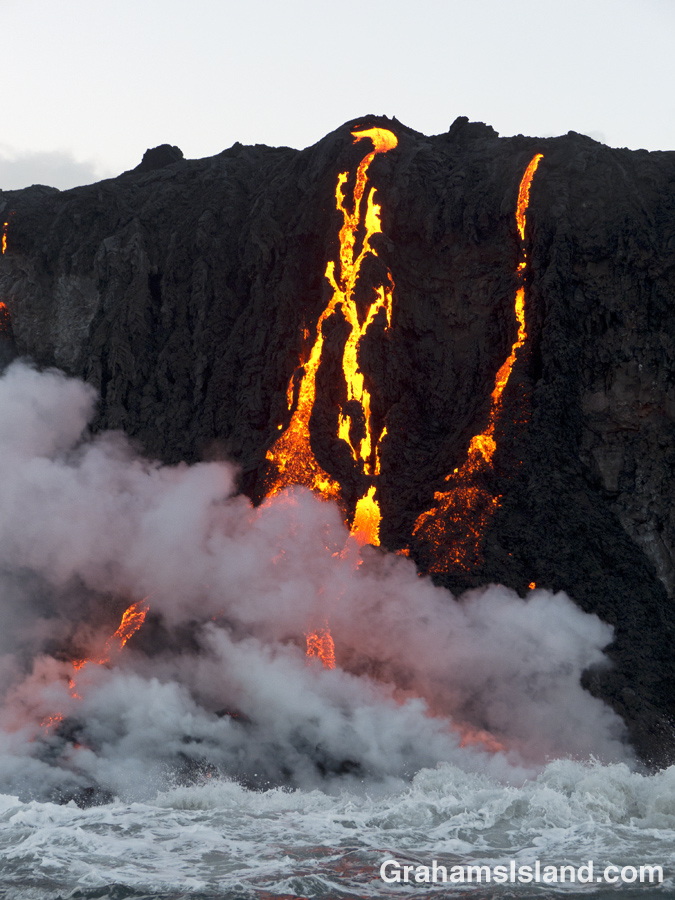
Our boat moved about, sharing time near the flow with the other boats, and providing views from different angles. It edged in close to shore, then away again. We could feel the heat from the lava. As daylight filled in, the drama of the glow ebbed, but more detail emerged – clumps of glowing lava tumbling down the slope, waves rushing ashore to explode into steam, and a steady river of lava flowing down the slope to the sea.

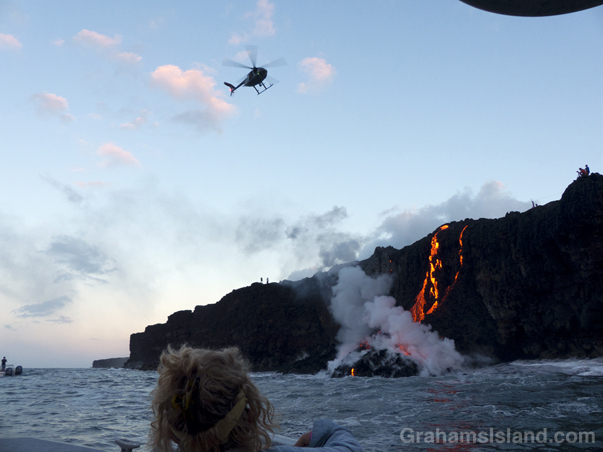
A helicopter from the United States Geological Survey (USGS) joined the scene, making close passes over the area. The USGS surveys Kilauea’s activity regularly and posts daily updates of the situation at the website below.

We were there an hour or so before heading back. The experience was everything we’d hoped, well worth the cost of the excursion. We were lucky that conditions had been good – not too windy and a quiet sea for that area. To top off the trip, on the way back we were joined, for a while, by a pod of spinner dolphins.

Today, the flow has widened and is putting on an even better show, but I’m happy to have seen what we saw, knowing I could check the situation tomorrow or the next day and find out that the flow has stalled, never to resume.

For more information about Kilauea Volcano and it current eruption, go to hvo.wr.usgs.gov/activity/kilaueastatus.php.
For more information about boat trips to see the lava, go to lavaocean.com.

The top of the cliff where Kilauea lava falls to the ocean.

The top of the flow with lava running over the edge. A couple more steps and the man on the right will be one with the flow. Ouch!

A small boat is on hand to see Kilauea lava reaching the ocean.

A couple of smaller boats were at the scene while we were there.

A USGS helicopter checks the progress of Kilauea lava reaching the ocean.

A USGS helicopter joined the scene for a while to monitor the state of the activity.

Kilauea lava reaches the ocean – part 1

Kilauea lava pours into ocean as people watch from the cliffKilauea lava pours into the ocean
On July 9, I posted about a visit to see the latest lava flow (exotically named the 61g flow) from Kilauea Volcano’s Pu’u O’o vent. At that time the lava was less than three-quarters of a mile from the ocean and I figured I’d go back when it got closer to the emergency road (about a tenth of a mile inland) and the water.

That, of course, was the cue for forward progress to cease. The flow was still active, but mostly in breakouts to the side. Day after day the lava was noted as being about half a mile short of the water. I checked again on Sunday, still no change. Monday, I forgot to look. So naturally, Tuesday’s lava report, not seen until the late afternoon, reported that the lava had reached the ocean at 1:15 that morning. Scratch the idea of being present when that happened.

However, my wife and I really wanted to see the lava’s ocean entry from the water and it sounded as though at least one boat tour company, Lava Ocean Guided Tours, was already running trips. A phone call later, we were booked on the sunrise trip the next morning. Check-in time was 4 a.m.. Current time was 5:30 p.m.. Drive time to the launch place is three hours – it’s the far corner of the island. That left seven and a half hours for getting organized and, oh yes, sleep.

Today’s photos show we made it. At the top is the view from the sea, and people ashore perilously close to the flow. Second photo is a frontal view. Below, the morning scene looking toward the sunrise. Tomorrow I’ll post more photos and details, but first, a good night’s sleep is in order.

For more information about Kilauea Volcano and it current eruption, go to hvo.wr.usgs.gov/activity/kilaueastatus.php.
For more information about boat trips to see the lava, go to lavaocean.com.

Kilauea lava pours into the ocean at sunrise

Flowing to the ocean

Lava from Kilauea's Pu'u O'o flow.
At twilight, lava flows down Pūlama pali while, at the top of the hill, a smaller breakout can be seen. In the center are two onlookers, illuminated by the glow of flashlights.
Lava from Kilauea's Pu'u O'o flow sets fire to shrubs and trees.
In the early evening, the flow descends the pali, starting fires in surviving stands of trees and shrubs.
The glow of lava from Kilauea's Pu'u O'o flow reflects off the clouds.
As the light fades, the glow from the flow reflects off passing clouds. The white lights are the flashlights of people hiking to or from the flow.
Kilauea's Pu'u O'o flow glows brightly as darkness falls.
The lava flow burns brightly as darkness falls.

In April, I posted here about a trip last year to see lava bubbling up at Kilauea Volcano. That activity was in the Overlook vent of Halema’uma’u Crater. On May 24, Kilauea’s other active vent, Pu’u O’o, began a new breakout of lava toward the southeast. This is a path that flows have taken many times before. The first active lava I saw was back in 2010 when such a flow reached the sea and put on a spectacular show.

This May 24 flow is also headed to the sea. By June 28 it had reached Pūlama pali, a steep slope leading down to the coastal plain. On July 7 it was less than three-quarters of a mile from the ocean, and creeping slowly over previous flows that have taken this path. That’s when I went down to take a look and took these photos.

At its current rate of progress, the flow will reach the ocean in a week. But it could speed up or stop, so it’s really a case of wait and see.

There is one note of irony. I have a map from 1975 showing the road that ran along this coast before being covered by various flows from the volcano. In 2014, a flow from the Pu’u O’o vent headed east, threatening the town of Pahoa and the main highway into that corner of the island. One response to that situation was to bulldoze an emergency highway along the coast, at a cost of $10 million or so, following the route of the old road. It was never used as that flow stopped short of Pahoa. If the current flow travels another a half mile or so, the emergency highway will be covered again without ever being used. Such is life.

For more information about Kilauea Volcano and it current eruption, go to hvo.wr.usgs.gov/activity/kilaueastatus.php.