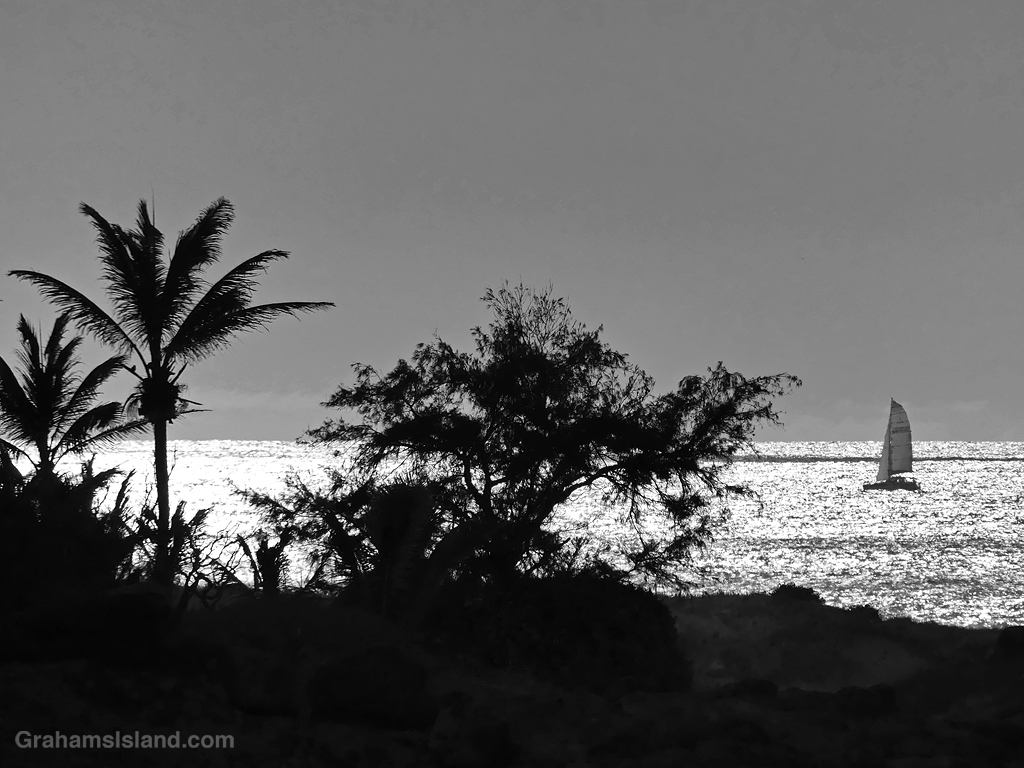
Hawaii isn’t all sandy beaches. There are lots of rocky shores and lava ledges such as this stretch north of Kihilo Bay.

Hawaii isn’t all sandy beaches. There are lots of rocky shores and lava ledges such as this stretch north of Kihilo Bay.

A few days ago, I headed out on the trail from Spencer Beach Park to Mau’umae Beach Beach. I was curious to see how far last month’s brush fire, that burned near Mauna Kea Resort, had reached down by the ocean. A hundred yards into the walk the answer became clear. It reached the shore. Spencer Beach Park was untouched, but the woods on the edge of the park are one tree deep in places.

I walked back to Spencer on the service road, a quarter mile inland. The power line ran along the ground or was draped in blackened trees. There was a clump of poles and other supplies in one spot, ready for restoring service.


The vehicle access road to Mau’umae Beach beach is closed now, as two small wooden bridges were destroyed in the fire. Currently, and for the foreseeable future, the only access to the beach will be along the coast trail from Spencer. It’s only a 15 minute walk, but that’s often enough to discourage people from going there.


One recent early morning, I spent a while watching A’ama Crabs on the rocks at Spencer Beach Park. This one held its position as the waves washed over it and then receded ….


…. Time after time.

Since the big windstorm of a few weeks ago, I’ve seen a number of Kiawe trees looking like this, on their sides with a disc of roots and dirt exposed. They’ll get cut up and probably used for smoke meat, but it will take a while to clear all of them. This one was below the trail at Pu’ukohola Heiau National Historic Site in Kawaihae.

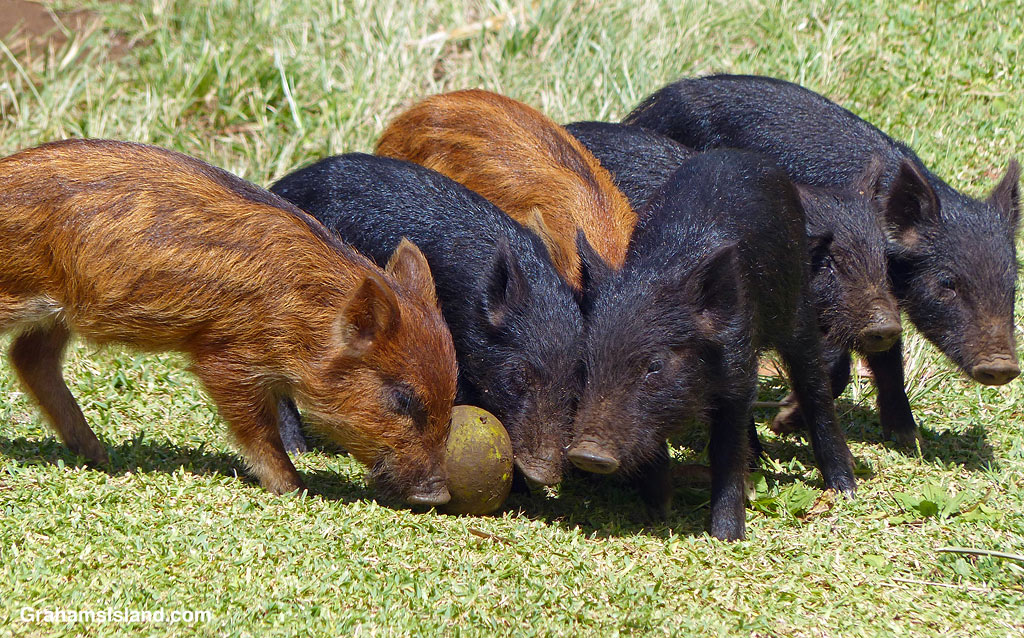
There are four reasons why I took this photo and why I like it. The ears!

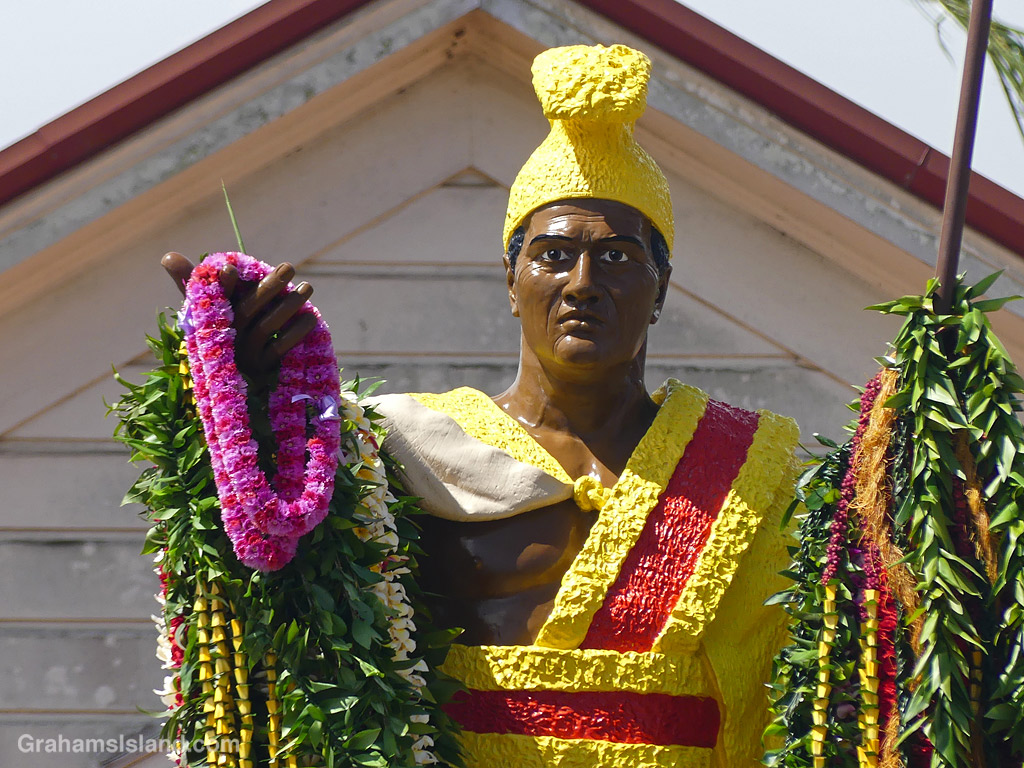
This week’s Sunday Stills challenge theme is ‘Celebrations.’ See more responses here. Since I rarely take photos of people, the usual options for this one were off the table. So I’ve gone with some photos from Pu’uhonua o Hōnaunau National Historical Park.
This site is also known as Place of Refuge and it represented guaranteed forgiveness for those who had broken kapu. The park’s website (here) notes, “Kapu (sacred law) regulated fishing, planting, and the harvesting of other resources. Any breaking of kapu disturbed the stability of society, and the punishment was often death. Any fugitive who had broken kapu could seek refuge and forgiveness within the walls of the Puʻuhonua.” The refuge is bordered by a huge L-shaped wall on land and by the ocean on the other sides.

I imagine some such unfortunate swimming across Honaunau Bay. The palm trees look welcoming, but this is a sacred place, home to Hawaiian royalty, and to important ceremonial sites. One of these is Hale o Keawe, situated at the northern end of the wall, a place of powerful mana, or divine power. It is home to many ki’i, representations of “the akua, or the multitude of Hawaiian gods, deities, and venerated ancestors.” The refuge is on the other side of the Hale.


These ki’i would look down on the miscreant swimming toward them, growing in size as they got closer. But so too would the welcoming palm trees and though it is a rocky shore, a few cuts and scrapes would be a small price to pay for salvation.

Once ashore, forgiveness was guaranteed and the person was free to reenter society and rejoin family and friends, who would no doubt celebrate the return.

Yesterday morning, around 4:30, I got a text alerting me to a brush fire burning alongside the road I take to work. It said the road would be closed for two to three hours. This was not a good way to start the day! It meant I’d have to take the road over Kohala Mountain.
When I headed out, the wind was howling and the mountain road was strewn with tree debris, including some sizable branches. Farther along, I noticed a cloud of smoke ahead of me in the vicinity of Waimea. For a few moments, I thought this new fire was burning around the alternate route I was taking, but I saw it was a bit farther away than that. This fire was quickly contained, but the first one is still going strong as I write, with people living in the area being evacuated for safety.
The fires were a byproduct of the passage of Hurricane Dora, well to the south of Hawaii, but still a major hurricane. Its passage caused very strong, but dry trade winds over the island, which exacerbated conditions in some already drought-hit areas. It was no surprise that fires broke out and that, once they did, they quickly got out of hand.
The top photo looks up the coast toward the fire, later in the day. The burning area is in the distance with smoke billowing out over the water. In front of that is a cloud of brown dirt being blown from the dry gullies of the hillside on the right. In the foreground is a smaller, pale cloud of sand being blown from the beach in Kawaihae Harbor.
The bottom photo is a view of the fire near Waimea. When I stopped the car to take photos, the wind was blowing so hard I could barely open the door. That same wind buffeted me around so that, despite propping myself against a rail, I couldn’t keep the camera still enough to get a sharp photo!


This week’s Sunday Stills challenge theme is ‘Lazy, Hazy Days of Summer.’ See more responses here. Beach scenes seemed appropriate for this, even if some of these photos were taken in the winter! Captions on the photos.