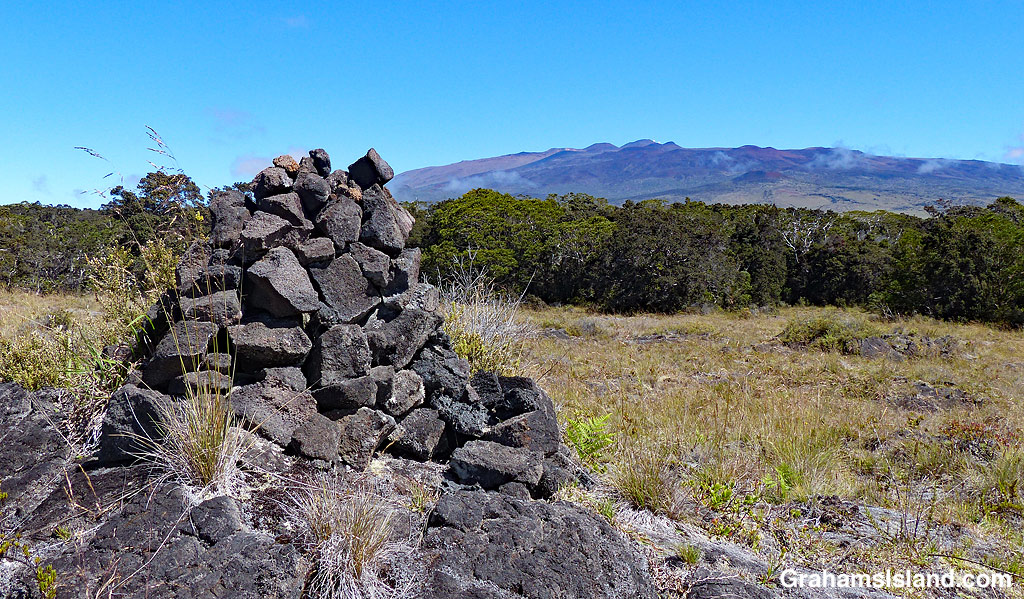
This cairn is one of many that mark the path of the Pu’u O’o Trail, off Saddle Road. At various spots, the trail offers good views of Mauna Kea such as this one.

This cairn is one of many that mark the path of the Pu’u O’o Trail, off Saddle Road. At various spots, the trail offers good views of Mauna Kea such as this one.
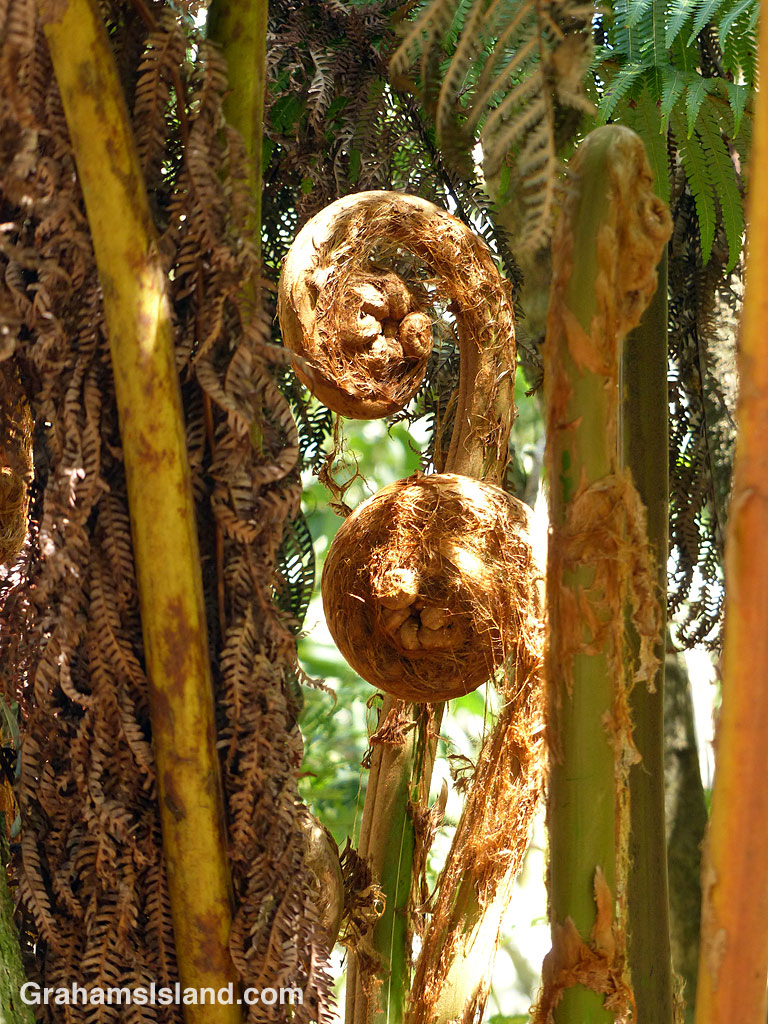
Hapu’u ferns uncoil alongside the Pu’u O’o Trail, off Saddle Road.

I was driving down Old Saddle Road when I passed this tableau. I thought they’d take off, but I pulled over, walked back up the road, and saw the three of them still there. I took a few photos before the little one wandered off, followed by the other two. It was only as I walked back to the car that I realized there was a whole herd of goats mostly hidden in the long grasses.
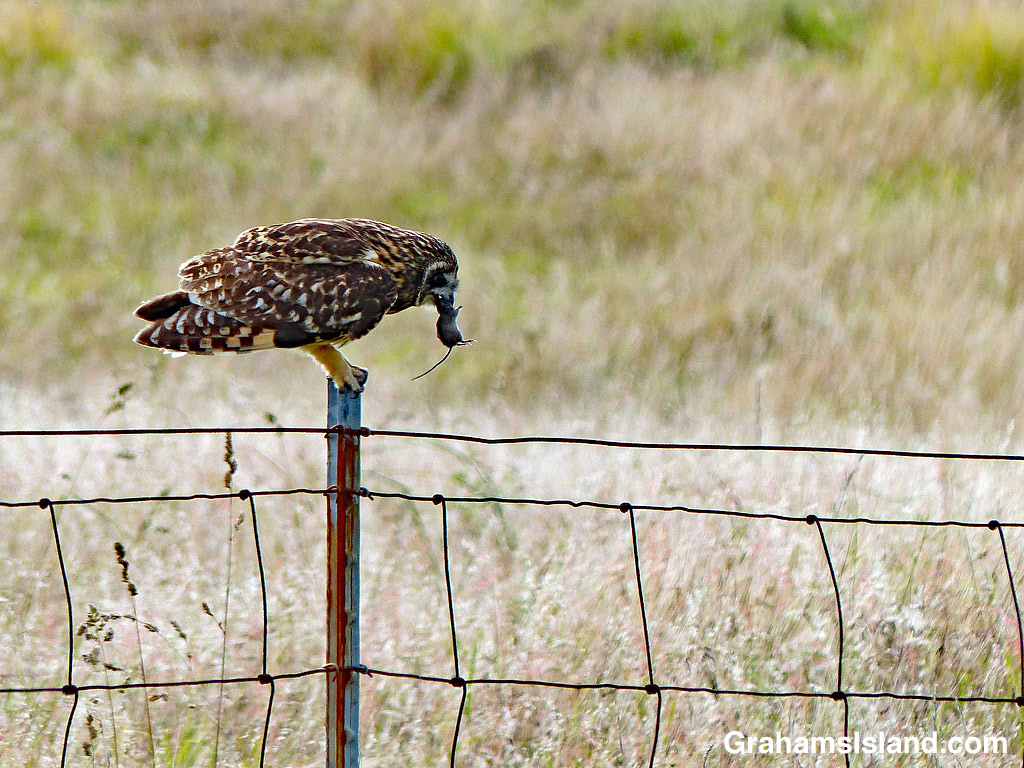

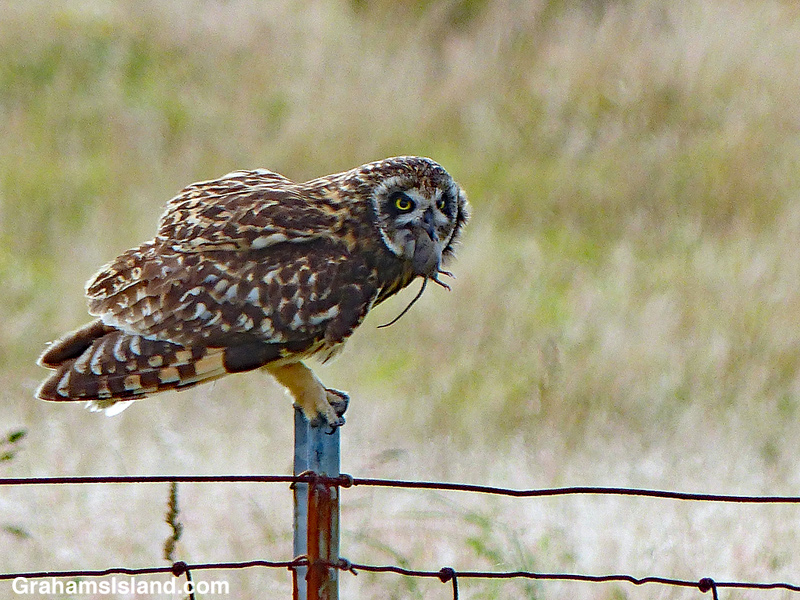
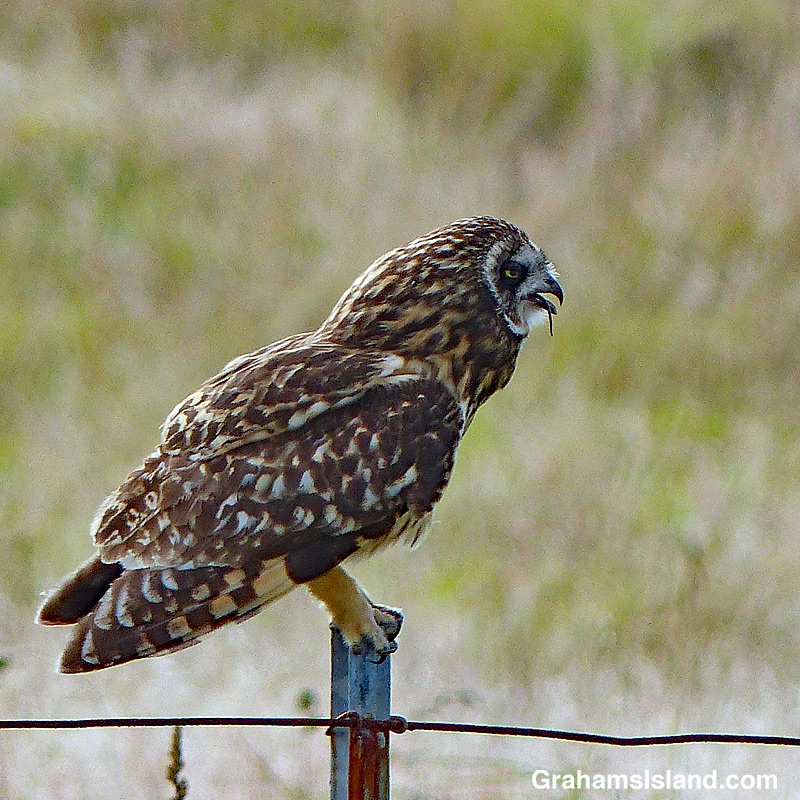 Last week’s Sunday Stills challenge theme was ‘Flight’ and I posted photos of a pueo flying here. This week’s Sunday Stills challenge theme is ‘Wildlife’ (see more offerings here) and, in an audacious move, I’m posting photos of the same bird.
The photos were taken along Old Saddle Road. It’s a prime area to see pueo (Hawaiian short-eared owls) and when I drive this road, I’m something of a menace to other cars since I spend a good deal of time looking at the sky rather than the road. When I do spot a pueo I tend to veer suddenly onto the grassy verge. This is OK assuming there’s a grassy verge and not a deep channel caused by water runoff.
The day I saw this bird had been a good day indeed. Many pueo had been spotted, several photographed, and no accidents caused. Nearing the end of the prime spotting area, I noticed a bird flying over a pasture. I bumped onto the grass and stopped just in time to see the pueo disappear over a ridge. As I waited to see if it might reappear, I looked across the road and saw this pueo perched on a fence post directly across from where I parked. Sometimes it’s better to be lucky than smart.
I grabbed my camera, eased the window down, trying to make as little noise as possible, and took a few shots. I needn’t have worried. This pueo seemed quite attached to its spot, perched on a metal fence post. It wasn’t about to move just because someone across the road kept making clicking noises. As cars passed, the bird’s head swiveled to follow their progress, then returned to its surrounds. It kept looking down, sometimes leaning forward with a more intense stare.
Suddenly, the pueo plunged into the grass and disappeared from view. Moments later, it flew up again and landed back on the post. This time it wasn’t alone. Hanging from its beak was a mouse. It wasn’t dead, but its future looked bleak. The pueo juggled it briefly, working it into the right position. Then, in a couple of quick gulps, the mouse disappeared, only the tip of its tail hanging out of the pueo’s mouth. Moments later, that too was gone. The pueo hung around for a while longer before taking off to try its luck hunting from the air.
I was struck by the poise of this large bird, perched on a small metal post, while it scanned its surroundings and ate its meal. Look at those talons gripping the post. Not something I’d want around my head. The same goes for its beak.
I’m easily charmed by cute geckos and awed by giant humpbacks, but there’s a reason for the ‘wild’ in wildlife. It’s a critter eat critter world out there and sometimes it can be almost as dangerous as civilization.
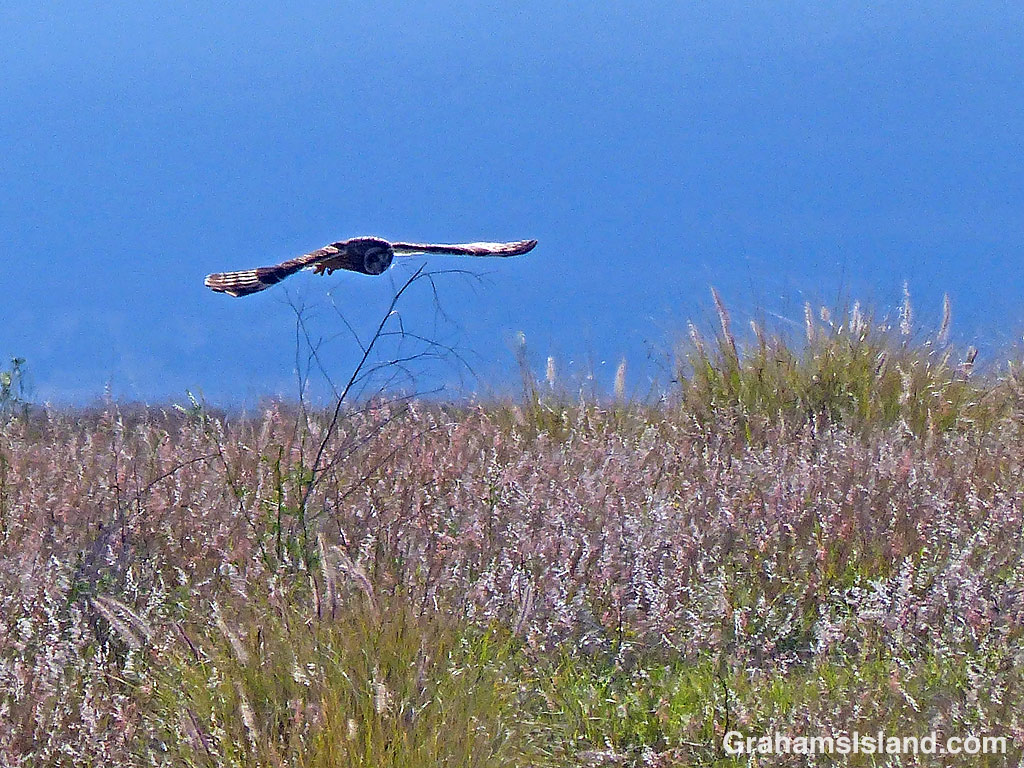
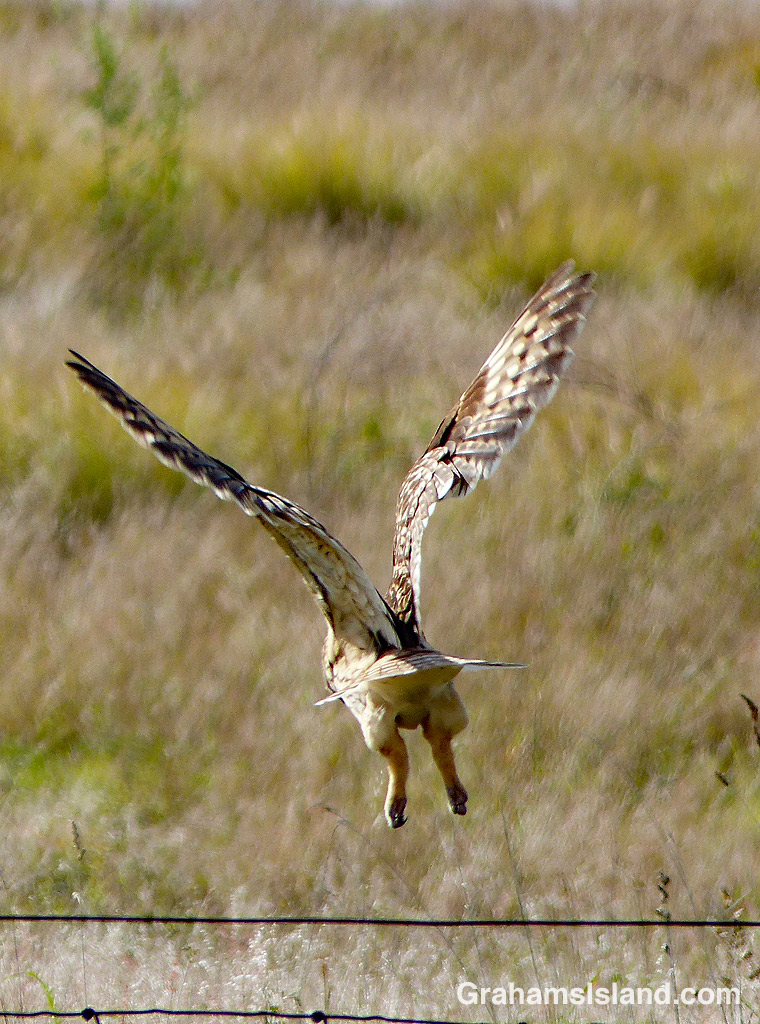
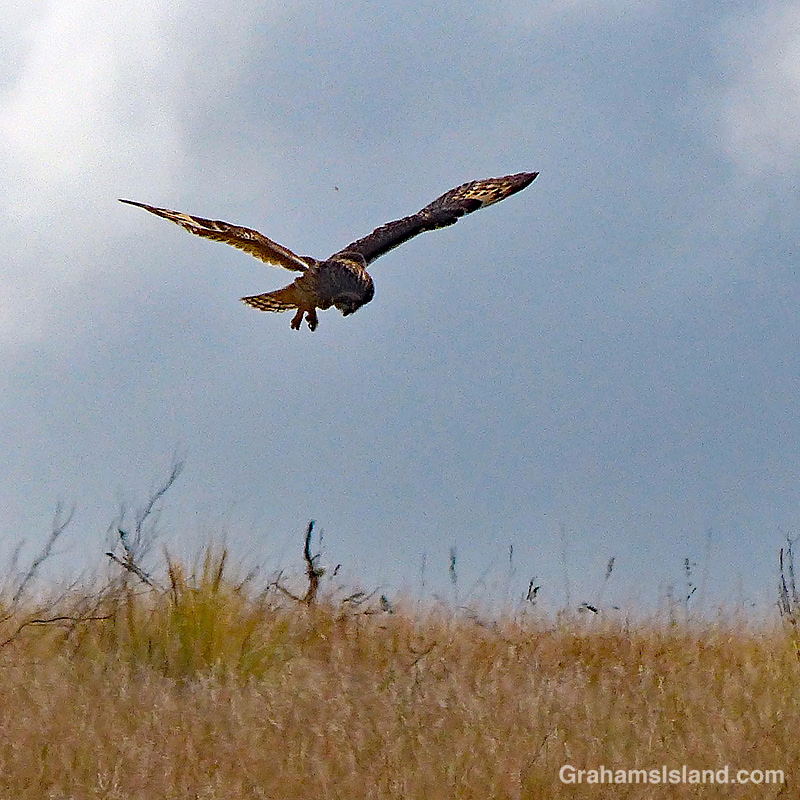 This post is in response to two photo challenges, which I could say is killing two birds with one stone, but given the subject matter, that would be most inappropriate. This week’s Sunday Stills challenge theme is ‘Flight’ (see more responses here), and this week’s Friendly Friday challenge theme is ‘Dreamy’ (see more responses here).
The ‘flight’ response is more immediately obvious. This is a pueo (Hawaiian short-eared owl) flying. In the top photo it’s cruising over pastureland. In the middle is its initial launch into the air. Below that, hovering above something promising in the grass. And at the bottom, a dive to take a better look.
These photos also work for the ‘dreamy’ response for two less apparent reasons. The first is that I’ve always had flying dreams, less frequently these days, but still every now and again. The thought of gliding above the landscape, as in the top photo, is very pleasing for me. The second reason is that seeing pueo is still a somewhat surreal, dreamy event. Owls are often nocturnal, but pueo are active during the day. In the air they are accomplished fliers, gliding, hovering, diving with little apparent effort. At rest, they look very dignified as they sit, keeping watch, head swiveling a disconcerting 360°.
These photos are of the same pueo, seen on a recent drive along Old Saddle Road, southeast of Waimea. I’ll post other photos of this bird once I’ve had time to go through them, but seeing it was a great, chance encounter at the end of my best ever day for seeing pueo.

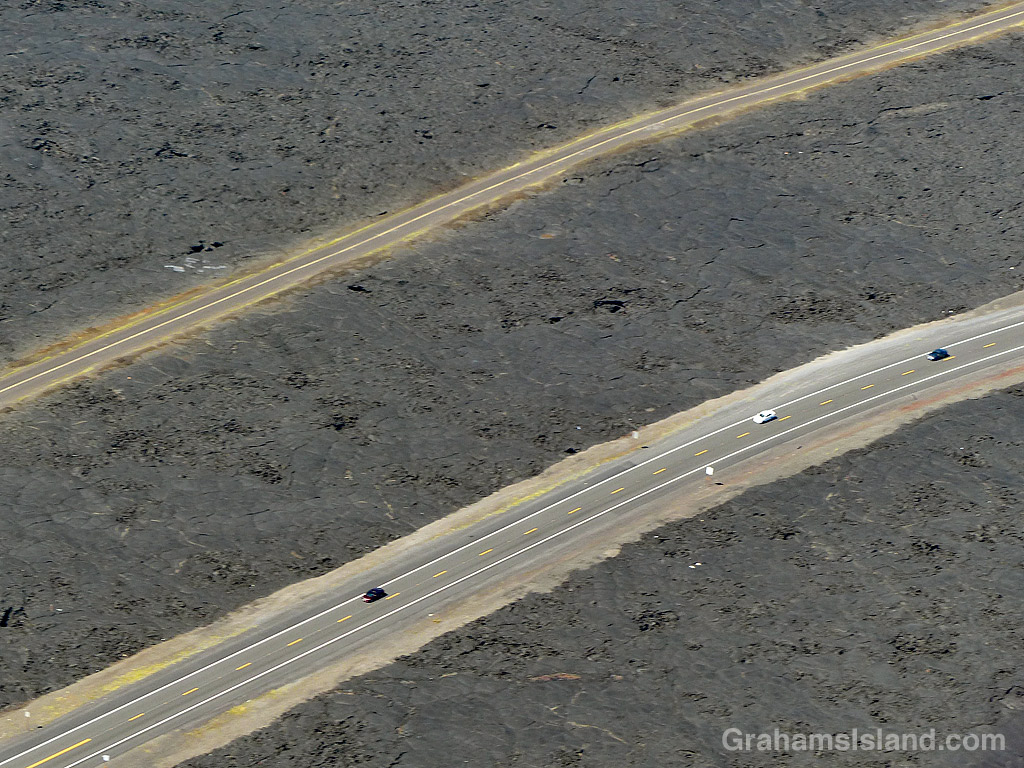
Cutting through the lava between Mauna Kea and Mauna Loa are these two roads. The lower one is Saddle Road, the upper one a road leading to the military base at Pōhakuloa Training Area.
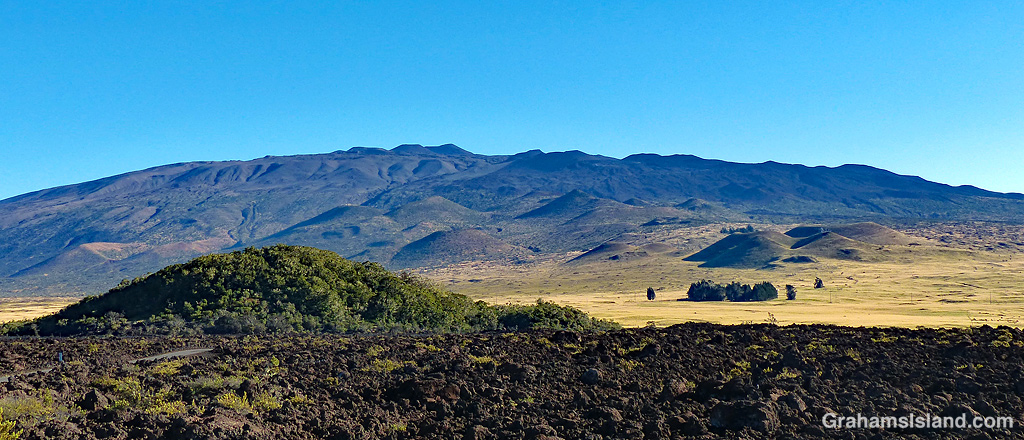
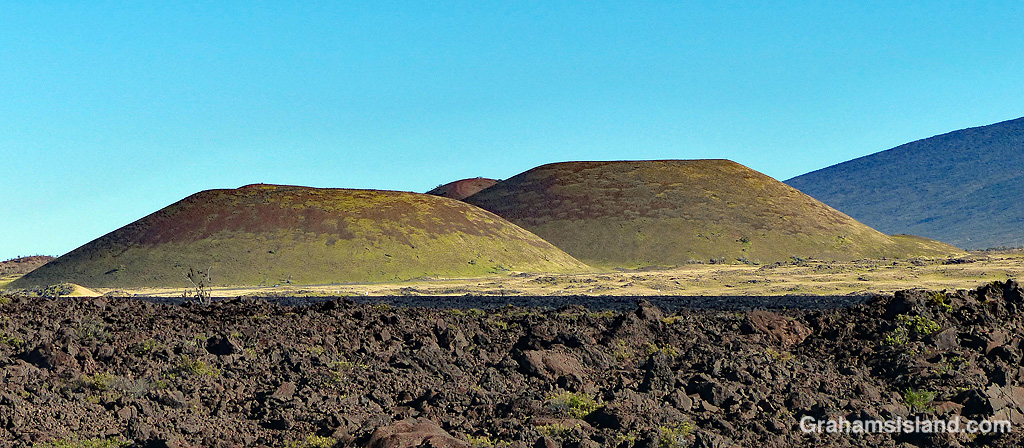
In Hawaii, one meaning of the word ‘pu’u’ is ‘a protuberance of some kind.’ This can be anything from a pimple to a hill, but ‘hill’ is the most common usage I encounter, as a general reference or in place names.
Pu’u O’o is the cinder cone that is home to the vent on Kilauea Volcano that was active from 1983 until earlier this year. Pu’u Wa’awa’a is an old cinder cone that is now managed by the Division of Forestry & Wildlife. A common thread is that, in Hawaii, a hill is a cinder cone because all of Hawaii is volcanic and the landscape is liberally dotted with cinder cones.
The top photo shows Mauna Kea and the large array of pu’us on its southern slopes. In the foreground is Pu’u Huluhulu, which means hairy hill. There’s a trail to the top of this pu’u which offers good views of Mauna Kea and Mauna Loa.
The bottom photo shows grassed over pu’us in Pōhakuloa Training Area, which is a military base located in the region between Mauna Loa, Mauna Kea and Hualālai volcanoes.
On the Big Island, several pu’us are accessible to hikers, usually with a trail curving up to the top and then around the rim of the pu’u. Even if the pu’u isn’t that high, it invariably stands out from its surroundings and offers good views.
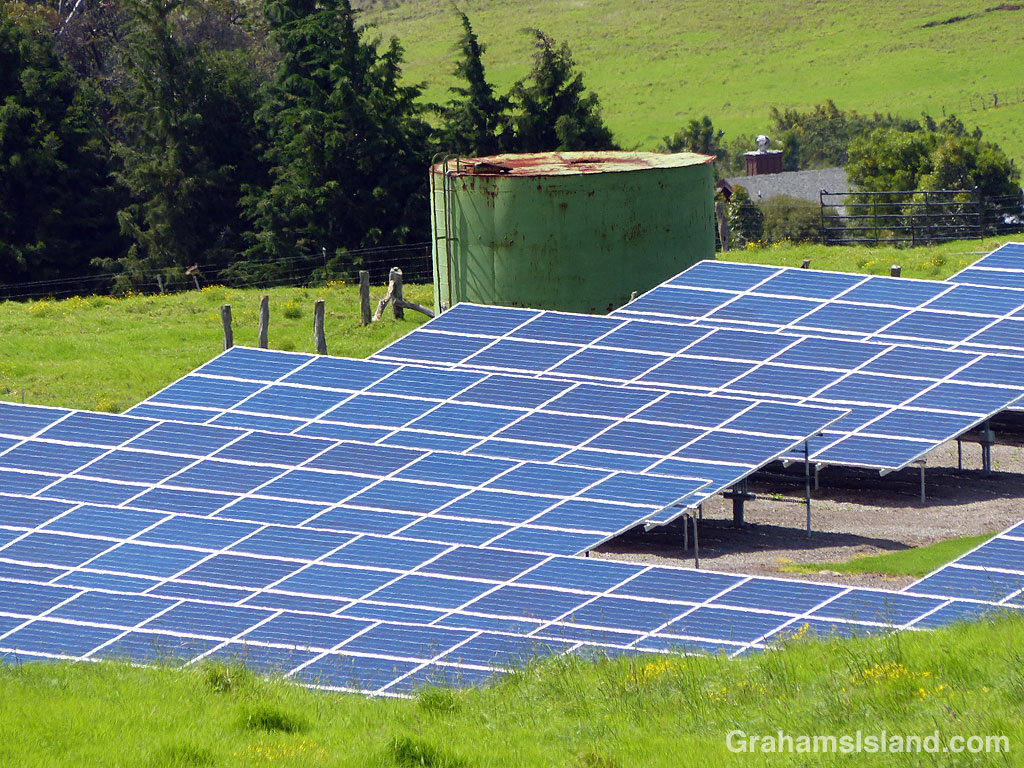
It should be no surprise that Hawaii generates a good deal of solar power. Many houses have panels, but there are also larger arrays serving communities. These solar panels are at Waiki’i Ranch, a planned community, on old Saddle Road. I like that they’re sitting next to an old water tank.
 Graham's Island