Tag Archives: Sunday Stills

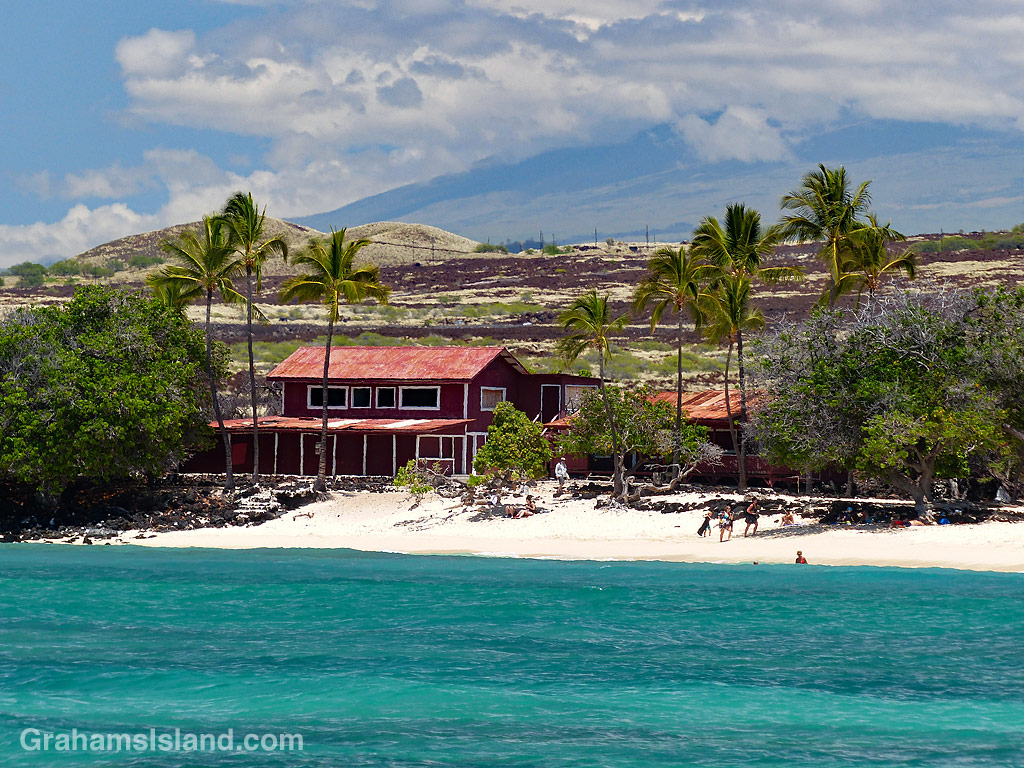
Mahai’ula Beach

This week’s Sunday Stills challenge theme is ‘Warmth.’ (See more offerings here.) Picture yourself stretched out on this beach. Imagine the sun warming the sand, warming you. Perhaps it’s time for a dip in the clear, turquoise waters. After you emerge, the sun quickly dries you. Time to retreat to the shade of the trees lining the beach, a cool beverage at your side, a book in hand (put that phone away). Repeat as necessary.

This is Mahai’ula Beach, one of the beaches at Kekaha Kai Park. The old house, in the top photo, was built in 1880 by John Kaelemakule, a successful fisherman and businessman. After he died in 1936, the property was sold to the Magoon family who owned the land until 1993. It’s now owned by the state of Hawaii.

Pyrosoma

This week’s Sunday Stills challenge theme is ‘Fifth.’ (See more offerings here.) I was stumped as to what to post until I thought about looking back to see what photos I’d taken on the fifth of a given month. As it happened, these somewhat strange photos were taken just one month ago, on April 5th, and I was now ready to run them.

I was out snorkeling and was drawn to some black triggerfish, which were gathered in a very tight group. I took some photos and as I maneuvered around the group I became aware of something very close by.

The thing was at least two feet long and six inches or so in diameter. It was translucent, but with short lines of purple dots, and a milky central line through the tube. It was floating just below the water, changing shape, though not appearing to propel itself, but more being moved by the water. I thought it was some kind of egg sac, but really had no idea what it might be.

I wasn’t even sure I could get a photo of it, since I thought my camera might not ‘see’ it and instead focus on the fish beyond. I was also leery of getting too close. Perhaps it was some form of jellyfish or some other creature loaded with toxins.

When I got home, I was thrilled to find that some of the photos had turned out and registered what I’d seen, but I had no idea what it was. It didn’t really look like an egg sac, but what were the alternatives?

I had a browse in John Hoover’s Guide to Hawaii’s Marine Invertebrates and the closest thing I found was a prickly pyrosoma (pyrosoma atlanticum), but while the general shape was similar, the surface looked much less smooth than the thing I saw. So I shared the photos with some local snorkelers and divers and asked if they had any idea what it was. A couple of ideas were floated but nothing definitive. No one had seen anything like this before.

I looked online and found a few images that bore some resemblance. One of those links was to John Hoover’s website so I thought, ‘Why not ask someone knows about these things?’ and sent him an email with the photos. He quickly responded that it looked like a pyrosoma, a type of tunicate, and referred me to the listing in his book.

As we exchanged emails about a definitive identification, he noted, ‘Often microscopic examination is required to definitely identify tunicates, so unless you can get a piece of one, preserve it properly, and send it to a specialist we’ll probably never know exactly what it is.’

So what is this pyrosoma in the photos? Well, the name means ‘fire body’ and it can light up at night. It’s a colonial tunicate that can be 30 feet or longer (search online for pyrosoma and diver to see examples). Tunicates are filter-feeding creatures that either attach to hard surfaces or float free in the oceans. The colony is made up of zooids, individuals animals that are embedded in a gelatinous tube, which is open at one end and, apparently, is quite hard to the touch. One end of each zooid opens to the outside of the tube, the other end to the inside. Each zooid filters tiny cells from the water outside and expels filtered water to the inside of the tube.

Now, every time I get in the water, I’m looking around for another one. I probably won’t see one, but if I do get lucky, I just want to poke it, gently of course, to see what it feels like.

The photos show the shape and general composition of the pyrosoma. Some people have said it must have been huge because it dwarfs the fish in the photos, but the pyrosoma was only a couple of feet away. The fish were 20 or more feet beyond.

Sugar cane

North Kohala was a significant center for Hawaii’s sugar industry through the boom years in the 1800s until its decline in the first half of the 20th century. Now, sugar cane is being put to a new use in the area – rum production.

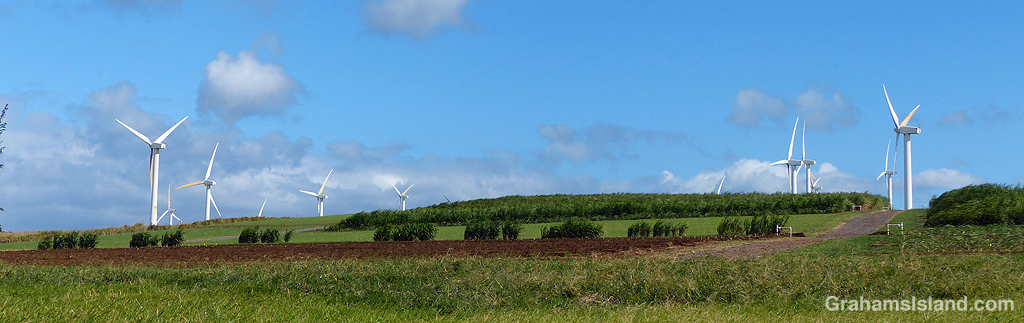
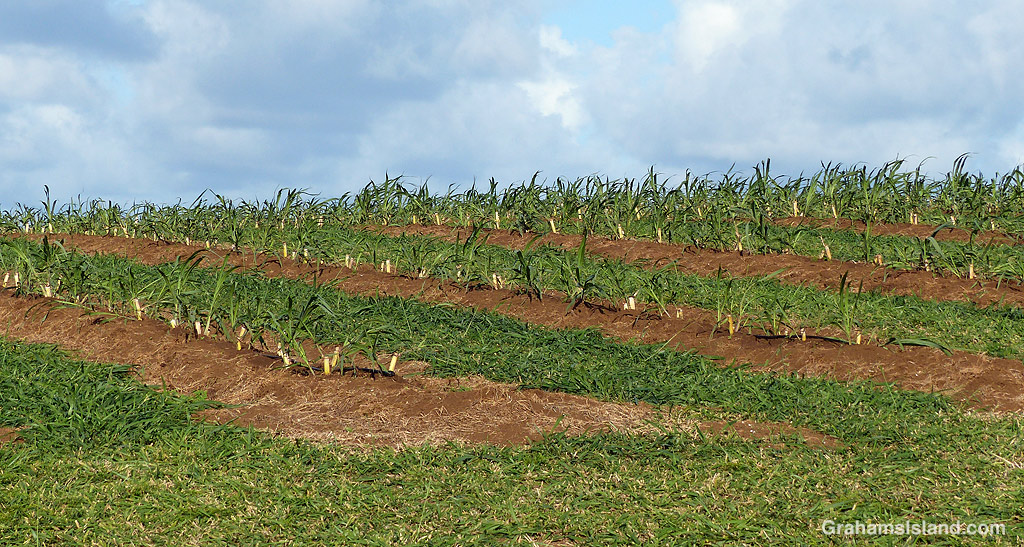
The photos show sugar cane being grown in the fields below Hawi wind farm. This isn’t just any kind of sugar cane. These are heirloom varieties, derived from canoe plants – plants brought to Hawaii by the original Polynesian settlers. Now they’re being used in the production of rum agricole.

Rum agricole hails from the Caribbean, particularly the island of Martinique. Regular rum is made from molasses, but rum agricole uses fresh sugarcane juice. The people behind Kuleana Rum have begun producing the Caribbean-style rum here on the Big Island. They have a distillery in Kawaihae, about 17 miles down the coast, and have opened Kuleana Rum Shack, a bar and restaurant in Waikoloa.

For more information about Kuleana Rum, go to kuleanarum.com. Posted in response to this week’s Sunday Stills challenge on the theme of ‘Spirit.’ See more offerings here.

Cattle egrets on a gate

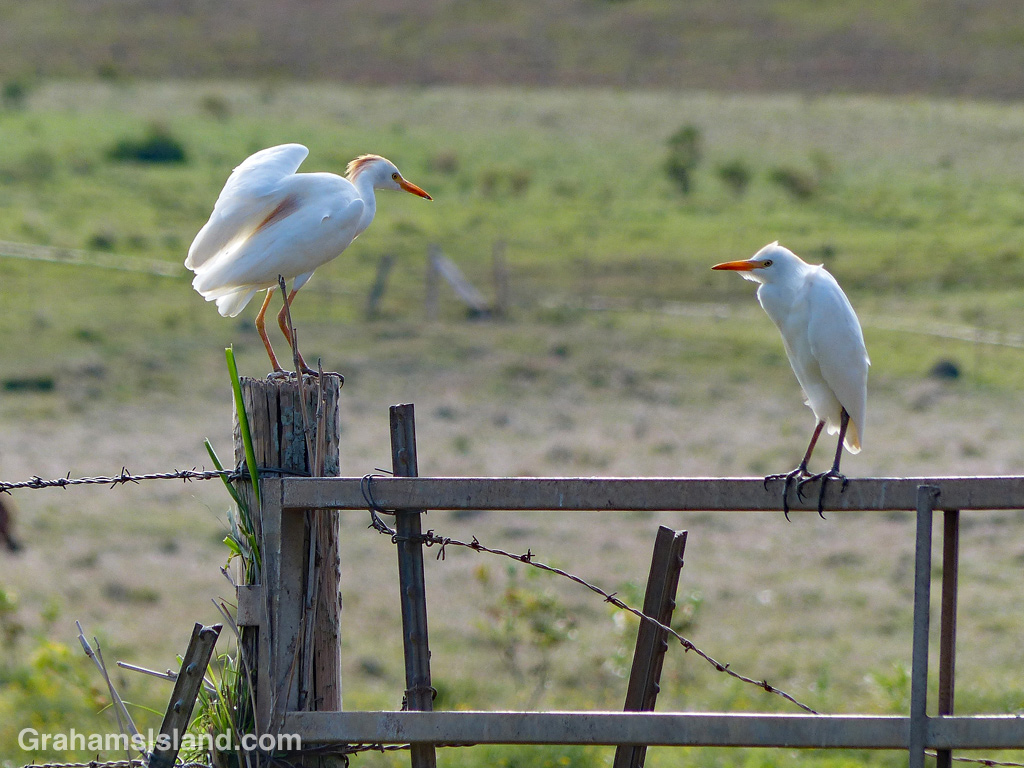
This week’s Sunday Stills challenge theme is ‘Gate.’ (See more offerings here.) I remembered these two cattle egrets, on a gate separating two cattle pastures. I like how the birds seem to be engaged, like a couple of neighbors talking over the garden fence, or in this case, on the fence.

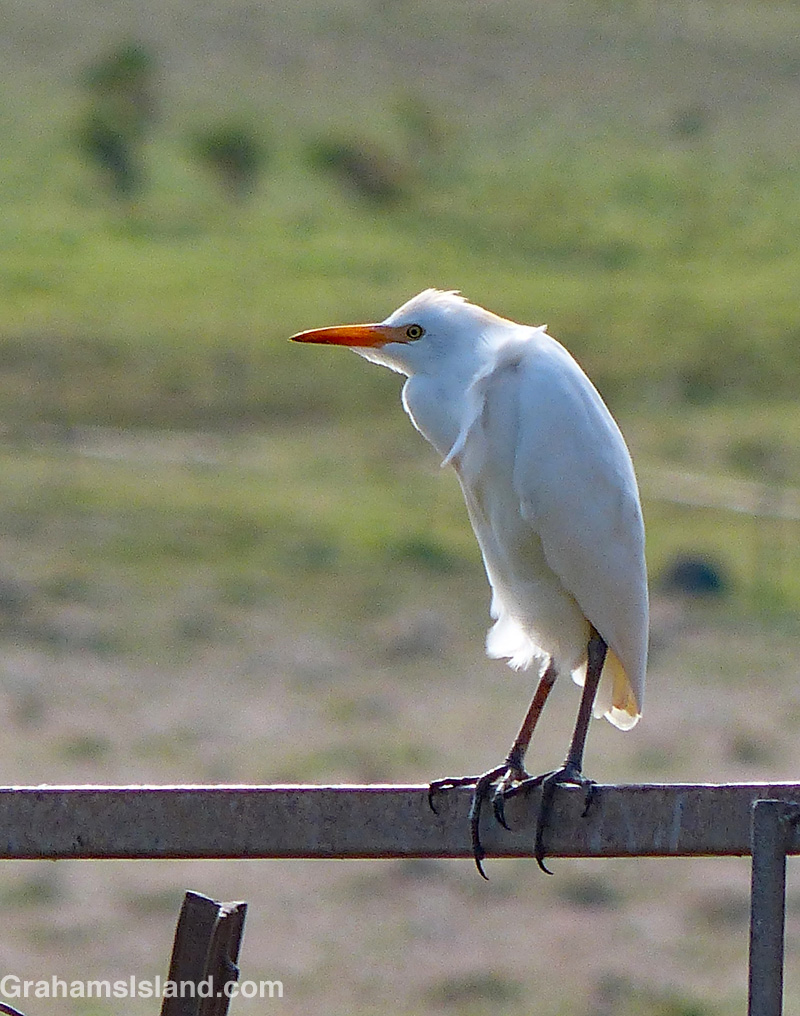
Also, I like the feet of the bird perched on the gate. Makes me feel like my feet are positively dainty!

North Kohala libraries

The new public library in North Kohala, Hawaii

Today’s post is in response to this week’s Sunday Stills challenge on the theme of ‘For the Love of Reading & Books.’ See more offerings here.

The top photo shows North Kohala’s relatively new public library, which opened in 2010. The library features wind and photovoltaic energy systems as well as a rainwater catchment system. These features helped it gain LEED Gold Certification, the first state building in Hawaii to do so.

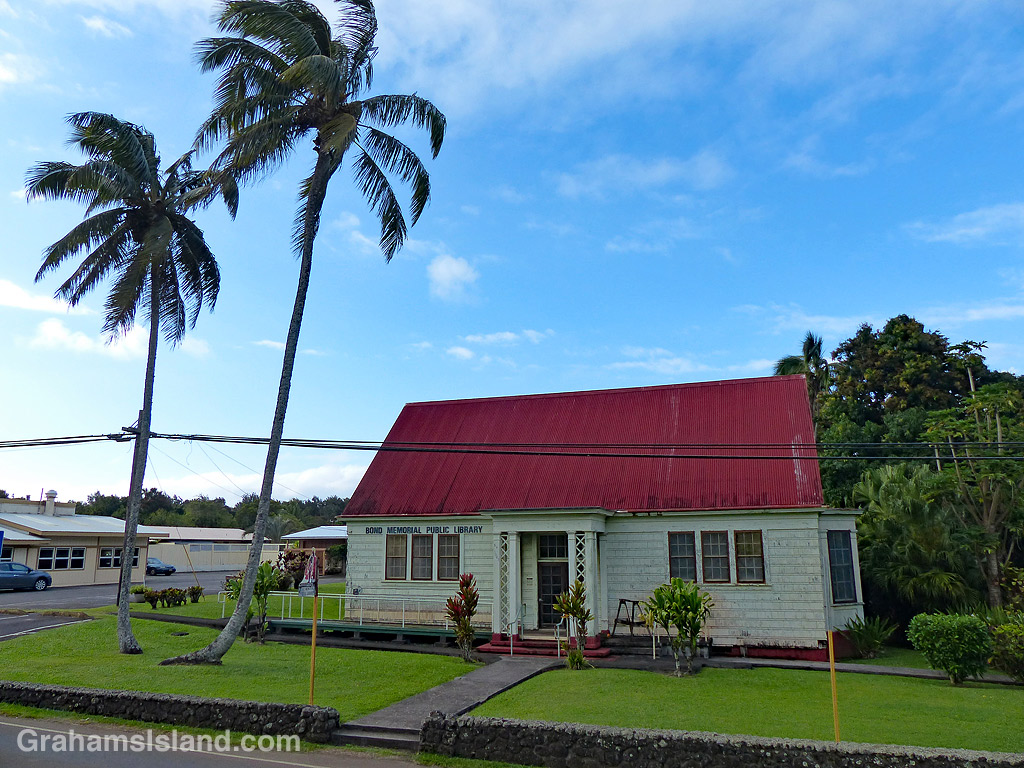
The photo below shows the Bond Memorial Library, which served the area from 1929 until the new library’s opening. This building was much smaller – 1,610 sq.-ft. as opposed to 6,000 sq.-ft. for the new building.

When the library moved from the old building to the new, more than 1,000 volunteers lined the road to move the books by hand over the mile plus distance. This echoed the story of King Kamehameha the Great who organized a human chain 20 miles long to carry rocks from Pololu Valley to build Pu’ukohola Heiau near Kawaihae, though I don’t think King Kamehameha’s rock carriers were volunteers.

Back in 2014, there were plans to convert the old Bond Memorial Library to a cultural/historical museum for the area, but nothing has happened yet and the old building still sits there, unused as far as I can tell.

The old Bond Memorial Library in Kapaau, Hawaii.

Coconut orchid

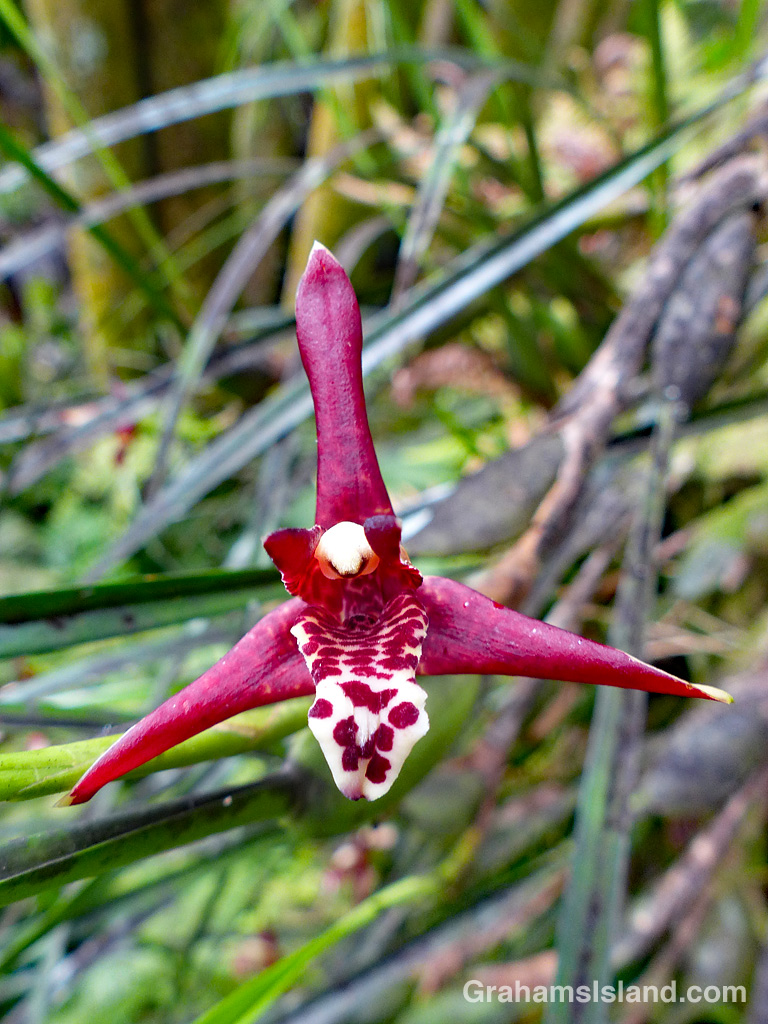
A coconut orchid at Hawaii Tropical Botanical Garden

Coconut orchids (Maxillaria tenuifolia) are originally from Central America. They’re noteworthy for their flowers’ blood red color and a coconut scent. I admit, I didn’t detect much scent, but my sense of smell is not exactly acute. The flowers bloom in spring for a week or more.

I saw this orchid at Hawaii Tropical Botanical Garden during a visit with Terri, from Second Wind Leisure Perspectives, who was visiting the Big Island for a week. Terri hosts the Sunday Stills challenge and her theme this week, coincidentally, is ‘Tropical.’ See more responses here.

We had a good stroll around the garden taking the usual slew of photos. Though I’m a regular visitor to the garden I always see new things, and this coconut orchid was one. For more information about Hawaii Tropical Botanical Garden, go to htbg.com.

Also posted in response to this week’s Friendly Friday challenge on the theme of ‘Feelings of Spring.’ See more responses here.

Bees on haole koa

Bees on a haole koa flower

Haole koa is the local term for Leucaena leucocephala. It means ‘foreign acacia koa.’ Acacia koa is a native hardwood tree that has been used in building everything from guitars to canoes.

Haole koa got its name because it looks similar to young acacia koa trees. It also looks similar to kiawe, but lacks the vicious thorns of that tree.

This is the time of year that haole koa trees flower and their white flower heads look like puff balls. These are popular with the bees, which were swarming all over a small group of haole koa trees just a few days ago.

Posted in response to this week’s Sunday Stills challenge on the theme of ‘Spring has Sprung.’ See more responses here.

A green turtle says hello

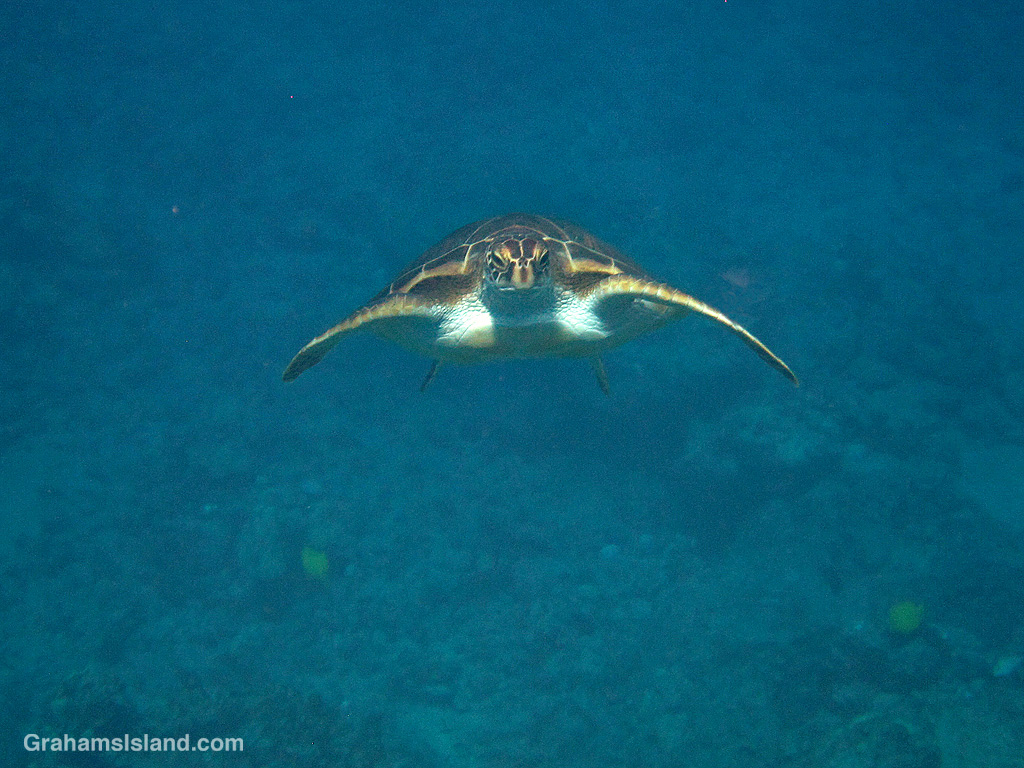
Green turtle says hello

During a recent snorkeling trip, I happened to turn around and saw this turtle heading toward me. Usually they will head off in a different direction when they see something as strange as me, but this one came up quite close before sliding off to the side and gliding away again.

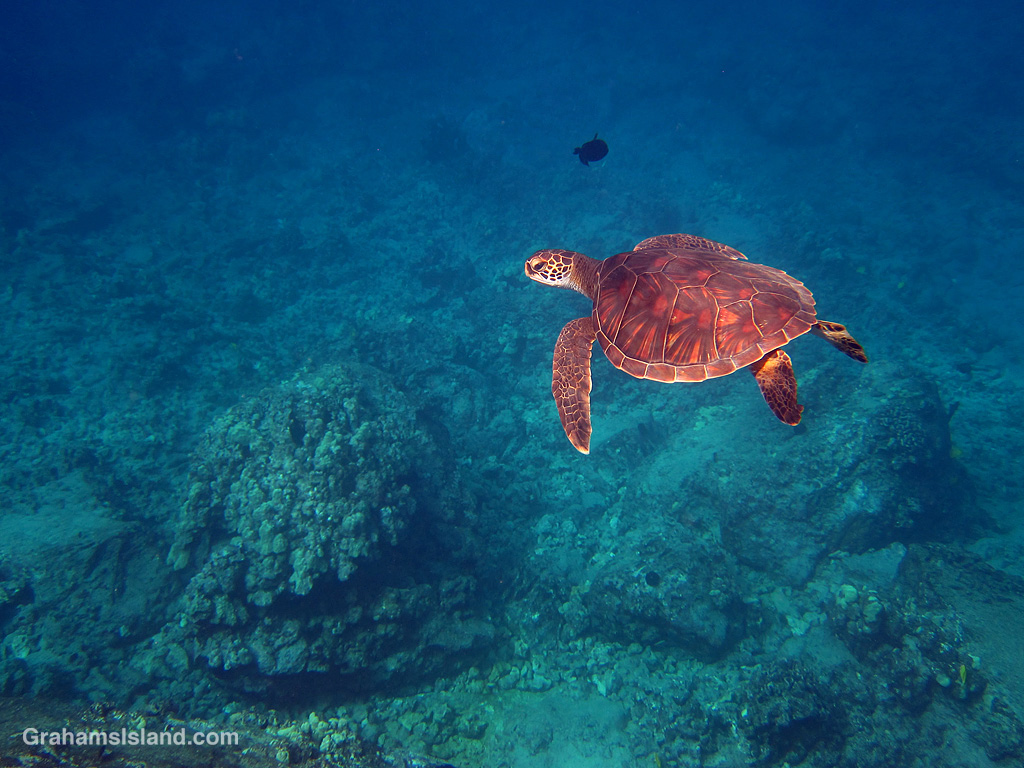
As you can see, there’s nothing green in the appearance of green turtles. The name comes from the color of their fat, found between their organs and carapace.

Posted in response to this week’s Sunday Stills challenge on the theme of ‘Green.’ See more offerings here.

Green turtle swimming