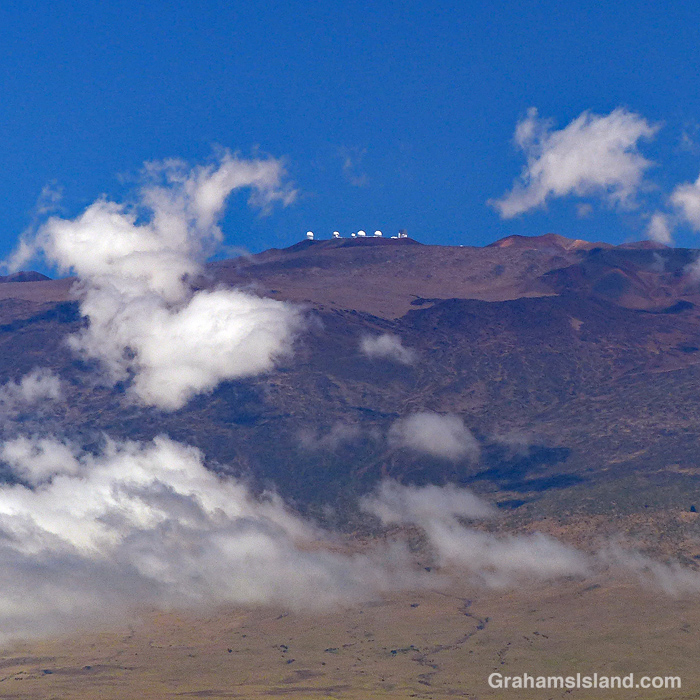
Tag Archives: Telescopes

Smithsonian Submillimeter Array

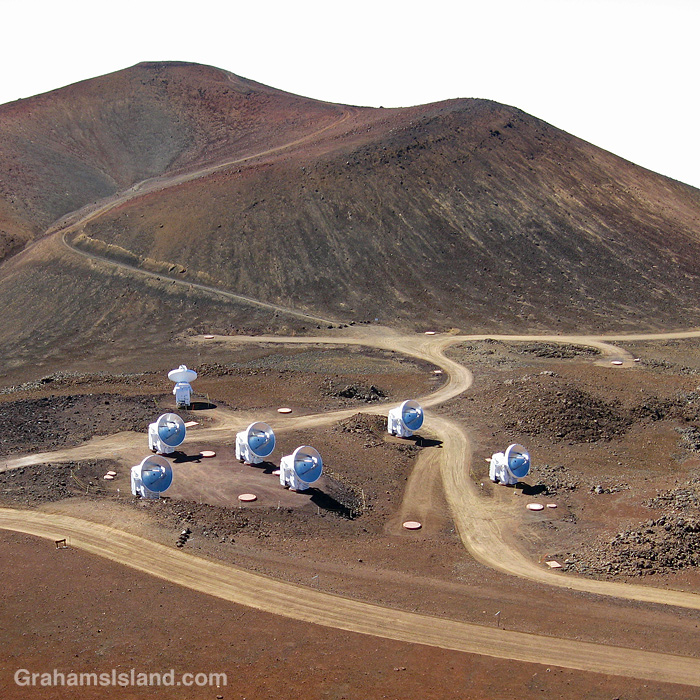
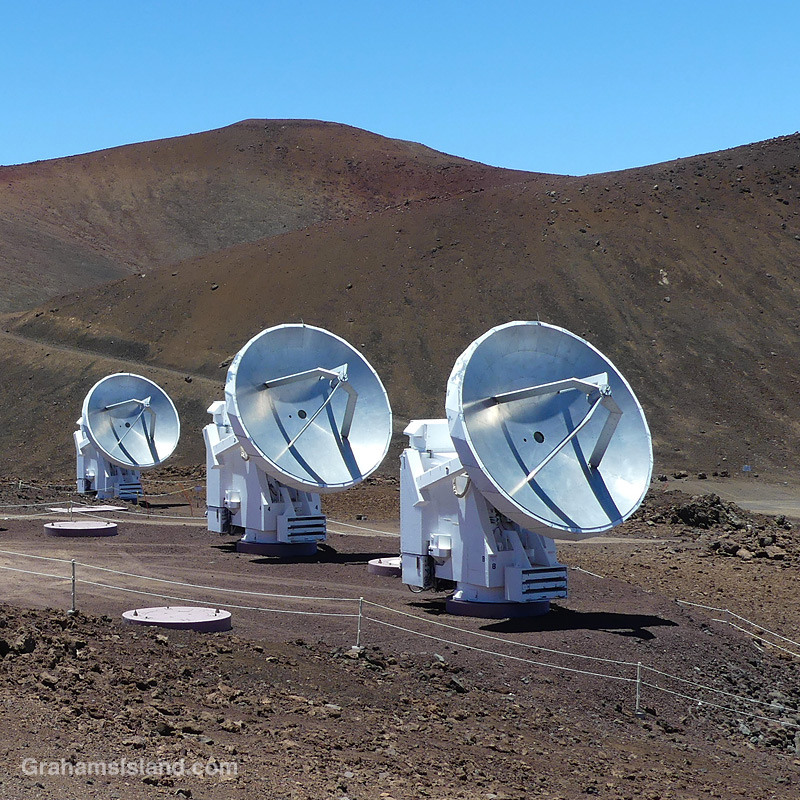
The Smithsonian Submillimeter Array on Mauna Kea, Hawaii

According to their website (here), the Smithsonian Submillimeter Array (SMA) on Mauna Kea “is a type of multiple-antenna observatory known as an interferometer, in this case consisting of eight radio dishes, each 6 meters in diameter. The eight antennas observe the same astronomical object simultaneously. Combining the light measured by all the dishes produces an interference pattern, which results in a sharper image than could be made by any of the individual antennas. For that reason, the eight-antenna interferometer behaves like a single telescope as much as 500 meters (one-third of a mile) across.”

These dishes sit on little concrete pads, which can also be seen in these photos. If a change in the dish configuration is needed, they can be moved from one pad to another. What I’ve always liked about this is that some of these pads are only a few feet apart. I like to imagine conversations along the lines of:
“We need more data from the Invisible Particle Cluster. Let’s move Dish Three over there.”
“You mean, to that pad six feet away. Why didn’t I think of that?”
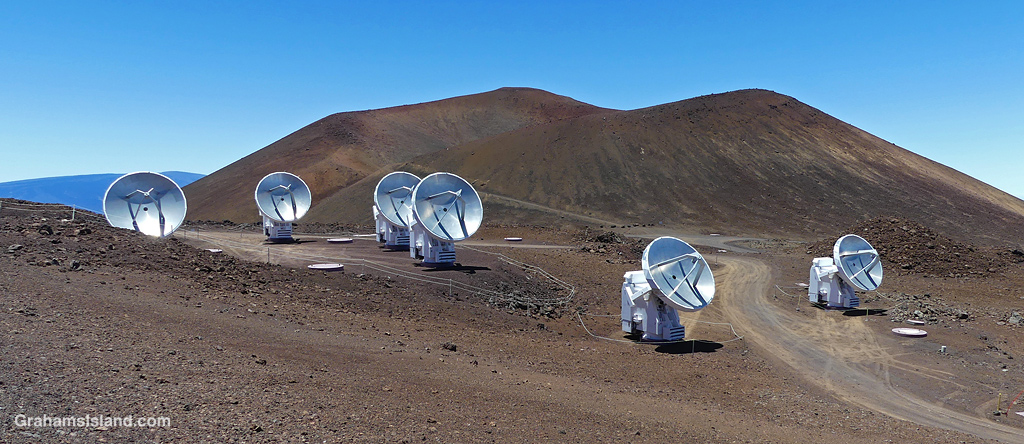
The Smithsonian Submillimeter Array on Mauna Kea, Hawaii

Of course, there are probably good scientific reasons for moving the dishes around like chess pieces. However, in chess one only has to lean forward, lift an itty-bitty piece of wood, and plunk it on a new square, while giving your opponent a knowing smirk. These dishes are big and heavy. Even Arnold Schwarzenegger, in his heyday, would have trouble moving one without the assistance of special effects.

That’s why they have the vehicle below. I suspect this is not something purchased at the local used car dealership. I suspect it costs a good deal more than the combined value of all the vehicles at the local used car dealership.
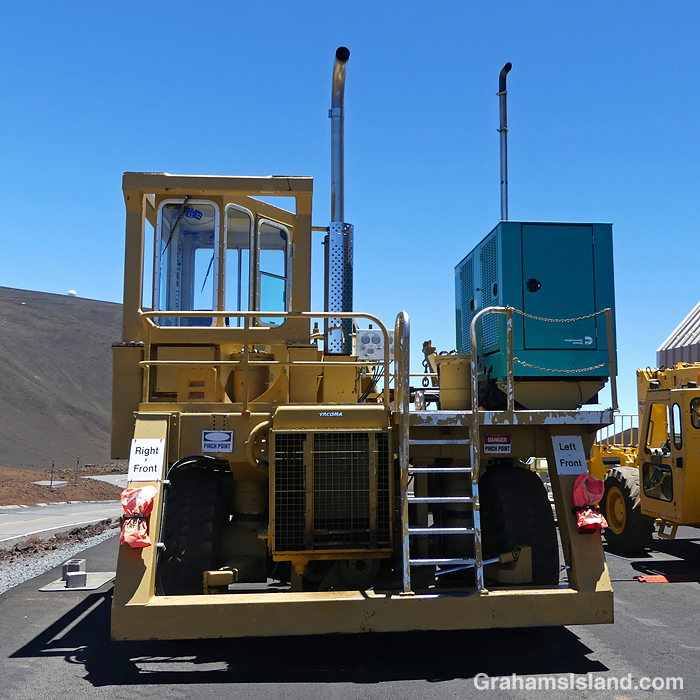
The machine used to move dishes of the Smithsonian Submillimeter Array on Mauna Kea, Hawaii

It’s something of an out-of-this-world design, which is entirely appropriate. There are two things I really like about this vehicle. One is that the scientific minds have thought it prudent to label the front and back, left and right of it. This way, everyone knows whether the vehicle is moving forwards, backwards, or sideways. The other is that they have also recognized that for safe, efficient operation, it’s important to have, in the cab, a pair of fuzzy dice.
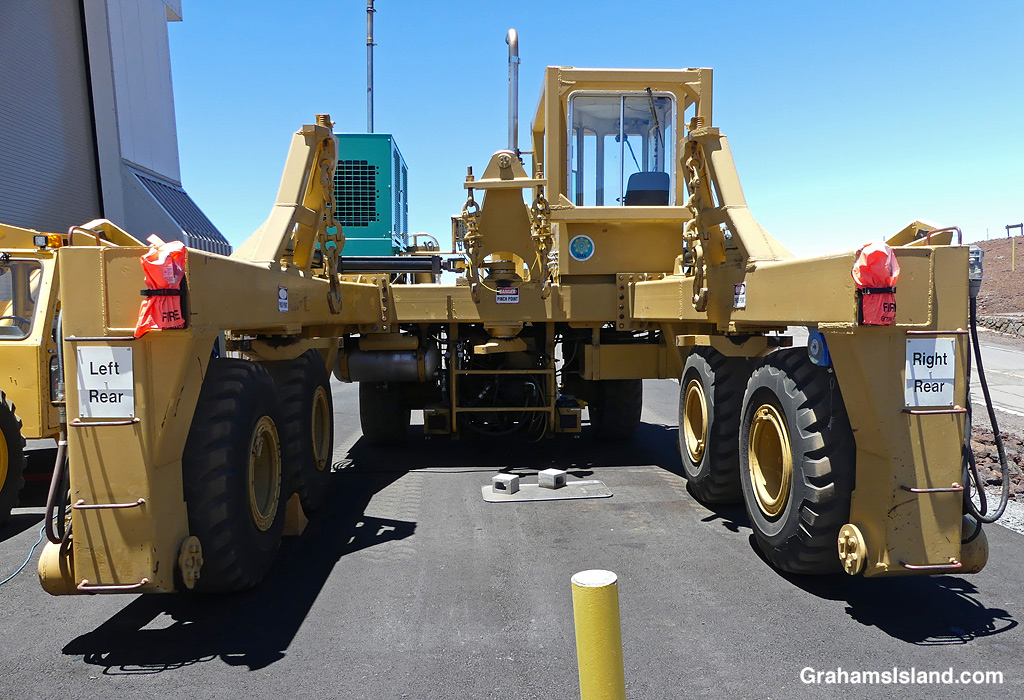
The machine used to move dishes of the Smithsonian Submillimeter Array on Mauna Kea, Hawaii

Posted for Becky’s Squares: Move Forward, Reconstruct, Renew, and/or are Burgeoning. See more responses here.

Subaru Telescope visit

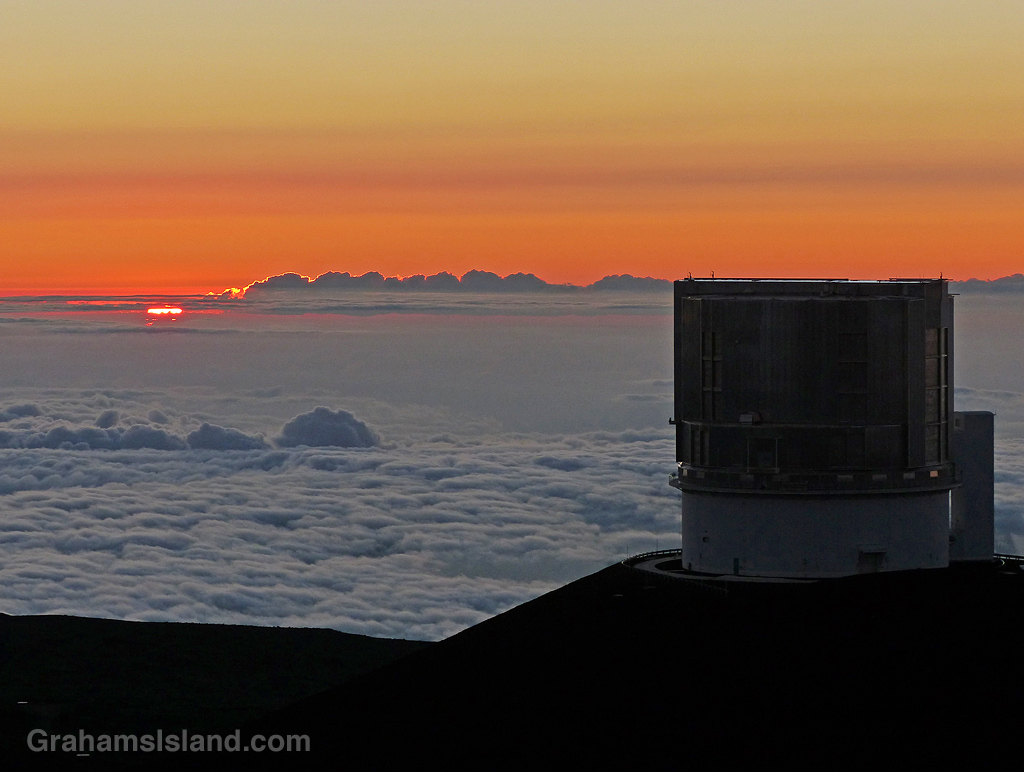
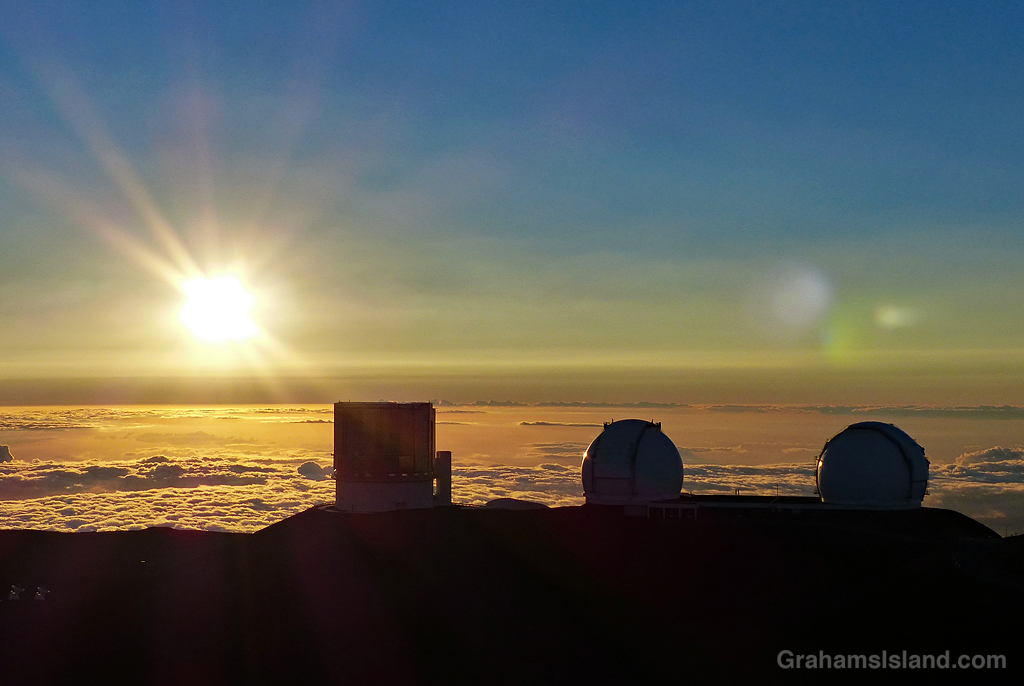
The Subaru Telescope on Mauna Kea, Hawaii at sunset
The Subaru Telescope at sunset.

This week’s Sunday Stills challenge theme is ‘Going Back….’ See more responses here.

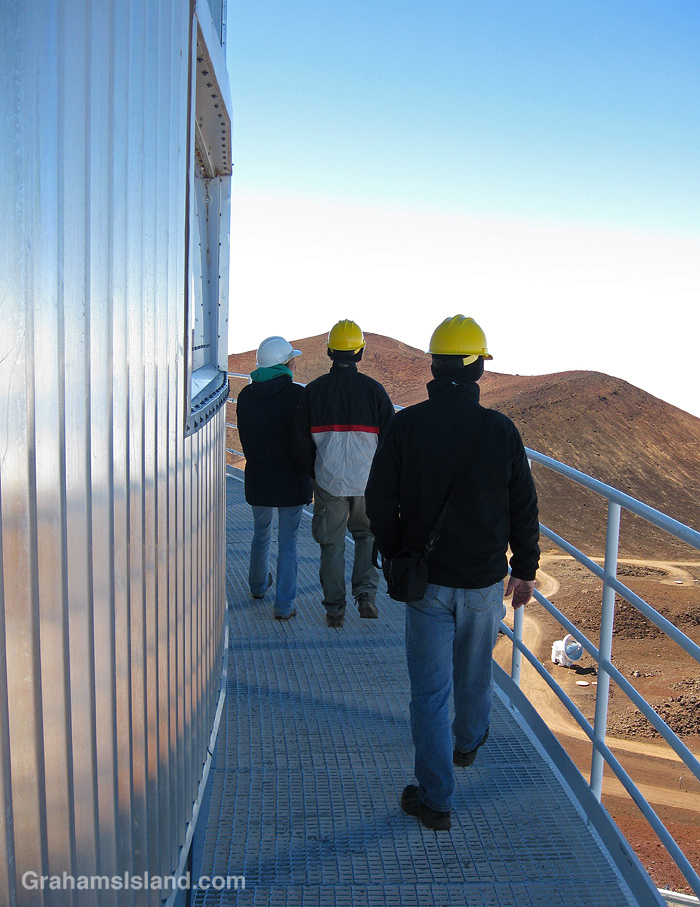
I was thinking about posting photos going back to my first visit to Hawaii, but in looking at them, I realized that I’d never posted photos from my tour of the Subaru Telescope, which I took a few months after moving here. At the time, the Subaru Telescope was the only one on the summit of Mauna Kea that offered tours to the general public, though the tours have been shut down by the current Covid situation.

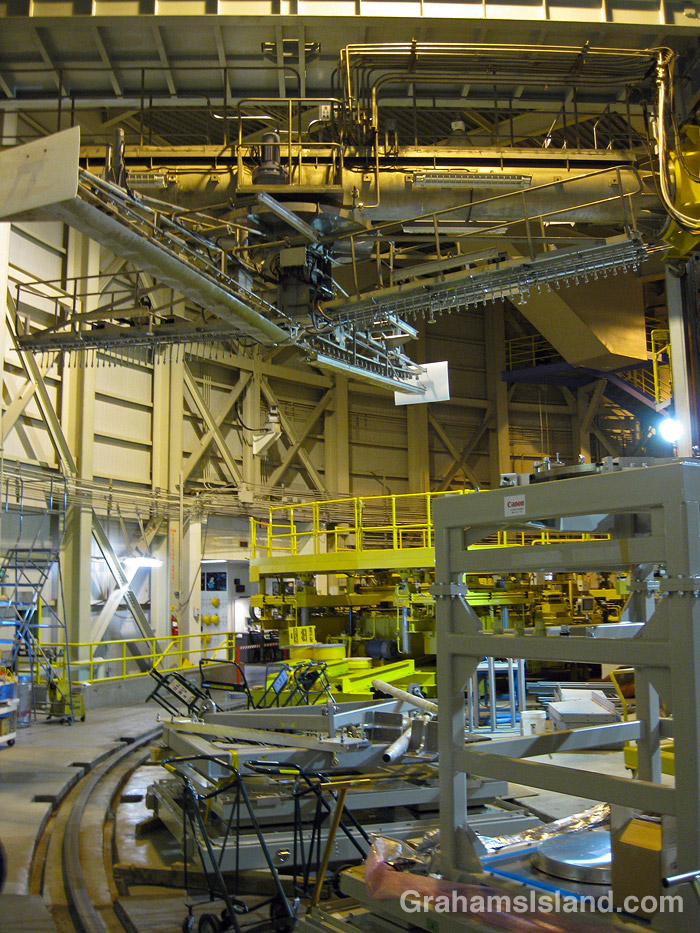
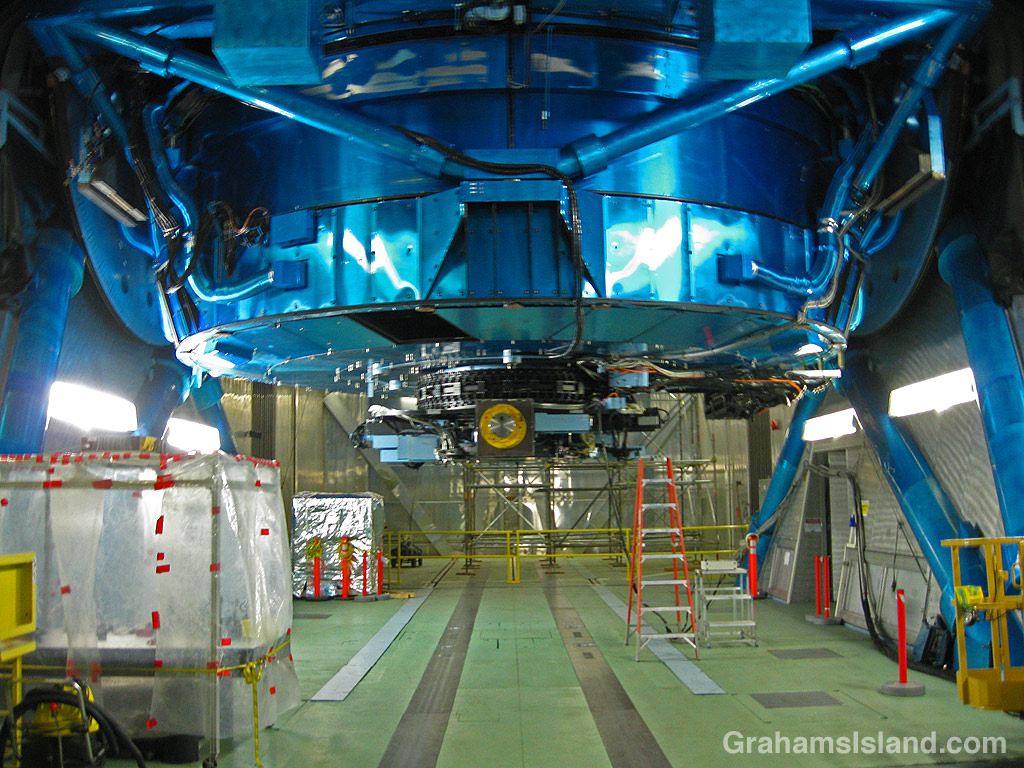
I particularly remember the fabulous views from the walkway around the exterior of the telescope. The interior of the telescope was also interesting, though in the abstract way of a giant piece of equipment. This is not a telescope where one gets to put an eye to the lens to see what’s going on, though I was charmed to learn that when Princess Sayako of Japan dedicated the telescope in 1999, she was able to do just that because a special eyepiece had been constructed for that purpose!

The Subaru Telescope is a Ritchey-Chretien reflecting telescope. It has a large field of view which makes it ideal for wide-field sky surveys. For more information about the Subaru Telescope, visit https://subarutelescope.org/en/. The telescope’s live camera stream captured a cool video of last month’s Perseid Meteor Shower which can be seen here.

Atop Mauna Kea

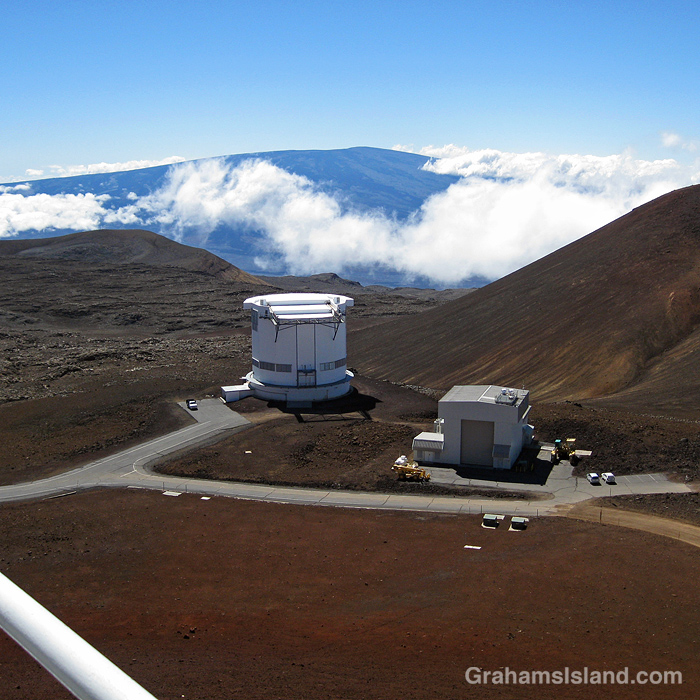
Three telescopes on the summit of Mauna Kea at sunset
A wind turbine with snow covered Mauna Kea in the background

This week’s Friendly Friday challenge theme is ‘Mountain Top.’ See more responses here.

Mauna Kea is the highest mountain on earth, when measured from its base to its peak. It logs in at 33,476 feet, 13,803 of which are above sea level.

The top photo is a late afternoon view from near the summit of Mauna Kea, with the Subaru Telescope on the left and the two Keck Telescopes to the right. The top of the cloud layer lies a thousand or more feet below them, which is one of the reasons it’s such a prime site for astronomy.

The second photo is a view from Upolu, showing the summit with a lot of snow on it. While this photo was taken in February, the volcano is high enough that snow can fall at any time of year.

View of Mauna Kea

There are 13 telescopes atop Mauna Kea, but while they’re all one of a kind in that regard, they vary in how they make observations. Some collect visual light, some infrared. Others are used for radio astronomy. I’d go in to more detail about this, but the science is as far over my head as the telescopes are in this photo!

Posted in response to Becky’s October Squares challenge theme of ‘Kind.’ See more responses here.

Yucca flowers

I see this stand of yuccas on the drive into Waimea and watch for it to bloom. When it does, late afternoons are the best time for photographs so I try to remember to stop on the way back from hiking off Saddle Road or at Hawaii Volcanoes National Park. In this instance, it was the latter, and I was passing by around 6 pm.

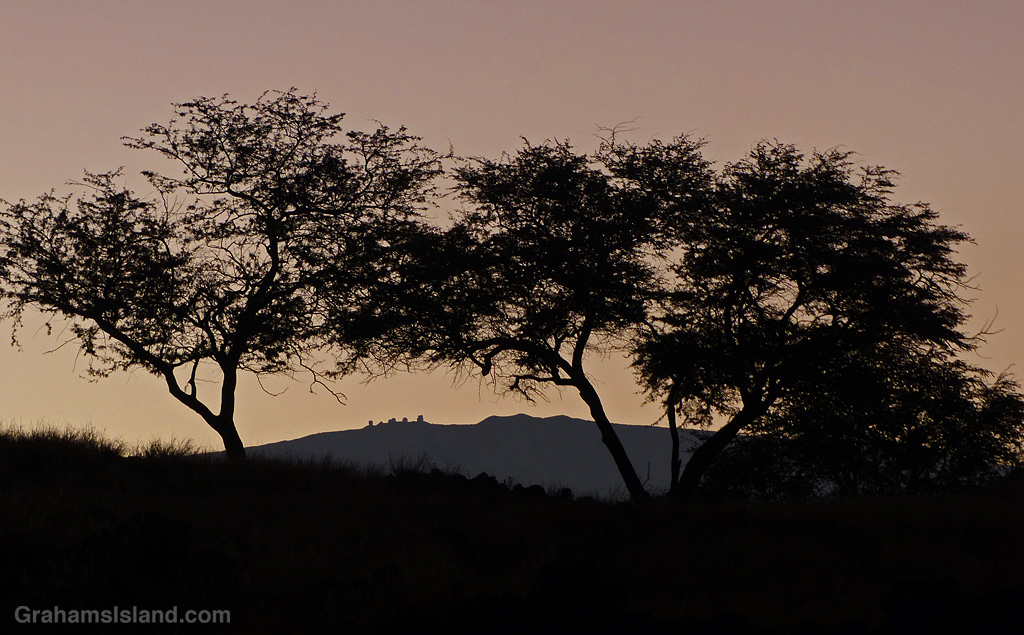
Look closely at the top photo and the telescopes of Mauna Kea can be seen in the distant background, which is a bit unusual for this time of day, morning being their time to shine.