
I think this is a bloody hermit crab, but this was my only look at it. The greenish lump, from which the legs protrude, is not a shell but a lump of rock or old coral.

I think this is a bloody hermit crab, but this was my only look at it. The greenish lump, from which the legs protrude, is not a shell but a lump of rock or old coral.
This week’s Sunday Stills challenge theme is ‘Oldie-but-Goodie or Favorite Photo.’ (See more responses here.)
This seemed like a good opportunity to run a few of my favorite photos from the first year of this blog.


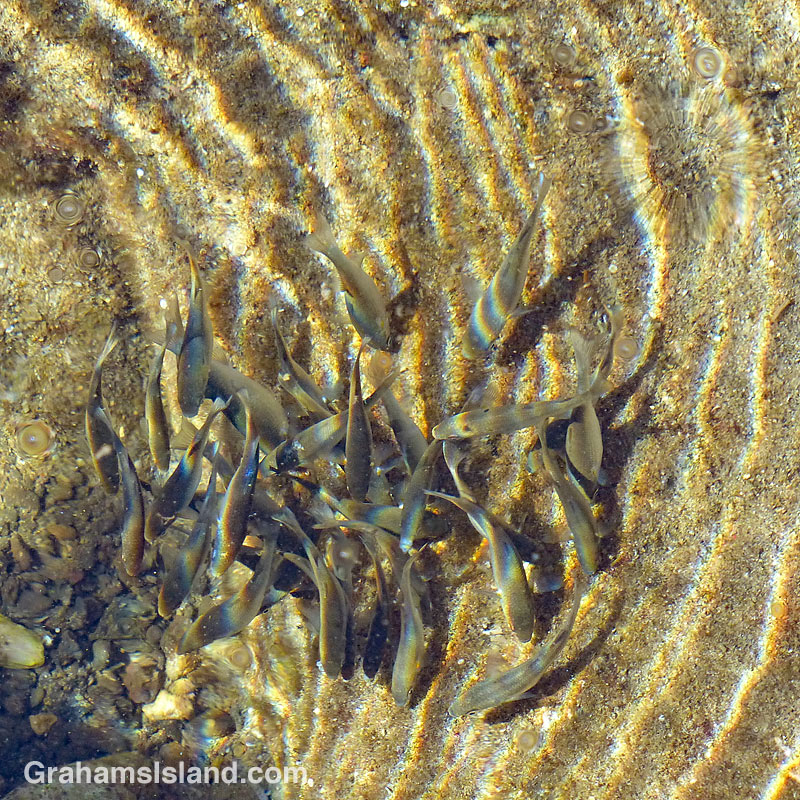
Little fish swim in a tide pool dappled in sunlight.
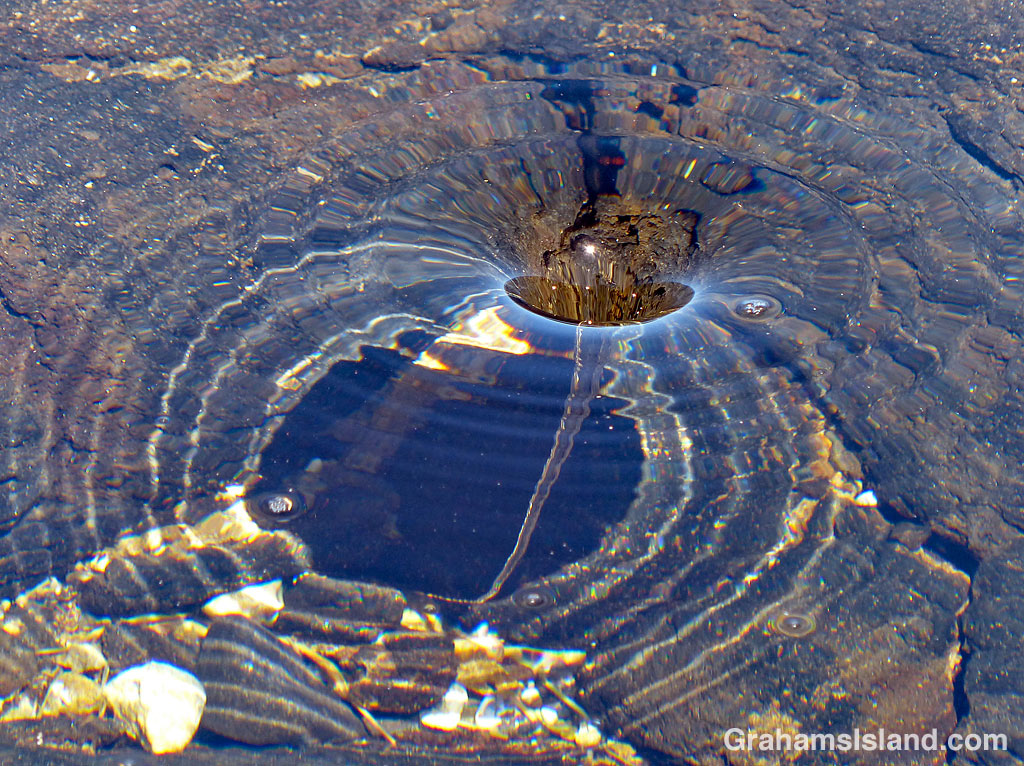
I watched this little whirlpool come and go in a tide pool, its state varying with the influx of water from the ocean. Sometimes it disappeared altogether, but usually returned.
What first drew my attention was not the whirlpool itself, but the shadow on the floor of the tide pool, which varied from fairly circular to heart-shaped.
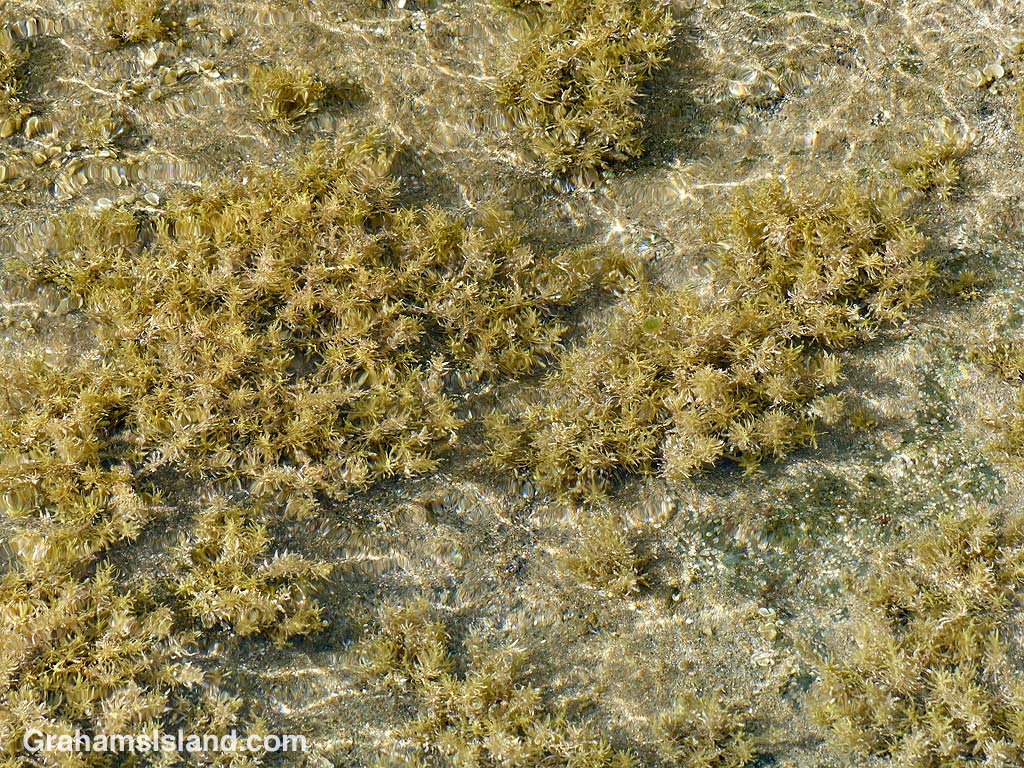
Seeing these clumps of seaweed in a tide pool was like looking down on a forest.
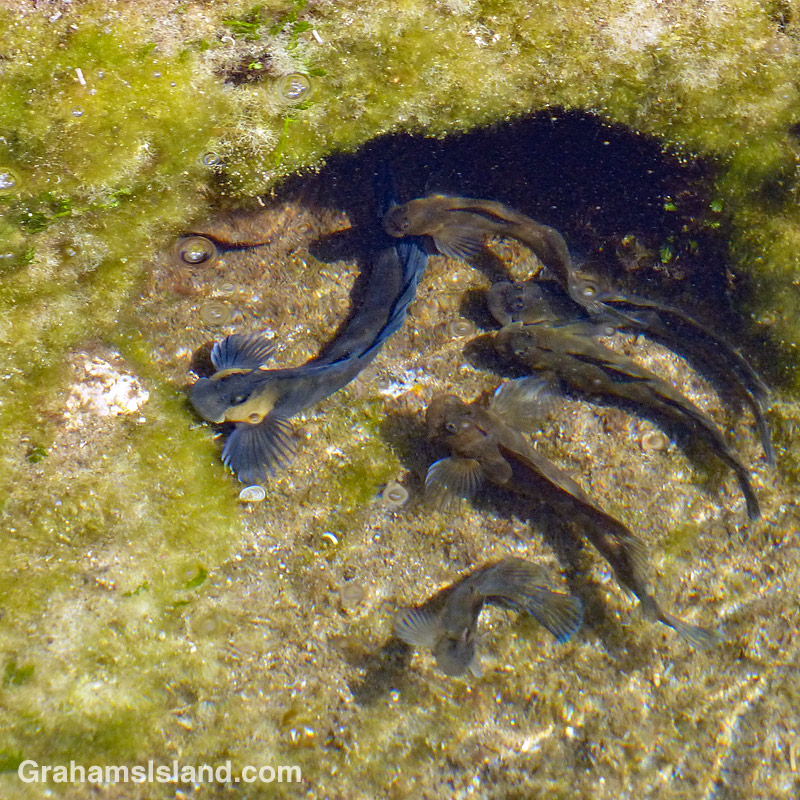
This is a group of Hawaiian zebra blennies that I came across in a tide pool one day. The largest of them, with the blue highlights and yellow cheeks is the breeding male. The others are likely females that he has won over.

Padina japonica is a kind of seaweed which is found in tide pools. I love it’s creamy curled shape.
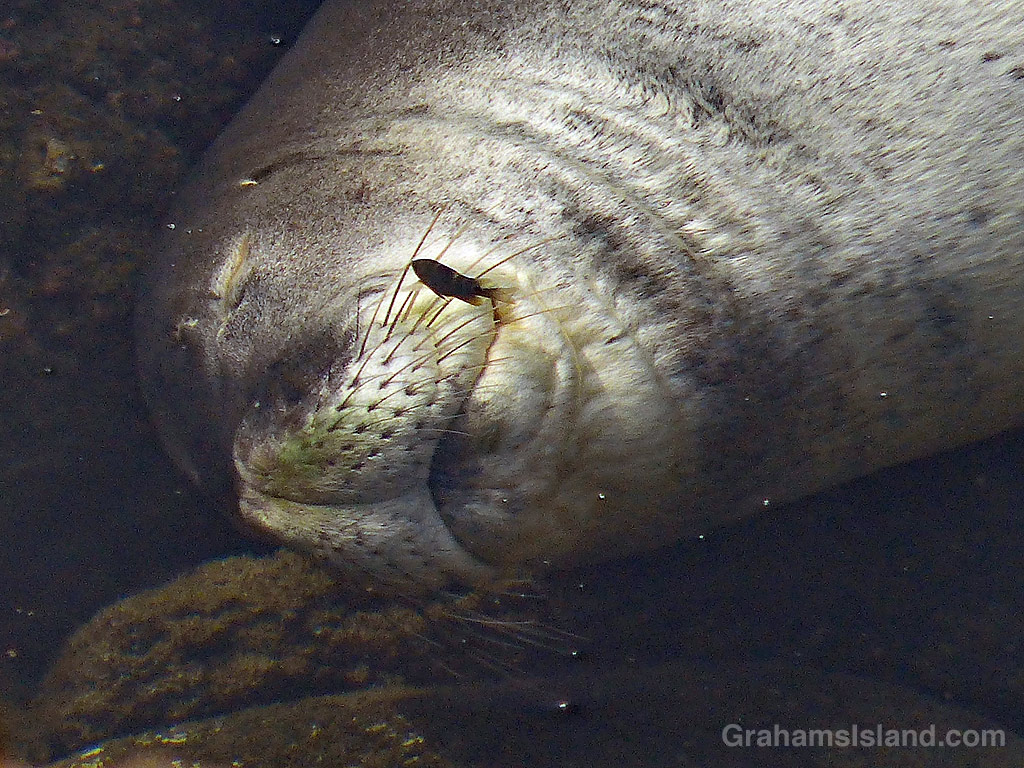
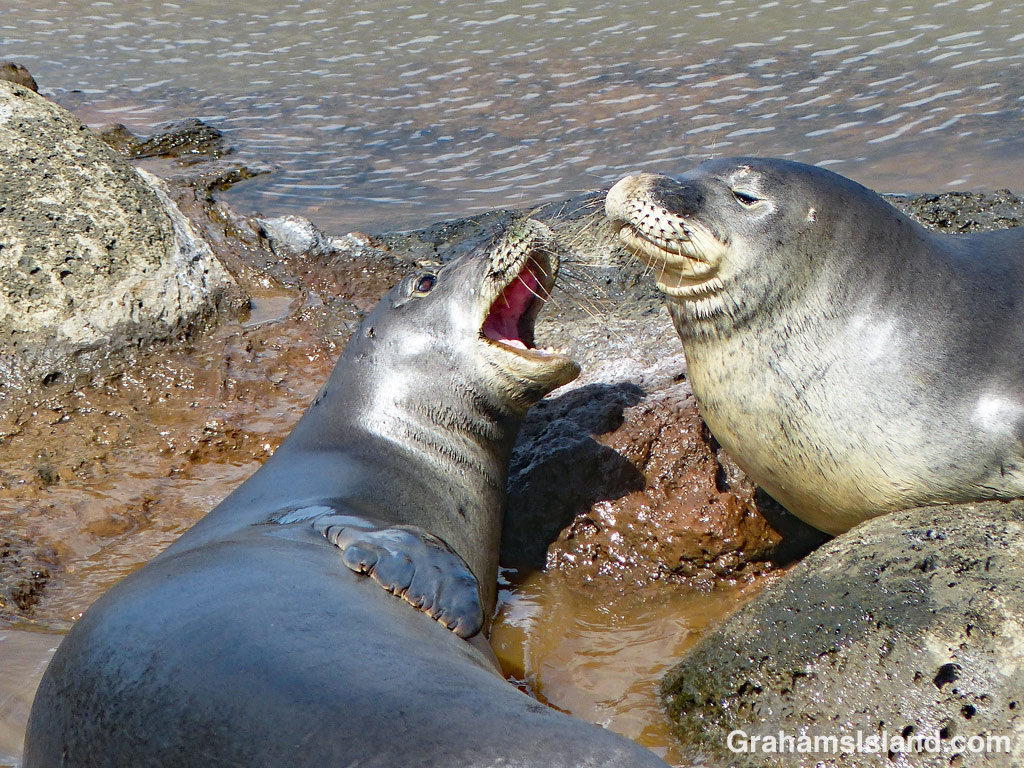
 Monk seals are endangered and only a handful regularly live in the waters around the Big Island. The seal in these photos is one of these and I’m lucky enough to see him on a regular if not always frequent basis. When I do see him, it’s not unusual for him to be submerged in a tide pool as he was on this day.
Sometimes, when there’s been rain, the tide pool will be brown with runoff and all I see is this body with its head submerged. When I first saw this, I wondered if the seal had drowned, but since a monk seal can hold it’s breath for 20 minutes or more I know that’s not what’s going on.
What I like on this occasion, was the little fish (seen above) swimming around the seal’s head and through his whiskers. I like to think it was wondering what the heck this giant lump was that had suddenly taken up most of the space in its pool.
 Graham's Island