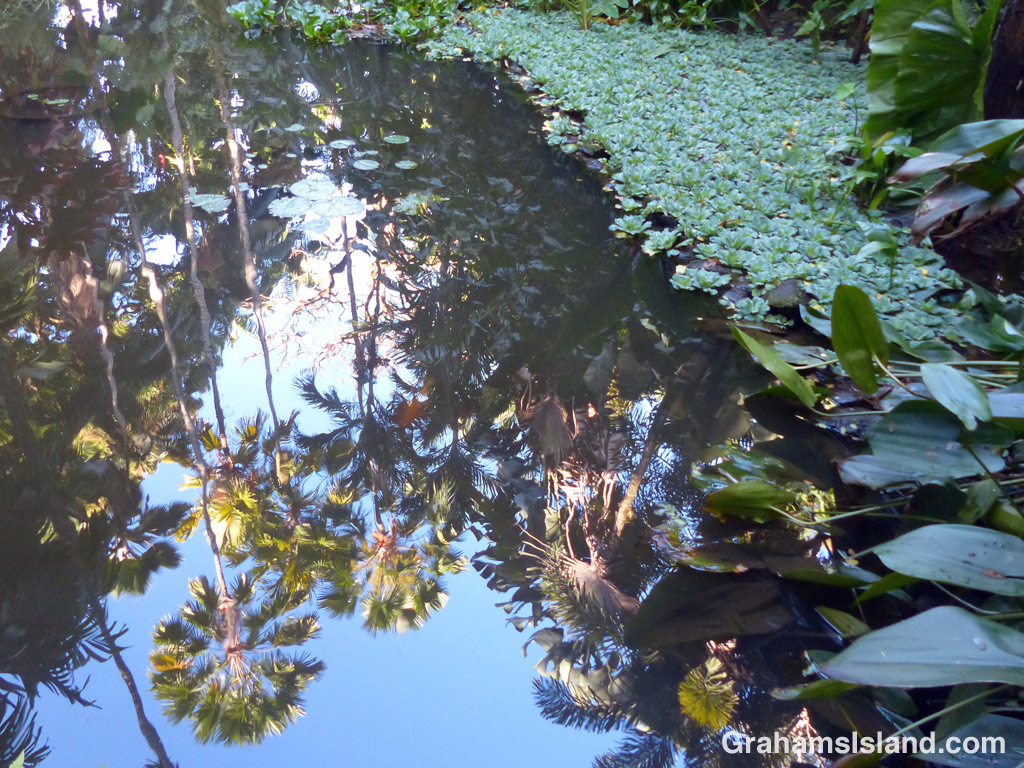
Palm trees and tropical foliage cast a reflection on Lily Lake at Hawaii Tropical Botanical Garden.
For more information about Hawaii Tropical Botanical Garden, go to htbg.com.

Palm trees and tropical foliage cast a reflection on Lily Lake at Hawaii Tropical Botanical Garden.
For more information about Hawaii Tropical Botanical Garden, go to htbg.com.
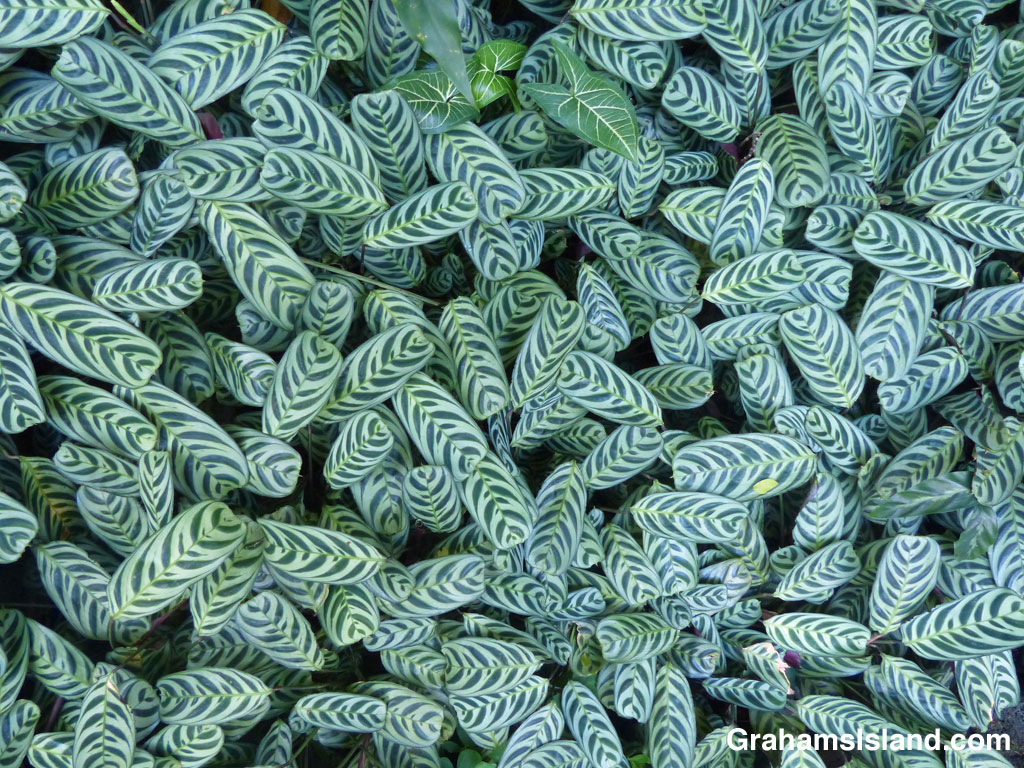
I liked the strong patterns of these Ctenanthe burle-marxii leaves at Hawaii Tropical Botanical Garden. Luckily there’s no audio here so I don’t have to try to pronounce the name of the plant.
For more information about Hawaii Tropical Botanical Garden, go to htbg.com.

In Hawaii Tropical Botanical Garden, north of Hilo, this gravesite sits close to the ocean, surrounded by tropical foliage. The wording on the sign reads:
Long ago, Onomea Bay was a fishing village, became a rough-water seaport in the 1800’s, and later was inhabited by Portuguese, Chinese, Japanese and Filipinos who came here to work in the sugar cane fields and to help build the Onomea Sugar Mill. In the early 1900’s, Onomea was deserted and vegetation grew so densely that few signs of habitation could be seen.
When our Founder and his tireless helpers were first clearing this area, they discovered this olden and dignified gravesite. We have never been able to authenticate the origin, although some old-timers believe the gravesite may have belonged to a caretaker’s family, since a cement-made gravesite would not have pre-dated the 1900’s.
Our commitment is to forever preserve this resting place with the utmost care and respect.
Hawaii Tropical Botanical Garden
For more information about Hawaii Tropical Botanical Garden, go to htbg.com.
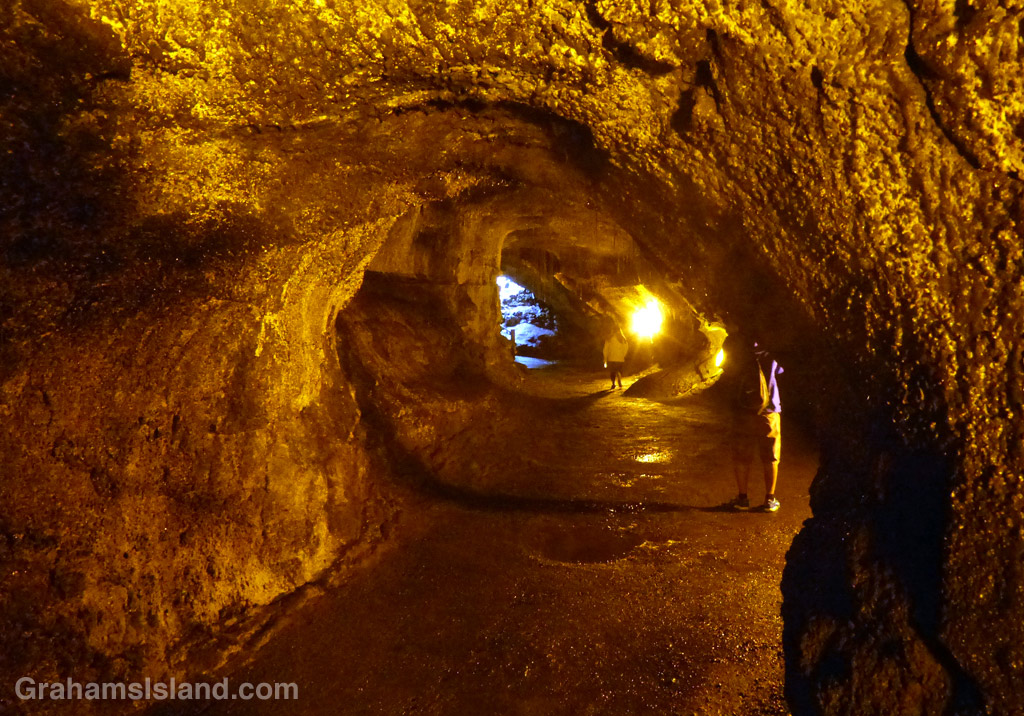

Thurston Lava Tube is one of the more visited spots in Hawaii Volcanoes National Park. It might not be as compelling as Puapoo Lava Tube, but it’s not far from the road and easily accessed. I tend to visit it whenever I’m in the park.
One thing I like about Thurston is the path to and through the tube. It starts with a drop into dense tropical forest, features a bridge leading to the maw of the tube, and then wiggles through the damp and the eerily lit interior until reaching the light at the other end.

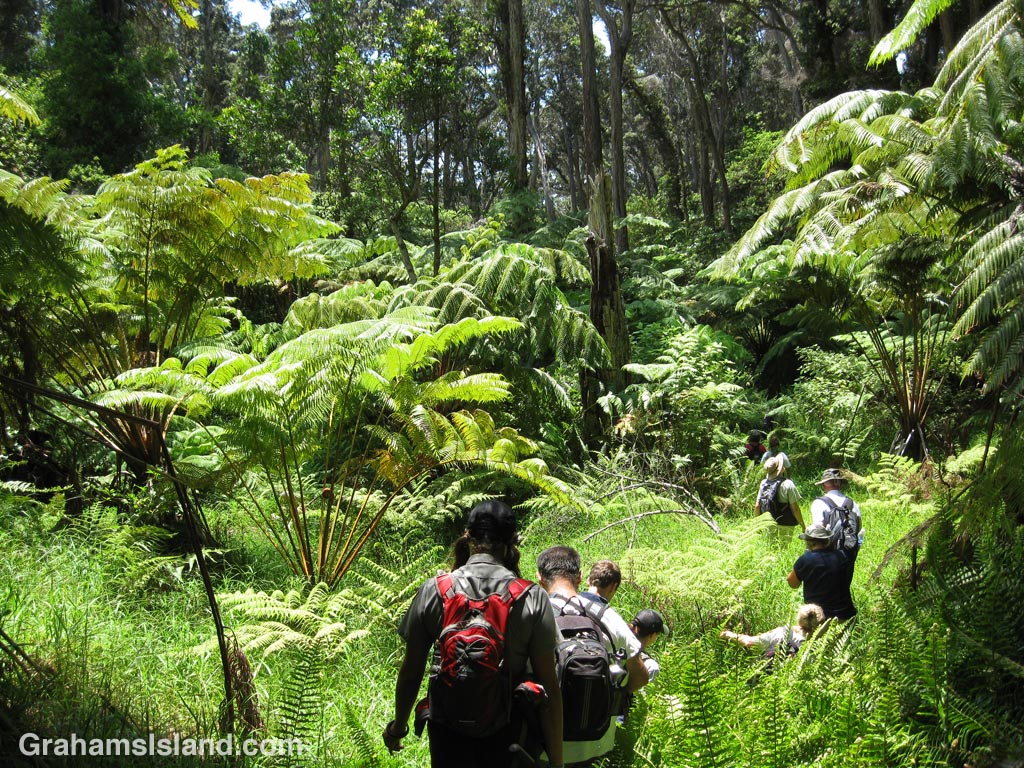

Kahuku is part of Hawaii Volcanoes National Park. Its 116,000 acres was added to the park in 2003, an estate purchase of former ranch land. This purchase almost doubled the size of the park.
Not far from the southern tip of the Big Island, the entrance to Kahuku is about an hour’s drive from the main park entrance, but the two areas are contiguous, joined at the summit of Mauna Loa.
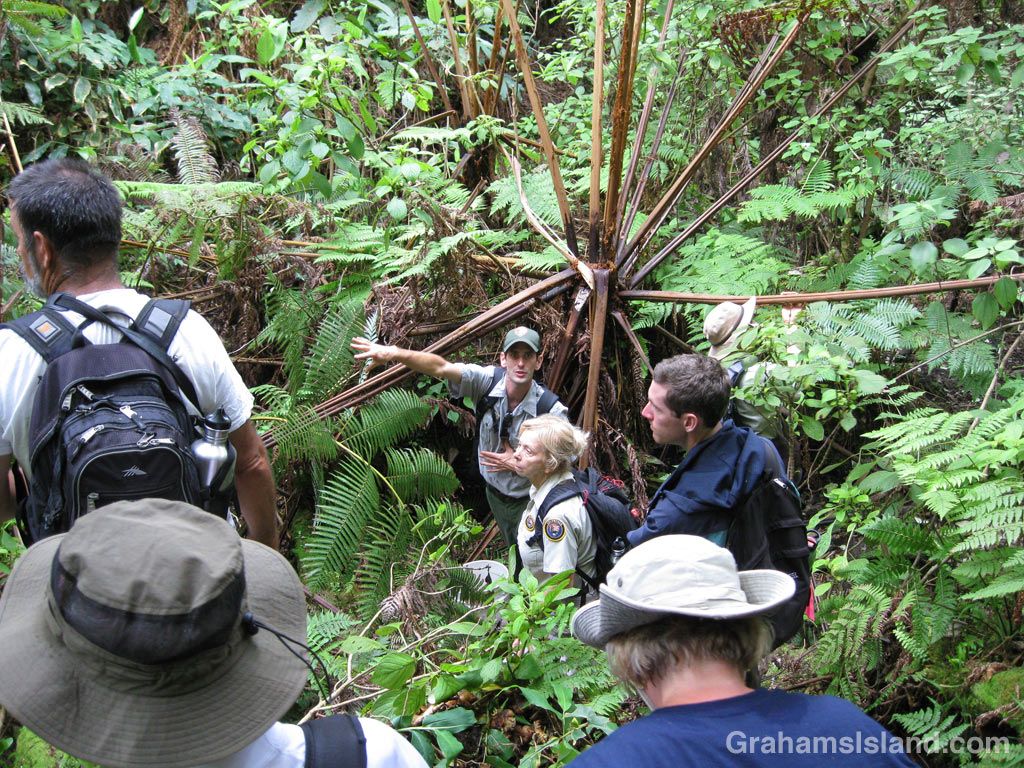
These photos are from a guided hike in Kahuku that I did a while back. The hike went through fairly dense old growth Hawaiian forest that had been spared because it was in a steep gully and thus not suitable for clearing for pasture. There was no real trail.
Currently this part of the park is closed because trees with Rapid ‘Ōhi’a Death (ROD) have been found in the lower part of the park and the goal is to prevent it spreading to other areas.
For more information on the Kahuku Unit of Hawaii Volcanoes National Park, go to nps.gov/havo/planyourvisit/kahuku-hikes.htm or bigislandhawaiitravelguide.com/places/puu-o-kahuku-at-hawaii-volcanoes-national-park.html
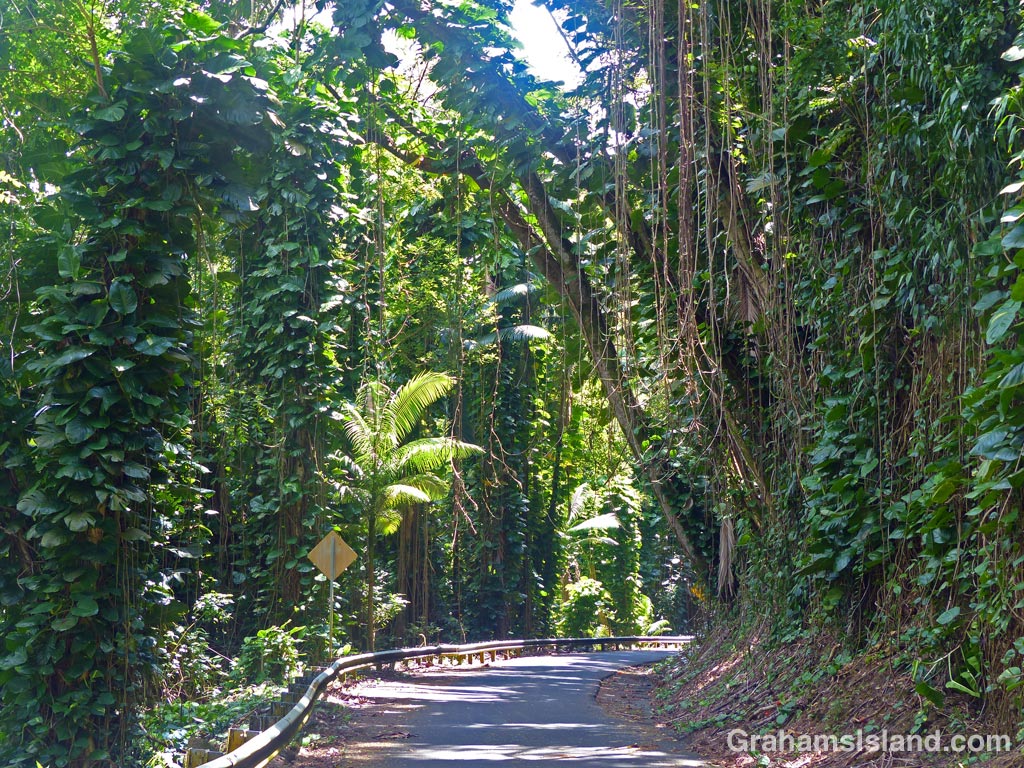
One of the things I enjoy about driving on the east side of the Big Island is coming across roads like this one, winding through a profusion of tropical foliage.
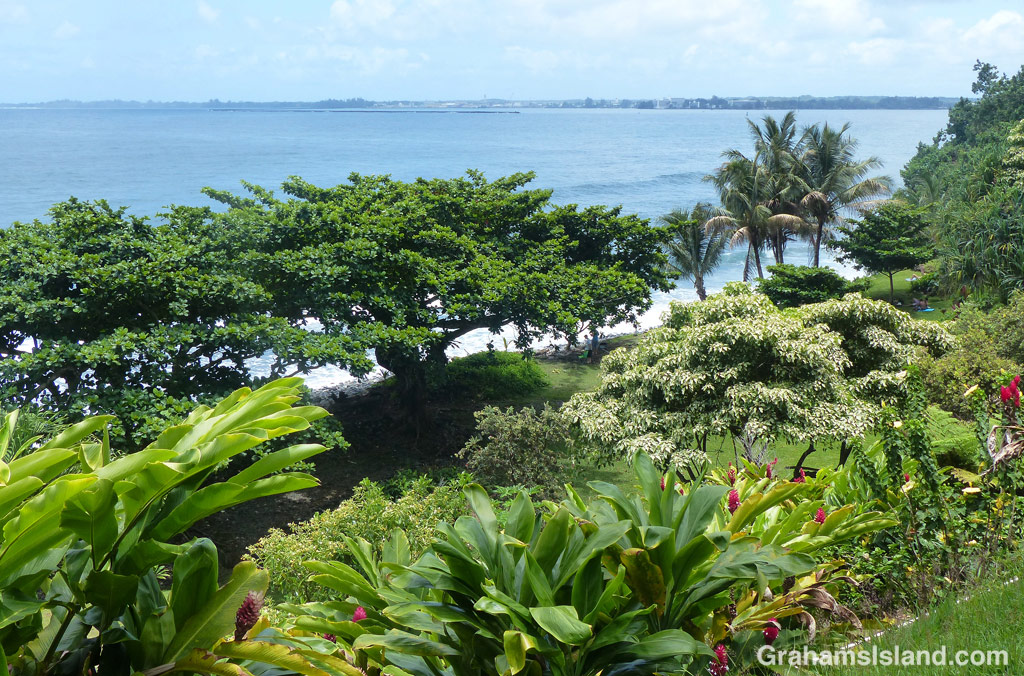
A view of Honoli’i Beach Park with Hilo Bay in the background. I do love the lush vegetation on the east side of the island.
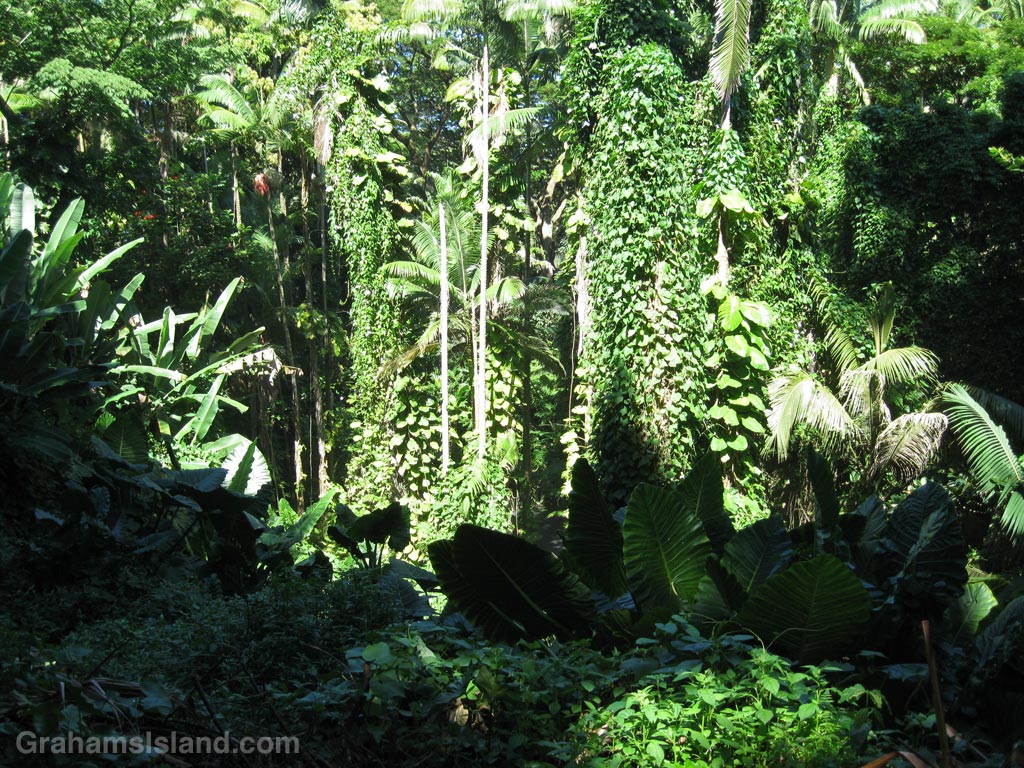
The north and east sides of the Big Island get more rain than the west – a lot more rain. Much of that area gets 100 inches and up. A good chunk of it gets more than 200 inches. By contrast, there are areas on the west coast that get less than 10 inches of rain a year. Two of the driest parts of the island are the summits of Mauna Kea and Mauna Loa, which also get less than 10 inches. That’s because they’re mostly up above the clouds.
The east side’s rain tends to be of the tropical variety – intense downpours that don’t necessarily last long. Several inches can fall in the space of half an hour. Flash floods are a threat all over the island. Those heavy rains falling up on the hills can channel down west side gullies.
Another result of all that rain is that the foliage is luxuriantly tropical: towering trees and shrubs, extravagantly large leaves, and vines with everything. This scene is on the coast near the Hawaiian Tropical Botanical Garden north of Hilo.
For more information about Hawaii Tropical Botanical Garden, go to htbg.com.
 Graham's Island