Tag Archives: Wordpress Photo Challenge

Abstracts: Floating branch

A branch floats in the water off the Big Island of Hawaii

The last of this week’s posts in response to the WordPress photo challenge on the theme of ‘transient.’

High winds resulted in a bump in the amount of debris in the water. This branch could be on its way back to shore or headed for somewhere across the Pacific, depending on how wind and currents move it.

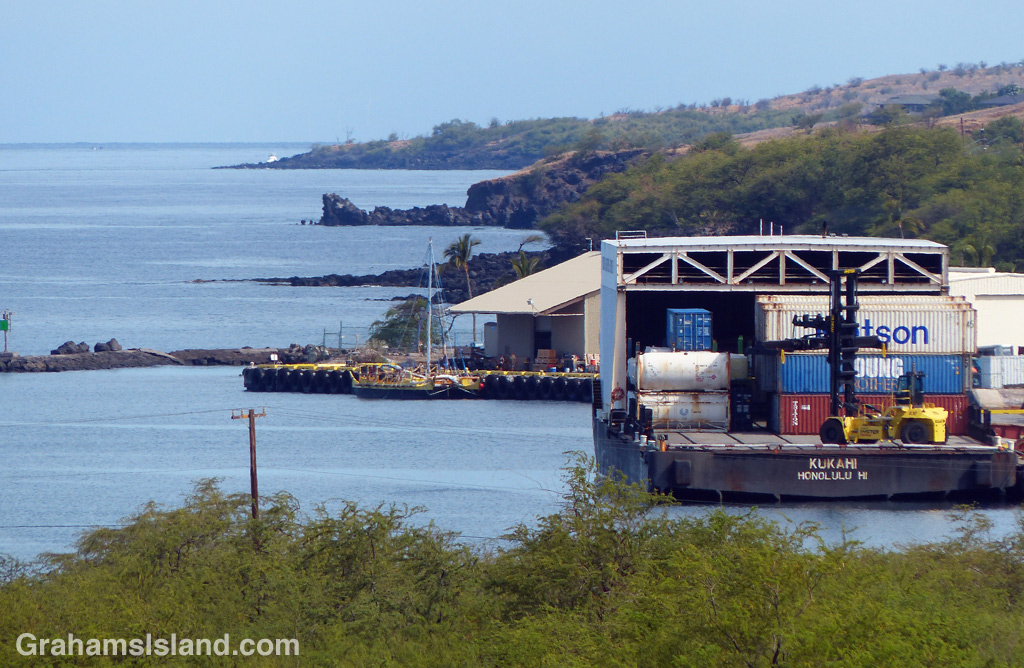
Inter-island barge and Makali’i

An inter-island barge and Hawaiian voyaging canoe Makali'i at Kawaihae harbor.

This week’s posts are in response to the WordPress photo challenge on the theme of ‘transient.’

There are two commercial ports on the Big Island, Hilo on the east side, and Kawaihae on the west. This is a view of Kawaihae harbor with the inter-island barge unloading at the dockside. In Hawaii, many goods are shipped to Oahu and then distributed to the other islands on barges.

Also at the dock, beyond the barge, is the Hawaiian voyaging canoe, Makali’i. This boat had just returned to the water after a long refit on the island. The following day, it set off to join other boats in Oahu, welcoming home the Hawaiian voyaging canoe, Hokuleʻa, from its 3-year Mālama Honua Worldwide Voyage.

Two wildly different vessels, but both engaged in the very transient business of crossing open waters.

For more information about Hokuleʻa and the Polynesian Voyaging Society, go to www.hokulea.com.

Jumping fish

Little fish leap from the water to avoid predators below.

This week’s posts are in response to the WordPress photo challenge on the theme of ‘transient.’

I watched these little fish roil the surface of the water and then jump clear, first in one area, then another, then elsewhere. Chances are that their performance was due to larger predatory fish below the surface, lured in to shallow water by the presence of food. The predators will move back to deeper waters once the feeding is over. The little fish will hope to survive long enough to eventually do the same.

Signs: Do not climb

A sign on a mimosa tree forbids climbing

This week’s posts are in response to the WordPress photo challenge on the theme of ‘transient.’

This sign is attached to one of two mimosa trees near King Kamehameha’s statue in Kapaau. The trees are huge with the kind of bumps and hollows that invite exploration. They’re believed to be more than 100 years old.

Not long after taking this photo, I was somewhat taken aback to see the trees almost devoid of foliage, the limbs hacked back. It turns out that one of the trees basically split in two, took out power and water lines, a chunk of the other tree, and blocked the road. It was, as they say in potboilers, rotten to the core. The cleanup is still in process, but will likely involve the removal of both trees, more than a century old, but transient in the larger scheme of things.


Fruit flies on a mango

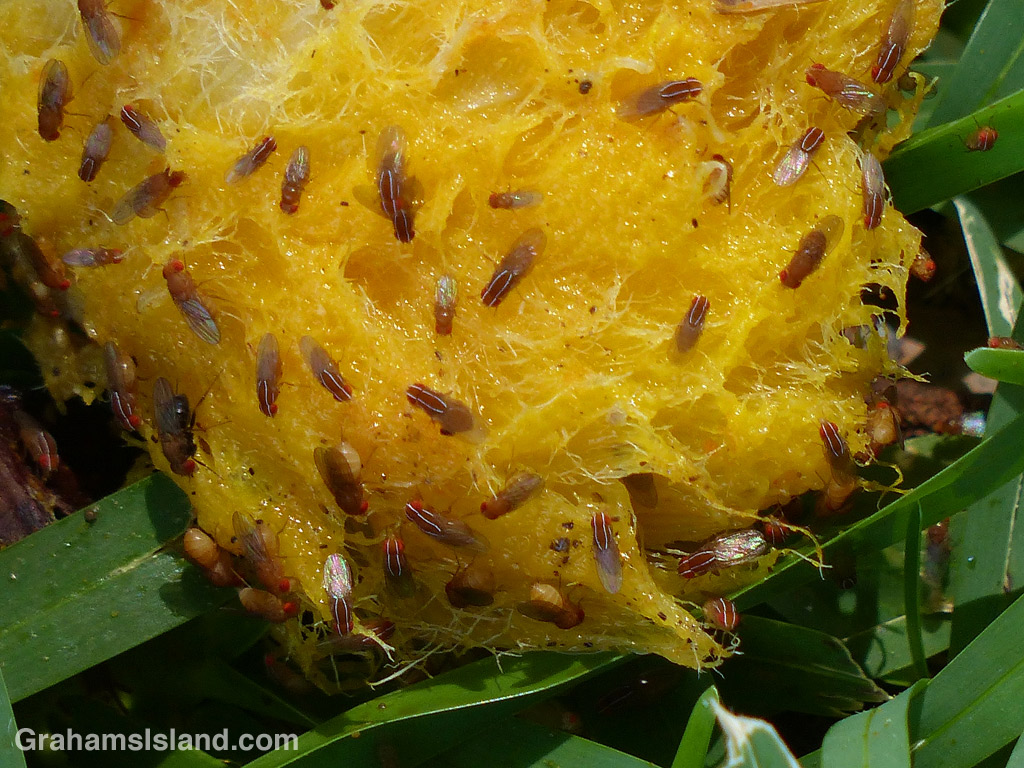
Fruit Flies feed on a mango

This week’s posts are in response to the WordPress photo challenge on the theme of ‘transient.’

This little scene could be considered transient on three counts. First is the fact that this is a mango that has fallen from the tree. In the life cycle of a mango, it’s a very short interval between ripening on the tree and rotting on the ground. Second, this mango has clearly been chewed over by one of the transient wild pigs that pass through from time to time, more so during mango season. And third, these fruit flies won’t be around long either, having a lifespan in the region of 30 days.

This fruit fly, also called the vinegar fly, is probably Zaprionus ghesquierei, an invasive species known to have reached Hawaii. Zaprionus indianus also looks like this, but hasn’t been seen in Hawaii yet, as far as I know.

Mauna Kea snow

Snow covers the summit of Mauna Kea

This week’s posts are in response to the WordPress photo challenge on the theme of ‘transient.’

Despite the tropical latitude of the Big Island, Mauna Kea can get snow at any time of year. It’s always fun to see the mountain with a white coating. In the winter it sometimes sticks around for a while. At other times of the year it’s usually here today, gone tomorrow.


Pacific golden-plover

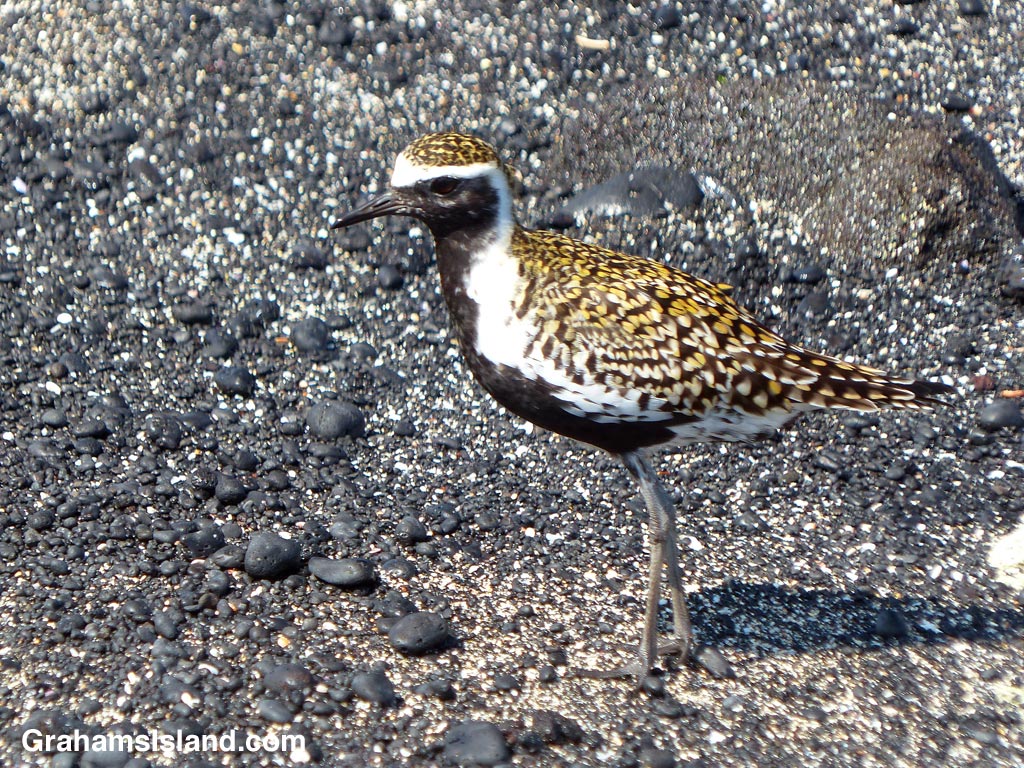
A Pacific Golden Plover with summer plumage.

A while ago I did a week’s worth of posts in response to a WordPress photo challenge on the theme of ‘evanescent.’ I thought I’d take a similar approach to this week’s theme, ‘transient,’ which is basically a synonym of evanescent.

Migrating birds are transient, in that they spend time in one area where they breed before moving to regular wintering grounds. The Pacific golden-plover is one such bird. After wintering in Hawaii, these birds fly north to spend May, June, and July at breeding grounds in the Arctic. Not only that, but this is one bird that dresses for the occasion! Normally, a mostly brown bird with flecks of yellow (as seen here), its summer plumage takes on this splendid black and white frontage.

Kamehameha Day ceremony in Kapaau

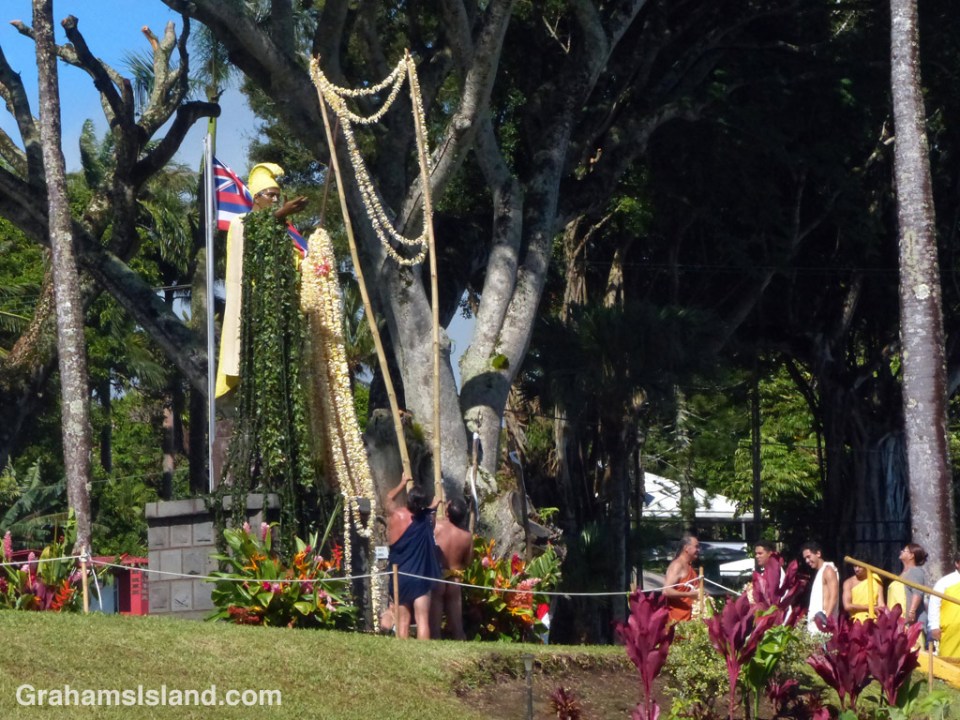
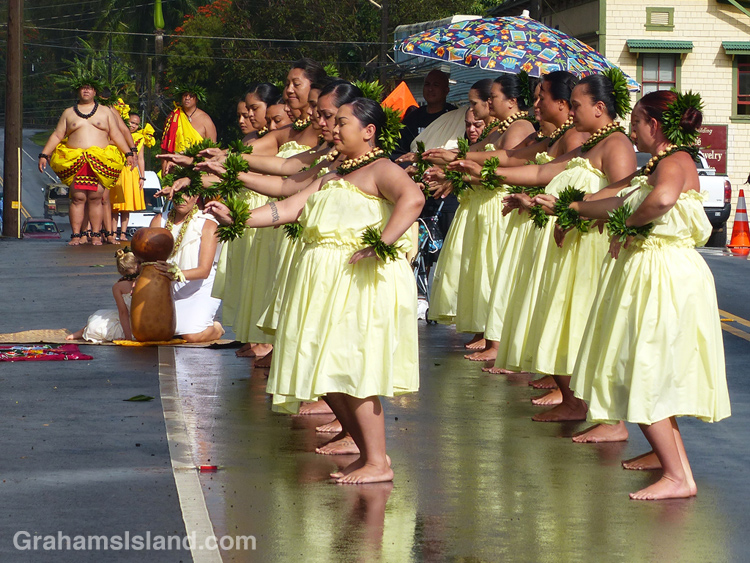
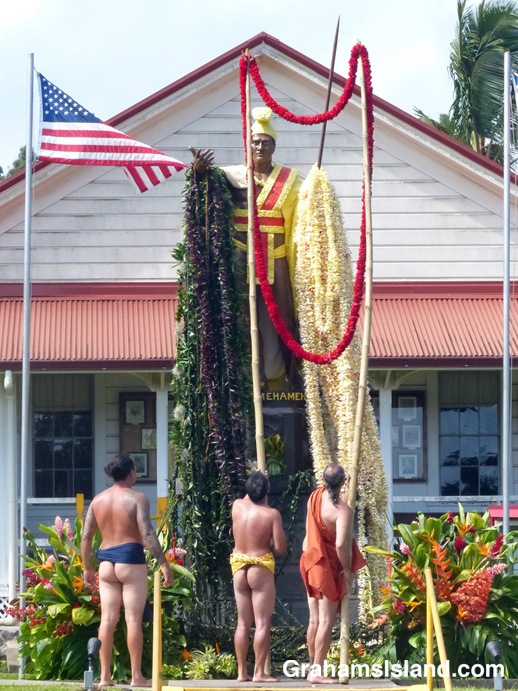
A lei is draped over the spear of the statue of King Kamehameha 1 in KapaauA hula group performs on front of the statue of King Kamehameha 1 in KapaauA group pays its respect to the statue of King Kamehameha 1 in Kapaau

Yesterday was Kamehameha Day, celebrating Kamehameha 1, the king who first united the Hawaiian Islands under one leader. There’s a statue of the king at Kapaau in North Kohala, and this was the scene of a ceremony honoring him.

The ceremony began in steady rain, but the weather brightened so that proceedings ended in bright sunshine. After opening blessings, various groups approached the statue and paid their respects to the king. This was followed by the draping of leis on the statue. Finally, a hula performance in front of the statue concluded events – at least as far as this ceremony was concerned. An hour or so later, there was a parade featuring representatives of all the Hawaiian islands, and for the rest of the day, there were events and music in a local park.

The top photo shows a lei being draped over the king’s spear. The lei is made up of plumeria blossoms. The leis draped over his extended arm are mostly made up of ti leaves. In the second photo, members of one of the groups honoring the king performed a hula in front of the statue. Third, I think this is the order of Kamehameha presenting an offering which was carried up and placed at the base of the statue. Below, a red plumeria lei is hoisted over the king’s spear. Bottom, after all the lei were placed on the statue, another hula performance concluded events.

For more information about the Kamehameha Day and the statue, go to kamehamehadaycelebration.org.
For more information about the Kamehameha’s history, go to nps.gov/puhe/learn/historyculture/kamehameha.htm.
A lei is draped on the statue of King Kamehameha 1 in KapaauA hula group performs on front of the statue of King Kamehameha 1 in Kapaau