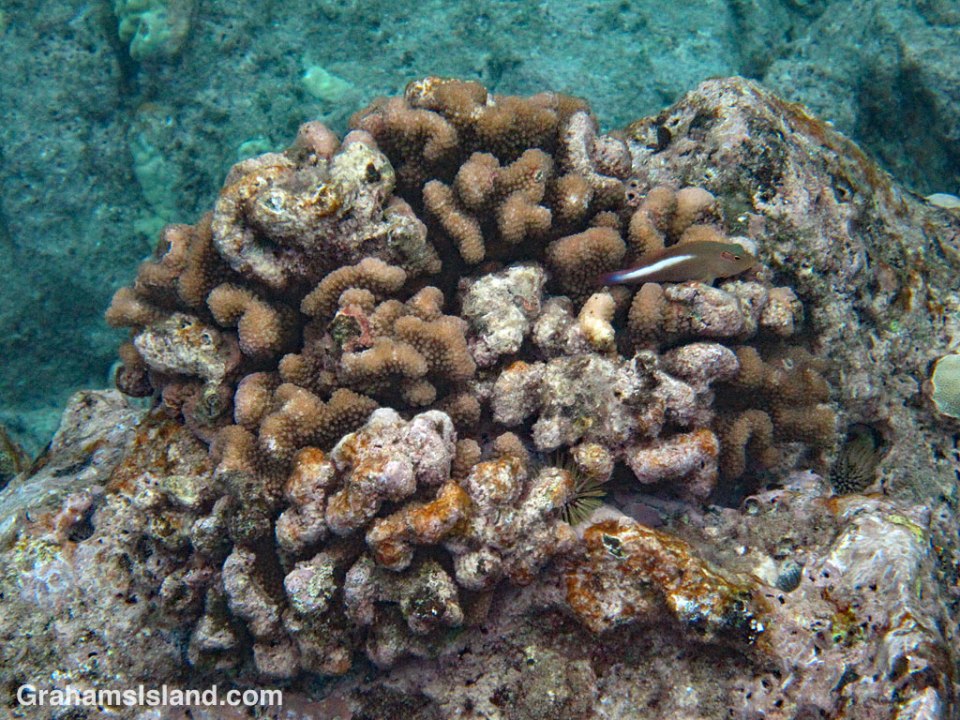
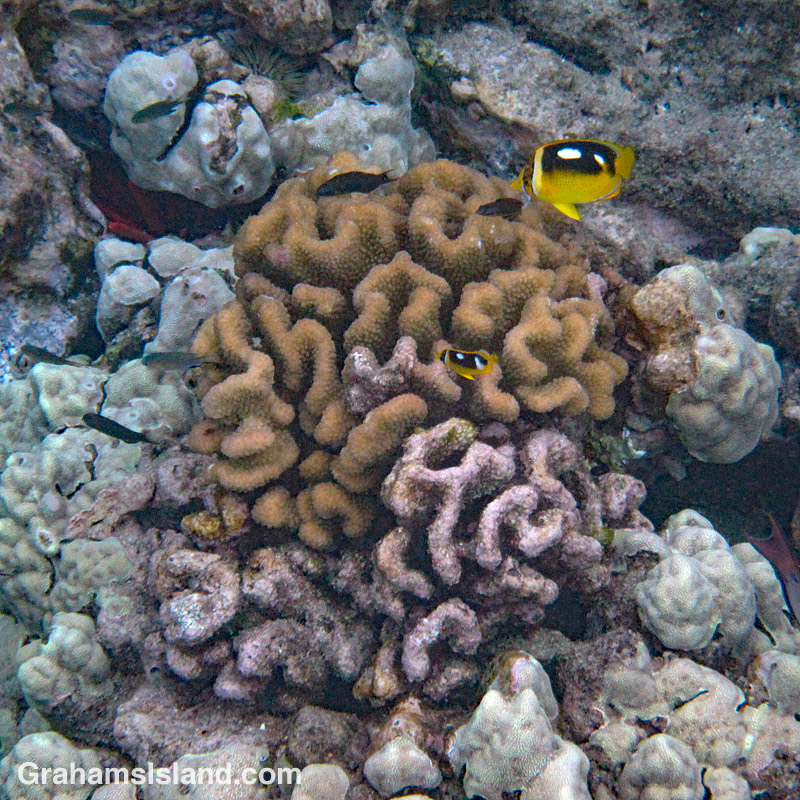
Cauliflower coral was once a mainstay of reefs along the west coast of the Big Island, but has been in decline for a while. Then, in late 2015, high water temperatures caused a huge coral bleaching event, which resulted in a die-off of more than 90% of the area’s cauliflower coral. In some places, nothing was left. Because of this, the reproduction of surviving corals has become of increased importance.
Different corals have different methods of reproduction. Cauliflower coral reproduces in a synchronized spawning event. During this event, the corals release gametes (eggs and sperm) into the water, creating a milky cloud. For many corals, the spawning event takes place at night, but research indicates that cauliflower corals spawn shortly after sunrise, two or three days after the May full moon. At least, that’s what I was told.
Consequently, twice last week, I got up at an early hour in order to be in the water before 7 a.m. in the hope of witnessing a cauliflower coral spawning. Yes, that’s the kind of life-on-the-edge that I lead.
The first priority was to find some live cauliflower coral, easier said than done. There were a few patches in deeper water, but since visibility was not great, it would be almost impossible to tell if and when they spawned. After some finning around, I found a shallow spot with three small clumps and decided to pin my hopes on them. The live coral was part of a larger mass, part of which had died, as can be seen in the photos. Also to be seen in the photos are an arc-eye hawkfish (above), and two four-spot butterflyfish (second photo) among others. Corals are very important to fish stocks because many small fish, and the young of bigger fish, use the coral for protection, a place to hide when threatened.
What’s not to be seen in the photos is any evidence of spawning, because I didn’t see any. It was unlikely that I would. Conditions might not have been right for the coral or my timing could have been off. The May full moon is actually on the 29th so it might be that the spawning will be at the end of the month, not the beginning. I’ll try again then.
Posted in response to this week’s WordPress Photo Challenge ‘Unlikely.’

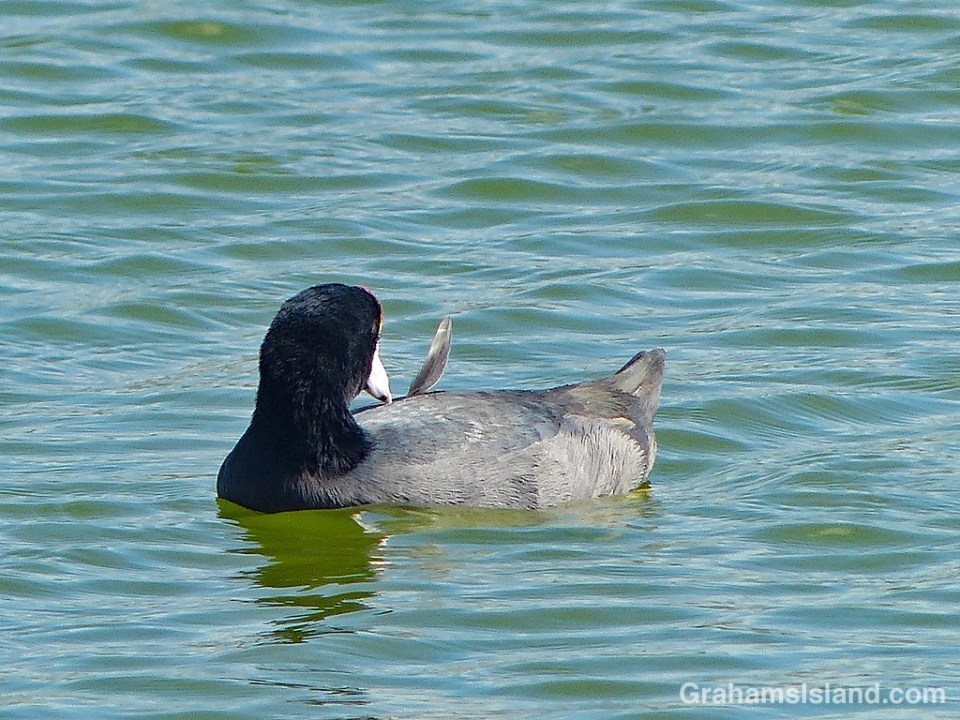
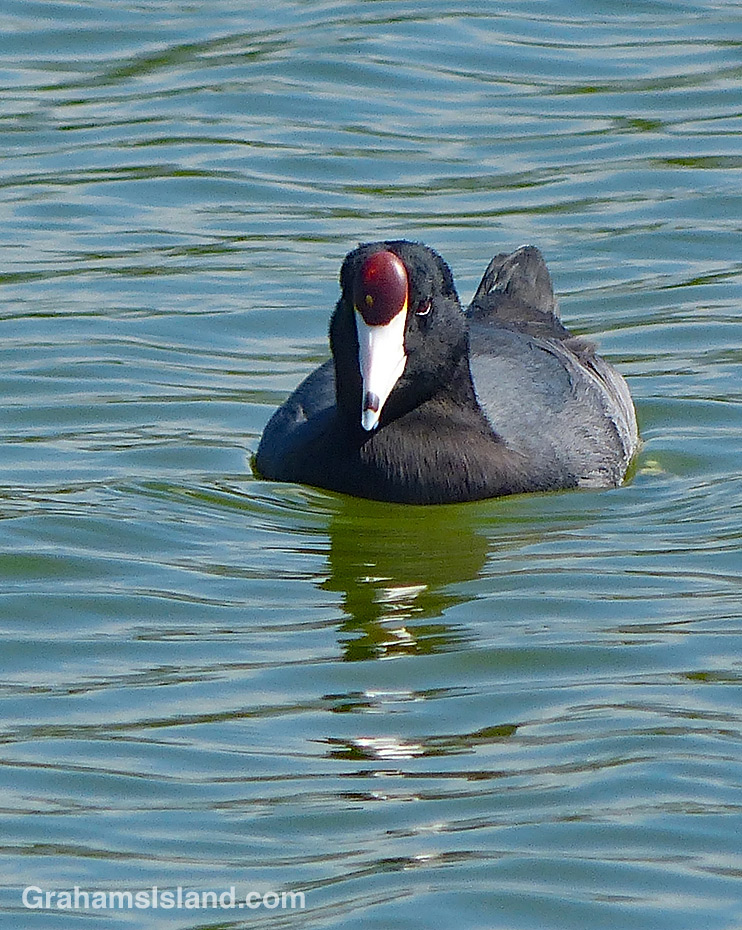 This Hawaiian coot looked surprised to discover a wayward feather in its otherwise immaculate plumage (above). Several attempts to corral the unruly feather failed, leaving the bird with a distinctly grumpy look (middle photo). But a solution was found (below). Time for a stylish V for Victory lap around the pond.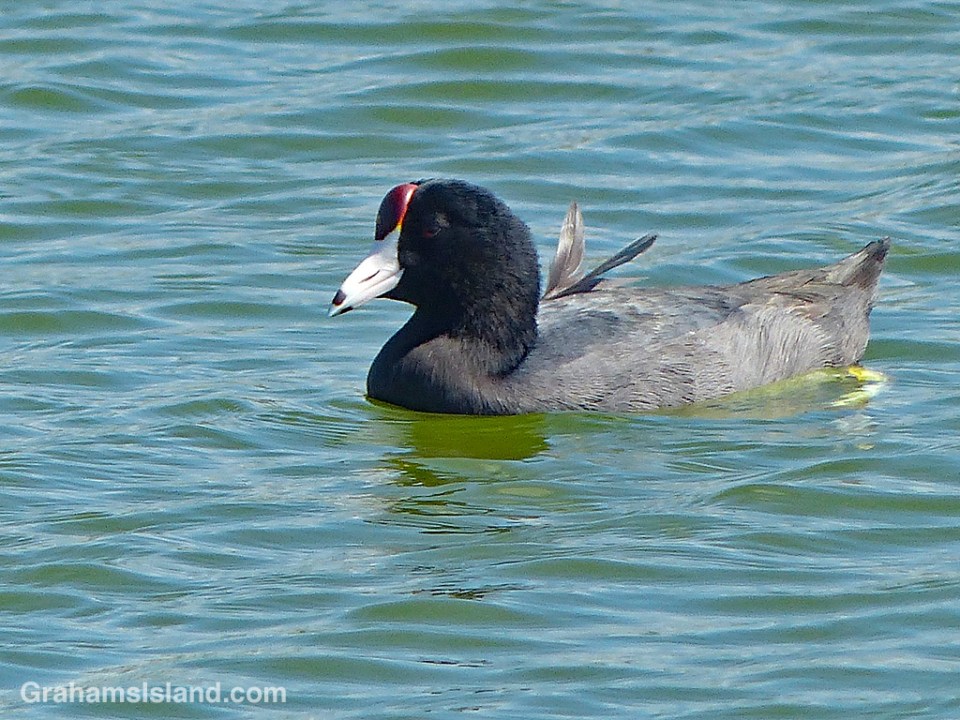
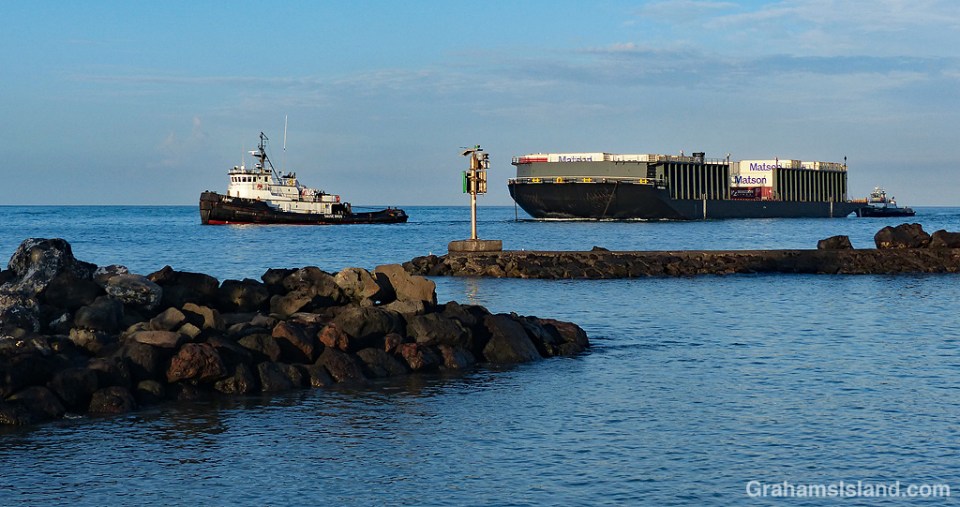
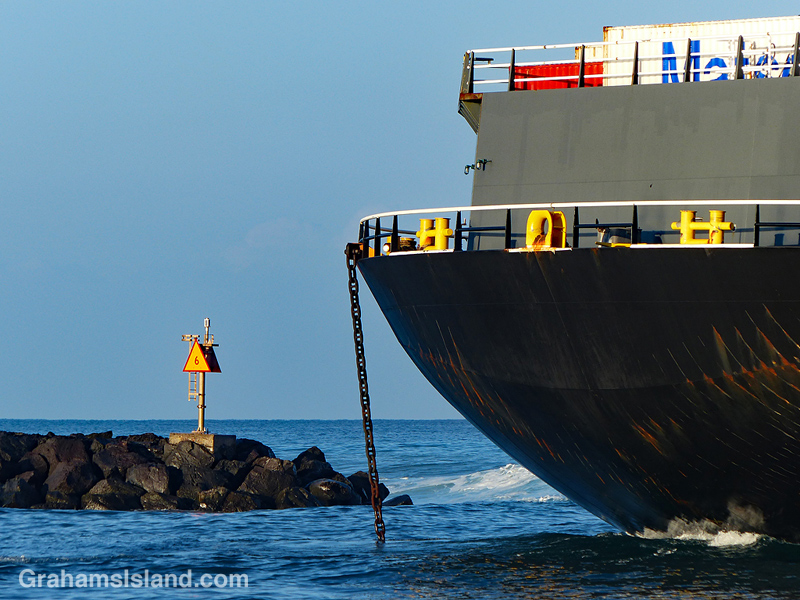 One of the inter-island barges enters Kawaihae harbor on a calm, clear morning. The barges are a prime method for moving freight between the islands, with Honolulu being the hub of all the operations.
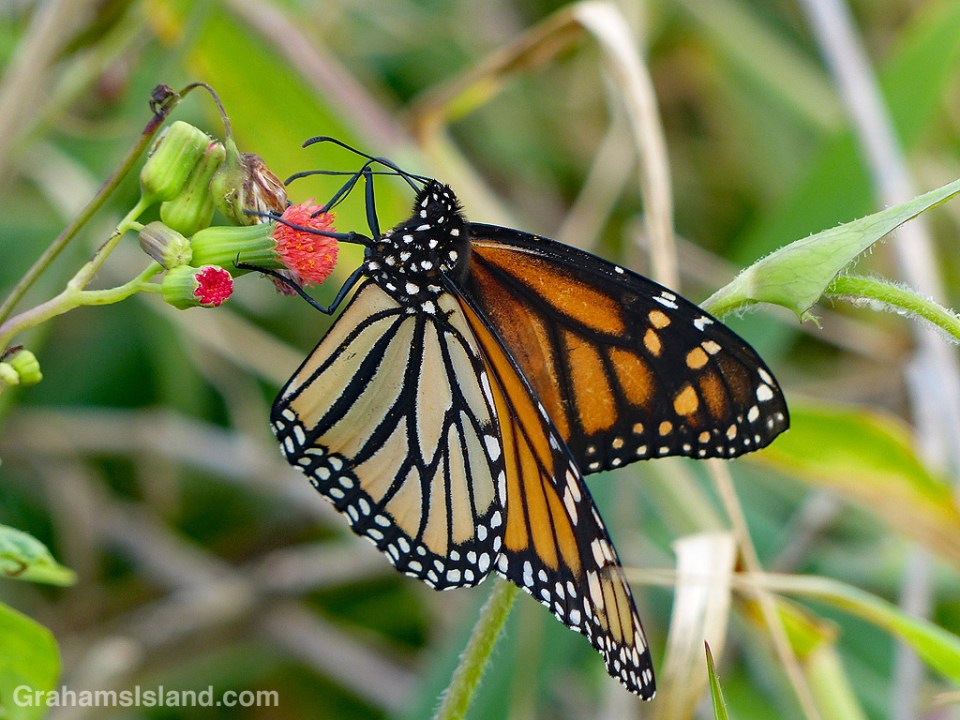
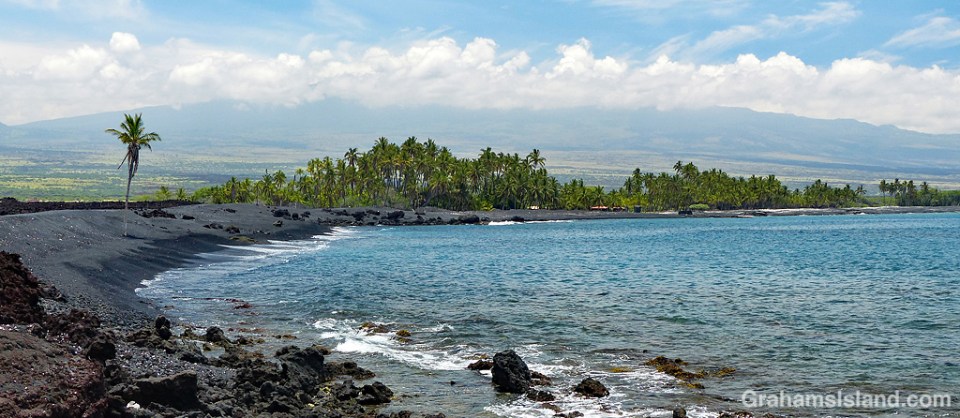

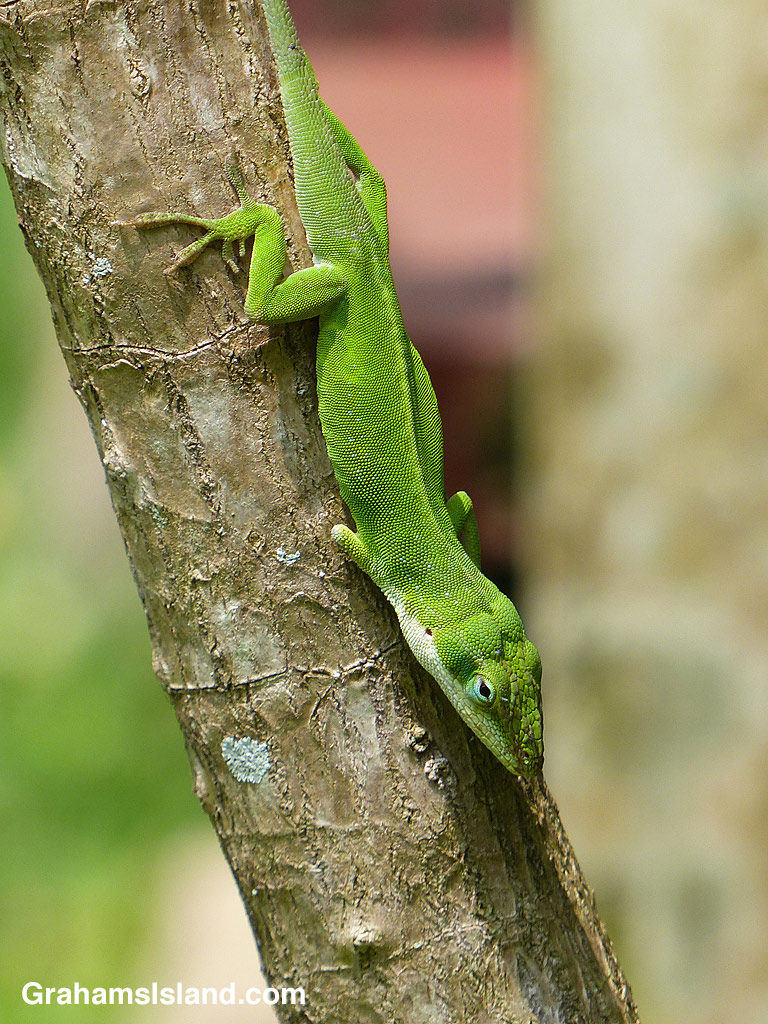 I love nature, but I’m reminded from time to time that it isn’t always warm and fuzzy. One such occasion was when I noticed that one of the resident green anoles was getting around on fewer than the standard issue number of limbs. Something nasty had happened to him, possibly in the form of a larger anole.
 On the first decent day after a long spell of grey, wet weather, I headed up to the Palila Forest Discovery Trail, just off Saddle Road on the lower slopes of Mauna Kea. I figured that even if the weather let me down, it’s a drive that I enjoy, so it would be OK regardless.
 Graham's Island