Monthly Archives: September 2020

Halema’uma’u Trail

The trail winds down through woods and abundant vegetation.
Steps lead down from the mossy pass featured in a previous post.

Recently, I posted a couple of photos (here) of a section of the Halema’uma’u Trail in Hawaii Volcanoes National Park. I thought I’d follow up with a few more photos of the trail, which runs from near the visitor center down to the edge of the summit caldera of Kilauea Volcano.

For more information about Hawaii Volcanoes National Park, go to nps.gov/havo/.

The trail suddenly emerges at the edge of the summit caldera of Kilauea Volcano. In the morning, the bench is a shady spot to take in the view.
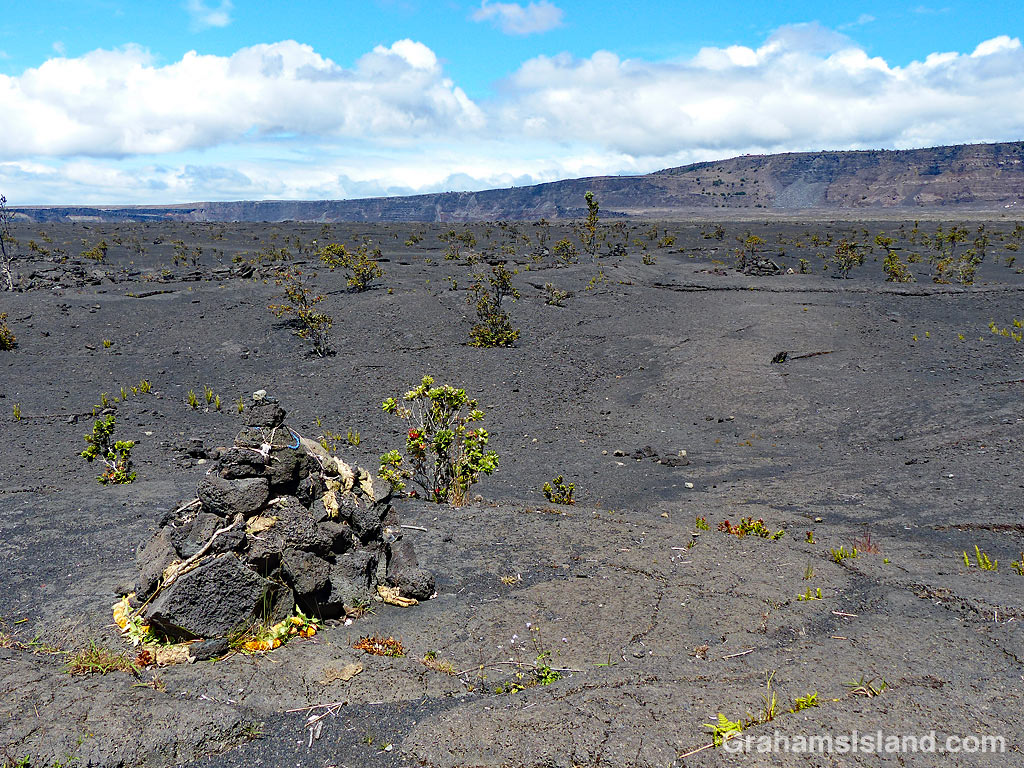
Halema’uma’u Trail carries on across the caldera, marked by cairns, but this section has been closed since 2008, when the Halema’uma’u Crater vent became active. These days it would lead straight into the depths of the greatly enlarged Halema’uma’u Crater.

Sheep on the run

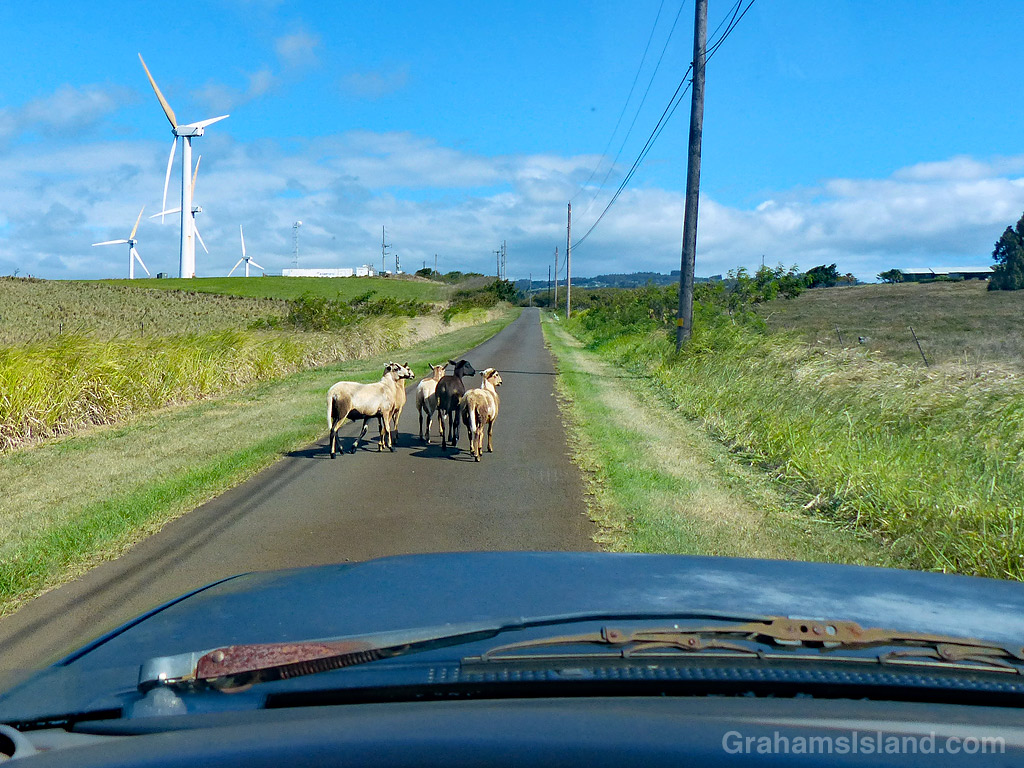
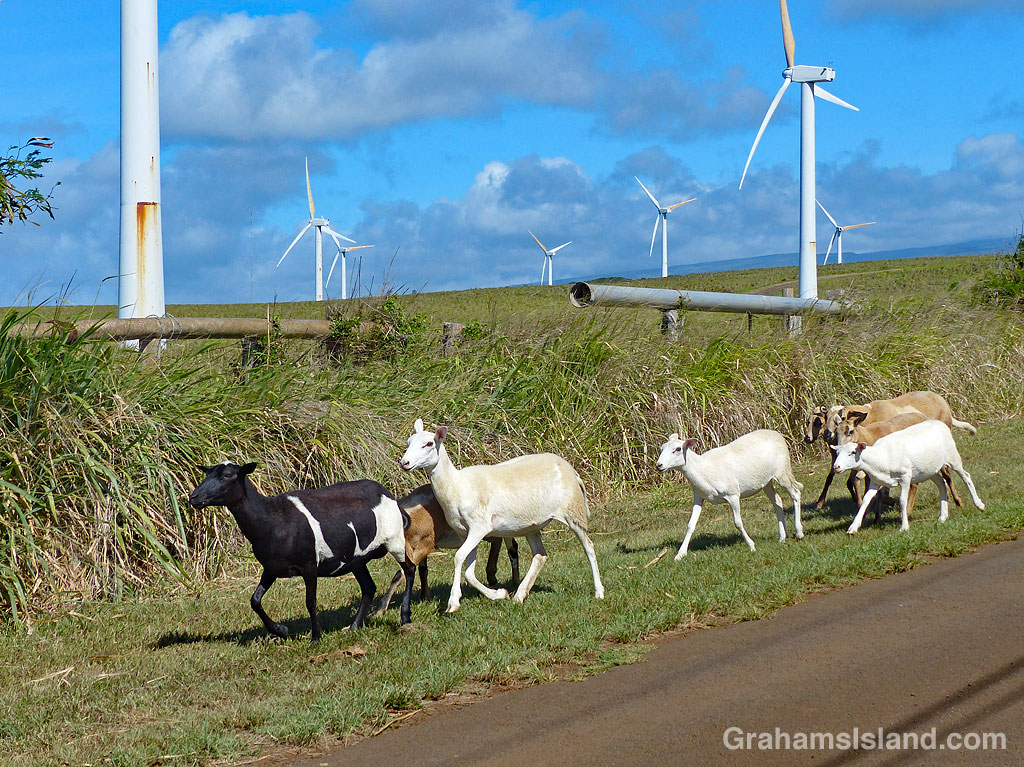
On my drives to and from Upolu Airport, it’s not uncommon to encounter groups of sheep on the road. Some of the field fencing is not in the greatest shape and, in any case, it’s primarily there to corral cattle, not that it always works for that either.

When I do encounter sheep, their typical response is to run ahead of me. At some point though, they usually veer off to the side and I can get by. Sometimes they turn and run back towards me. The last group I saw ran off, with several of the leaping into the air, twirling as they did so. I don’t think it was because they were so excited to see me.

Floating debris and tiny sergeant fish

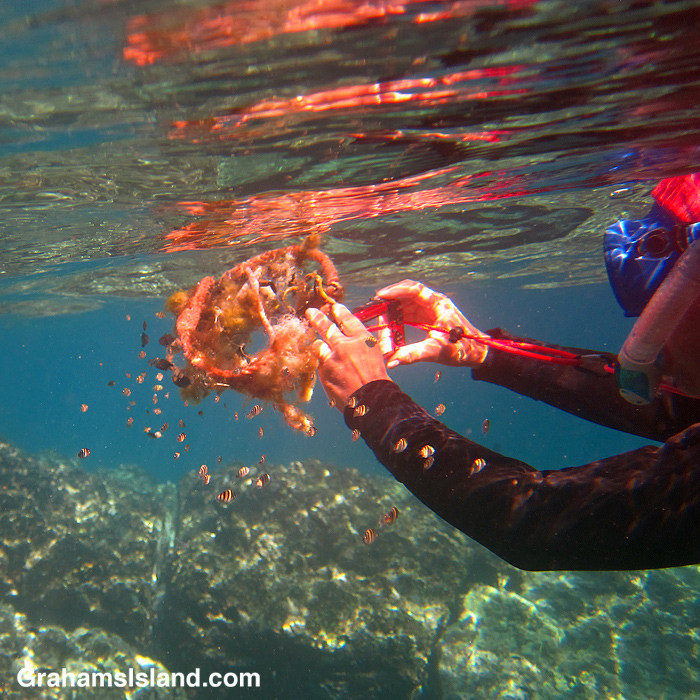
I was out snorkeling with a friend when I noticed her taking photos of a small clump of floating debris. When I headed over to see what was so interesting about the debris, I saw a host of tiny fish swimming around and within the clump. This was a small example of how fish, particularly smaller fish, will use floating objects to give them some cover and security from predators.

Most of the fish appeared to be sergeant fish, probably Indo-Pacific Sergeants, no more than half an inch long, but with their dark bars quite distinct. There were a couple of other species there, too, in smaller numbers, but I’m not sure what they were. (Update: The slightly larger grey fish are freckled driftfish. Thanks to John Hoover for the ID.)

The second photo gives a sense of scale and shows how small this little world was. It also shows the fish migrating across to check out whether this new clumpy thing might make a good new home. They did this with both of us, but returned to the floating debris, figuring wisely that it offered better shelter for them.

Posted in response to this week’s Friendly Friday challenge theme of ‘Quiet Places.’ See more responses here.

Signs: Yes, but…

Back in June, I went to Hawaii Volcanoes National Park to do a little hiking. The park had recently reopened and I thought it would be a good time to do some of the popular trails near the summit that are usually crowded. I was right about this because I saw hardly anyone all day.

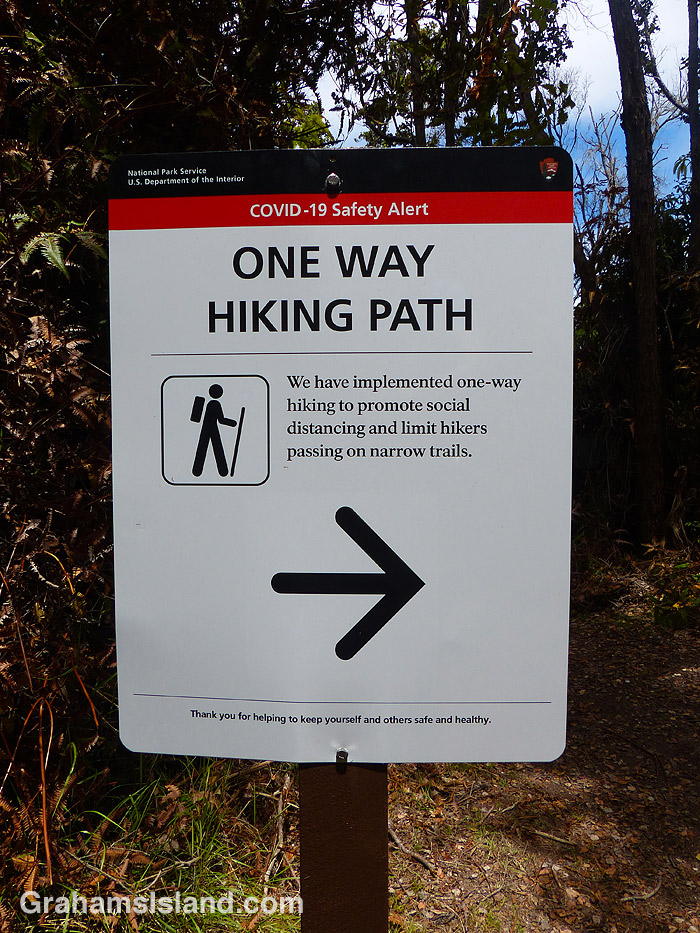
One of the trails I hiked was the Byron Ledge Trail and when I got to a junction near the end of it I came across this sign. I knew the park had made the popular Kilauea Iki Trail one way, but I hadn’t known about it applying to any other trails.

As you might have guessed, I arrived at this spot from the pointy end of the arrow. I’d hiked the trail in the wrong direction. The problem was that there was nothing at the other end of the trail letting me know I shouldn’t enter. When I hiked Kilauea Iki later, it was the same: at the parking lot there was a sign saying hike this way, but nothing at the other entrances to the trail.

On my way out of the park I stopped at the entrance and mentioned this to the ranger on duty. When I returned to the park in August, I asked the ranger at the entrance if they were still doing one way traffic on some of the trails. She said they weren’t. I wasn’t surprised. To do it properly, it would require a lot of signage and, with the Visitor Center closed, it would be hard to get the message across to everyone who visits the park.

For more information about Hawaii Volcanoes National Park, go to nps.gov/havo/.

Water inlet

Behind the beach at Anaeho’omalu Bay are two fishponds, Kahapapa and Ku’uali’i. These ponds are typical of the kind that form behind a beach, which protects them from the ocean waves. The ponds are connected to the ocean by this channel, which allows was to come and go with the tides. A sluice gate was used to prevent fish using the channel as an escape route.

Where natural ponds weren’t available, they were created by enclosing areas with rock walls. I featured one such fishpond here.

In Hawaiian history, fishponds were very important. In such an isolated community it was important to have reliable food supplies. The ponds provided this, supplementing fish caught in the ocean. Many ponds have disappeared due to development, volcanic activity, tsunami, and the like. But the ones that survive are a bit of living history, used now more for education than for food.

For more information about Hawaiian fishponds go here.