


This northern cardinal family set up home in the yard for a while. Above is the proud father. Next is the attentive mother. Finally there’s junior, looking, as offspring often do, like he might belong to a different species.

This northern cardinal family set up home in the yard for a while. Above is the proud father. Next is the attentive mother. Finally there’s junior, looking, as offspring often do, like he might belong to a different species.

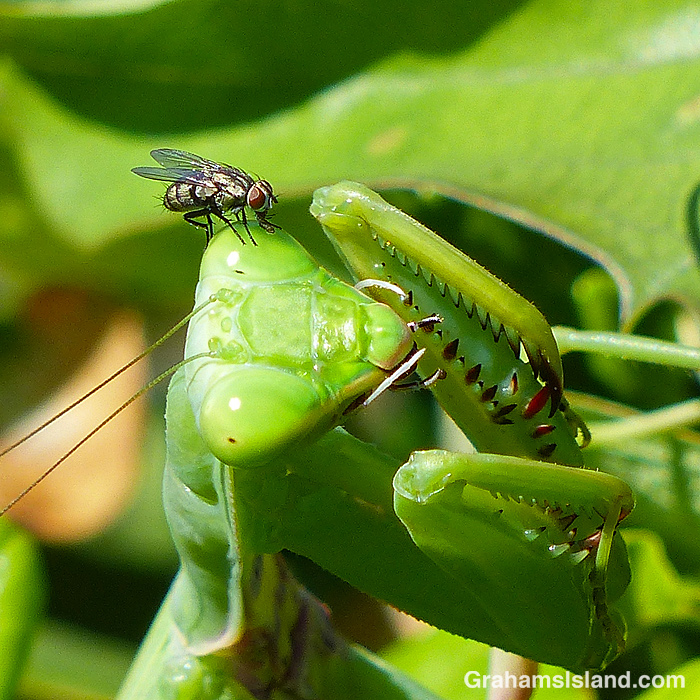
At Upolu Airport, where I go walking a lot, there’s a mock orange hedge with a passion vine running through it. I check this hedge to see what’s happening on it and lately, it’s been overrun by flies. I don’t know why this is, but I wasn’t surprised when I noticed two praying mantises stationed in the hedge. They were having a field day.
The flies would flit around as flies do, but when one settled, a mantis would strike. Their success rate was quite high, but the flies were easy targets. The safest place to be was on one of the mantises, but that wasn’t a long term solution.
The scene remained the same over three or four days, and then, though the flies were still around, the mantises disappeared. I guess that’s understandable. I mean, how many flies do you think you could eat before you’d start looking for something different?


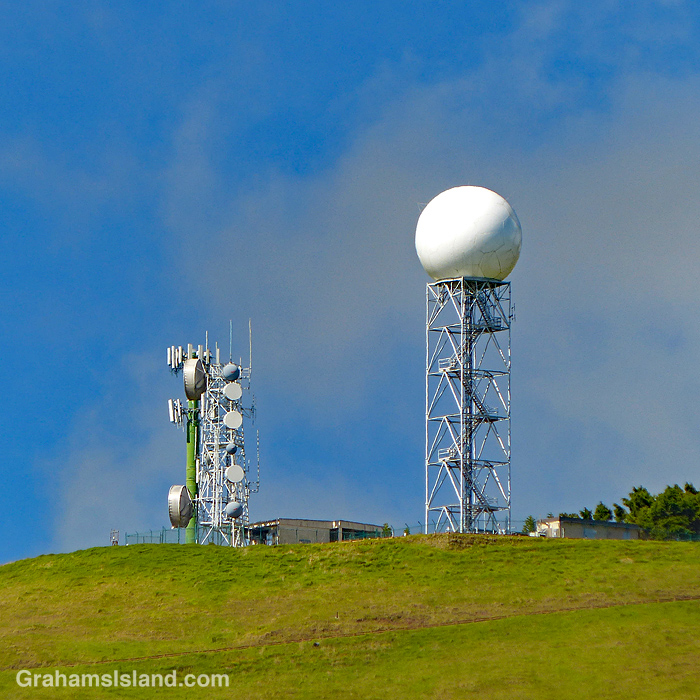
This week’s Sunday Stills challenge theme is ‘Towering.’ See more responses here.
Up near the top of Kohala Mountain is this array of towers. They sit in the middle of pastureland, surrounded by cattle and horses. The one with the large white ball on top is NEXRAD, the Next Generation Weather Radar, which provides current time information showing where clouds and rain are moving through the area. It’s also a navigation aid to local pilots who refer to it as the golfball.
The cattle don’t have access to the information from the golfball, but they know that when they’re wet, it’s raining, and when they’re dry, it’s not, and really that’s all anyone needs to know.
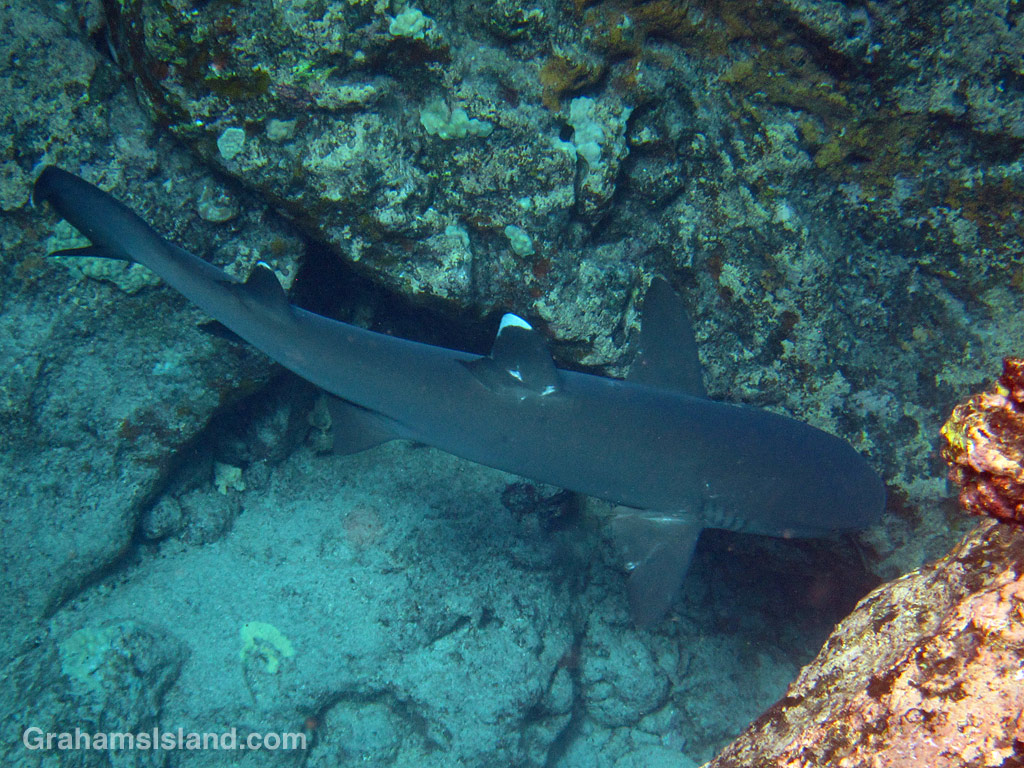


This week’s Friendly Friday challenge theme is ‘Morning Rituals.’ See more responses here.
Most mornings, I try to get in the water, as conditions and schedules allow. Morning is the best time for snorkeling as the water is usually calmer before the wind picks up as the day wears on. Visibility can vary from day to day and it can help to check surf reports to see if there are any swells moving in. But calm water doesn’t guarantee good visibility just as swells don’t always mean bad visibility. There’s only one way to be sure and that’s to jump in.
My favorite thing about snorkeling is that every day is different and I never know what I’ll see. Going to the same spot means I become familiar with some of the regulars, but there are always transient creatures passing through including rays and dolphins. And while those big creatures are great to encounter, it’s equally interesting to watch the activities of smaller fish and marine invertebrates.
It’s a rare day indeed that I don’t emerge prattling on about something I saw while I was in the water. And on those rare days, well, I’ve still had a good swim to set me up for the day ahead.

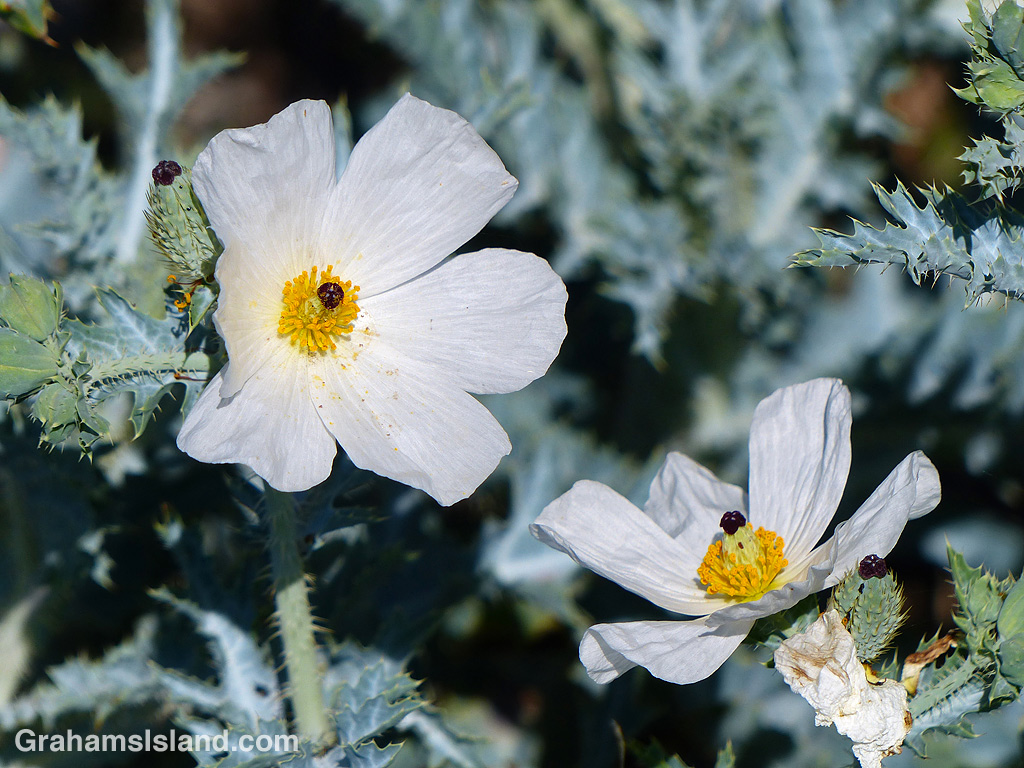
Argemone glauca is an endemic plant, known in Hawaii as Pua Kala or Hawaiian Prickly Poppy. It favors the hot, dry, and sunny conditions on the west side of the island and can grow anywhere from the coast, where these were, all the way up to subalpine areas of the volcanoes.
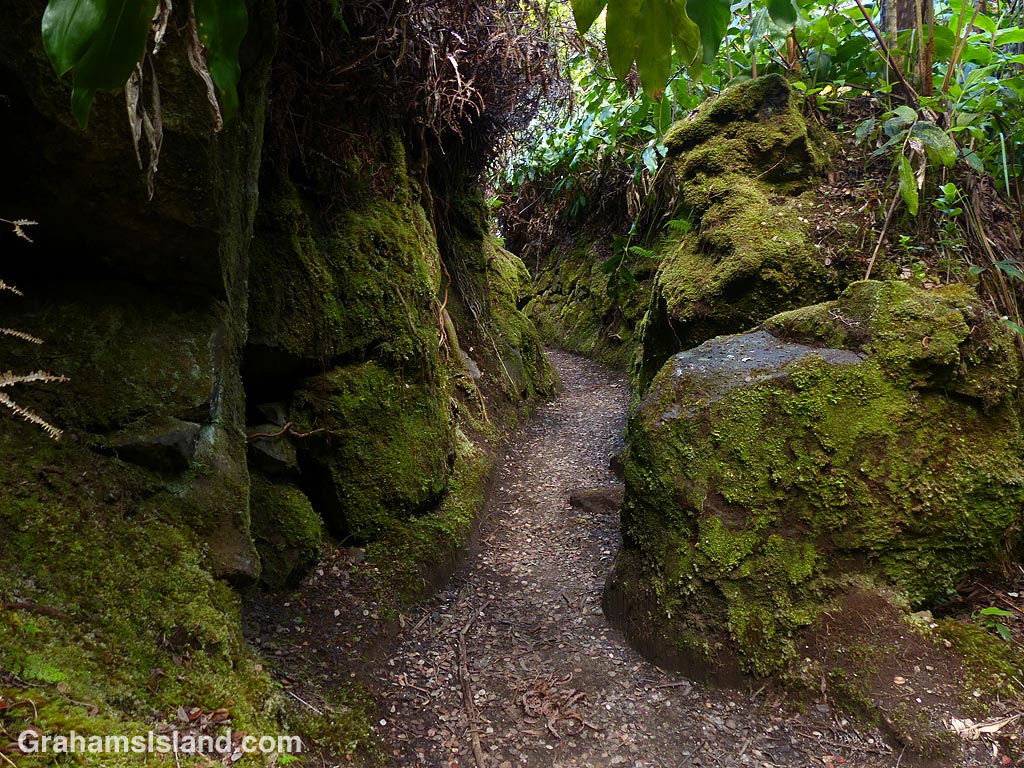
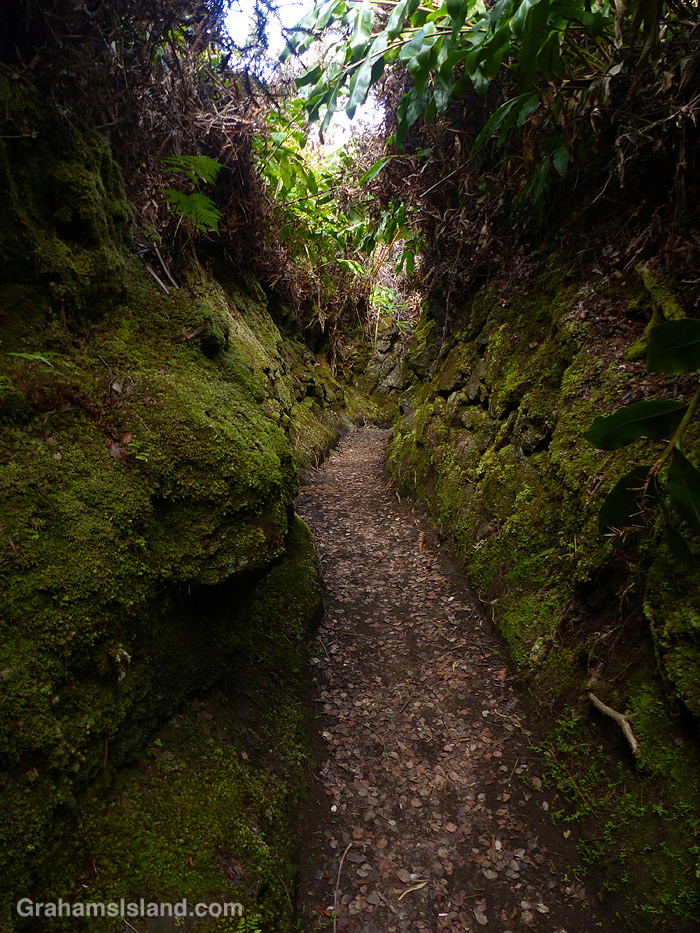
The Halemaumau Trail in Hawaii Volcanoes National Park takes hikers from near the visitor center down to the floor of the summit crater of Kilauea Volcano. It mostly passes through trees and some lush tropical foliage, this being the wet side of the island. Part of the way down the trail eases through a channel between two walls of rock, which are covered in moss. It’s a quite beautiful passage and, in this harsh volcanic area, has a remarkably soft feeling to it.
For more information about Hawaii Volcanoes National Park, go to nps.gov/havo/.
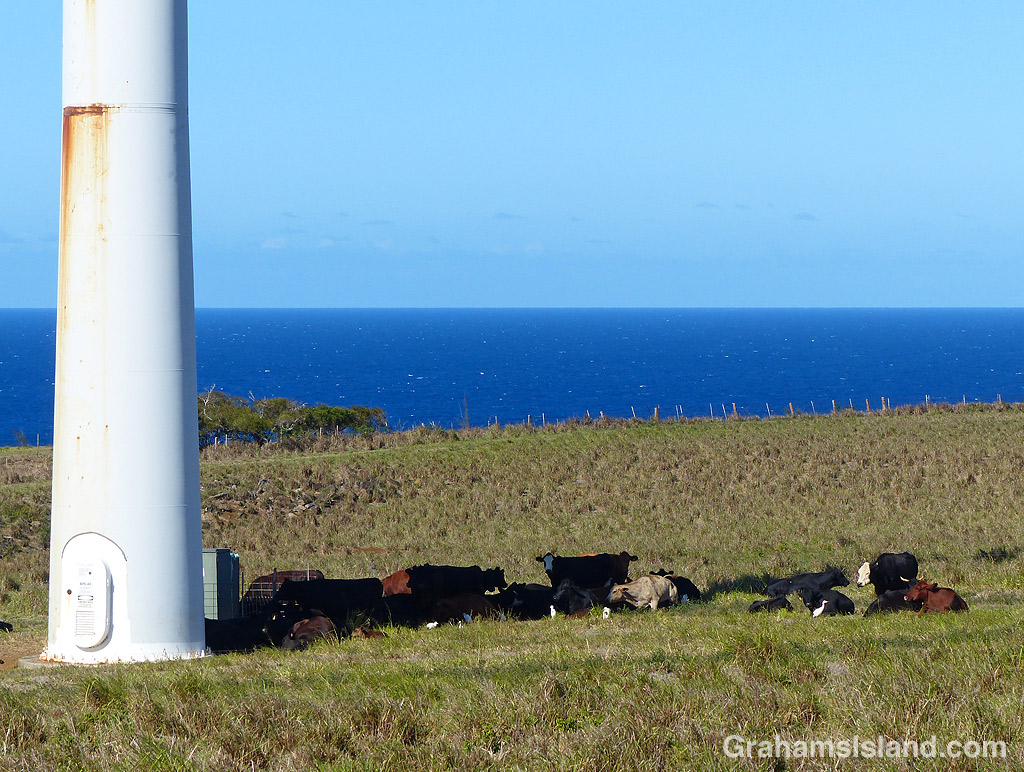
The Hawi Wind Farm often shares its grounds with cattle or horses. It’s open pasture with no trees and on this day, a clump of cattle had wedged themselves into the narrow band of shade cast by one of the turbines.
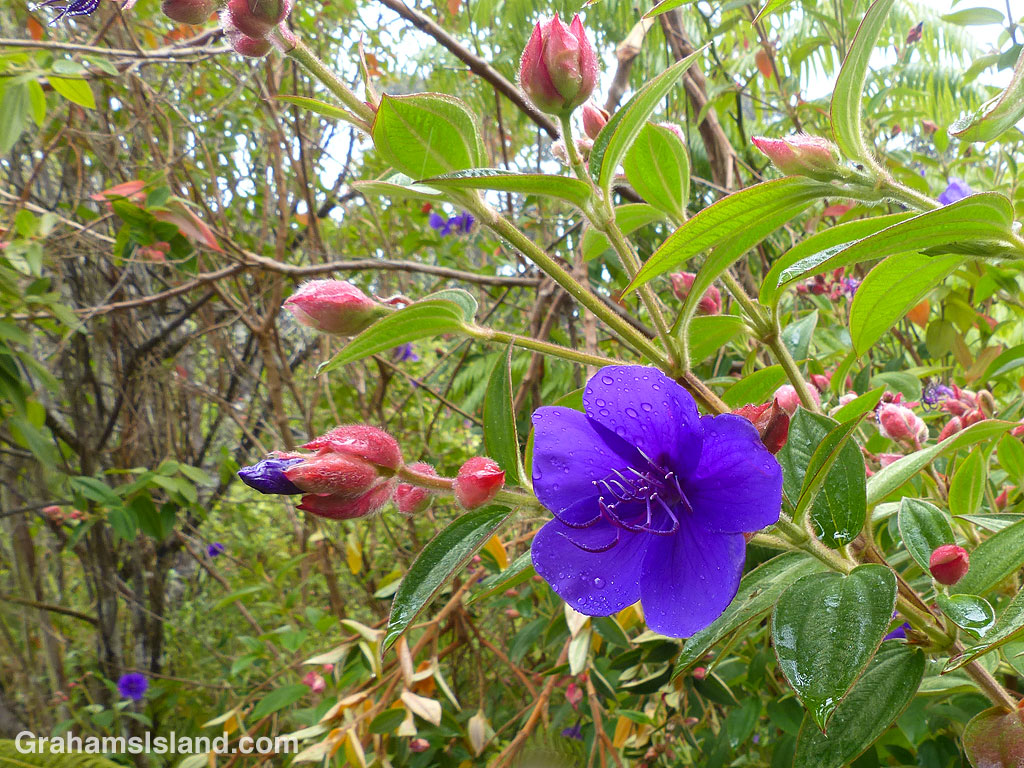
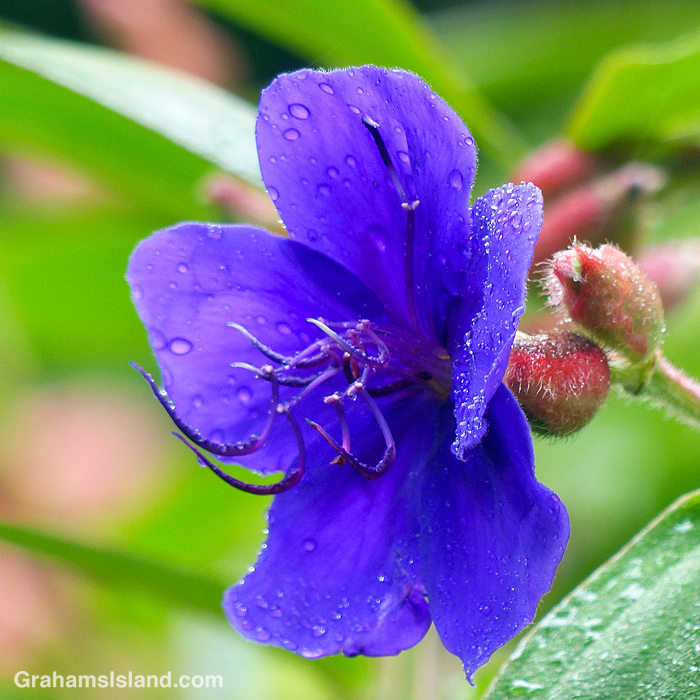
Tibouchina urvilleana hails from Brazil and is also known as purple glory bush and princess flower. Its flowers have striking deep blue to purple petals, which contrast nicely with dark pink sepals. Here on the Big Island, it’s a bit of a problem because of it’s dense growth habit which can crowd out other plants.
 Graham's Island