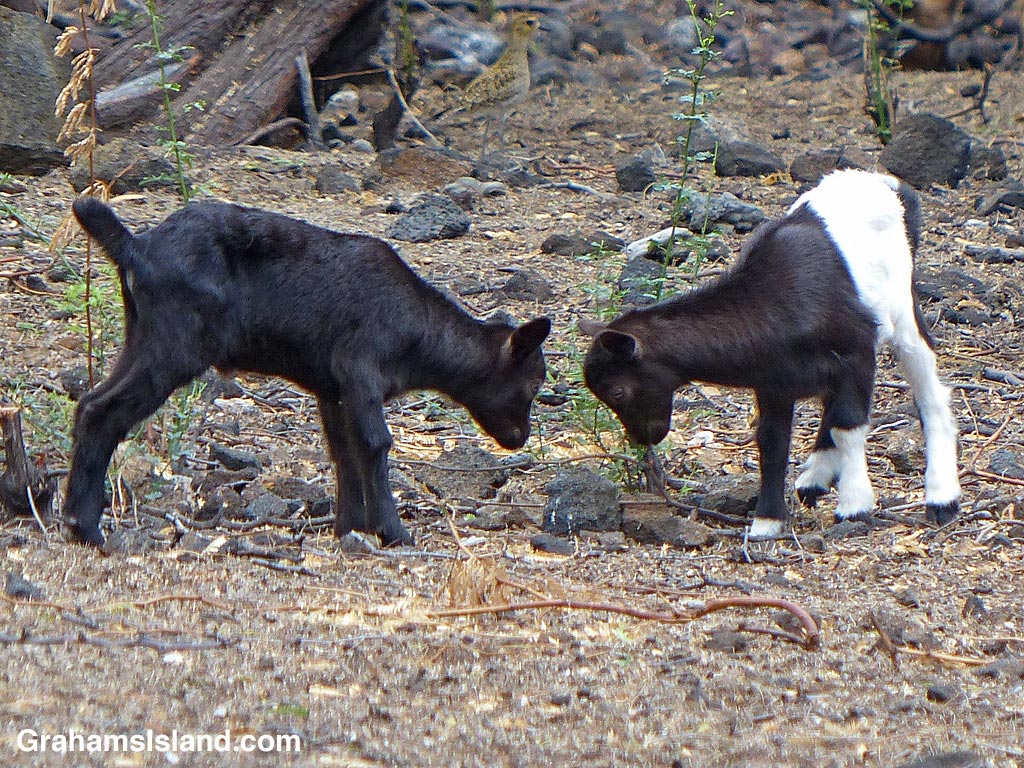
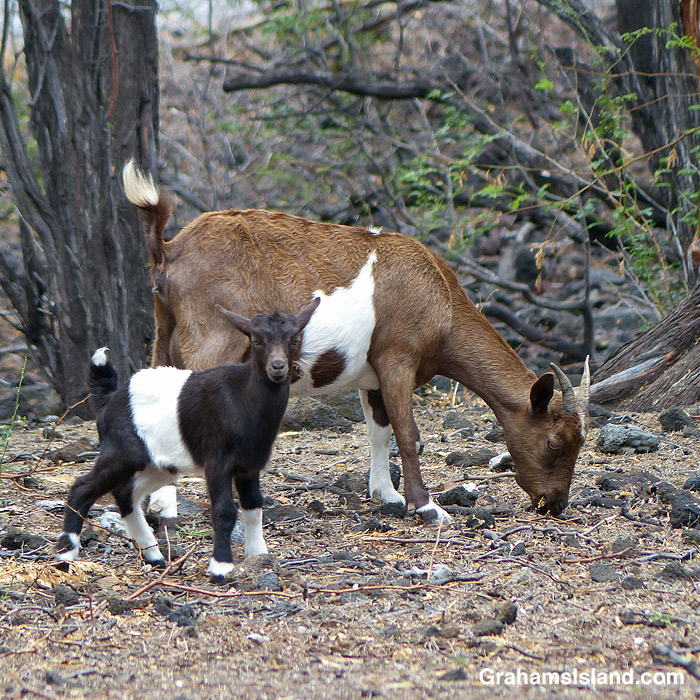
There are no shortage of goats at Kiholo and it doesn’t look like their numbers will be dwindling any time soon. On my last visit these two kids caught my eye with their typically rambunctious behavior. Mom, in the middle photo, looked singularly unimpressed.
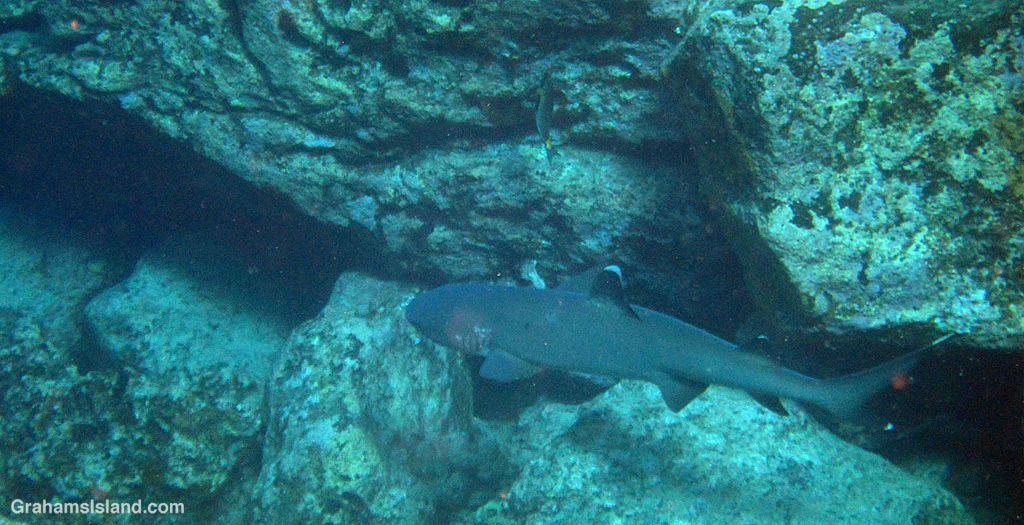
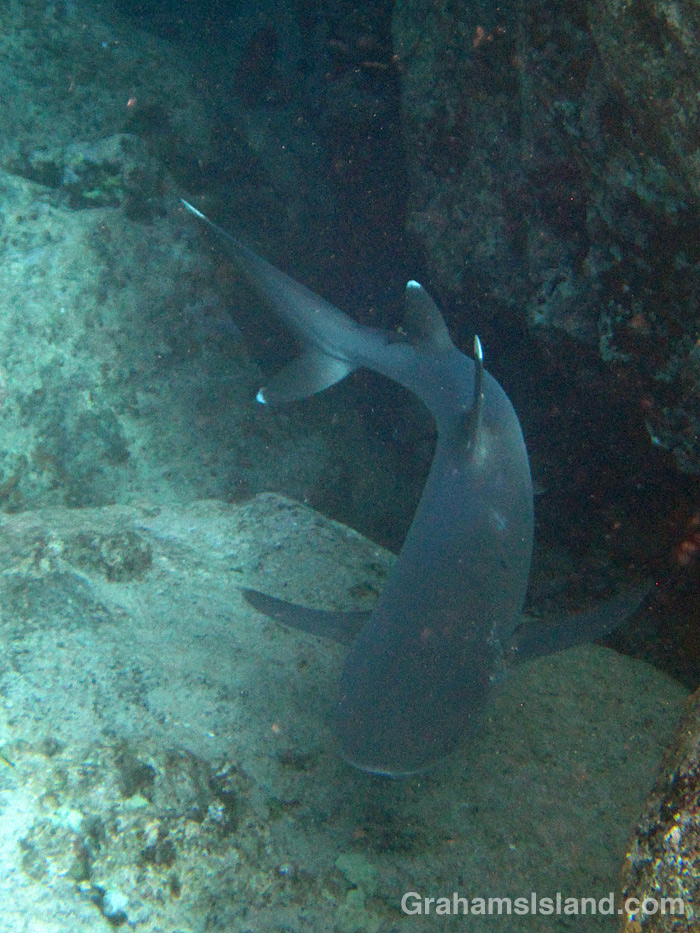
It’s been a while since I last saw a shark (cue seeing one this morning!) so I thought I’d post a couple of photos to remind myself what they look like.
This whitetip reef shark was cruising back and forth at the foot of a rocky ledge, possibly looking for a recess where it could rest.
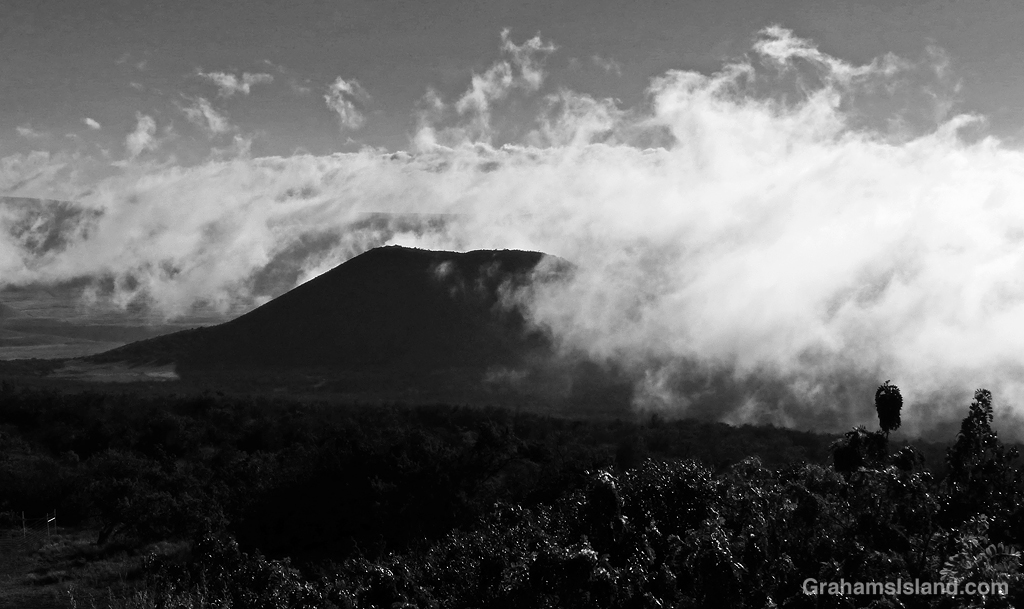
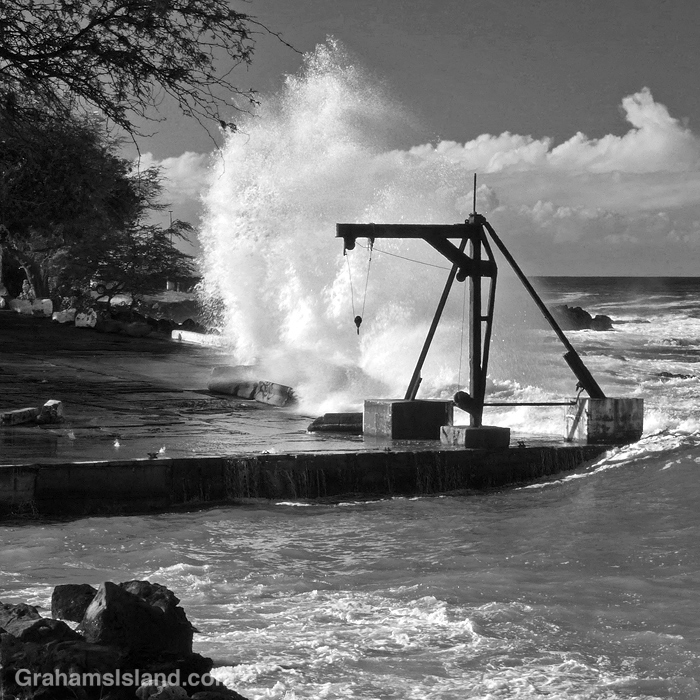
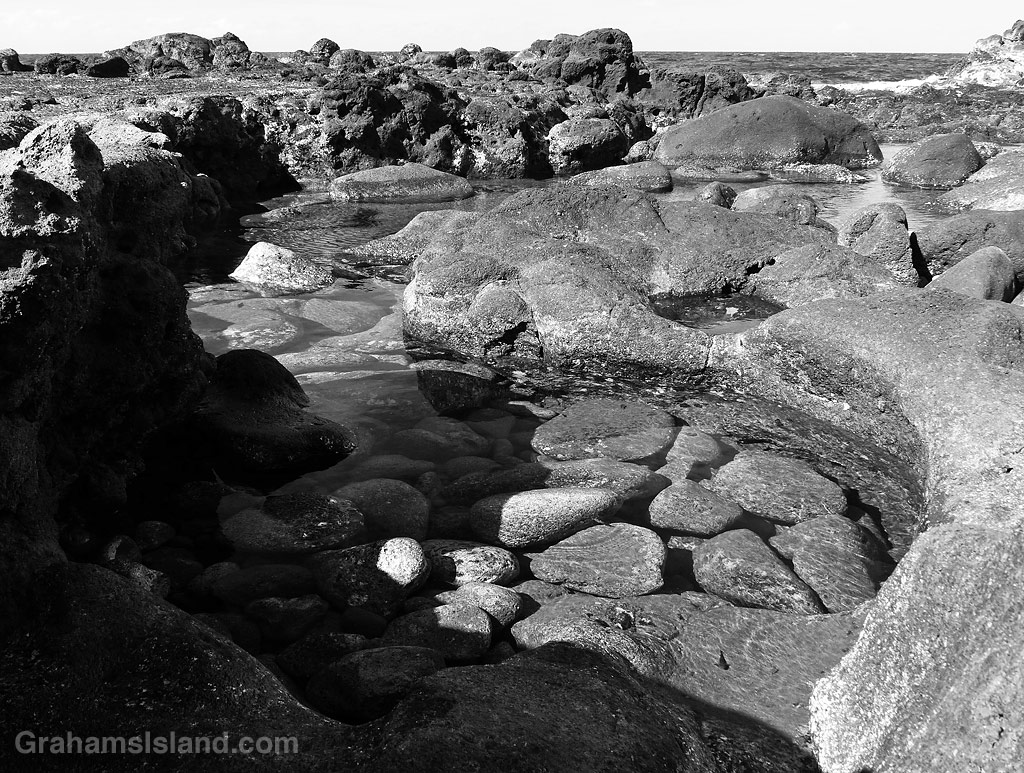
This week’s Sunday Stills challenge theme is ‘Your Best Black & White Photos.’ See more responses here. Having posted only one black and white photo until recently, this is the second such post in a couple of weeks.
In the top photo, clouds swirl around Pu’u Ahumoa on the southwest slope of Mauna Kea. The second photo shows surf crashing against the same wharf seen in the previous post. Last, but by no means least, is a photo of a tide pool on the North Kohala coast.
When I’m out walking, I rarely see praying mantis egg sacs. They’re no more than an inch long and they can blend in with the trees and branches where they tend to be found. However, on a recent walk on the coast, I saw these three sacs in the space of 20 minutes, the top two on branches and the third on a tree trunk.
I’m not sure why they caught my eye, though this is the time of year when they’re typically seen. Perhaps it was because I was watching for butterflies and dragonflies, so was paying a bit more attention to details than usual.
Each sac can contain up to 300 eggs. The eggs are encased in foam, called ootheca, which hardens into the sacs seen here. The sac in the middle photo was crawling with ants, which I suspect is not good news for the would-be mantises inside.
Kiawe trees (Prosopis pallida) are native to the northeastern corner of South America. They were introduced to Hawaii way back in 1828 and now are the dominant tree in coastal areas on the drier west side of this island. The downside of this is that the tree has wicked thorns that penetrate tires and footwear. My feet have been jabbed through Teva sandals and Adidas hiking shoes. The most popular footwear in Hawaii are slippahs (flip-flops or thongs), but one has to be brave and vigilant, or maybe foolish, to wear those where kiawe grow.
On the plus side, the tree’s wood is popular for firewood and barbecues. Kiawes also provide shade and have light yellow flowers which are popular with bees and butterflies such as the painted lady butterfly in this photo.
There aren’t a lot of houses around Kiholo Bay, but those that are range from older, rustic shacks to palatial millionaires’ compounds. This building is solidly in the rustic end of the range.
Yellow tangs are common here and are usually seen in schools. I like how, when they move from one feeding spot to another, they string out in long, colorful lines. They’re often seen in mixed schools with convict tangs, the paler fish with vertical black lines.
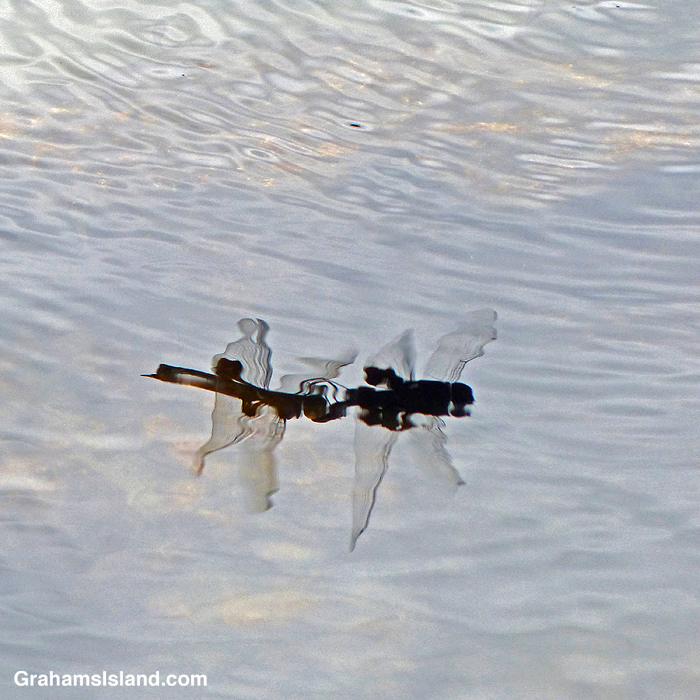
The pool at the south end of Kiholo State Park Reserve is a hotspot for birds and insects. When I go there, I’m lured in to taking photos of dragonflies. I ran one at the bottom of this post. This is another from that visit, showing a pair of black saddlebags dragonflies mating. I failed to get the actual dragonflies in any of my photos, but did get this reflection of them in the pool.