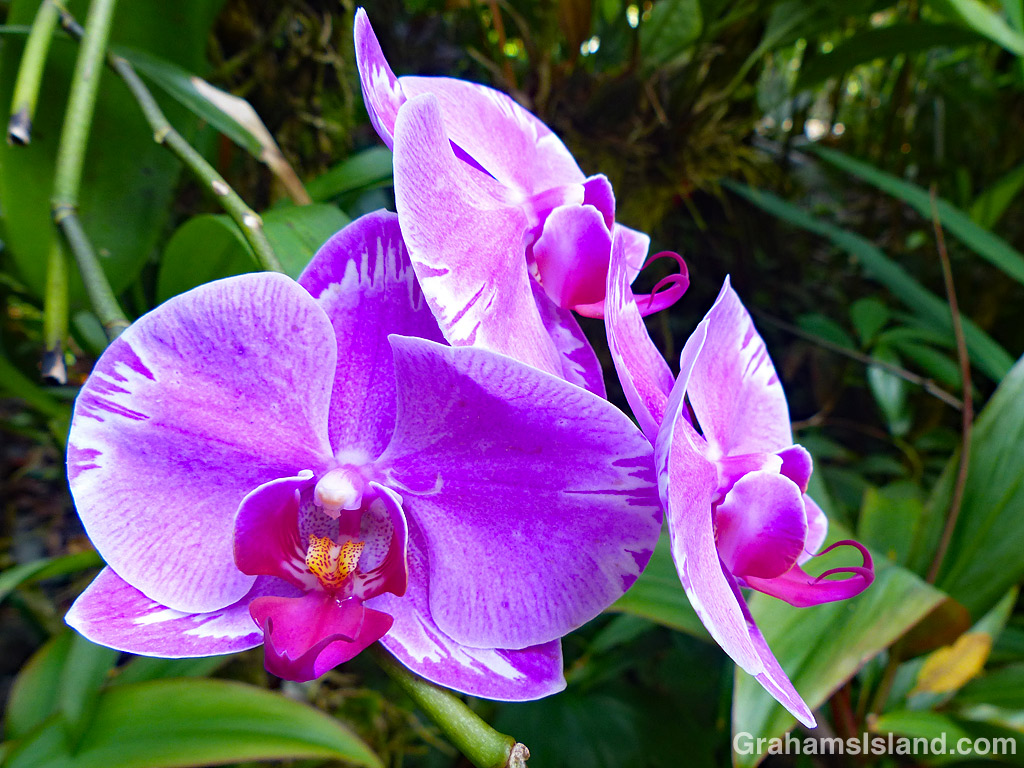
This Phalaenopsis Minho Princess orchid was at Hawai’i Tropical Bioreserve & Garden. The garden has been closed for almost a year now because of the Covid-19 pandemic. I haven’t seen any indication of when it will reopen though it will undoubtedly do so when conditions are right.
For more information about Hawai’i Tropical Bioreserve & Garden, go to htbg.com.
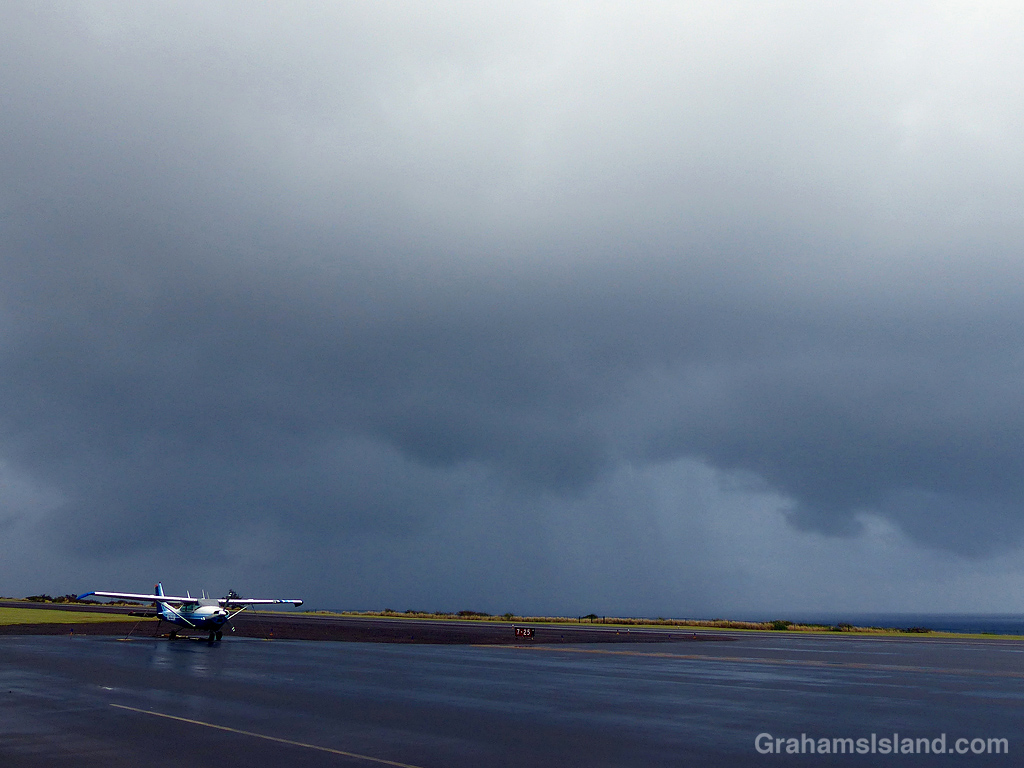
This week’s Sunday Stills challenge theme is ‘Rainy Day.’ See more responses here.
I had just finished my walk around Upolu Airport when the weather closed in. Usually, clouds and rain are blown in by the northeast trade winds, but on this day a system was moving in from the west. I’d been watching its progress as I walked, but still got caught out as it moved faster than I expected. Still, I did make it back to the car, waiting for me in the wet parking lot, before the next deluge arrived (top photo).
The crab spiders didn’t seem to mind the weather, and the raindrops made a picture of their webs (middle photo). It also made them easier to see so that I could avoid my usual trick of blundering into them and having webs wrapped around my head.
On the drive home, after my walk, I carved an avenue of spray as I motored along the puddled road (bottom photo).
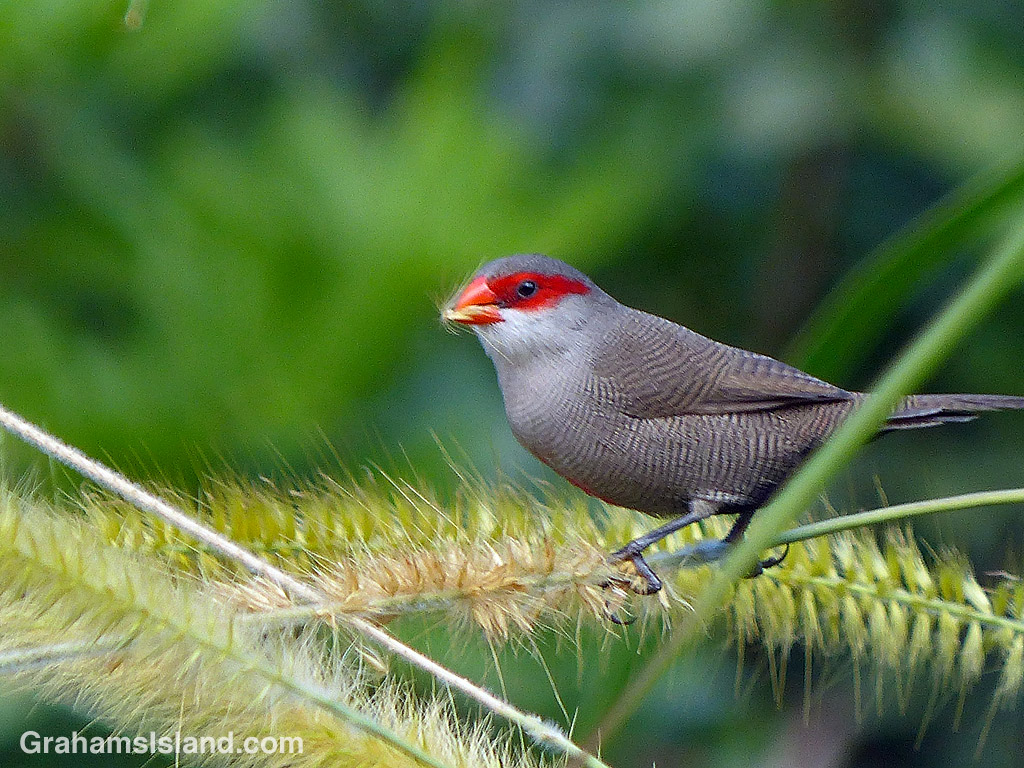
Common waxbills are an African species and were first seen on Oahu in the 1970s. Now they’re present on other islands including the Big Island. Lately, they’ve been snacking on the cane grass seeds that are currently available here.
Chain of Craters Road is the route down to the coast in Hawaii Volcanoes National Park. As the name implies, it passes a variety of volcanic craters, which were the scenes of eruptions in years gone by. But as it gets close to Hilina Pali, a series of great views open up. This one looks to the west and southwest, the backcountry part of the park.
For more information about Hawaii Volcanoes National Park, go to nps.gov/havo/.
I was taking photos of dragonflies over a pool when I realized there was a good deal of buzzing around where I stood. Looking around, I saw a fair number of bees collecting water from the edge of the pool. Luckily, I wasn’t bothering them and they didn’t bother me. I took a few photos and then returned to the futile practice of photographing dragonflies in motion.
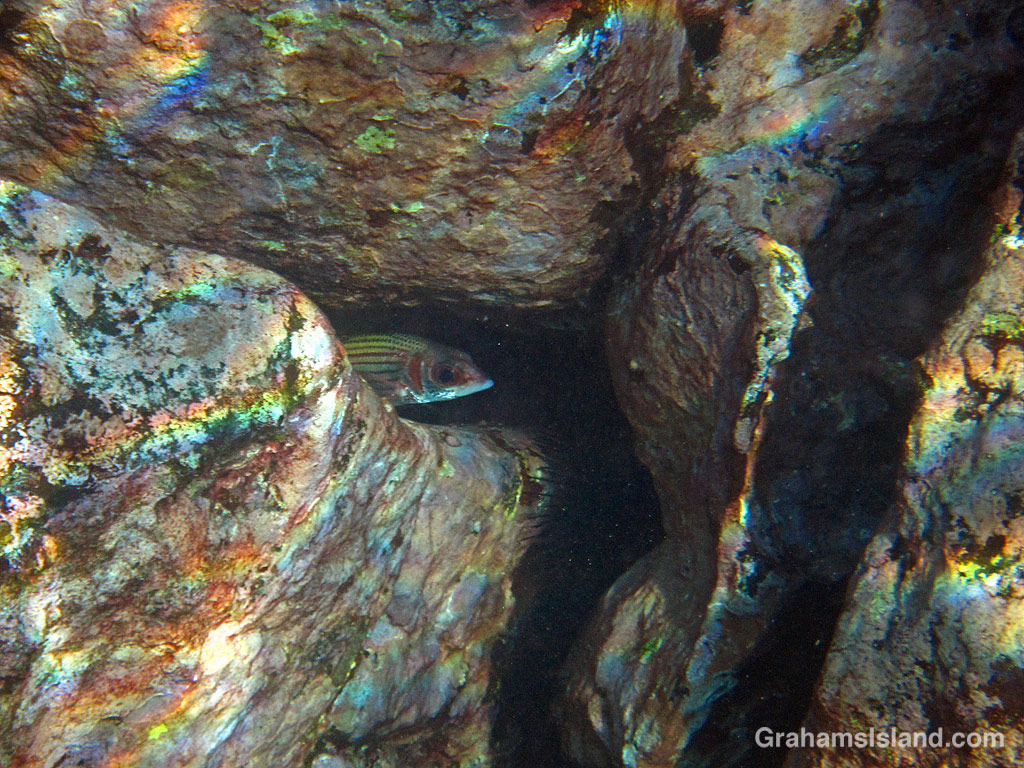
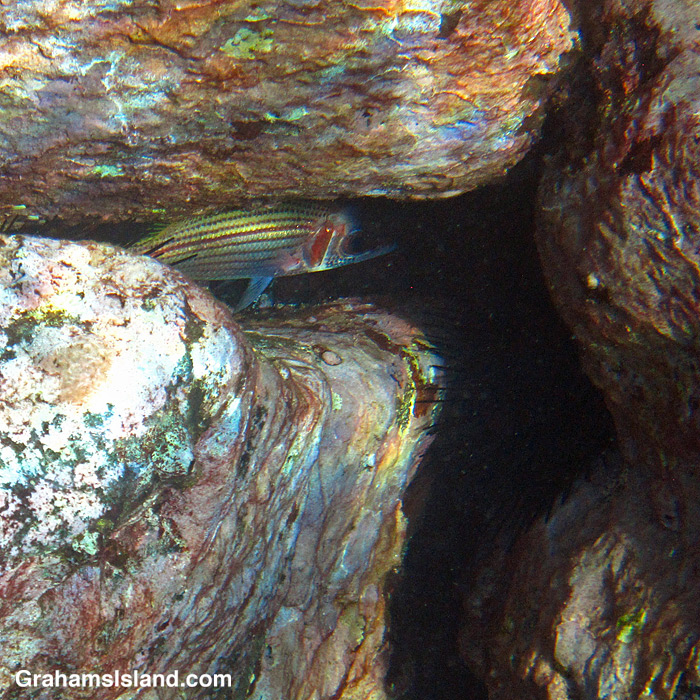
A few days ago, I posted a photo of a common bigeye, a fish that tends to hang out in recesses in the rocks. The yellowstripe squirrelfish is a similar creature. I see them occasionally, but they’re down in holes and recede even farther when I appear. This one lingered momentarily before sinking out of sight. They’re more often seen in deeper water, but not if you’re a snorkeler.
The current Friendly Friday challenge theme is ‘Something Different.’ See more responses here.
I think in my 6+ years of doing this blog, I’ve posted exactly one black and white photo. So a selection of black and white scenes seemed like a suitable response for this challenge.
The top photo is of morning clouds scudding over Mauna Kea as seen from the top of Pu’u Wa’awa’a. Second is a shot of surf crashing against an old wharf in North Kohala and, yes, I was secretly hoping the man on the wharf would get soaked! Third is a tenacious tree on the coast near Kawaihae. The bottom photo shows a small fishing boat in the ʻAlenuihāhā Channel, as seen from the North Kohala coast.
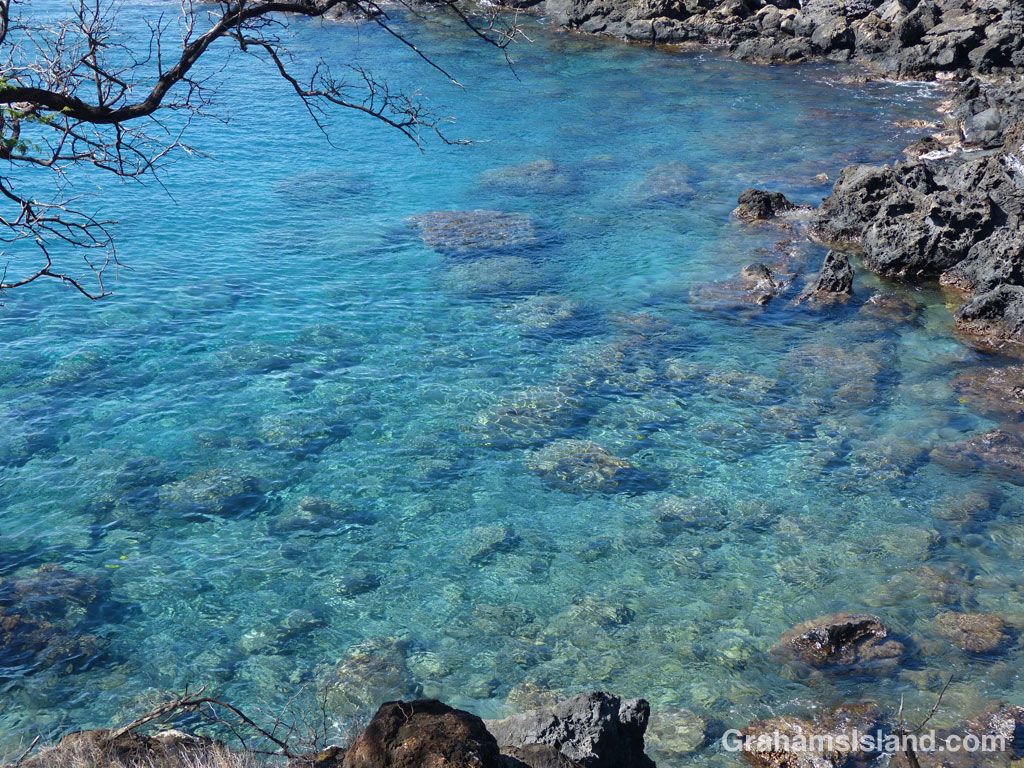
That isn’t the name of this little bay, but it could be. The wind was howling offshore and it was spritzing with rain from clouds that were several miles away. But the bay was calm and blue and inviting.
Posted for Bushboy’s Last on the Card photo challenge. See more responses here.