The golden pools at Keawaiki, on the North Kona Coast, get their color from a unique algae that lives in the pools. The pools are actually a little way inland from Pueo Bay, just north of Keawaiki Bay. If you visit, please refrain from taking a dip in the pools so that you don’t disturb or destroy the delicate ecosystem there.
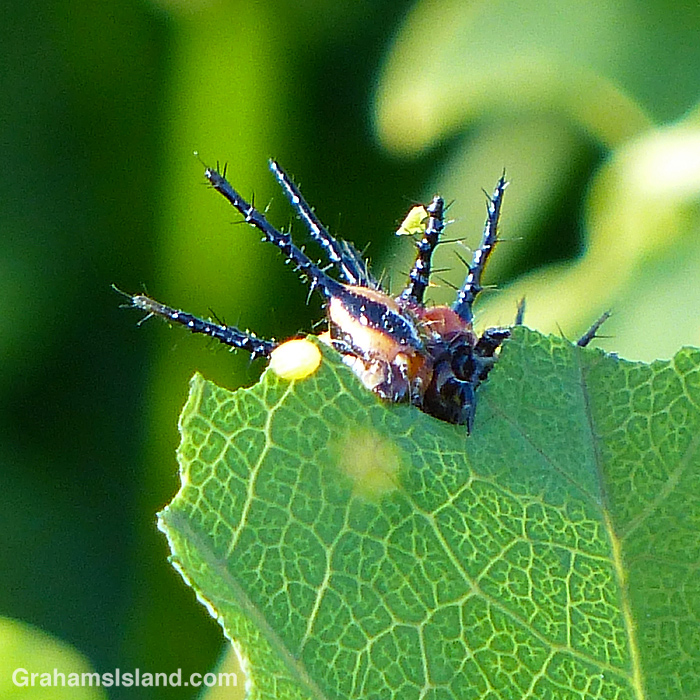
Passion vine butterflies lay eggs on passion vine leaves because that’s what the caterpillar is going to eat. Mostly, a butterfly will lay one egg per leaf so some passion vines have developed yellow spots to try and convince butterflies that the leaves are already egg laden. I haven’t seen this strategy working too well.
Once a caterpillar emerges it will begin a life of voraciously eating passion vine leaves. There’s an early video game quality about this as the mouth chomps back and forth across the leaves, cutting one arc after another.
However, despite the presence of caterpillars, butterflies continue to lay eggs on the leaves. So what happens when a caterpillar comes across an egg? It makes no distinction and down goes the egg. So long cousin Billy!
Yesterday, when I was out snorkeling, I was spotted this entity hanging in the water. When I first saw it, I thought it might be a pyrosoma. I was lucky enough to see one of those last year, which I posted about here. Pyrosoma are colonies of many individual tunicates and this new sighting looked somewhat similar. But where that pyrosoma looked like a gelatinous tube with little purple dots in it, this tube was longer, thinner, and had much larger, and clearly visible, brown spots in it.
After some research, I’m pretty sure this is a chained salp. Like pyrosoma, chained salps are colonies of individuals. The individuals have a heart, gills and a spinal cord, which makes them quite advanced in evolutionary terms. They move around by pumping water through their bodies. When they form chains, the individuals in the chains communicate with electrical signals so the the chain moves in harmony.
Typically, salps are creatures of the open ocean, and not often seen in Hawaii, so I feel quite fortunate to have seen this one.
This pair of nene was hanging around at Upolu airport as if waiting for the pilot of this plane to show up. Probably not a bad idea since it was pretty windy that day.
This week’s Sunday Stills challenge theme is ‘Texture.’ See more responses here.
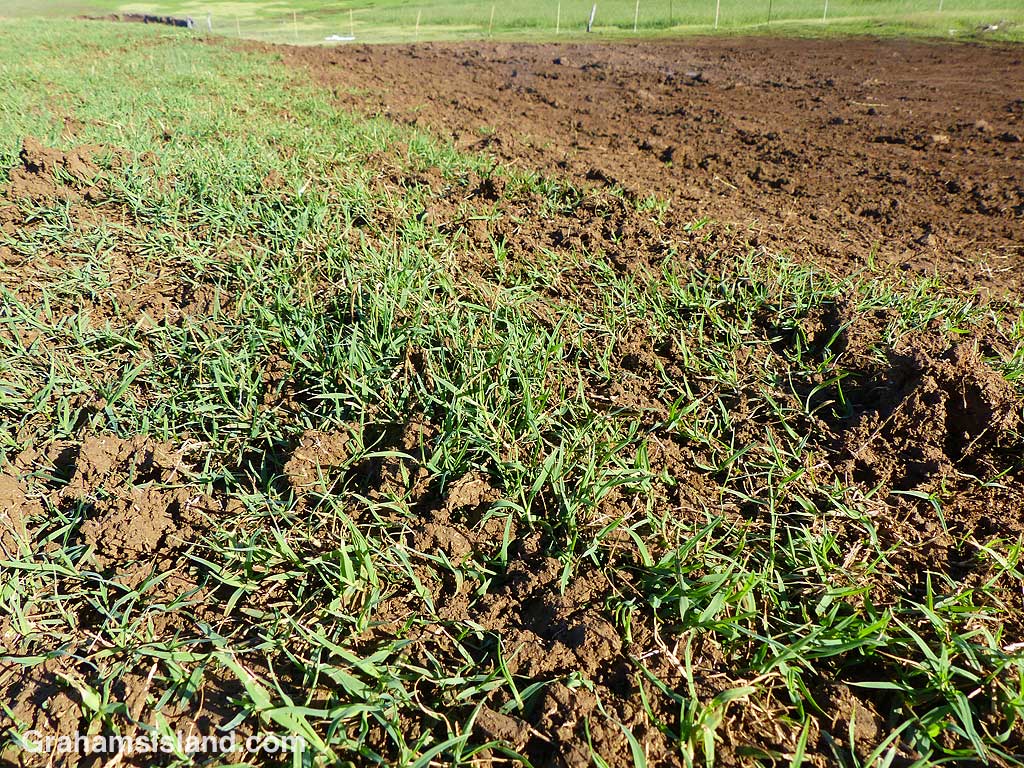
We had a lot of rain here last week, not tropical downpours, but steady, continuous rain. Along the coast, this turned parts of the dirt road into mud baths. Areas to be avoided, right? Not if you’re a mudder, someone for whom heavy rain is an excuse, a calling even, to drive their 4×4 trucks to the area and carve figure eights into the morass.
The top photo shows an area where this activity is particularly popular. The original grassless patch was about half the size of that in the photo. For walkers, it’s not quite so inviting. It’s easy to lose footing in the slick, squishy mud. And if the rain continues, this mud will wash down into the ocean affecting coastal habitat for fish and other marine life.
Fast forward past a couple of days of sunnier weather and the ground is very different. Most of the mud has dried. Those spatters sprayed around the edges of the mud bath are now nubbly, crunchy lumps in the grass. Anyone driving or walking in this area will crush those lumps into dust and when the wind blows, as it does here most of the time, that dust will blow into the ocean, etc., etc..
But it might rain again before it all blows away, except … well, you get the picture.
This week’s Friendly Friday challenge theme is ‘Unique.’ See more responses here.
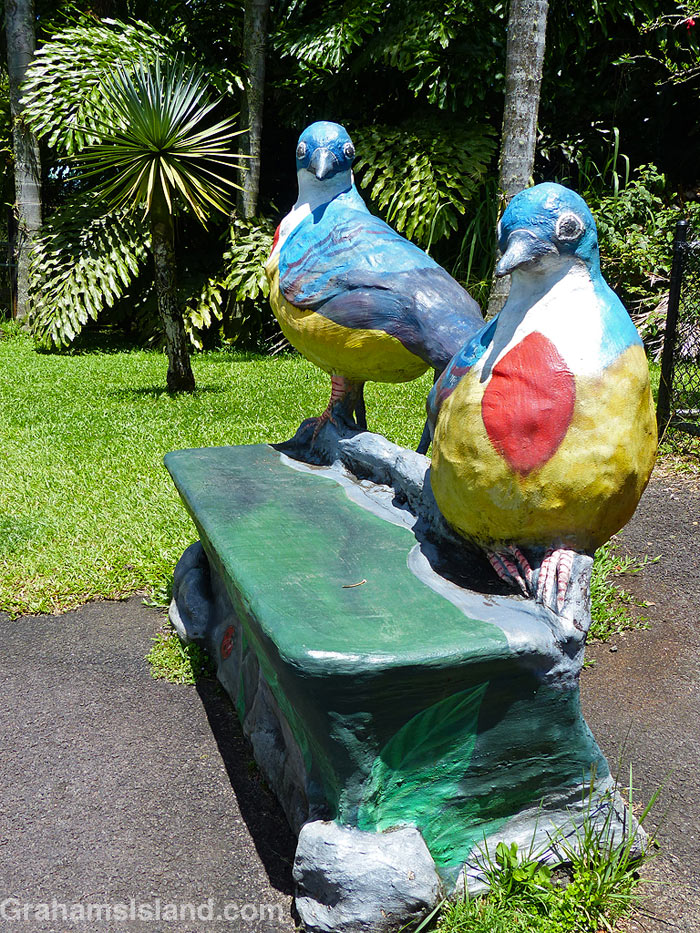
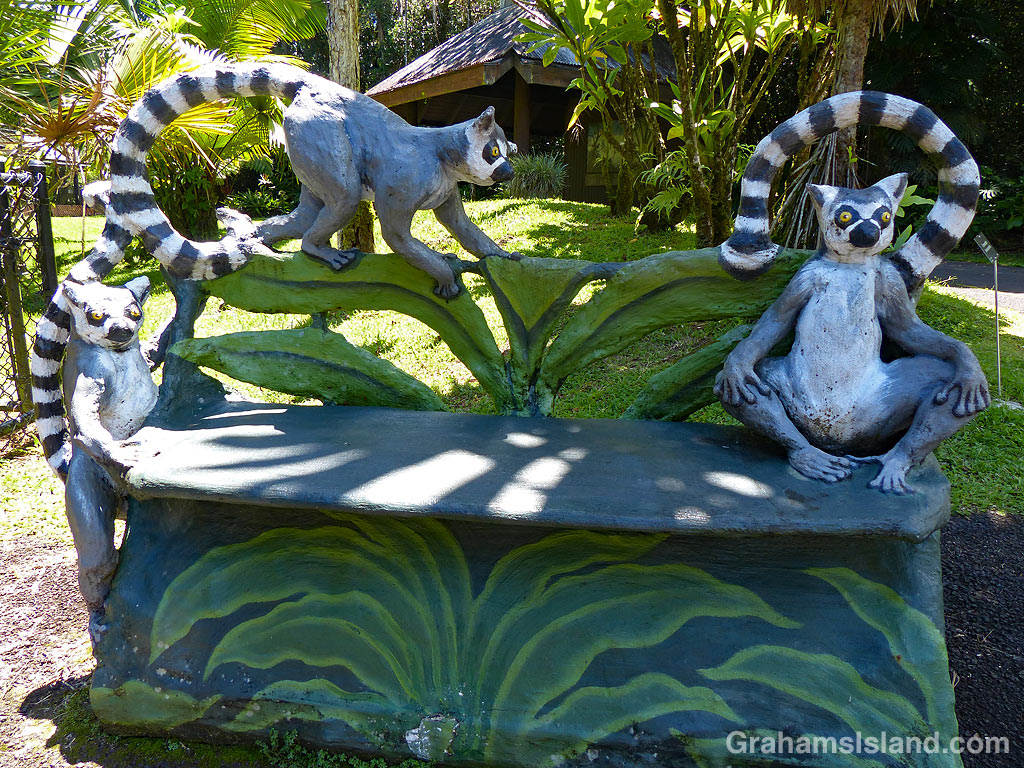
I’ve posted photos of the benches at Pana’ewa Rainforest Zoo before (here and here), but realized I had some others available, so here they are. I don’t know whether they’re unique or not, but I’ve never seen anything like them elsewhere.
Top photo is the Namaste bench, Namaste being a white Bengal tiger, the zoo’s star attraction, who died in 2014. The middle photo shows a couple of birds, though I hesitate to say what kind! The bottom photo represents the zoo’s ring-tailed lemurs.
The zoo is currently closed, in part because of the Covid virus, but also for construction required to make the zoo compliant with the Americans with Disabilities Act. It’s scheduled to reopen in early 2021. For more information about Pana‘ewa Rainforest Zoo & Gardens, go to hilozoo.org.
This shell necklace was draped over the sign at King Kamehameha’s birthplace on the North Kohala coast. It was probably left there as an offering, a not unusual occurrence at such sites.
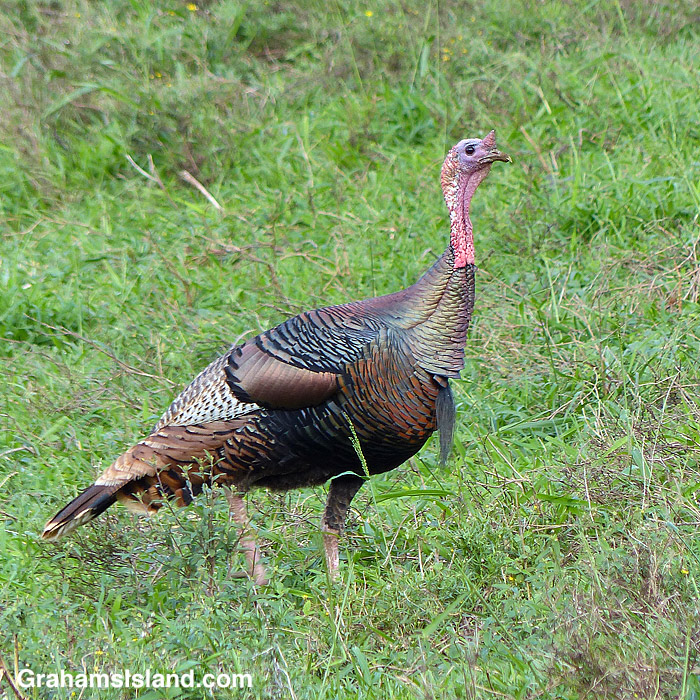
It’s Thanksgiving in the U.S., so I hope you have as good a day as these turkeys, which are undoubtedly happy to be alive. And as an aside, looking at these photos made me appreciate what lovely plumage these birds have.