
This Pacific Day Octopus was easy to spot when it was on the move, but when it settled down it quickly became almost invisible.


This Pacific Day Octopus was easy to spot when it was on the move, but when it settled down it quickly became almost invisible.
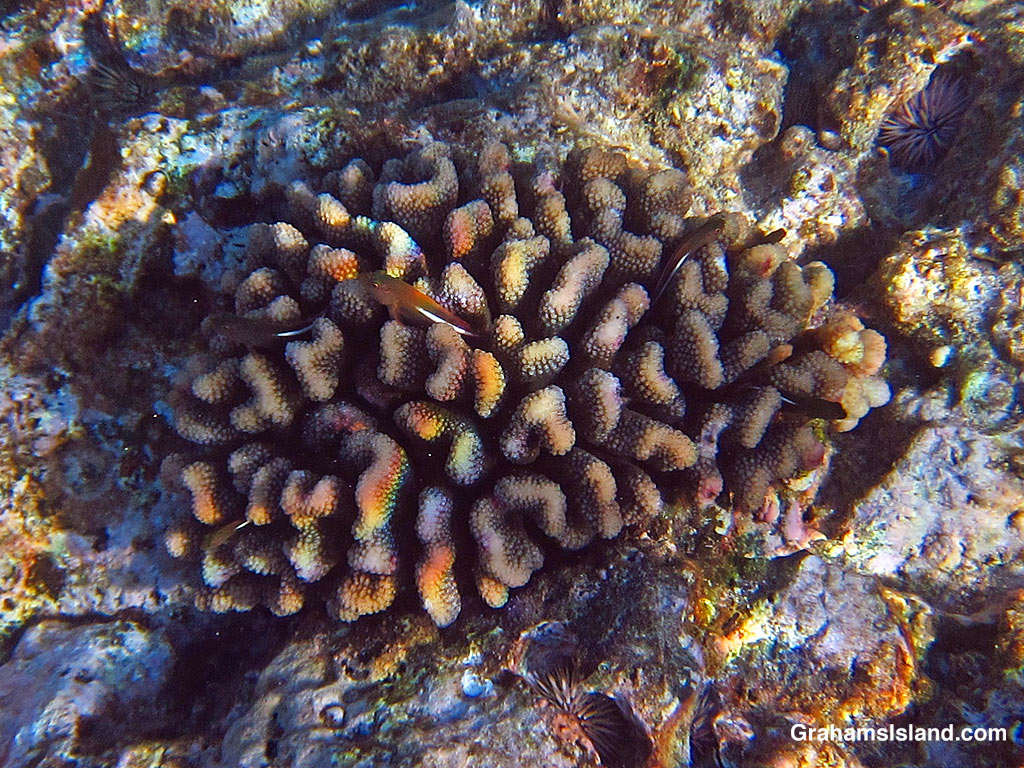
How many Arc-eye Hawkfishes can you fit in a head of Cauliflower Coral? I count six here, though there could be more, and who knows what else besides. Corals like this offer vital shelter for small fish and other creatures seeking to avoid the many predators out hunting.

A typical early Saturday morning at the beach. The campers set up Friday night, but not too many are up and about until it starts getting warm. This photo was taken just after 7 a.m. when coffee and breakfast is the priority for most of those who are up, though not the kids of course!

Yesterday, I posted photos of a manta ray encounter (here), noting that, if fins are seen in the water, manta rays are one likely reason. After the post went live, I went for a swim. I didn’t see anything unusual and was heading back in when I turned and saw fins in the water. This time, they were clearly dolphin fins.
Sometimes, the dolphins zip by as if they’re late for an appointment, but these were proceeding in a very leisurely fashion, so I thought I’d swim back out a ways and see if any came to check my out. As I swam, I’d pop up to see what was going on. Quite a few dolphins went by in small groups, but I saw more were following.

Luckily, one of these groups was traveling closer to shore than the others and as I ducked my head underwater, I saw them approaching. The lead dolphin did veer in my direction, but carried on its way, followed by a trio that maintained impressive formation as they passed. The whole encounter lasted just a few minutes, but I was thrilled to see them and happy to get a few decent photos.

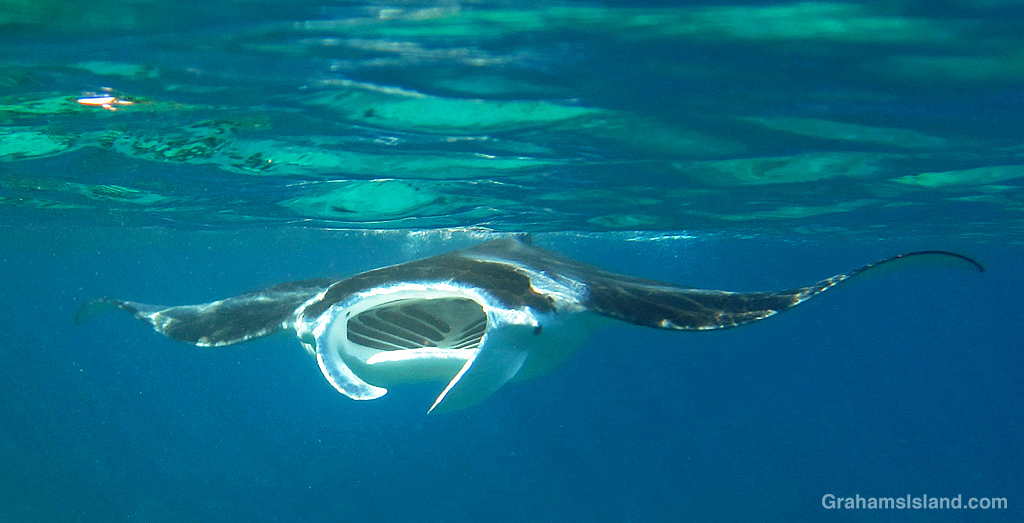
A couple of days ago, my wife and I arrived at our usual snorkeling spot and, when we got out of the car, she spotted fins in the water. Fins generally belong to dolphins, sharks or rays. Each has a different look and these had the look of manta ray wingtips. We could see that there were at least two mantas in the bay. Sometimes, especially with dolphins, the fins will be on the move as the bearers move along the coast. These mantas did not seem in a hurry to go anywhere, but were just puttering around the bay. We hustled down to the water and swam off in the general direction of where we’d seen activity.

We were swimming along when I saw the first manta heading towards me. I stopped and started taking photos. It came fairly close before veering away and heading back the way it came. Then it turned, came back past us and continued on its way.


When it became clear it wasn’t coming back we continued on our way. A little farther along we saw the second manta. It was doing barrel rolls and then came our way. Again, we stopped and watched. This one was more curious, passing by quite close and then looping around several times. Sometimes it went a fair distance away and we’d pop up and follow its progress when it was close to the surface.
Eventually, it seemed to head off in the general direction of the other manta. We lost track of it and popped up in the water to decide what to do next. When I ducked under the water again and turned around I saw the manta again. It made a couple more passes before heading out towards deeper water.


I saw this Undulated Moray Eel out in the open recently and, rather than dart for shelter, it remained where it was opening and closing its jaws. While this looks threatening, it’s typical of most eels, the purpose being to push water over its gills, the equivalent of breathing. However, that’s not to say it’s a good idea to dive down and interact with the eel.
My fish book describes the Undulated Moray Eel as “one of the nastiest.” Its narrow jaws hold three rows of teeth, one running down the middle of its mouth. It’s usual prey includes small fish, but this eel was accompanied by a changing group of fish, and neither seemed too bothered about the other.
In Hawaii, this eel is often called the chainlink eel, for obvious reasons.

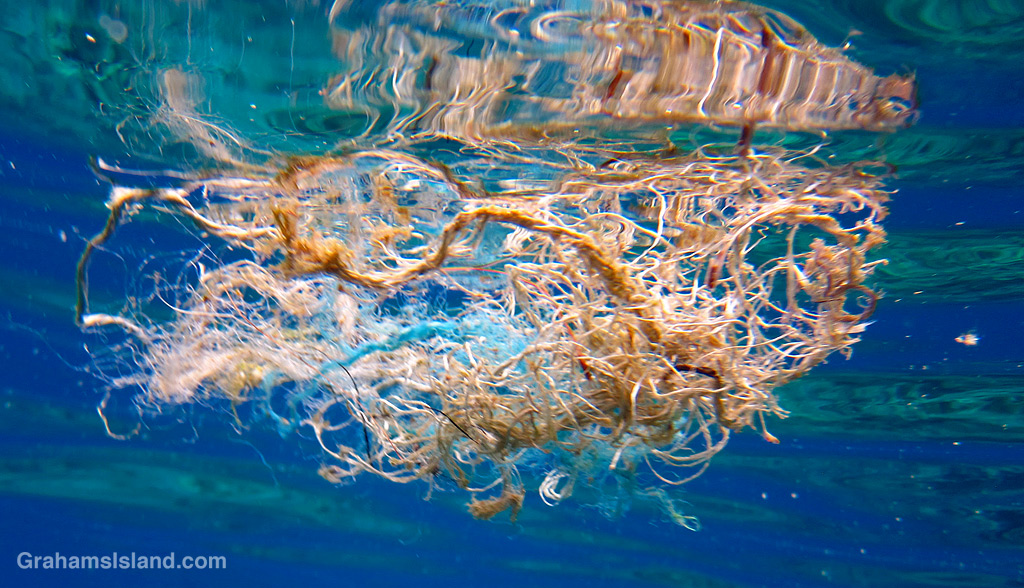
A tangle of floating fibers creates an abstract pattern in the water.
This week’s Sunday Stills challenge theme is ‘I’d Rather Be…’ See more responses here.
It had been a while since I went hiking, for various reasons, and it’s something I was missing, something I’d rather be doing. So last week, I headed down to Hawaii Volcanoes National Park to try the Ka’u Desert Trail. This backcountry trail has been on my list for a long time, but I had never done it before. For one thing, it’s about as far from my house as one can get on the island. For another, it’s directly downwind from Kilauea Volcano, so when the volcano is active and the trade winds are blowing, gasses blow across the length of the trail.
The latest eruption of Kilauea is currently either paused or over, so gas emissions are much reduced, and last week, the trade winds had given way to winds from the southwest. So off I went.


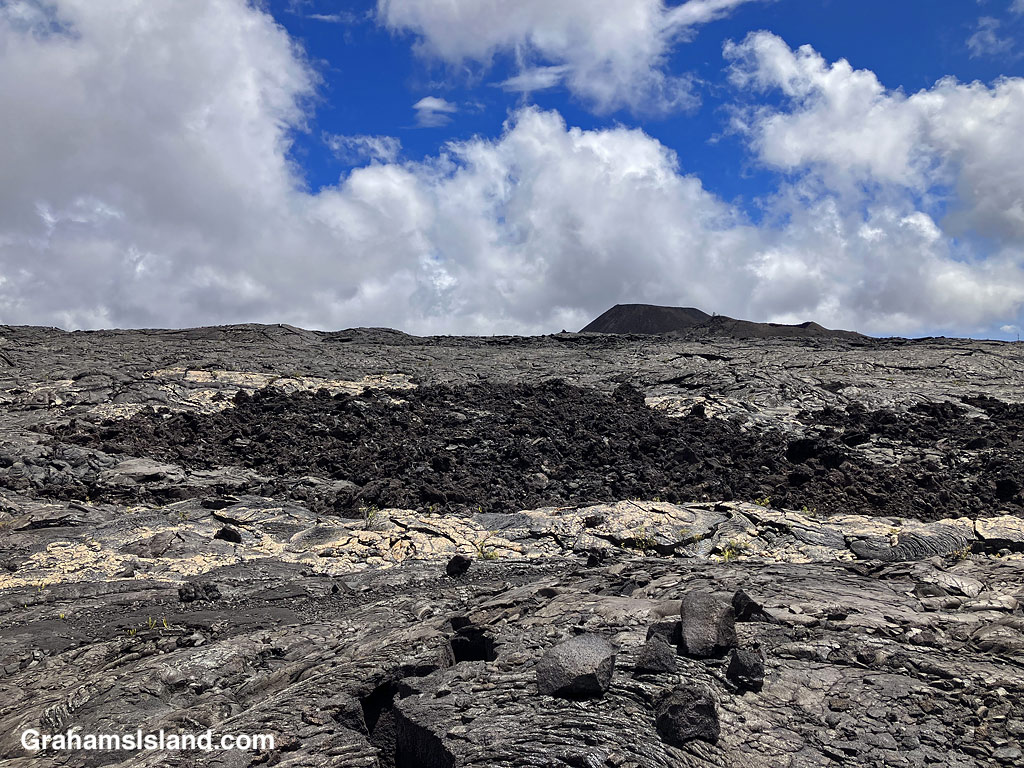
The trailhead is several miles west of the main entrance to the park, with a strip of parking along the highway. The first mile of the hike is also known at the Footprints Trail. It’s a sort of paved path that threads through ohias to a small building that houses footprints left by early Hawaiians in volcanic mud and ash. Alas, I couldn’t identify any footprints in the display. Shortly after the footprints, the path breaks out of the vegetation into open lava fields. This isn’t a tropical Hawaii walk, this a bleak hellscape Hawaii walk. Or is it?

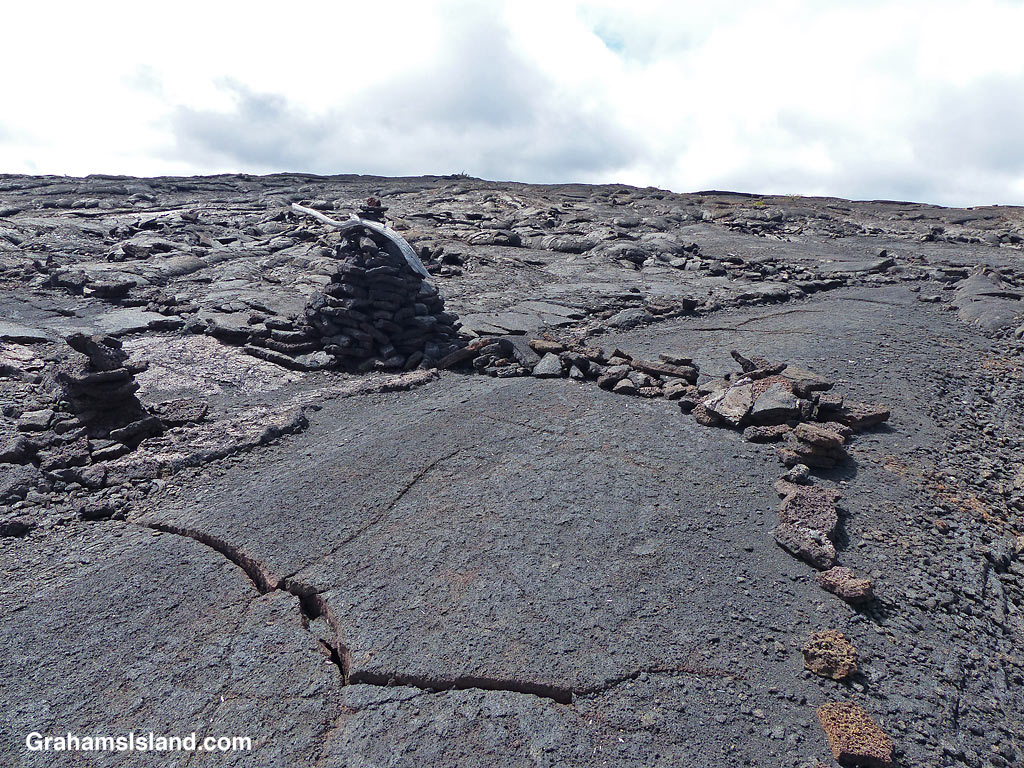
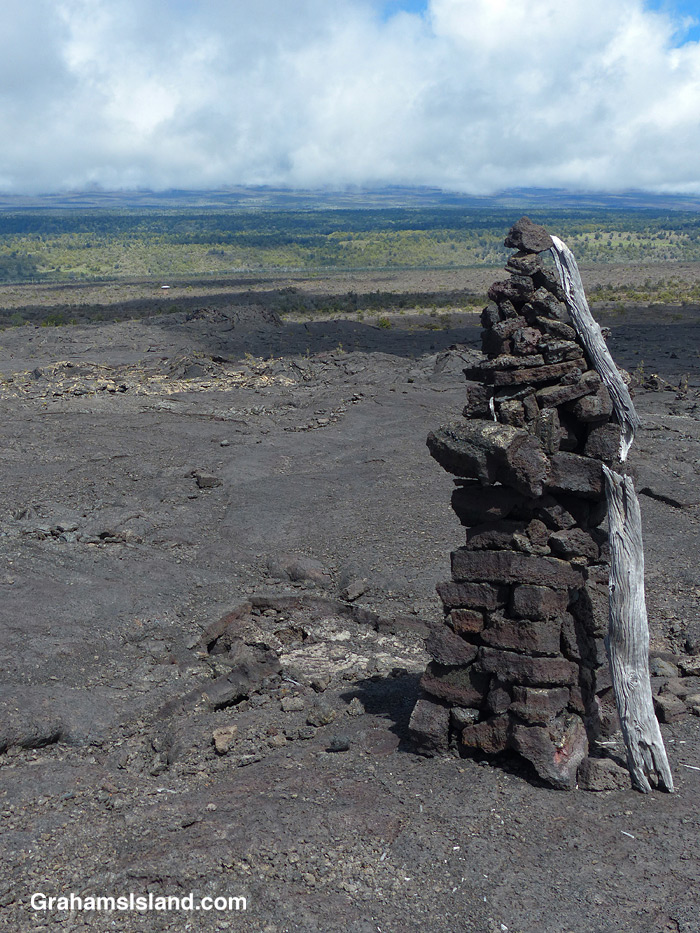
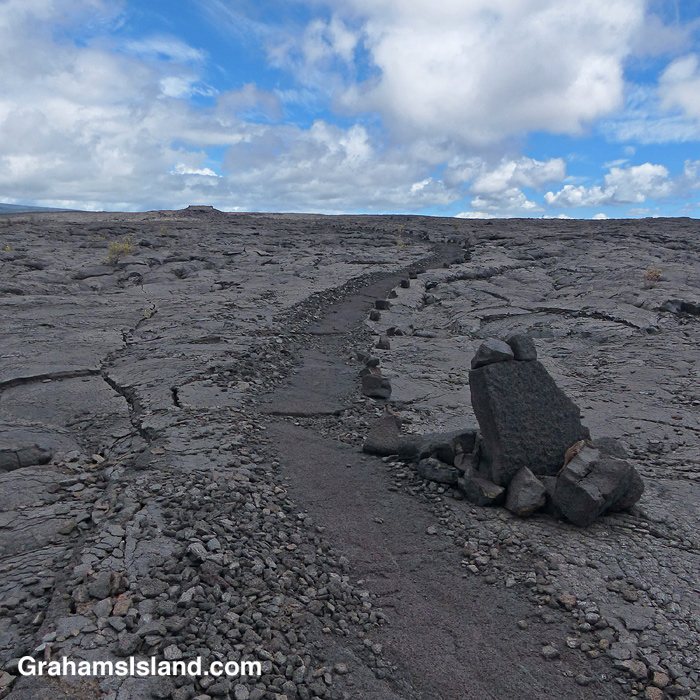
The trail ascends gently to the only junction for miles around, at Mauna Iki. To the left is a trail back towards the heart of the park. The Ka’u Desert Trail heads to the right and into backcountry wilderness. Mauna Iki was the site of an eruption in 1919 and the trail traverses the lava fields from this eruption.
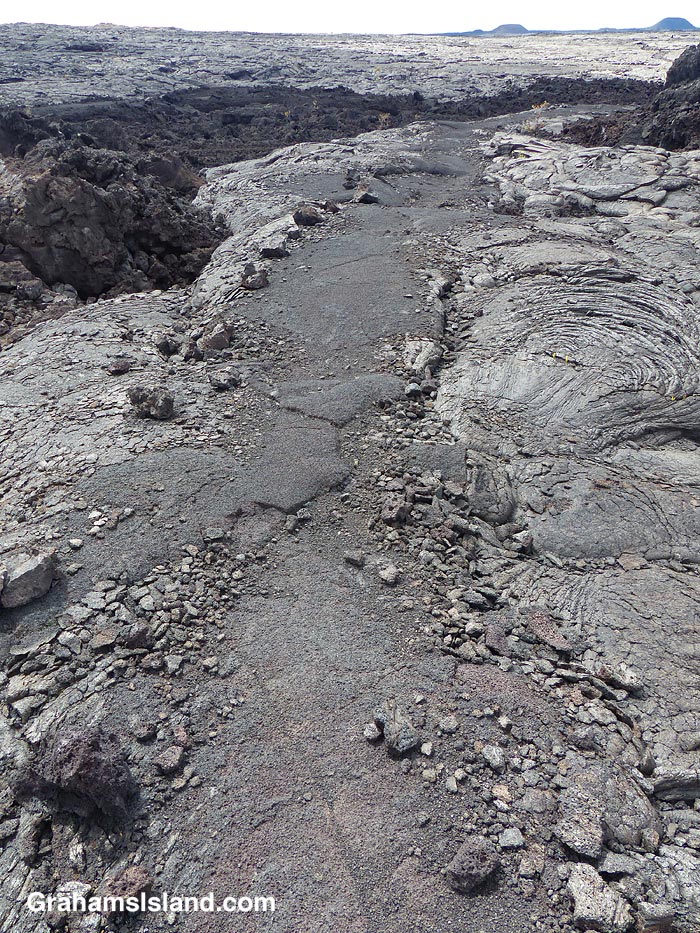

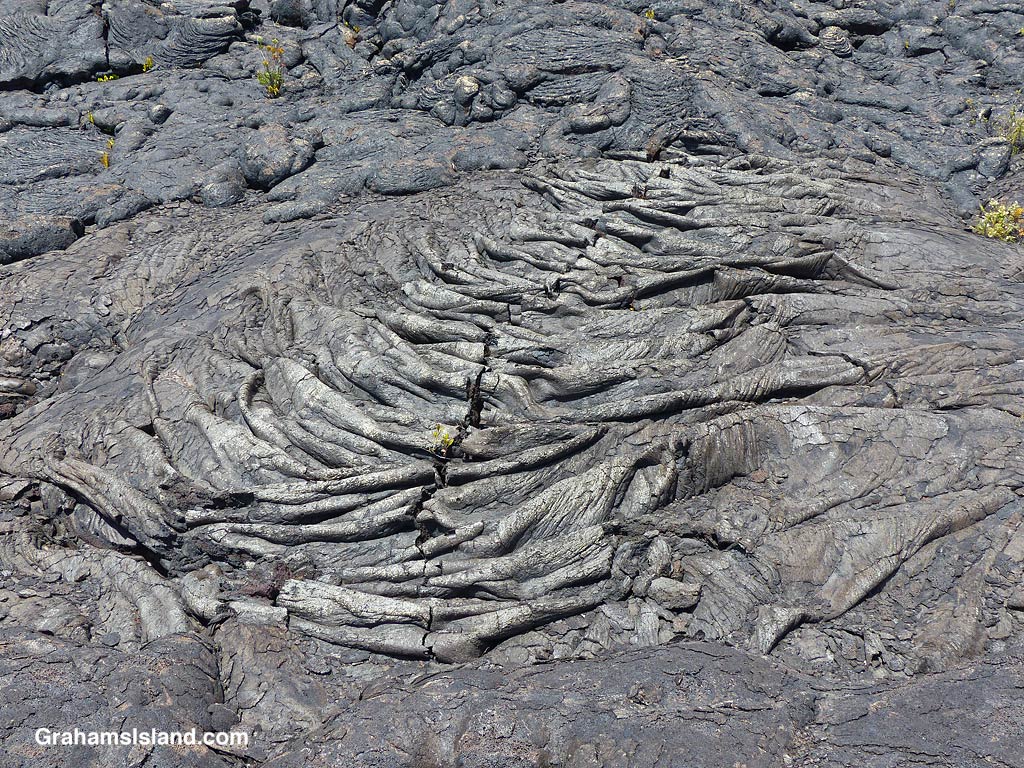
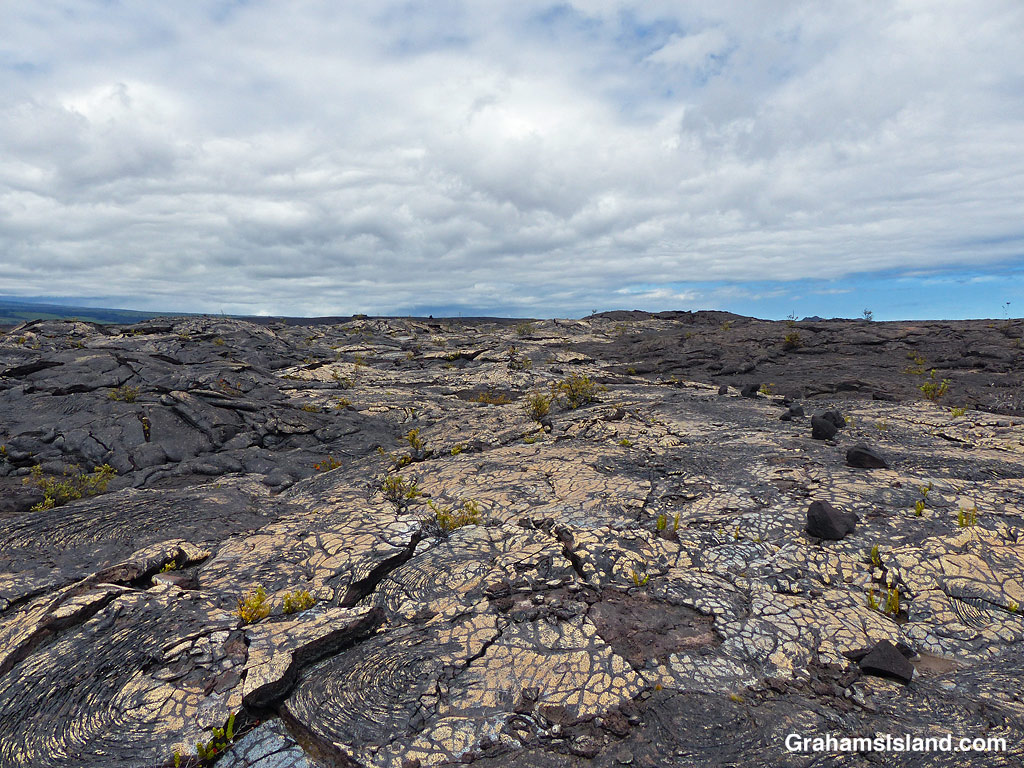
Much of the trail is over pahoehoe lava, which is rounded and much easier to walk on than jagged a’a lava. The trail is marked by cairns and single rocks placed alongside it. It’s pretty easy to follow with just one or two parts where attention has to be paid to make sure one doesn’t stray.

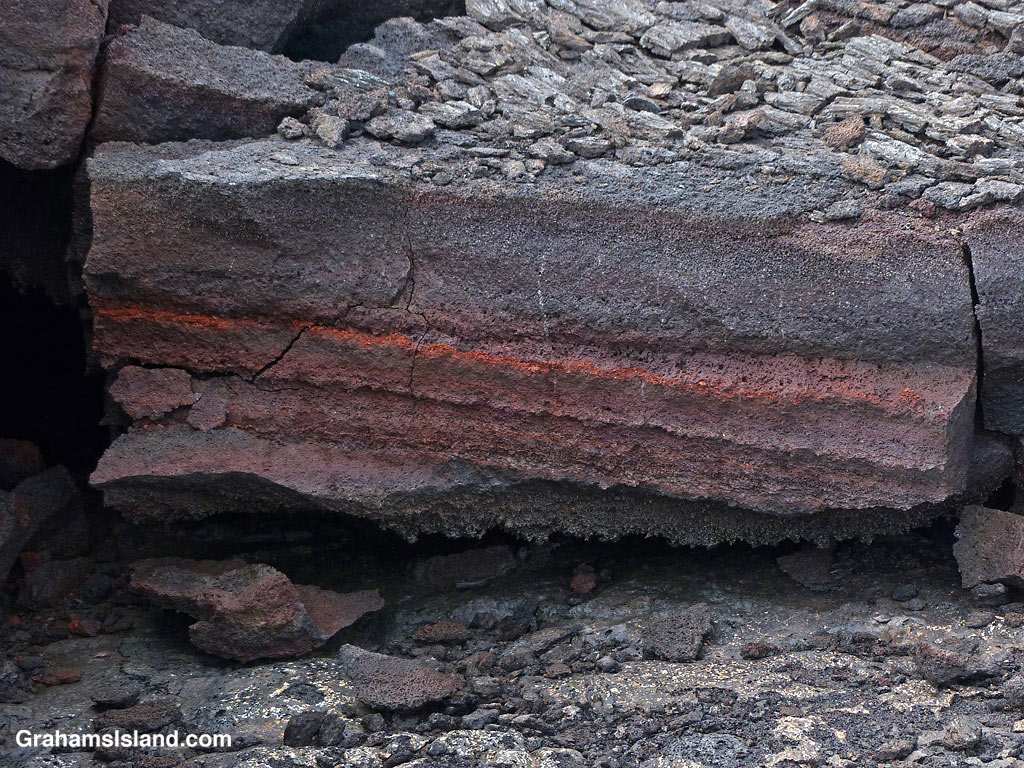


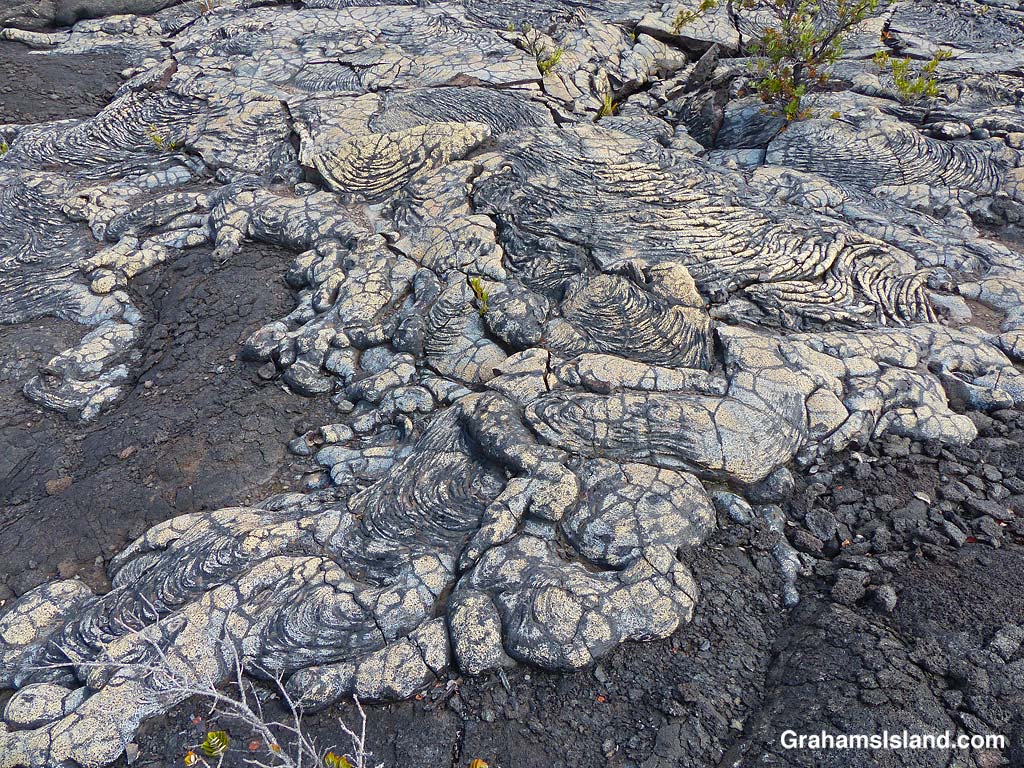

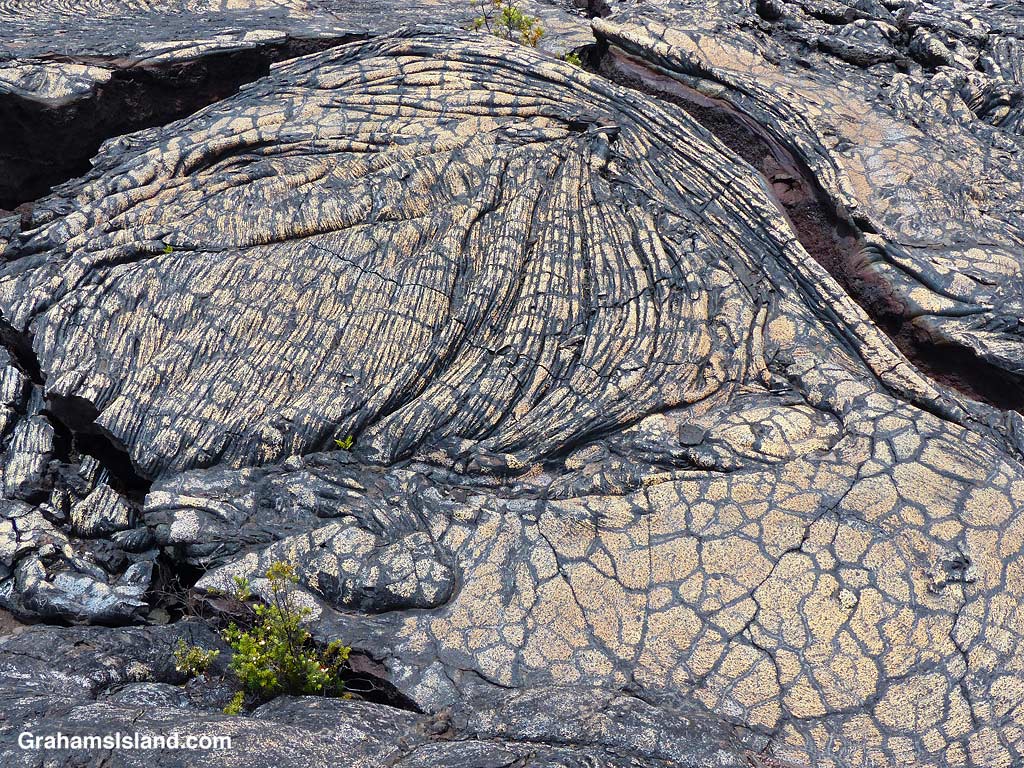

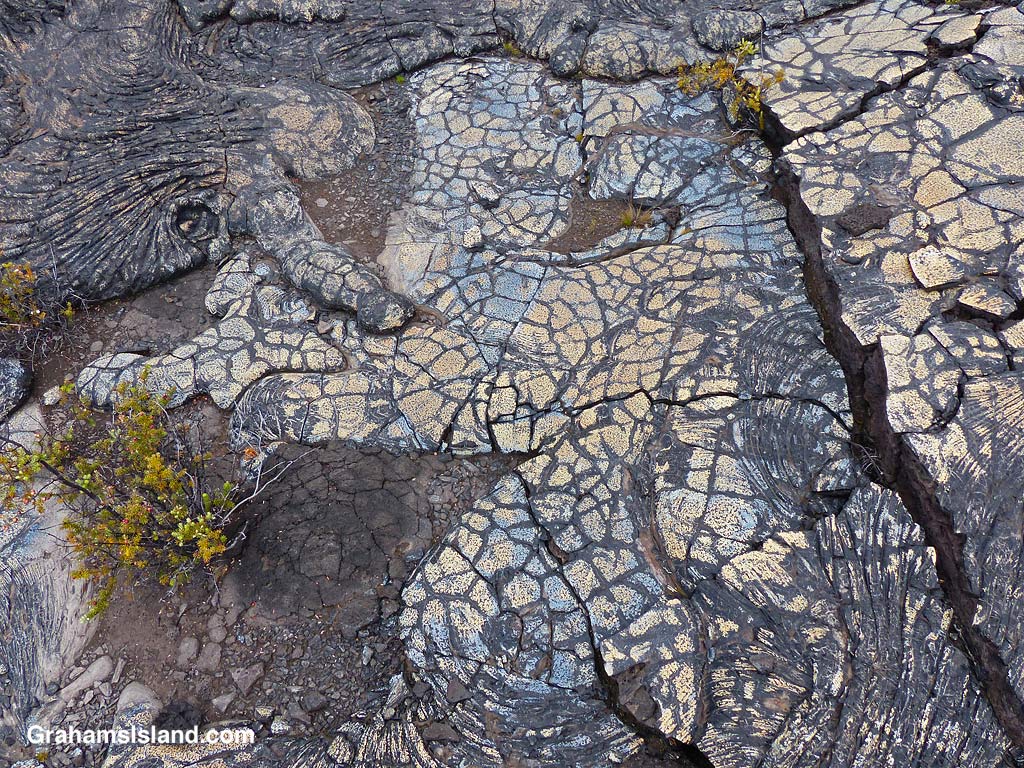
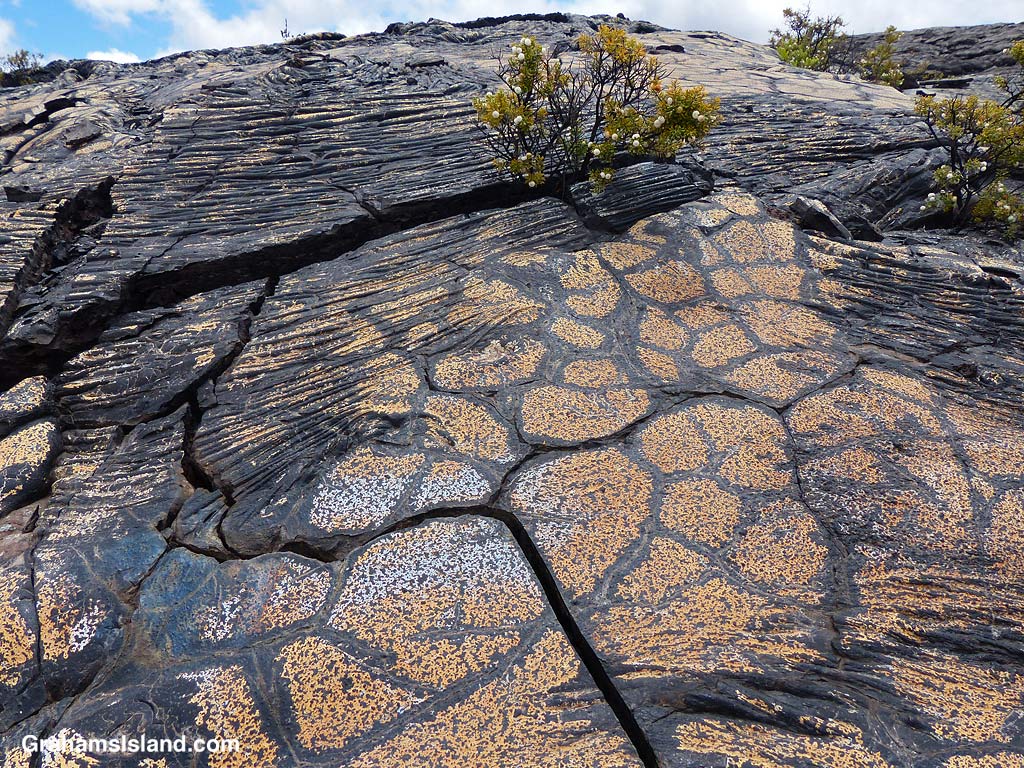
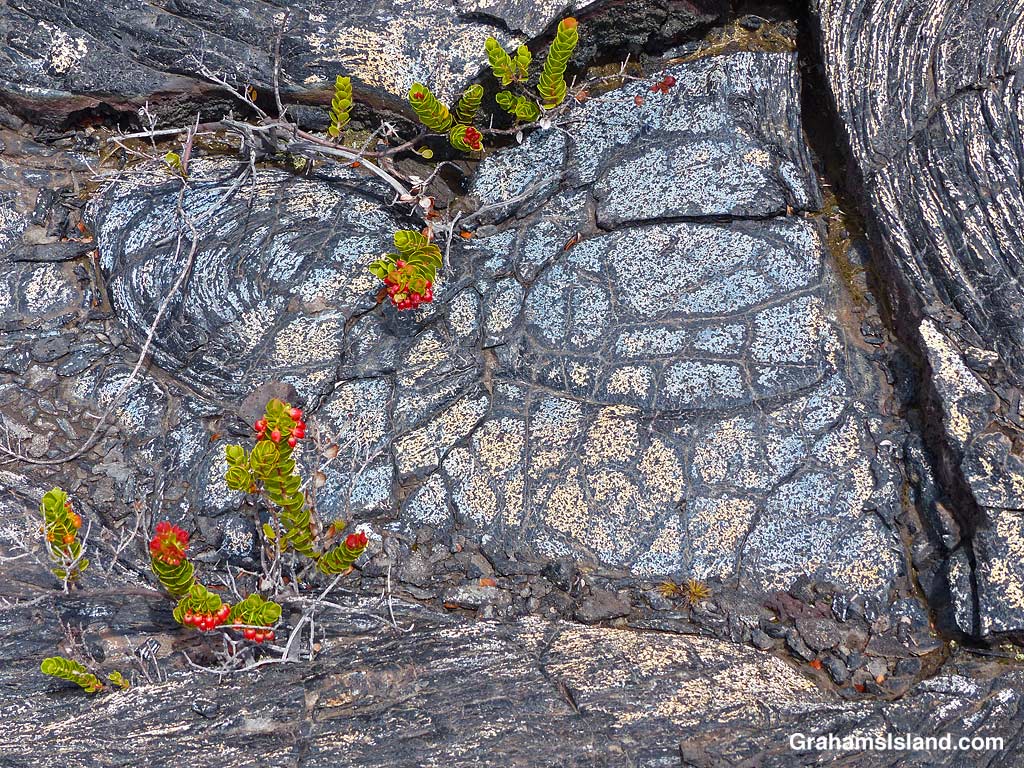


It wasn’t far along this part of the trail that I first encountered blue lava. That’s right, blue lava. Who knew? But not just blue. There’s bronze, pink, red, orange, gold, and who knows what. I’ve seen colorful lava on the Puna Coast Trail, but this was more varied and quite wonderful. In places the trail crossed this colorful lava and I felt bad for walking on it, though as I hiked I could see many more patches of color out in the lava fields. It’s not wise to leave the trail since there are many lava tubes, some with very thin ceilings.
This is an out and back trail and I turned around once I reached the Kamakai’a Hills, after about 5 miles. It’s another 2 or 3 miles to the next junction where there is a small cabin.
Also posted for Jo’s Monday Walk. See more responses here.
 Graham's Island