The latest eruption at Kilauea Volcano has recently been declared paused. It was never an especially dramatic eruption, but when I went down a few days after it began (here) the sky was illuminated by the activity. In recent weeks though, the lava lake formed by the eruption crusted over completely and lava from the active vent was also hidden from view.
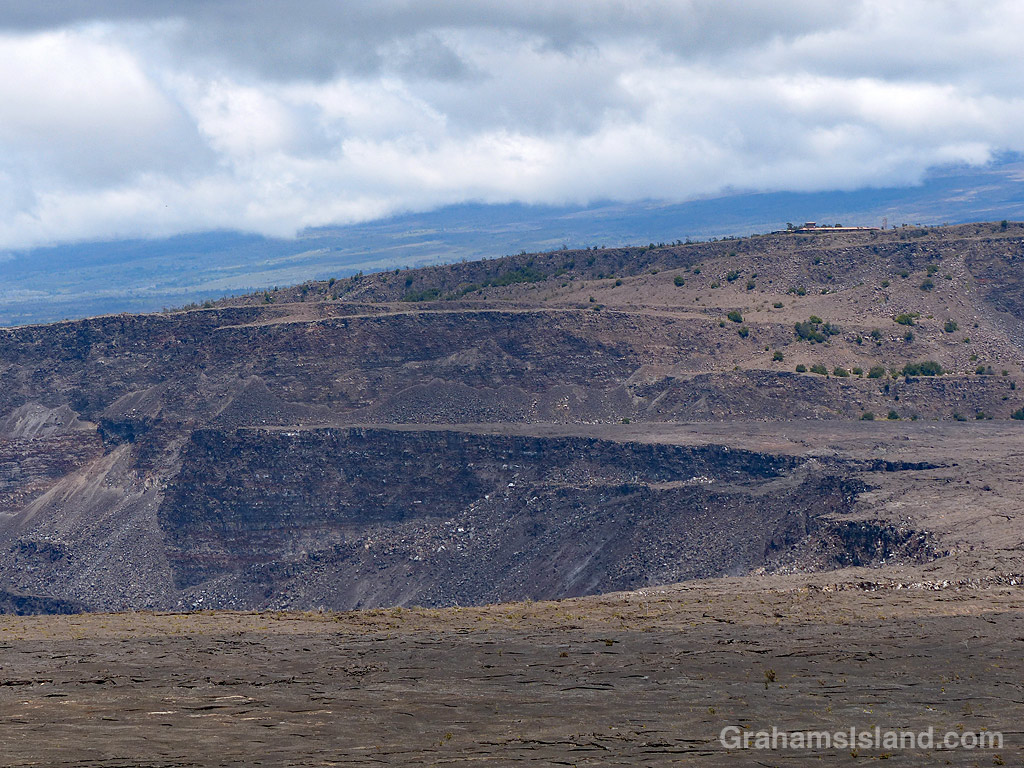
The photos are two views of Halemaumau Crater, taken before this latest eruption. In the top one, the collapsed floor of the crater is on the left. This is what the new lava lake was filling up. On the ridge, to the right side of the photo, is the low profile of the Jaggar Museum, which was closed after the 2018 eruption and likely won’t reopen.
The bottom photo shows the easternmost edge of Halemaumau Crater, which wasn’t greatly impacted by this eruption or the events of 2018. Consequently, the walls of the crater are quite green and the floor is dotted with plants. These plants are mostly ohia trees, which are among the first plants to grow in lava fields, in part because their roots will tap into lava tubes to find moisture and nutrients.
For more information about Hawaii Volcanoes National Park and Kilauea’s eruptions, go to nps.gov/havo/.
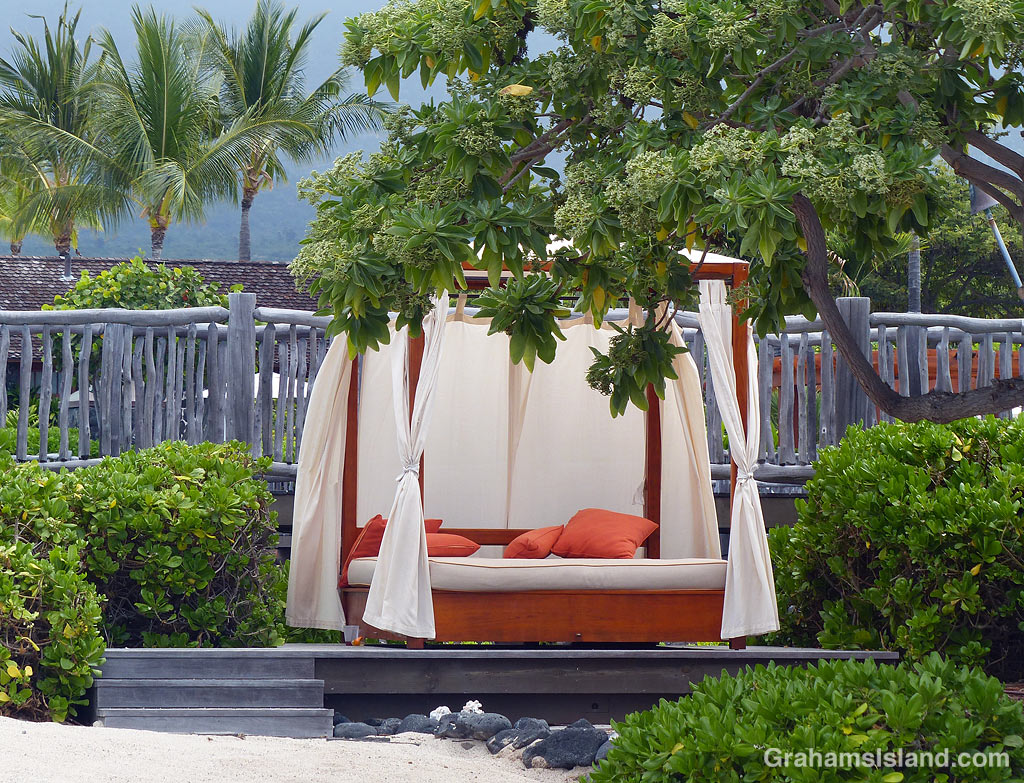
On a coastal walk, I saw this scene at the back of the beach fronting Kohanaiki Beach Club. The urge to rest was strong, but I suspect I wouldn’t have been peaceful for long.
This week’s Sunday Stills challenge theme is ‘Favorite Vacation Spot.’ See more responses here.
It’s been a long while since I took a vacation, but a favorite day out is a road trip to the east side of the island and a visit to Hawaii Tropical Bioreserve & Garden.
The day starts with a drive out of Hawi, up the hill to Kohala Mountain Road. This winding road climbs to around 3,500 feet before descending into Waimea. One the way, it passes through pastureland that is home to cattle, horses, and sheep.
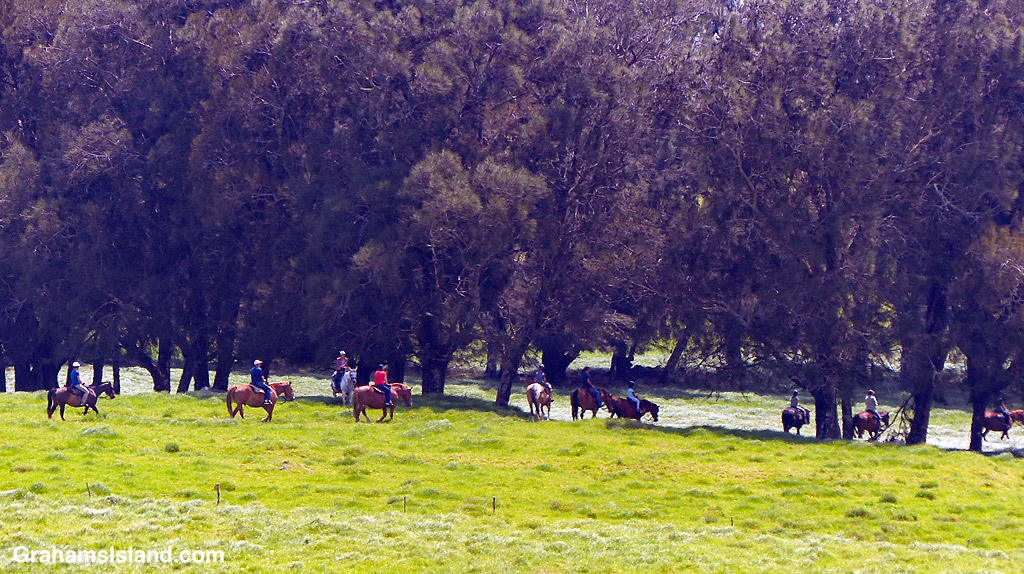
Horse riders near Kohala Mountain Road.
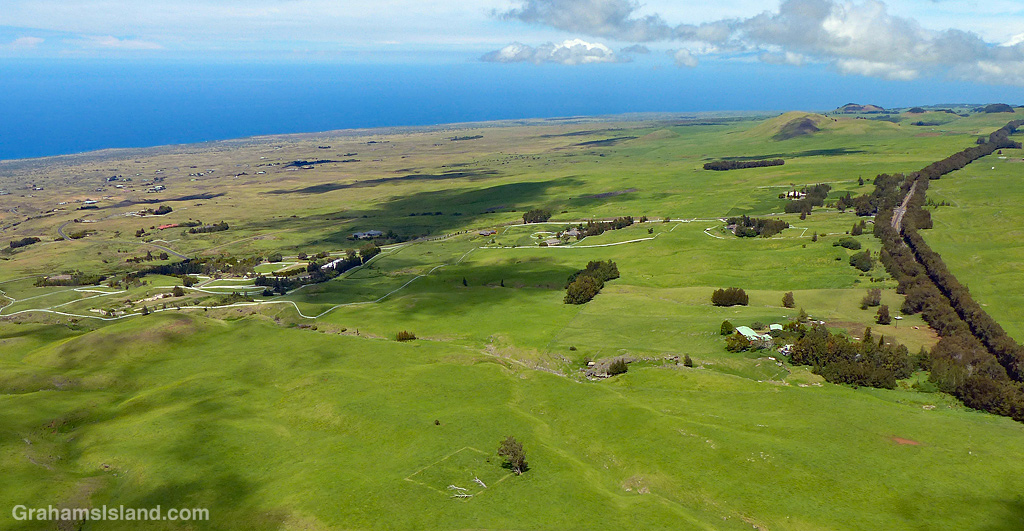
A view of Kohala Ranch with Kohala Mountain Road on the right.
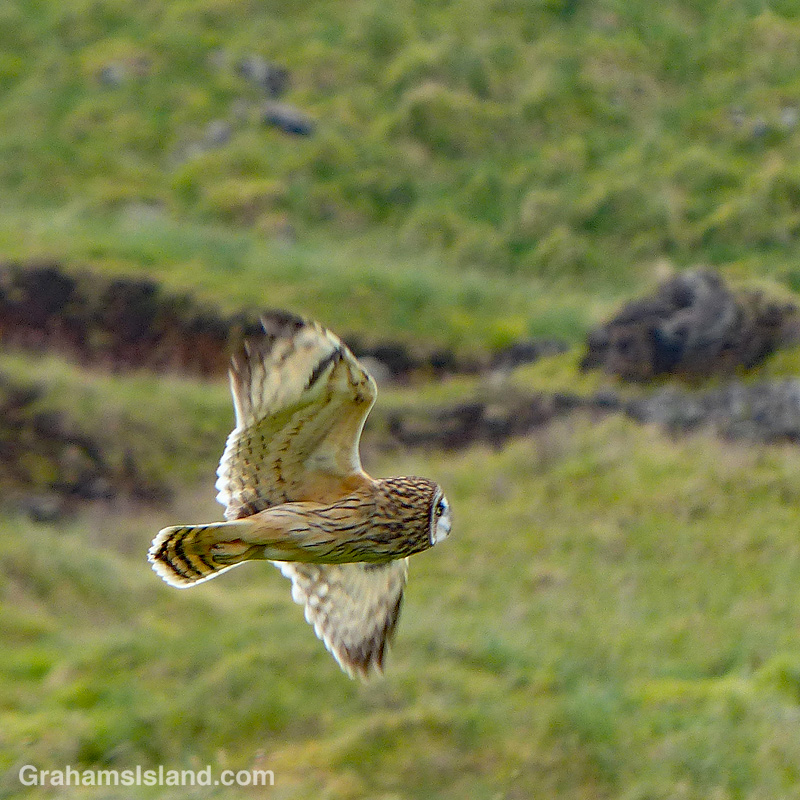
A Pueo flying.
A few miles after driving through Waimea, there’s a left turn onto Old Saddle Road. These days, the main road across the island is a smooth, wide thoroughfare, but it’s not so long ago that the highway was all like Old Saddle Road – narrow and twisting. In those days, rental car companies would not allow their cars to be driven on that road. Old Saddle Road is the last remnant of the original road and it’s one of my favorite roads to drive here, not just because of the road’s qualities, but because it’s one of the most reliable places to see pueos, the Hawaiian short-eared owl. On this road I drive like one of those people you follow and say ‘What the !@^%$@)&^ is that idiot doing?’ I’m prone to zipping off the tarmac and bolting from the car, camera in hand, snapping photos as I go.
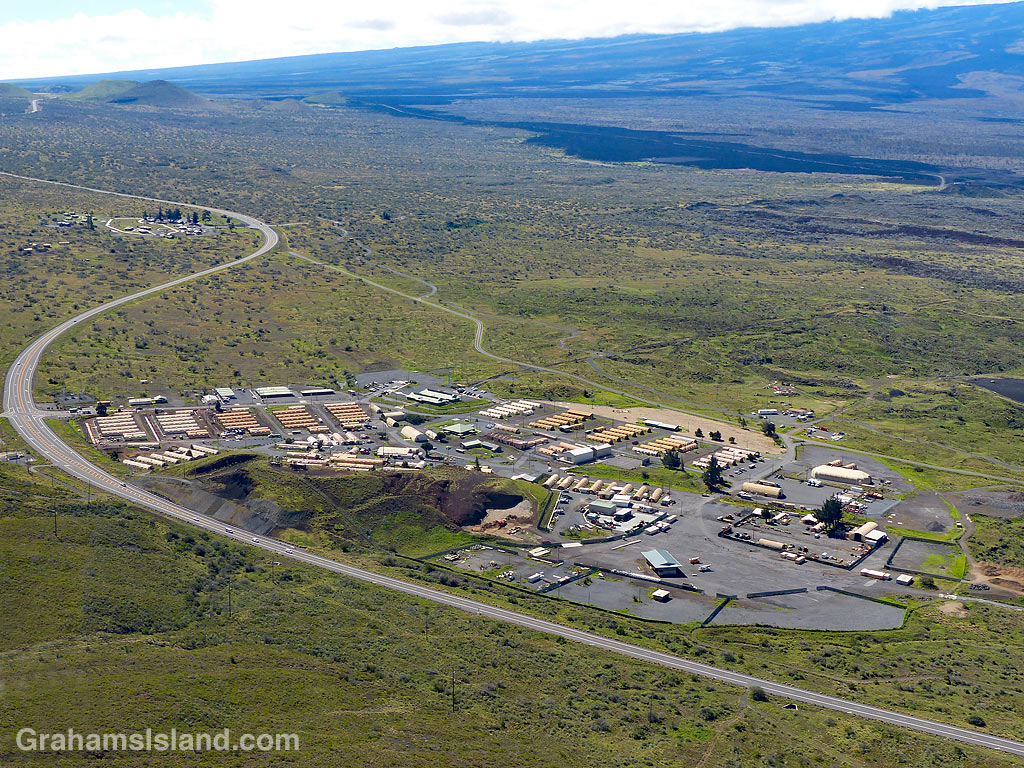
A view of Pōhakuloa Training Area and Mauna Kea State Recreation Area.
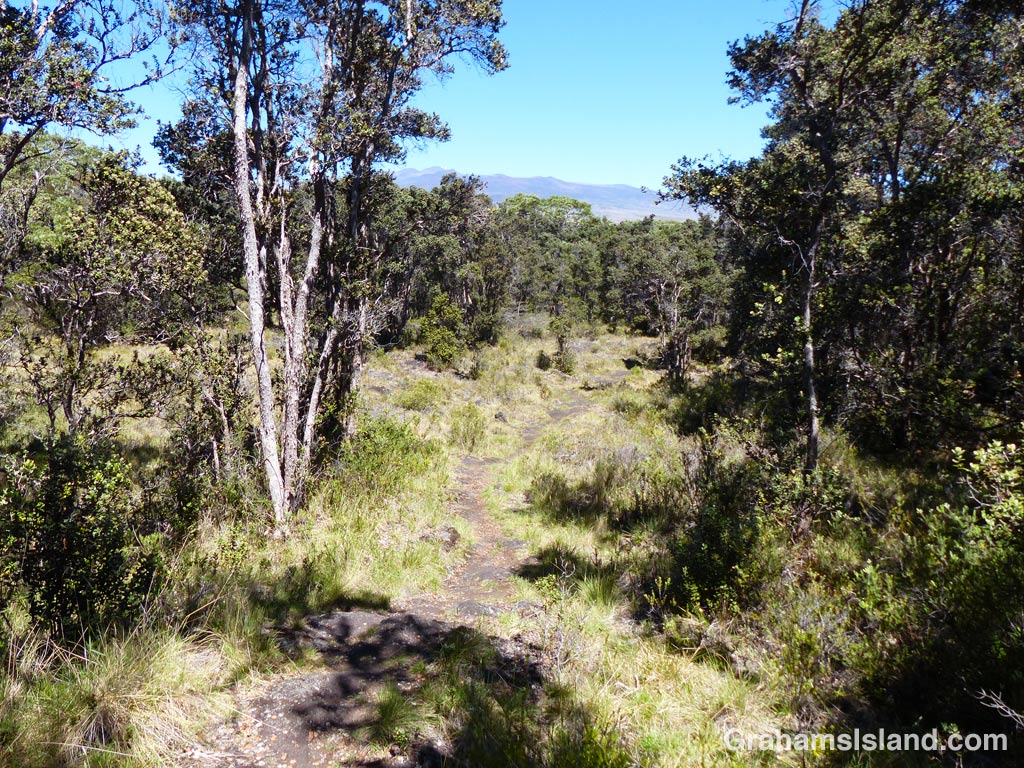
A section of the Pu’u O’o trail.
Old Saddle Road joins the new highway a just before it reaches Pohakuloa Training Area, a large military base in the saddle between Mauna Kea and Mauna Loa. It’s not unusual to hear the sound of shells exploding here as they do live ammunition fire. Past this area, there are several good hiking trails that venture into the high elevation landscape. This is one of the best areas for seeing native birds that are still hanging on in much reduced habitat.
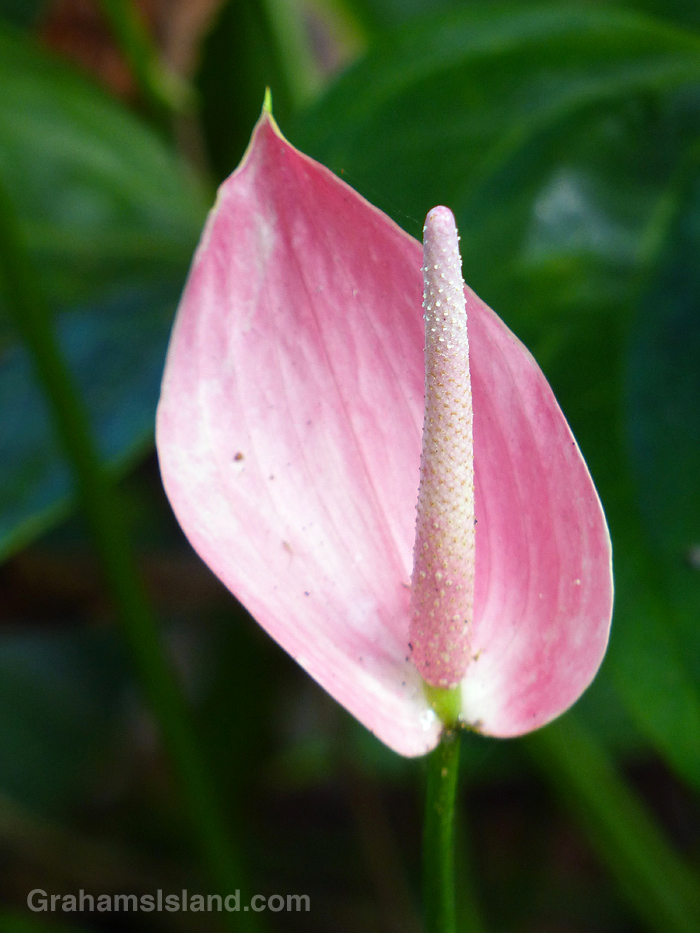
After that, there’s the descent into Hilo and then a jog north to the garden where, every time I visit, I see something different, something that wasn’t blooming on previous visits or that I’d just missed in the profusion wonderful plants to see.
Pink anthurium
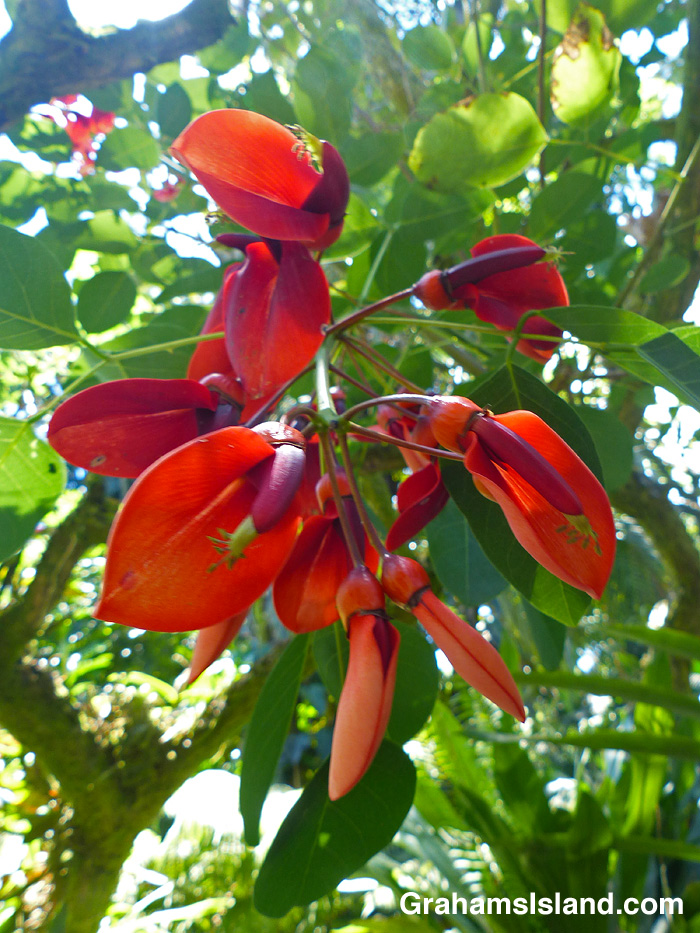
Erythrina crista galli
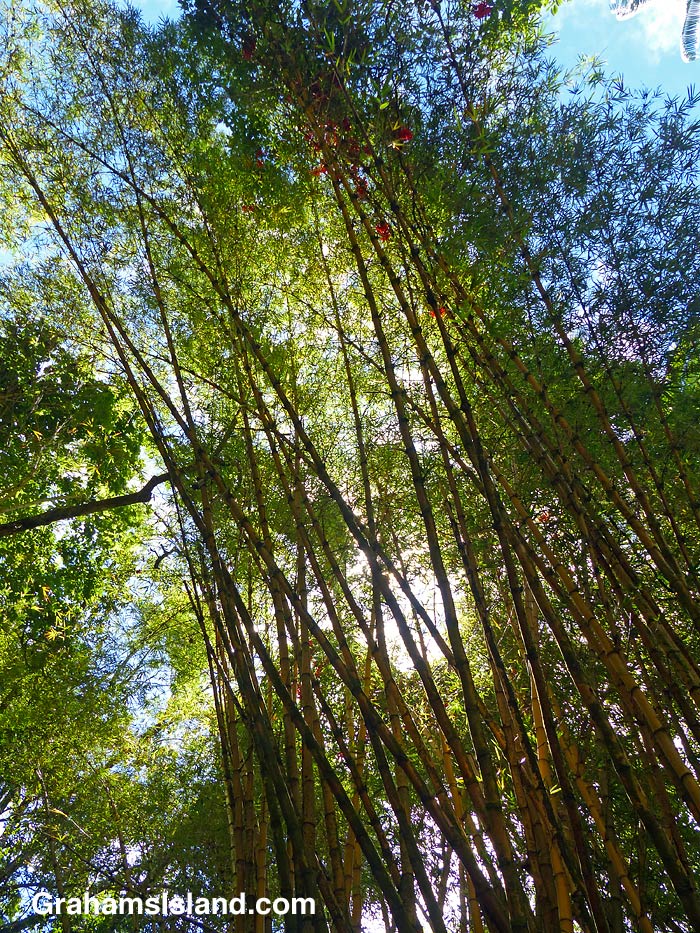
Painted bamboo
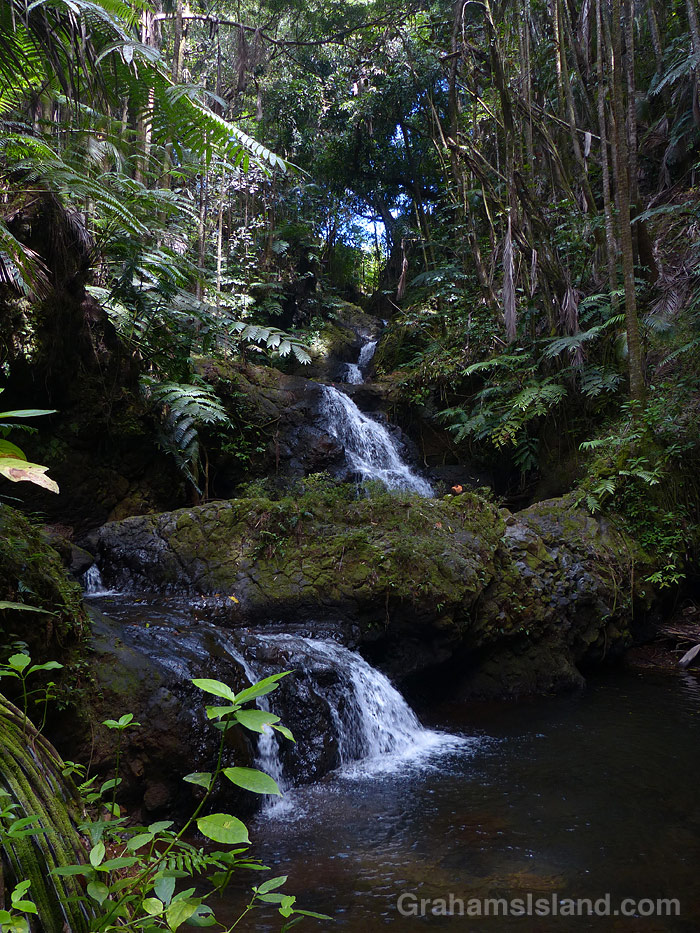
Onomea Falls
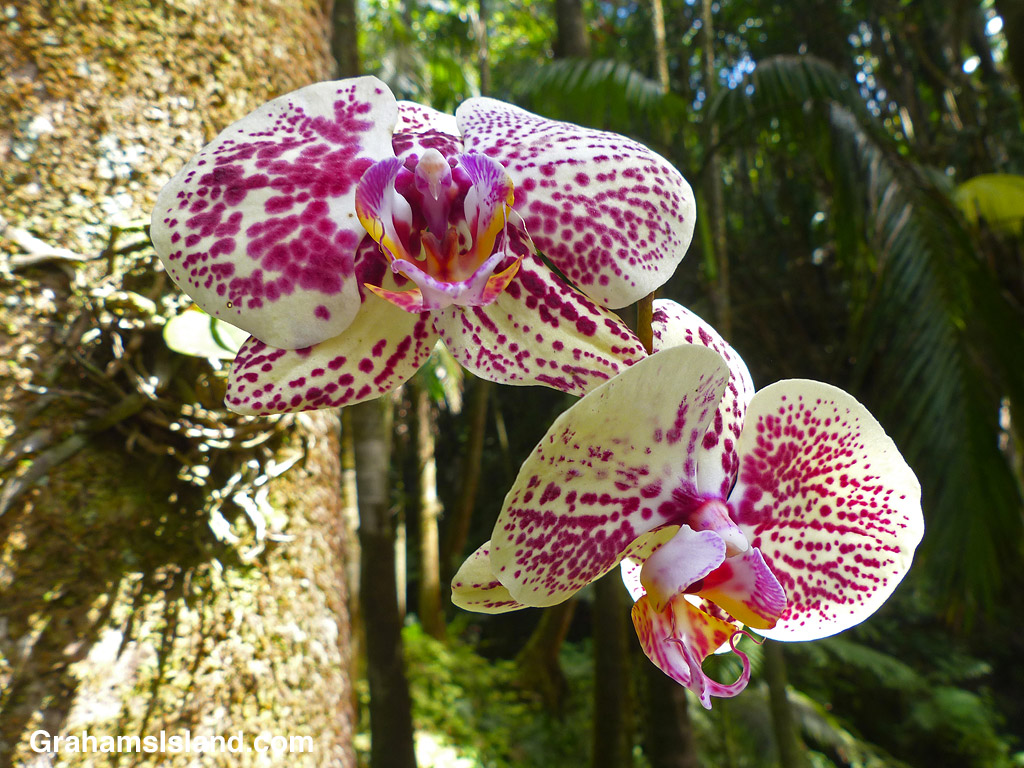
Orchid
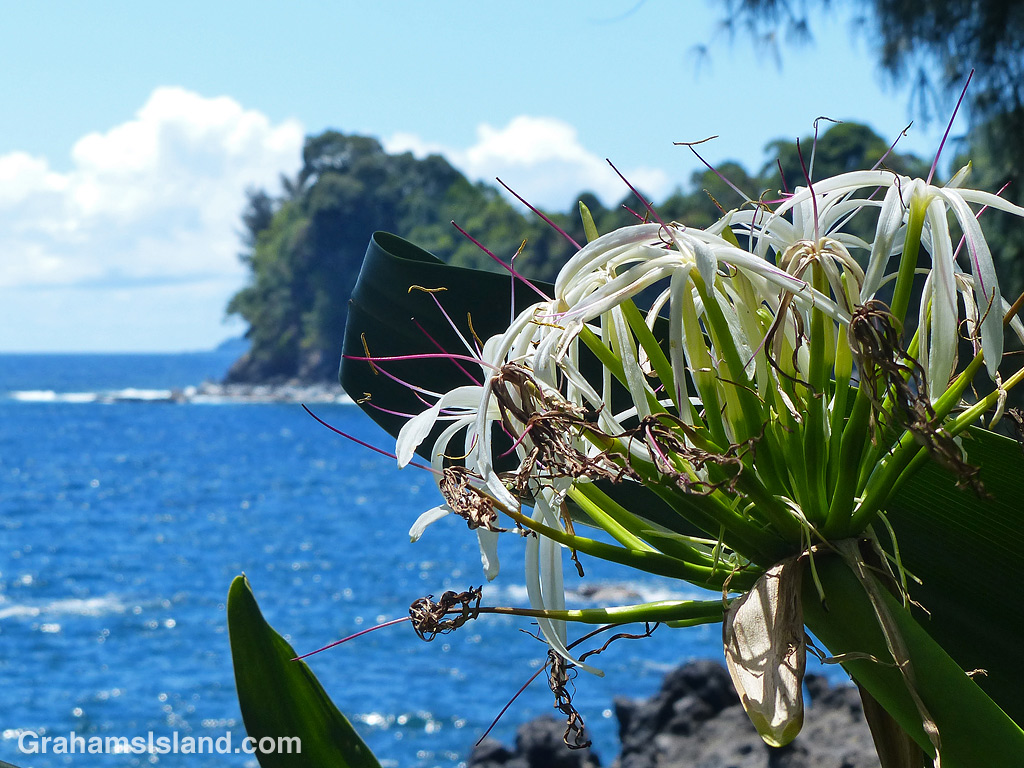
Spider lily by the ocean
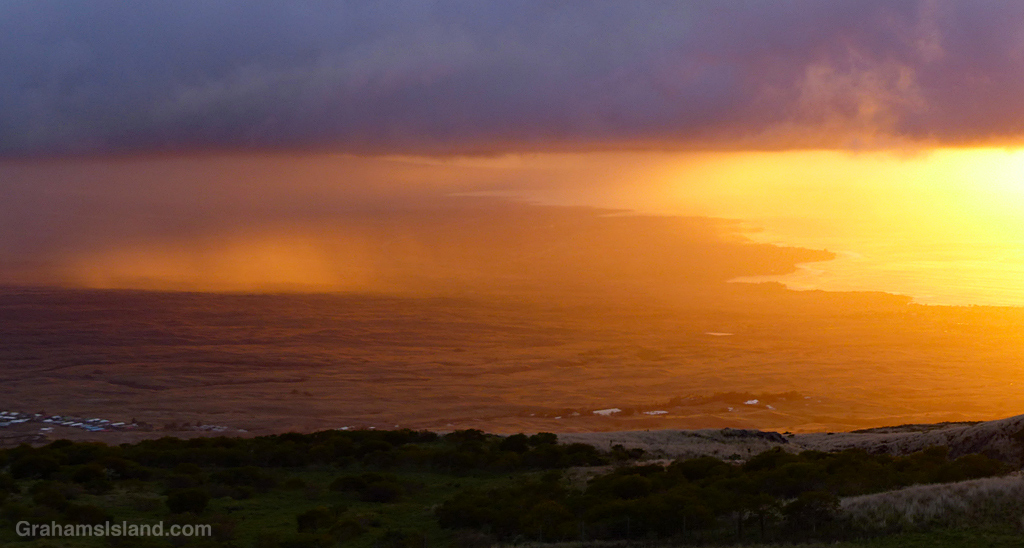
And on the way back there’s a good chance that there’ll be a splendid sunset to be enjoyed.
Sunset from Old Saddle Road
Also posted for this week’s Friendly Friday challenge theme is ‘Road Trip.’ See more responses here.
On my last hike on the Pu’u O’o Trail, off Saddle Road, I’d been busy taking photos of an i’iwi when I noticed this little bird hopping up a tree trunk, probing for insects. It’s an Hawaii ‘elepaio (Chasiempis sandwichensis sandwichensis), a member of the flycatcher family, and endemic to the island. The Hawaii ‘elepaio is one of three ‘elepaio species in Hawaii, the other two being on Oahu and Kauai.
I’ve mentioned before that great barracudas give me the willies more than sharks do. But the truth is, that while they look menacing, I’ve yet to see one being aggressive. The black fish in this photo wasn’t far from the barracuda, but was ignored by it as it swam by.
Even though they unnerve me, there are times when I just have to laugh. A couple of weeks ago I was snorkeling, puttering along as I looked around for things of interest, and I happened to look behind me. One of the very large barracudas was following me, about a body length behind. The instant I looked back, the barracuda turned away. It could have been a great photo, but I wasn’t ready for it and then the fish was gone. It was also a good illustration of the fact anything that might attack me in the water is highly likely to take me completely by surprise.
Barracudas will follow spear fishers in the water, hoping to snatch their catch, and I think because of this, they’ll follow anyone in the water in the hope that they might be in the fish acquisition business, too.
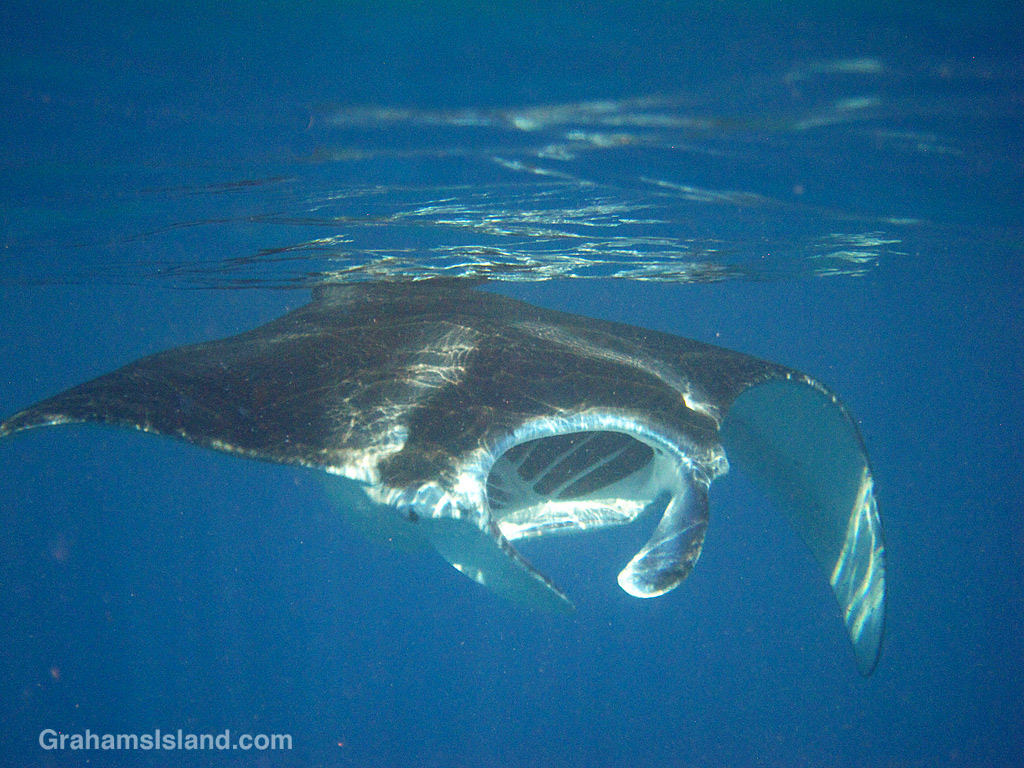
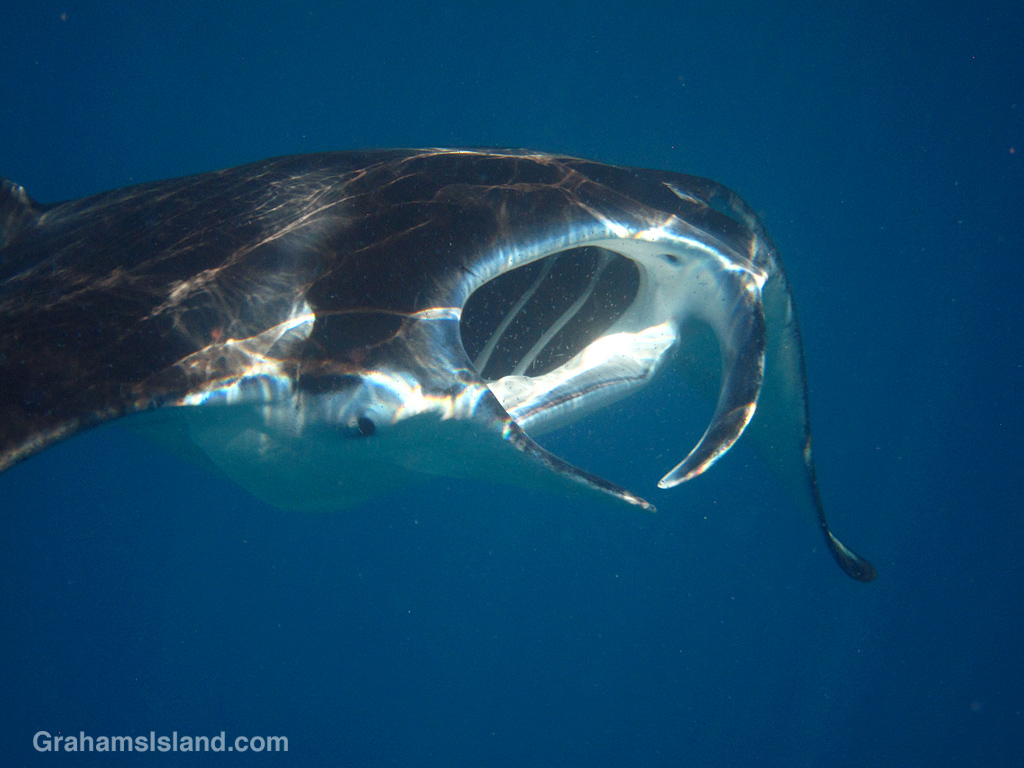
A manta ray approaches.A close up view.The spots on the underside are unique to each manta ray. This shot also gives a good view of the gill slits and cephalic flaps.
Yesterday, my wife and I went snorkeling at our usual spot. The visibility was pretty good so, on our way back, we decided to cross the bay and see how it was on the other side. The visibility got worse, not awful, but with more particles in the water.
Suddenly, I saw something large off to my left. I pointed to it and turned to my wife to see her pointing in the same direction. We’d seen this coastal manta ray at the same time. The ray was crossing in front of us and I snapped a couple of photos knowing they wouldn’t be good, but to at least have a record of the encounter.
A close up of the manta ray’s head.
The manta ray makes a turn.
The ray looked set to disappear into the murk, but then it turned and came back towards us. It passed in front of us again, turned again. Back and forth the ray went. On different occasions, it went by so close in front of each of us that we could have reached out and touched it. It was clearly as curious about us as we were entranced by it. Finally, it made one last pass and seemed to wave at us as it receded into the distance.
Mutual curiosity as manta ray meets snorkeler.The water was quite murky, so more distant photos show suspended particles.
The manta makes a dive and turn.
This was a smaller ray with maybe a 6- to 8-foot wing span and most of this time it was swimming near the surface, so we got great views of it. Manta rays are plankton feeders and have no poisonous spines so they’re amongst the least dangerous creatures in the ocean. I hadn’t seen one since last August so this made the occasion even more special for me.
After it left, we headed back in. It would have been hard to top that encounter.
Finally, the manta waves goodbye as it heads out into deeper waters.
This week’s Sunday Stills challenge theme is ‘Water.’ See more responses here.
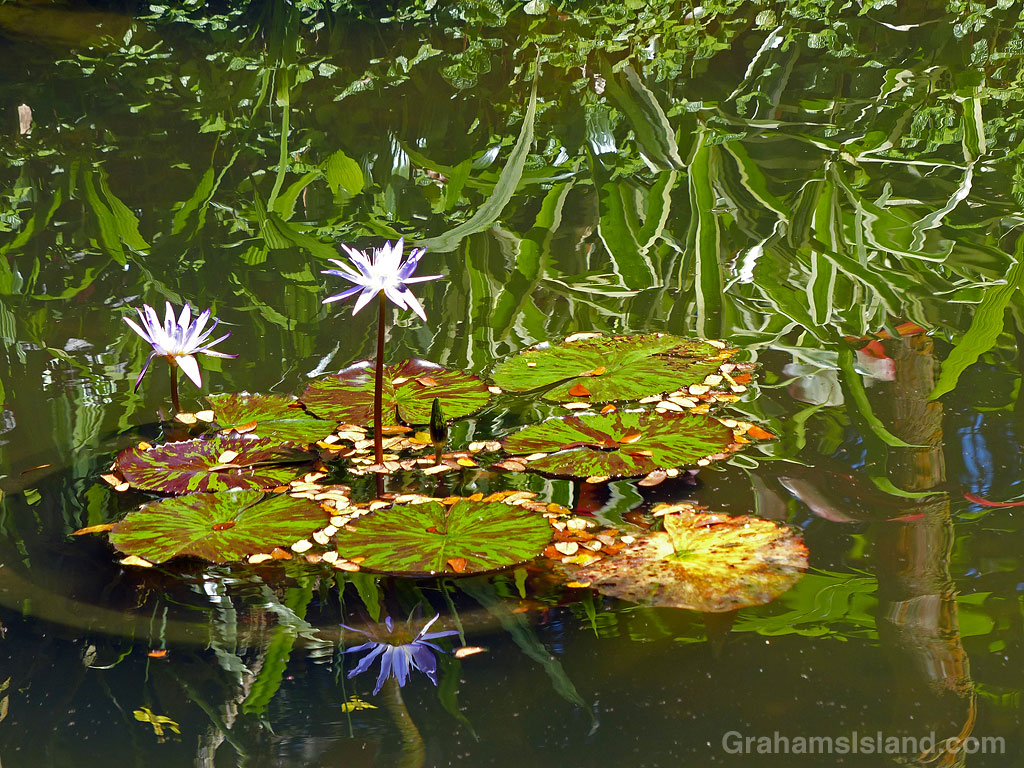
First up is a patch of water lilies on Lily Lake at Hawaii Tropical Bioreserve and Gardens, which reopened at the beginning of April after being closed all year. My wife and I visited last Friday and it was great to be back. As usual, I took a bunch of photos most of which still need processing.
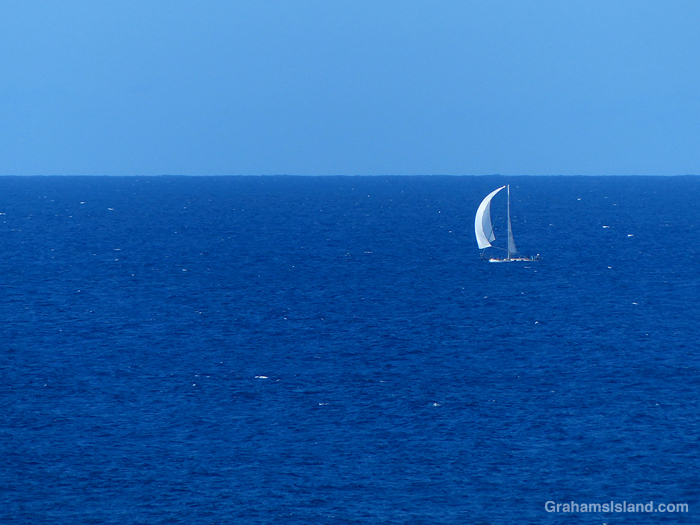
Second is a sailboat running before the wind on the blue Pacific.
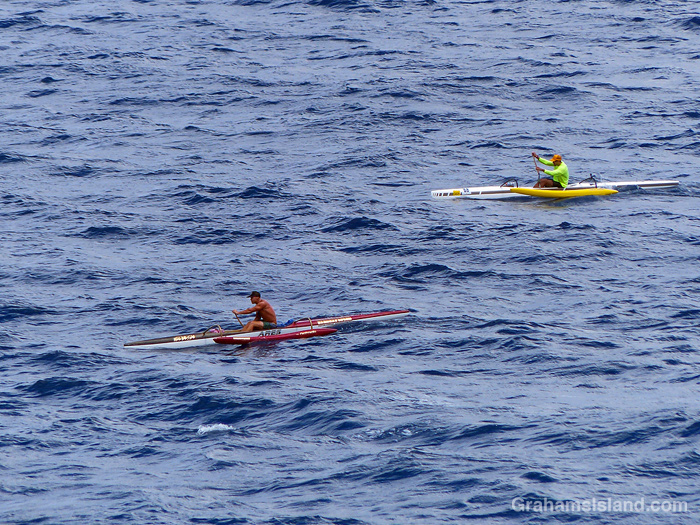
Below that is a pair of canoeists paddling along the island’s northern coast. Yesterday, I saw several vehicles going by with canoes, probably headed for Keokea Park, where they can put in safely, possibly for a race. One of the vehicles pulled in to the likely landing spot, where surf was crashing over the parking lot. The driver didn’t look too enthusiastic. I don’t know whether the race took place or not.
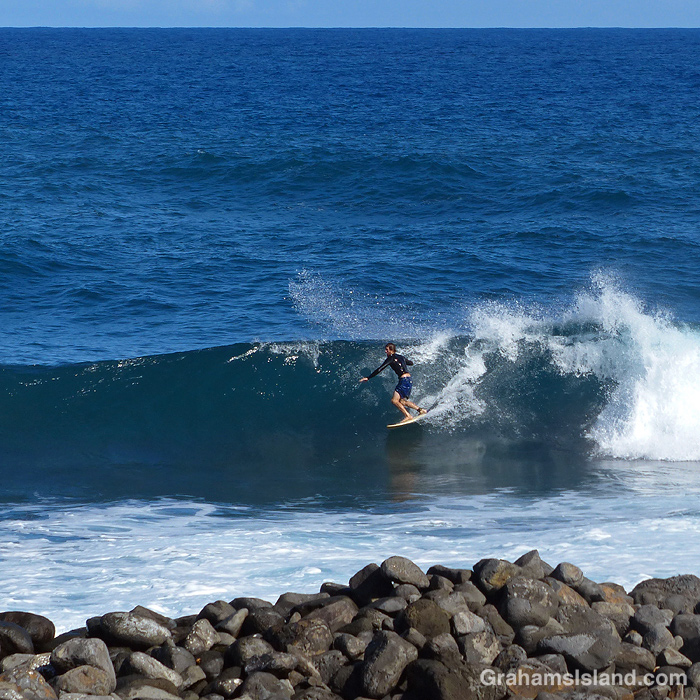
Fourth is that quintessential Hawaiian pastime – surfing. Watch out for those rocks!
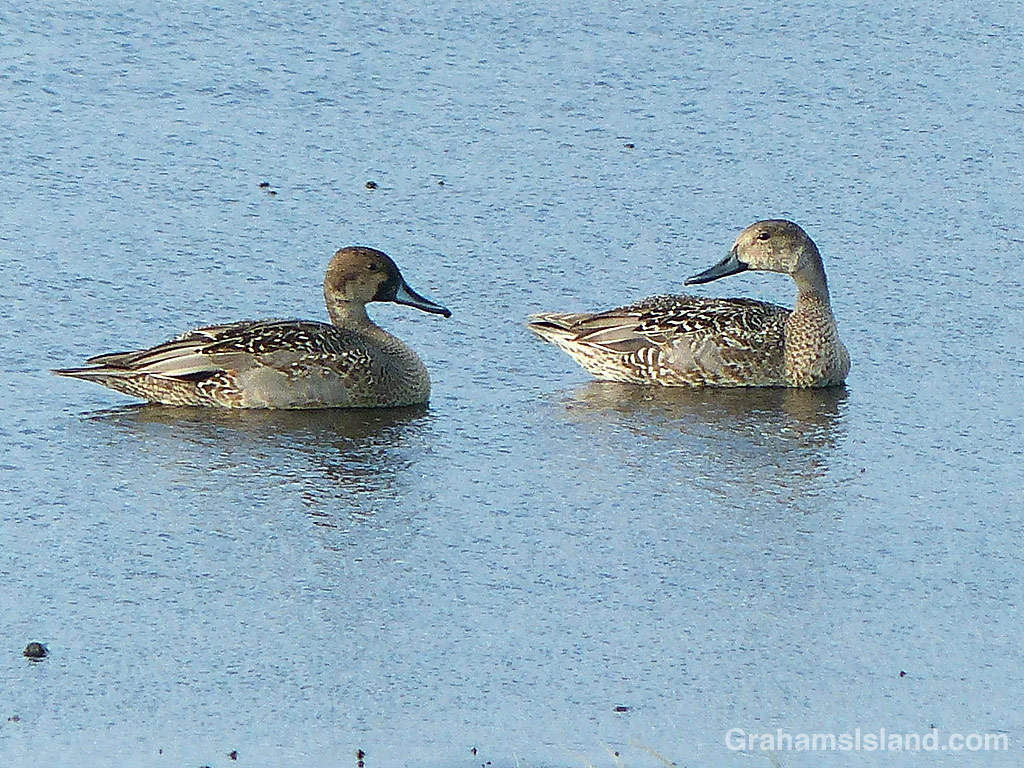
Finally, a pair of northern pintails coast on a pool of water at Upolu. These used to be seen in large numbers in Hawaii, but not so much these days.
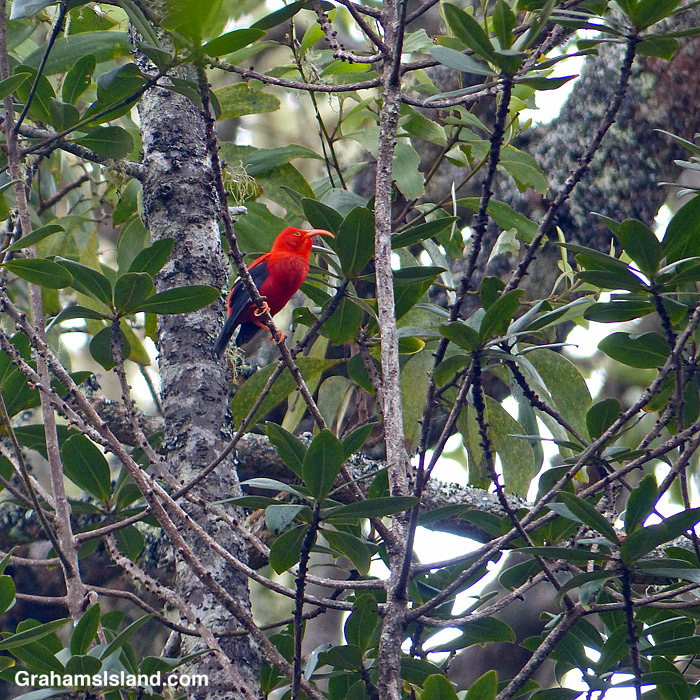
On my last hike on the Pu’u O’o Trail, off Saddle Road, I soon ran into a man and his son staring at a tree a short distance away. The man explained that they’d seen an i’iwi, a native Hawaiian honeycreeper, fly into the tree and were hoping to see it again. I waited with them for a while, but saw nothing and decided to move on.
A little later I ran into two men coming out of a kipuka, a cluster of old vegetation that has been bypassed by lava flows. One of them, looking pretty pleased, held out his camera and said they’d just seen an i’iwi and he’d got some good photos. He mentioned the spot where they’d seen the bird, so I headed into the trees to have a look. Nothing. It was beginning to look like it was going to be one of those days where everyone else has a wonderful experience except me!
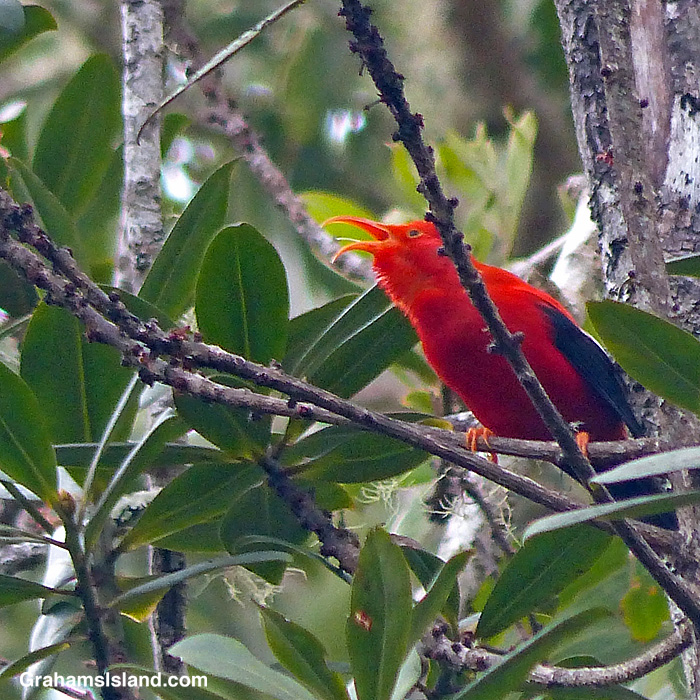
But not long after, I saw a flash of red and then this bird settled on a branch and began to add its song to the loud chorus of bird songs in the kipuka. One thing about i’iwis is that if they’re around, they’re easy to see, their bright red plumage standing out against the green background.
After the bird flew off, I carried on with my hike. When I returned half an hour later, the bird song in the kipukas had diminished considerably and I didn’t see or hear anymore i’iwis.
Posted in response to Becky’s April Squares challenge theme of ‘Bright.’ See more responses here.