The Big Island’s ‘Ōma‘o is one of two endemic thrushes left in Hawaii. The other is on Kaua‘i. There used to be distinct species on each of the islands, but the others are extinct. These birds live mostly on the wetter eastern slopes of Mauna Kea and Mauna Loa. This one was seen on the Pu’u O’o Trail off Saddle Road, which is probably near the westernmost limit of its range.
Category Archives: Activities
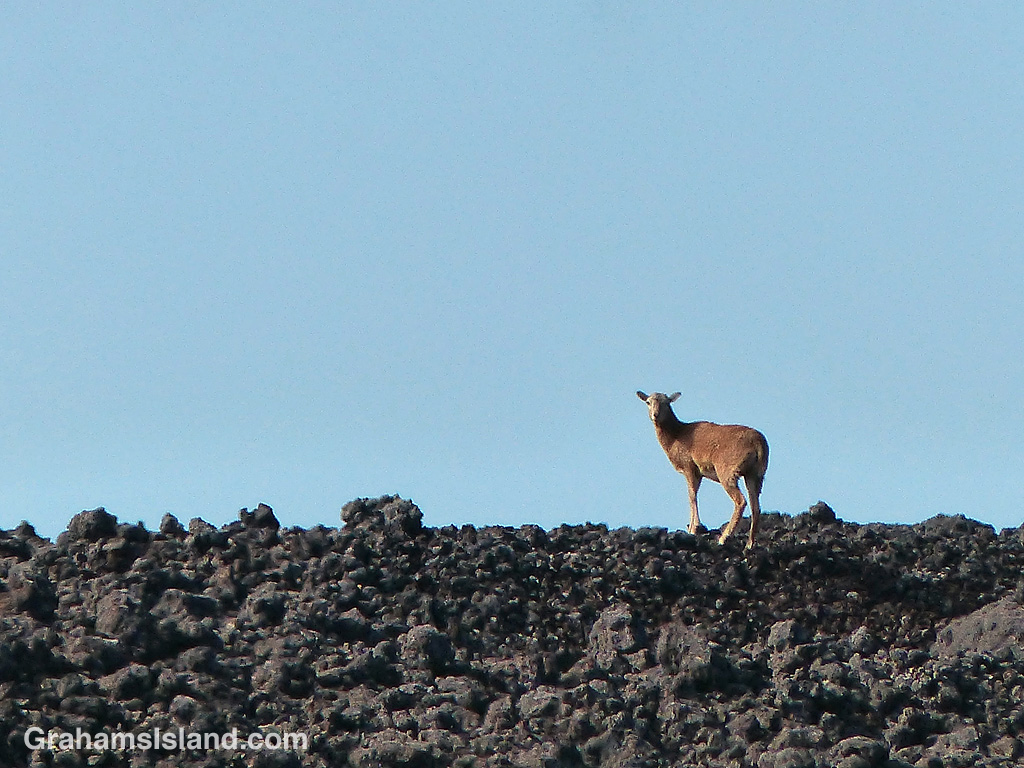
Goat on a lava field
Abstracts: Passion flower
Better Days: Honokane Nui Valley trail
Last May, I posted here about the hike from the end of Highway 270 down to the beach at Pololū and up on to the ridge on the other side. There, a bench awaits the hardy hiker, as well as wonderful views along the coast and into Honokane Nui Valley. I’m happy to report that the bench, which was in bad shape last time I was there, has been replaced by one with a plastic frame. While this might be aesthetically less pleasing, it should last a good deal longer.
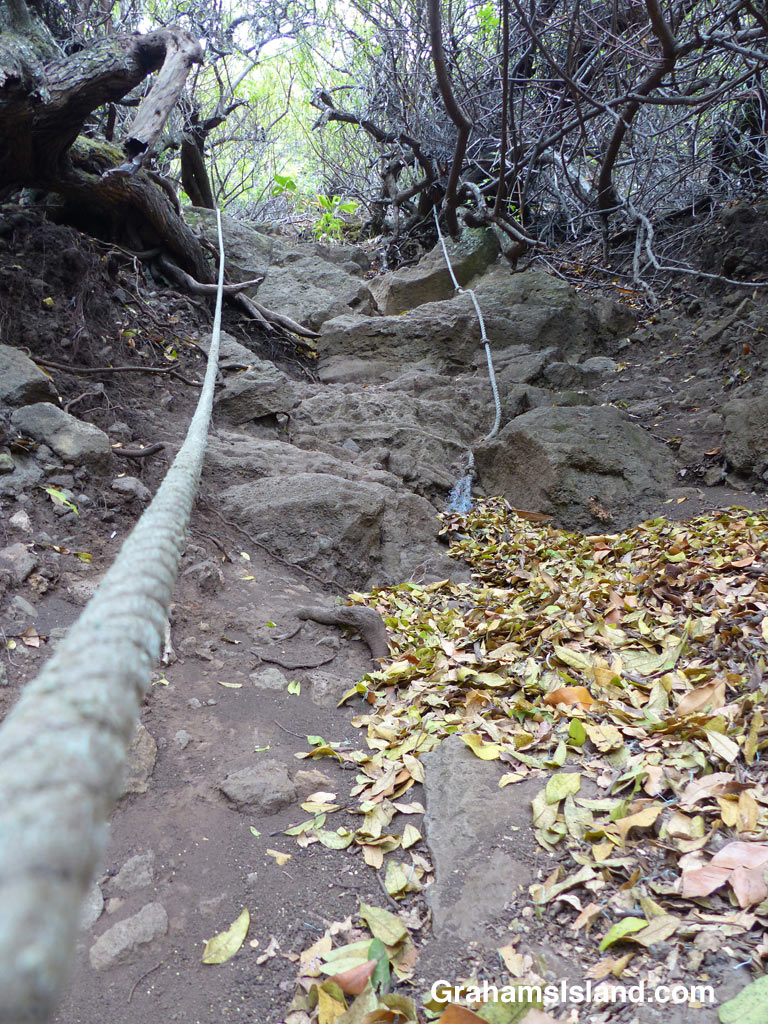
I also mentioned that not far beyond this point, the trail into Honokane Nui Valley got wiped out by a landslide in the earthquake of 2006. Now, instead of switch-backing down to the valley floor, the trail goes straight down. The precipitous drop is made passable by a series of ropes, to hang on to on the way down, and to haul on on the way up. It’s a great workout though not necessarily the safest one around. If a rope gives way, it could be a long and nasty fall. Let the user beware.
The top photo shows what the entry into this section of trail looks like. This part is steep, then it drops off out of view. The second photo shows a steeper section with two ropes to hang on to.
For more information about the Pololū hike, go to bigislandhikes.com/pololu-valley/.

Abstracts: Floating branch
The last of this week’s posts in response to the WordPress photo challenge on the theme of ‘transient.’
High winds resulted in a bump in the amount of debris in the water. This branch could be on its way back to shore or headed for somewhere across the Pacific, depending on how wind and currents move it.
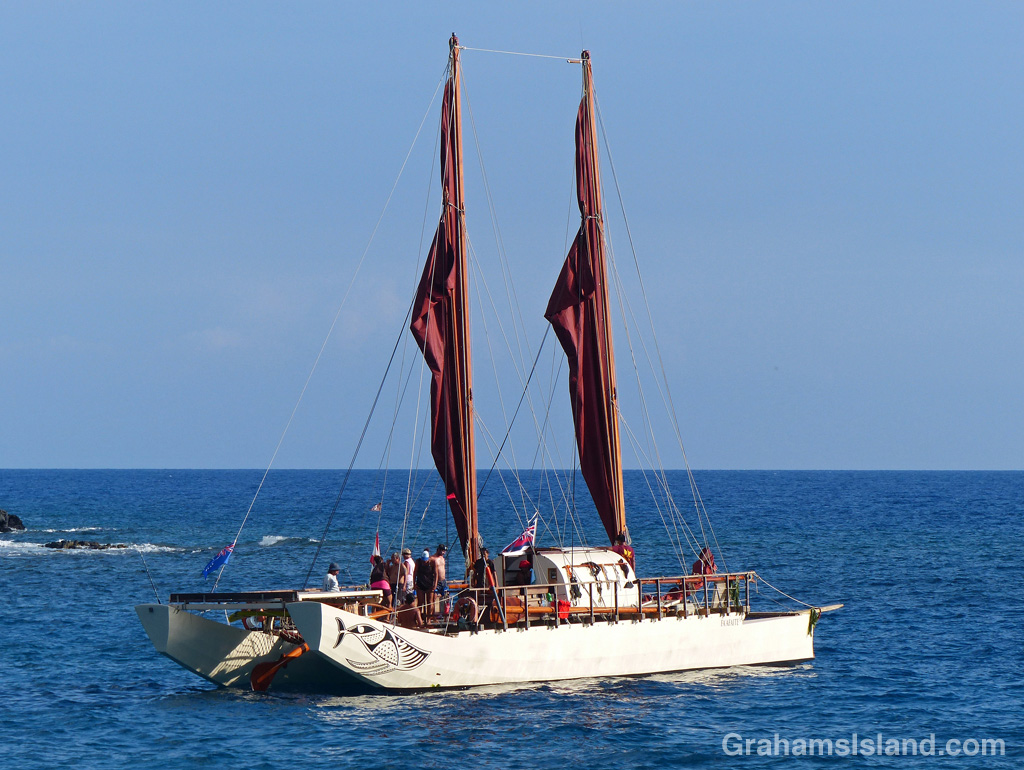
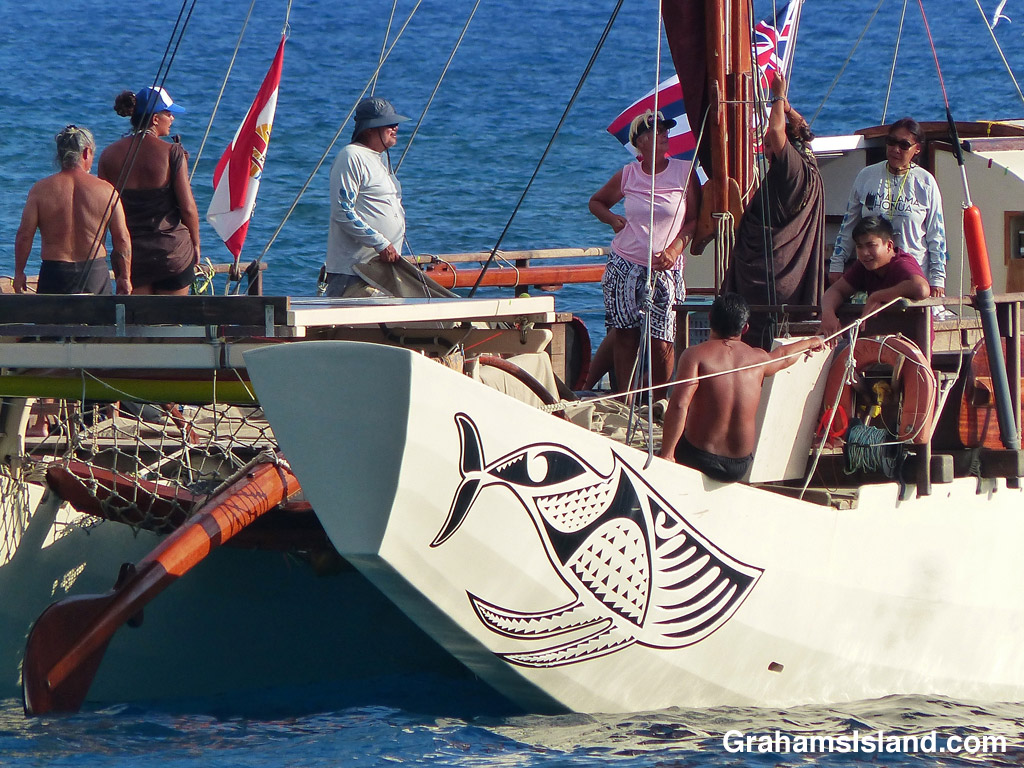
Fa‘afaite Tahitian voyaging canoe
Yesterday saw the return of the Hawaiian voyaging canoe, Hokuleʻa, from its 3-year Mālama Honua Worldwide Voyage. There was a ceremony on Oahu to mark the return featuring Hokuleʻa’s sister canoe, Hikianalia, and several other Polynesian voyaging canoes.
Earlier in the week, one of the canoes, Fa‘afaite, from Tahiti, was waiting for its sister canoe, Okeanos, off the Kohala coast, before carrying on to Oahu. These voyaging canoes use traditional instrument-free navigation on their travels.
For more information about Hokuleʻa and the Polynesian Voyaging Society, go to www.hokulea.com.
Hula dancers
Some more photos from the hula dancing at Sunday’s Kamehameha Day ceremony in Kapaau, North Kohala. The performers are members of Halau Hula O Napunaheleonapua.
For more information about the Kamehameha Day and the statue, go to kamehamehadaycelebration.org.
For more information about the Kamehameha’s history, go to nps.gov/puhe/learn/historyculture/kamehameha.htm.
Helicopters circle Pu’u O’o vent
During a recent hike on the Nāpau Trail in Hawaii Volcanoes National Park, one accompaniment was the throb of helicopter engines. The active flow from Pu’u O’o vent, and its ultimate outpouring into the ocean, is a great attraction for visitors and locals alike.
One way of seeing these events is on a helicopter tour and, as I sat at the Nāpau overlook, I noticed there was a clear order to those helicopter visits. A pair would arrive from the west, one a bit behind the other. One would circle the vent, the other visit the ocean entry. Then they’d switch. After 10 or 15 minutes, the two helicopters would head off to the northeast and soon after, the next pair would arrive.
For more information about Hawaii Volcanoes National Park, go to nps.gov/havo/. For more information about Kilauea Volcano and it’s eruptions, go to hvo.wr.usgs.gov/kilauea/history/main.html.