A pair of boldly marked Asian swallowtail butterflies flying in the blue Hawaiian skies.

A pair of boldly marked Asian swallowtail butterflies flying in the blue Hawaiian skies.
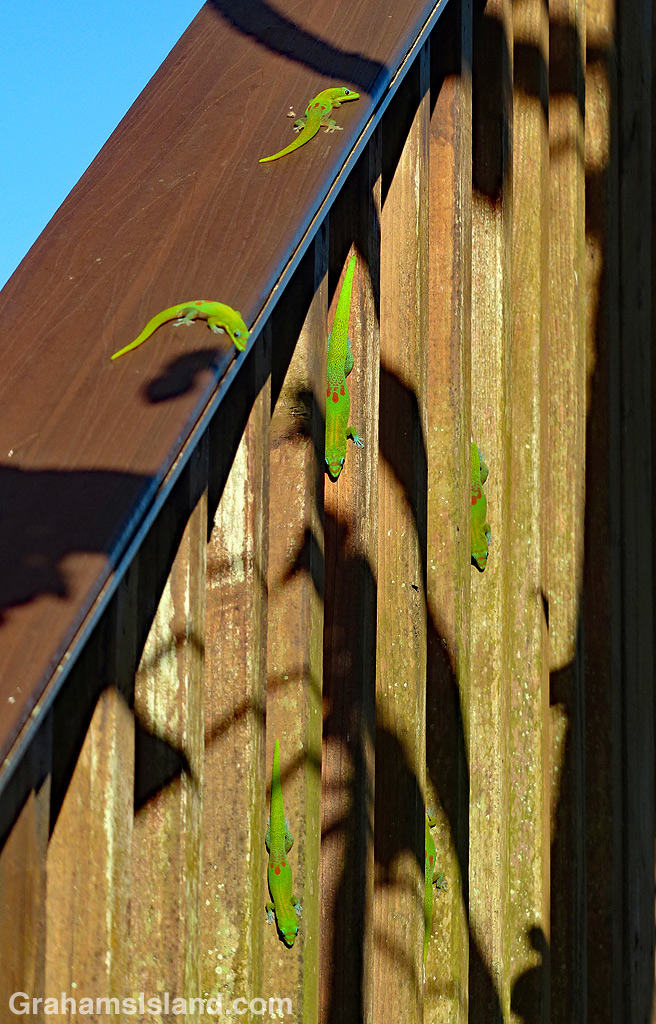
When the morning sun hits, gold dust day geckos can often be seen soaking up the early rays to warm themselves for the day’s activities. Half a dozen of them were doing just that on this railing.

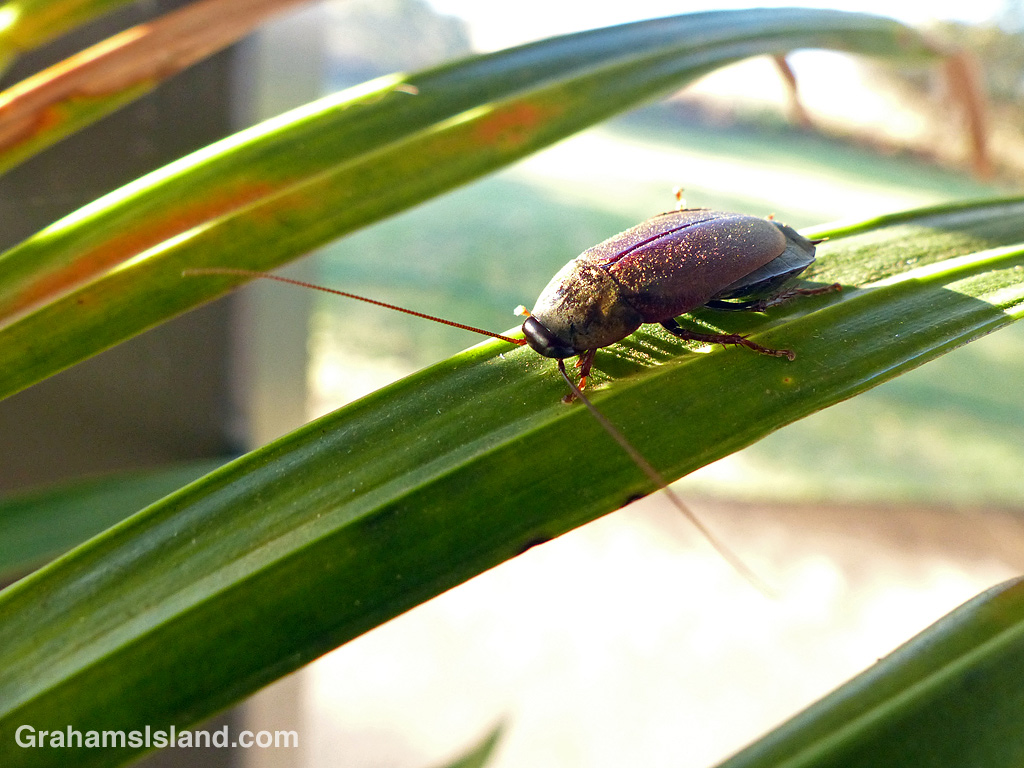
When I first saw this bug, with its red back and gold sparkles, I thought for sure it was a beetle. But it turns out, it only resembles a beetle. It is in fact a cockroach, which left me with slightly less warm thoughts about it.
But it turns out that the Pacific beetle cockroach is quite interesting. It’s one of a few that are viviparous, meaning that it gives birth to live offspring. A couple of years ago, this cockroach was in the news because the ‘milk’ it feeds its young is a more complete food than cow’s milk and was being touted as the next superfood. Not that cockroach dairies were about to be set up, but the thought was that the protein crystals in the milk could be reproduced in labs.
This hasn’t happened yet, but who knows. I bet Gwyneth Paltrow is out there, milking cockroaches, even as I post this.
Thanks to Hawai’i Insect Identification for help in identifying the Pacific beetle cockroach. For more information about Hawai’i Insect Identification, go to flickr.com/groups/hawaii-insect-id/pool/.
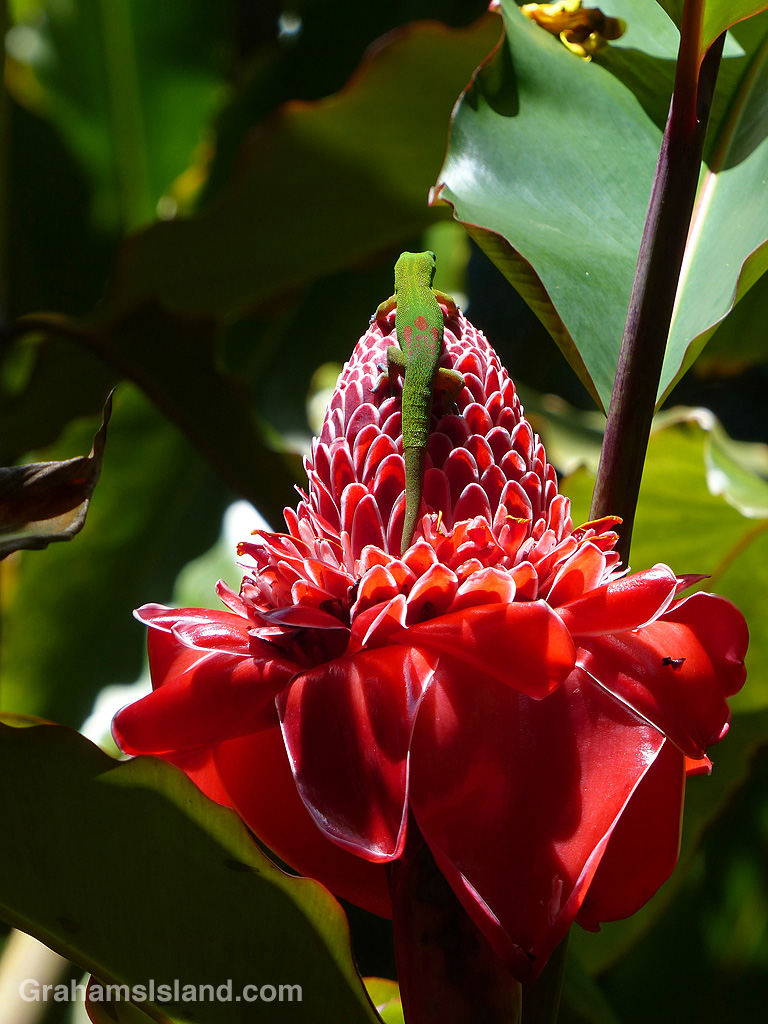
There is no Sunday Stills challenge this week (or next), but the theme was going to be ‘Something Red or Green or Both!’ so I thought I’d go with the photo I had picked out for that anyway.
So here’s a very green (with red markings) gold dust day gecko resting atop a very red torch ginger surrounded by green foliage. It looks like the gecko has been in the wars judging from the rings around its tail, which suggest it has lost it a few times. The most recent regrowth is the lower brown part, which will ultimately take on a matching green color once it’s fully grown.
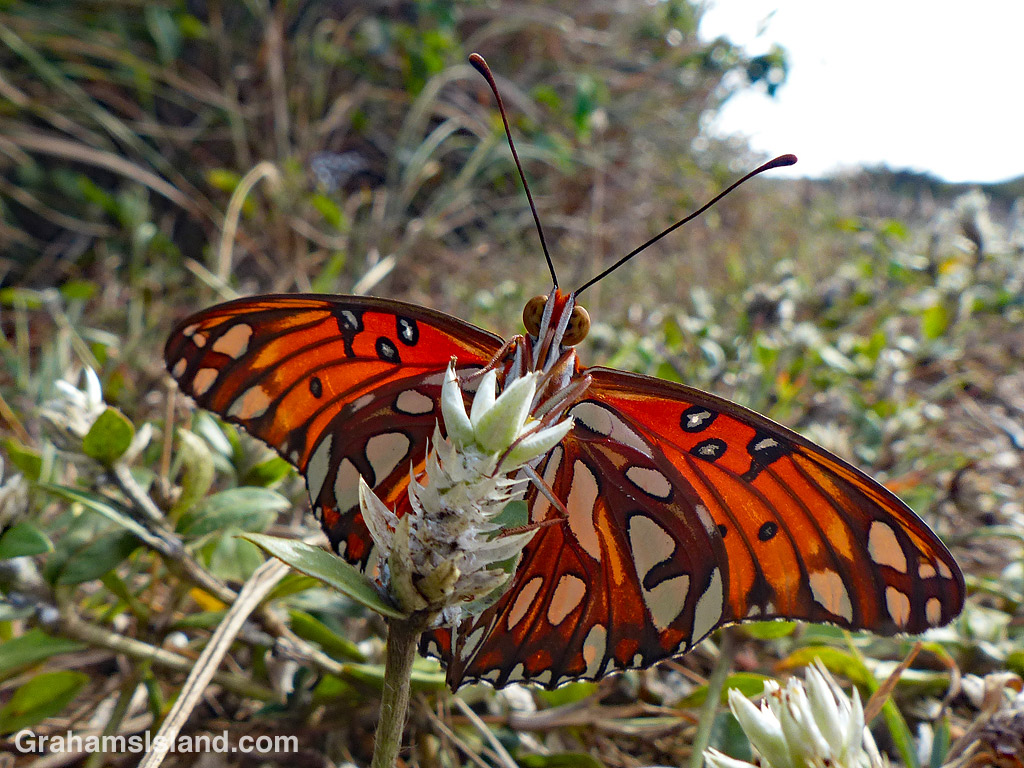

I saw this passion vine butterfly resting one windy late-afternoon. It didn’t seem in any rush to head off into the wind again so I got some decent photos. What I like about the photos is that I was close enough to get clear images of the butterfly’s labial palps, the white appendages sticking up on either side of the proboscis. These palps are covered with hairs that are believed to allow the butterfly to sense whether something is edible or not.
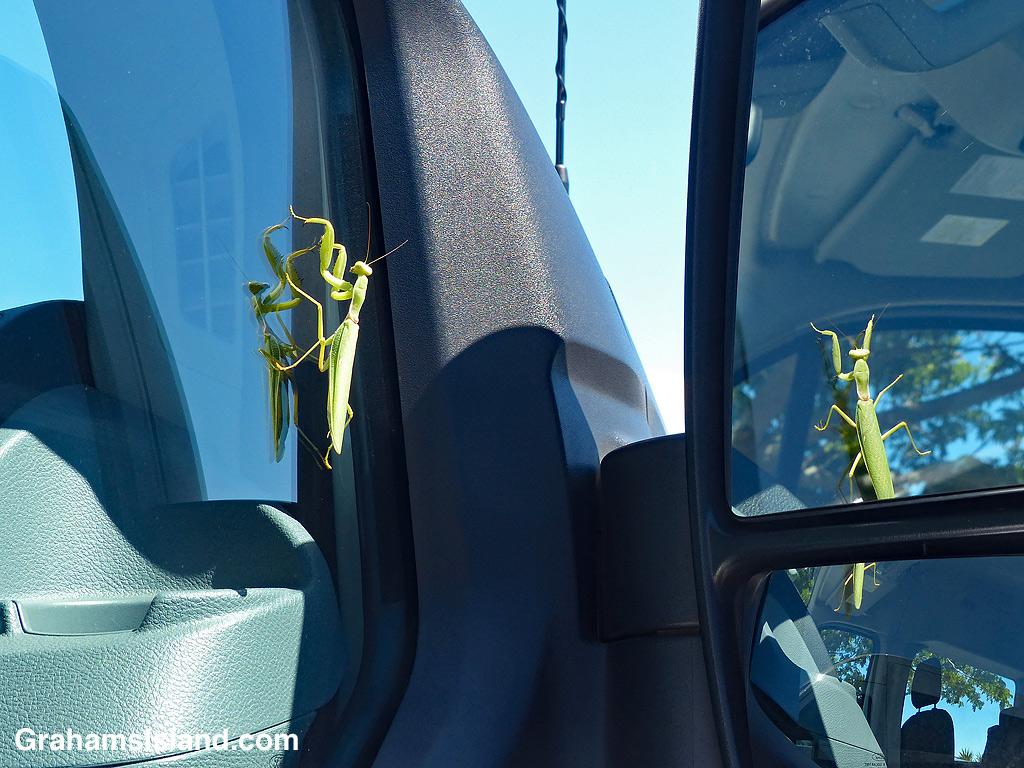
This praying mantis landed on a vehicle window and instantly became reflective. Perhaps it was feeling introspective. Perhaps it has multiple personalities. Perhaps it’s just trying to get away from me.
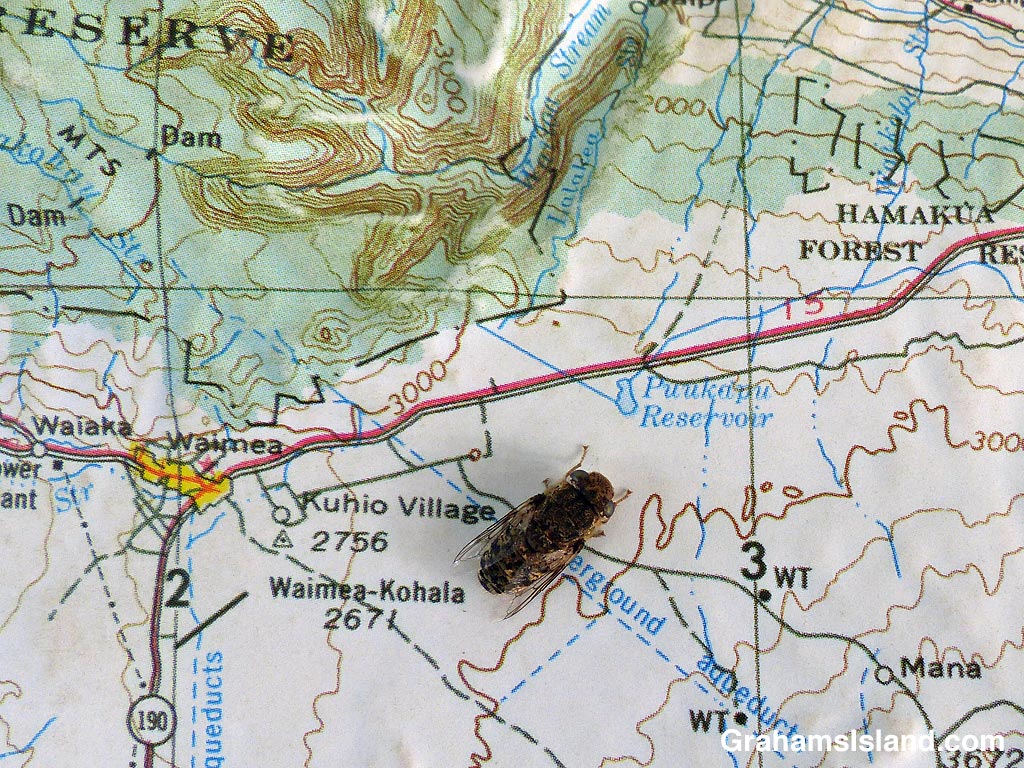
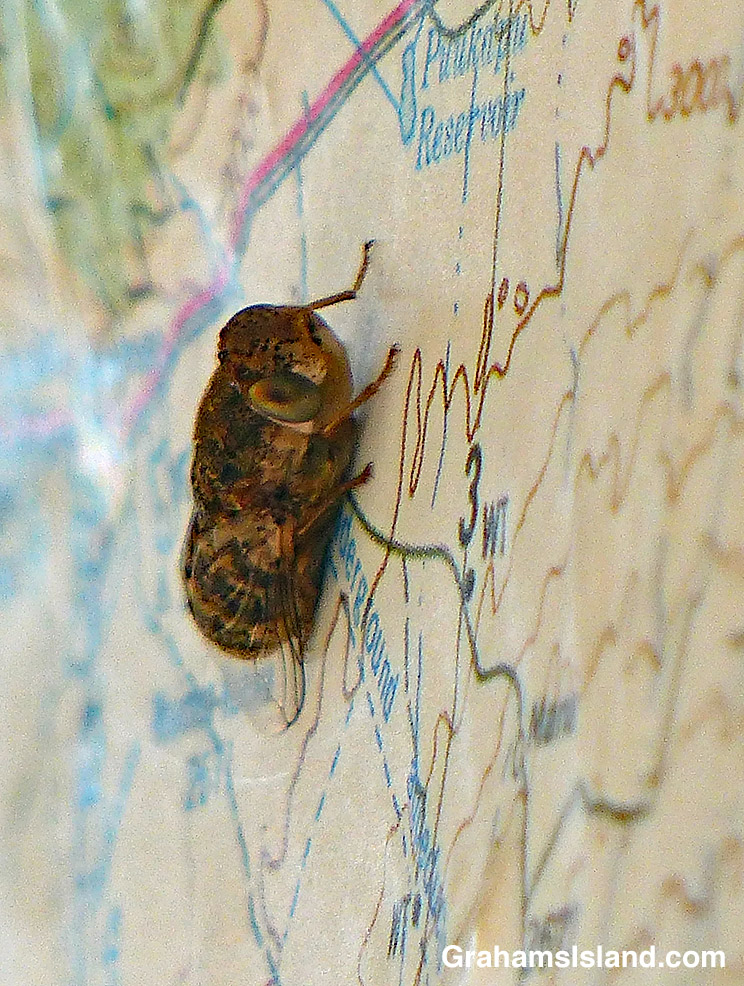
The sheep bot fly (Oestrus ovis) is also known as the sheep nose bot fly or sheep nostril fly. That’s because larval stages of this fly move into the nasal passages of sheep and goats. So not only is it good looking, but it also resides in the best of neighborhoods.
I like how, in the top image, the fly appears to be bigger than the fair-sized town of Waimea, on the map, though it’s actually about half-an-inch long. Then, in the lower image, the large eye casts a quizzical look.
There were no sheep for miles where these photos were taken, but there’s no shortage of goats in the vicinity, so that probably accounts for the presence of the fly.
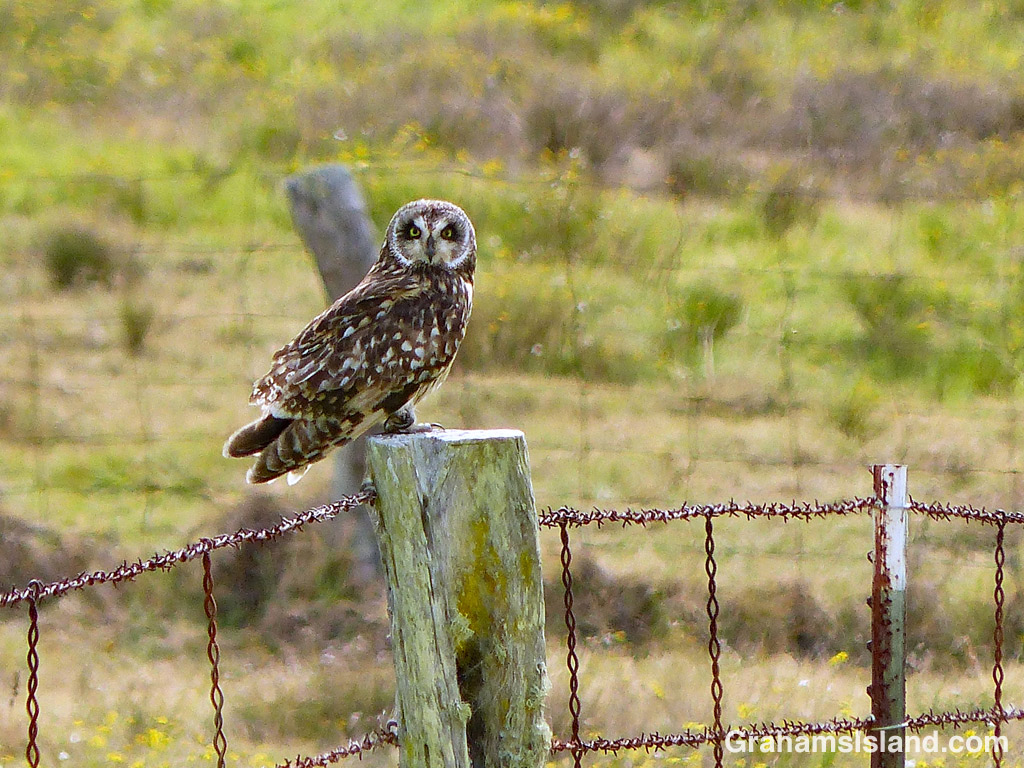
This week’s Sunday Stills challenge theme is ‘Oldie-but-Goodie or Favorite Photo.’ (See more responses here.)
This seemed like a good opportunity to run a few of my favorite photos from the first year of this blog.