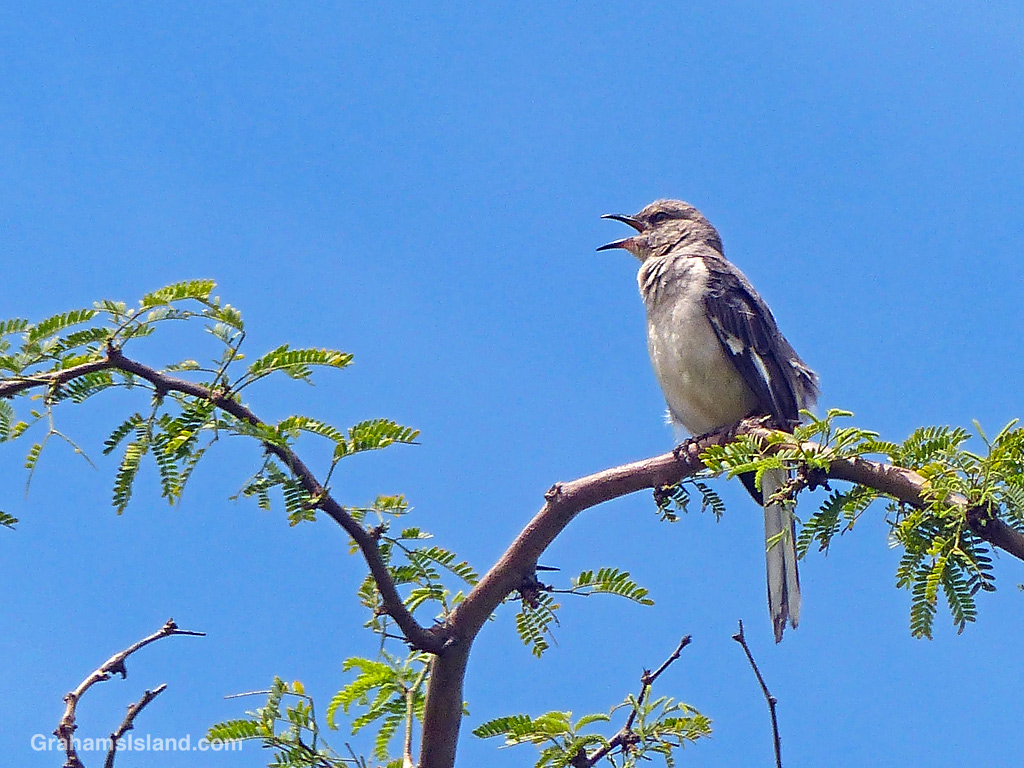
A Northern Mockingbird sings its heart out at the top of a tree, as they often do.

A Northern Mockingbird sings its heart out at the top of a tree, as they often do.
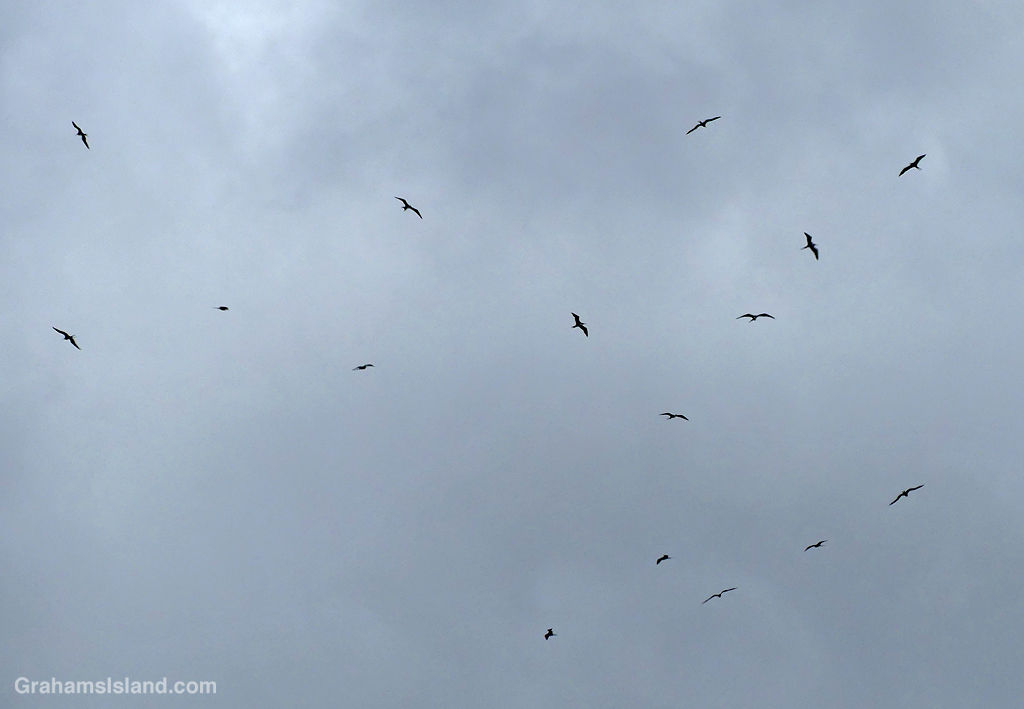
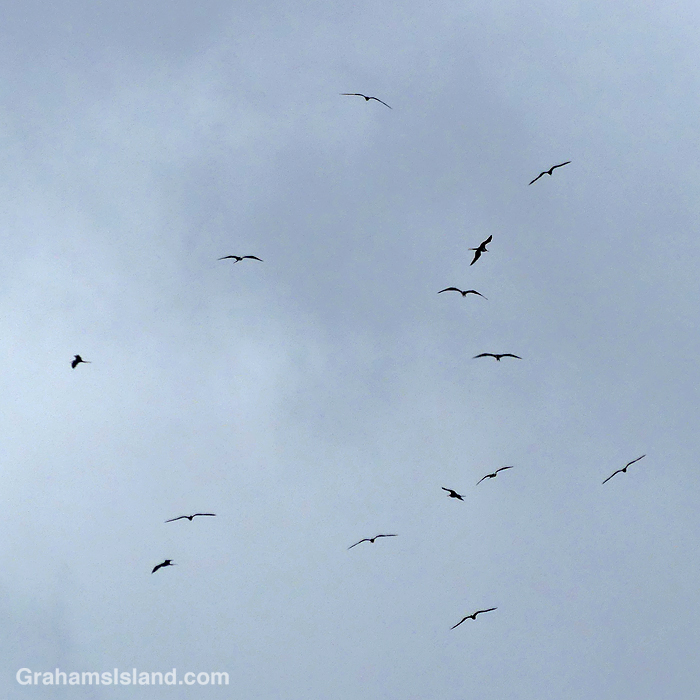
“Graham, get your camera. Storm birds!” With that alert, I dashed out of the office at work and saw these Great Frigatebirds circling in the gray skies towards Kohala Mountain. There were 16 of them, which is the most I’ve seen at one go.
These birds are known as ’Iwa in Hawaii. This means ‘thief’ in the Hawaiian language, a reference to their practice of harassing other birds into dropping prey they’ve caught, which the ’Iwa then take for themselves.
In Hawaii, a gathering of these birds is seen as a sign of stormy weather coming, Hence the storm birds name. They were on the money again, with Tropical Storm Calvin hitting the island a few days later.

This week’s Sunday Stills challenge theme is ‘Double Trouble.’ See more responses here.
A pair of juvenile Black-crowned Night Herons spell trouble for small fish living in the pool behind Pelekane Beach in Kawaihae.

Giant Porcupinefish can inflate themselves into a ball. When they do so, long spines along the back become raised and stick out, making them an extremely unpleasant proposition for any predator. Oh, and they’re poisonous, too. Trouble, indeed.
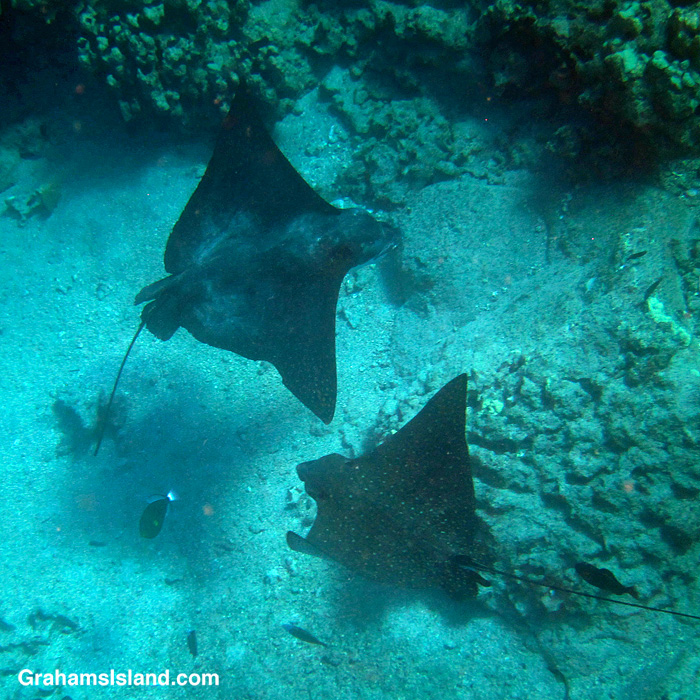


Spotted Eagle Rays hunt for molluscs and other creatures hiding in the sand. They root out prey with their duck-like bills.
Wild pigs can dig up a garden in no time, searching for worms and the like, but they go bananas over fallen fruit. These two were slurping down fallen mangoes.
This cow looked very suspicious of these cattle egrets, especially the one on its back. But they weren’t up to any trouble, just waiting for the cow to start grazing again and stir up some insects for them.

The Gold Dust Day Gecko on the left isn’t licking the paint. He’s sticking out his tongue and leaning to make his body look bigger in a challenge to the other gecko. The other one was singularly unimpressed and chased off his adversary.
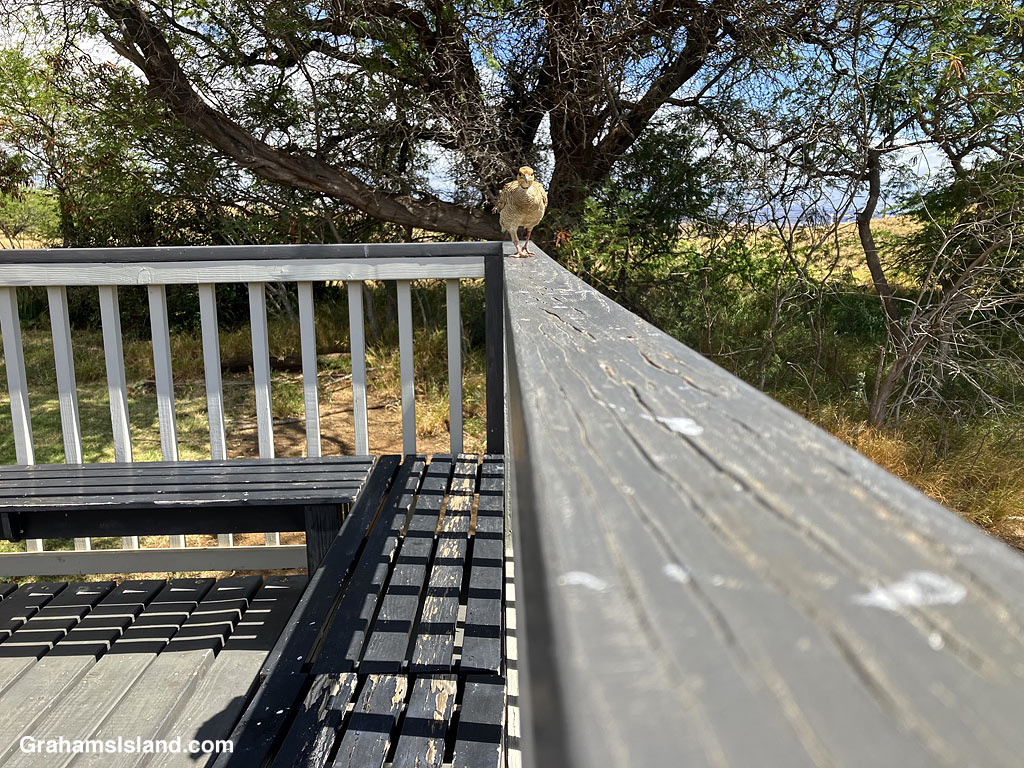
At work, we have six cats which get fed twice a day. After the cats have eaten, and sometimes while they’re eating, birds swoop in. The cats’ numbers are stable, but the number of birds at the feast keeps increasing. Some days it’s like a scene out of Hitchcock’s ‘The Birds.’
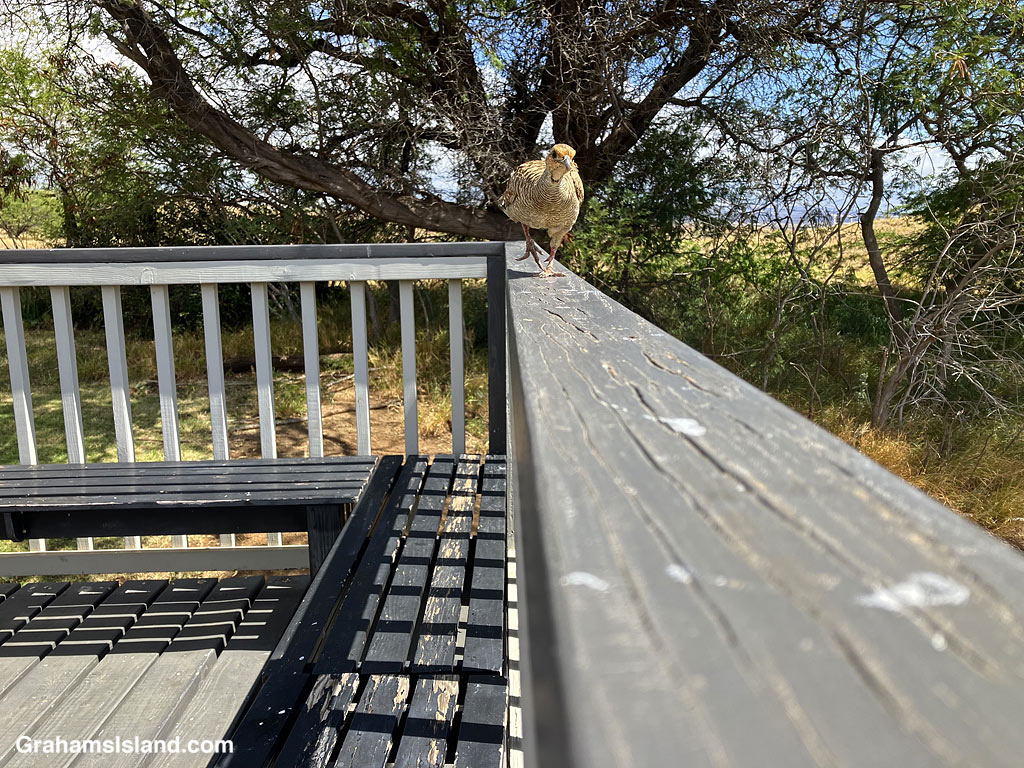
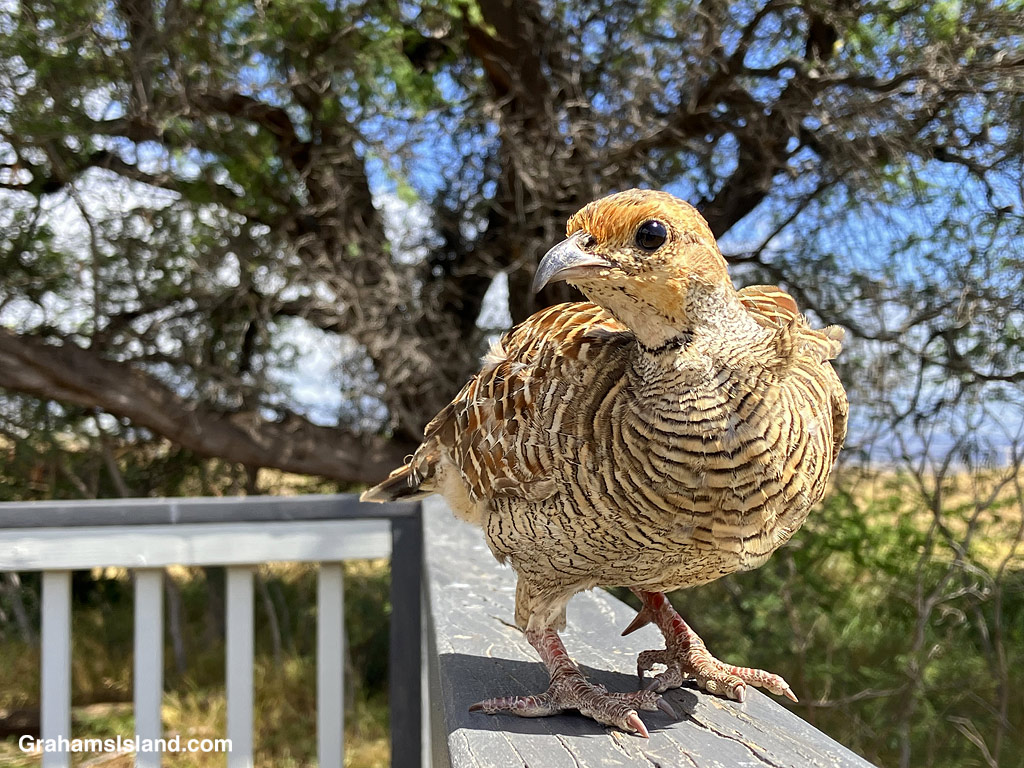
The Gray Francolins, including this one, are particularly bold. When I saw it on the rail one day, I wondered if it would come seeking a handout. I wasn’t disappointed. It was a little uncertain, but couldn’t resist the prospect of an extra snack. I just stood and waited and got these photos on my phone.

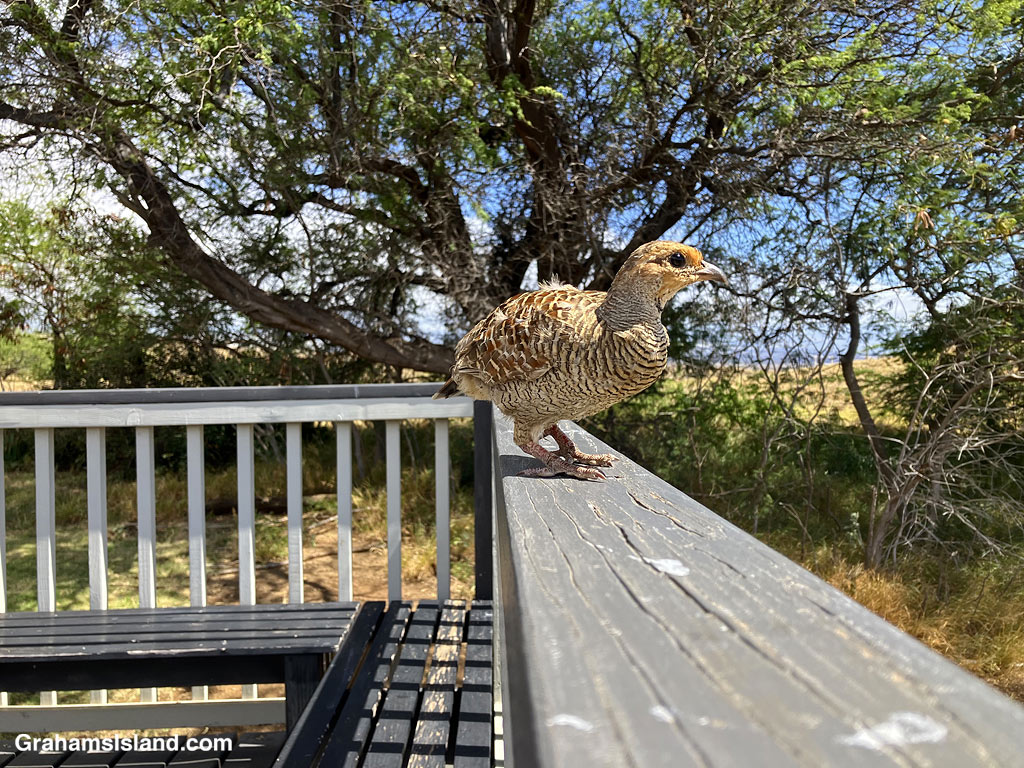

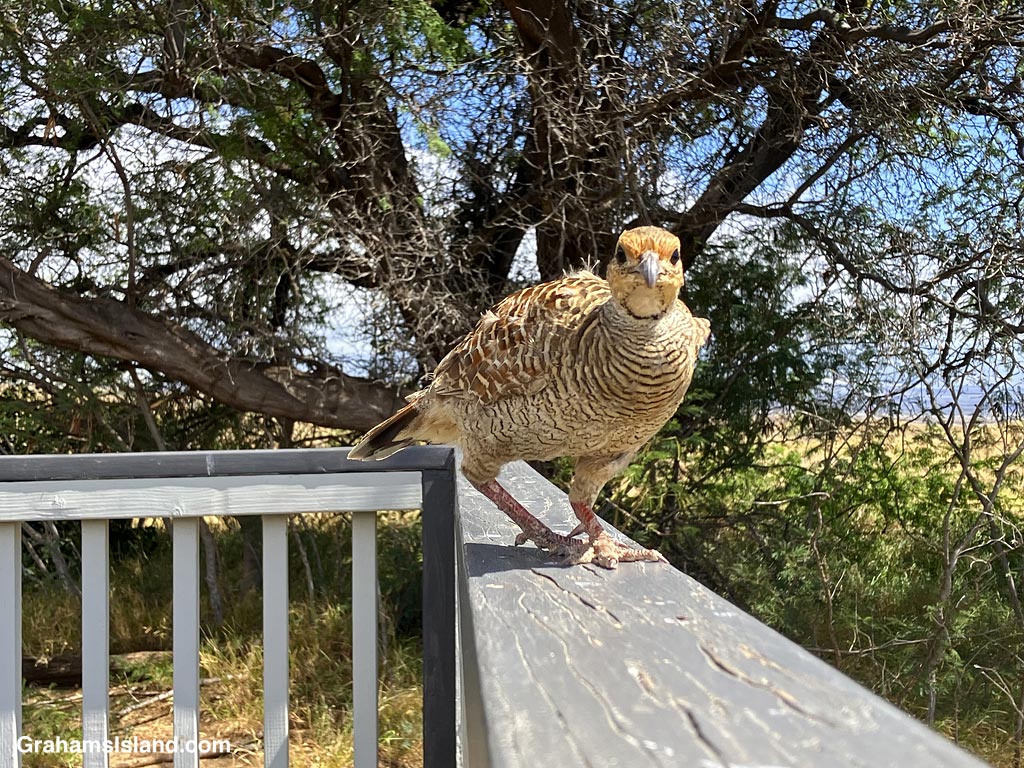

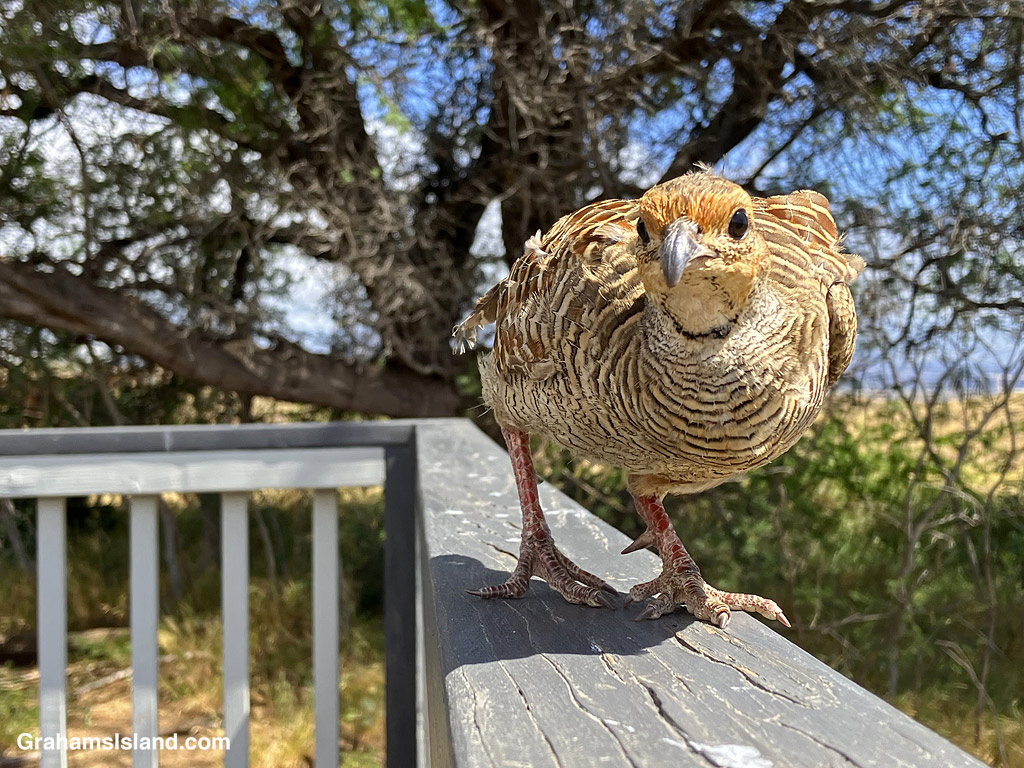
I hoped it would come right up to the lens so I’d end with a photo of a beak and maybe an eyeball! It did get pretty close, but with no food appearing to lure it on, it finally stopped and then flew off.

This Wandering Tattler struck an obliging pose on a rock on one of my early morning walks near Kawaihae.

A couple of days ago, on my way to work, the early morning sky had an interesting look to it. Then I saw a tug and barge heading toward Kawaihae Harbor, so I decided to pull over and park (right next to a No Parking sign!). I walked a few paces to get a more open shot of the scene and, in doing so, disturbed a flock of pigeons roosting in a nearby tree. They took to the air and swooped around for a while before dispersing.


I saw this endemic Hawaii Amakihi on the slopes of Mauna Kea, feeding at Mamane flowers. The Hawaii in the name refers, not to the state, but to the island of Hawaii, otherwise known as the Big Island. There are different species on Oahu, Maui, and Kauai.

In the early morning, on the waters off Kawaihae, some outrigger canoe paddlers train for a future race while cattle egrets head in the opposite direction to find their cattle.
 Graham's Island