Category Archives: Birds

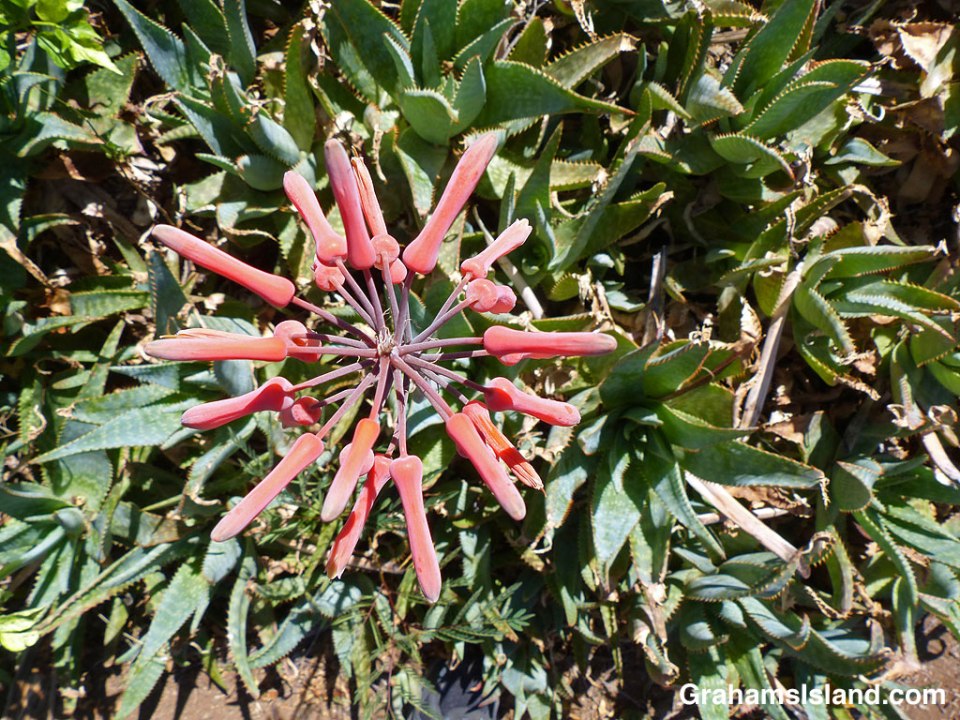
Japanese aloe

Japanese Aloe

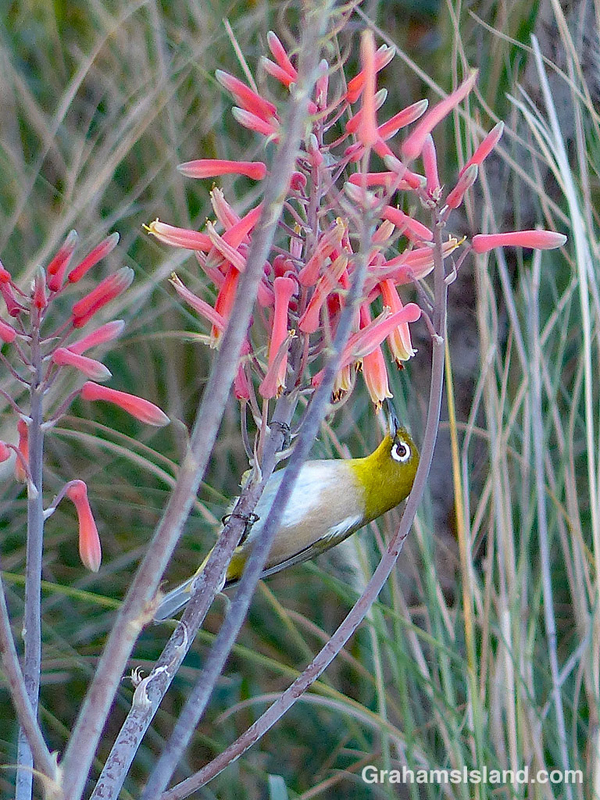
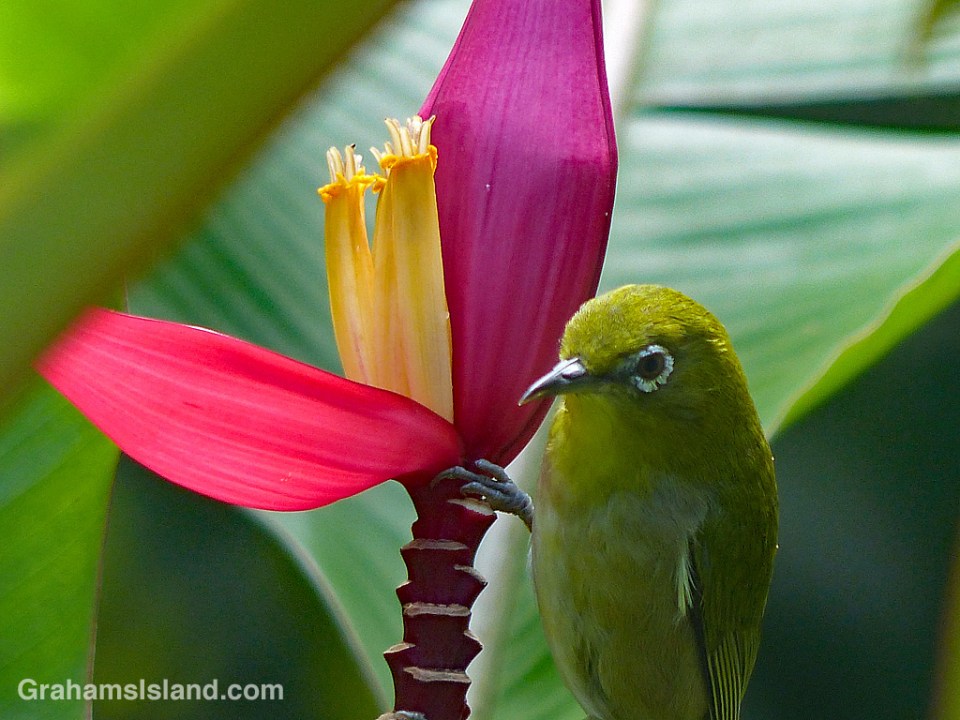
Japanese White-eye on Japanese aloe

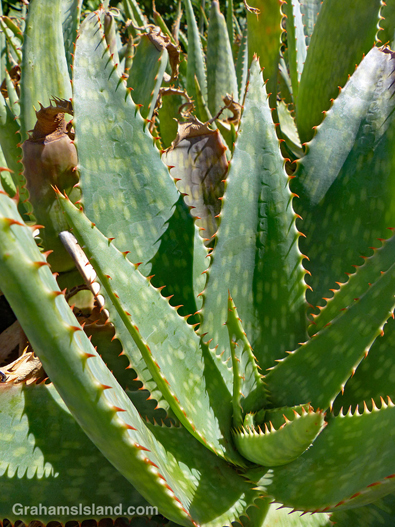
I think this is a Japanese aloe with its long tubular flowers and spiky leaves, though it could be a different variety. The flower stalks are quite long and reach well beyond the leaves, which makes things a little easier for this Japanese white-eye to feed from the flowers.

Japanese Aloe leaves

Goats and nene

Goats and Nene

Three goats crossing a golf course fairway while a pair of nene head the other way. What I like about this image is that they all look very purposeful in their progress, as if they had an important appointment to keep. Only the saffron finch in the foreground looks like it couldn’t give a damn.

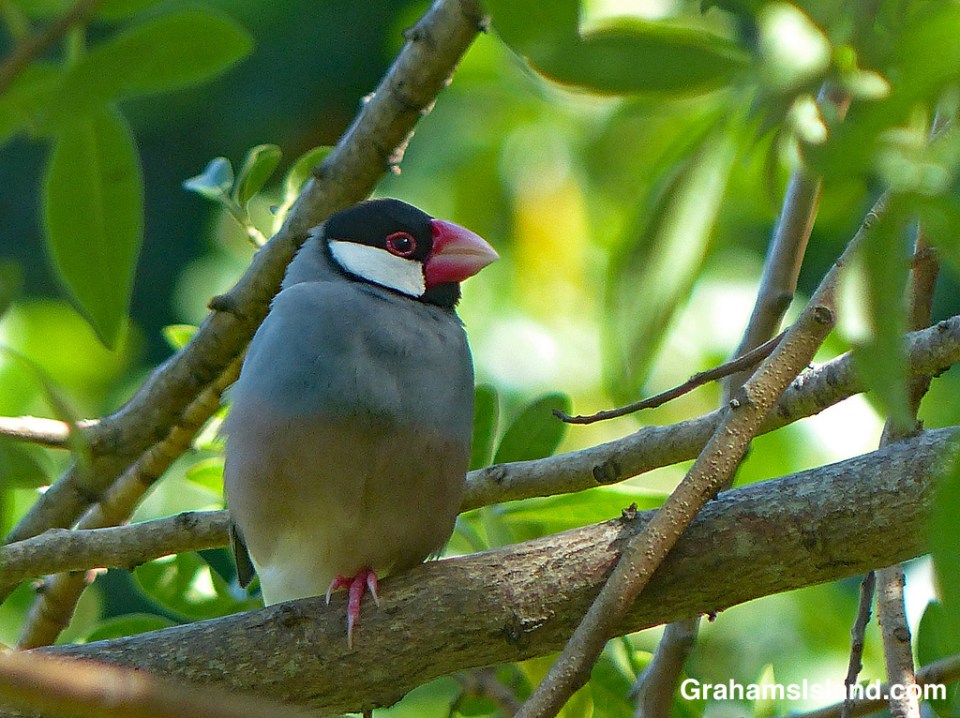
Java sparrow

Java Sparrow

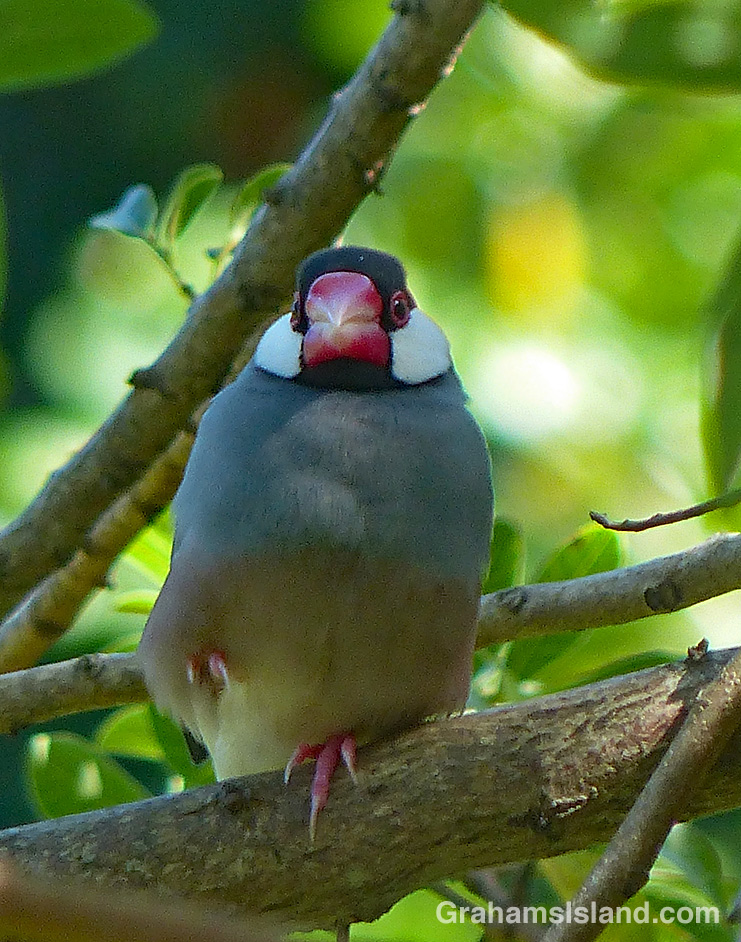
Java Sparrow from the frontThis week’s Sunday Stills challenge theme is ‘Pink.’ (See more responses here.) I mulled a few possibilities before settling on this fine little bird, a Java sparrow. The Java sparrow, as its name suggests, is native to Indonesia, but is now well established in Hawaii. It’s notable for its thick, pink bill which matches its eye ring and feet.


Return of the Pacific golden plover

Pacific golden plover feeding

This week’s Sunday Stills challenge theme is ‘Autumn,’ (more responses here) which poses a bit of a challenge. In Hawaii, we don’t have leaves turning color or a certain crispness in the air. But what we do have at this time of year is migratory birds coming to the islands.

One of the more impressive of these travelers is the Pacific golden plover. These birds spend the summer, their breeding season, in the Arctic tundra from western Alaska to northern Asia. At the end of the season they make an epic migration south to places as far away as Australia, Southeast Asia, and northeast Africa.

Hawaii is a stopover on their way to Australia, New Zealand, and other Pacific islands, but some of the birds spend their winters in Hawaii. This is a non-stop journey of more than 2,500 miles and takes the birds three to four days. How they do this is not fully understood. There are no landmarks or stopping points en route and no room for errors in navigation. But year after year, Pacific golden plovers return precisely to the same sites. Not only that, but new born plovers are able to make the journey independently despite never having flown the route before.

Then there’s the small matter of how this little bird fuels itself for such a long flight. There’s a fine balance between the amount of fuel it must carry and the need to fly fast. But even if it gets this right, the fact is an individual plover still wouldn’t be able to go that far. The secret lies in the birds flying in a V-formation which saves enough energy for the birds to make the whole distance with a little bit to spare to cover adverse conditions. It’s a remarkably precise balance which the birds manage successfully year after year.

This plover was foraging (successfully in the top photo) in tide pools along the Kona coast.

For more information about the Pacific golden plover’s migration to Hawaii, go to https://phys.org/news/2011-06-plovers-tracked-pacific.html.

Pacific golden plover

Egrets and turbines

Egrets and turbines

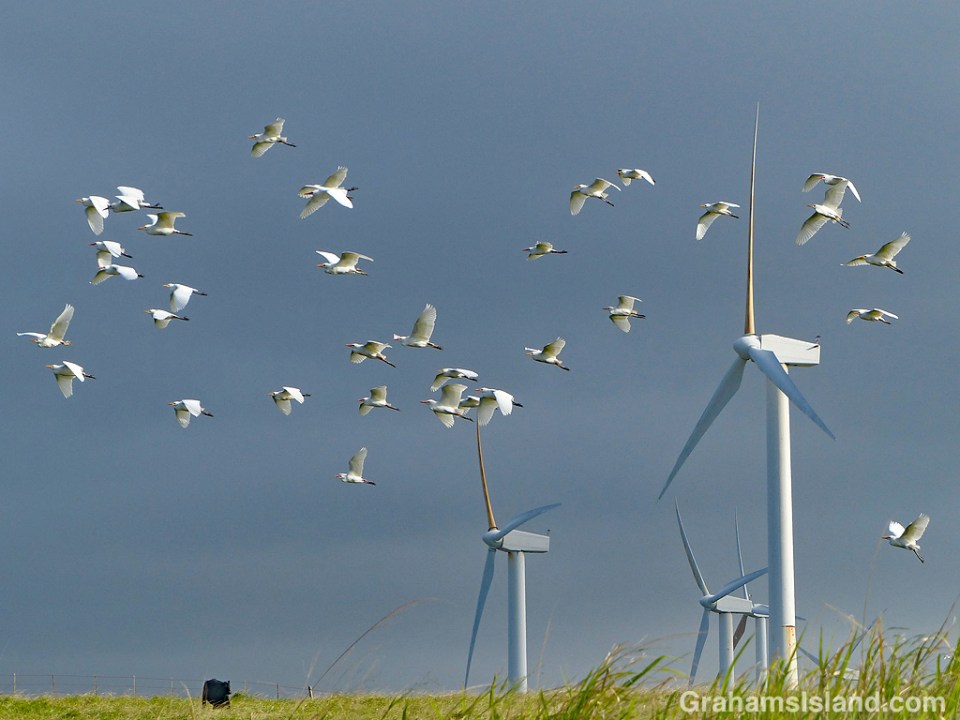
Today marks the 1,000th post on this blog. To mark the occasion I looked for a suitably appropriate subject and couldn’t find anything! So instead I chose this photo since it featured a couple of subjects I must have seen a thousand times.

I pass the turbines at Hawi Wind Farm on my way to the part of the coast where I regularly walk. And I’ve seen an awful lot of cattle/horse/sheep/goat/lawn mower egrets since they are omnipresent. Plus I have a soft spot for them.

In this photo, a flock of egrets is on a mission to get from one pasture to another one. They aren’t the most graceful of flyers, but en masse I find they make a very pleasing sight.

Bold gray francolin

Gray Francolin

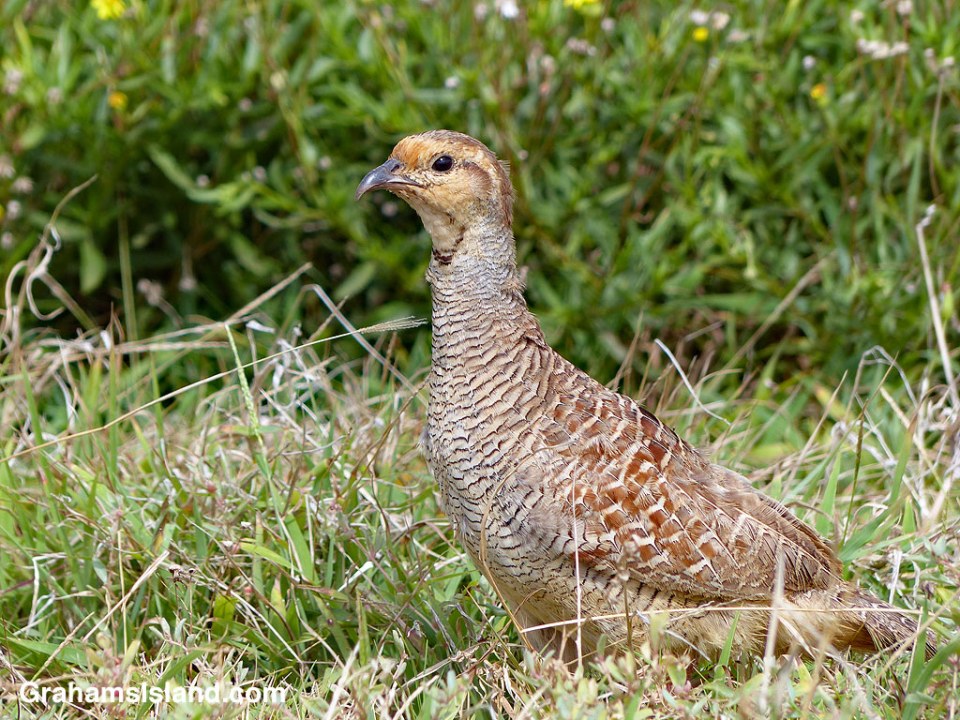
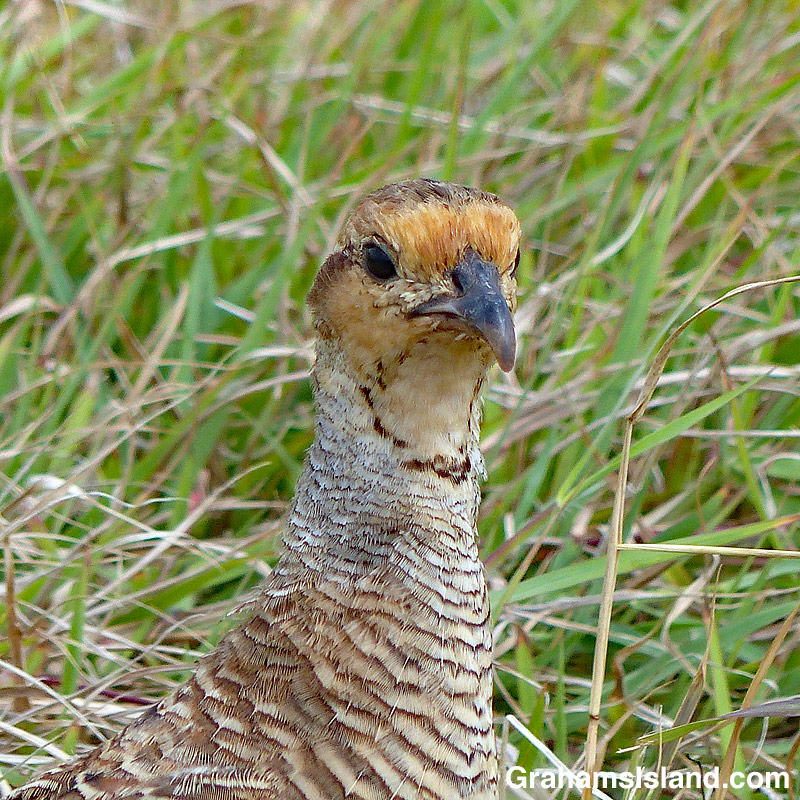
Gray Francolin headGray francolins are a favorite bird of mine, not for their loud and raucous call, especially early in the morning, but for their goofy behavior.
They blend in very well in dry, grassy surroundings. I often encounter them when one or more loses it’s nerve and shoots out from cover, which leaves me as startled as the francolin. Sometimes they’ll fly out, but more frequently they take off running. When this happens alongside a fence the bird will run along, pausing occasionally to probe for an escape route, with me calling after it, ‘You can fly you know.’ If it doesn’t find a hole in the fence it will eventually take off, but it’s as if they’ve all been told they can only take off 20 times in their lifetime.

The gray francolin in these photos neither ran nor flew. It stood its ground quite boldly, making sure to keep a sharp eye on me as I edged past trying not to alarm it. When I’d done so it wandered off through the grass looking quite pleased that it hadn’t used one of its 20 airborne escapes.

This is your 5 a.m. alarm call

Northern Cardinal in a tree

Northern Cardinal looking downA while back, I exposed roosters (here) as the frauds they are when it comes to greeting the dawn. Yes, they crow at dawn, but only because they crow, randomly, 24/7.

But the dawn chorus is not a myth. It’s the time when birds that have managed to get a decent night’s sleep, despite the roosters, wake up and let other birds know that they made it through the night and this is still their territory. Around here, there’s both a great variety and large number of birds singing in the chorus, but the chorus leader is this bird.

At this time of year, this northern cardinal cranks it up around five in the morning. He’s almost always in this spot, high in a tree, about 60 feet from the house and, if I didn’t know better, I’d swear he has an amplifier and speakers up there, too. The northern cardinal has a loud and piercing voice, as well as a wide variety of songs to use it on. They include, ‘pichooey, pichooey, pichooey,’ ‘puertorico, puertorico, puertorico,’ and the ever popular ‘party, party, party, party.’

Sometimes, these calls get a response from another cardinal in the hedge about 10 feet from the bedroom window, which is startling to say the least, especially at that time in the morning when I’m not exactly at my best.

While I confess to having muttered a few less-than-complimentary words at the chorus, and this bird in particular, I’m grateful for the numbers and variety of birds around here. So I guess I wouldn’t have it any other way. And just lately, this cardinal hasn’t been on his appointed perch in the wee hours. I’m kind of worried.