Yesterday, I posted (here) a response to this week’s Sunday Stills challenge theme of ‘Yin-Yang.’ (See more responses here.)
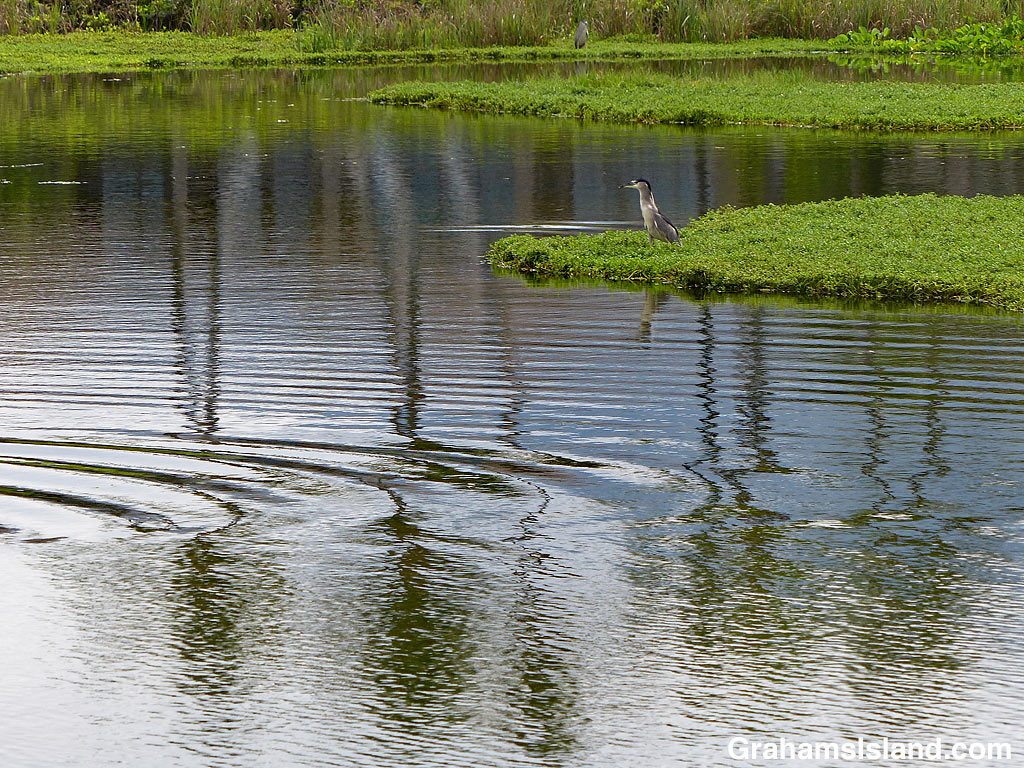
This is my second offering on the theme, which also features light and dark, but also stillness and movement – the stillness of the herons (there’s a second one in the background) and the movement of the rippling water. I like how the second set of ripples disturbs the first set and the reflections of the palm trees.
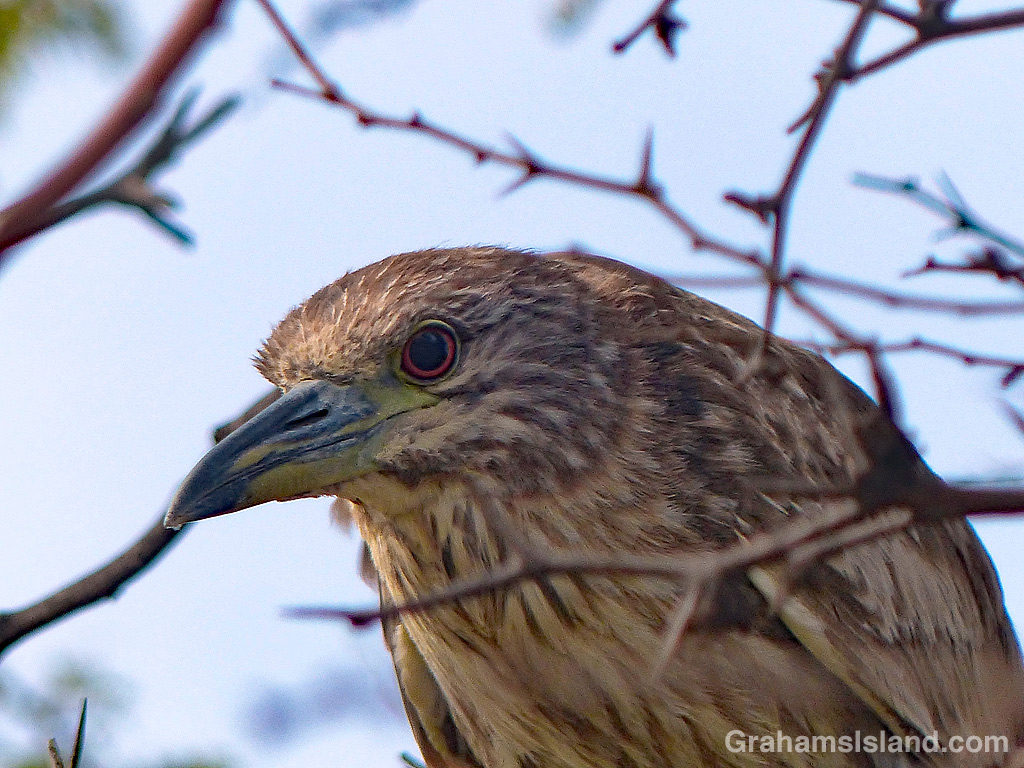
The intense stare of a juvenile black-crowned night heron. This heron was a regular visitor to this kiawe tree, and its sharp thorns, for a couple of weeks.
Kohanaiki Beach Park, north of Kailua Kona, is a favorite spot for surfers. But at the south end of the park, the focus switches to history.
There’s a hālau, Ka Hale Waʽa, which is used for teaching Hawaiian crafts and culture. There’s a garden which grows the same kind of plants brought over by the first Polynesian settlers. And there’s a Hawaiian star compass, a 17-foot diameter recreation showing how the Polynesians used to navigate the vast open spaces of the Pacific Ocean.
The top photo show shows the compass. The middle photo shows a plaque, which explains the basics of how it works, using the points of the compass, the sun, nighttime celestial bodies and the ocean swells. I won’t go into detail here, but more information can be found here, here, and here. Below, the setting of the compass, with a Pacific golden plover walking on it. I like this shot because the plover is said to be the reason Polynesians discovered Hawaii. Each year, plovers summer in Alaska and then fly south as far as New Zealand. It is said that the Polynesians noted this small bird’s annual journey back and forth and figured there must be land somewhere to the north, so they set out in their canoes to find it.
Posted in response to this week’s Sunday Stills challenge on the theme of ‘Round.’ See more offerings here.
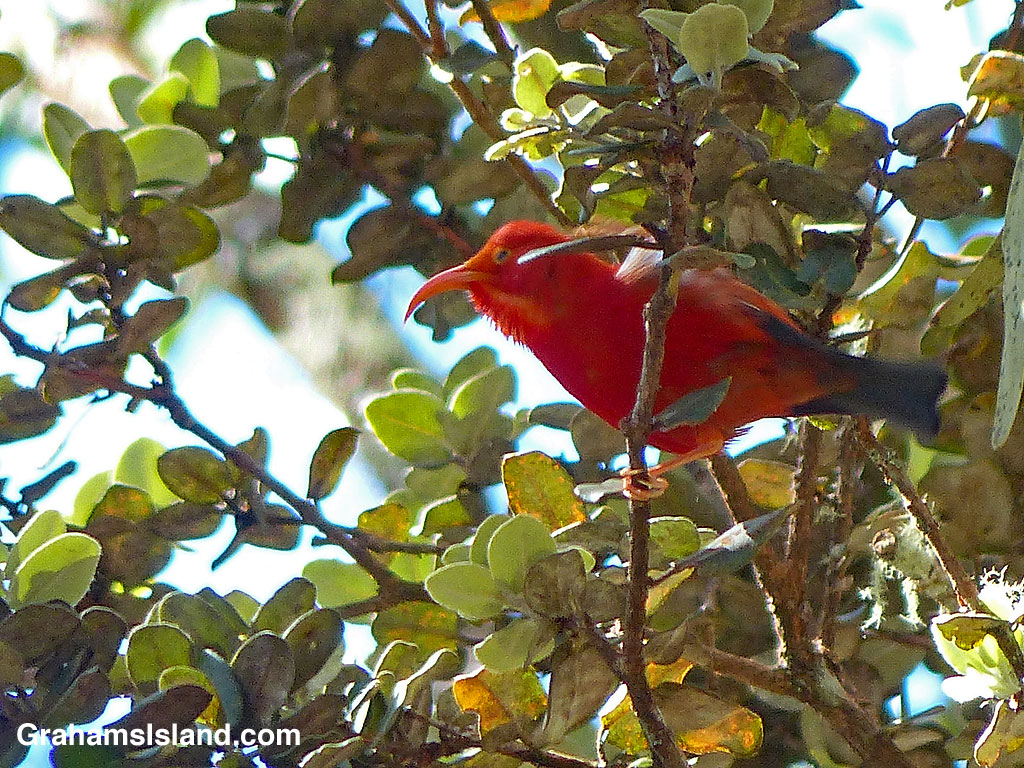
I saw this I’iwi (Drepanis coccinea) on a trail off of Saddle Road, between Mauna Kea and Mauna Loa. These bright red birds are native Hawaiian honeycreepers and in the old days, the feathers of the birds were collected to make cloaks for Hawaiian royalty.
The curved bill is suited for feeding on native lobelias, but a decline in those plants has seen the I’iwi adapt to feeding on other native plants including ʻōhiʻa lehua, māmane, and ohelo.
While the numbers of I’iwi are still fairly good, particularly on the Big Island and Maui, they have suffered, like other birds, from loss of habitat. In addition, They are susceptible to avian malaria, spread by mosquitoes. Consequently, I’iwi are doing better at higher elevations, such as where this photo was taken at around 6,000 feet.
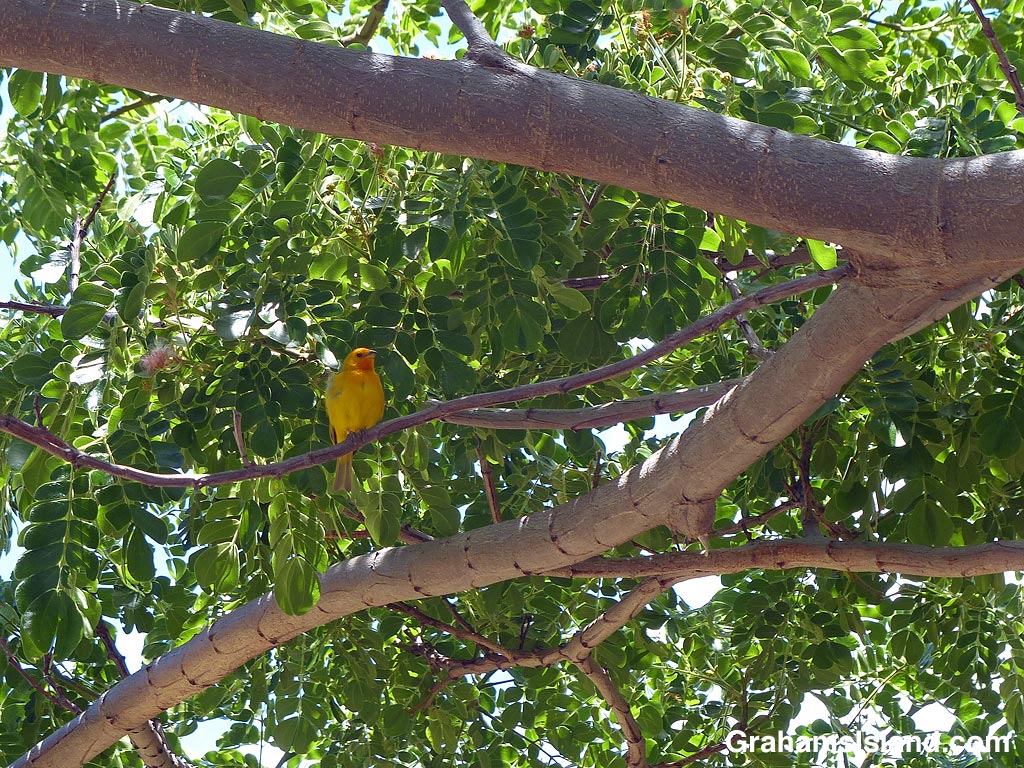
Monkeypod trees are renowned for their spread, creating large shady areas below. They also provide habitat for many birds including this saffron finch, enjoying a rest in the relative cool of the lower branches.
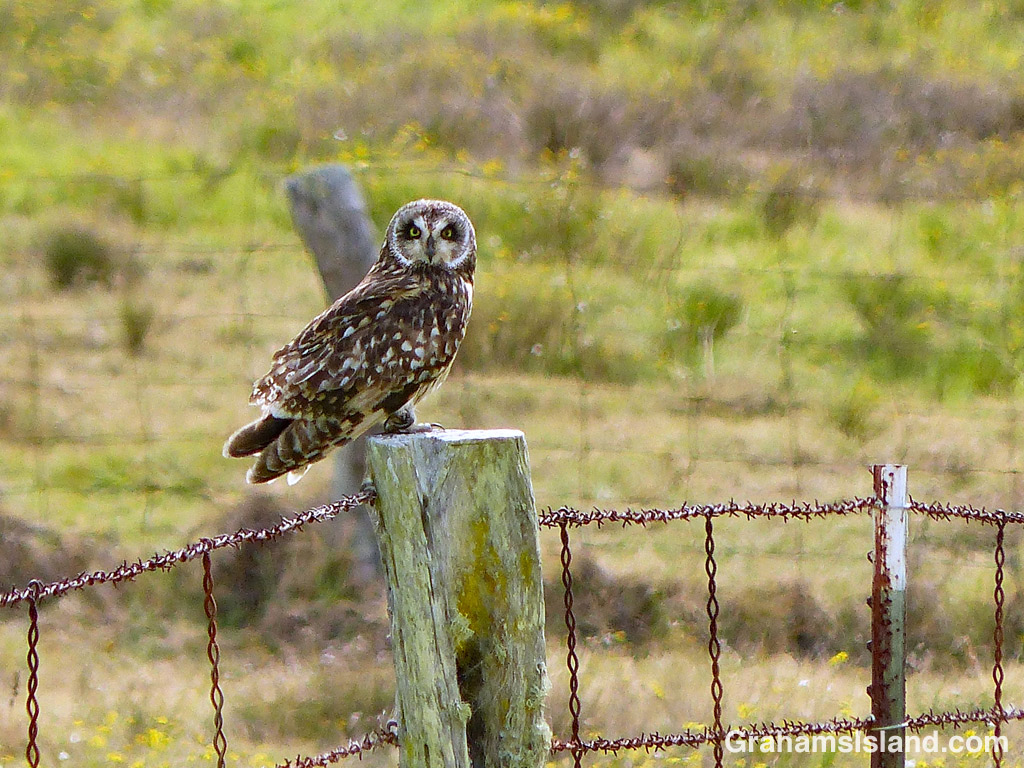
My first decent pueo photo taken on Old Saddle Road. I noticed it on the post as I drove by, then stopped, got out, and started taking photos. The bird watched me with that intent stare that they have. (Original post here.)
This week’s Sunday Stills challenge theme is ‘Oldie-but-Goodie or Favorite Photo.’ (See more responses here.) This seemed like a good opportunity to run a few of my favorite photos from the first year of this blog.
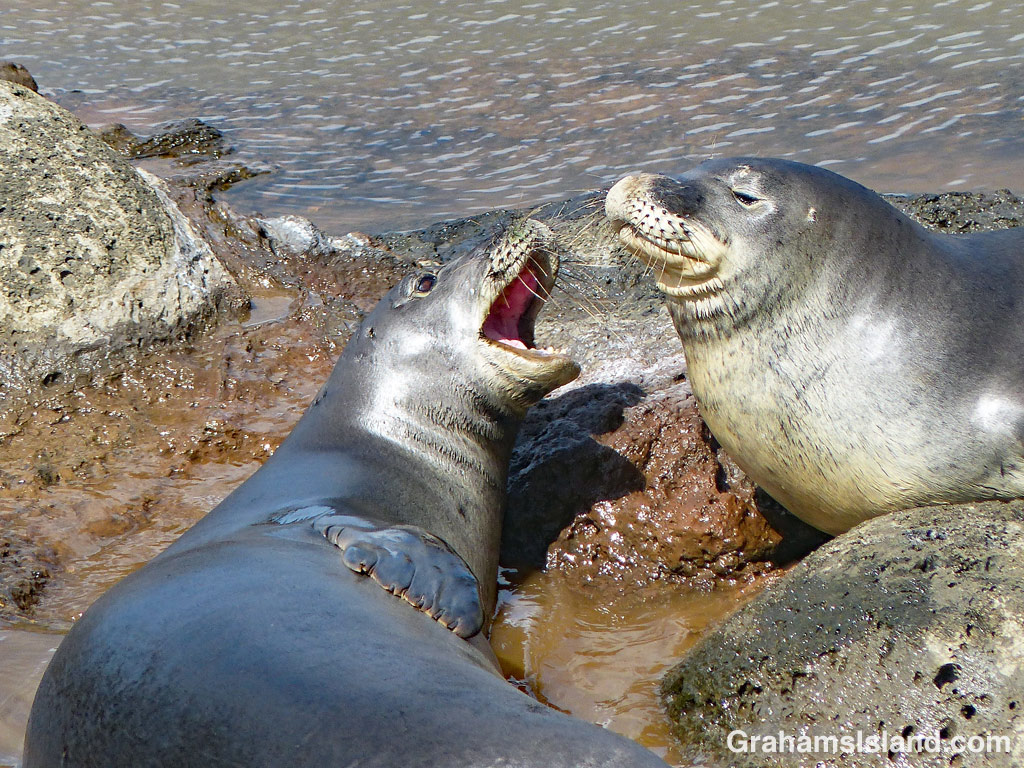
Hawaiian monk seals are solitary creatures, but these two spent some weeks in each others company. On the left is the female and on the right is IO5, the male I see most often up here in Kohala. (Original post here.)
I saw this rusty millipede crossing a dirt road in the late afternoon and liked its giant shadow. This photo ran on the BBC website here. (Original post here.)
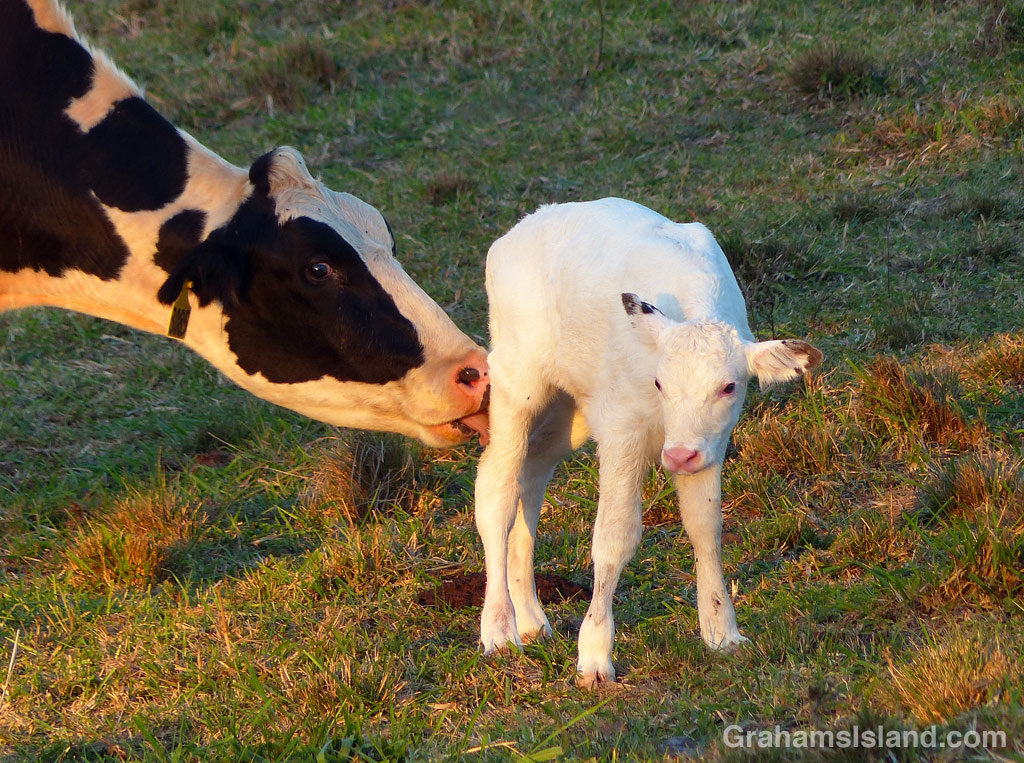
A cow cleaning her very new calf. Another photo that ran on the BBC website here. (Original post here.)
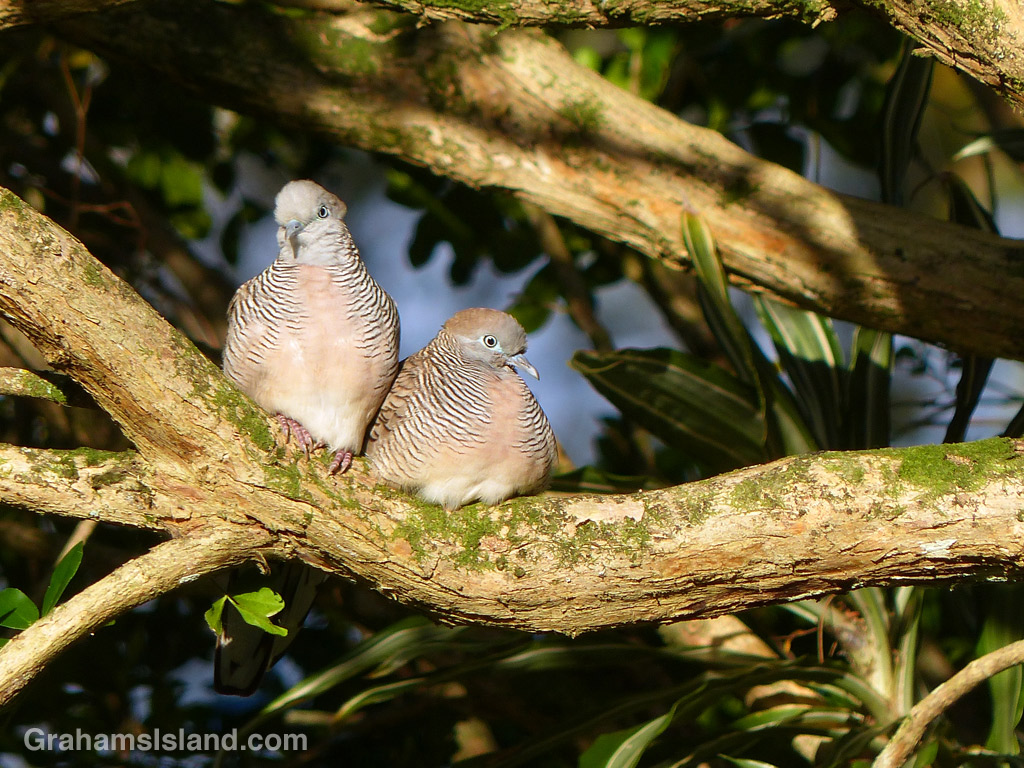
A couple of zebra doves enjoying the late afternoon sun together. (Original post here.)
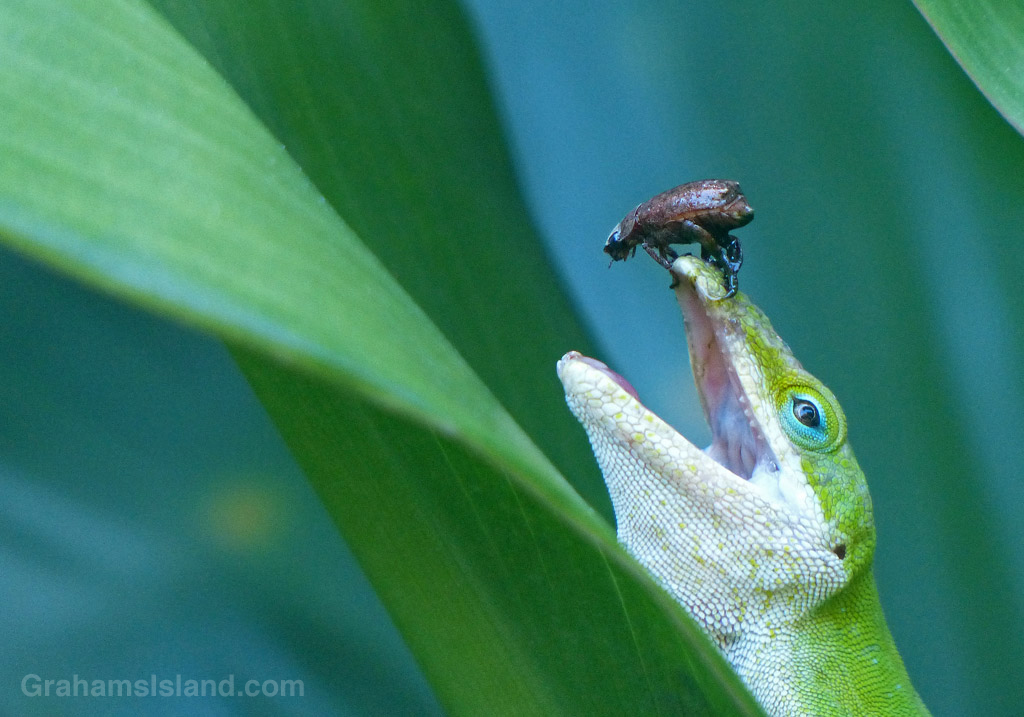
A personal favorite, this green anole snagged a Chinese rose beetle, but the beetle did not give up. Instead, it got itself onto the anole’s nose before escaping. The anole did not look thrilled at having this incident photographed. (Original post here.)
Finally, a photo from a hike along the coast. Colorful tide pools, blue ocean, white sand – I spent a long time traversing this stretch. (Original post here.)
This Pacific golden plover seemed unimpressed by the surfers going back and forth in the bay behind it. Instead, it focused on tidying its plumage and making sure everything was in order.
Recently, I walked around the Palila Forest Discovery Trail on the slopes of Mauna Kea without seeing any palilas. The mamane seeds that they feed on were either dry and brown or just starting to form, so a return in a few weeks might bring more luck. But there were other birds flitting around, usually easier to hear than see, especially in some areas where the tangle of branches make it hard to see anything.
This endemic Hawaii Amakihi was one of them, but then it landed on part of a branch where I happened to have a clear view. I snapped two photos before it once more vanished. I like how this photo makes it looks like the bird is settled in for the long term rather than the momentary landing and take off that actually occurred.