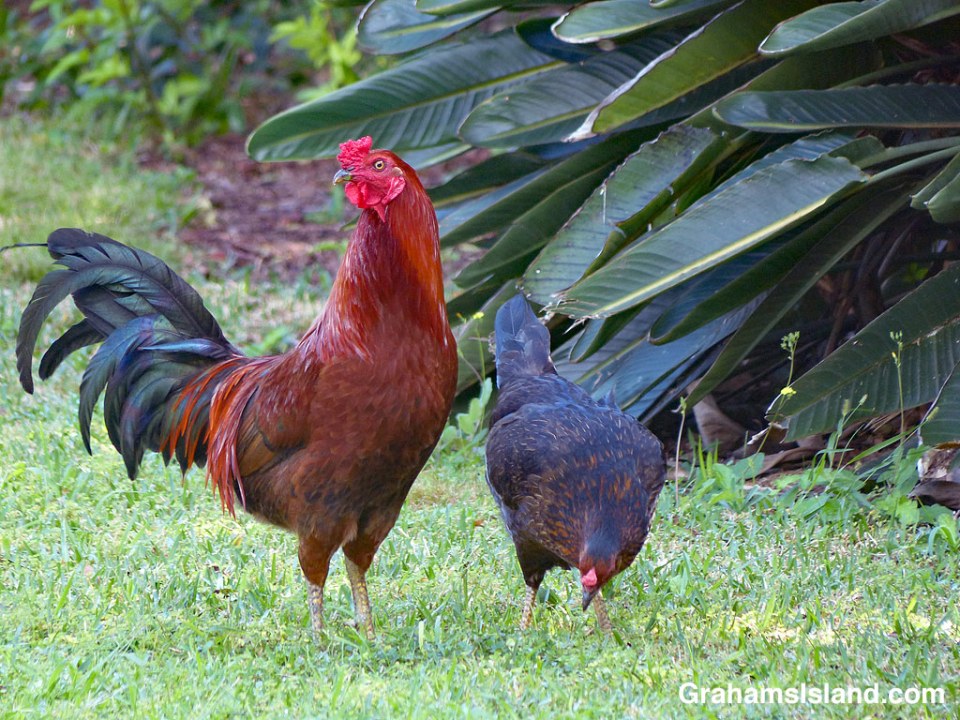
Since this week’s WordPress Photo Challenge theme is ‘Awakening,’ it seemed an appropriate time to feature a rooster. After all, they’re widely associated with heralding in the day by loudly announcing the new dawn.
As it happens, I know a few things about roosters, mostly because, for six months, I lived across a narrow street from a rooster farm with 40 or 50 birds. Here in Hawaii, roosters and chickens are everywhere. While many are farmed in some form or other, others wander free. They can be seen milling about both town and country, crossing streets, wandering across lawns, scratching up flowerbeds.
I can confirm that roosters do indeed crow at daybreak, but this is along the lines of saying a broken clock gives the right time twice a day. That’s because roosters are quite happy crowing at daybreak, during the day, in the evening, in the dead of night, and all of the above. In theory, it’s quiet for a few hours at night when roosters sleep. In practice, all it takes is for one bird to wake suddenly — possibly from a bad dream, possibly barbecue-related — and cry out, and any other rooster within earshot is likely to join in. So that dawn chorus could go off at midnight, at 2 a.m., at 4 a.m., or all of the above.
But what is it these roosters are making such a noise about? Well, after exhaustive research, using my Dr. Dolittle translator kit, I have figured it out. What they’re saying, each and every time they open their little beaks is, “I’m a rooster.”
Forget ‘cock-a doodle-do,’ forget whatever the version of this is in different countries, “I’m a rooster” is what it boils down to. And when one announces this, it prompts other birds to announce that, they too are roosters, just in case anyone had forgotten.
Many’s the night I was jarred awake by this call, first one rooster, then a couple of others, the noise swelling, and then gradually ebbing as each bird forgot why it woke. At these times, I’d lie in bed hoping this would be the cue for another hour or two of blissful quiet. And then, somewhere out there in the dark, one of the slower roosters in the neighborhood would stir. Deep in that little bird brain a cog would clunk into life. ‘Did I hear a rooster? Well, shoot, I’m a rooster too. I’d better let him know.’ Out would come the cry and all those birds that had just settled down would pop awake again. ‘Hey, he’s a rooster. What d’ya know. Me too. “I’m a rooster.”’
So, yes, I think a rooster is an appropriate post for ‘awakening,’ assuming, that is, one can fall asleep in the first place.
These two birds appeared in the neighborhood a few weeks ago from who knows where. When I see them, I shoo them off, not wanting them to get too comfortable here. The alternative is making their dreams come true, assuming they’re barbecue-related that is.


 When I was out walking in downtown Honolulu, I came across this scene. Someone had had turned on a hose up the street and the ensuing temporary river caused an instant influx of this hoard of white king pigeons.
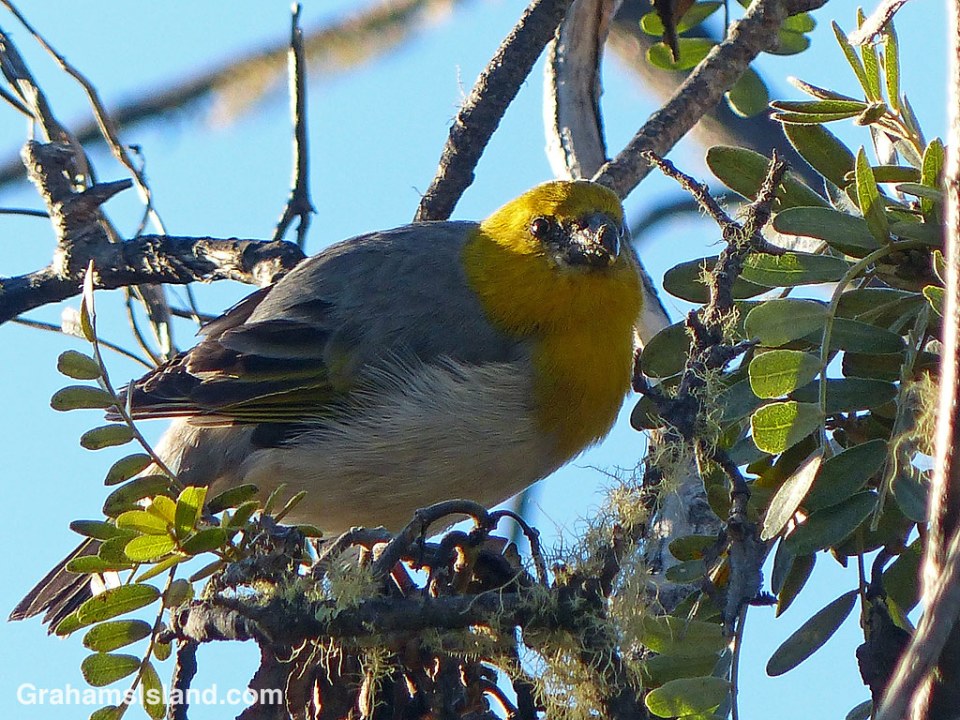
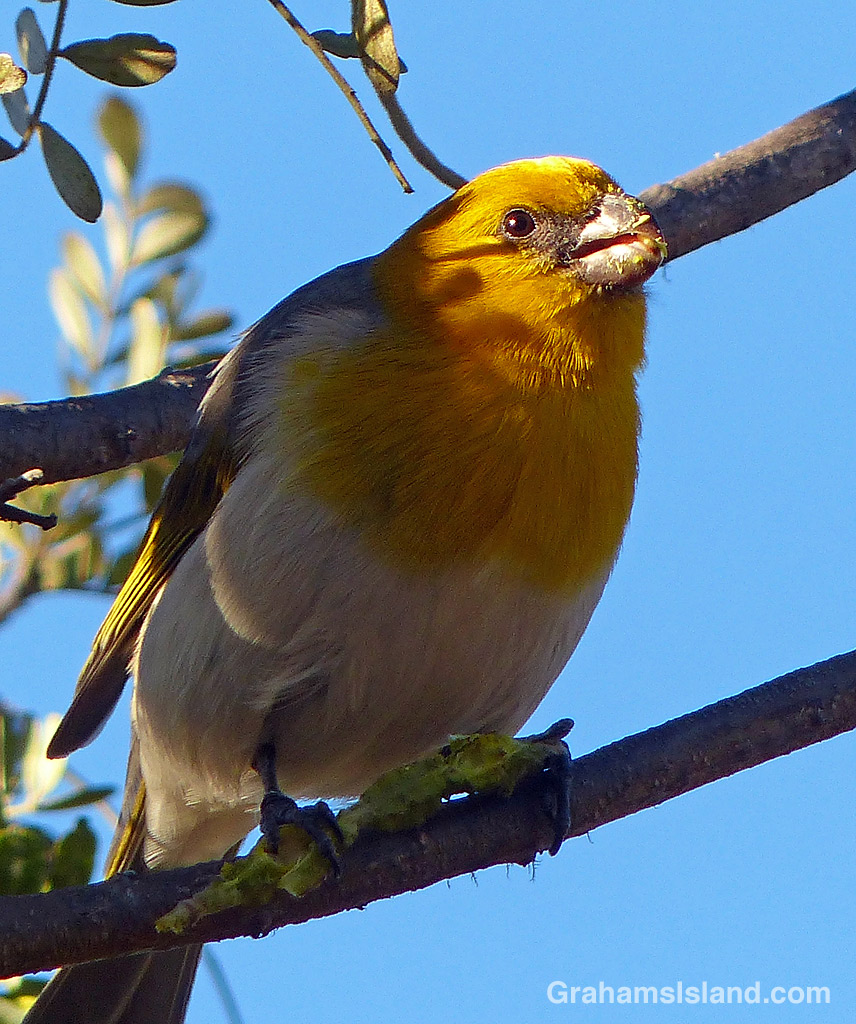 I haven’t ever been a real birder, but since moving to Hawaii I’ve been more drawn to them. Because of this interest, one of my favorite places to visit on the Big Island is the Palila Forest Discovery Trail. Opened in July, 2016, this one mile loop trail passes through Mauna Kea’s unique, high-elevation dry forest.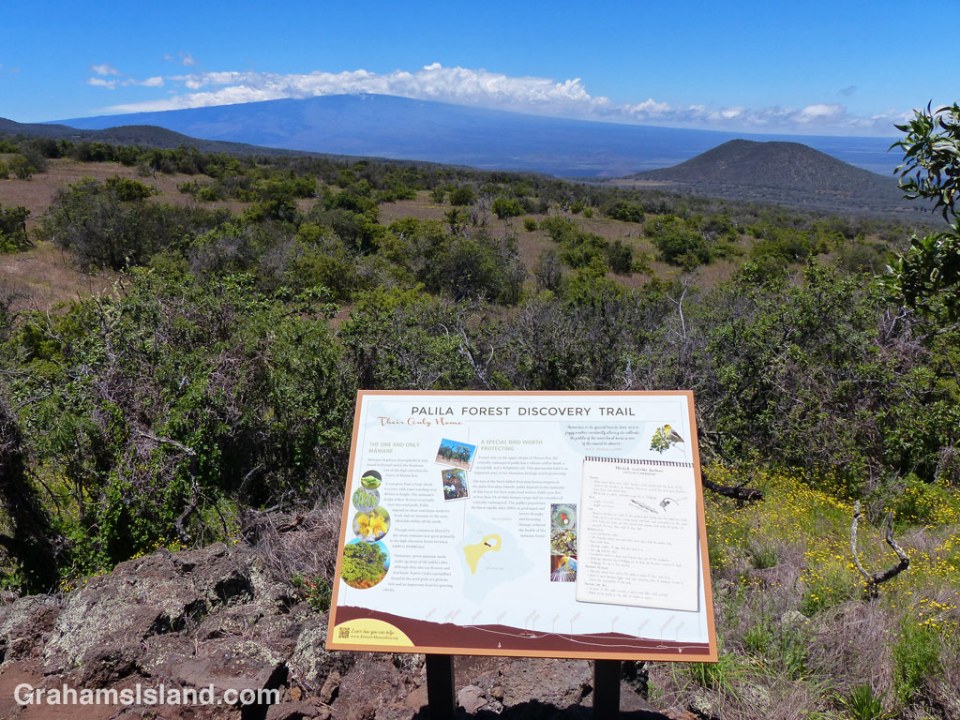




 Graham's Island