Cleaner wrasses establish territories where they remove mucus, parasites, and dead tissue from other fish. These cleaning stations can exist in the same place for years and can have several wrasses performing those services. Their clients can be anything from other small reef fish to eels and sharks.
In these photos, a Hawaiian Cleaner Wrasse services a Whitebar Surgeonfish.
A couple of creatures in the water that are like to blend into the background. The Titan Scorpionfish is fairly easy to spot in this one, but the Whitemouth Moray Eel is a bit trickier.
These are a couple of fish that spend a good deal of their time sitting, stationary, on coral or rocks. The similarity ends there.
The hawkfish is a predator, waiting for small fish or crustaceans to come within range. The blenny feeds solely on living coral. And while this blenny is probably an adult at about 6 inches long, the hawkfish can grow to twice that size.
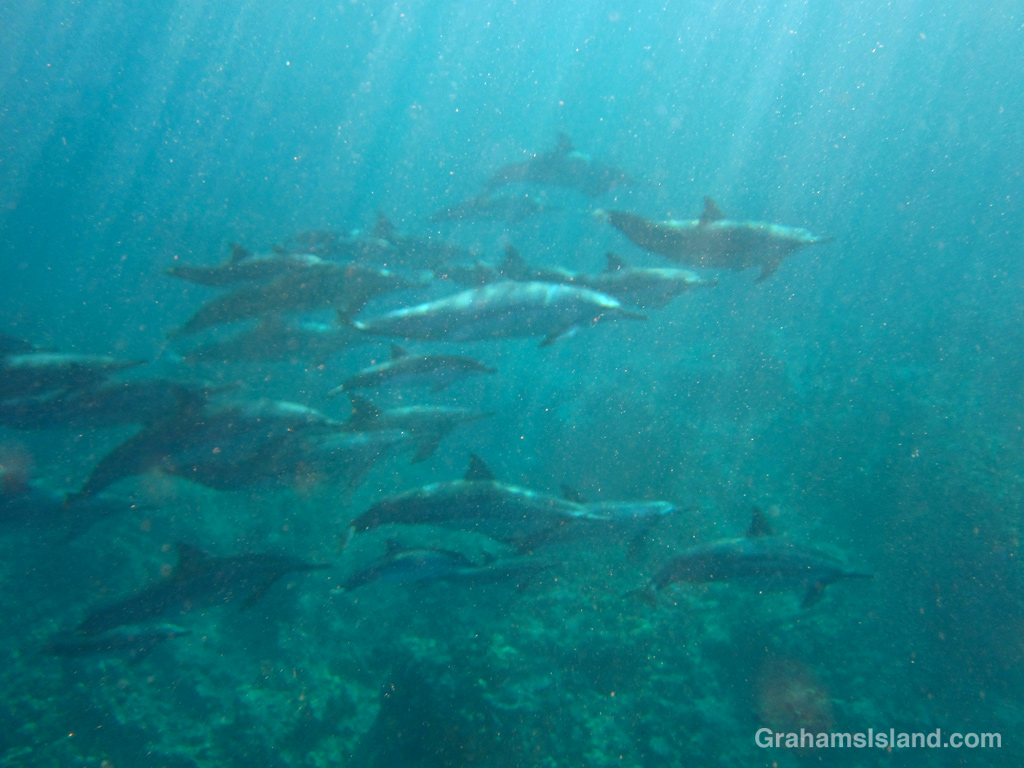
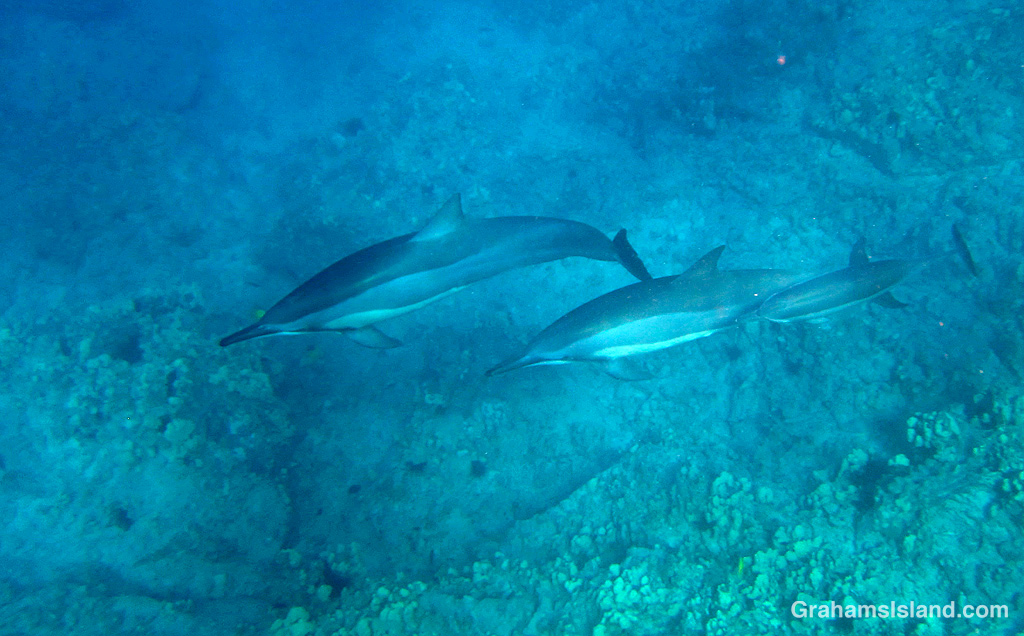
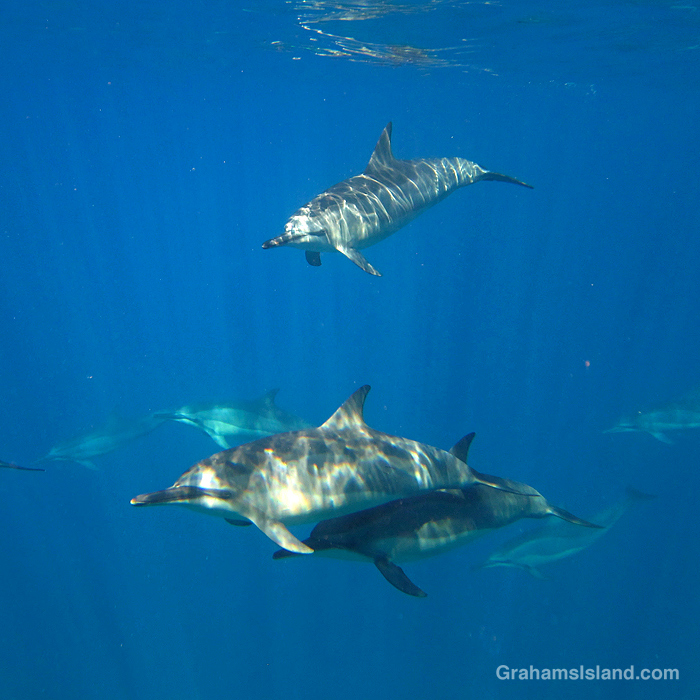
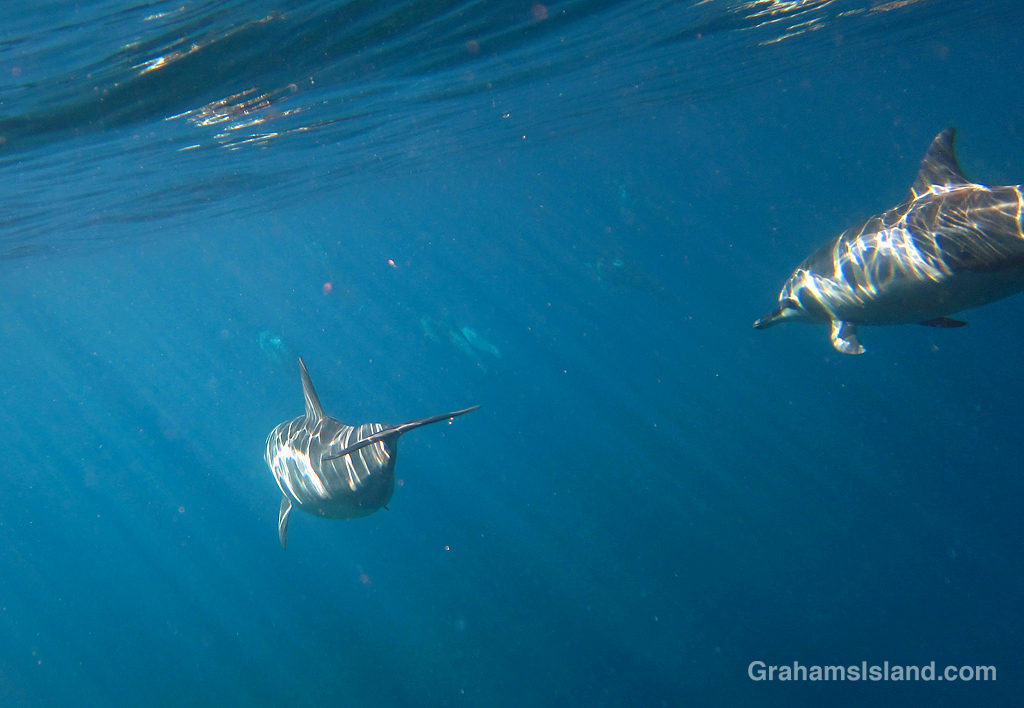
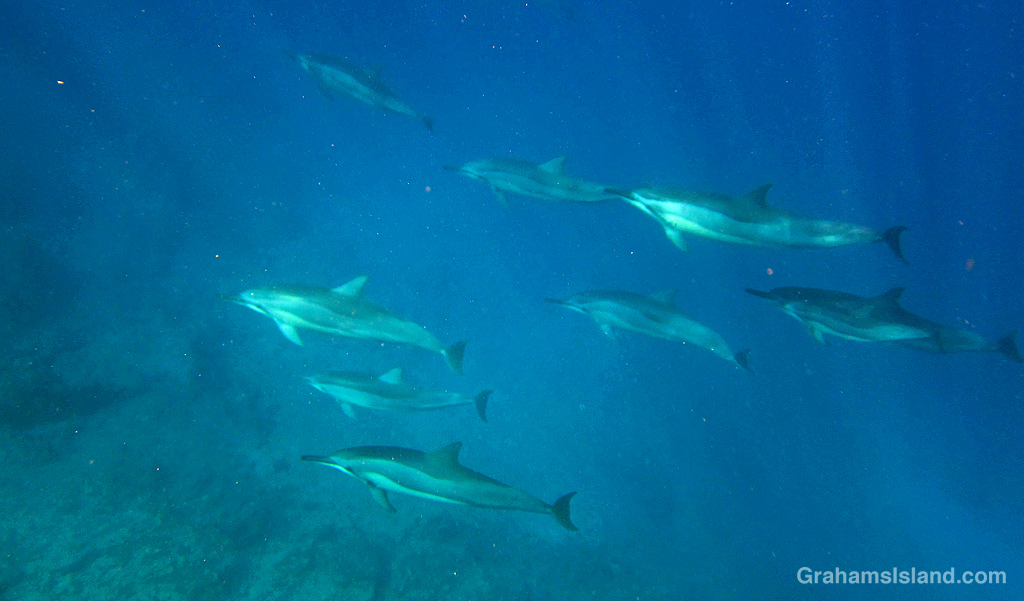
Yesterday, when I went swimming, the swells rolling in were larger than expected, and the visibility in the water, worse than expected. Consequently, it wasn’t a banner swim until I popped my head out of the water and saw spinner dolphins heading my way.
I reckoned there were at least 60 or 70 dolphins in the pod, but I suspect there the number was closer to 100. I count more than 25 in the top photo and that was one group going by on one side. The traffic was continuous on both sides, and below, for several minutes.
The dolphins weren’t hanging around, but zipped by, heading for their daytime resting spot. Several minutes later, a much smaller group passed by, traveling at a more sedate speed. I’m not sure why that was. Sometimes it’s because they’re escorting calves, but I didn’t see any. Perhaps they were just tired and not inclined to get caught up in the rush of the main group.
This week’s Sunday Stills challenge theme is ‘Black or Metallic.’ See more responses here.
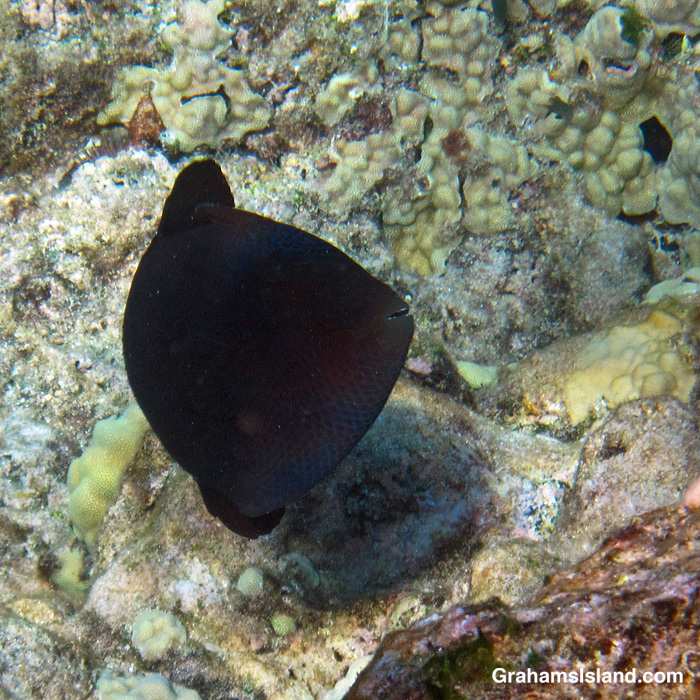
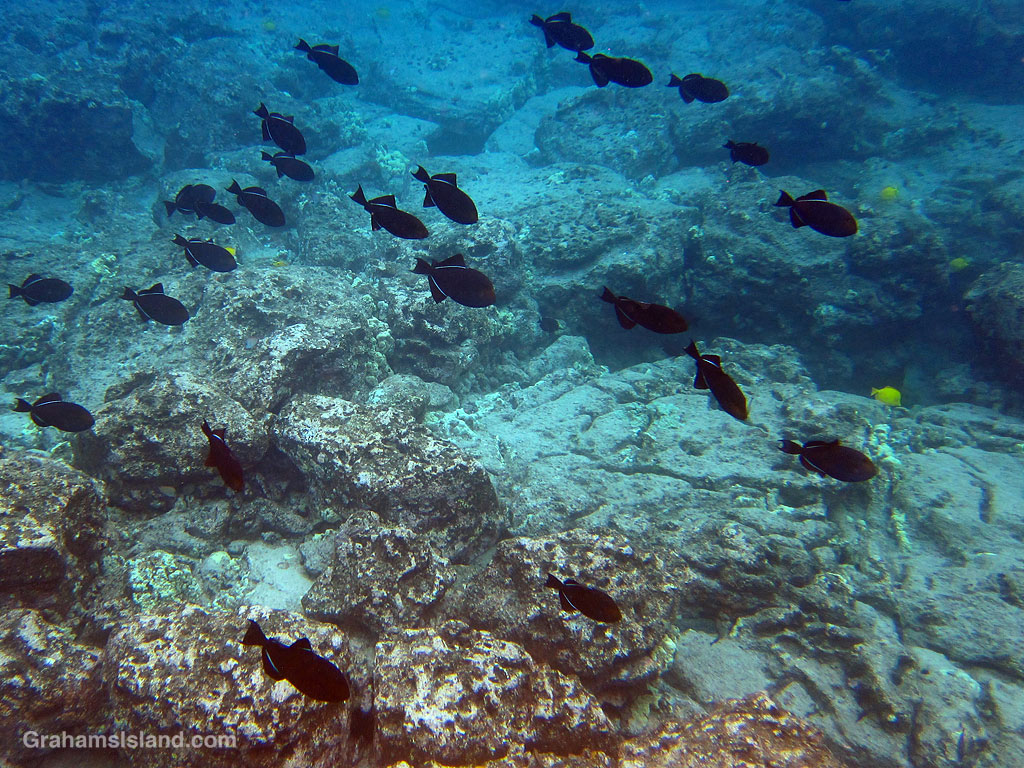
I’m going with the Black Triggerfish for this one. This fish is very black except for distinctive light blue lines at the base of the dorsal and anal fins. Even the eyes are black and very difficult to distinguish in the water or in photos.
The exception to this is when the fish is aroused. Then, blue lines radiate from around the eyes. The more agitated the fish is, the more color is displayed until the fish is entirely blue, yellow and green, except for the fins and tail outline.
These fish often gather in large numbers high in the water, feeding on plankton and drifting algae. But they also feed lower in the water, especially when sergeant fish eggs are on the menu.
My regular swim these days, passes through the territory of the local Great Barracuda ohana. It’s quite common for them to gather in the wake of swimmers, mostly I think, in case the swimmers are spear fishing and might snag something they can steal.
Last week, this barracuda approached me from the front and gave me quite the look, but since it was no more than a foot long, I wasn’t too concerned.
A couple of days ago, I had a similar encounter with a similar-sized fish. This time the barracuda approached from dead ahead and only turned away at the last minute.
Had either of these been one of the giants, which can be three or four feet long and much bigger around, I’d probably have been wetting myself!
The second photo is posted for Bushboy’s Last on the Card photo challenge. See more responses here.










 Graham's Island