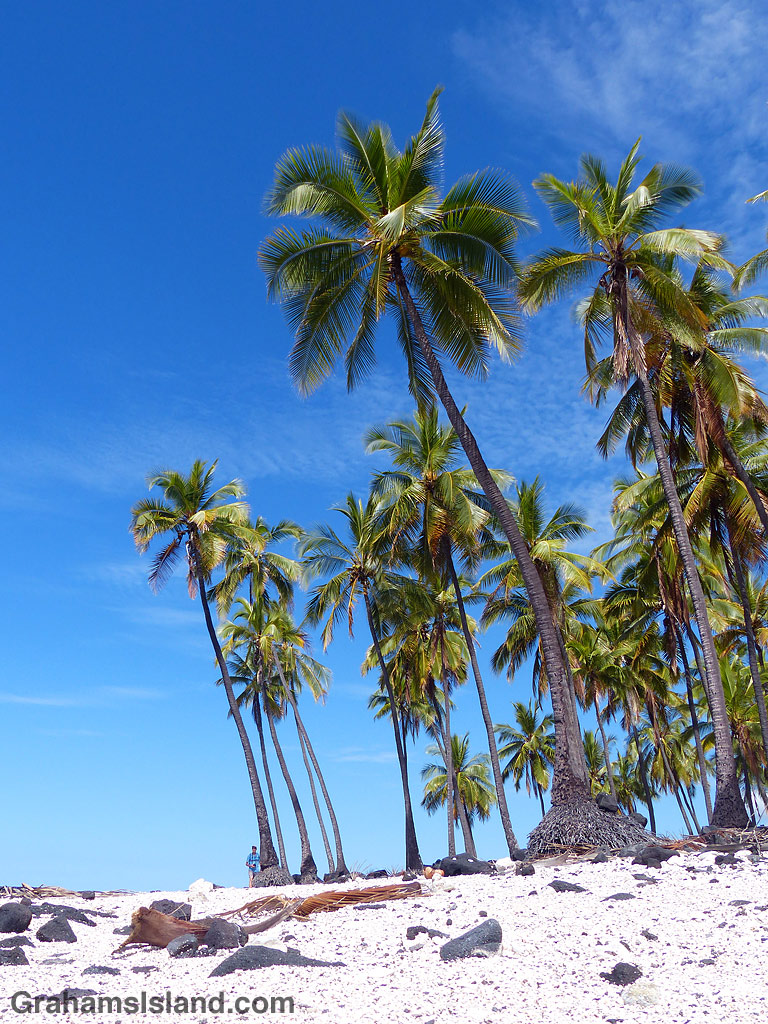
White sand, towering palms, blue sky, and almost invisible in this quintessential Hawaiian image, a single small figure.
In response to WPC ‘A face in the crowd.’

White sand, towering palms, blue sky, and almost invisible in this quintessential Hawaiian image, a single small figure.
In response to WPC ‘A face in the crowd.’

A tugboat enters Kawaihae Harbor in the early morning. The crewman, bathed in sun and casting a long shadow, waits to begin the process of maneuvering the tug’s barge alongside the jetty.
In response to WPC ‘A face in the crowd.’

This Erckel’s francolin appears indistinct in its cover of waving grasses, though if it makes its piercing call, that cover will immediately be blown.
In response to WPC ‘A face in the crowd.’
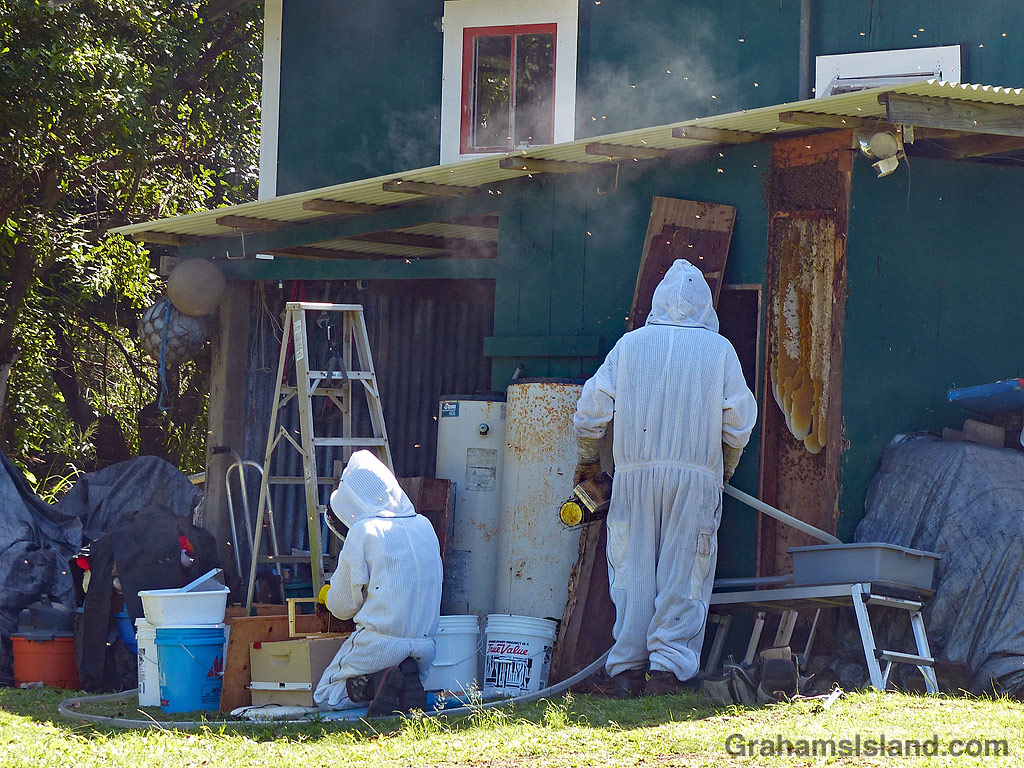

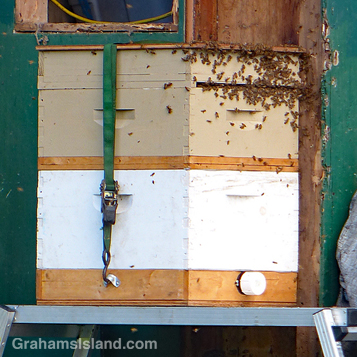
Recently, when I moved my truck to mow the lawn, I noticed this scene at a neighbor’s house. I was impressed by the number of bees and the huge, hanging combs filled with sweet honey. When I got out of the truck, I thought I’d get a few photos.
The bee wrangler called out to me that there were a lot of angry bees about. I said I wasn’t going to come closer and asked if it was OK to take photos. He said that was fine, but the bees might come and find me where I was. Since I was a good 70 or 80 feet away, I wasn’t too worried. I snapped a few photos, then heard a buzzing noise, and felt something on my arm. Sure enough it was a bee.
I imagined this bee sending back a message along the lines of, ‘Hey, here’s another one of those creatures, but this one doesn’t have protective clothing. Let’s get him.’ I pictured the rest of the colony heading my way in a matter of moments, so I blew the bee off my arm and hotfooted it back home. Before I went inside I made sure I hadn’t accidentally ended up with the queen bee lodged somewhere in my clothing. No need to have my day turn into a starring role in a horror movie.
After the lawn was mowed, the bee wranglers were still on the scene so I left the truck where it was. A couple of hours later I thought it would be safe to retrieve it. As I reached the house, the bee wranglers were just leaving. We chatted a bit about what they’d been doing. They’d cleaned out the bees’ home in the wall and put a new hive next to it. Presumably they’d found the queen and installed her in her new digs. The idea is to have the bees relocate to the new hive and, when they’re settled in, move it to a new location, probably on one of the farms around here.
They warned me, however, that there were still some disgruntled bees flying around. As if on cue, I heard buzzing. Something landed on my head and started burrowing into my hair. The bee wrangler had just handed my his card and I used that to try and extract the bee. The buzzing intensified, but I couldn’t dislodge it. Finally, it popped loose and I took off for my truck. I jumped inside, making sure the door shut properly and the windows were closed, and drove home.
I avoided walking past that house for a while until, two days later, the hive was gone and it was safe to venture out again.
For more information about Ho’ola Beekeepers, go to savehealthrive.com.
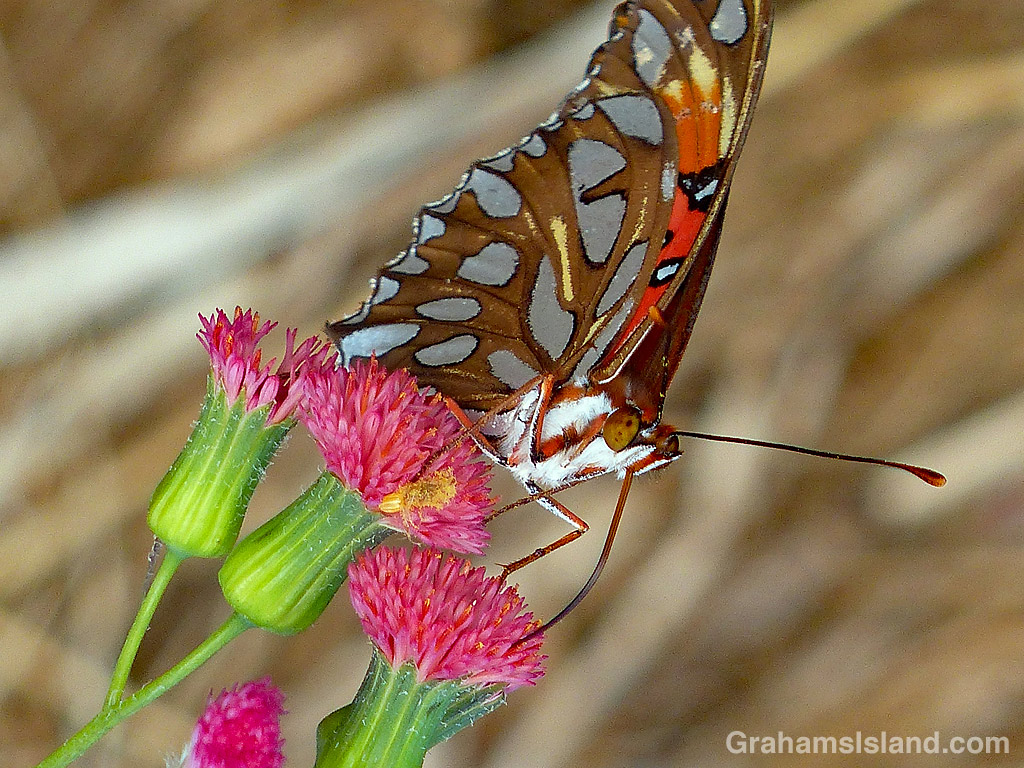
A passion vine butterfly drinks sweet nectar from a tasselflower. I think it’s a Florida tasselflower (Emilia fosbergii), which is also known as Flora’s paintbrush.
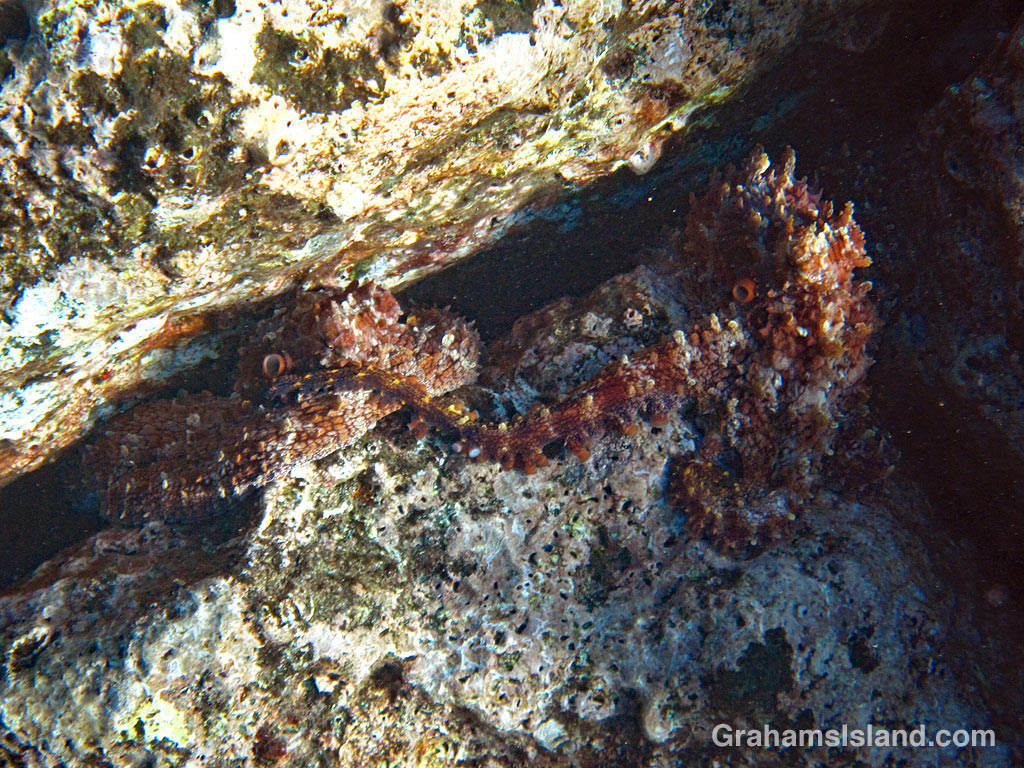
For Valentine’s Day I offer this photo of two day octopuses. It comes with a little story.
One day, while I was snorkeling, I noticed a stocky hawkfish about to plop onto a bit of coral. Before it could settle, a blue goatfish butted it away, getting my attention. I wondered if its presence might mean there was an eel or octopus around since they sometimes hunt together. Almost immediately, just beyond the goatfish, I noticed a day octopus glued to the side of a rock.
I took a couple of photos but knew they wouldn’t be very good; the octopus just looked like another lump of rock. So I began the usual dance I do with an octopus. I edge away, as though I’m leaving, keeping an eye on the octopus out of the corner of my eye. I know the octopus is watching me. Often, when I’ve gone a ways, the octopus will rise up onto whatever rock it’s hiding behind. If I’m quick, I can turn and get a photo before the octopus slides back down again. It’s like we’re connected by a line: I go away, the octopus rises. I return, the octopus sinks.
I swam behind a large chunk of rock, then peeked around the side. Still there, still hidden. A bit farther, another peek. Still there, still hidden. And again. And then I looked away momentarily and when I looked back, the octopus was gone. I think they, like many other creatures, watch a person’s eyes and if the person looks away, off they shoot.
It was a matter of a moment so I knew it couldn’t have gone far. I looked around, examining the rocks. Nothing. They can squeeze into tiny spaces so it was always possible I wouldn’t see it even if it was close by. Then, as I turned around, I caught a glimpse of movement and saw the octopus zip behind a bit of rock. Except then I immediately saw a second octopus follow the first.
I swam around the rock and saw the two of them, each in its own separate crack, a few feet apart. Again I took a couple of photos and then moved away. This time I went farther and waited, watching from a fair distance. Eventually, the octopus on the right of the photo emerged and moved toward the other one. I edged closer and began taking photos. It was then that that octopus slowly eased a tentacle toward the other one, sliding over the rock until it reached up and over the front of the other octopus. It was such a sweet and tender gesture, as though the octopus sought reassurance in making physical contact with its companion.
I took the photo and swam off, leaving them in peace.

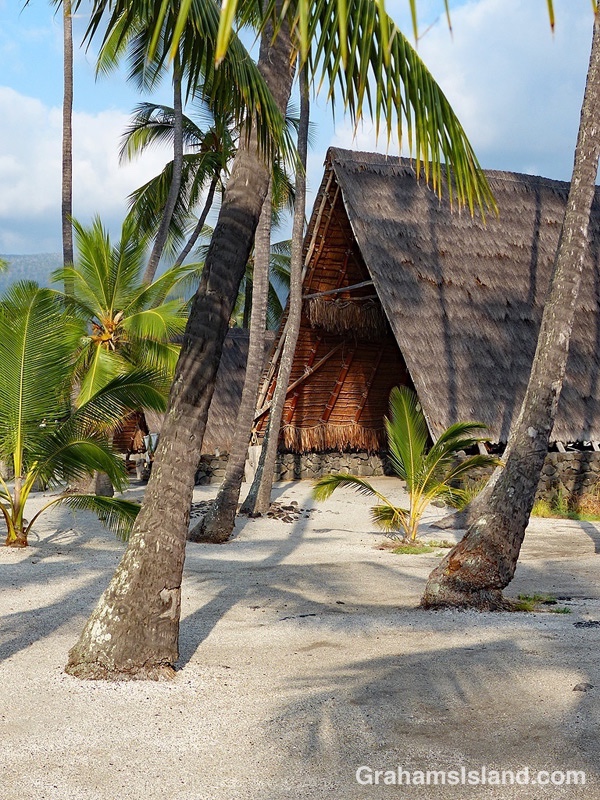
The final post on this week’s theme of the WordPress photo challenge, ‘Tour Guide.’
These photos are from Pu’uhonua o Hōnaunau National Historical Park, otherwise known as Place of Refuge. This National Park showcases important Hawaiian history with it’s royal grounds where the Hawaiian royalty lived, Hale o Keawe where the bones of 23 ali’i were housed, and for the Pu’uhonua where anyone who had broken kapu (sacred laws) could seek shelter and ultimately forgiveness.
Here are views from the ocean side (above), of a hālau (right) which houses canoes, and of a ki’i (below) representing an Hawaiian god.
For more information about Pu’uhonua o Hōnaunau National Historical Park, visit https://www.nps.gov/puho/index.htm.
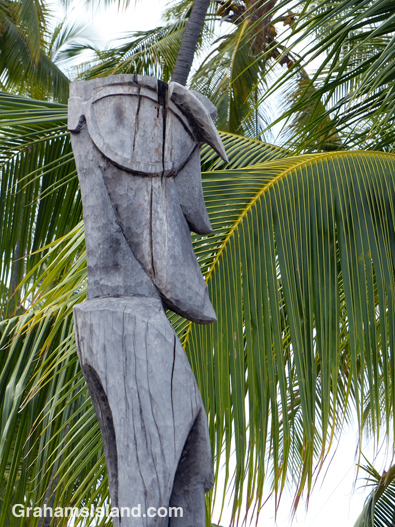
This week’s posts are on the theme of the WordPress photo challenge, ‘Tour Guide.’
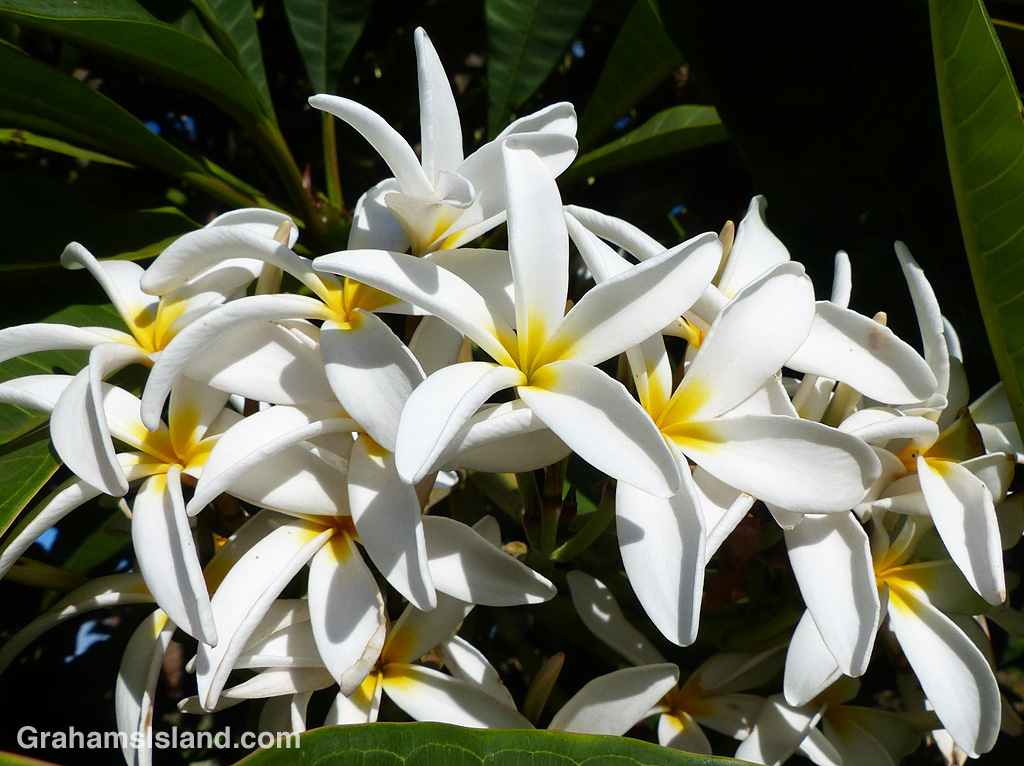
Tropical foliage and flowers are another Hawaii must-see. Those tender house plants back home grow like weeds here. The east side of the Big Island, with its copious rainfall, is lush and green with sprays of tropical color as different plants come into bloom.
Plumerias are a quintessential tropical plant, much used here in the making of leis.
 Graham's Island