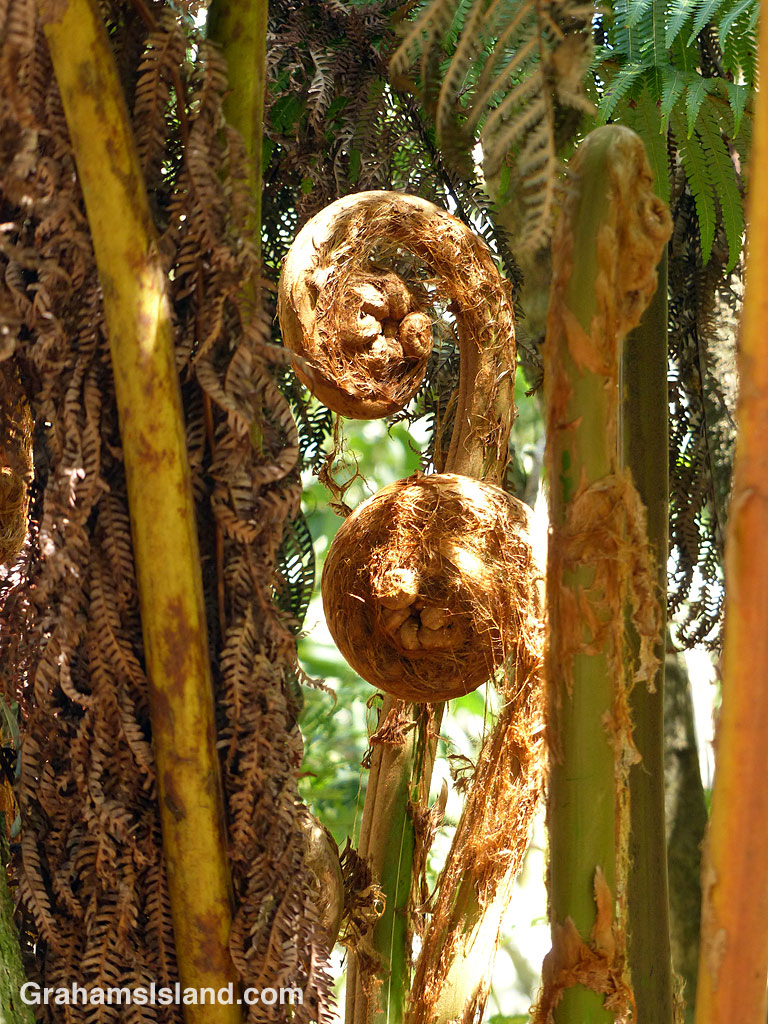
Hapu’u ferns uncoil alongside the Pu’u O’o Trail, off Saddle Road.

Hapu’u ferns uncoil alongside the Pu’u O’o Trail, off Saddle Road.


This praying mantis had been hanging out on this spider lily for a few days. I don’t know whether it was working hard there, but I did like how it mopped its brow in the second photo.

The spiky leaves of an aloe plant rise up menacingly.
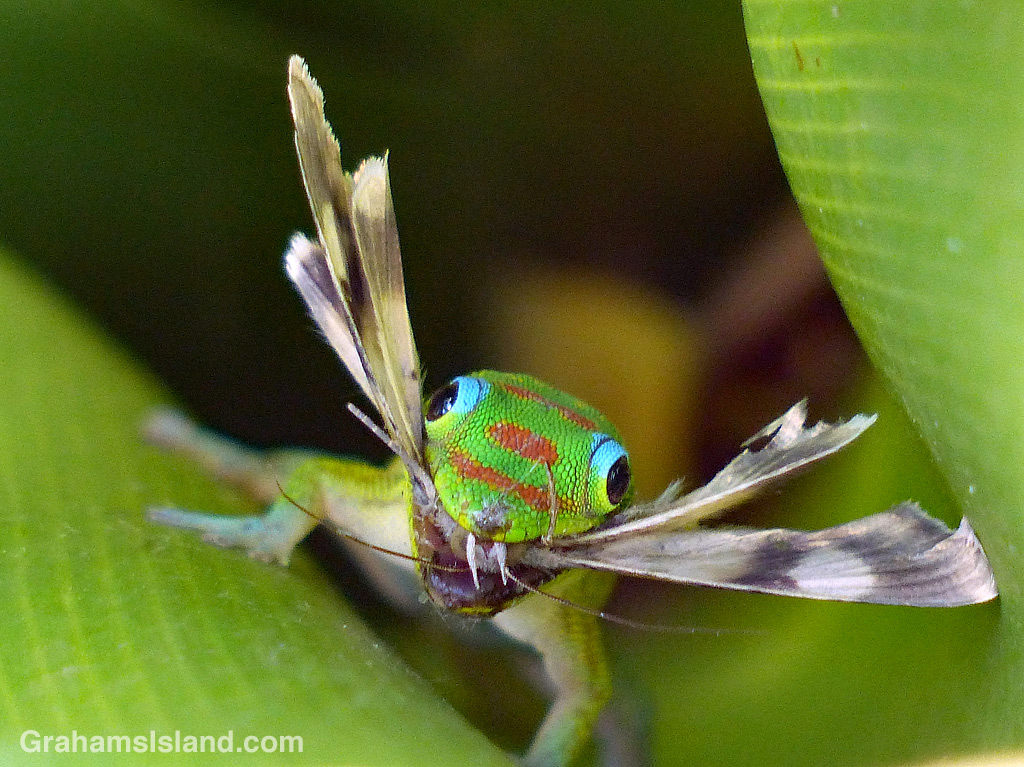
I peered down into a spider lily one day and this is what I saw looking up at me, a gecko with wings. The wings, of course, were those of an unlucky moth, which the gold dust day gecko had snagged from behind. The moth struggled a good deal, but there was only ever going to be one winner in this contest.
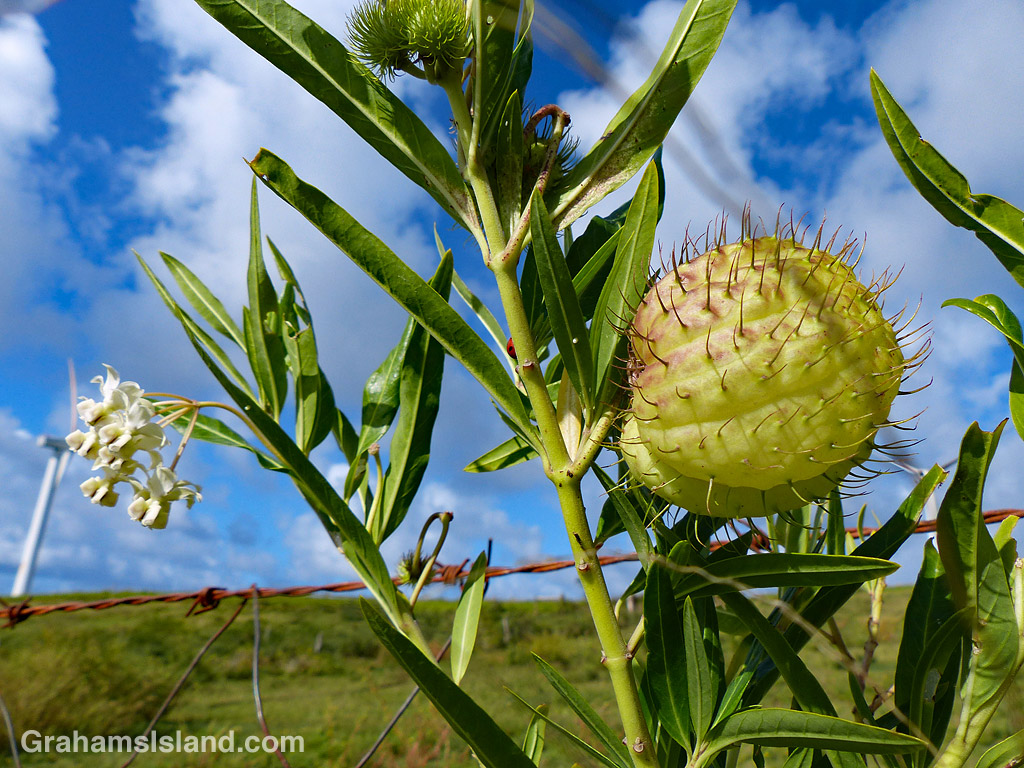
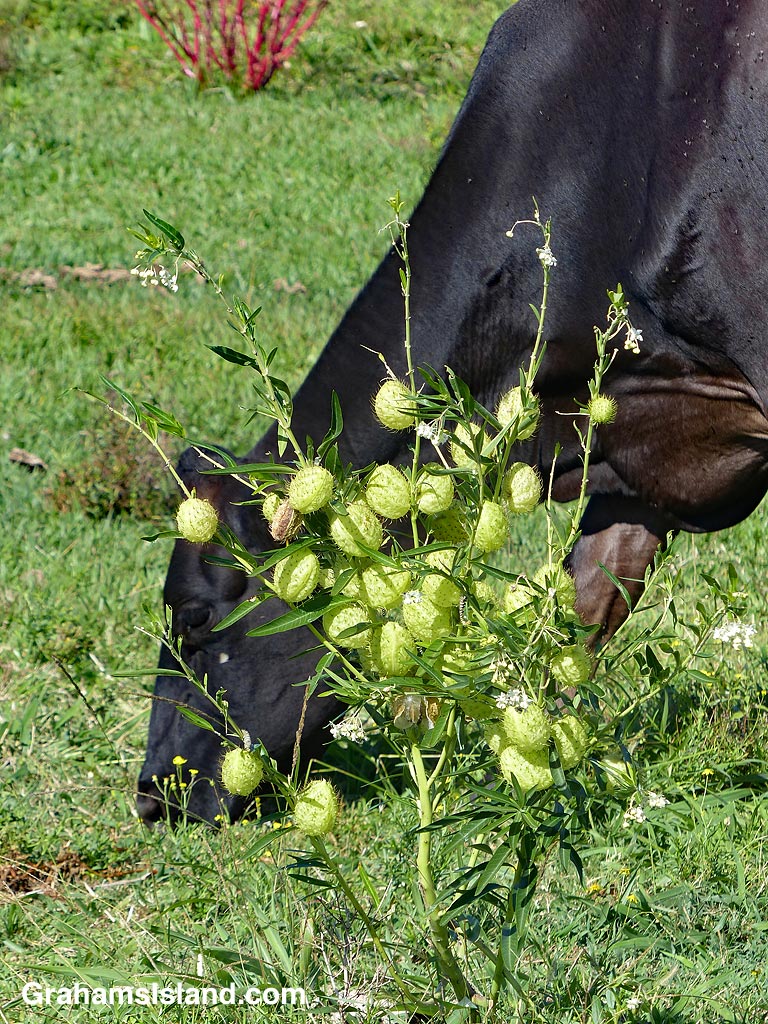
Balloon plant (Asclepias physocarpa) is an invasive weed, introduced to Hawaii as a fiber crop. A member of the milkweed family, it is considered to have medicinal properties, but parts of the plant are also poisonous.
I saw several of these plants in a pasture occupied by livestock and, like the cow in the photo, they were avoiding the plants. Consequently, the pasture consisted of close-cropped grass and a generous sprinkling of these scrubby plants, 2- to 3-feet high, though they can grow to 6-feet tall.
The ‘balloons’ are actually the fruits of the plants. When ripe, they’ll burst and release a multitude of white silky-haired seeds.

I don’t know who Christa is or was, but there were a couple of things that struck me about this image.
The sign and the swing’s rope and seat were in excellent condition in stark contrast to the tree, which was dying and deliberately so. The channel around the trunk, below the sign, is intended to kill the tree, probably a silk oak, which can take over and crowd out native trees.
And then there’s the location, not far from the old quarry near the foot of Pu’u Wa’a Wa’a. It’s more than a mile down the hill to the nearest habitation, a ranch that runs livestock in this area. So, an isolated spot for Christa’s playground, but a wonderful location too, with views to the Pacific and surrounded by birds and animals, both domestic and wild.
Posted in response to this week’s Sunday Stills challenge on the theme of ‘Playground.’ See more responses here.
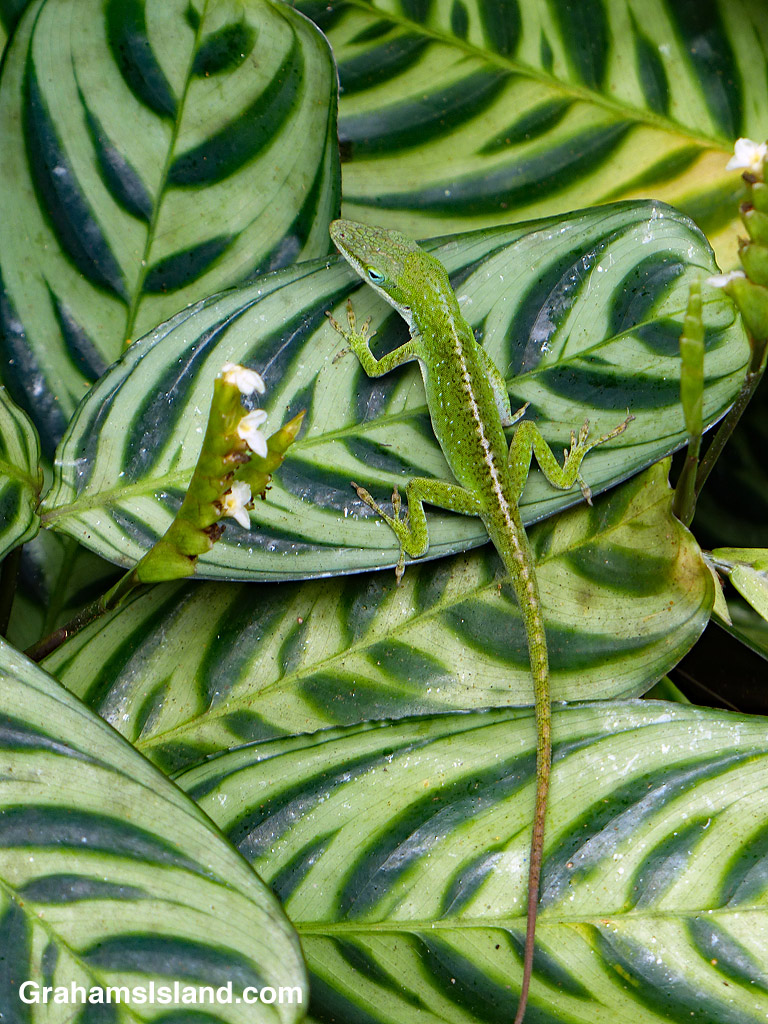
A green anole blends in on the bold-patterned leaves of Ctenanthe burle-marxii.

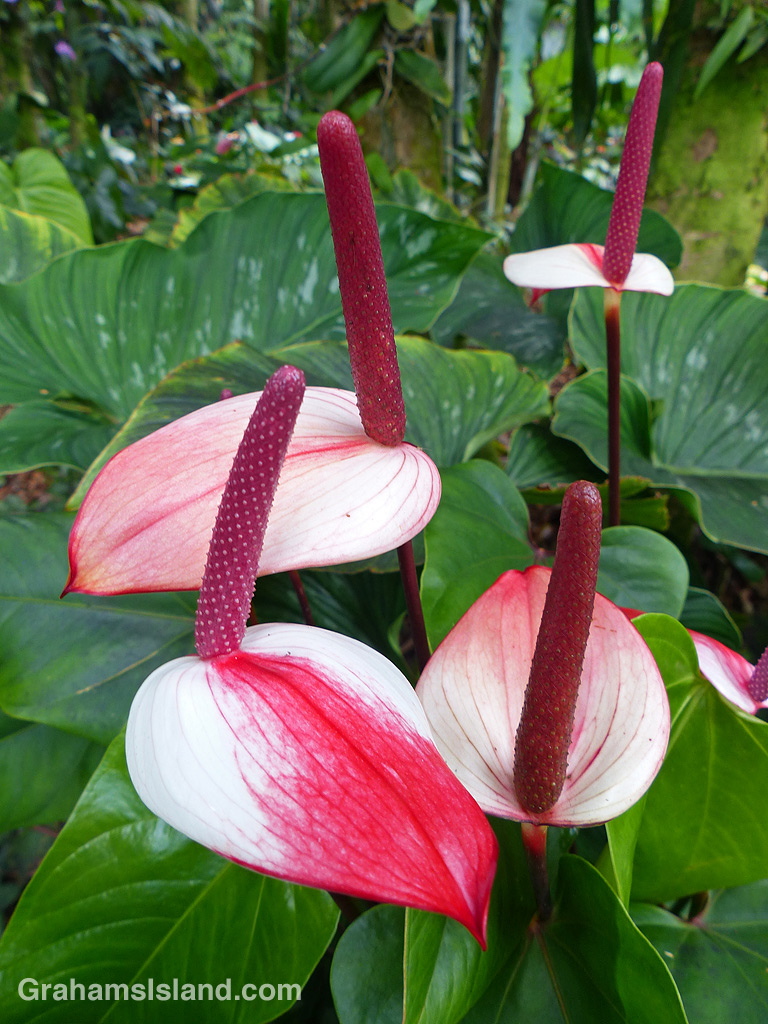
The strong colors of bicolor anthuriums stand out against their green leaves.
These were at Hawaii Tropical Botanical Garden. For more information about Hawaii Tropical Botanical Garden, go to htbg.com.

