Category Archives: Plants

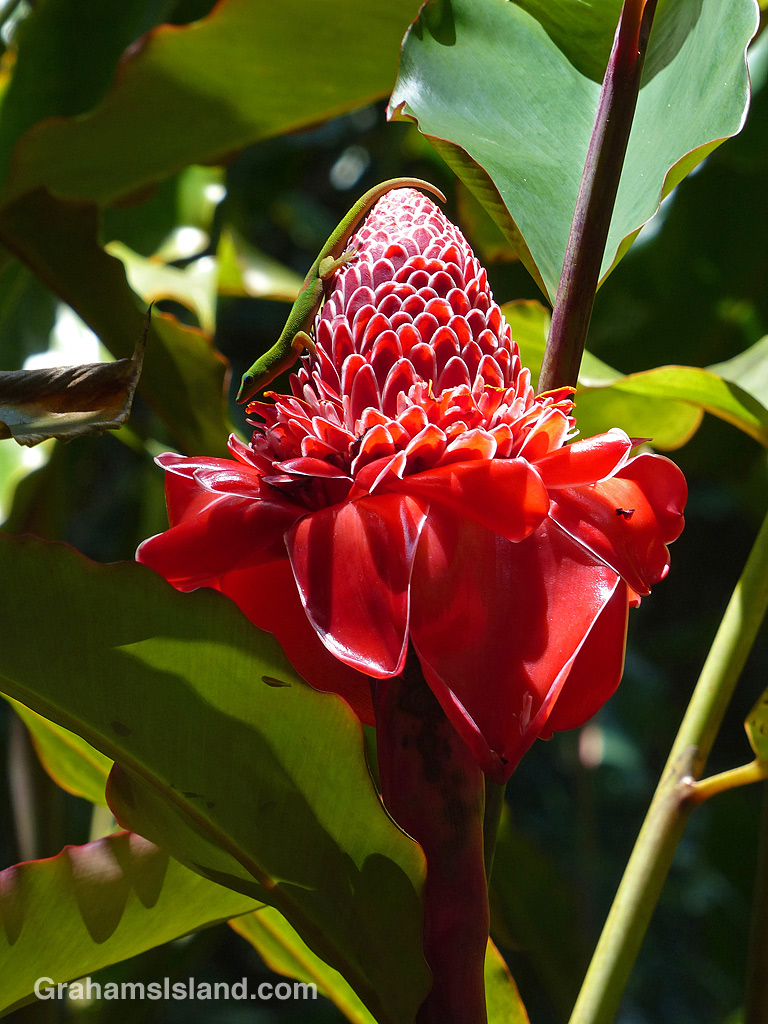
Gecko on torch ginger

Gecko on torch ginger

A gold dust day gecko drapes itself over a torch ginger (Etlingera elatior). This striking red form is not the flower but is known as an inflorescence. The red leaf-like parts are bracts and it is from between these that the yellow-edged red flowers will emerge.

Horses with a view

Horses and the ocean

I used to see these four horses frequently when I went for walks. They’re still around, but not as accessible as before. This pasture has been sold and is now used to grow Hawaiian heirloom sugarcane for use by a rum micro-distillery.

Another thing that’s changed is that the brown grass has been greened up by the last two hurricanes, both of which have dumped a good deal of rain, but generated very little in terms of wind, at least around here.

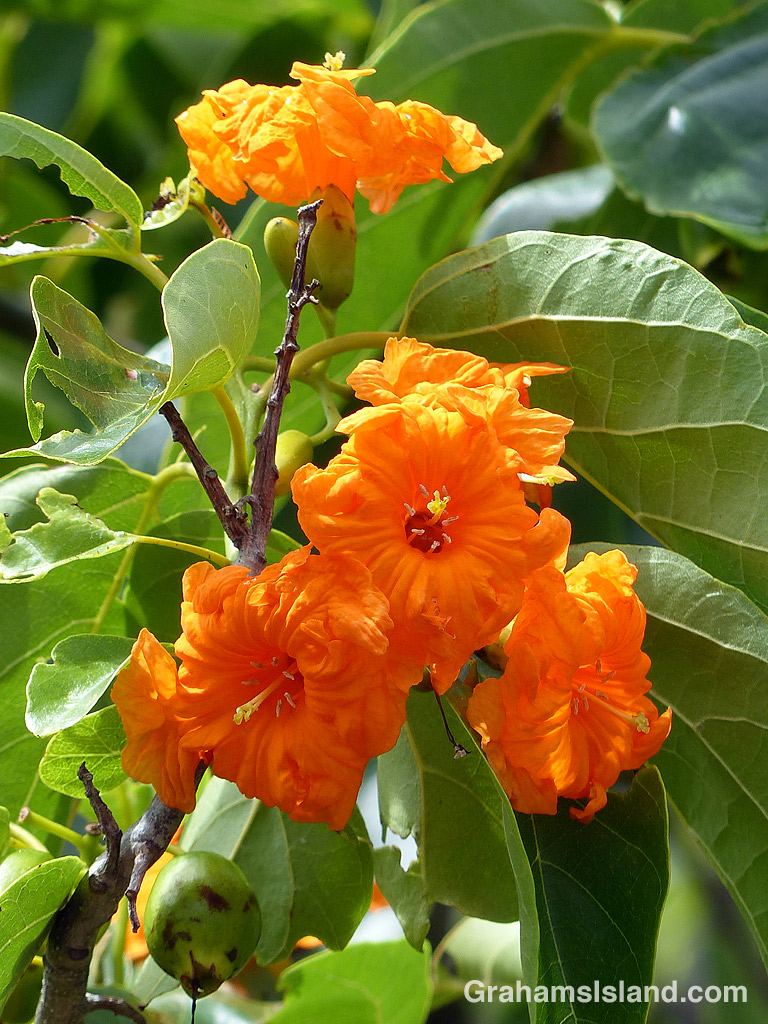
Kou tree

Kou flower and bee

Kou flowersKou (Cordia subcordata) is an indigenous tree that was also brought over by Polynesian settlers. It was highly prized for its wood, which was used to make bowls and other containers.

The flowers are beautiful, too. Less than two inches across, they grow in clumps, which are sometimes hidden by the shiny green leaves. The flowers are followed by small, round green fruits (seen in the photos to the left and below) which harden to a dark brown and contain white seeds.

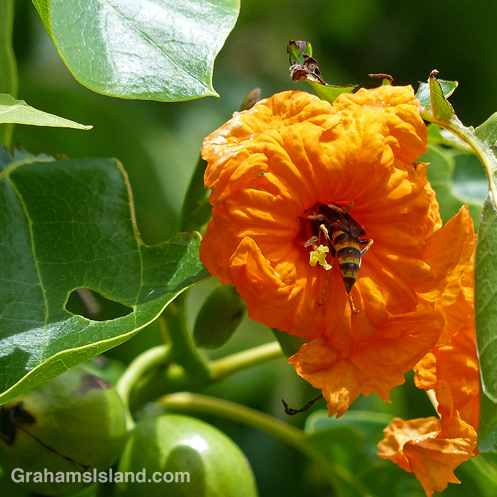
The flowers on this tree were popular with a variety of insects including a honey bee, above, and a paper wasp (Polistes exclamans), below.

Kou flower and paper wasp

Kou flower and wasp

Kou tree

Long-tailed blue butterfly

Long-tailed Blue Butterfly

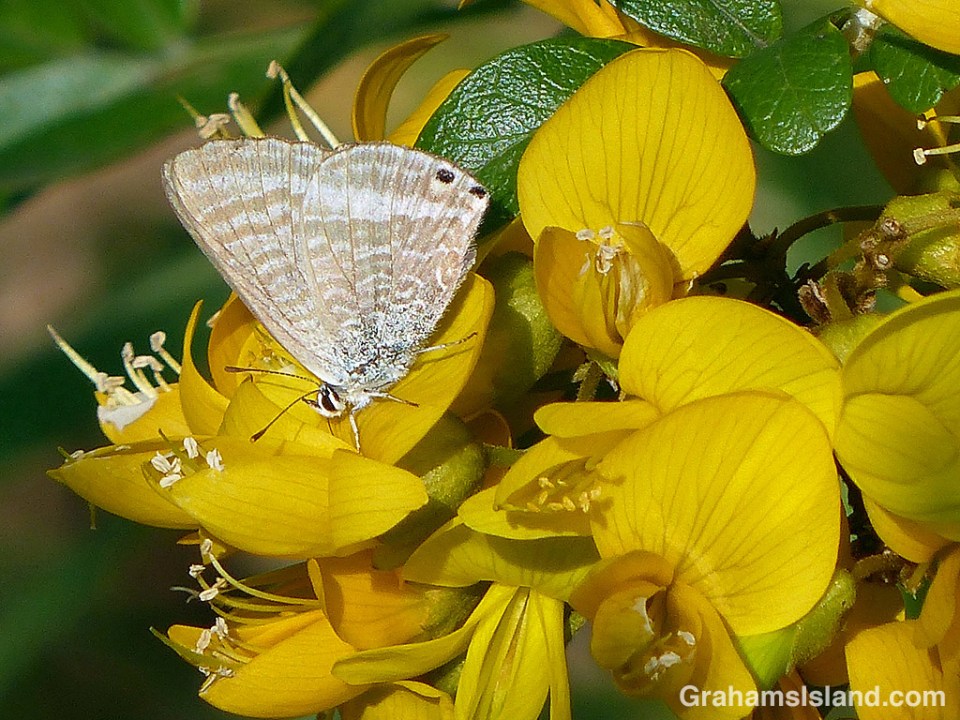
I think this is a long-tailed blue butterfly, otherwise known as the bean butterfly. It’s a pest on beans and peas and also wild legumes. My only question about the identification is that the tail, normally seen where the black spots are, is not visible here. But it’s possible that this butterfly has suffered a bit of damage in that area. Some butterflies look so beaten up that it’s a wonder that they’re able to fly at all.

It’s resting on the flowers of a mamane tree.

Royal poinciana

Royal Poinciana flower spray

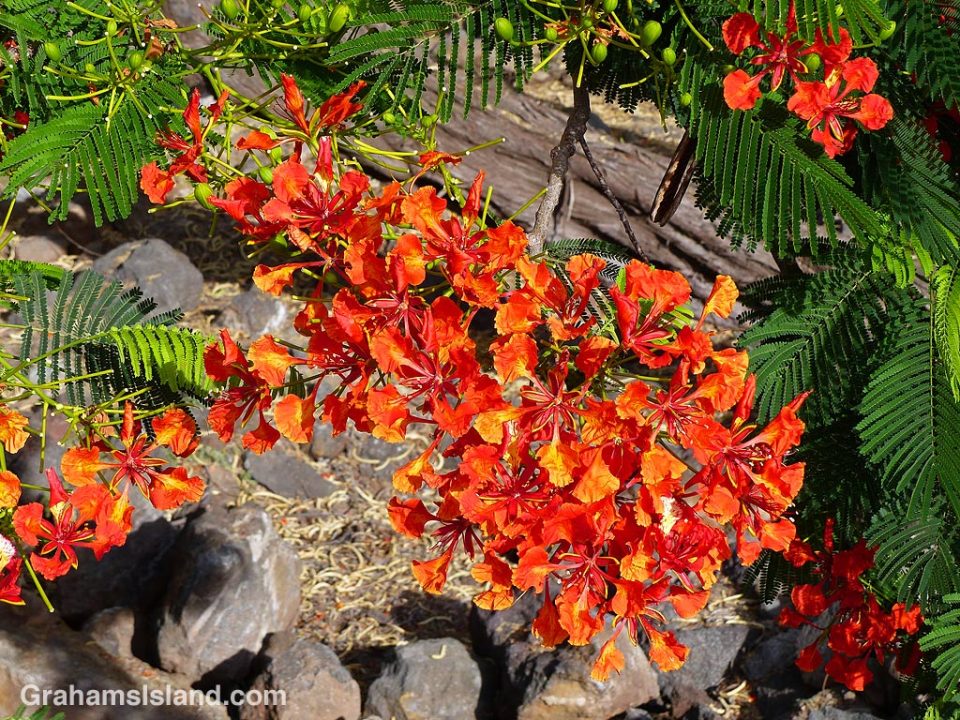
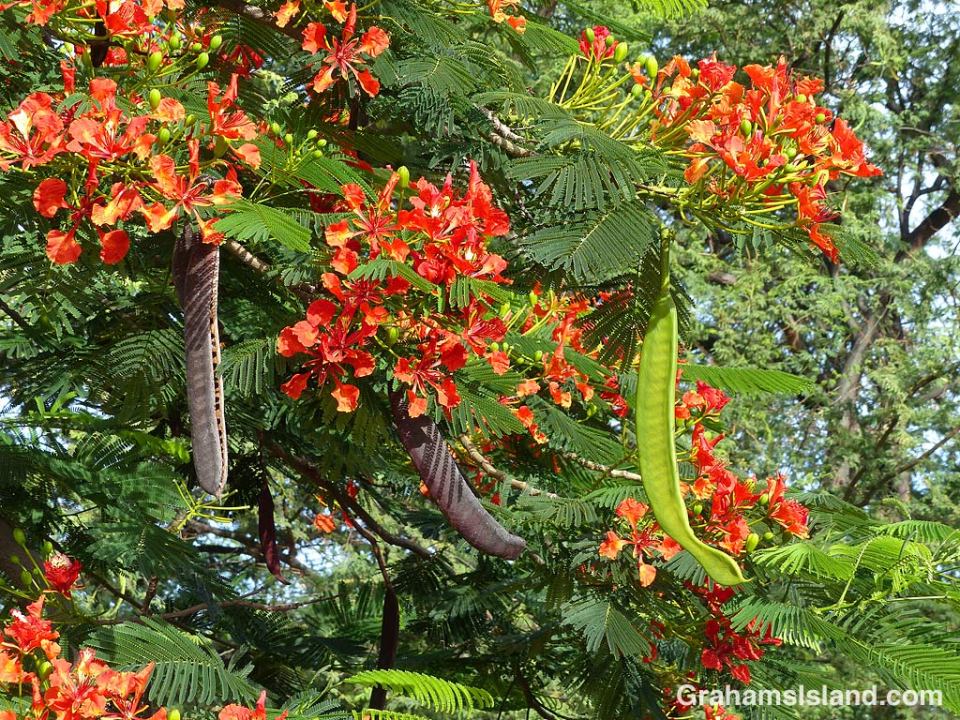
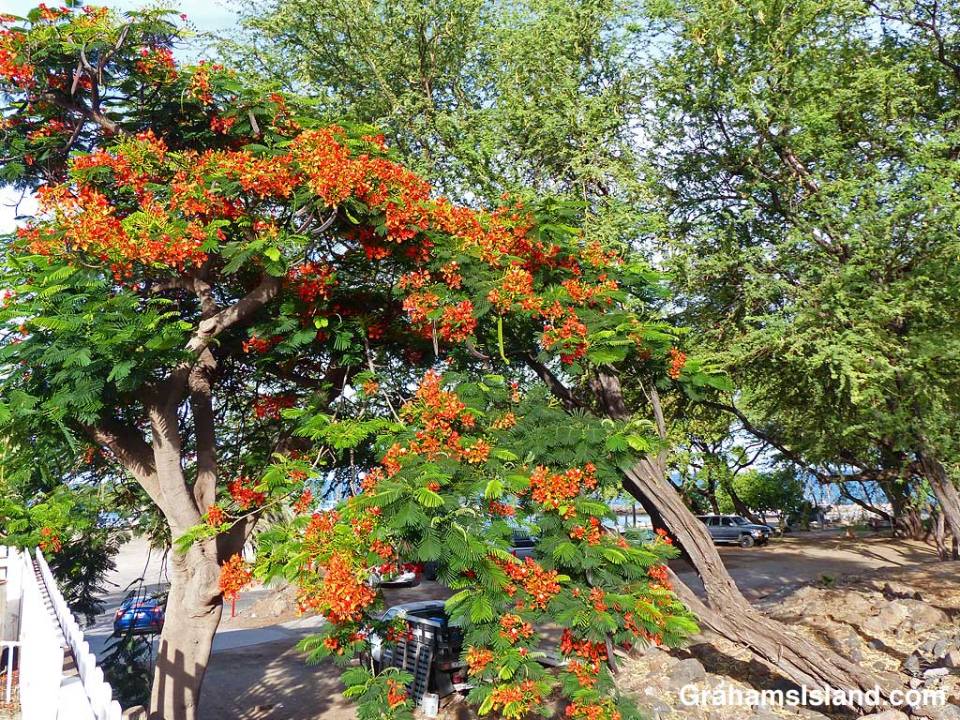
Royal Poinciana flowersRoyal poinciana (Delonix regia) is also known as the flame tree. As well as producing a stunning array of crimson flowers, it has lacy-looking leaves and produces long, distinctive seed pods.

I noticed this tree, tucked away at the end of a small commercial area in Kawaihae. The top photo shows an array of flowers. The flowers consist of four red petals with a fifth upright petal which is more yellow and white, as in the photo to the right. The photo below shows three of the seed pods which start out green before turning brown. At the bottom is the full tree. It can do well close to the ocean, as this one is, because it’s salt tolerant.

Royal Poinciana seed pods

Royal Poinciana tree

Sonoran carpenter bee

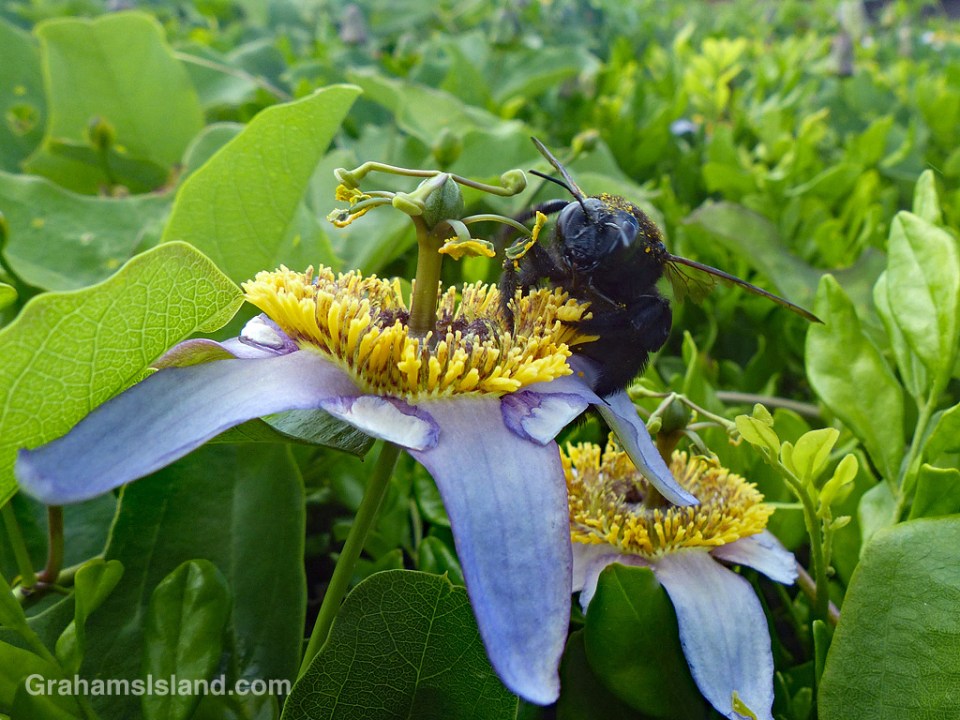
Carpenter Bee female on a passion flower

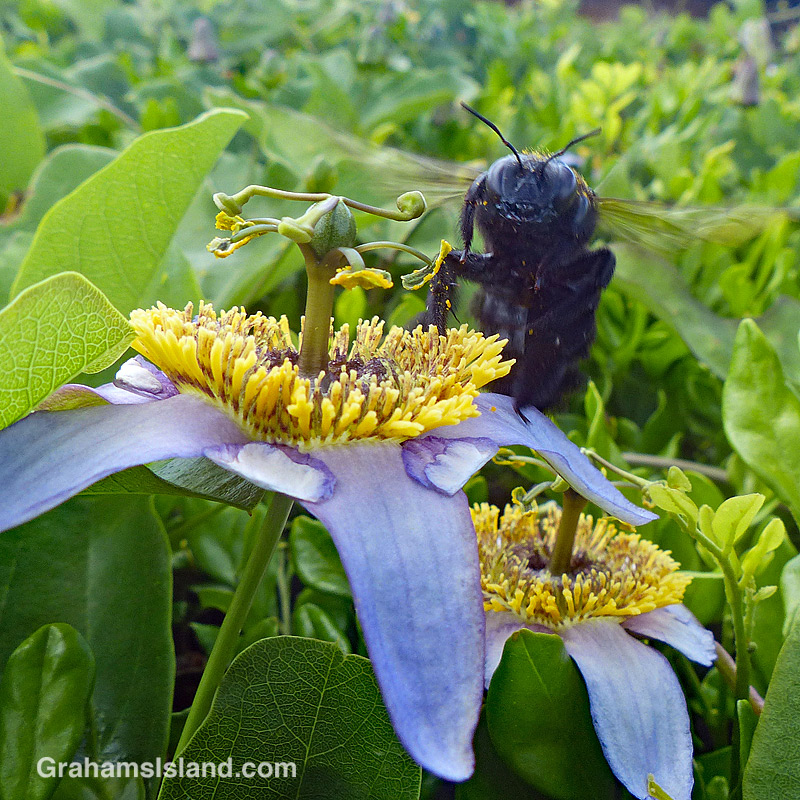
Carpenter Bee female lifts off a passion flowerThe Sonoran carpenter bee (Xylocopa sonorina) was first recorded in Hawaii around 1874. This black bee is a female. Males are golden orange in color and smaller than the female.

These bees get their name because the females tunnel into wood to create cavities in which to lay eggs and raise their young. The entrance to a nest is usually a neat, half-inch diameter hole in the wood. In the wild, the bees make nests in dead branches or tree stumps, but around human habitation they’ll bore into fence posts, rails, and roof eves. Because of this tunneling habit, these bees are sometimes considered pests, but the damage they cause is far outweighed by their importance as pollinators.

In Hawaii, passion fruits are one of the many fruits and vegetables pollinated by carpenter bees. The bottom photo shows how the bee’s size helps it pollinate the passion fruit’s large flower. It also shows how battered this poor bee’s wings have become. She was still able to get airborne though.
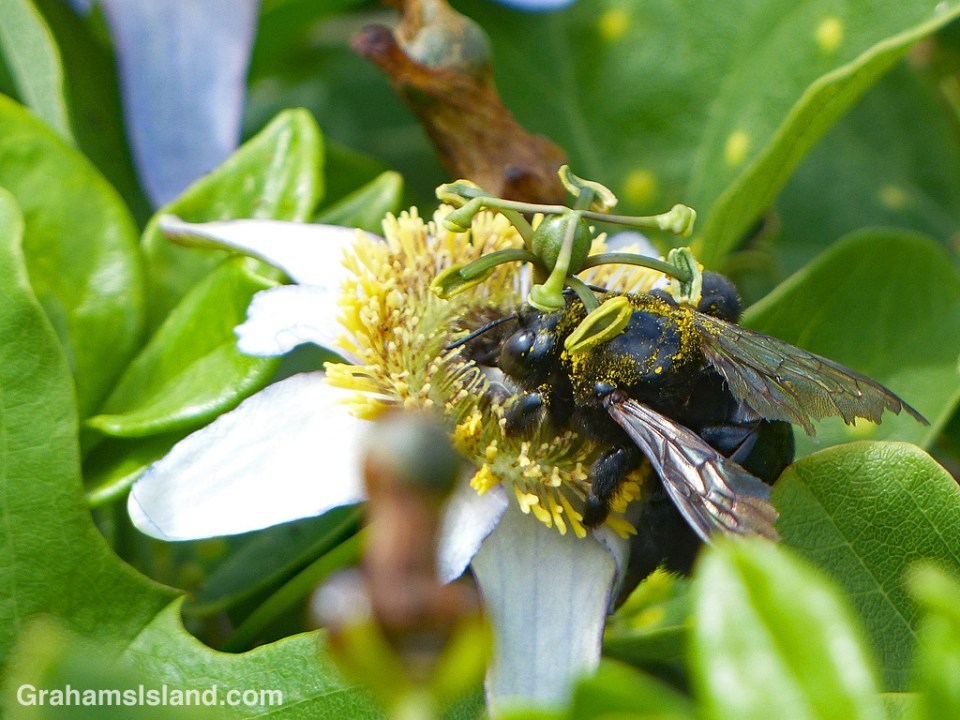

Carpenter Bee female