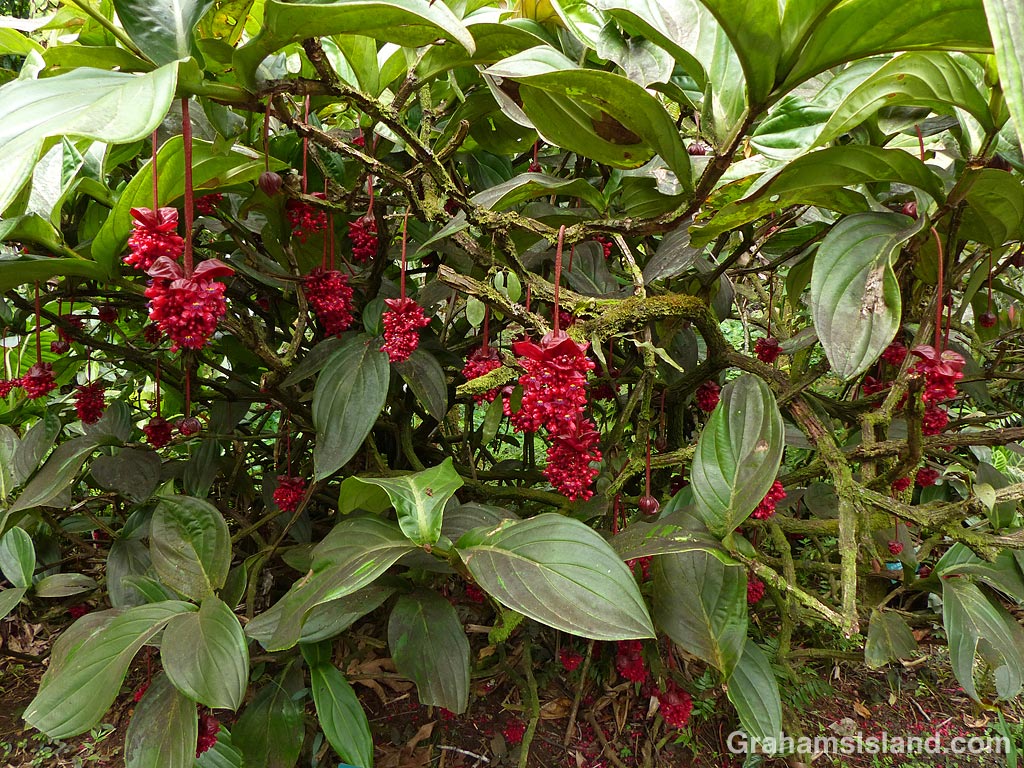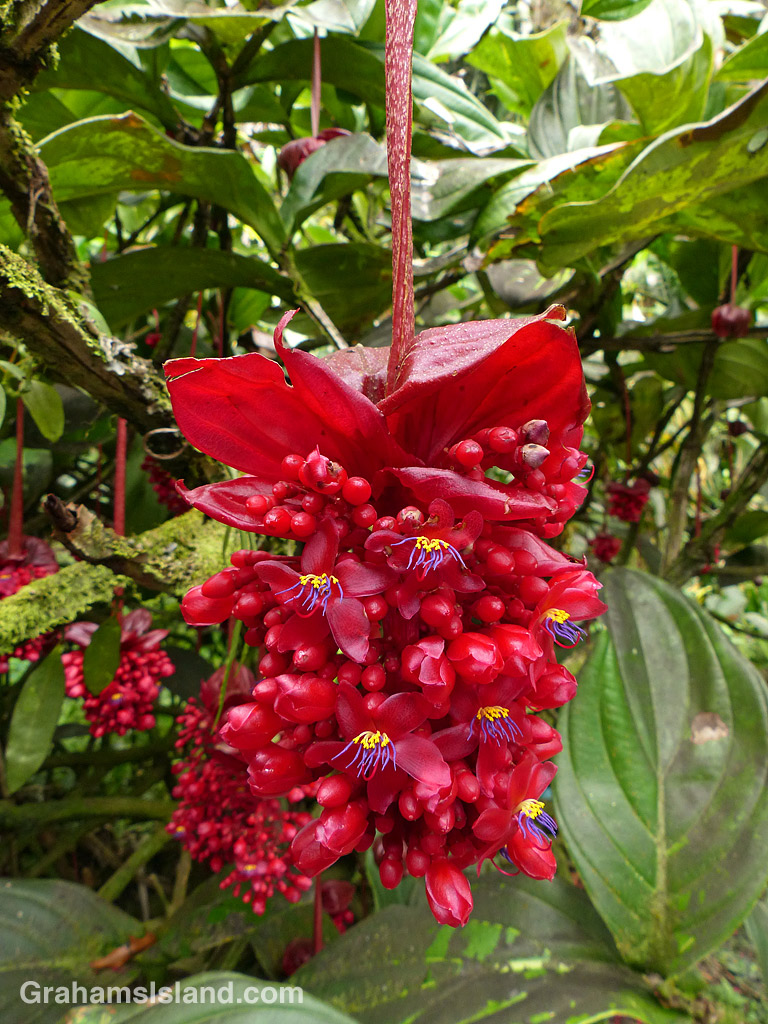
These dense trees can be found in the vicinity of Kilauea Volcano and show that nature thrives if it is spared by the lava flows. This view reminds me of broccoli.

These dense trees can be found in the vicinity of Kilauea Volcano and show that nature thrives if it is spared by the lava flows. This view reminds me of broccoli.

Just a couple of big, tropical leaves backlit by the sun.

On the evening of Tuesday, February 25, 1941 this twin-engined B-18 bomber was part of a group of four aircraft on a night training mission. They had started out from Hickam Field on Oahu. Not far from Hilo the plane lost its port engine when a bearing failed. The pilot decided to try and reach Suiter Field (now known as Upolu Airport) at the island’s northern tip. It was not to be. Flying on only one engine, the plane lost altitude. The crew thought they were over the sea, but suddenly a mountain appeared in front of them. The pilot yanked on the flight yoke wheel and the plane stalled and flopped into the trees around 10 p.m.. Incredibly only one crewman was slightly injured.
Search aircraft from Hickam Field found the plane the next morning around 9 a.m.. The nose of the plane was hanging over a 75-foot deep ravine about 3,500 feet up on the northern side of Kohala Mountain. It was one of the most inaccessible places on the island. A rescue operation was started, but it was Thursday noon before it reached the crew.
Over the years, the aircraft has slid into the ravine which is where it rests today. As these photos show, the plane’s condition has deteriorated and it is increasingly being engulfed by trees. But it is still quite easily spotted from the air. On the ground, it remains one of the most inaccessible spots on the island.
It’s also worth noting that just nine months after this crash, almost all the B-18 bombers based at Hickam Field were destroyed on the ground during the attack on Pearl Harbor. 77 years on, this B-18, in its remote resting place, is one of only a handful remaining in existence.
For more information about this aircraft and the crash, search online for Big Island Bomber – hiavps.com or go to pacificwrecks.com/aircraft/b-18/36-446.html.


For whatever reason, I don’t see a lot of mushrooms around where I live. But when I was out for a walk, I found this group had popped up. I didn’t know what kind they were so didn’t take them home for the kitchen, not wanting to experiment on myself. They were gone within a couple of days, either naturally, or taken by someone who could identify them. At least I hope they knew what they were doing.


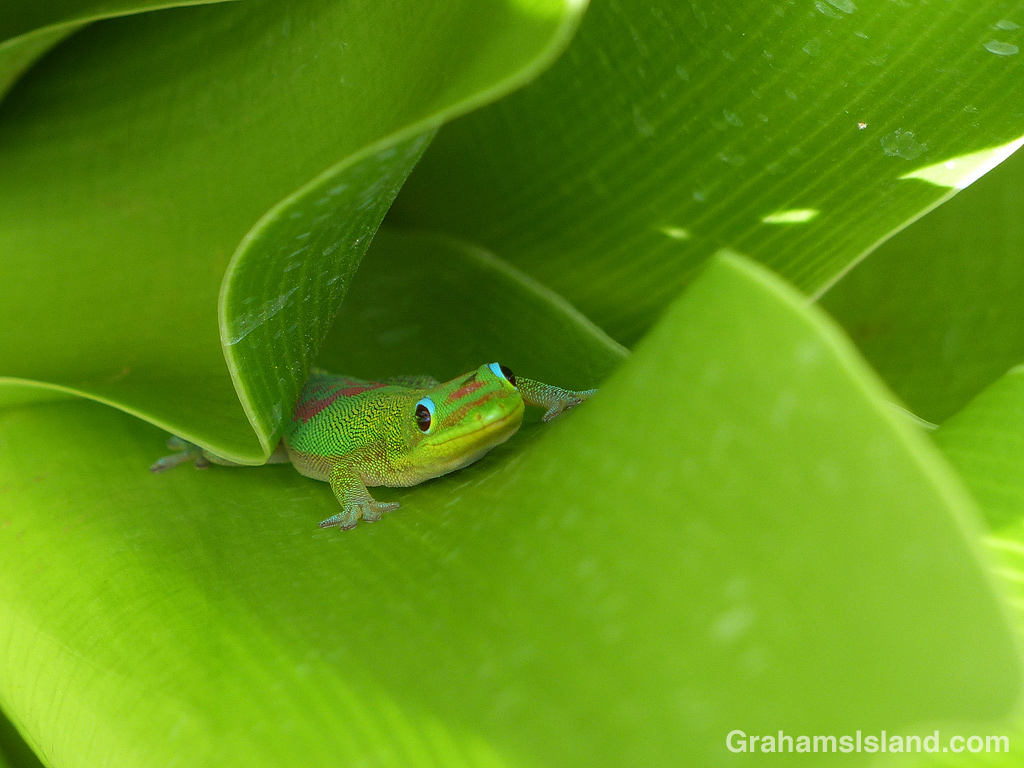
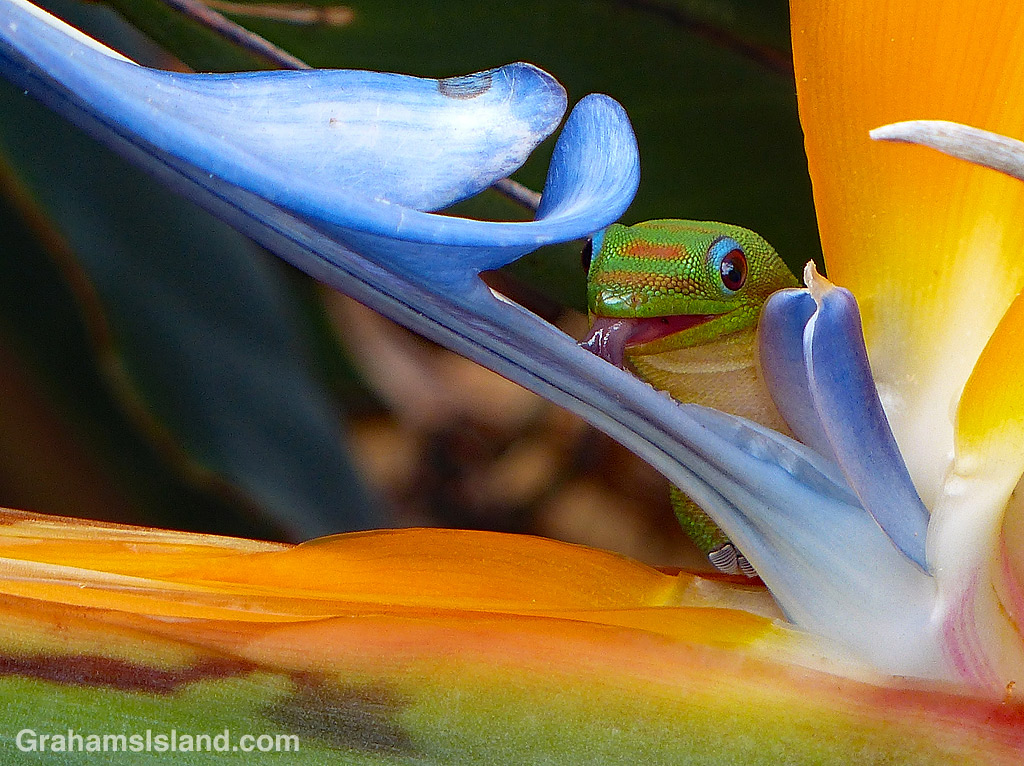
A gold dust day gecko drapes itself over a torch ginger (Etlingera elatior). This striking red form is not the flower but is known as an inflorescence. The red leaf-like parts are bracts and it is from between these that the yellow-edged red flowers will emerge.

I used to see these four horses frequently when I went for walks. They’re still around, but not as accessible as before. This pasture has been sold and is now used to grow Hawaiian heirloom sugarcane for use by a rum micro-distillery.
Another thing that’s changed is that the brown grass has been greened up by the last two hurricanes, both of which have dumped a good deal of rain, but generated very little in terms of wind, at least around here.

This little pineapple (Ananas nanus) is grown for its looks but is edible. With sharp spines on the leaves, it should be handled with care.
This one was at Hawaii Tropical Botanical Garden near Hilo.
For more information about Hawaii Tropical Botanical Garden, go to htbg.com.

Kou (Cordia subcordata) is an indigenous tree that was also brought over by Polynesian settlers. It was highly prized for its wood, which was used to make bowls and other containers.
The flowers are beautiful, too. Less than two inches across, they grow in clumps, which are sometimes hidden by the shiny green leaves. The flowers are followed by small, round green fruits (seen in the photos to the left and below) which harden to a dark brown and contain white seeds.
The flowers on this tree were popular with a variety of insects including a honey bee, above, and a paper wasp (Polistes exclamans), below.