This week’s Sunday Stills challenge theme is ‘Emerging.’ See more responses here.
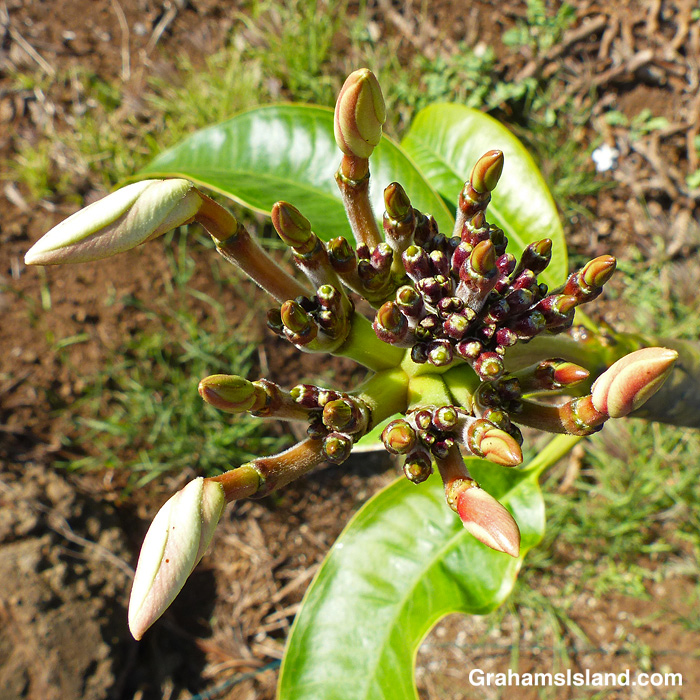
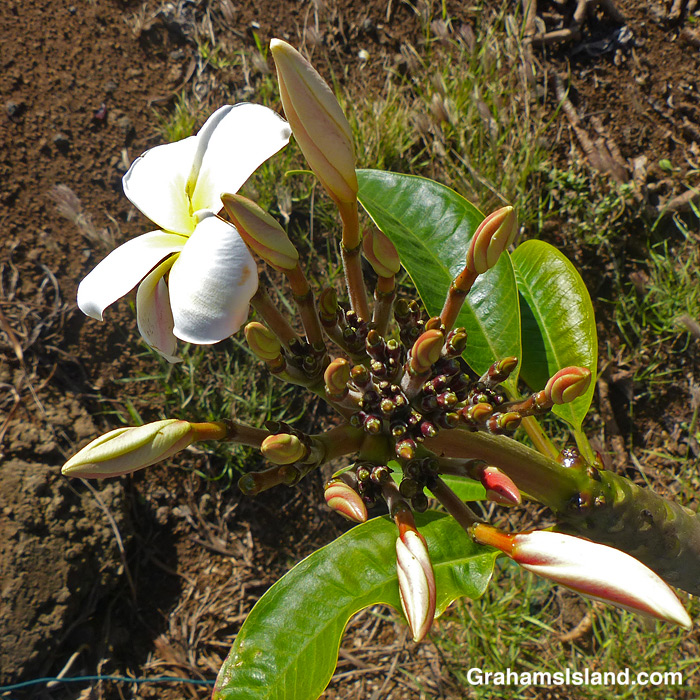
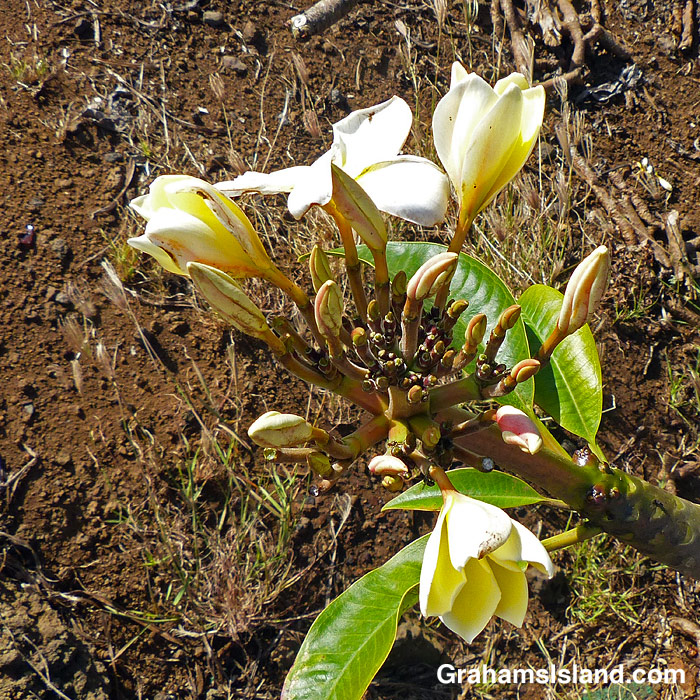
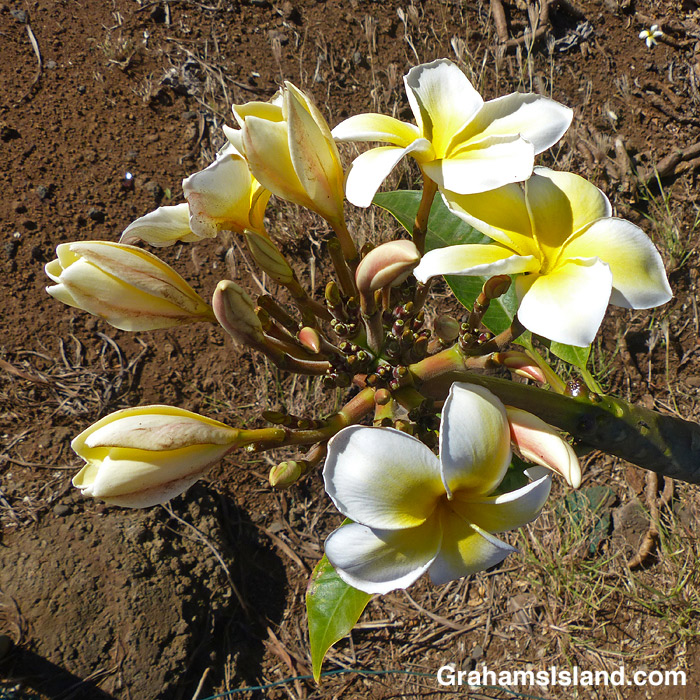
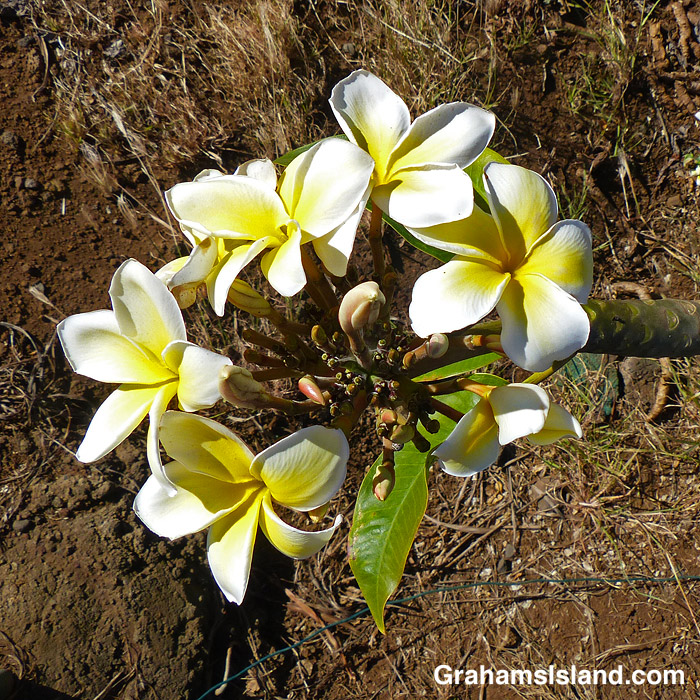
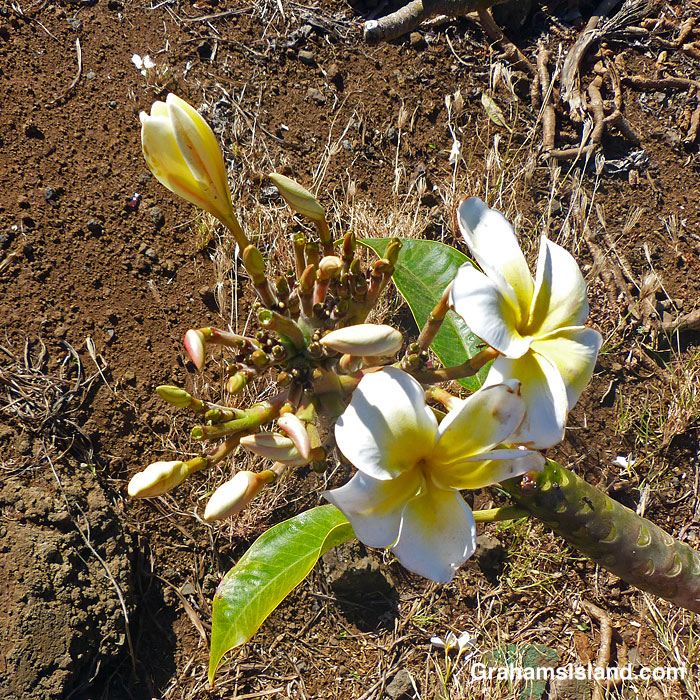
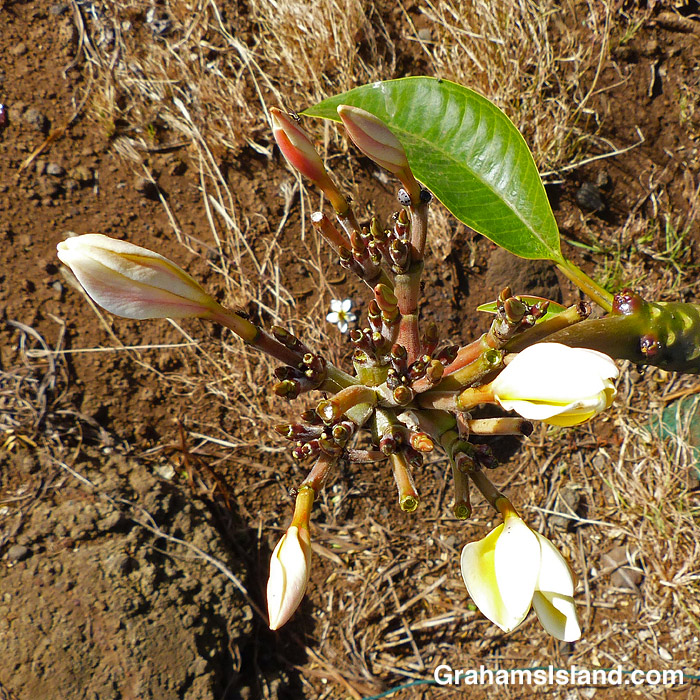
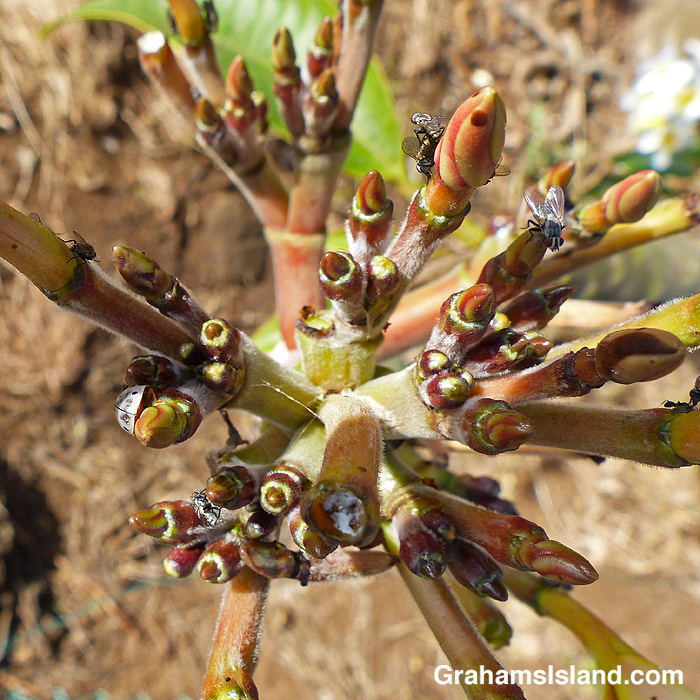
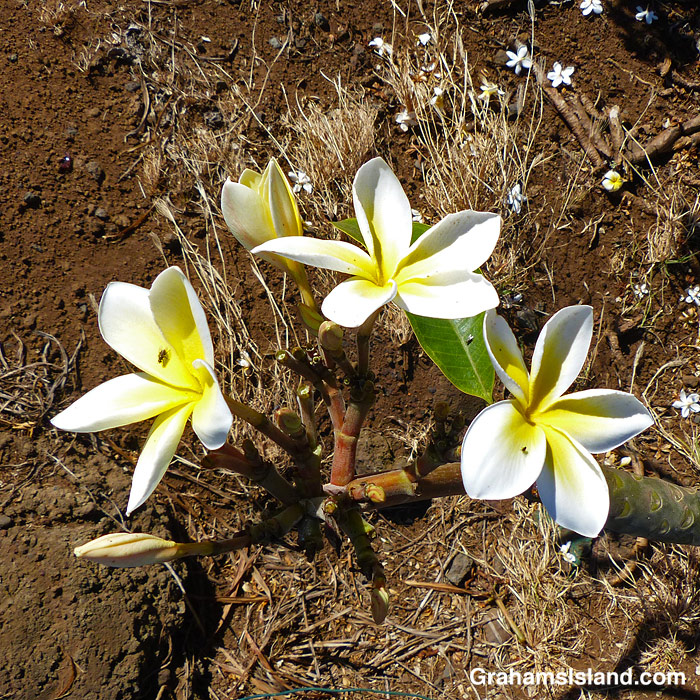
A while ago I posted a photo of Plumeria buds (here). I returned to that tree several times over the next few weeks and took photos of the same cluster of buds and then flowers to see how they developed. Plumerias aren’t one-bloom-and-done trees. Instead, there’s a continual production of buds, which bloom and die.
I like the swirls and colors of the buds and the different stages of the flowers emerging. I’m not the only one. All kinds of insects can be seen on both the buds and the flowers.
Giant Laulau (Syzygium megacarpa) is widespread across the Pacific. These red fruits apparently taste similar to apples though I haven’t yet tried one. This one was at Hawai’i Tropical Bioreserve & Garden.
For more information about Hawai’i Tropical Bioreserve & Garden, go to htbg.com.
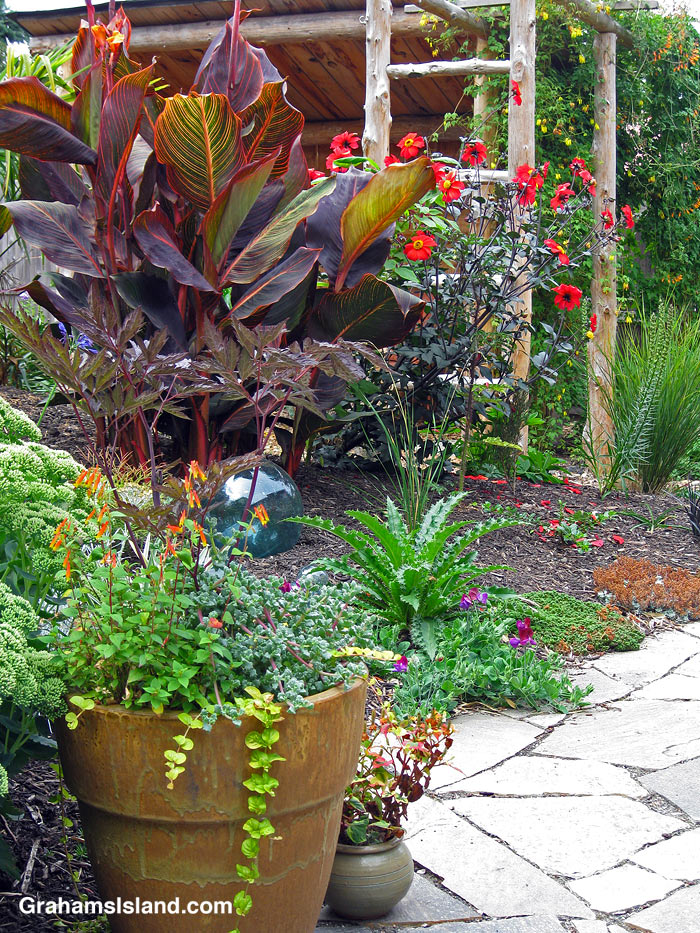
This week’s Sunday Stills challenge theme is ‘Fabulous Florals.’ See more responses here. For this, I’m taking a short jaunt off the island to revisit the first tropical garden I planted. That was in Washington State. Now, I’m aware that Washington State isn’t in the tropics, but I like a challenge.
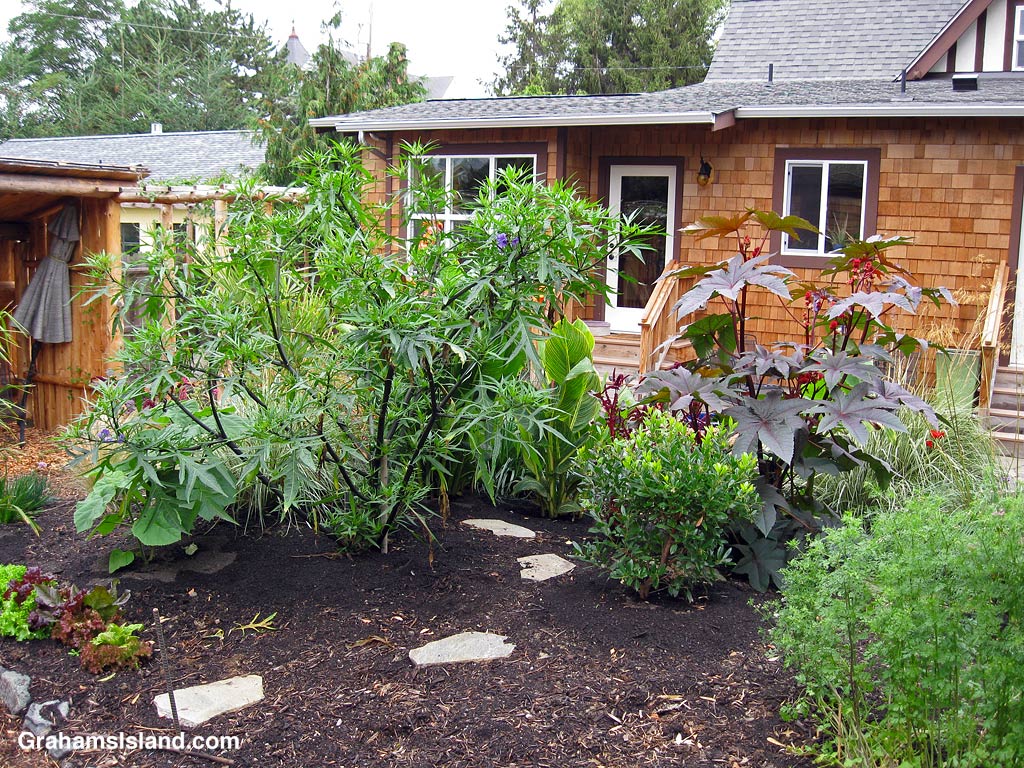
My goal was to create a garden of hardy tropical-looking plants, with colorful flowers and/or big, bountiful foliage. The first summer, I laid the foundations with three Windmill Palms and a wall of bamboo alongside one fence. Colorful canna lillies and big foliage gave an inkling of what was to come.
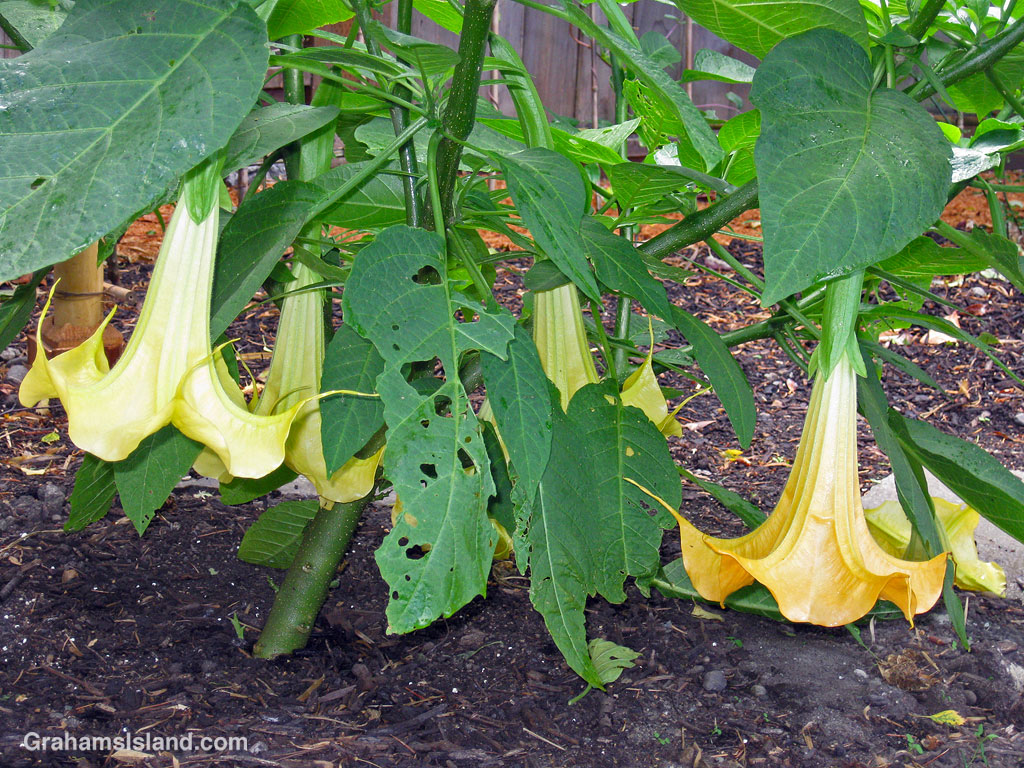
Canna Lily-TropicannaSolanum laciniatum and Castor Bean-Carmencita Red,
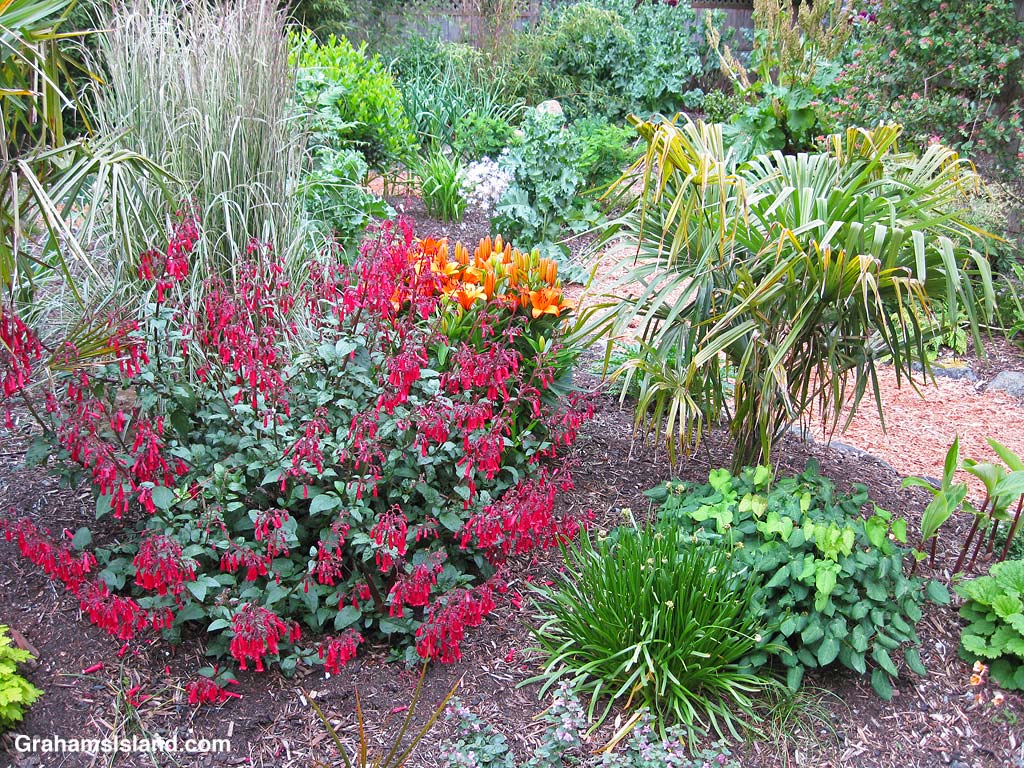
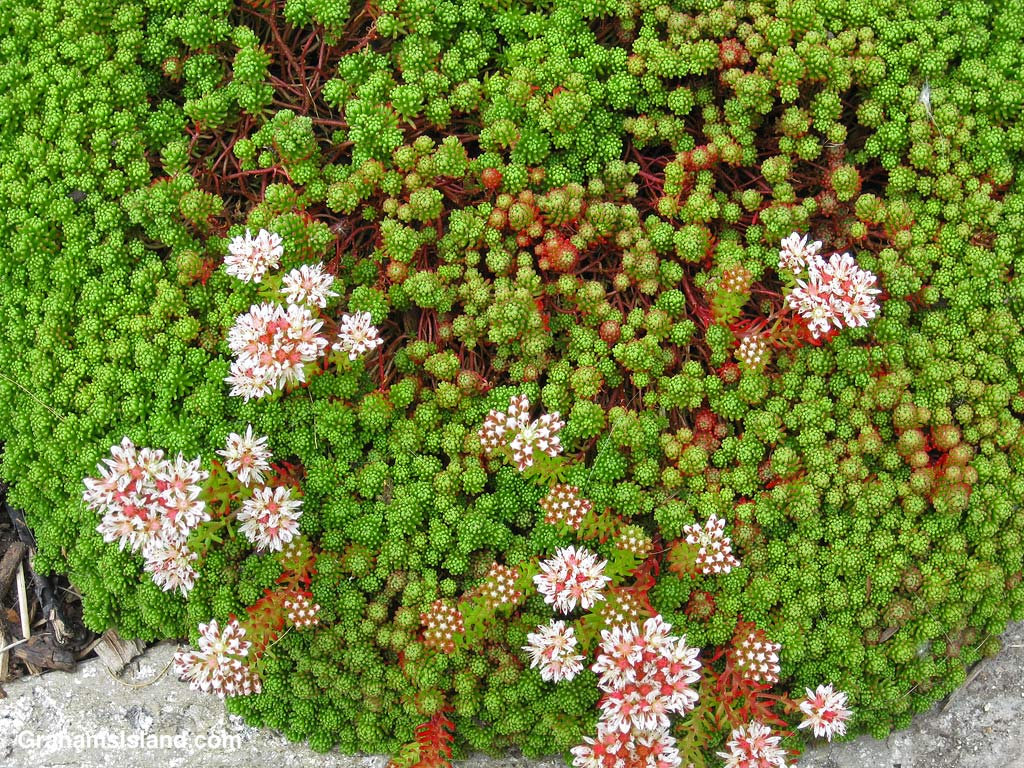
The second summer was when the garden took off. Ground covers spread. Vines took off. Pots provided focal points.
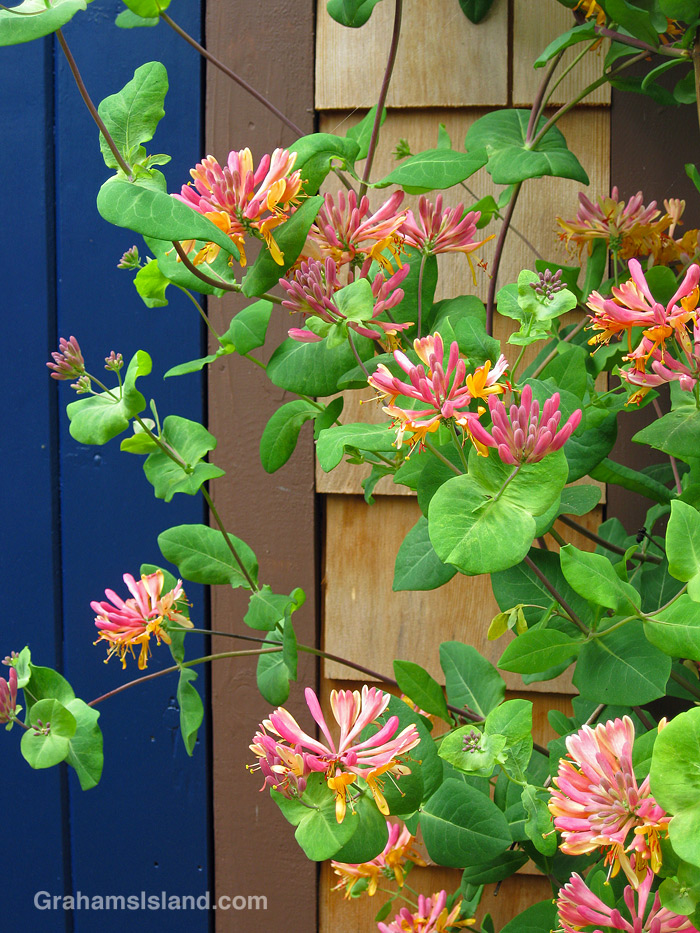
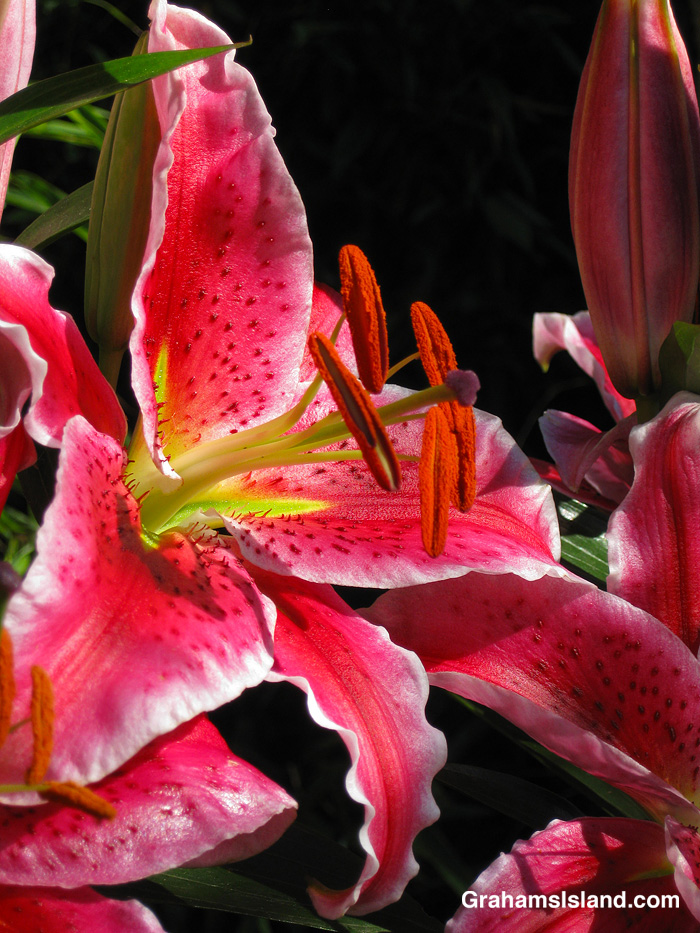
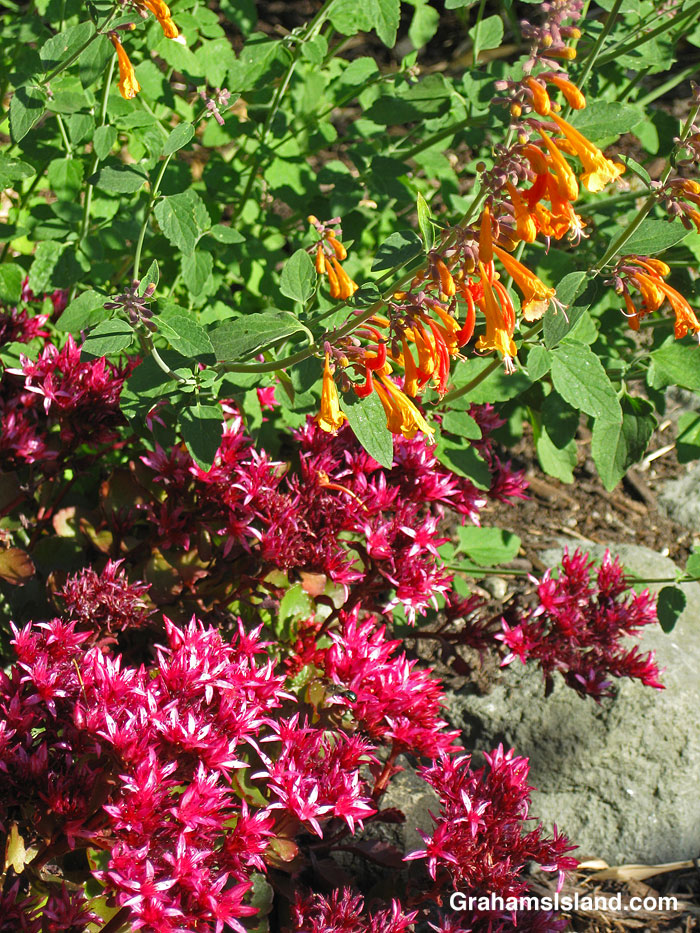
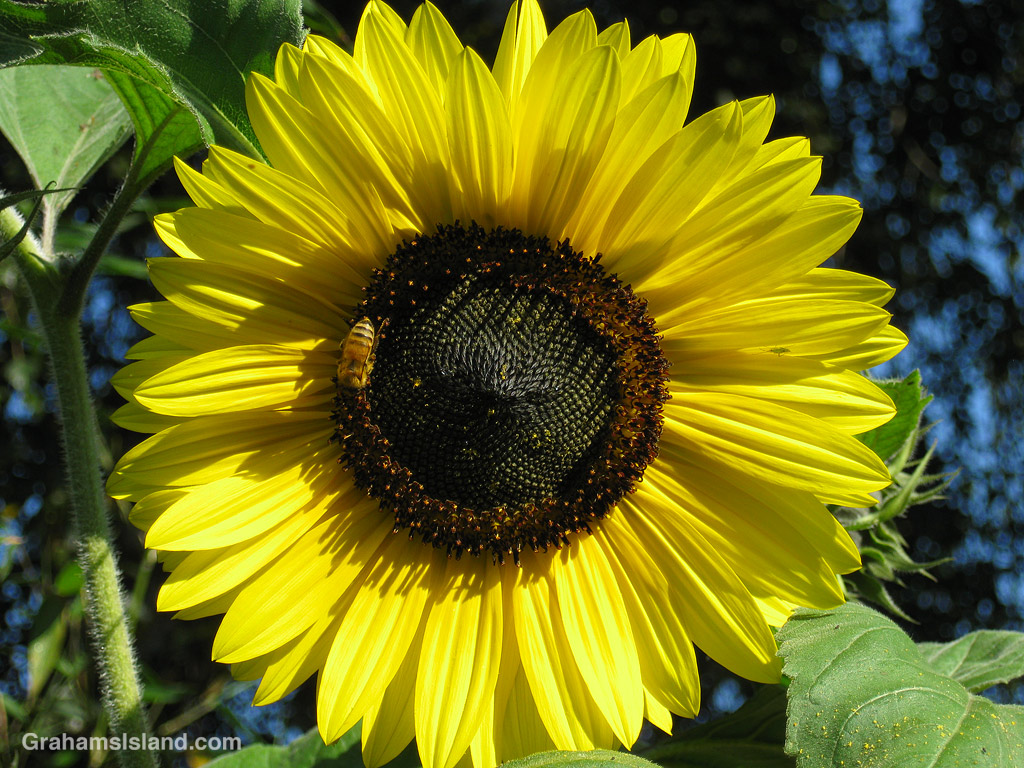
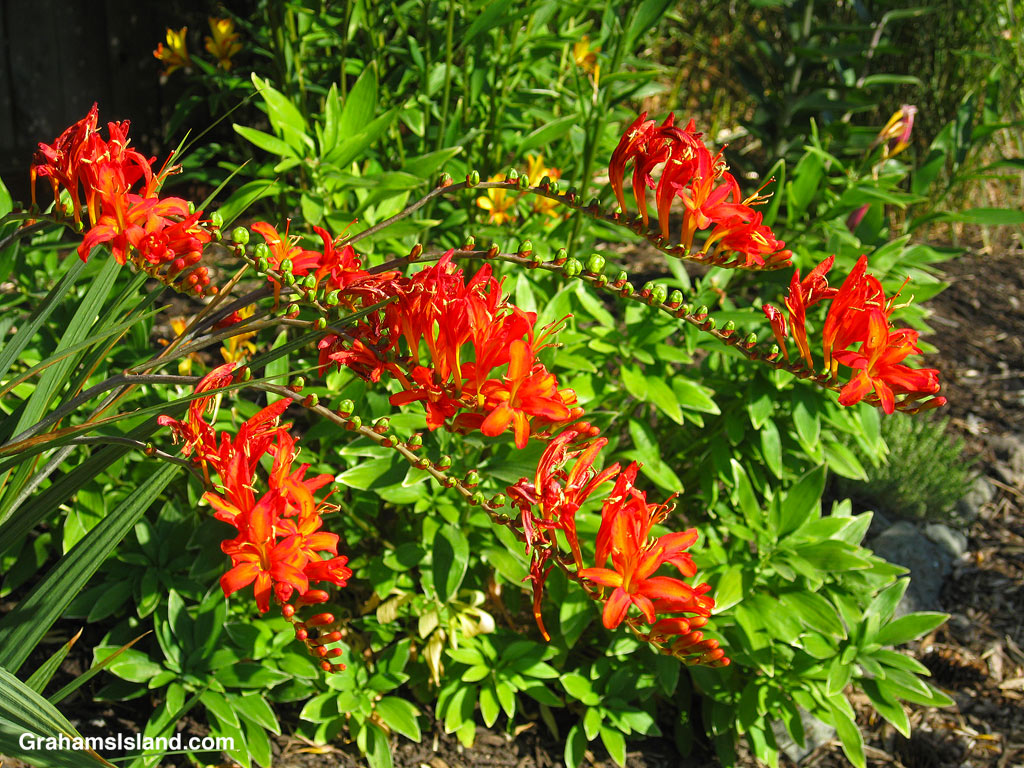
And of course, there were those fabulous florals.
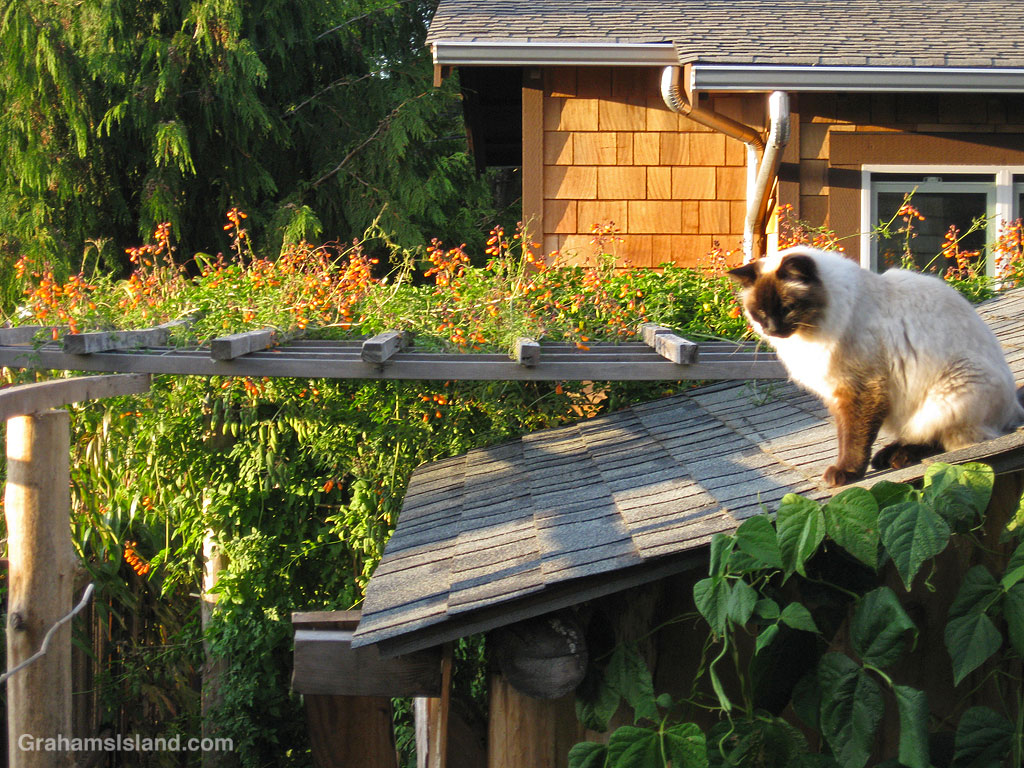
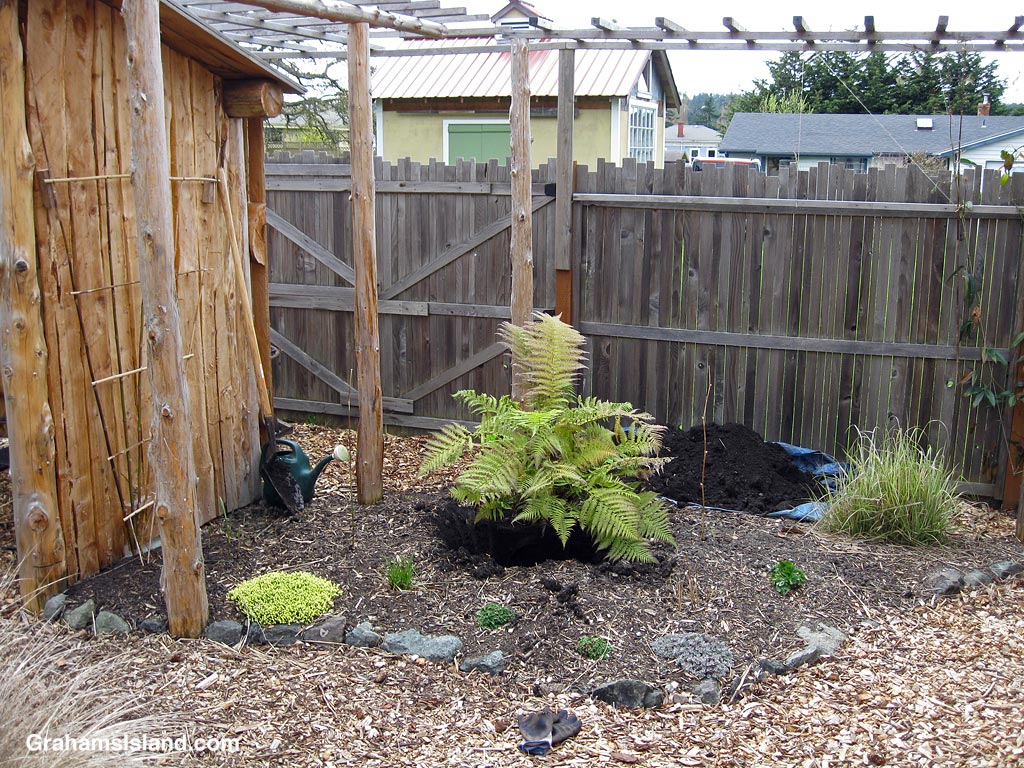
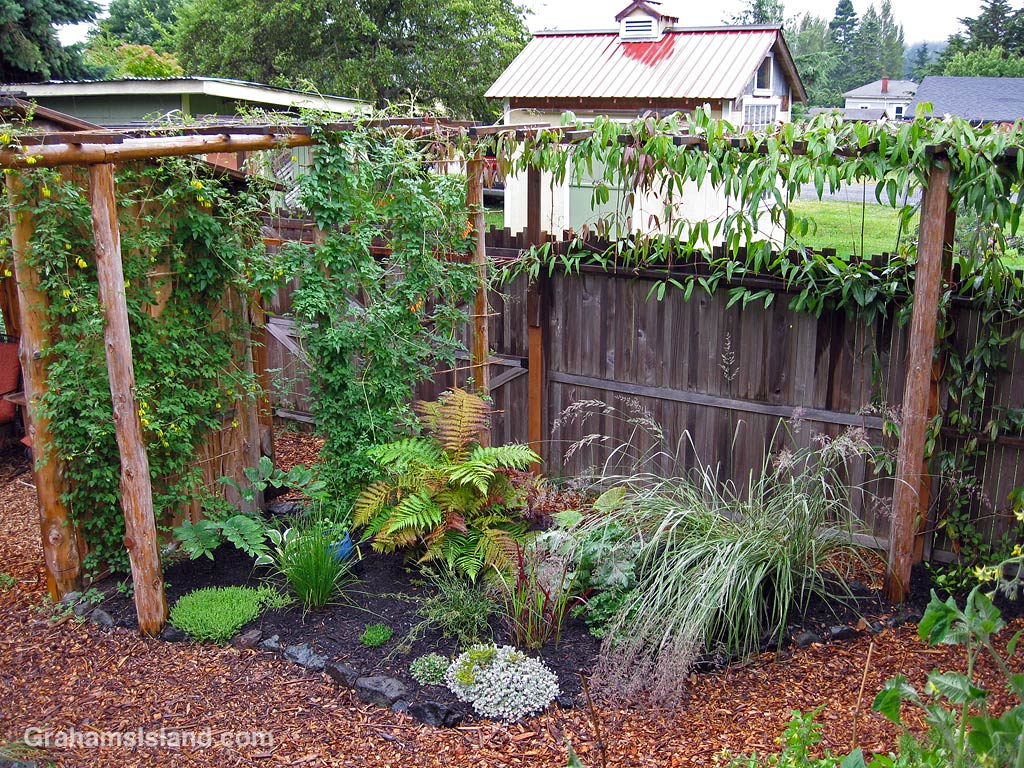
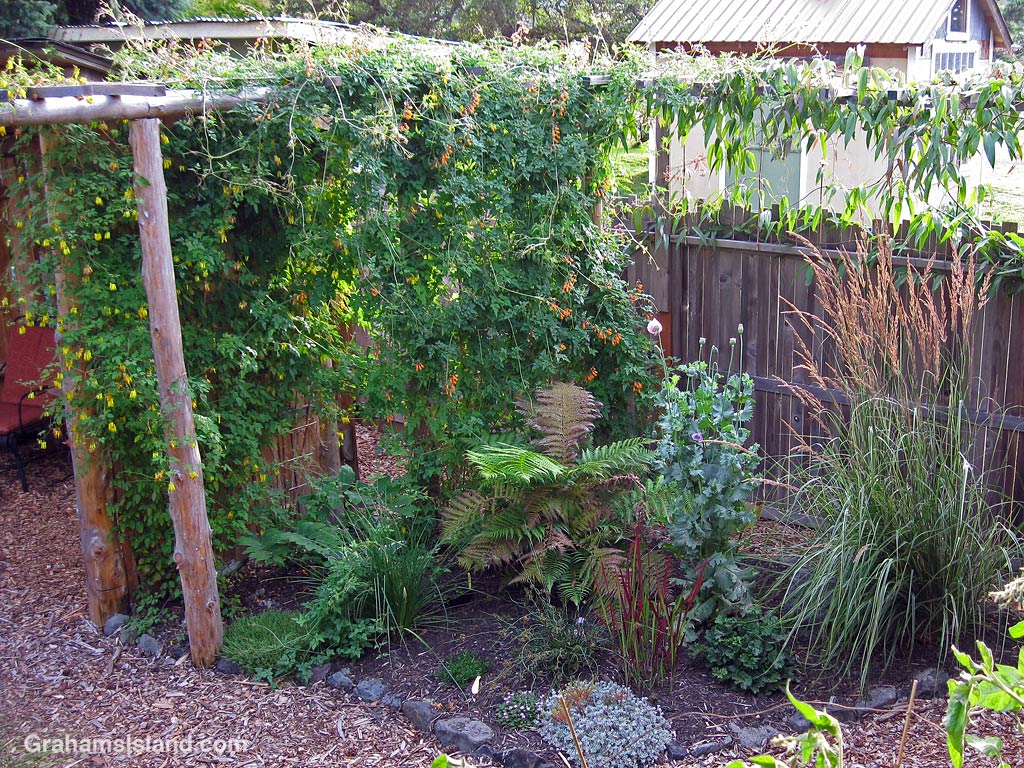
One corner of the garden featured a Dicksonia Antarctica tree fern, which was soon joined by a Dicentra Scandens-Golden tears vine, Eccremocarpus scaber – Chilean glory vine, and a Clematis Armandii. There’s less than a month between the second and third photos in the gallery below, and the following summer the area was rampant with color and growth.
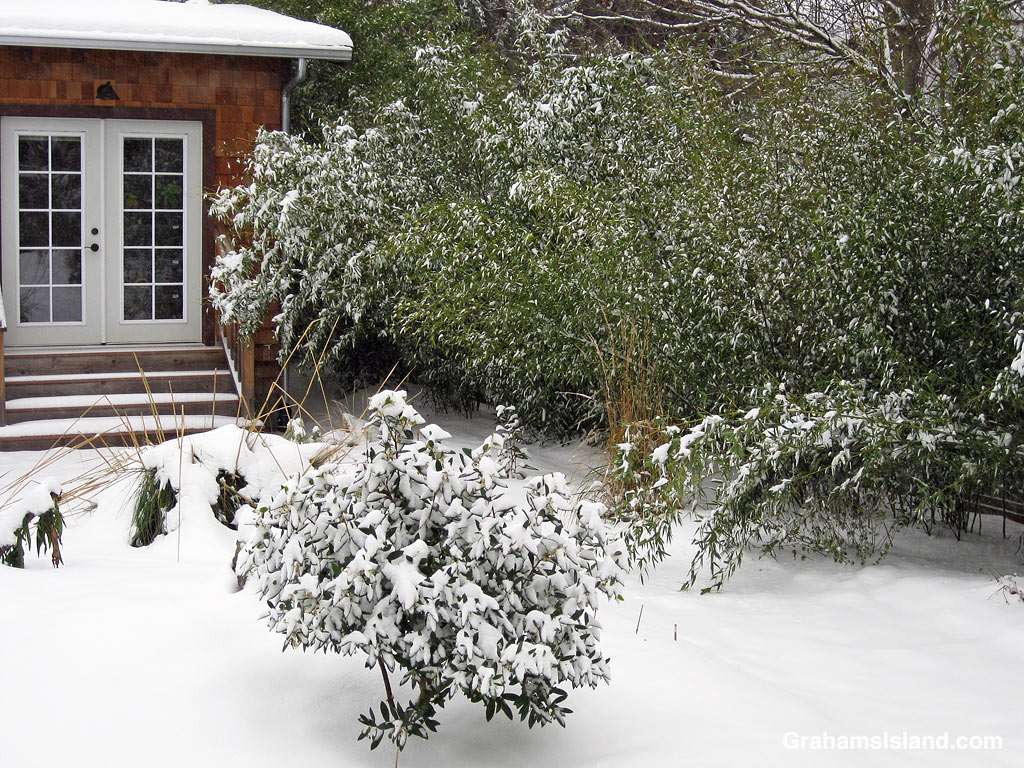
But it is Washington State and there are winters and in the winter it can snow. The palms and bamboo bent low under the weight of the snow, but they survived. The tiki torch looked distinctly unhappy with the weather, possibly jealous of those lucky plants that were moved indoors for the winter.
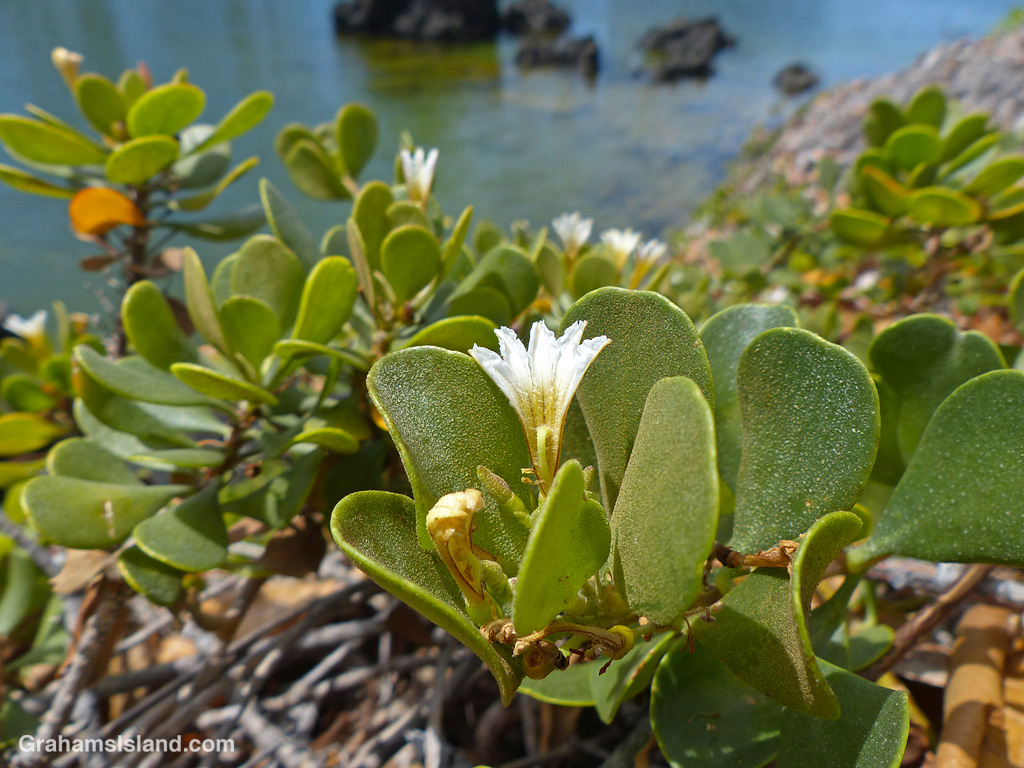
Beach Naupaka (Scaevola sericea or Scaevola taccada) is relatively common here, often seen in coastal areas because of its salt tolerance. Dwarf Naupaka (Scaevola coriacea), on the other hand, is on the federal endangered list. It used to be seen on all the main islands, but these days it’s only seen on Maui and then not in many places. The flowers of Dwarf Naupaka are a little different and the leaves are considerably smaller, just one to two inches in length.
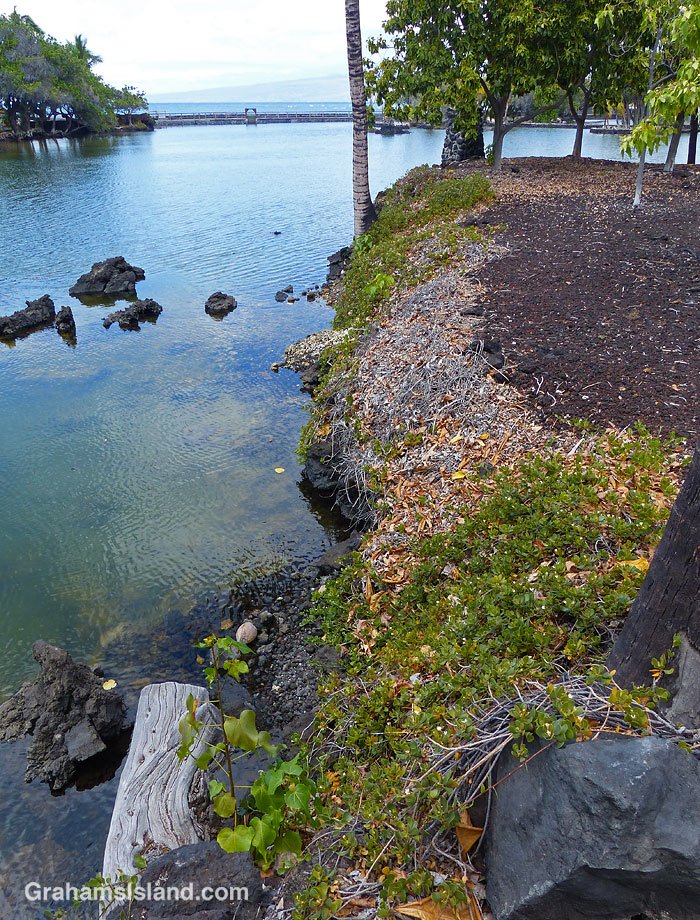
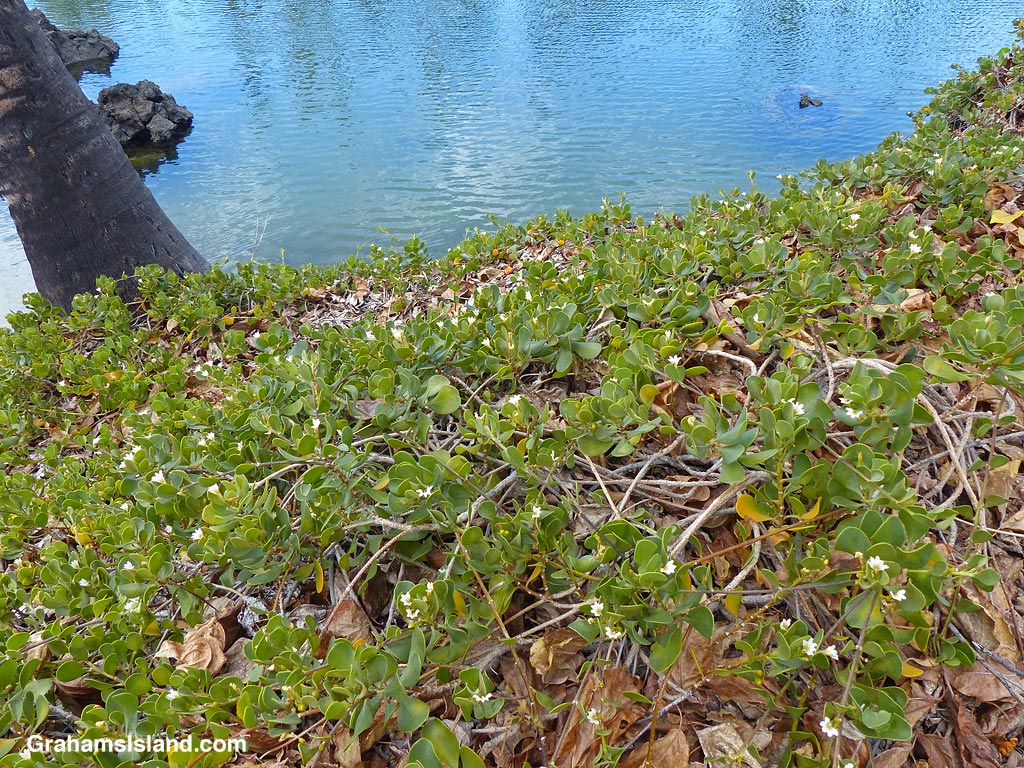
These endemic plants were spotted alongside one of the fishponds at Mauna Lani, on the South Kohala coast, by a friend who knows a lot about native plants. When he told me about them, I headed down to take a look and get some photos. I agreed with his identification and got a confirmation on Hawaii Plant ID.
It’s likely that the plants by the fishpond aren’t naturally occurring, but were deliberately planted, though by who or why is not clear. Still, it’s encouraging that at least one small pocket of these extremely rare plants still exists on the island.
At Spencer Beach Park, there are several trees providing shade for beach goers. This picnic table sits beneath a False Kamani tree growing in the sandy beach.
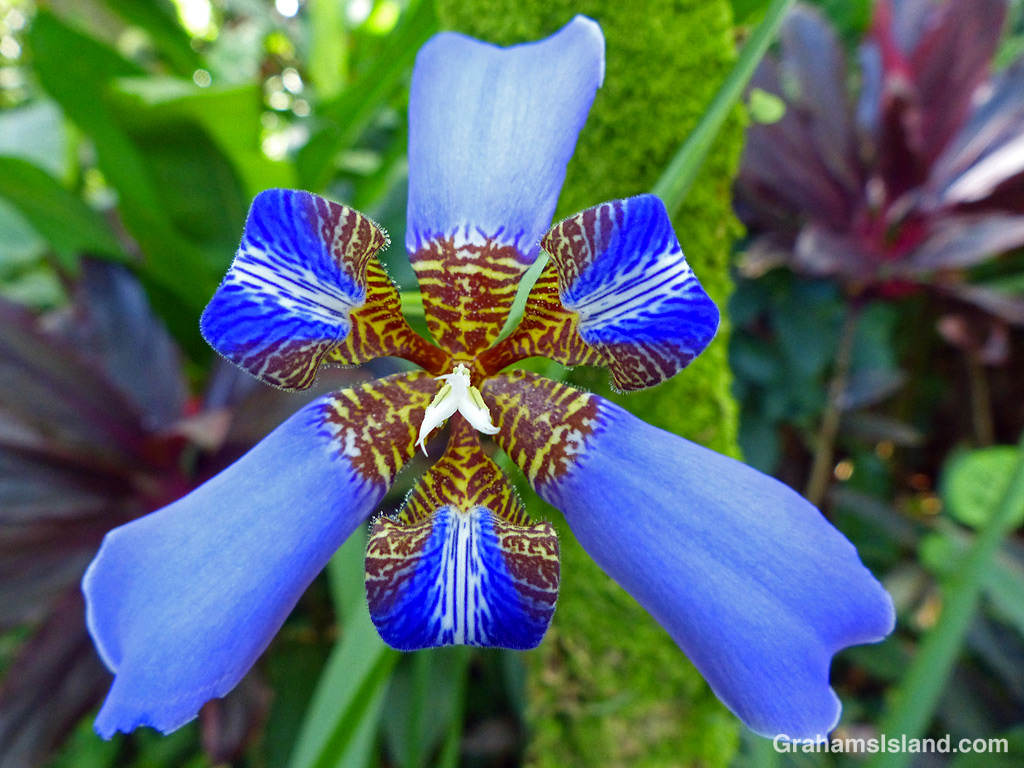
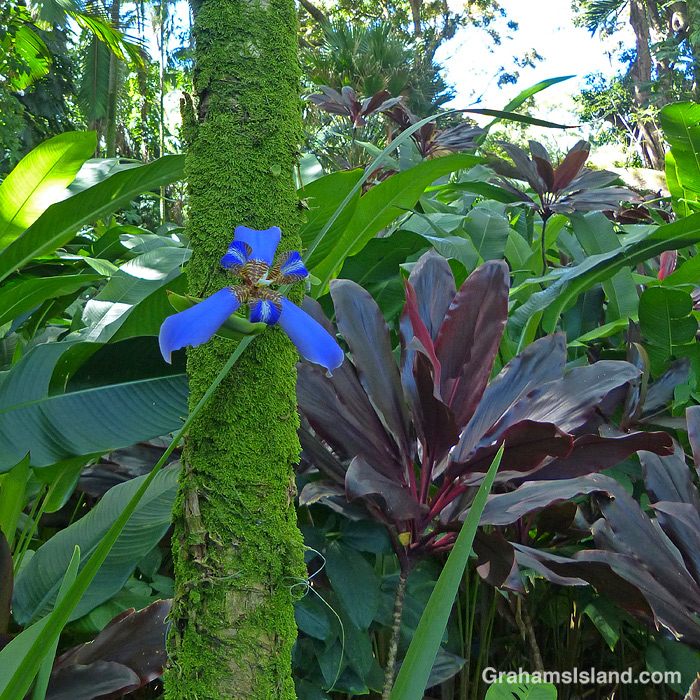
The lovely blue color of this Walking Iris caught my eye when I was last at Hawai’i Tropical Bioreserve & Garden. Not only was it striking in its own right, but it was also a distinctive splash of color against a predominantly green background.
For more information about Hawai’i Tropical Bioreserve & Garden, go to htbg.com.



















 Graham's Island