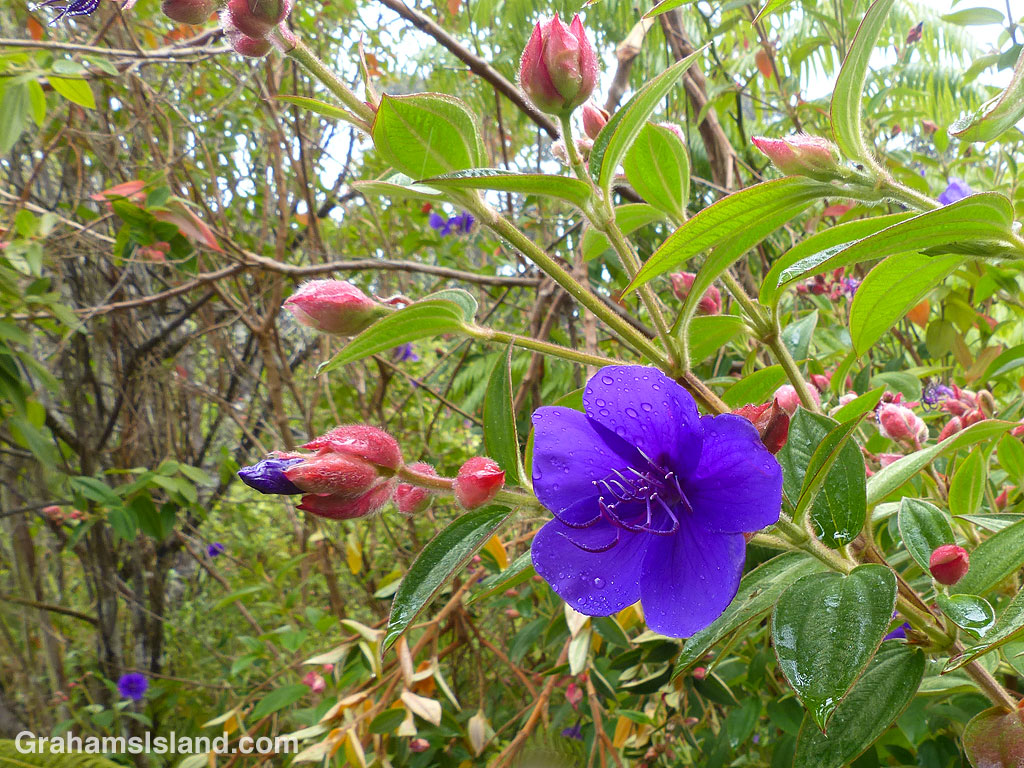
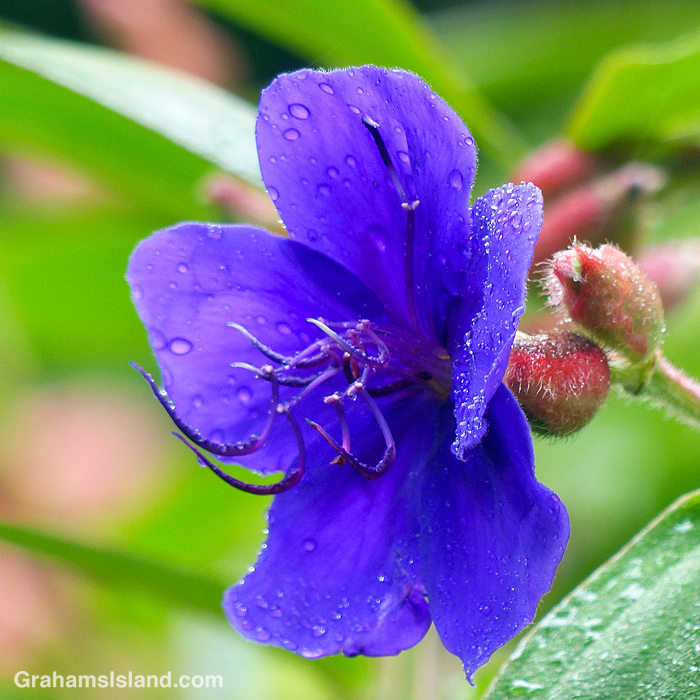
Tibouchina urvilleana hails from Brazil and is also known as purple glory bush and princess flower. Its flowers have striking deep blue to purple petals, which contrast nicely with dark pink sepals. Here on the Big Island, it’s a bit of a problem because of it’s dense growth habit which can crowd out other plants.
There’s a good variety of fish at Two Step including raccoon butterflyfishes, seen here mingling with goatfishes and yellow tangs.
A barred filefish swims by with a startled look on its face, which is just their usual look.
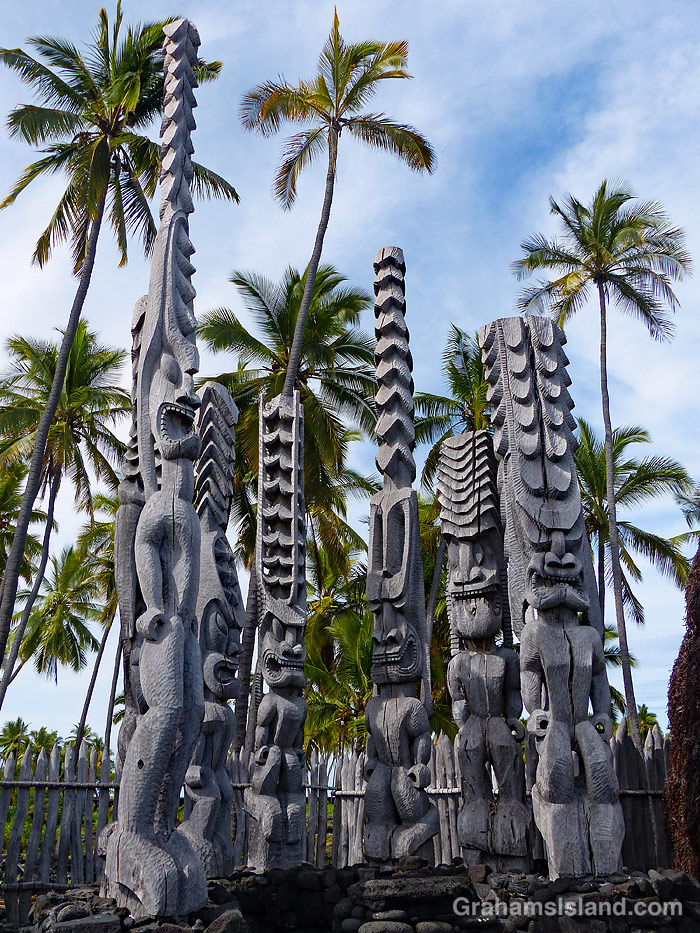
Ki’i at Pu’uhonua o Hōnaunau National Historical Park, better known as Place of Refuge.
This week’s Friendly Friday challenge theme is ‘Anniversaries.’ See more responses here.
Often, on our wedding anniversary, my wife and I go to Hawaii Tropical Bioreserve and Garden (formerly Hawaii Tropical Botanical Garden). This year the garden was shut, and still is, probably until tourists return to the islands. So a different anniversary is my birthday, which is not marked with candles on a cake, since that would be prohibitively expensive, but usually by a trip somewhere and a meal out. This year we went down to snorkel at Two Step and then had a wander around Pu’uhonua o Hōnaunau National Historical Park, otherwise known as Place of Refuge, which is right next door.
Two Step is a very popular snorkeling spot on Honaunau Bay, south of Captain Cook. This is a marine reserve so no fishing is allowed and the fish tend to be more numerous and mellow because of this. It’s a popular spot to see and swim with dolphins, though I haven’t done either of those things there. Currently, it’s not nearly as busy since there are very few tourists on the island and those that are here are diligently following quarantine rules (I’m trying to keep a straight face writing this!).
After our swim we made the short walk to Pu’uhonua o Hōnaunau National Historical Park. The park is on the south side of the bay and, at the moment, is fully open only on Fridays, Saturdays, and Sundays. However, on the other days, pretty much everything else is accessible, it’s just that the parking lot and visitor center are closed. What this means is that there’s basically nobody there so our visit was quiet and uncrowded. The park is an important place in Hawaiian history, and the location is beautiful. What’s not to like?
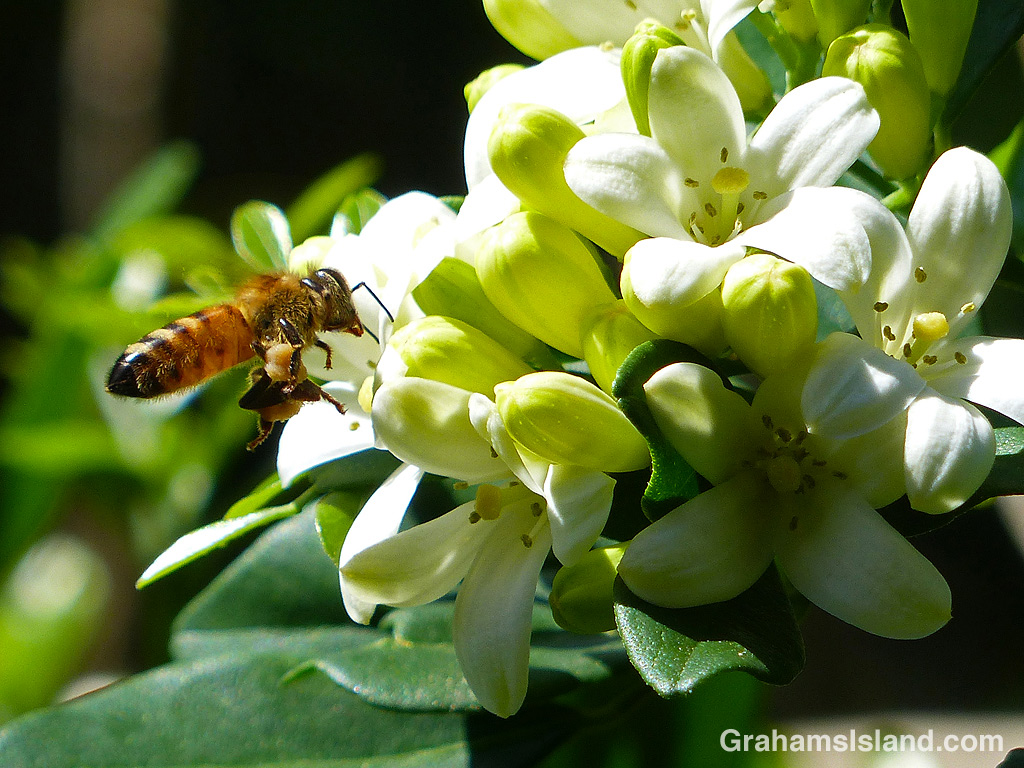
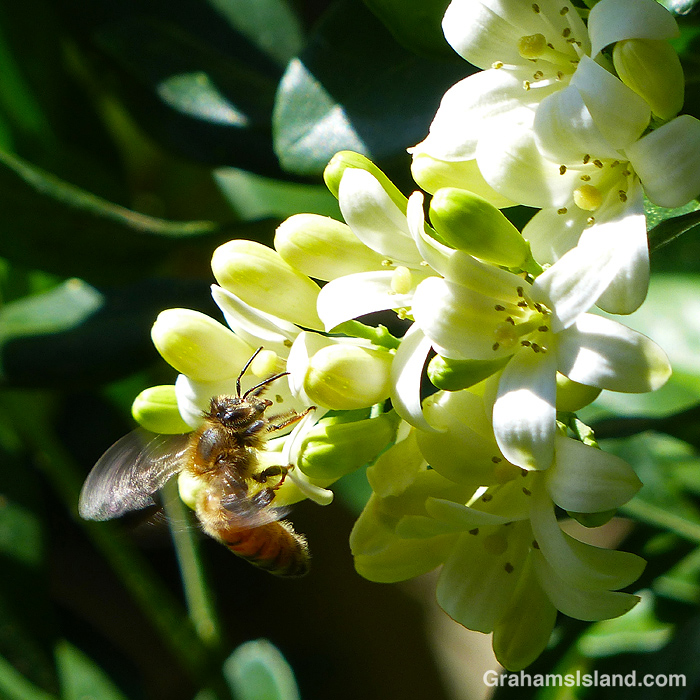
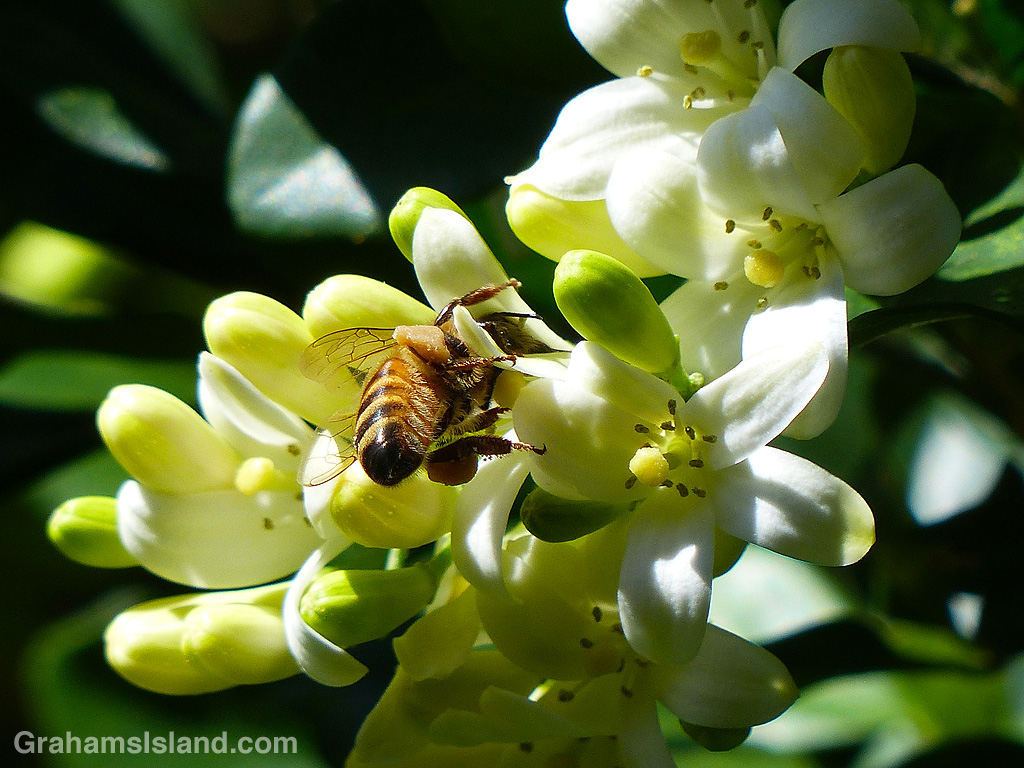
The mock orange next to the house has bloomed again. It does this several times a year, sometimes just parts of it, sometimes all of it. This latest bloom was the whole tree and when that happens the bees come out in force. Step outside, and a low hum fills the air as well as an intense aroma.
I take lots of photos, trying to capture something of interest to me, such as a bee approaching a flower (top), helicoptering in to land (middle), and getting stuck in (bottom). In the bottom photo, I was struck by the flat underside of the bee, not something I’d noticed before.
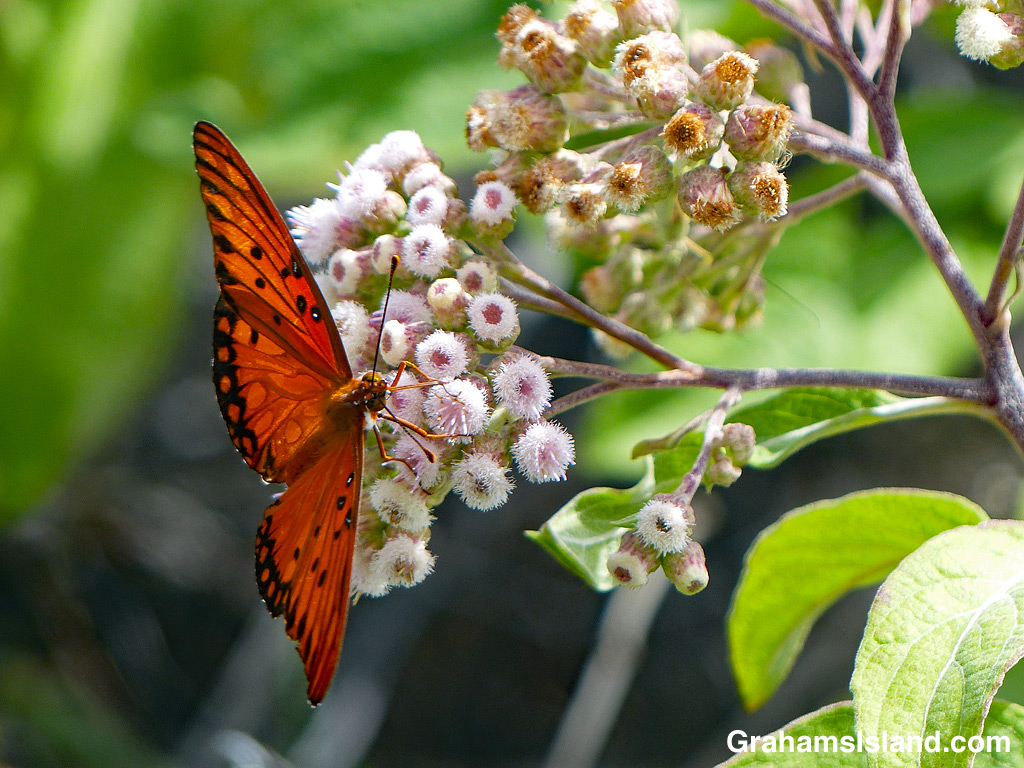
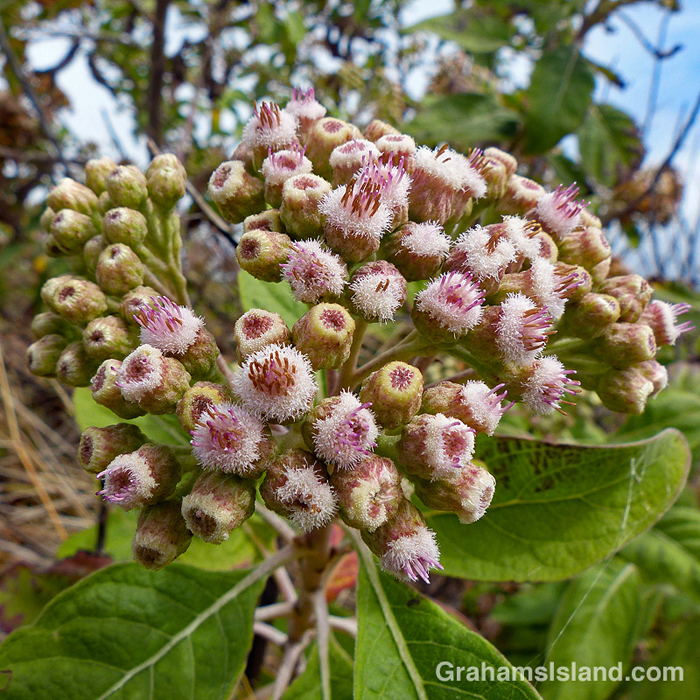
Pluchea carolinensis is also known as sourbush and cure-for-all. This latter name probably comes from its medicinal use in its native range, which is the tropical Americas. It’s a member of the aster family – Asteraceae.
The plant was first reported in Hawaii in 1931 and on the Big Island in 1933. It’s believed to be an accidental introduction, possibly associated with shipping to Hawaii and within the islands. The onset of World War II prompted the plant’s spread through the Pacific, probably in military shipments.
On the Big Island it’s most often seen in drier coastal areas, but it can tolerate a variety of climates and conditions. These photos were taken on the Puna Coast Trail in Hawaii Volcanoes National Park.
For more information about Hawaii Volcanoes National Park, go to nps.gov/havo/.
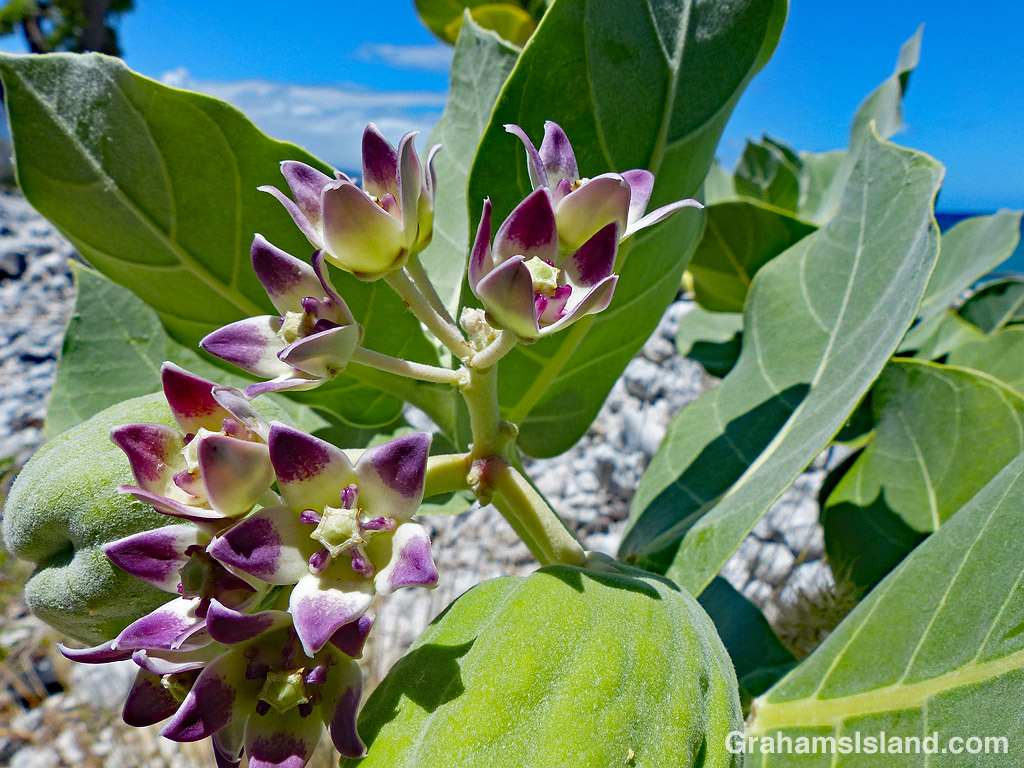
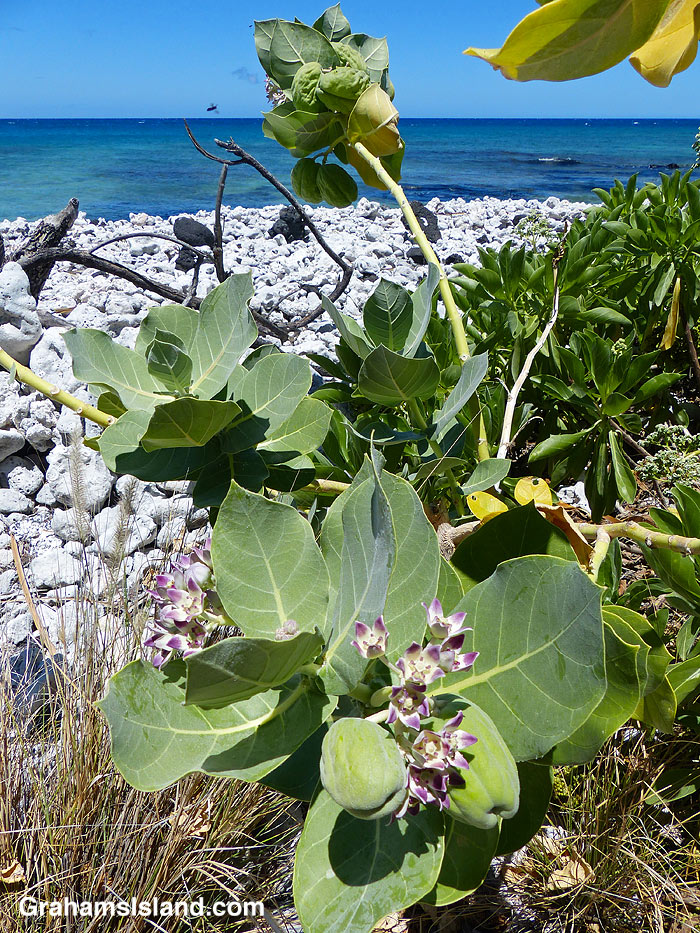
Calotropis procera, also known as Apple of Sodom, is a member of the milkweed family. A native of parts of Africa and Asia, it’s another of the many invasive plants that have found a home in Hawaii. On the plus side, it’s a host plant for Monarch butterfly caterpillars, while the butterflies themselves feed on the flowers.
In these photos, you can see the leaves, flowers, and the large green fruits of the plant.
Halemaumau Crater, at the summit of Kiluaea Volcano, underwent profound changes during the 2018 eruption. When lava drained from the summit vent, the crater floor experienced a series of collapses, radically changing the appearance of the crater and its surrounds.
I had seen this area from the air and posted about it (here). The middle photo was taken during that flight and shows where a section of Crater Rim Drive slid into the crater. When I last visited the park, I got a different view of this.
The recently reopened Byron Ledge Trail has good views across the crater. In the top photo, the chunk of road is clearly visible with its white line running down the middle of it. The bottom photo shows the longer view across the crater with the road in the distance. In the center of the photo, equipment used to monitor the volcano’s activity, can be seen. The tree in the foreground is an ‘ōhi‘a lehua with its brilliant red flowers. It’s an early colonizer of new lava flows and all those little dark spots on the main crater floor are ‘ōhi‘a lehua trees, mostly still shrub-sized at this time.







 Graham's Island