
This young praying mantis was perched on an agave attenuata, but its tail-up pose, and the direction of the photo, give at strange appearance.

This young praying mantis was perched on an agave attenuata, but its tail-up pose, and the direction of the photo, give at strange appearance.
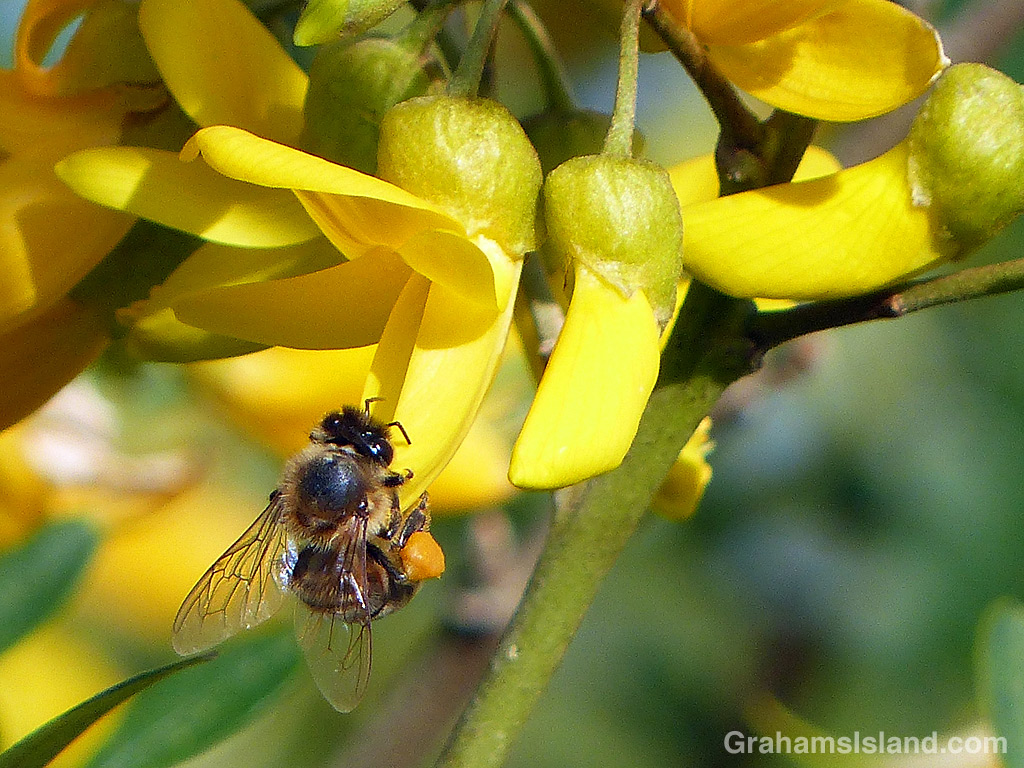
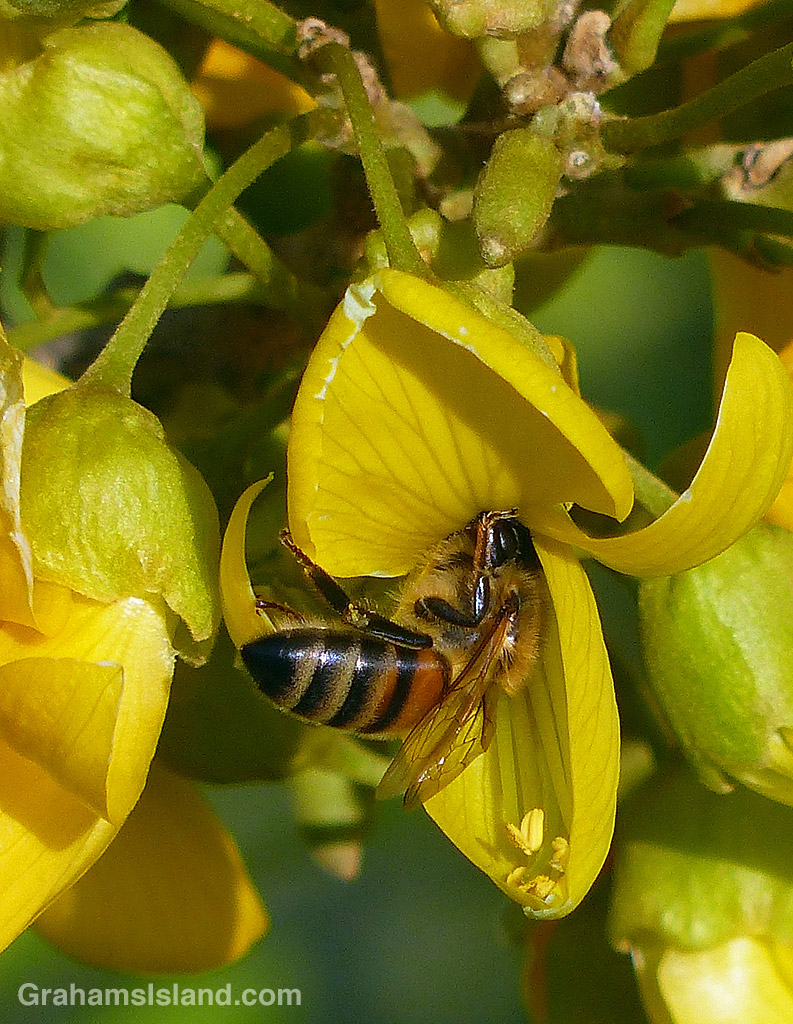
This week’s Friendly Friday challenge theme is ‘Yellow.’ See more responses here.
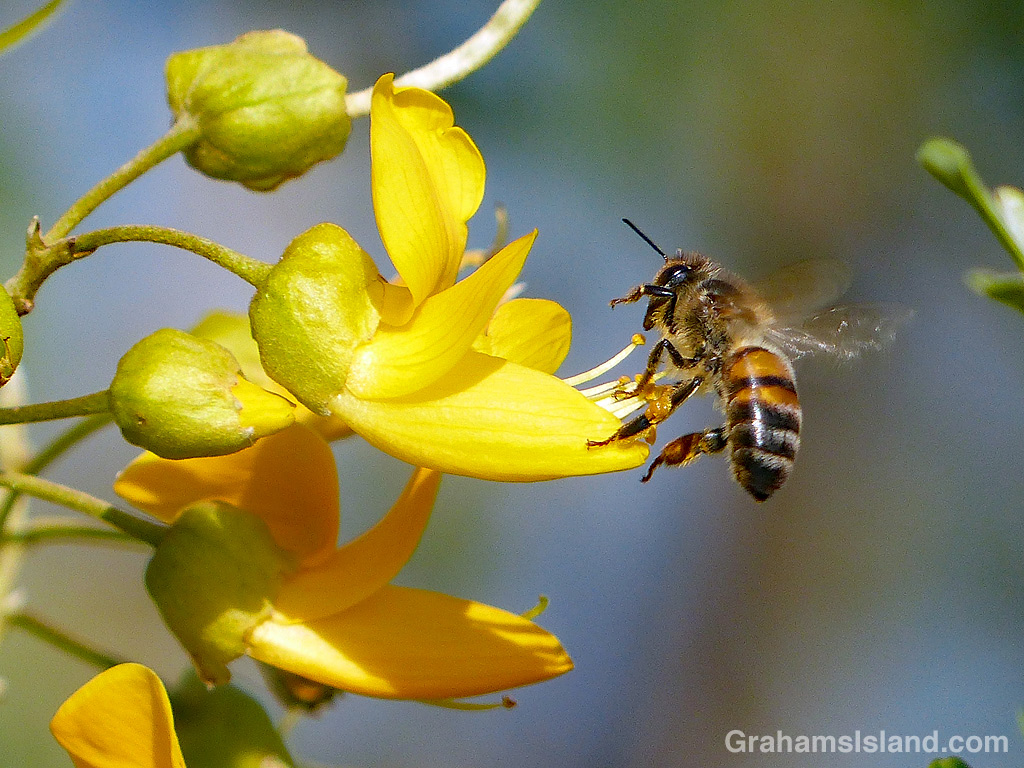
This is a good excuse to post more photos of bees foraging on bright yellow māmane flowers. Māmane (Sophora chrysophylla) is endemic to Hawaii, but while its flowers attract many insects, the seeds are highly toxic. The endangered palila, one of the last endemic Hawaiian honeycreepers, is a bird that feeds mostly on the māmane’s immature seed pods without any ill effect.
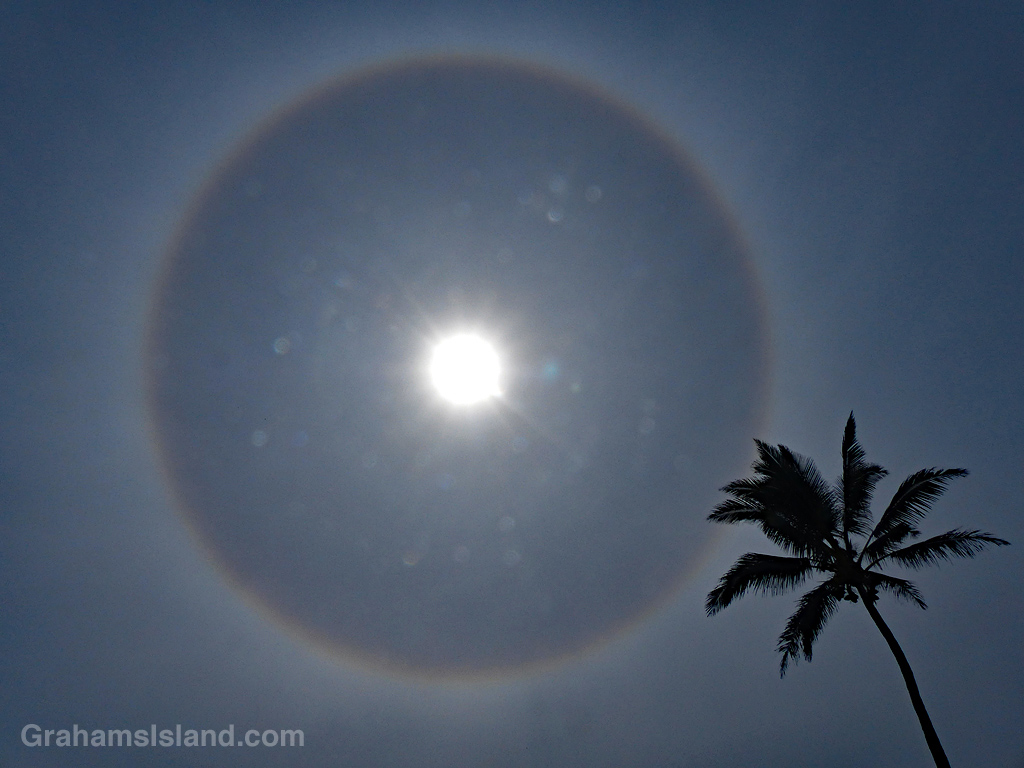
I was about to set out on one of my regular walks at Upolu, when I looked up and saw this halo around the sun. It’s the first I’ve seen here (which doesn’t mean there haven’t been others).
In days of yore, halos were considered a sign of impending bad weather. In this case, there’s some evidence to back that up. The ice crystals that cause halos are found in clouds, high in the troposphere, and these clouds are often a sign of an approaching weather front. Sure enough, the next day was fairly wet though, ironically, not in the area where I saw the halo.
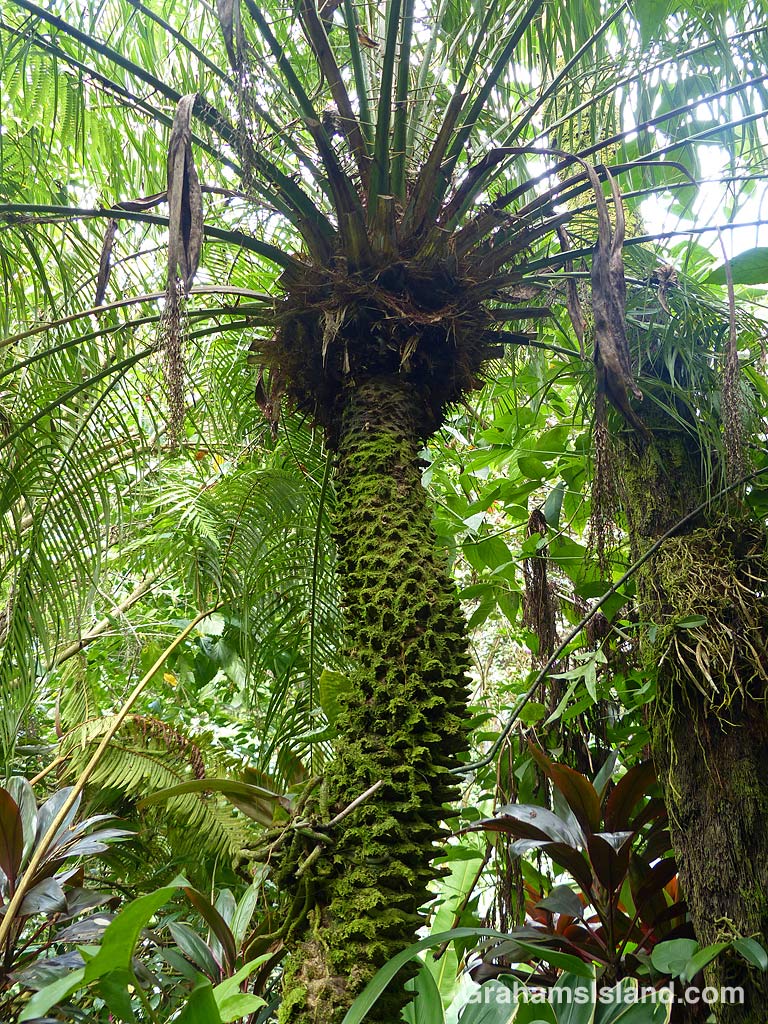
This is a dwarf date palm (Phoenix roebelenii), which I like particularly for its nobbly trunk. It hails from Vietnam and Thailand an is also known as pygmy date palm or miniature date palm

This week’s Sunday Stills challenge theme is ‘Green Macro or Close-Up.’ See more offerings here.
Here’s a green anole (Anolis carolinensis) perched on a green ti leaf so that I could take its photo (possibly). Light greens in the sun, dark greens in the shadow. With all this, I can forgive the anole its powder blue eye-shadow.


This week’s Sunday Stills challenge theme is ‘Country or State Flower.’ See more offerings here.
The country flower for the USA is the rose and I don’t have photos of those. The state flower for Hawaii is the hibiscus and, while I have lots of those, they’re all of Chinese hibiscus (Hibiscus rosa-sinensis). The state flower is the native yellow hibiscus (Hibiscus brackenridgei) and I have none of those. The native hibiscus is not often seen in the wild and is currently considered an endangered species, but it is used as an ornamental in domestic gardens.
Having struck out on the two proper responses to this challenge, I’ve chosen to post photos of the official flower of the Big Island, the red ʻōhiʻa lehua (Metrosideros polymorpha). A member of the myrtle family, ʻōhiʻa lehua is endemic to Hawaii. It’s one of the first trees to colonize lava flows. It’s able to survive in such a tough environment because its roots grow down into lava tubes and other voids in the lava and tap into the moisture there.
Recently, ʻōhiʻa trees have been attacked by a fungus which can cause the trees to die within a very short time. This disease, known as Rapid ‘Ohi’a Death, is caused by two new types of Ceratocystis fungus.

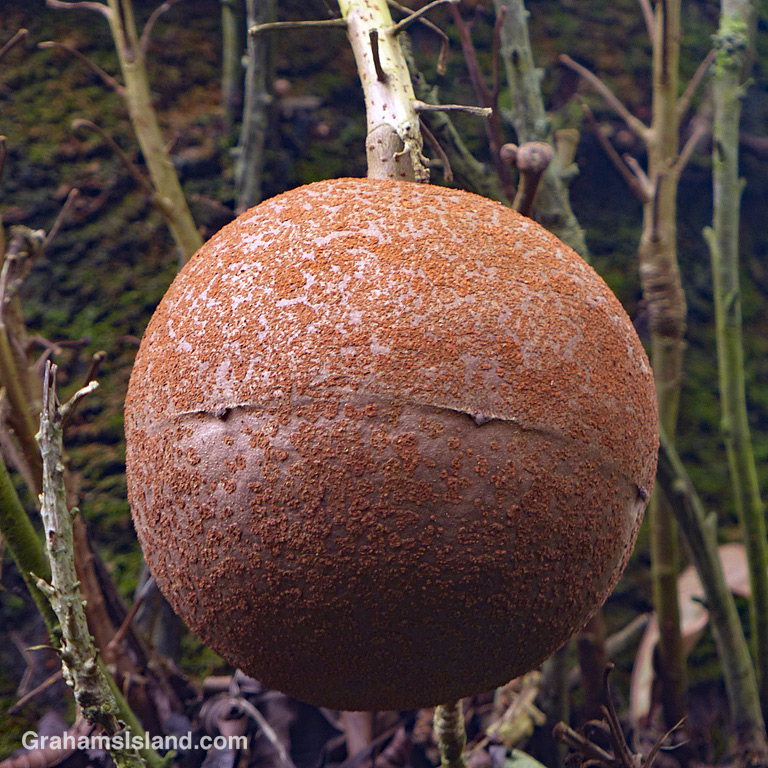
I have posted photos of the flower of the cannonball tree (Couroupita guianensis) before (here, here, and here). But the flowers aren’t what gives the tree its name. It’s the woody cannonballs that are its fruit.
In these photos, a cannonball tree is loaded with fruit. The flowers, and subsequent fruits, grow directly off the trunk. And the fruit itself, well it’s not hard to see why it gets its name. When the fruit falls from the tree it usually breaks open. The pulp and seeds are eaten by animals which go on to disperse the seeds.
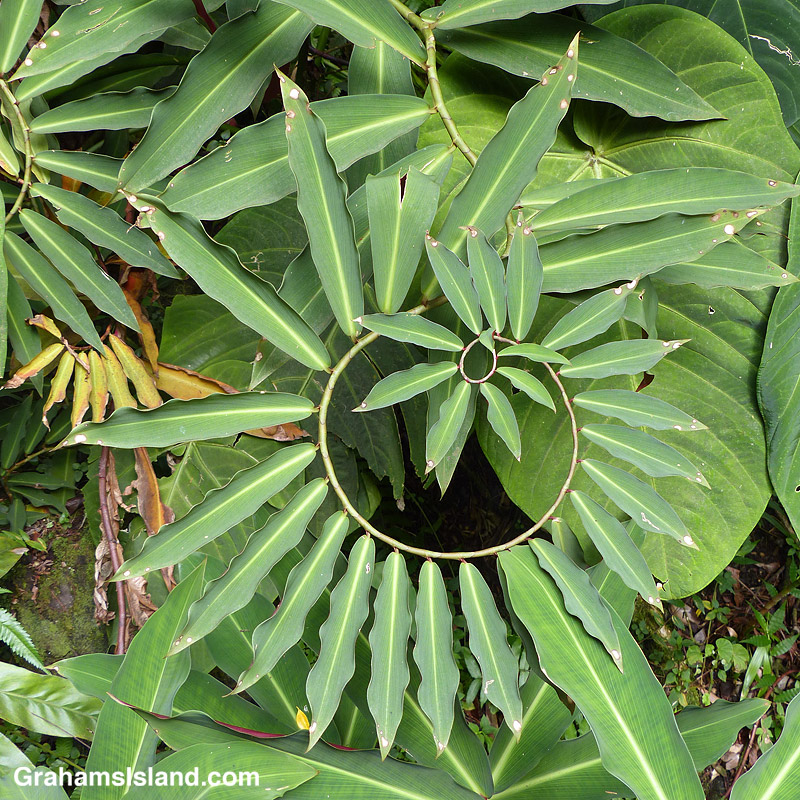
The leaves of what I think is philodendron goeldii spiral upward in a distinctive way.
 Graham's Island