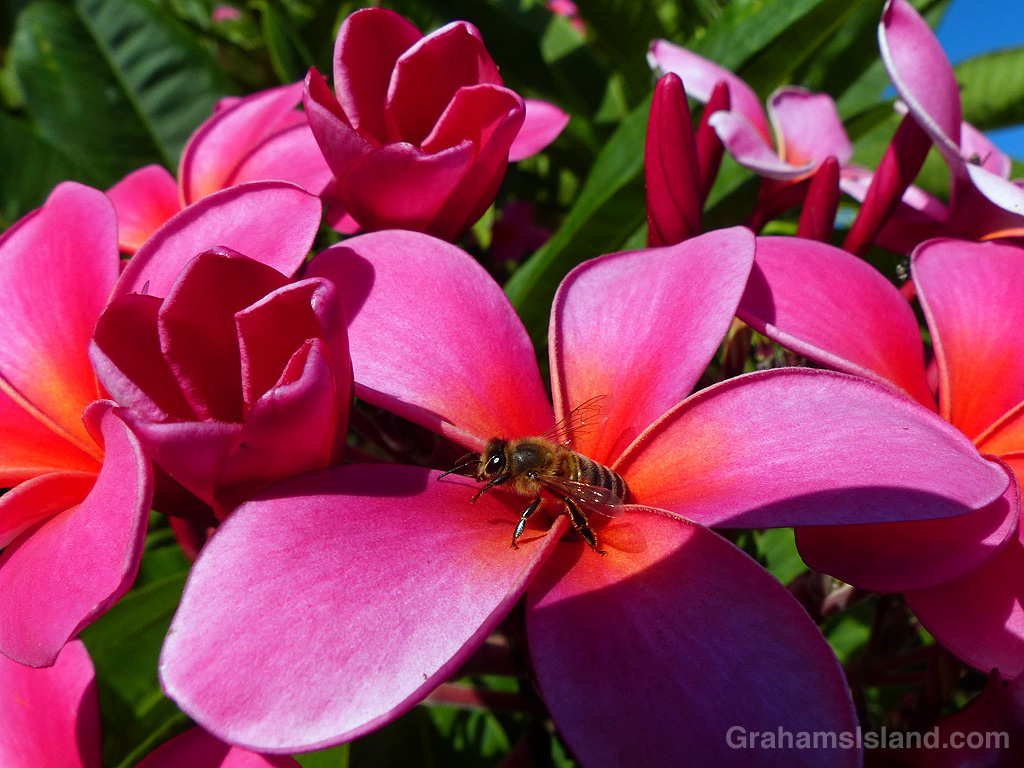
A bee forages on a red plumeria flower.

A bee forages on a red plumeria flower.

Earlier this month, I got up in the wee hours to view the Quadrantids meteor shower, with the idea of taking photos. My camera isn’t the greatest for this, but in the event, it didn’t matter. I caught a peripheral glimpse of one meteor and that was it.
Still, the effort wasn’t without its rewards. The sky was clear and starry, and I liked this scene of the illuminated building, the large kiawe tree, and the dark, starlit sky.
This is my third post on this week’s Sunday Stills challenge theme of ‘Yin-Yang.’ See more responses here.
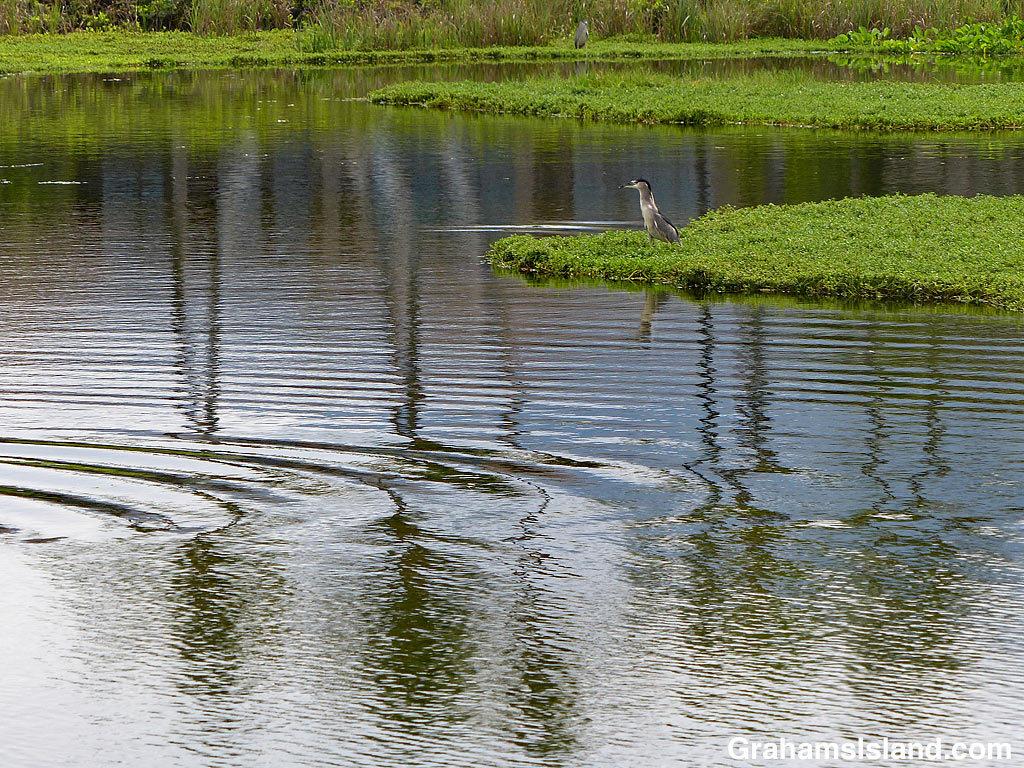
Yesterday, I posted (here) a response to this week’s Sunday Stills challenge theme of ‘Yin-Yang.’ (See more responses here.)
This is my second offering on the theme, which also features light and dark, but also stillness and movement – the stillness of the herons (there’s a second one in the background) and the movement of the rippling water. I like how the second set of ripples disturbs the first set and the reflections of the palm trees.
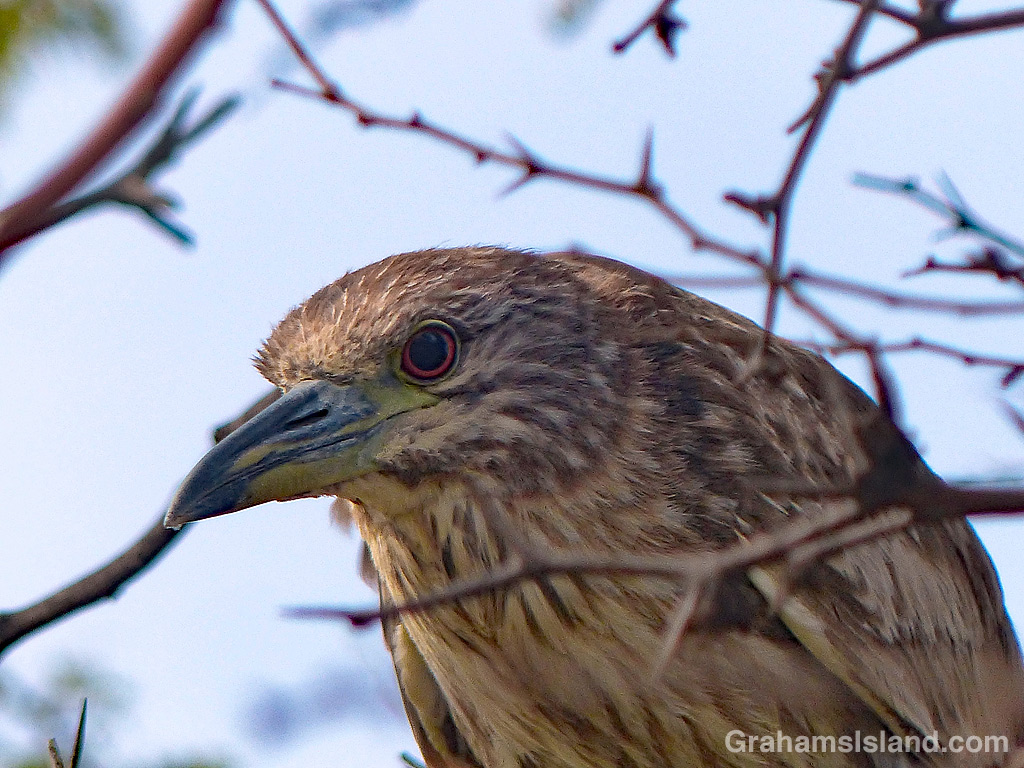
The intense stare of a juvenile black-crowned night heron. This heron was a regular visitor to this kiawe tree, and its sharp thorns, for a couple of weeks.
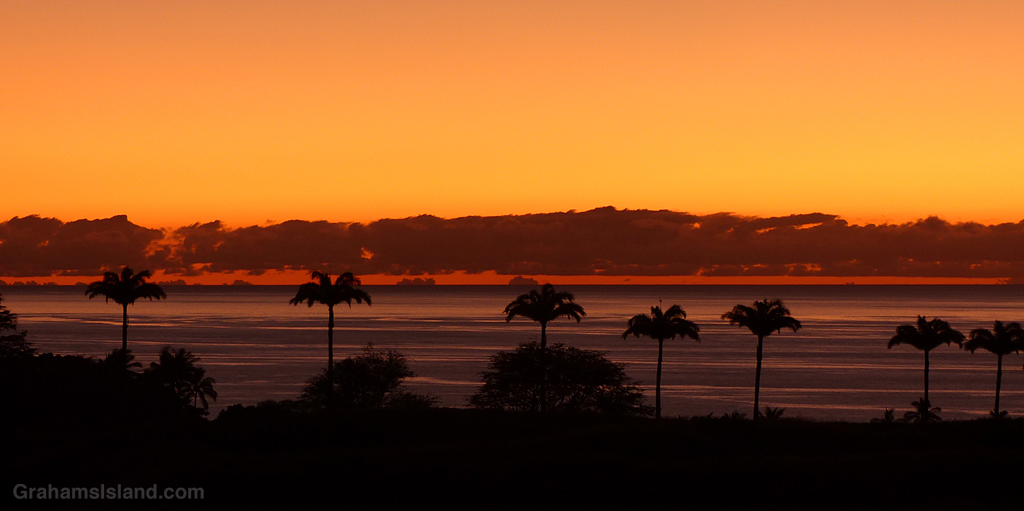
As the sun sets on the year 2019, here’s a photo of palm trees silhouetted by a post-sunset sky.


On a recent foray into Hawi to get photos for last week’s Sunday Stills challenge (here), I took these photos of the Kohala Welcome Center. This is the place to get information about North Kohala for visitors en route to Kapaau and Pololu, which marks the end of the highway.
On this particular evening, the welcome center was illuminated by its Christmas display and a full moon, which also highlighted the palm trees that tower over that location.

This week’s Sunday Stills challenge theme is ‘Holiday Decor.’ See more offerings here.
This theme forced me outside after dark, something of a rarity these days. As usual, when I walked into Hawi, I thought, ‘I should do this more often.’
Here are a couple of the downtown buildings illuminated for the season. In truth, this was pretty much it for holiday trappings, but it’s still a good deal more than at my house!
Also posted, belatedly, in response to the last Friendly Friday challenge theme of 2019, ‘Christmas Preparations.’ See more responses here.

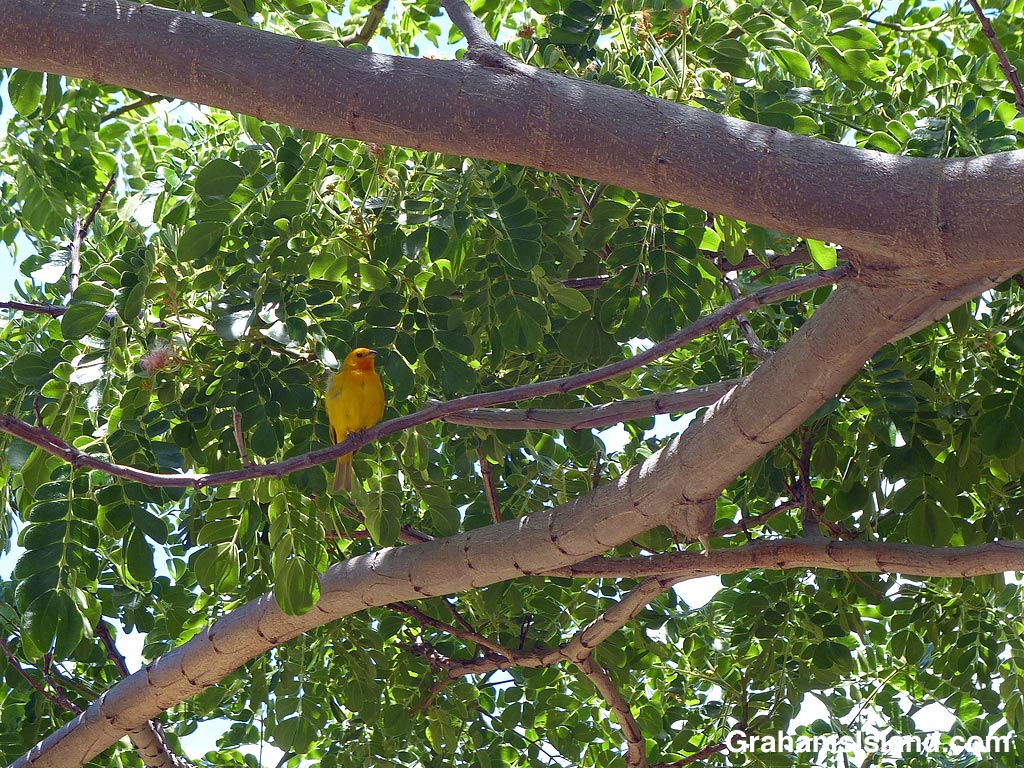
Monkeypod trees are renowned for their spread, creating large shady areas below. They also provide habitat for many birds including this saffron finch, enjoying a rest in the relative cool of the lower branches.
 Graham's Island