There’s nothing like spending some time on the beach at Kohanaiki Beach Park. Even when it’s busy it never seems crowded. All a person needs is a chair and a beach umbrella for shade and then you can sit back, relax, and read a book or watch surfers trying to catch a wave.
This week’s Sunday Stills challenge theme is ‘Signs of Autumn.’ See more responses here.
We’re a little short on autumnal changes here. I tend to mark seasonal changes in terms of wildlife, such as the return of humpback whales in winter. For autumn, the return of Pacific golden plovers from their summer breeding grounds in Alaska is probably the most notable.
Outside of wildlife, the shortening of the days does register here. It’s not as dramatic as when I lived in Washington State, with summer sunsets around 9 p.m. and winter darkness setting in a little after 4 p.m.. In Hawaii, the equivalent times are 7 p.m. and 6 p.m., not such a big difference.
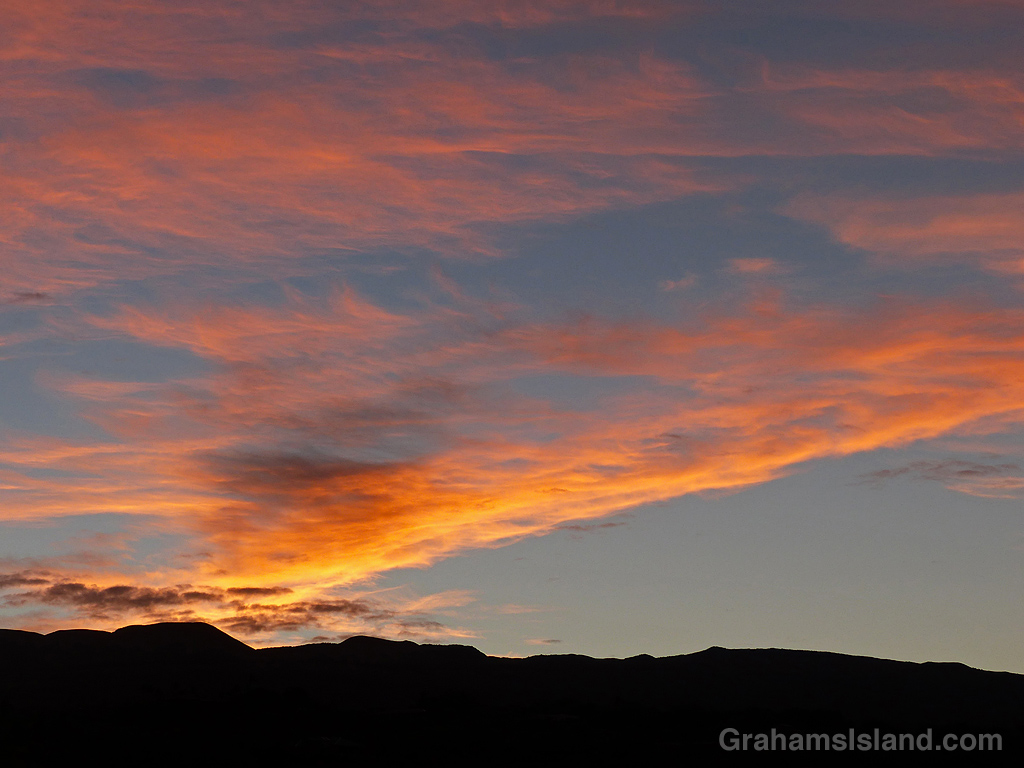
But it does make a difference for my morning commute, and autumn signals the time when I usually leave home when it’s mostly dark and arrive at work when it’s mostly light. I also try and give myself a little extra commuting time so I can pull over and take photographs when the sunrise merits it, such as this streaky red sunrise over Kohala mountain.
Kona Brewing is a local brewery, founded in 1994. They’ve changed hands a couple of times since then, most recently being hived off to PV Brewing Partners by previous owners, Craft Brew Alliance, so that entity could be swallowed by beer giant Anheuser-Busch. PV Brewing Partners is based in Kansas City, which is probably not the first place to spring to mind when thinking of white sand beaches and surfing.
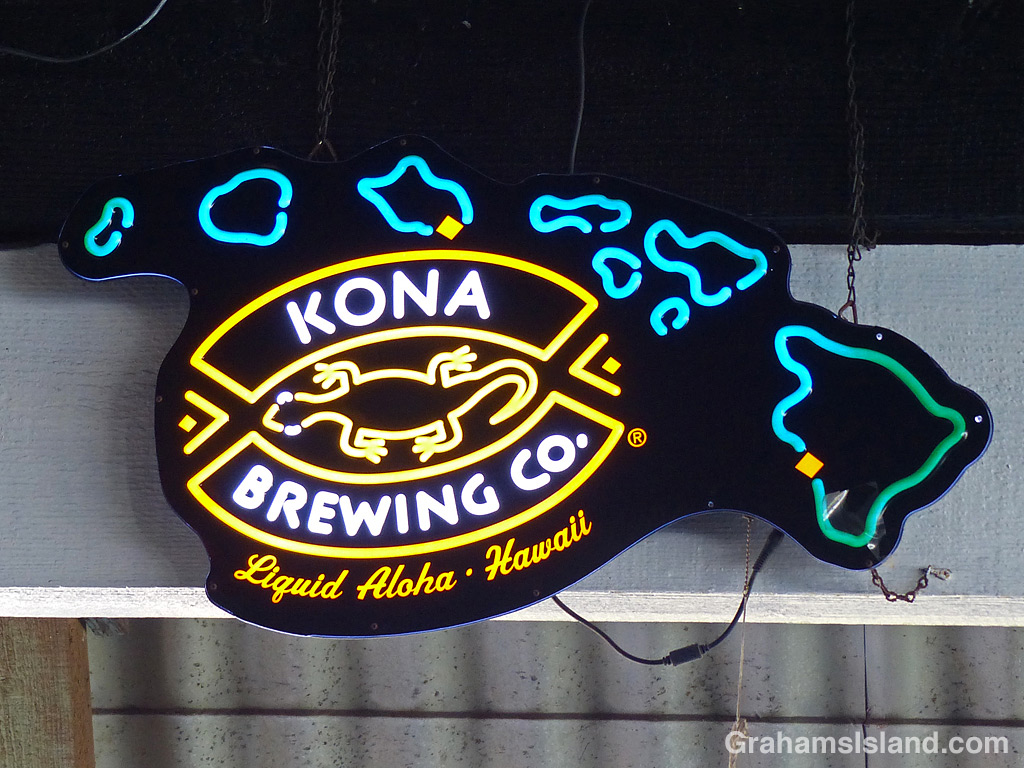
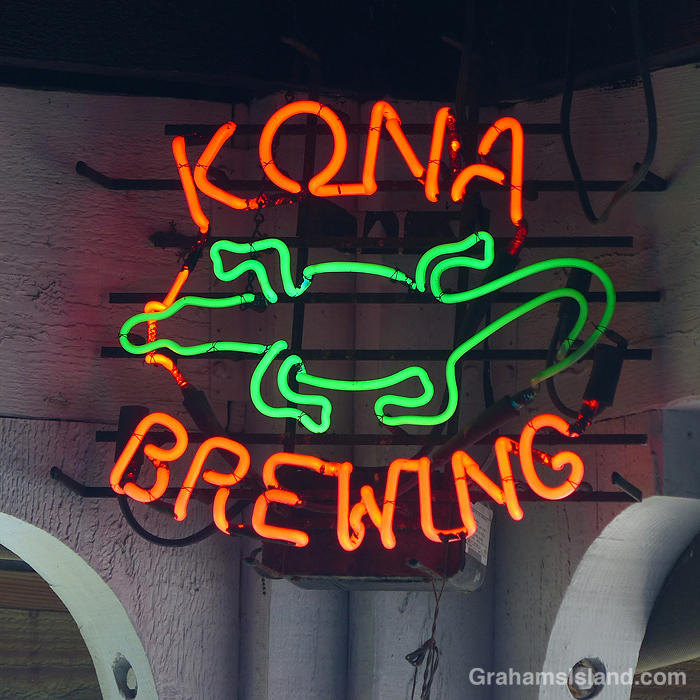
But never mind. The point is that their beer is pretty good and their Castaway IPA is generally my beer of choice when I’m out and about, which isn’t often. And, like all beer companies, they have neon signs which they distribute to stores, bars, and restaurants. These are a couple of the signs.
I prefer the top one. When I look at the red and green one, I always think the creature is an alligator, something to do with the head being the wrong shape and the lack of toes. In the top version, the gecko is more recognizable and the addition of the islands makes it a winner with me!
On my last visit to Kohanaiki Beach Park I noticed this dive boat a little way off shore. Not being a diver, I’m not familiar with the best spots for diving around the Big Island, but there are usually one or two boats to be seen here.
I’ve lived in Hawaii for more than nine years now and had previously never seen any of those most tropical of birds, the parrots. One reason for this is that parrots aren’t native to Hawaii, but a variety of different parrots have become established here.
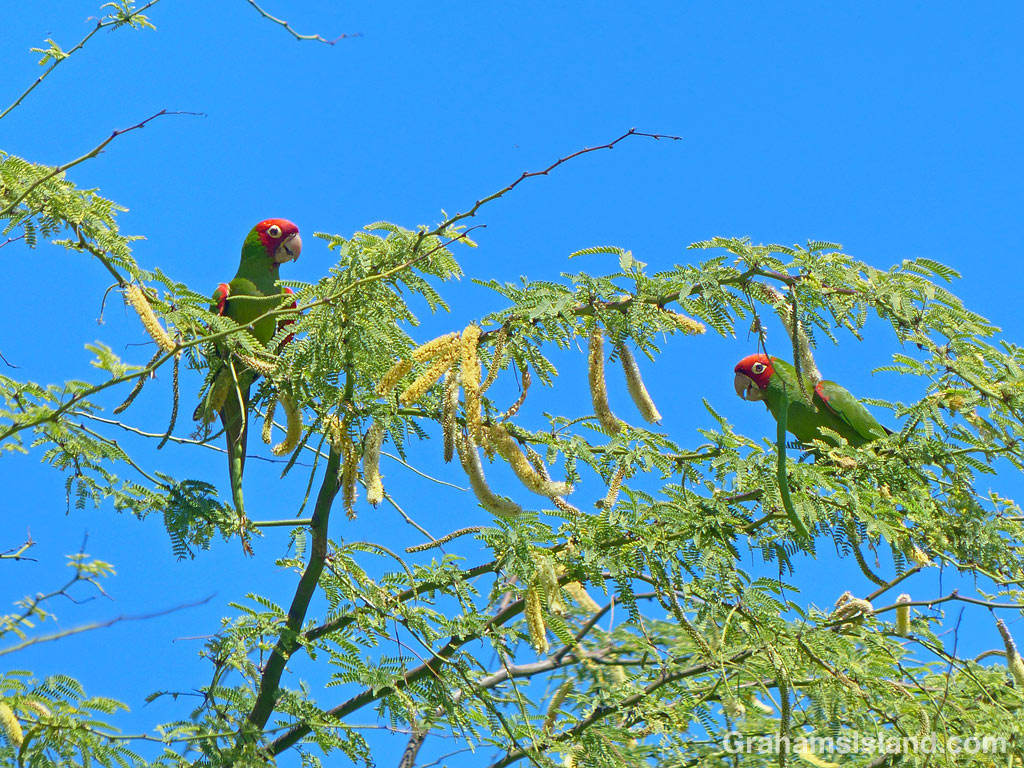
Red-masked parakeets were first seen here in 1988 and are probably the most common parrot on the Big Island. They’re natives of Ecuador and Peru, but are now fairly well established on the Kona coast, which is where I saw this a pair, in Kohanaiki Beach Park. While they forage along the coast here, they roost high up on the slopes of Hualalai Volcano.
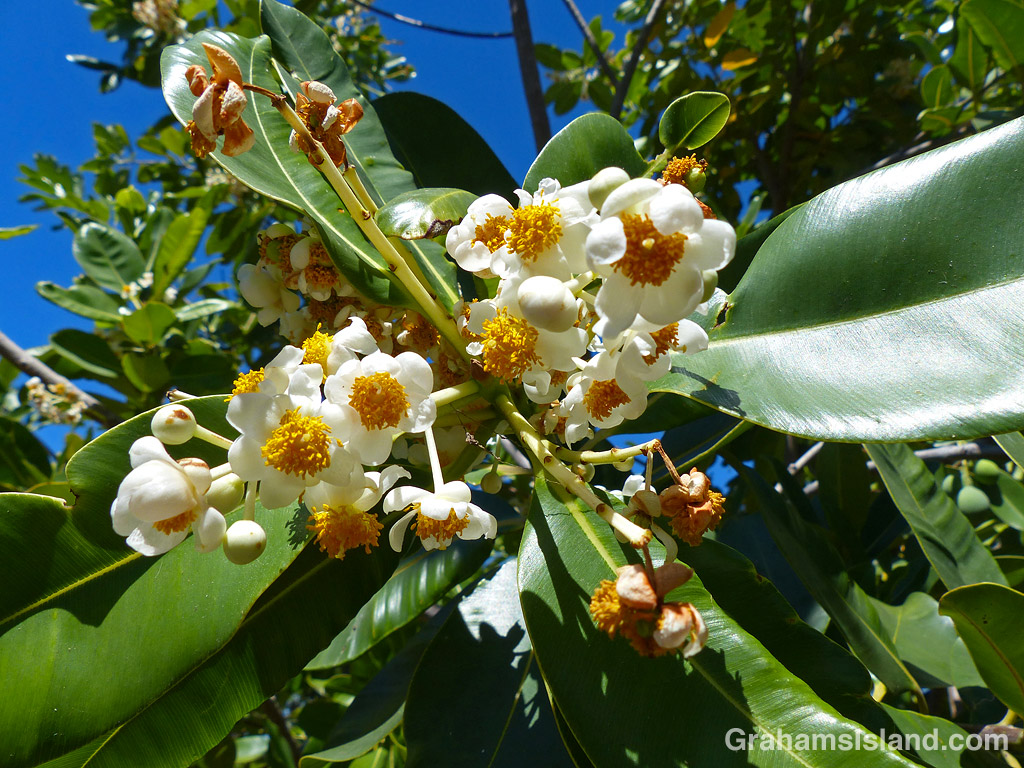
Alexandrian laurel (Calophyllum inophyllum) is known as Kamani in Hawaii. It’s a canoe plant, which means it was brought to Hawaii by the early Polynesian voyagers. They would have carried this evergreen tree because of its importance for building their ocean-going outriggers.
The small white and yellow flowers usually bloom twice a year and are followed by round fruits with a single large seed.
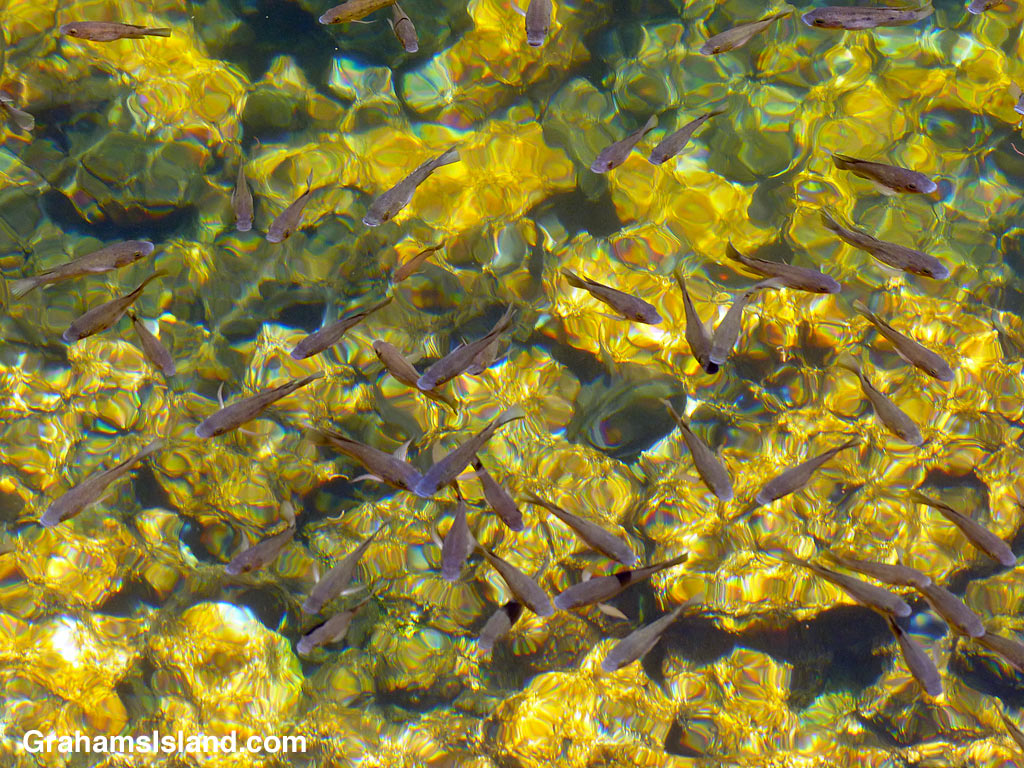
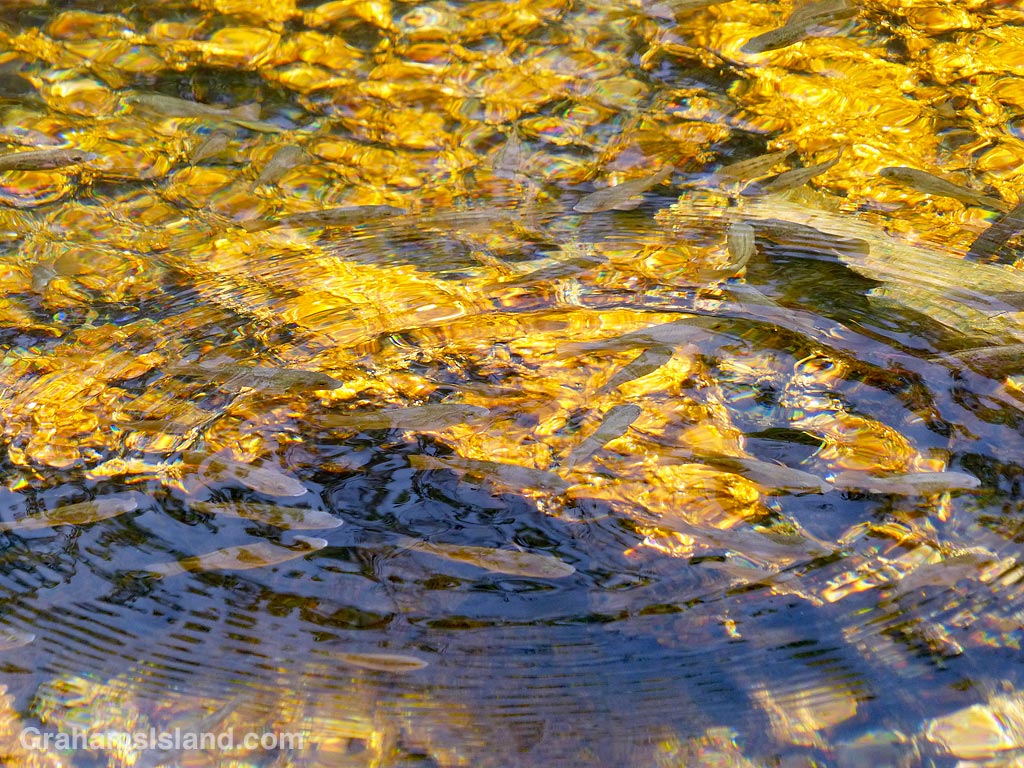
This week’s Sunday Stills challenge theme is ‘Harvest Gold or Citrine.’ See more responses here.
Here are a couple of photos of small fish in the Golden Pools of Keawaiki. The gold color has nothing to do with harvests but is produced by the algae there.
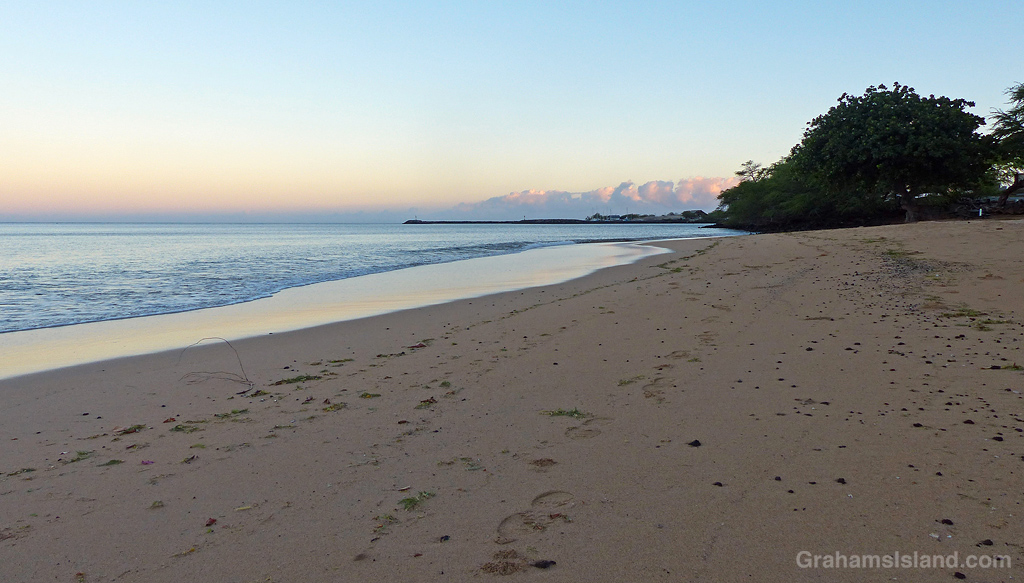
A few days ago, I posted about a heron encounter (here) when I didn’t have enough time to walk along the coast before going to work. I took this photo when I did have that time.
This is a view from Spencer Beach Park towards Kawaihae Harbor. The footprints are mine. There were no others. As a start to the day, it doesn’t get much better.