I saw this endemic Hawaii Amakihi on the slopes of Mauna Kea, feeding at Mamane flowers. The Hawaii in the name refers, not to the state, but to the island of Hawaii, otherwise known as the Big Island. There are different species on Oahu, Maui, and Kauai.
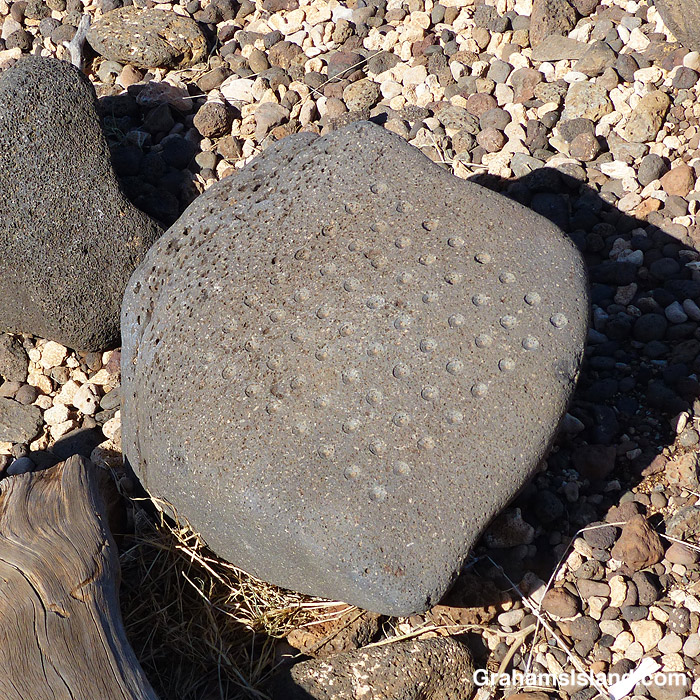
Kōnane is an old Hawaiian game with similarities to checkers or draughts but with more complications. It’s played on a board, or papamū, which can vary in size and material.
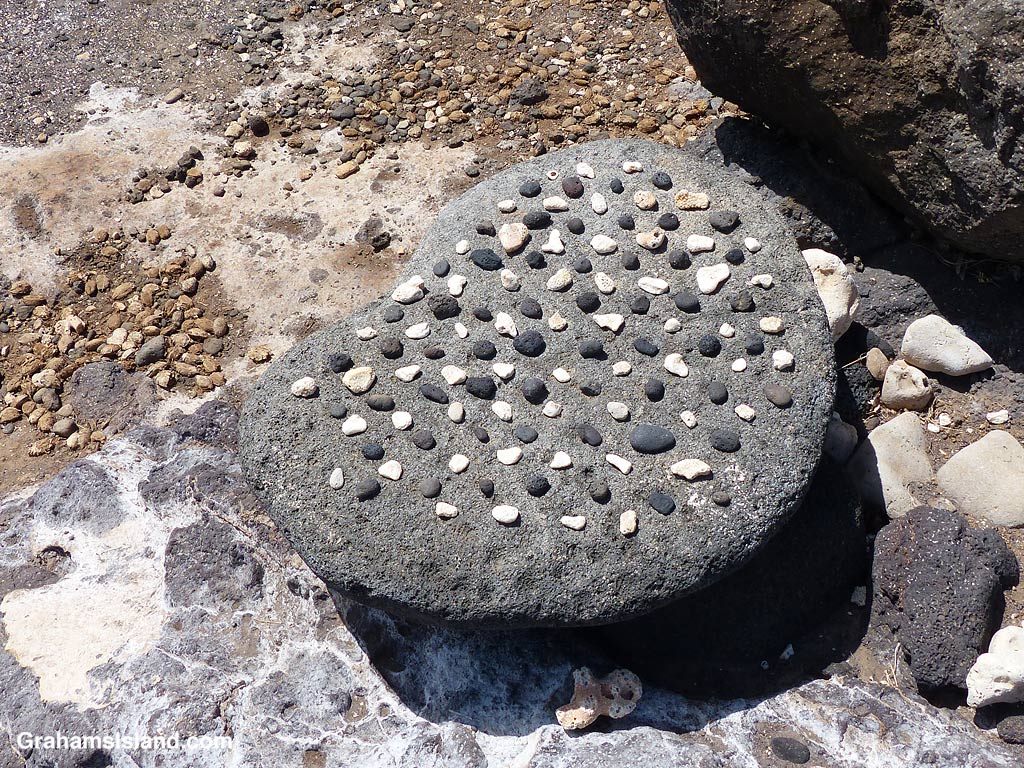
Older boards were often made in suitable rocks by creating hollows for the pieces to sit in. Sizes varied with most being rectangular with sizes such as a 14 by 17 configuration. The bigger the board, the longer the game. Game pieces were small pebbles of black lava and white coral. These days, wooden boards are common and some are made of cloth for portability. Square boards are more usual now such as an 8 by 8 configuration.
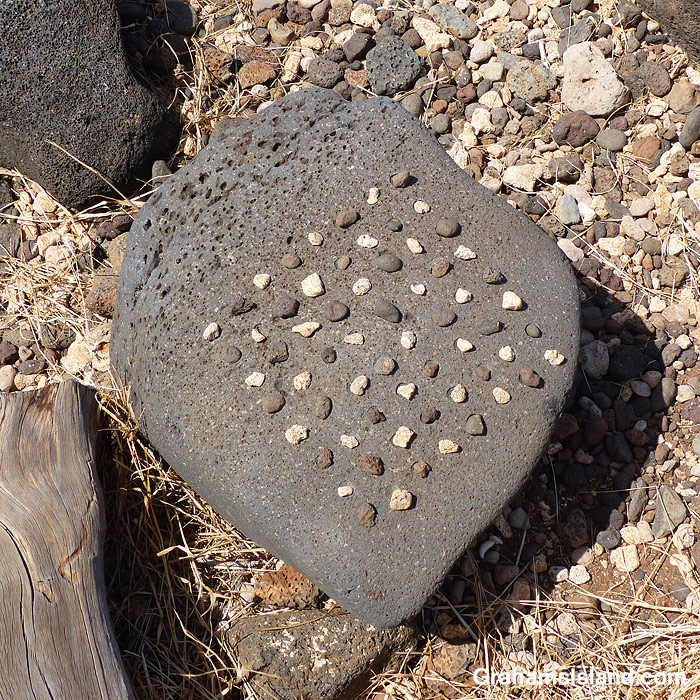
These photos were taken at Lapakahi State Historical Park, which was the location of an old Hawaiian village. The papamū in the top photo and the slider was probably made relatively recently judging by the smooth hollows for the pieces, but the board in the bottom photo was probably used by inhabitants of the village and show that boards weren’t necessarily a regular shape. Such irregularities only added to the challenge of the game.
To play kōnane, the board is set up as in the photos with black and white pieces on alternating squares. A correctly set up board should show all one color pieces on a diagonal line. After colors are chosen and the first two pieces removed, players alternate turns in jumping over the other player’s piece or pieces, removing those that have been jumped. Moves can be made up, down, or to the side, but not on the diagonal or around corners. The object of the game is to be the last player to make a move.
Kōnane was hugely popular in Hawaii, but was frowned on by missionaries who disapproved of the unproductive time spent playing and the rampant gambling on games. These days, it’s becoming more popular again, with tournaments and online games being held.
For more information about kōnane, go to hawaiiancheckers.com.
I saw this Erckel’s Francolin walking up an angled tree trunk on the side of Mauna Kea. It got to the spot in the top photo, had a look around, and then walked back down again. Francolins prefer to walk everywhere because, being game birds, they know that when they take wing, people try and shoot them.
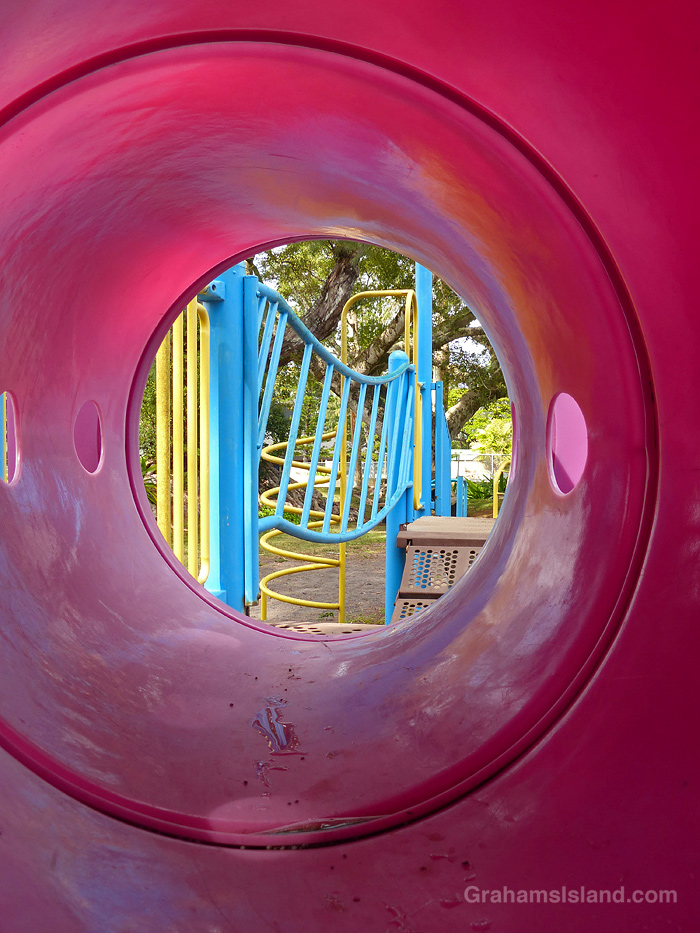
This week’s Sunday Stills challenge theme is ‘Pets and Playgrounds.’ See more responses here. I’ve gone for the playgrounds part of this since I don’t have pets, unless you count the rat in the attic!
Just waiting for the ball to drop.
As you might expect, I’ve managed to find seven photos with nary a single human at play in them. Most of the photos were taken at Kamehameha Park in Kapaau. However, I also stopped to take photos at a park in Waimea because I thought it was deserted, but I discovered there were a few kids with parents there. So I was careful lining up my photos. These days, an older guy taking photos in a kids’ park stands a good chance of being arrested or shot!
Now you can count to ten in Hawaiian!Slide Charlie Brown, slide!Light at the end of the tunnel.Ready for a swinging time.After the ballgame.
My immediate response to this sign, at Lapakahi Historical Park, was to think, ‘You mean, before I fall in the water.’ In truth, the sign is there because the land to the right of it is no longer park property. I’m just not sure why they oriented the sign this way, but there’s a nice, simple bench next to the sign where one can contemplate the matter







 Graham's Island