Category Archives: Parks

Fissure 8

This time last year, the newest eruption of Kilauea Volcano was still going strong in the Puna district of the Big Island. The previously active vents, in Halemaumau Crater and at Pu’u O’o, drained of lava at the end of April. Lava then moved underground, down the east rift zone, toward the southeast tip of the island. It resurfaced in May in Leilani Estates.

By the end of May, 24 fissures had discharged lava. Two of those sent flows down to the coast, but at the end of May the main eruption settled on Fissure 8. A river of lava flowed northeast, inundating Highway 132 and reaching the ocean at Kapoho Bay in early June. This flow continued into August, but by the end of that month all activity had more or less ceased. In all, more than 700 homes were destroyed during the eruption, but more than 800 acres of new land had been formed.

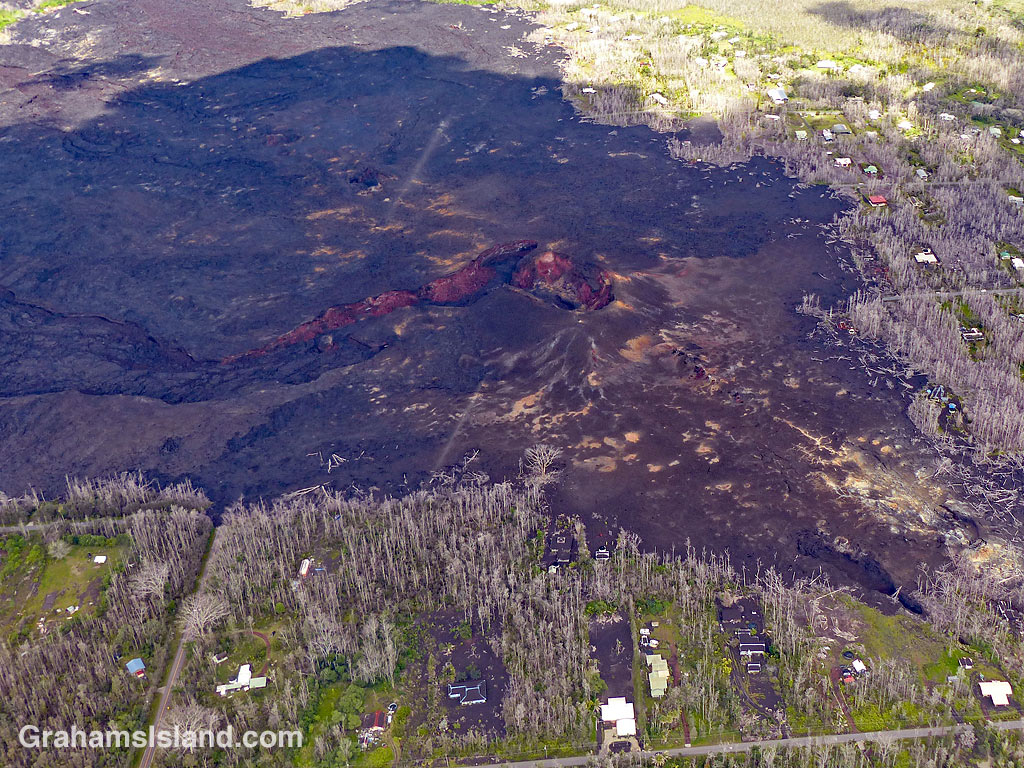
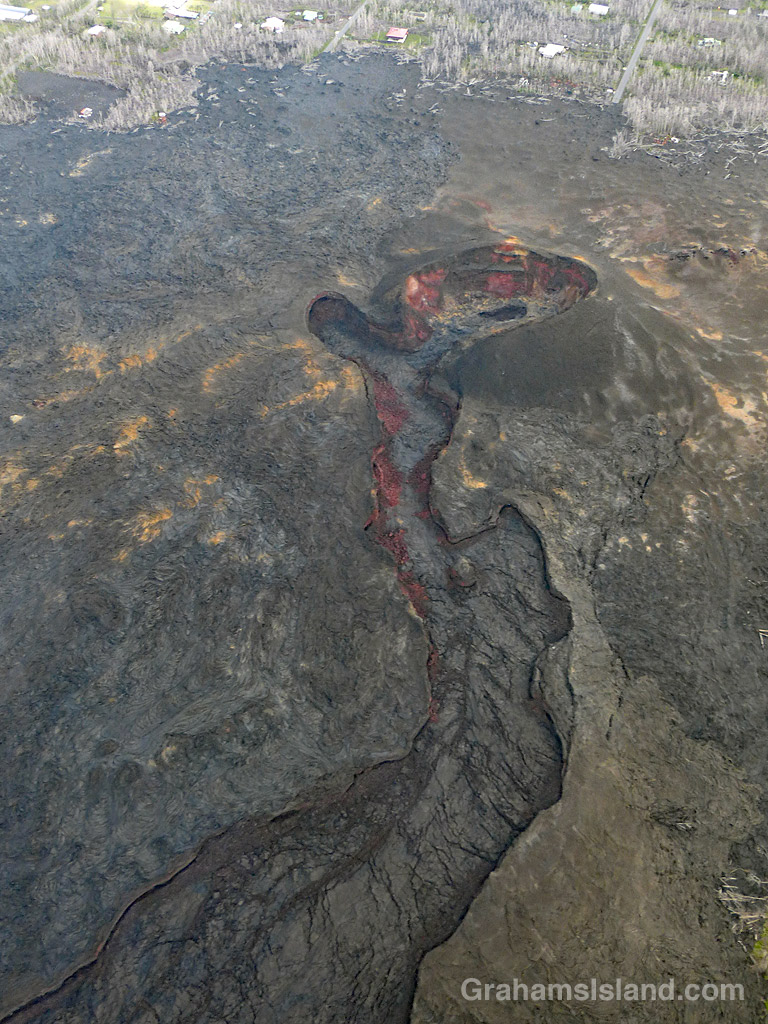
These photos show Fissure 8, the source of the main flow. The top photo shows Fissure 8’s location, bordered by houses in Leilani Estates that escaped destruction during the eruption. In the middle, the main crater and the ‘canal’ that channeled the flow toward the coast. Below, another view of Fissure 8 and the wasteland of destruction surrounding it.

PBS’s NOVA put out a show about the eruption earlier this year with some great information about what was actually going on during the eruption. It might be accessible on their site, PBS.org, or search online for the title of the show: PBS Nova Kīlauea: Hawaiʻi on Fire.

Ruddy turnstones

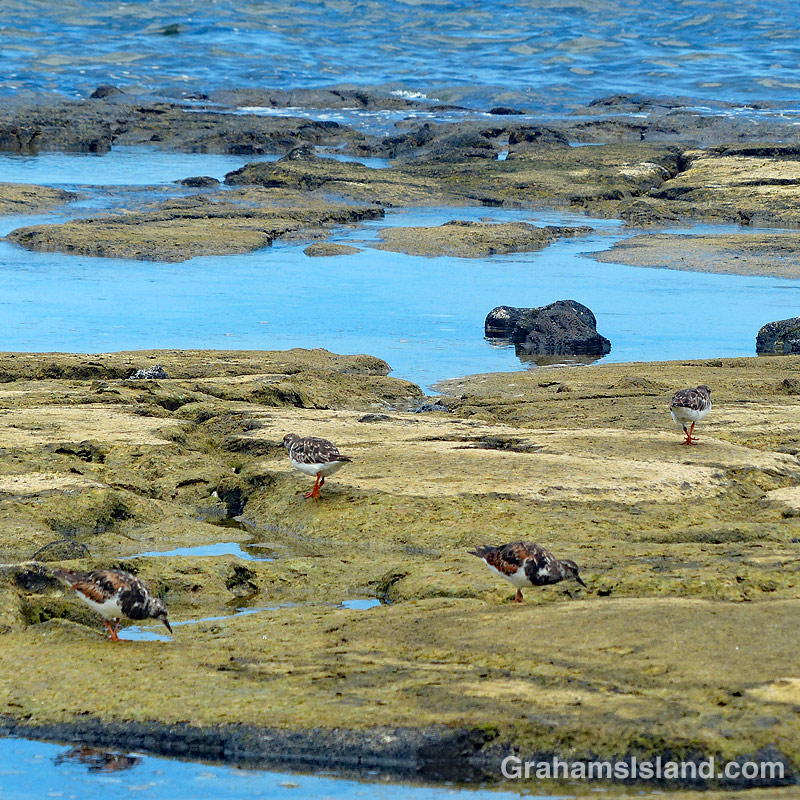
Ruddy turnstones are one of several species of birds that summer in Alaska and winter in Hawaii. Here, the bird is known as the ‘Akekeke, the name resembling its call. In the photos, this small group of ruddy turnstones was foraging along the Kona coast at low tide, looking for invertebrates to eat.

Two views of a beach at Kaloko-Honokohau National Historical Park

These two photos were taken at different times, different years in fact, of one of the beaches at Kaloko-Honokohau National Historical Park. The park is just north of Kailua Kona, the largest population center on the west side of the island. It’s a park I visit at least two or three times a year because it’s easily accessible and is a good place to see turtles, on the beach or in the water, and also birds on ’Aimakapa Fishpond, on the inland side of the sand.

The top photo looks north (that little lump on the wet sand is a resting green turtle). The bottom photo looks south (those little white specks are people). The thing is, these two photos are how the beach looks every time I visit. A few people will walk along it, but most go to the more protected beach at the south end of the park. And this situation is similar to many on the Big Island. If you’re willing to walk a quarter or half mile from any beach nearest the parking lot, then peace and solitude is almost certainly yours.

For more information about Kaloko-Honokohau National Historical Park, go to https://www.nps.gov/kaho/index.htm or bigislandhikes.com/kaloko-honokohau-park.

Kilauea Iki Trail

This week’s Sunday Stills challenge theme is ‘Paths.’ (See more offerings here.)

Kilauea Iki Trail is one of the more popular trails in Hawaii Volcanoes National Park. But last year’s volcanic activity, with numerous earthquakes, resulted in the park being closed for several months. Even after it reopened in September 2018, many parts of the park remained closed because the areas were too unstable to be opened to the public.

The Kilauea Iki Trail was one of those areas along with Thurston Lava Tube and Jaggar Museum. The latter two locations are still closed and Jagger Museum may never be reopened, but the Kilauea Iki Trail is currently listed as mostly open. Given that this is a loop trail, it would be wise to check ahead and find out what ‘mostly open’ means.

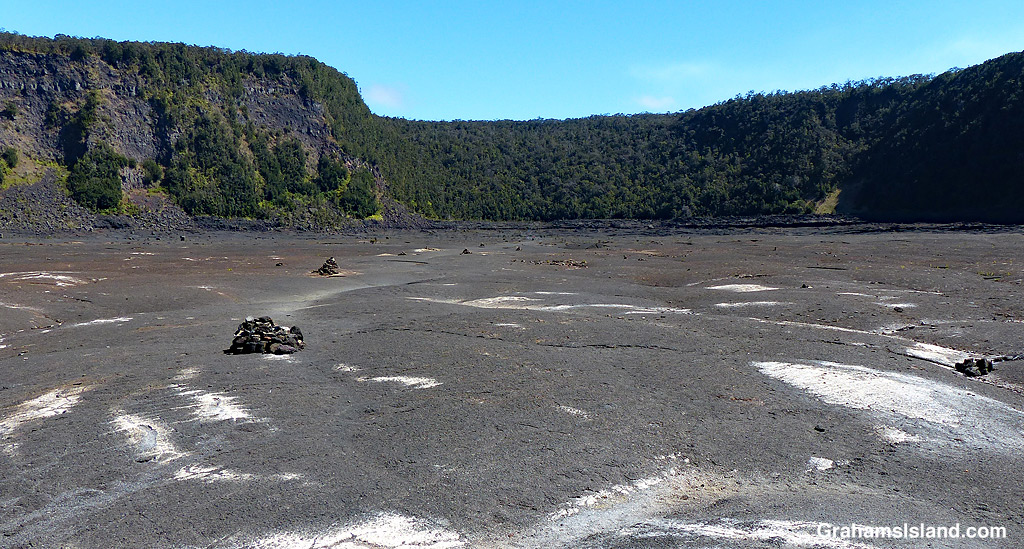
These photos were taken during a hike I took a couple of years back. The top photo shows the view from the part of the trail that follows the rim of the crater before it descends to the crater floor. The second photo shows two hikers heading out across the crater floor. The dark hill in the background is Pu‘u Pua‘i where a 1959 eruption poured lava out into the crater. The third photo shows hikers near the center of the crater where the path winds through broken areas of the crater floor. Below, cairns mark the trail across a flat area of the crater that leads to the switchback trail which takes hikers back up to the crater rim.

For more information about Hawaii Volcanoes National Park, go to nps.gov/havo/.

Halema’uma’u Crater

This week’s Sunday Stills challenge theme is ‘Danger.’ (See more offerings here.) It seemed a suitable opportunity to post some photos reviewing on Kilauea Volcano’s last eruption, which began in May of last year.

The bottom photo, taken from the Jaggar Museum overlook, shows the scene on the morning of April 25, 2018. Lava in the active vent in Halema’uma’u Crater, at Kilauea’s summit, was just below the crater floor and had been overflowing into the crater in previous days. The overflow is the large dark area to the right of the glowing lava.

By early May, the lava level in the vent had dropped around 1,000 feet. This drop occurred at the same time that lava disappeared from Pu’u O’o vent. Not long afterwards, cracks opened in the ground at Leilani Estates, a housing subdivision in the southeastern part of the island. By the end of May, 24 fissures had opened in the area. The most prolific lava flow emanated from Fissure 8, which flowed to the ocean and created more than 800 acres of new land. However, more than 700 homes were destroyed by this eruption.

Meanwhile, back at the summit, the absence of lava in the vent in Halema’uma’u Crater resulted in a series of collapses of the crater floor. Each collapse triggered earthquakes and shot clouds of ash and toxic gas thousands of feet into the air.

The top photo shows Halema’uma’u Crater as it looks today. The crater is twice the size it was the year before and the floor, which was mostly flat, is now a huge cascading pit. In the upper left of the photo, the Jaggar Museum, where I stood to take the bottom photo, can just be seen. It was heavily damaged by the earthquakes, as were the parking lot and access road. It’s also much closer to the crater edge than it was. (Technically the crater edge is closer to it, since the museum hasn’t moved!)

The museum, along with the rest of the park, closed in May 2018, because of the eruption. While much of the rest of the park reopened in September, Jaggar Museum did not. There’s a good possibility it never will and that its fate will be the same as the portion of Crater Rim Drive in the middle photo. A significant length of that road, which used to encircle the whole summit caldera, was destroyed, including the section in the photo which slid, intact, into the crater.

Things have settled down since September 2018 and there has been no volcanic activity anywhere on the island since then. But Kilauea remains an active volcano and will undoubtedly erupt again. It’s just that no one knows exactly when or where that will happen.

White-faced ibis

I think this is a white-faced ibis. According to my bird book, Jim Denny’s A Photographic Guide To The Birds Of Hawai’i, it is an occasional visitor and all reports have been of juveniles or birds in non-breeding plumage. It also notes that it is very similar to the glossy ibis, but doesn’t include a listing for that bird in the book. So I’m going to stick with the white-faced ibis identity unless someone has a better idea.

This one was wading in the shallow of the lagoon behind the beach at Kaloko-Honokohau National Historical Park. The yellow float was one of several isolating an area where restoration work was taking place. The lagoon is a popular spot for many birds, both endemic and visiting.

For more information about Kaloko-Honokohau National Historical Park, go to https://www.nps.gov/kaho/index.htm or bigislandhikes.com/kaloko-honokohau-park/.

Mahai’ula Beach

This week’s Sunday Stills challenge theme is ‘Warmth.’ (See more offerings here.) Picture yourself stretched out on this beach. Imagine the sun warming the sand, warming you. Perhaps it’s time for a dip in the clear, turquoise waters. After you emerge, the sun quickly dries you. Time to retreat to the shade of the trees lining the beach, a cool beverage at your side, a book in hand (put that phone away). Repeat as necessary.

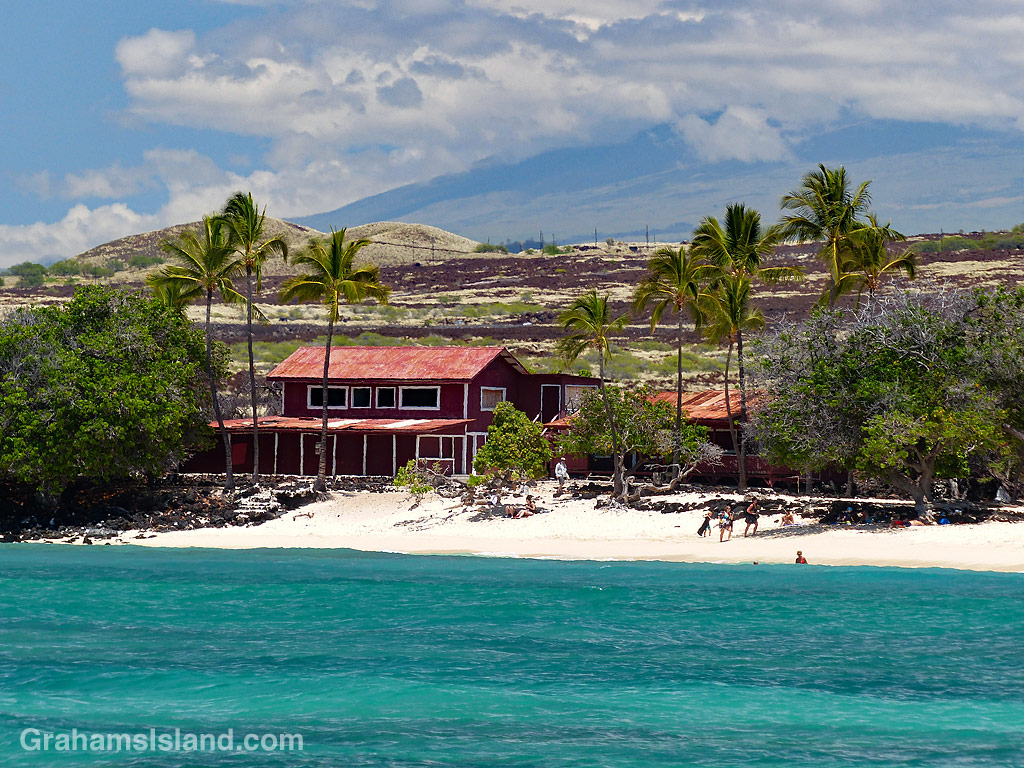
This is Mahai’ula Beach, one of the beaches at Kekaha Kai Park. The old house, in the top photo, was built in 1880 by John Kaelemakule, a successful fisherman and businessman. After he died in 1936, the property was sold to the Magoon family who owned the land until 1993. It’s now owned by the state of Hawaii.