The campground at Kiholo is located at the end of a gravel road and is only open Friday through Sunday nights. It has eight sites that must be reserved in advance. There are portable toilets, but no other facilities, and no water. So what’s the attraction? Well, let’s see if the photo offers any clues. (Sorry, but the yacht doesn’t come with the reservation.)
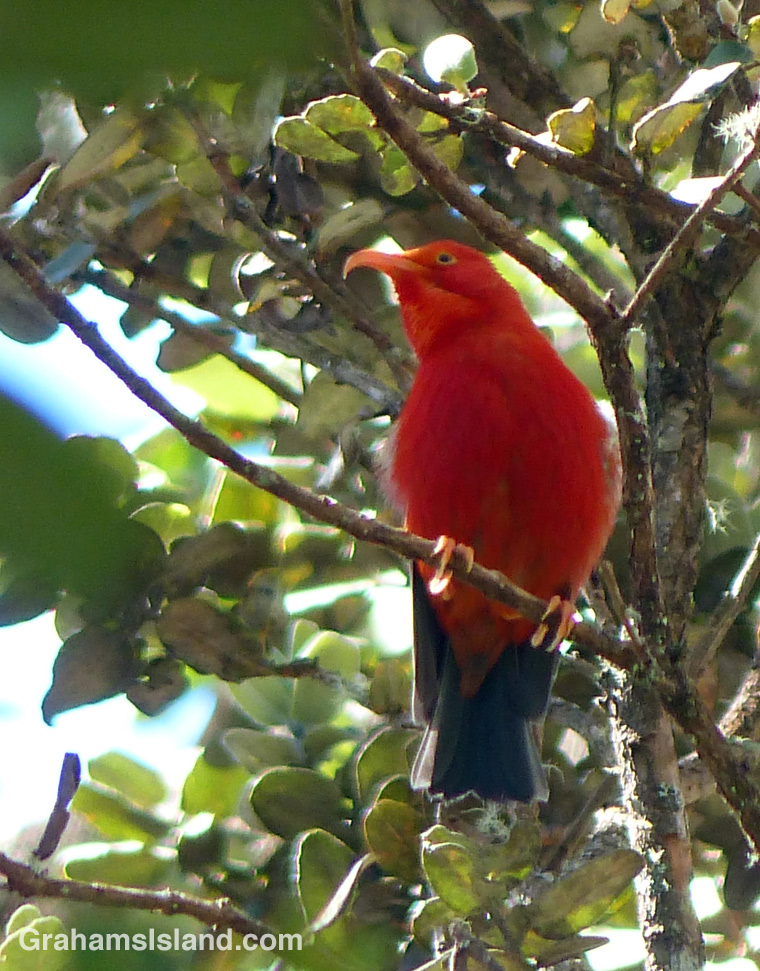
The I’iwi (vestiaria coccinea) is a native Hawaiian honeycreeper, which is still quite common on the Big Island, as well as on Kaua’i and Maui. I saw several while hiking the Pu’u O’o Trail, off of Saddle Road. The fact that they’re bright red and they have a quite distinctive call makes spotting them a bit easier for a non-birder like me.
More recent lava flows have yet to be reclaimed by vegetation. The greenery is a kipuka on the trail with Mauna Kea in the background.
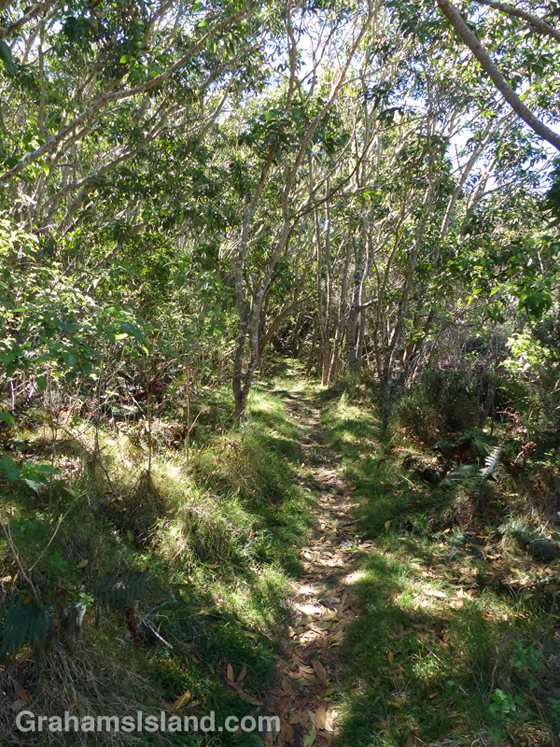
When the trail passes though a kipuka it offers shade and abundant bird calls.
An older lava flow has been softened by vegetation.
It took me a while to discover the various trails off Saddle Road. That’s because, from the road, they look like they’re mostly lava with some scrubby vegetation, but this is misleading. The kipukas (areas of land where lava has flowed around leaving it relatively untouched) are full of plants and a haven for wildlife including many endemic species. The whole area is an example of the cycle of destruction and regeneration that shapes this island and, indeed, the Earth.
The Pu’u O’o Trail, off of Saddle Road, has nothing to do with Kilauea’s Pu’u O’o vent. It refers to the Pu’u O’o Ranch on Mauna Loa. The trail was used for moving cattle from one grazing area to another.
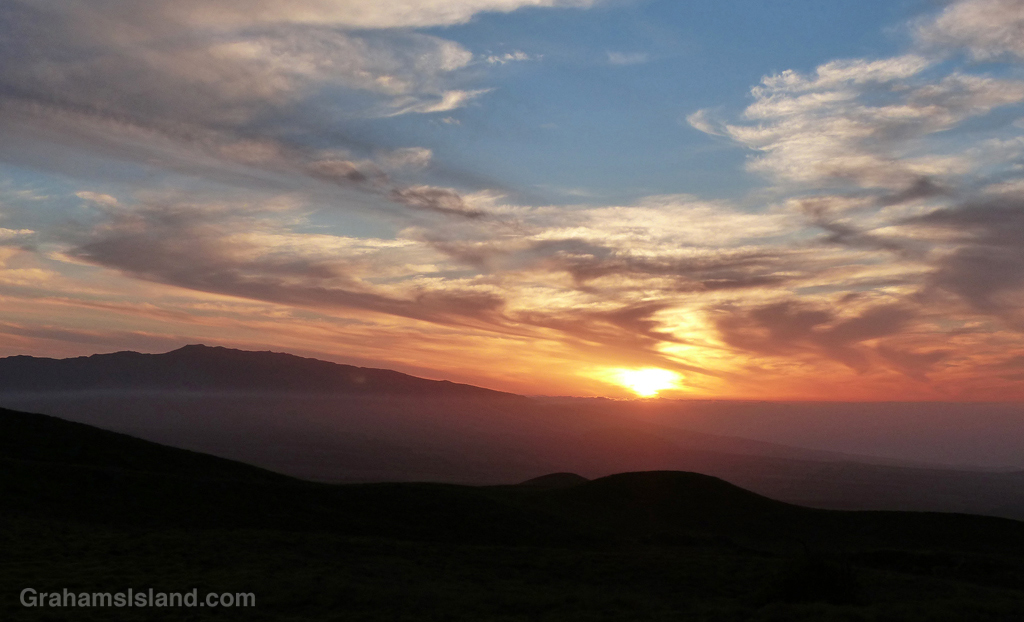
The trail alternates between crossing lava flows and passing through kipukas. Depending on the age of the flow, it might have a good deal of greenery on it, but more recent flows are stark lava fields. While the open lava flows offer great views of Mauna Loa and Mauna Kea (assuming it’s a clear day), the kipukas offer shade and are alive with bird calls, most of which I don’t recognize.
After about 4 miles the trail intersects with the Powerline trail and a loop can be made back to the start, or simply retrace your steps. Bear in mind that if the clouds roll in, which they do on a regular basis, the trail is a good deal harder to follow.
For more information about this, and other hikes on the Big Island, go to bigislandhikes.com.
Maui and Kohala Mountain as seen from Pu’u Ahumoa on the lower slopes of Mauna Kea. The structure on the left is what remains of an old beacon for low-flying aircraft.
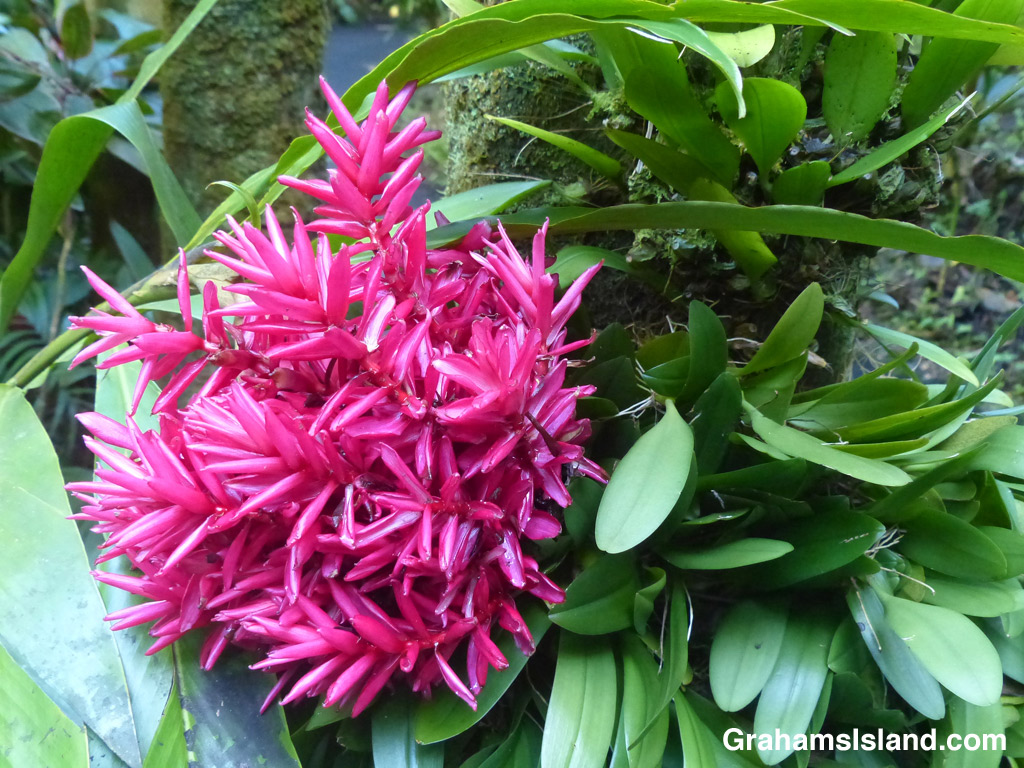
Alpinia purpurata is also known as red ginger. This bright red display is not actually the flower, but the bract. The flowers are small and white and will appear on the top of this.
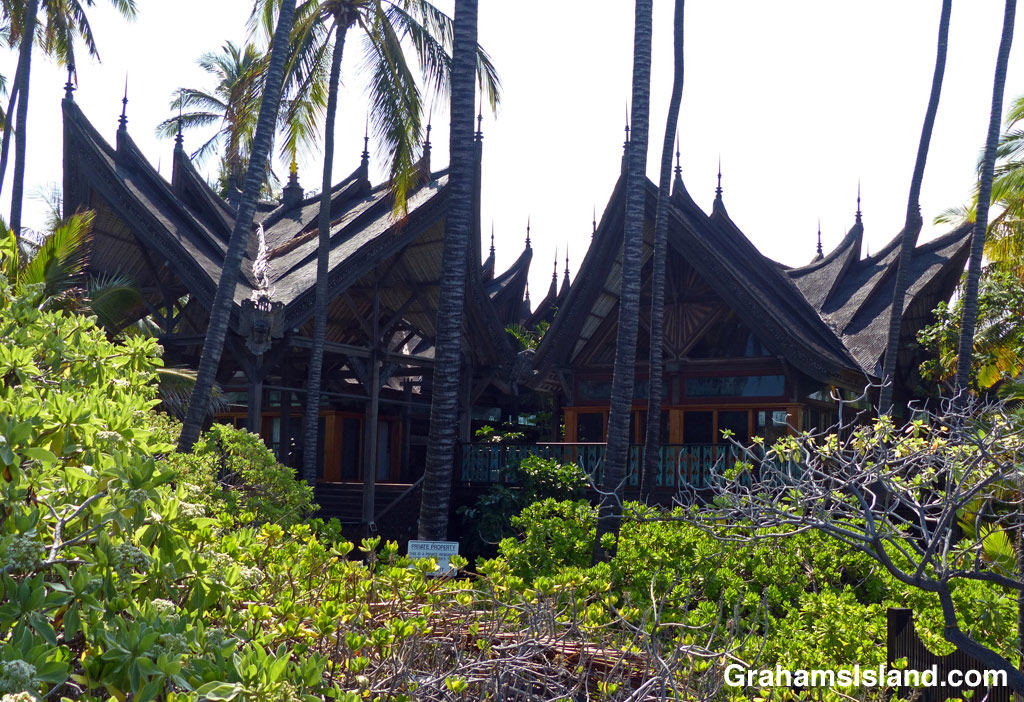
A good deal of the shoreline at Kiholo Bay is public land, but there is one short stretch that is privately-owned. Not surprisingly, these rare waterfront parcels are owned by the very wealthy. One such is a large, sprawling yellow estate just back from the beach, owned by the inventor of the pacemaker. A bit farther down the beach is this property, known to most people here as the Bali House.
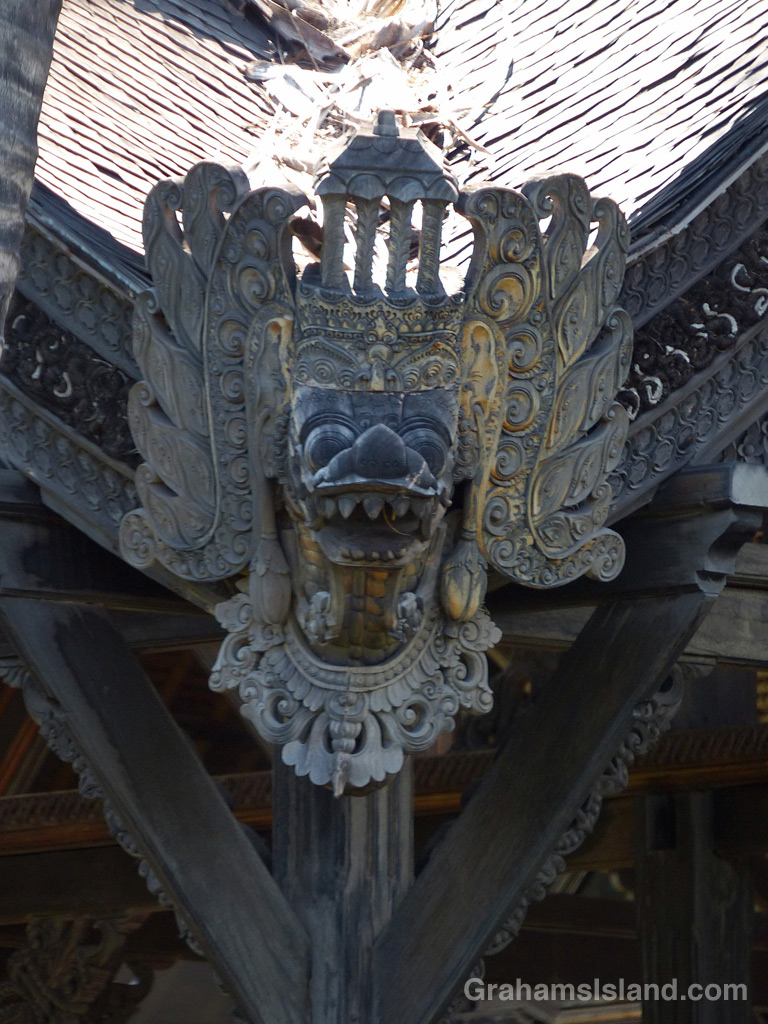
The property is owned by John Paul DeJoria, co-founder of the Paul Mitchell line of hair products and The Patrón Spirits Company. DeJoria had traveled in Bali and loved the architecture, so he had this house hand-built in Bali. The house was then disassembled, shipped to the Big Island, and reassembled on this property. The whole process took around six years and when they were done, it started to shrink. Turns out the Balinese carpenters had used green logs from the Borneo forest and in less-humid Hawaii, the wood shrank and split.
Apart from it’s striking appearance, what I find notable about the house is how it’s set back from the beach and surrounded by greenery. The view of the ocean is almost what realtors call peek-a-boo. The house is also self-sustaining, relying on solar power and rainwater collection. This is most admirable, but I suspect I’d still prefer the caretaker’s cottage.





 Graham's Island