A while back, I went to take photos of a barge arriving in Kawaihae and saw these buoys on the beach. I don’t know what the net pen was for, but it was quite large, and looked similar to those I’ve seen used for farming fish out in the ocean. I presumed it was ashore here for some repairs
Regardless, the large yellow buoys caught my eye and made a good foreground for the barge being docked.
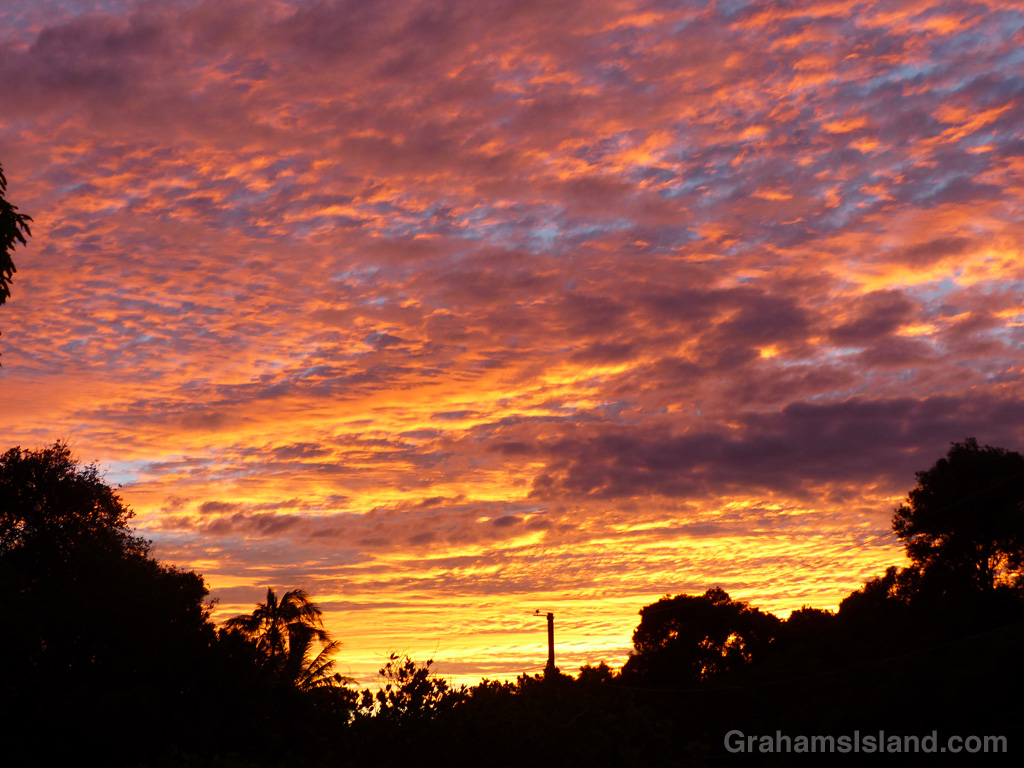
I took some photos yesterday morning and was looking to see what the final one was for Bushboy’s Last on the Card challenge (see more responses here), when I happened to glance out of the window and saw this splendid sunset in progress. So I dashed outside and got this shot.
While I called this ‘Sunset from the lanai,’ a more accurate title would be ‘Sunset while wobbling unsteadily on the lanai railing.’ This is kind of appropriate since, earlier in the day, I’d had a discussion with someone about the stupid things photographers do to get a shot. In that context, I could just call this ‘Exhibit A.’
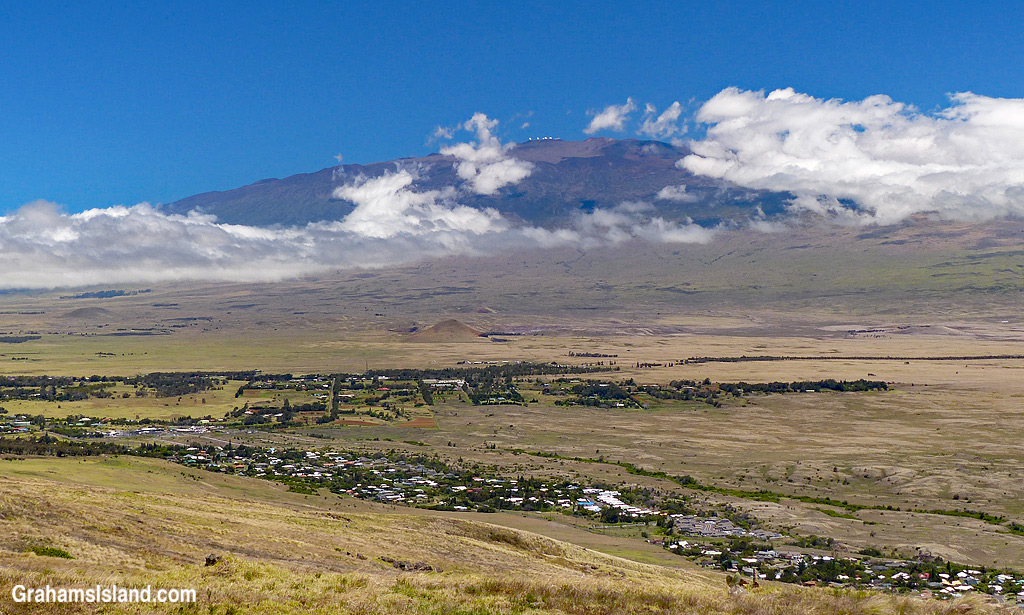
This view of Mauna Kea is interesting for a couple of reasons, neither of which have to do with Mauna Kea itself.
The first is that it shows the dry side of Waimea, which is to say some of the western part of the town. The dry side gets considerably less rain and more blue skies than the wet side though the separation is only a few miles.
The second point of interest is that this view looks nothing like this today. The area between the dark line of trees and the base of the clouds is where the recent brushfire went through. So it’s not currently green and pastoral. It’s more black and brown and apocalyptic.
The good news is the land will recover, assuming there are no more fires for a while.
This week’s Sunday Stills challenge theme is ‘Afloat.’ See more responses here.
I had a different canoeing post lined up for this, but a couple of days ago I happened on this scene at Kawaihae harbor early in the morning. I noticed an outrigger canoe heading in and thought it might provide a photo opportunity, so I readied myself for the canoe’s arrival. While I waited, I heard voices. I looked around but didn’t see anyone. Then I realized the voices were coming from the water and there were three people not far from shore, only their heads visible above the water. They can just about be seen in the top photo, to the far right.
At first I thought they were taking an early morning dip, but when the canoe zipped into the small harbor, I thought they were probably there to help bring the canoe to shore. Sure enough, the canoe curled around to where they were and I snapped photos. But where I expected the canoe to slow to a halt, it didn’t. Instead it curved back out toward the harbor entrance and I was left wondering what just happened.
It wasn’t until I looked at my photos that I realized what I’d seen. What the canoeists were practicing was changing crew while still in motion. In the second photo, the moving boat comes alongside the three people in the water. The third photo shows three of the boat’s crew toppling into the water on the other side of the boat. Photo four shows the trio in the water climbing aboard to take the now empty seats. Finally, the bottom photo shows the canoe heading back out into open water with barely a break in speed.
The purpose of this exercise was practice for long-distance canoe racing. During a race, a support boat takes fresh crew ahead and drops them in the ocean. At a certain point the crew change will be made in the way I’d seen. According to Wikipedia, “Longer races involving the OC6 (Six-person outrigger canoes) often involve paddler replacements, which involve exit and entry to the canoe directly from the water while the canoe is underway (this is called a water change). Typically, nine paddlers form a crew, with six paddling the OC6 and the other three resting, drinking, and/or eating on an escort boat. Replacement typically occurs at 20 to 30 minute intervals; the escort boat drops the relief paddlers into the water ahead of the OC6, which is steered toward them. The relief paddlers climb in on the ama side as those they are replacing roll out into the water on the opposite side. The escort boat then picks up the paddlers in the water so that they can rest, drink, and/or eat before they, in turn, relieve some of the paddlers in the OC6.” Wikipedia has more information about outrigger canoes and canoe racing here.
I knew about this practice, but hadn’t seen it before. I think it says something about how smooth this crew had the exchange down, that I didn’t even notice it at the time!
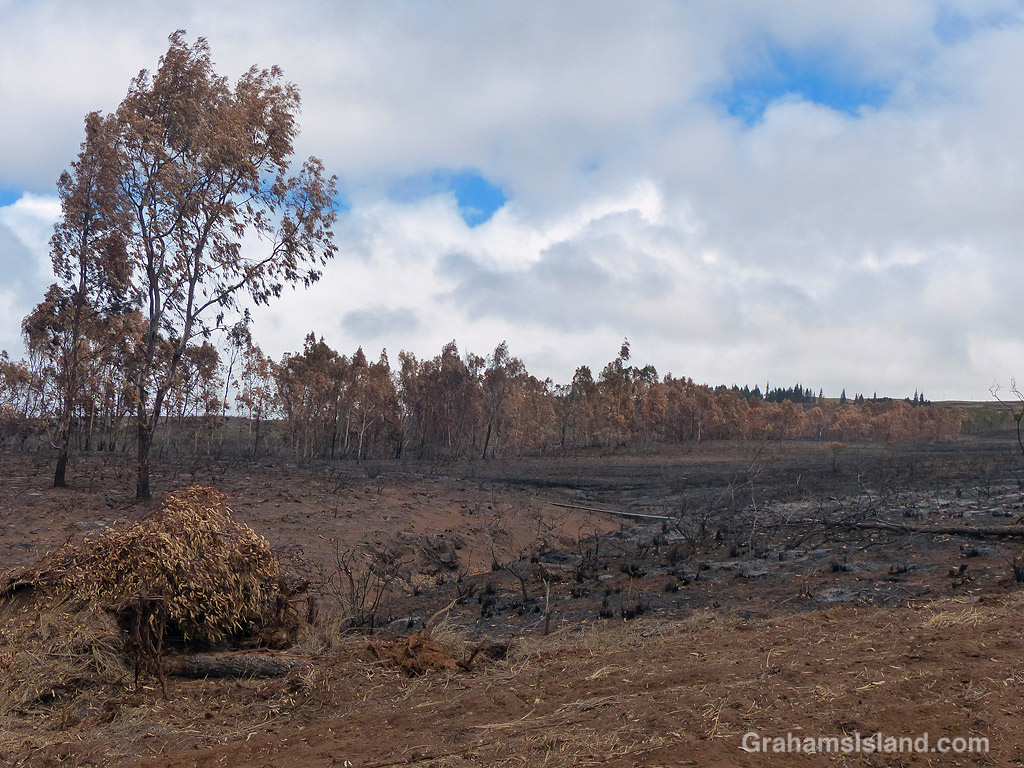
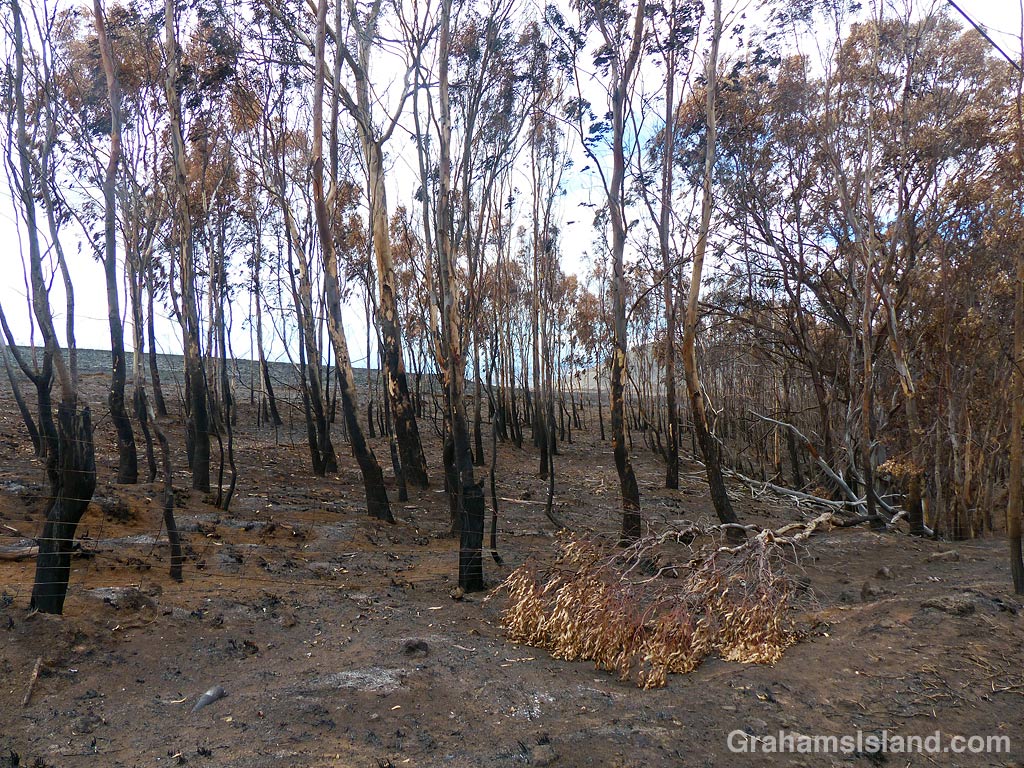
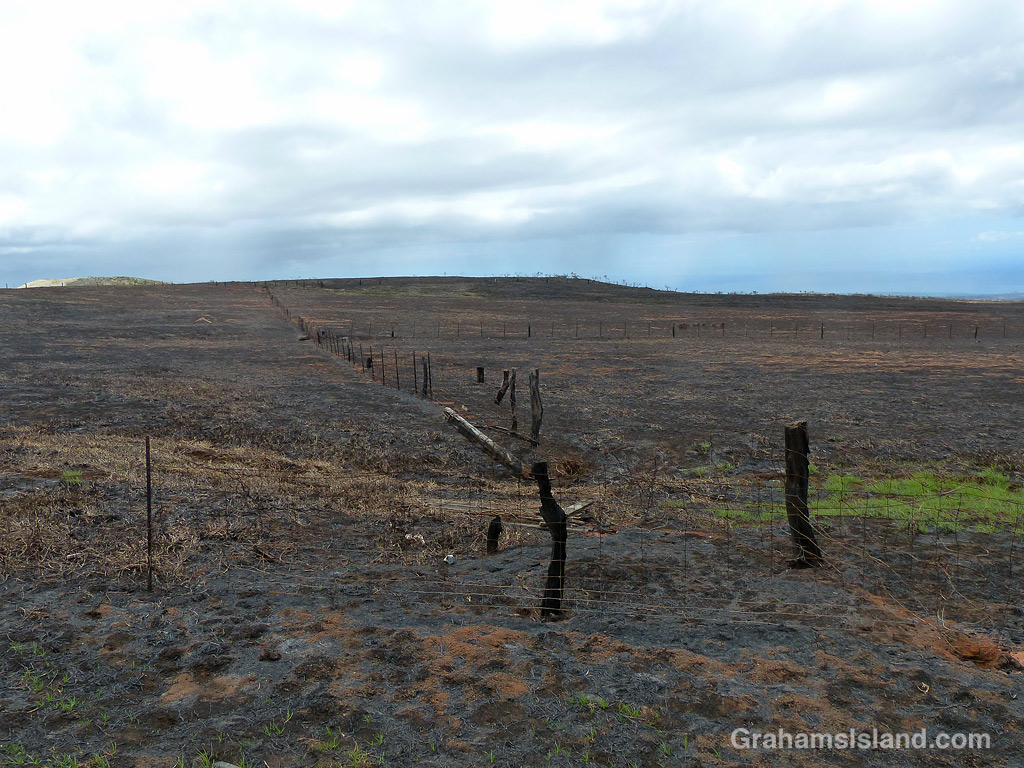
Burned pasture and trees with a bulldozed fire break in the foreground.
An object burned by the fire.
Earlier this month, I posted here about the largest brush fire in Big Island history, which burned more than 40,000 acres of land. A couple of days ago. I drove Old Saddle Road and got a look at the aftermath.
The fire burned mostly through dry pasture and scrub land leaving a black and brown landscape. Clumps of charred trees broke up otherwise uniform stretches of blackened grassland. Lines of fencing could be seen, but where before posts held up the wire, in many places the wire now supported the dangling remains of posts. Thoroughfares of dusty brown dirt cut through the landscape where fire breaks had been bulldozed. Strips of green alongside the highway were the only remnants of the area’s usual color.
The fire has been out for a couple of weeks now, but when the wind blows, brown clouds of dust are driven before it. It will be a few months before anything resembling normalcy returns, though new green shoots could be seen here and there, a testimony to the resilience of nature.
Trees charred by the fire.
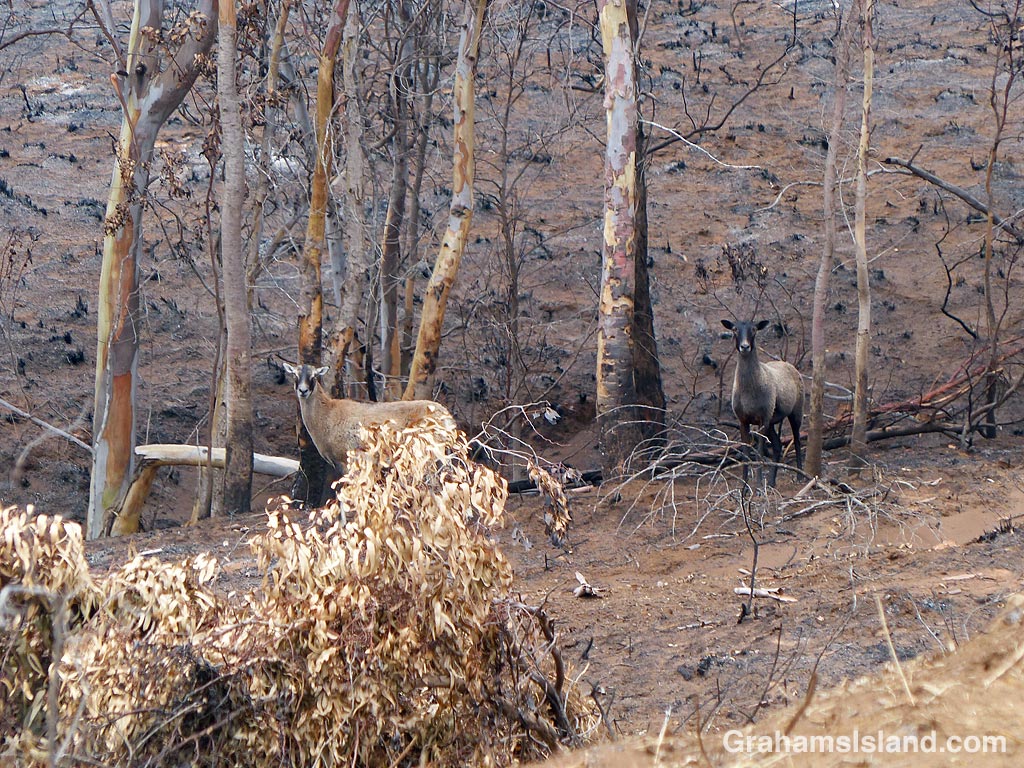
This is the same area after the fire and before.Two sheep in a fire scarred landscape.
As I walked around taking photos I heard some noises. I thought it was trees creaking, but when I got back to the car, I heard the sounds again and spotted these two sheep, now well camouflaged in the new landscape. They looked well enough, though there was nothing to eat or drink for some distance. But they’re free to roam through the gaps in the fencing and no doubt will find something. All the cattle and horses that normally occupy the fields were missing. Many were rounded up ahead of the flames, though some perished.
It was a sobering scene, the more so because, while this was the islands largest brush fire, it was tiny in comparison to the blazes that have become a regular feature of summer on the mainland.







 Graham's Island