Category Archives: Weather

Dead tree in the lava

Dead tree in the lava

The twisted remains of a dead tree lie, under heavy skies, on an old lava field at Hawaii Volcanoes National Park.

For more information about Hawaii Volcanoes National Park, go to nps.gov/havo/.

Posted in response to this week’s WordPress Photo Challenge ‘Twisted.’


Storm cloud over Kohala Mountains

Storm cloud over Kohala Mountains

Driving down old Saddle Road, one late afternoon, I saw this dramatic storm cloud sliding down the side of Kohala Mountain. Later, when I headed over the mountain road, I saw the cloud had settled over Kawaihae, dumping rain over the normally desert dry area.

Posted in response to this week’s WordPress Photo Challenge ‘Liquid.’

Inter-island barge entering Kawaihae harbor

Tug and Barge

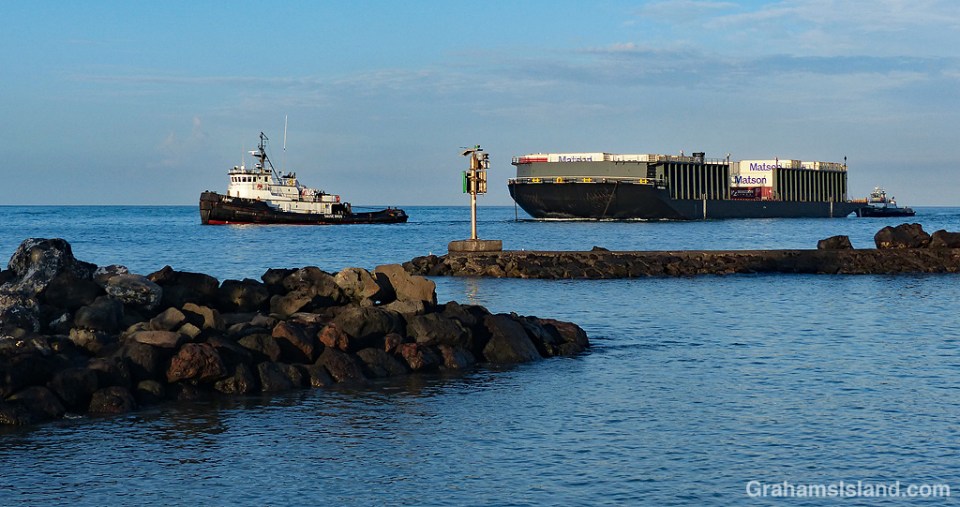
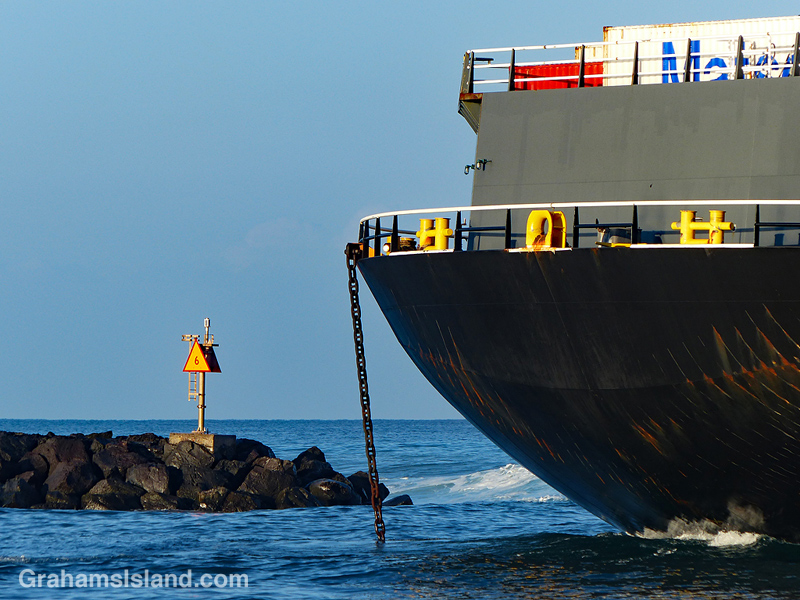
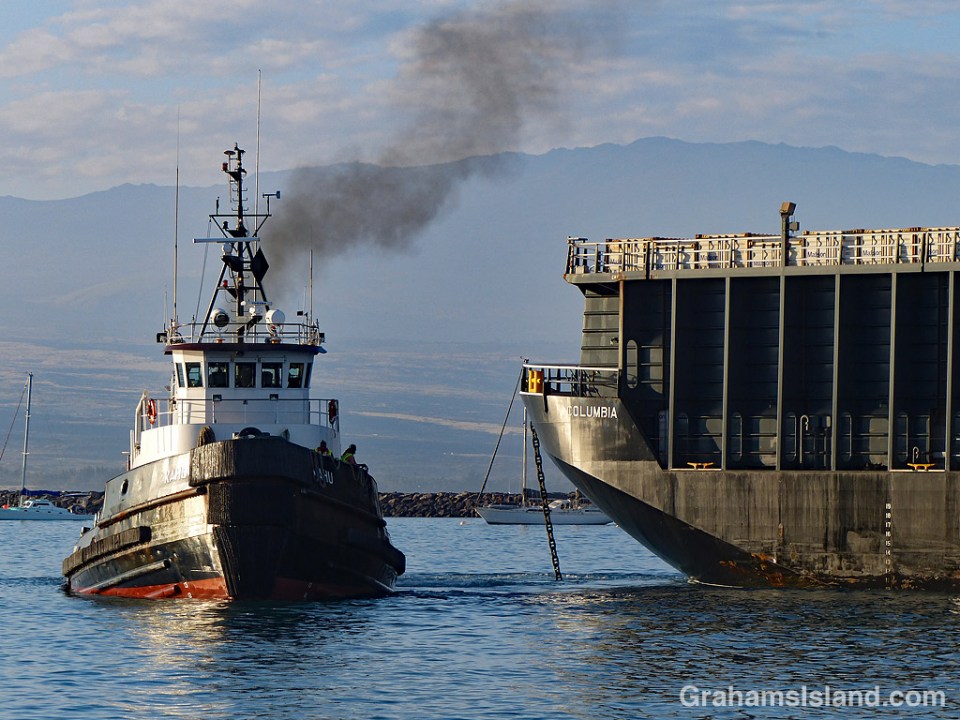
Tug and Barge entering Kawaihae harborOne of the inter-island barges enters Kawaihae harbor on a calm, clear morning. The barges are a prime method for moving freight between the islands, with Honolulu being the hub of all the operations.

The water isn’t always this calm. It can get very rough, very quickly, particularly crossing the channels between the different islands.

Posted in response to this week’s WordPress Photo Challenge ‘Liquid.’

Tug and Barge in Kawaihae Harbor

Resting bus driver

Resting bus driver

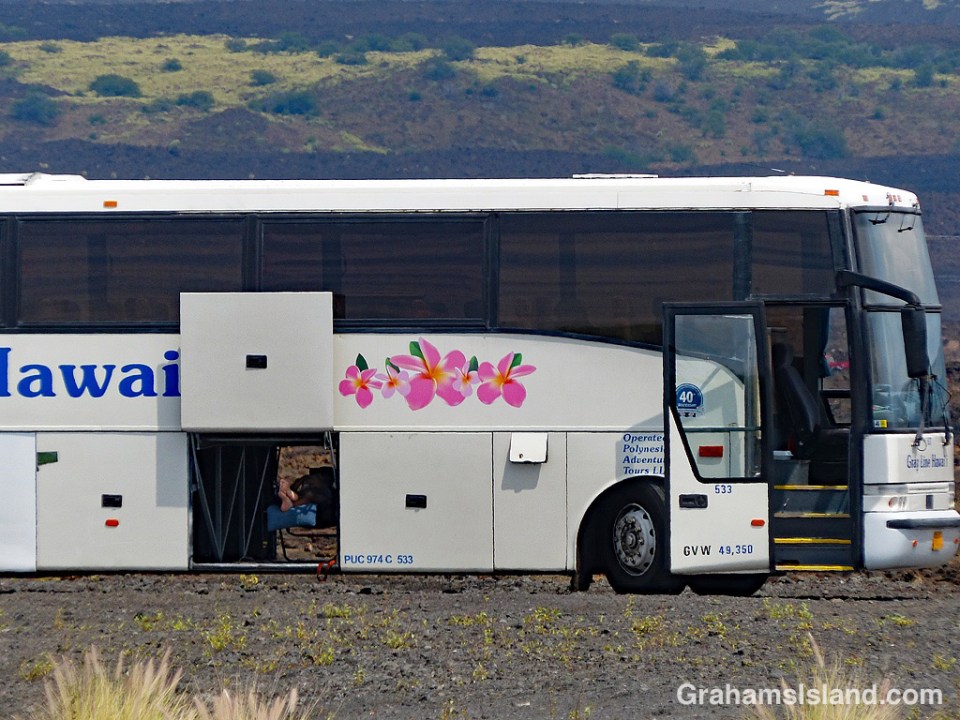
I was heading out of the parking lot after a recent hike, when I noticed this bus with its front door and cargo doors open. I realized I was looking at a pair of feet in the cargo bay and saw what was presumably the bus driver, taking a rest on a folding bed in his unusual bedroom. Nice and shady – check. Breeze funneling through the open passage – check. Better watch out for those tootsies though. They’re catching the sun.

Hawaii ‘elepaio

Hawaii Elepaio

Hawaii Elepaio on a branchOn the first decent day after a long spell of grey, wet weather, I headed up to the Palila Forest Discovery Trail, just off Saddle Road on the lower slopes of Mauna Kea. I figured that even if the weather let me down, it’s a drive that I enjoy, so it would be OK regardless.

However, the closer I got to my destination, the less promising it looked. When I got to the junction, where a 4-mile dirt road leads to the trailhead, I almost turned around since it seemed unlikely there would be anything to see. The mountain looked shrouded in cloud, but since it’s only a 15-minute drive and the road didn’t look too muddy or washed out, I thought I’d give it a go.

When I pulled into the deserted parking area, the sky was grey, the air was damp, but it wasn’t actively raining and the visibility was OK, so I set out on the mile-long loop trail. As usual, I could hear a fair number of birds. It’s just spotting them that’s the trick there. But there are a couple of places on the trail that seem to get a lot of action and this day was no exception, including my first photos of a Hawaii ‘elepaio (Chasiempis sandwichensis sandwichensis).

Oahu, Kauai, and Hawaii Island each have their own species of the endemic ‘elepaio, which is a member of the flycatcher family. The Big Island version is more boldly marked than the other two and this one obligingly set down in a mamane tree not too far away, affording me a decent view and the opportunity to take photos.

One tidbit that I found interesting about the bird is that when ‘elepaio were seen to frequent a given koa tree, this was a sign to canoe makers that the tree was likely insect infested and unsuitable for making a canoe.

For more information about Palila Forest Discovery Trail, go to dlnr.hawaii.gov/restoremaunakea/palila-forest-discovery-trail/.

Posted in response to this week’s WordPress Photo Challenge ‘Unlikely.’

Lava lake and morning sky

Lava lake and morning sky

A little over a week ago, I posted photos here of the lava lake at Overlook vent, in Halema’uma’u Crater at the summit of Kilauea Volcano. Here’s a photo of the crater as early morning light illuminated the scene. Around that time the lava was repeatedly spilling out onto the crater floor.

Perhaps you’re wondering if anything has changed in the short time since then. If so, the answer is yes. The lava lake has disappeared, dropping more than 500 feet below the level of the crater floor. Exactly how far its fallen is hard to find out because the people who monitor it have been busy with other things.

On Monday, after a period of increased seismicity, the crater floor of Pu’u O’o vent, the other active vent on Kilauea, collapsed sending a huge ash plume into the sky. When the ash cleared all the lava had disappeared from the vent. This coincided with ominous rumblings and grumblings east of the vent, along the East Rift Zone. Small earthquakes shook the ground. Cracks appeared in paved roads. Lava was believed to be bubbling underground.

On Thursday morning, a magnitude-5.0 earthquake caused another collapse at Pu’u O’o crater. On Thursday afternoon, around 5 p.m., lava erupted in the middle of the Leilani Estates subdivision in the Puna district. A fissure appeared in the ground and molten lava bubbled forth, shooting into the air. This lasted around 2 hours, then ended.

On Friday, yesterday, other fissures opened and poured forth lava, closed again, only for new eruptions to occur elsewhere, but in the same general area. Leilani Estates has been evacuated and is now patrolled by the National Guard. Dangerous sulphur dioxide hangs in the air. Will a full blown eruption occur in that area or will it shut down and appear somewhere else? Nobody knows. People who had to leave their home on 20 minutes notice don’t know when they’ll be able to return or whether there will be anything to return to.

Up here, on the northern tip of the island, there is no danger, though two earthquakes, a magnitude-5.4 around 11:30 a.m. on Friday, and a much more noticeable magnitude-6.9 around 12:30 p.m., were definitely felt. By the time you read this, chances are everything will have changed. That’s the unpredictable, unexpected and often unlikely life, living on an active volcano.

Posted in response to this week’s WordPress Photo Challenge ‘Unlikely.’

 

Planes landing at Kailua-Kona Airport

Plane landing at Kailua-Kona airport

Hawaii has the reputation of being a tropical paradise, but arriving at Kailua-Kona Airport looks anything but. The final approach to the airport comes over the 1801 Huʻehuʻe lava flow from Hualali volcano. This flow is still quite barren with next to no vegetation. For first-time visitors, touching down on actual tarmac can come as something of a relief.

Exiting the plane, it will most likely be hot, but sunny? Not so much, especially if touchdown is after noon. Typically, clouds roll in during the morning and vog (volcanic smog, caused by pollutants from Kilauea Volcano) settles over the area. The appearance, seen in these photos, is sometimes called ‘concrete skies.’ Not a bad description.

Plane landing at Kailua-Kona