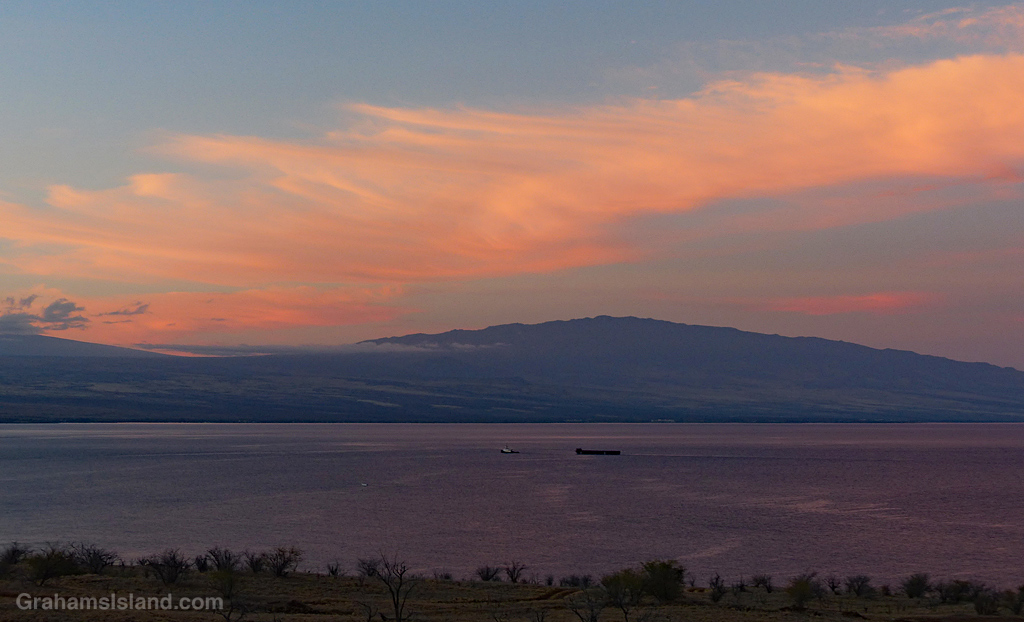
Wispy clouds catch the early morning sun above Hualalai volcano while an inter-island tug and barge heads in toward Kawaihae harbor.

Wispy clouds catch the early morning sun above Hualalai volcano while an inter-island tug and barge heads in toward Kawaihae harbor.
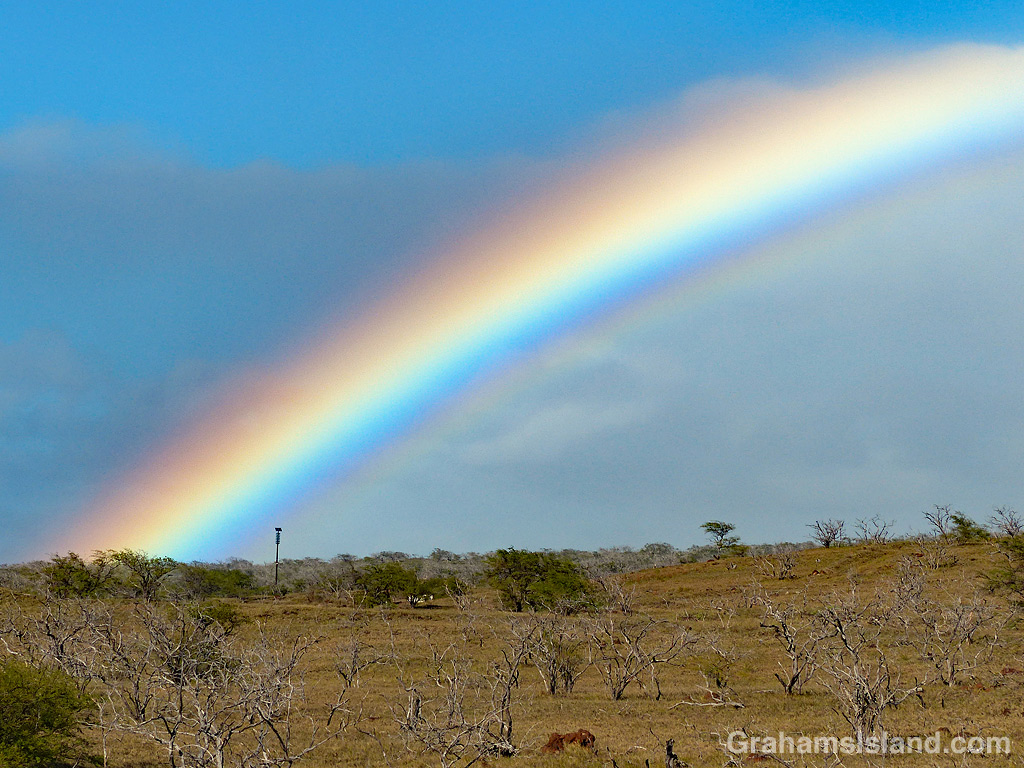
A rainbow arches into the sky just beyond the tsunami siren above Kapa’a Beach Park. The scrubby, dry ground reflects the lack of rainfall on this part of the coast, less than 20 inches a year.
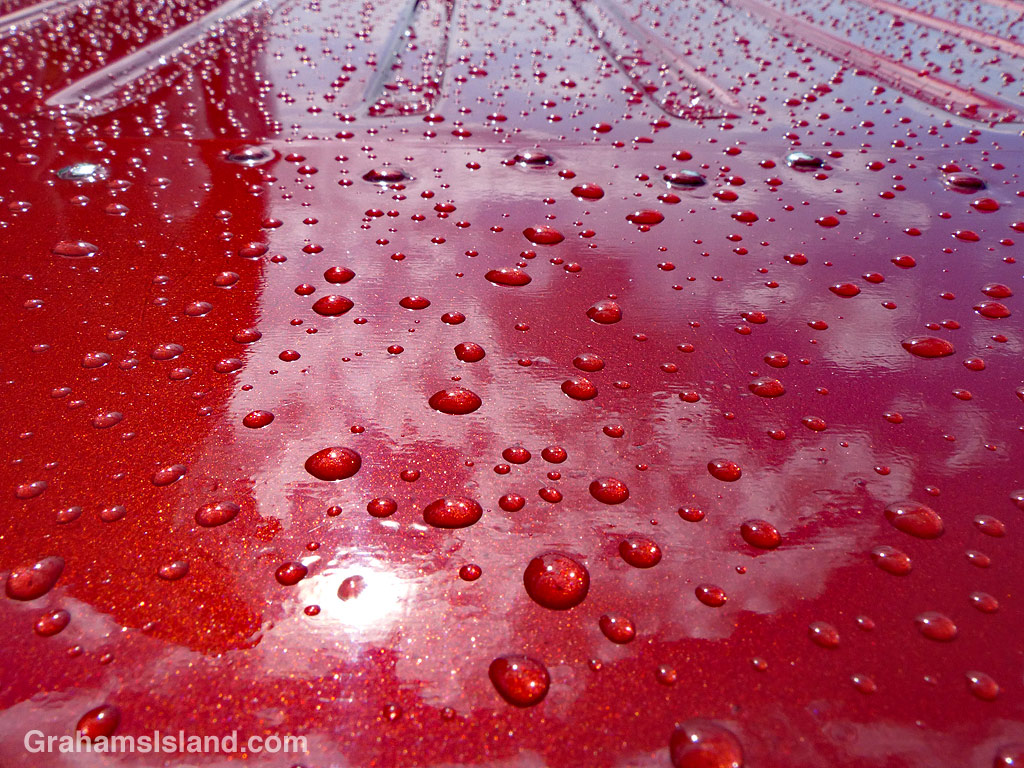
This week’s Friendly Friday challenge theme is ‘Raindrops.’ (See more responses here.) It was convenient therefore that today, just as I finished waxing some metal parts, a shower of rain passed over. The raindrops beaded up nicely on the shiny surface.
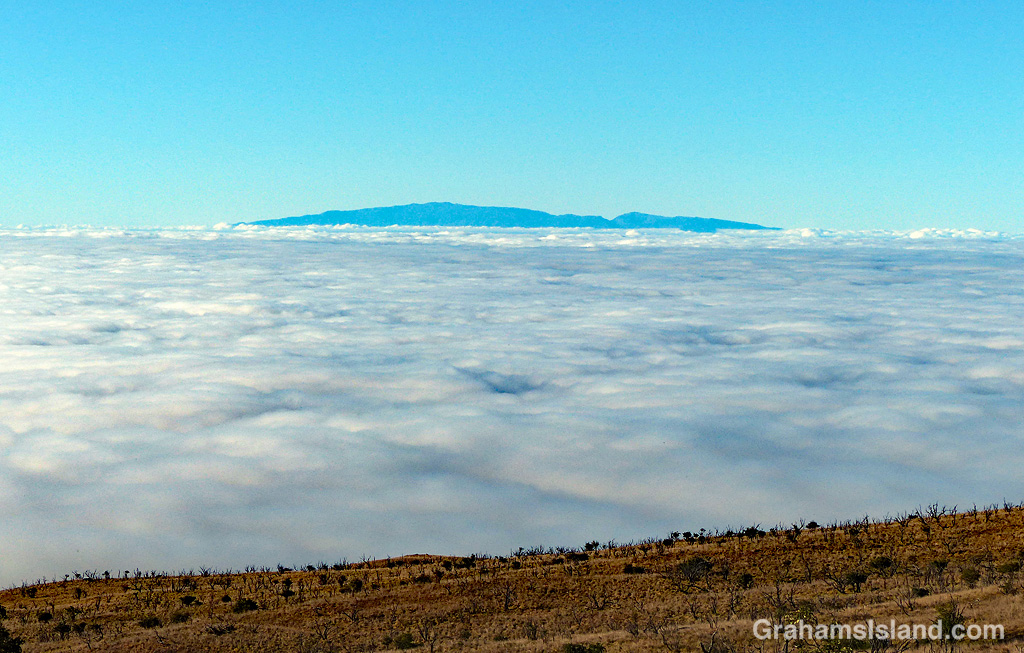
A sea of clouds separates Maui and the Big Island, as seen from the slopes of Mauna Kea. Somewhere under there is Kohala Mountain, which is 5,480 feet high.
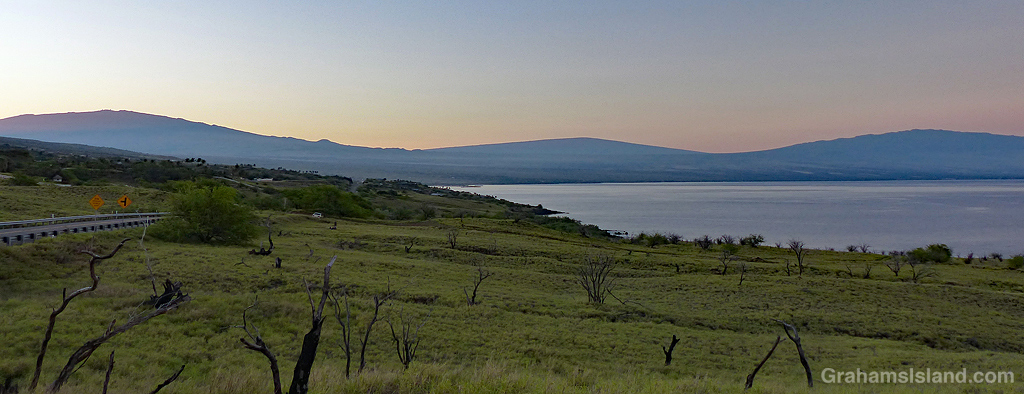
Three of the Big Island’s volcanoes – from left, Mauna Kea, Mauna Loa, and Hualalai – seen as daylight suffuses the sky.
Posted in response to this week’s Sunday Stills challenge on the theme of ‘Daylight.’ See more offerings here.
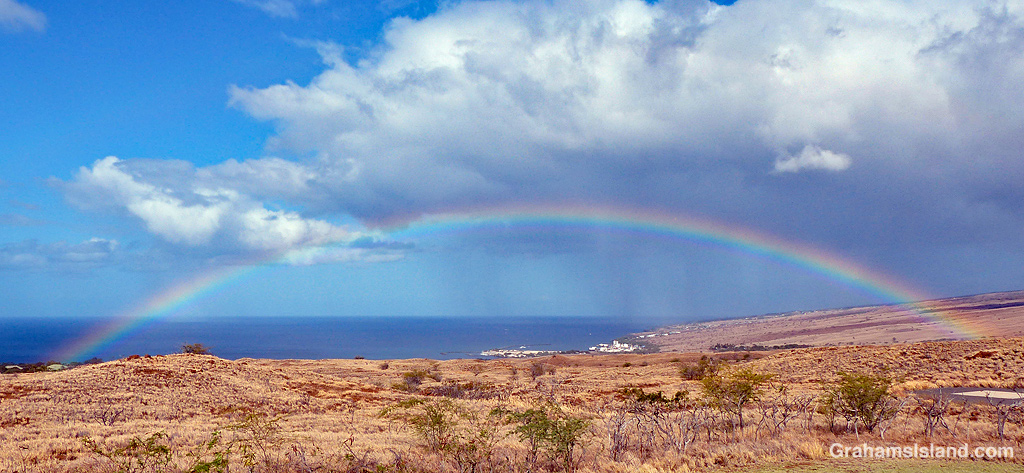
A rainbow stretches out above Kawaihae, the main port on the west side of the Big Island.
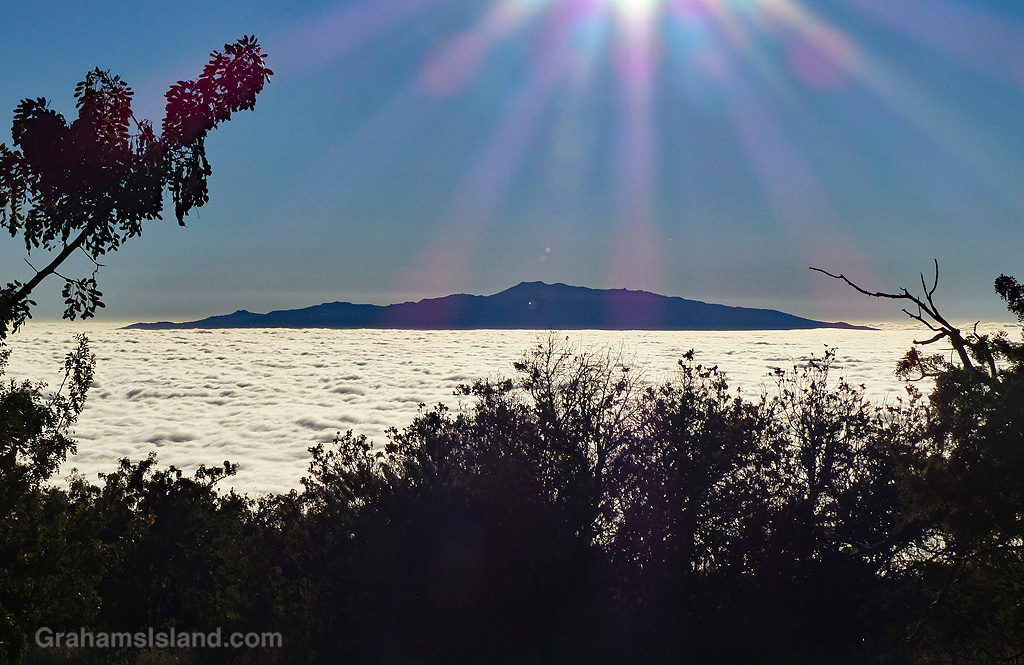
I’ve spent a fair amount of time in my life looking up at clouds, often as they poured water in my direction, so it’s nice to look down on them once in a while. Airplanes are probably the most common place to enjoy this view, but here on the Big Island, the upper reaches of Mauna Kea and Mauna Loa also offer this perspective.
In this case, the clouds were low enough that, when I was visiting the Palila Forest Discovery Trail at around 7,000 feet, the clouds blanketed the landscape below. Here, Hualalai pokes through the cloud layer in the late afternoon.
For more information about Palila Forest Discovery Trail, go to dlnr.hawaii.gov/restoremaunakea/palila-forest-discovery-trail/.
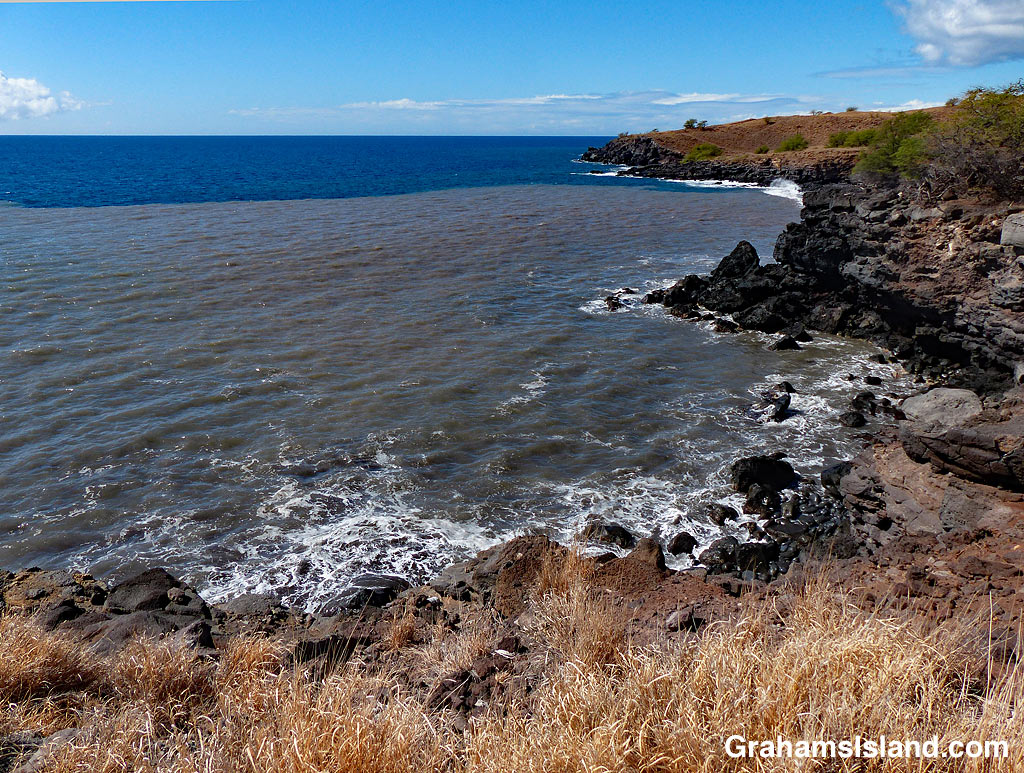
After something of a dry spell, during which I was able to drive my truck out of the yard without sliding about, there’s been a lot of rain lately. My truck is back to sliding, but that’s a minor issue compared with what happens to all that rainfall.
What happens is that the rain hits the land and runs downhill. It channels into dry gullies. If the rain is heavy enough, flash floods occur and wash all before them – dirt, rocks, trees. But any kind of heavy or prolonged rain will wash earth and debris down the gullies. All those gullies lead to the ocean, channeled under roads by culverts (bottom photo).
When the runoff reaches the ocean, it forms a distinct area of dirty brown water in the blue Pacific Ocean (top photo). The contrast is striking and easily visible from miles away. Over time, the brown and blue water will begin to mix until the delineation is gone, but part of that process is the dirt from the brown water settling to the ocean floor.
This kind of runoff is one of many threats to coral reefs around the Big Island. It’s not just dirt in the runoff, but also pesticides and other chemicals that can be washed down into the reefs, damaging the coral. There are hundreds of gullies and only a few places have erosion prevention measures to help mitigate this pollution.
So while Hawaii may be considered paradise, it has its share of challenges. And the problems associated with runoff and pollution are more visible and obvious than most.
Posted in response to this week’s Friendly Friday challenge on the theme of ‘Contrasts.’ See more responses here.


