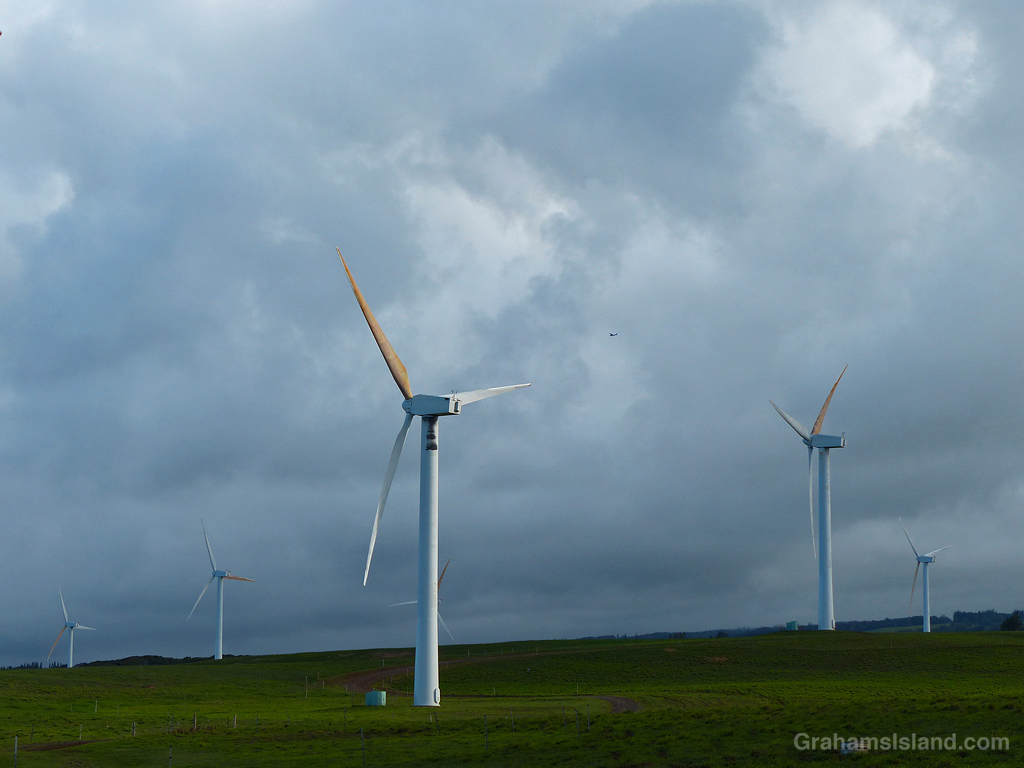
This week’s Sunday Stills Monthly Color Challenge is ‘White and Gray.’ See more responses here. This photo of white-painted wind turbines under gray skies seemed to fit the bill.

This week’s Sunday Stills Monthly Color Challenge is ‘White and Gray.’ See more responses here. This photo of white-painted wind turbines under gray skies seemed to fit the bill.

On my last walk along the coast near Upolu Airport I came across this scene. The shopping cart is from Safeway, the nearest location being in Kailua Kona. But I was also intrigued by the contents of the cart: A street address sign, a vehicle license plate, a perfectly good lawn rake, and several bits and pieces relating to a Stihl chainsaw.
Behind the bank, there was a fishing rod, a chair, and other signs of someone having staked out the spot for fishing, so perhaps the cart was associated with that. Quite what that association was will remain one of life’s little mysteries.


This Praying Mantis spent several days on this Agave Attenuata, waiting patiently for food. There were bees all over the flowers and I think the mantis got some of them, as well as other insects.
I presumed the mantis was a female as it seemed to be getting bigger. A couple of days after taking these photos, the mantis disappeared but I saw an egg sac on a nearby tree, so maybe there will be more on the way!


I don’t see a lot of mushrooms in the yard here, but this one popped up recently and I liked how it looked in the grass.
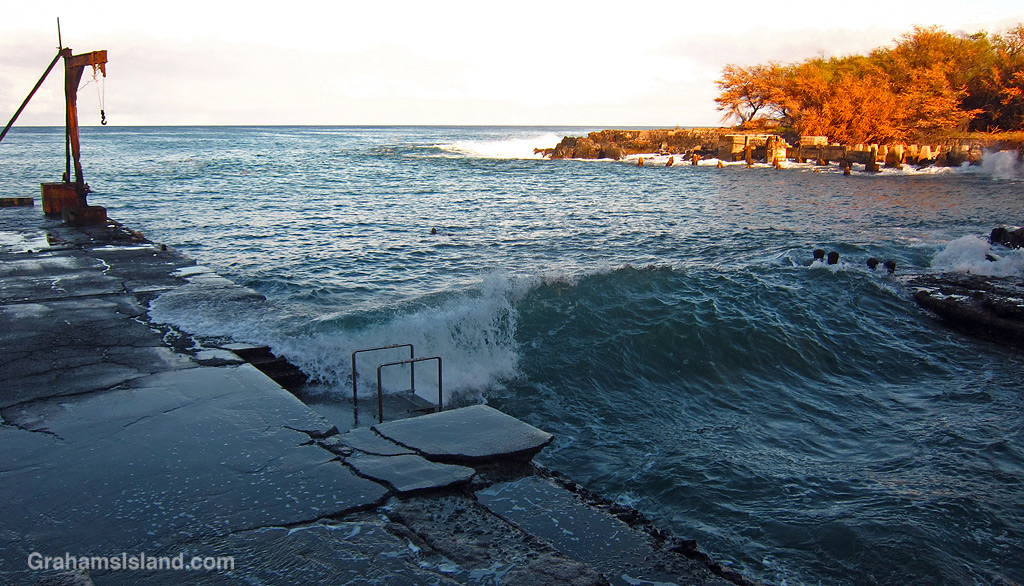
This is where I often get in the water to go snorkeling and this photo illustrates why it’s a good idea to pay attention when getting in or out. The water looks pretty calm, but the whitewater near the top is an indicator of swells coming ashore. When those swells reach the ladder where swimmers get in and out, they can be steep and dangerous.
It’s easy to judge swells before getting in the water, but getting out is more tricky. Trying to gauge what’s happening from water level, it’s easy to misjudge the size and strength of an incoming swell. I wouldn’t have wanted to be getting out when this one rolled in!
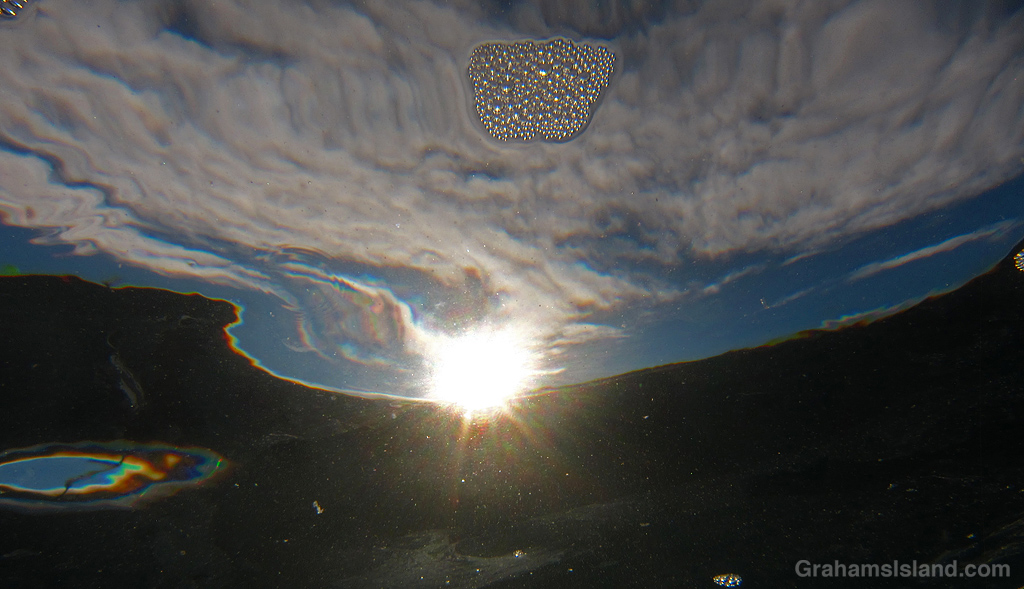
When I’m snorkeling, I like to take photos looking back up to the surface. On this occasion, I was hoping to capture bubbles floating on the surface, but got this image instead. To me, it looks like a sunrise shot, possibly after a night on the town!

We have had a seemingly endless stream of swells rolling in from the west, west-northwest, northwest, and north. What they all have in common is that they make snorkeling miserable here. The water gets churned up, reducing visibility to near zero, and getting in and out can be an adventure.
A few days ago, there was a gap between the incoming swells, allowing the water to settle a little and visibility to improve. And, luckily, that was a day that a pod of Spinner Dolphins went by.
I had stopped swimming for a moment and popped my head up to look around when I saw fins arching through the water towards me. This pod of 20 or 30 dolphins was just passing through, but I was happy to snap a few photos, of which these were the best two.
The visibility still wasn’t great, but any dolphin encounter is a moment to be treasured.

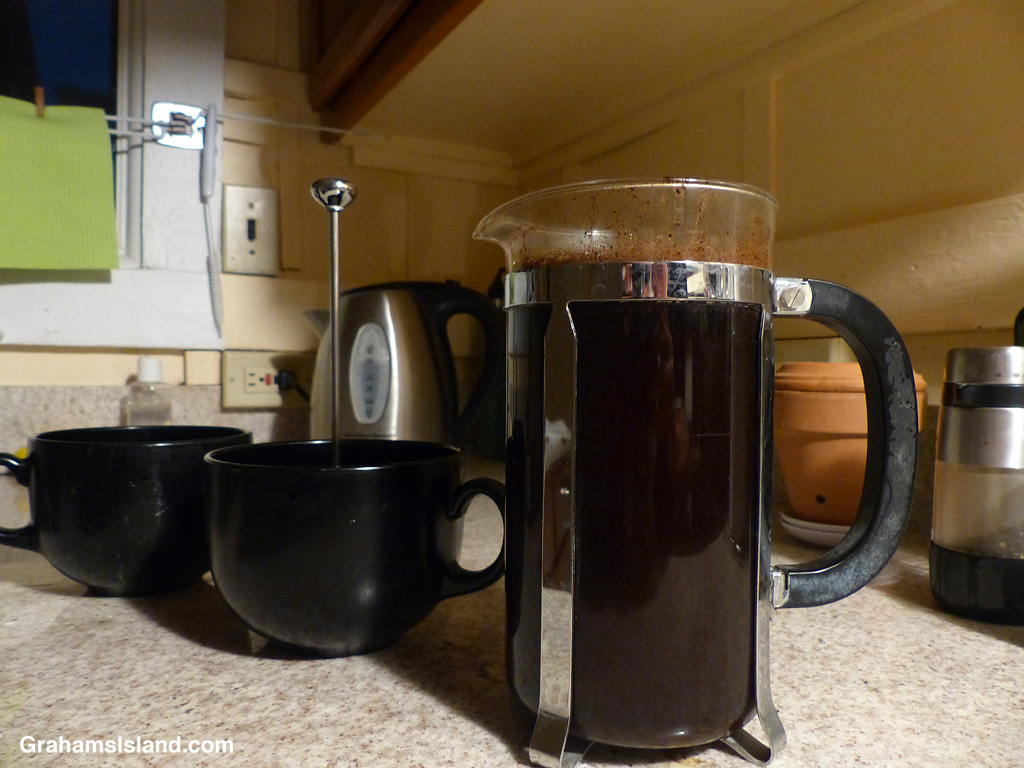
This week’s Sunday Stills challenge theme is ‘Plunge!’ See more responses here.
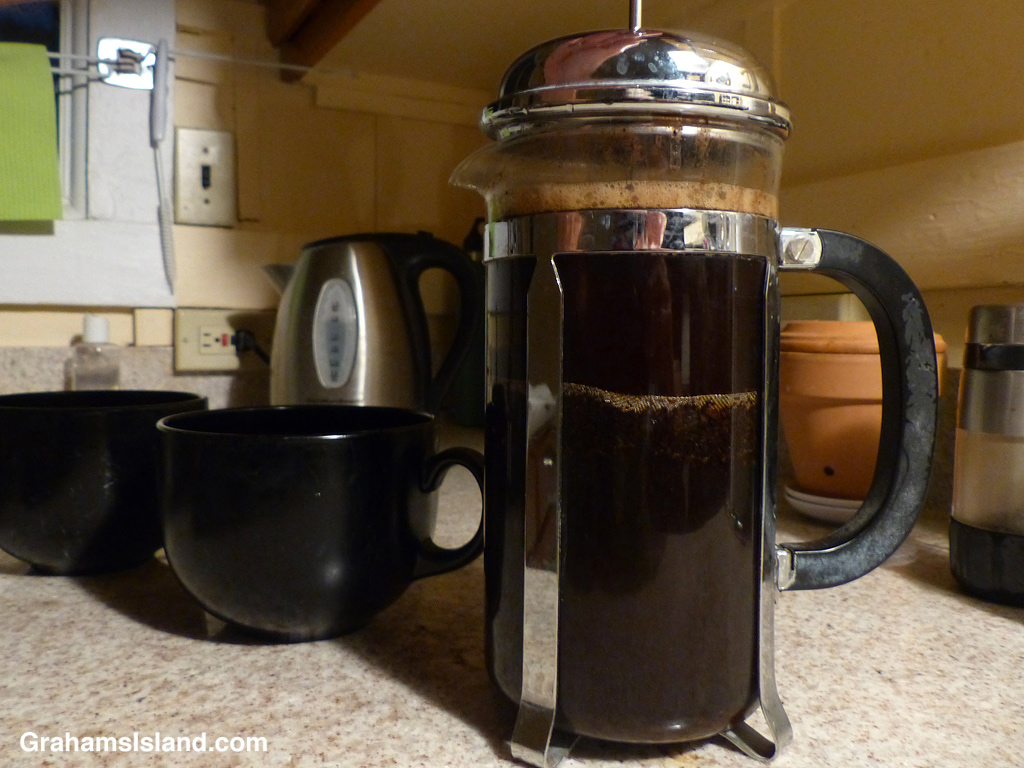
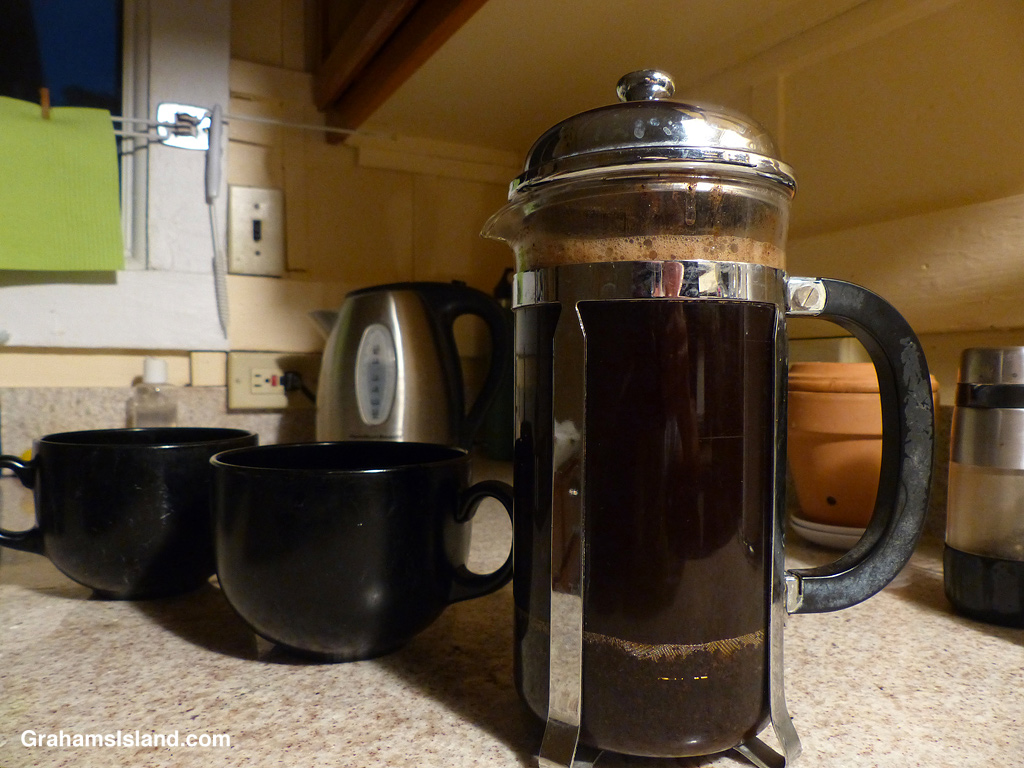
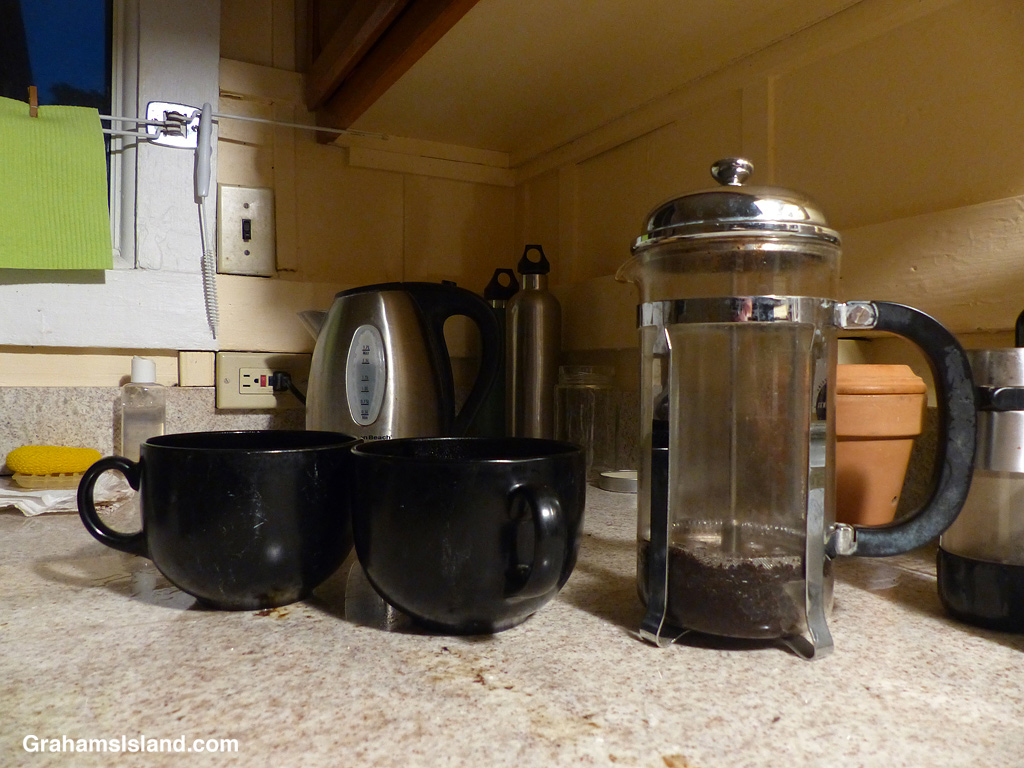
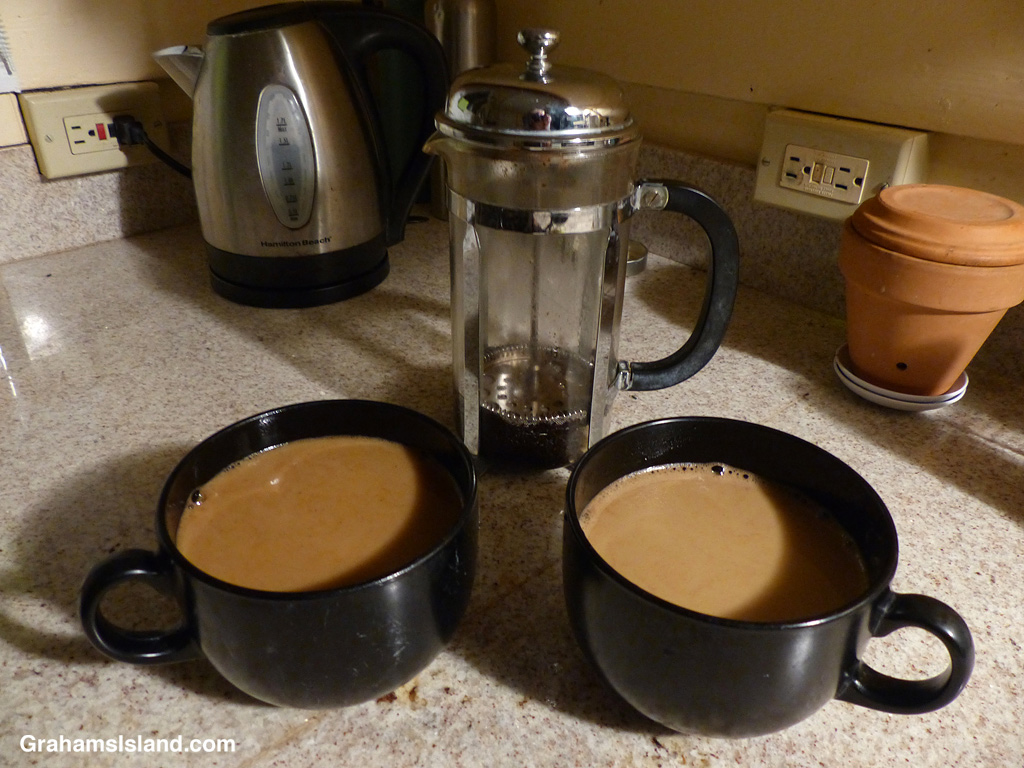
My morning plunge is not a dip in the water, but making coffee in a French press. Fresh ground coffee in the carafe, fill with hot water, and let it sit for four minutes. Then push the plunger down, pour the coffee, and add half and half. And another day gets underway!