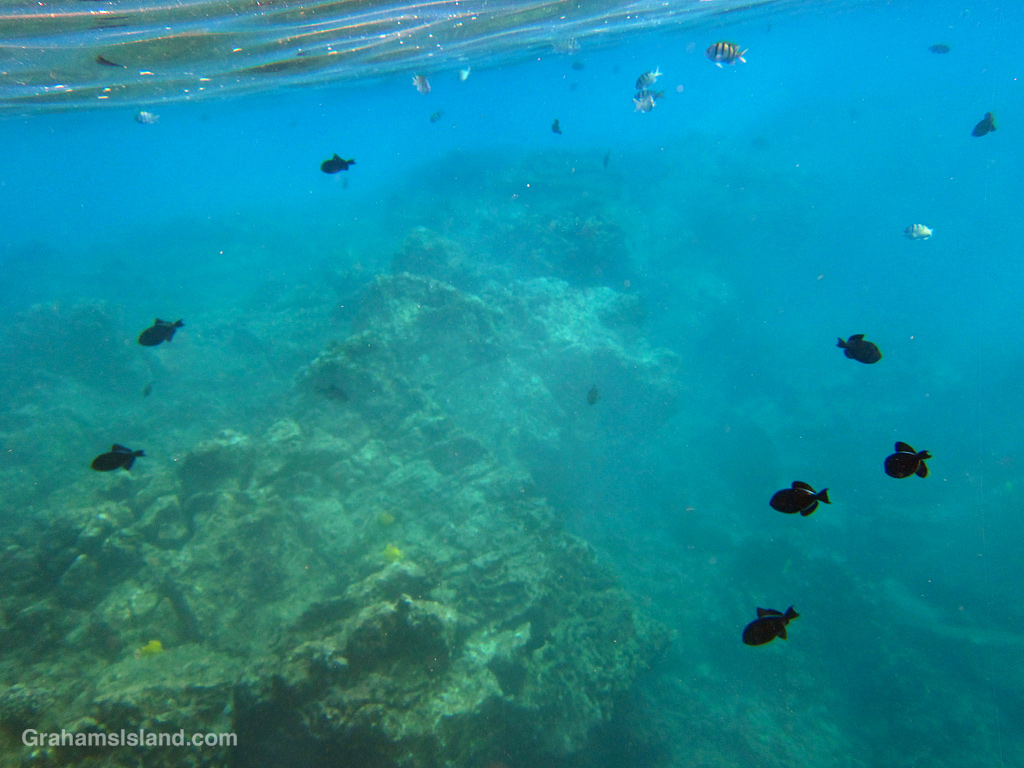
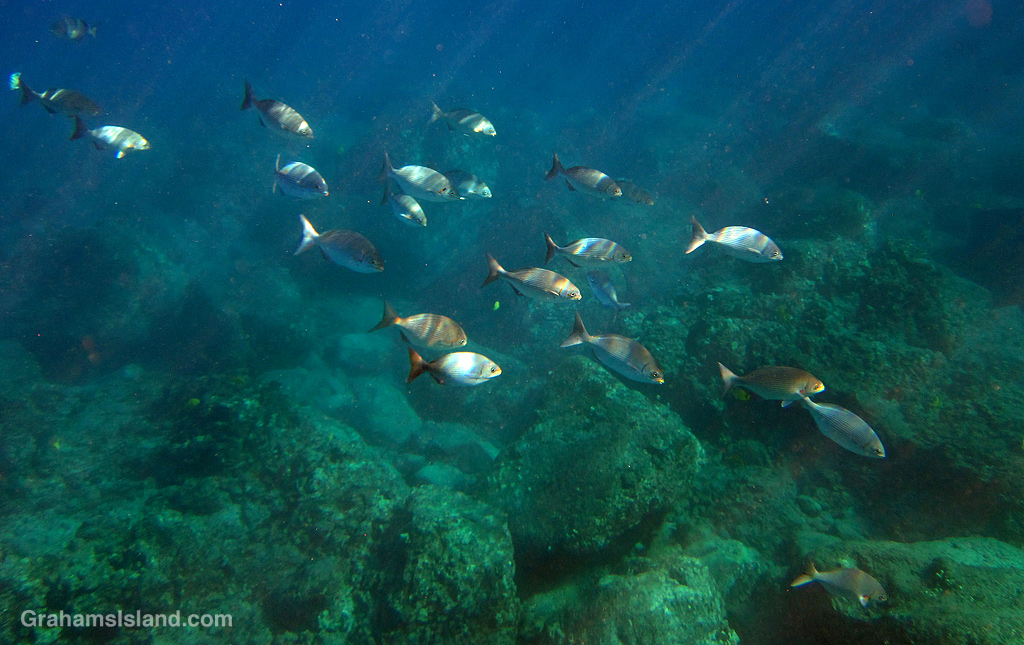
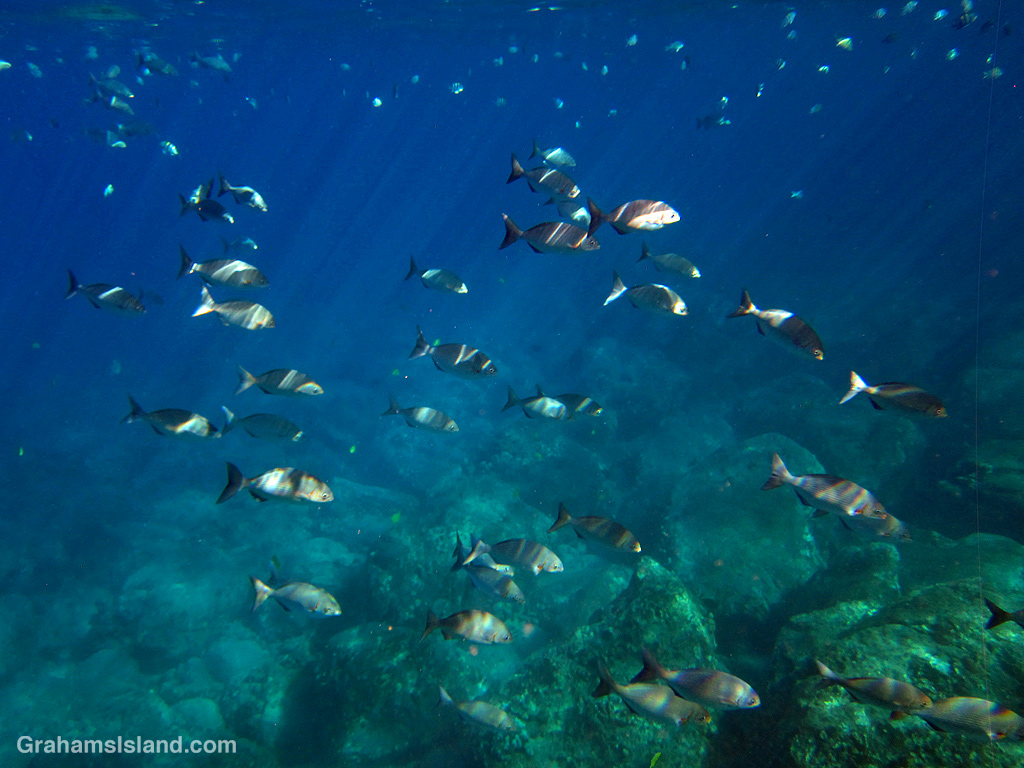
These days, when I go snorkeling, it’s not unusual to encounter hazy water like this. 10 years ago this would have been unusual. Today, it’s closer to the norm. I don’t know why this is, but warmer water is likely one factor.
From a snorkeling perspective, I have to be a lot closer to fish to hope to get a decent photo of them.
This week’s Sunday Stills challenge theme is ‘Silence.’ See more responses here.
The current eruption at Kilauea has been putting out a considerable amount of vog. This volcanic haze can make life difficult for people, causing respiratory and other medical complications. But it can also cause colorful skies.
I was driving home from work last week on a day when the vog was heavy and the sky glowed. There wasn’t much wind – another reason the vog has been hanging around – so the ocean was calm. I’d stopped to take photos once, but when I saw this little boat heading for this band of sunlight, I pulled over again.
I’d lucked into a quiet break in the traffic and was far enough from the coast that there was no sound from waves coming ashore or from the boat’s engine. I watched for a while until the boat crossed the glittering band, before returning to my car and heading home.
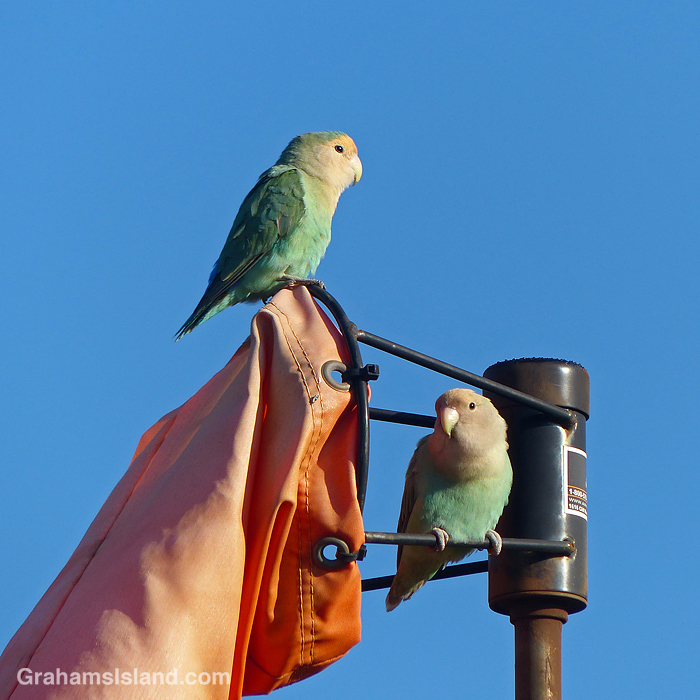
A few days ago, several Rosy-faced Lovebirds showed up at work. They were very loud and the regular bird residents were not pleased by their appearance. These two kept returning to our windsock and I figured even birds need to know which way the wind is blowing.
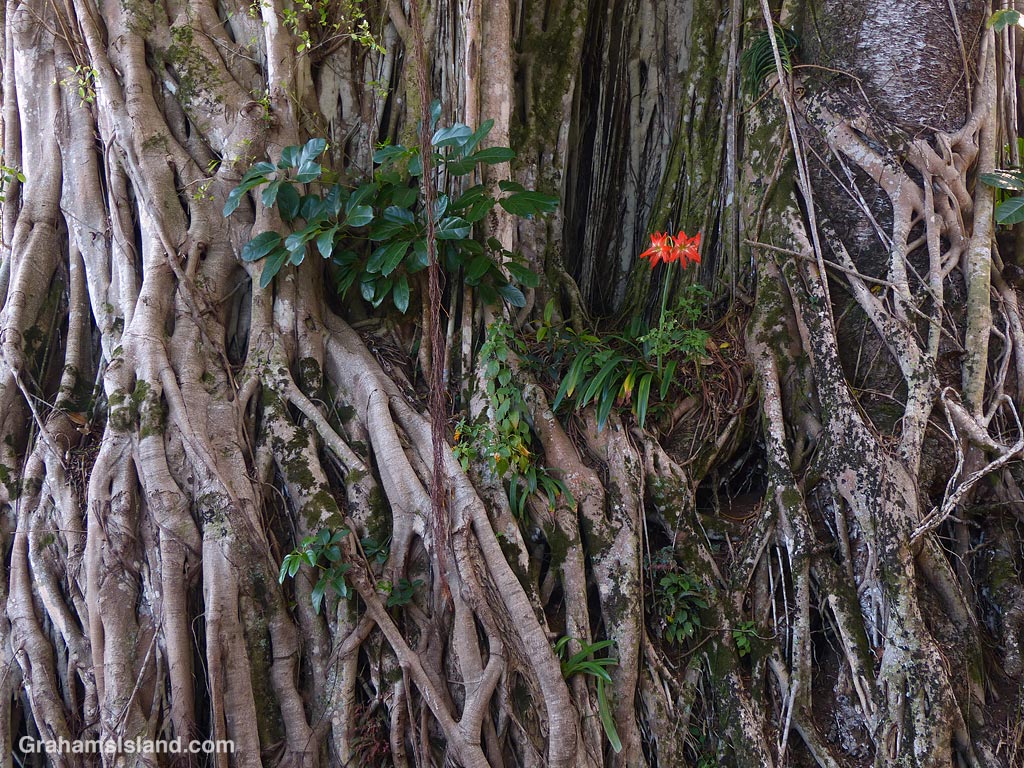
I noticed this Day Lily while I was driving and was moved to return and take some photos. I liked how the flowers stood out in the tangle of roots of a very large Banyan tree.
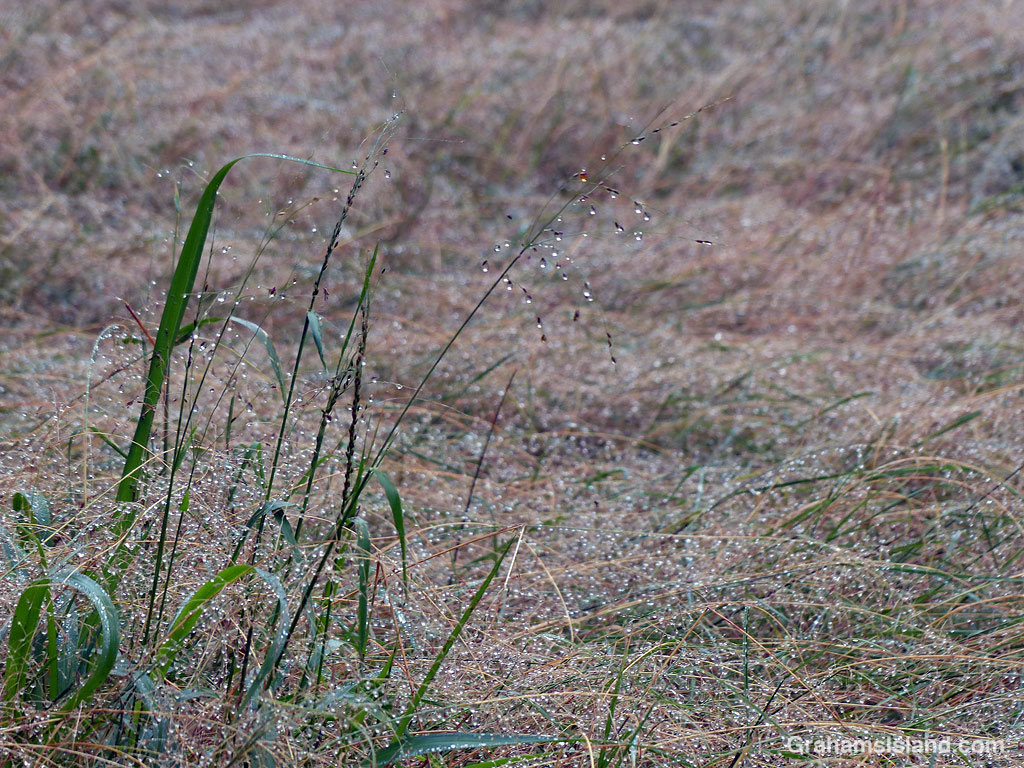
Recently, I noticed that the neighbor’s grassy yard was sparkling with dew, so I hotfooted it over there and got these photos, getting my feet very wet in the process.
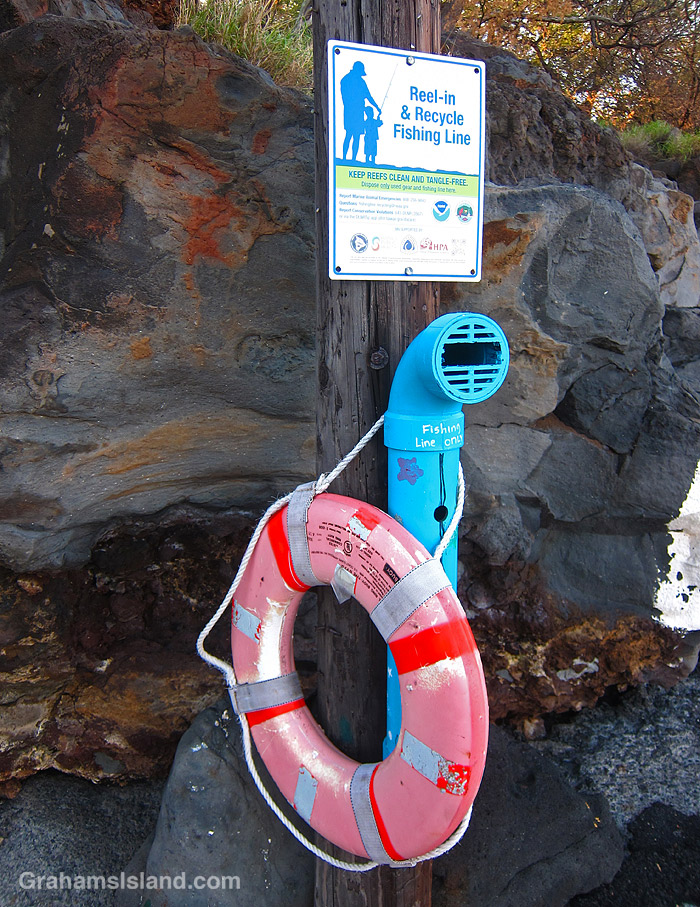
This sign and accompanying tube appeared at two local parks a couple of months ago. It’s part of a nationwide program to recycle discarded and snagged fishing line, which can be extremely harmful to marine life. The program has been going since the 1990s, but this is the first time it’s been available locally.
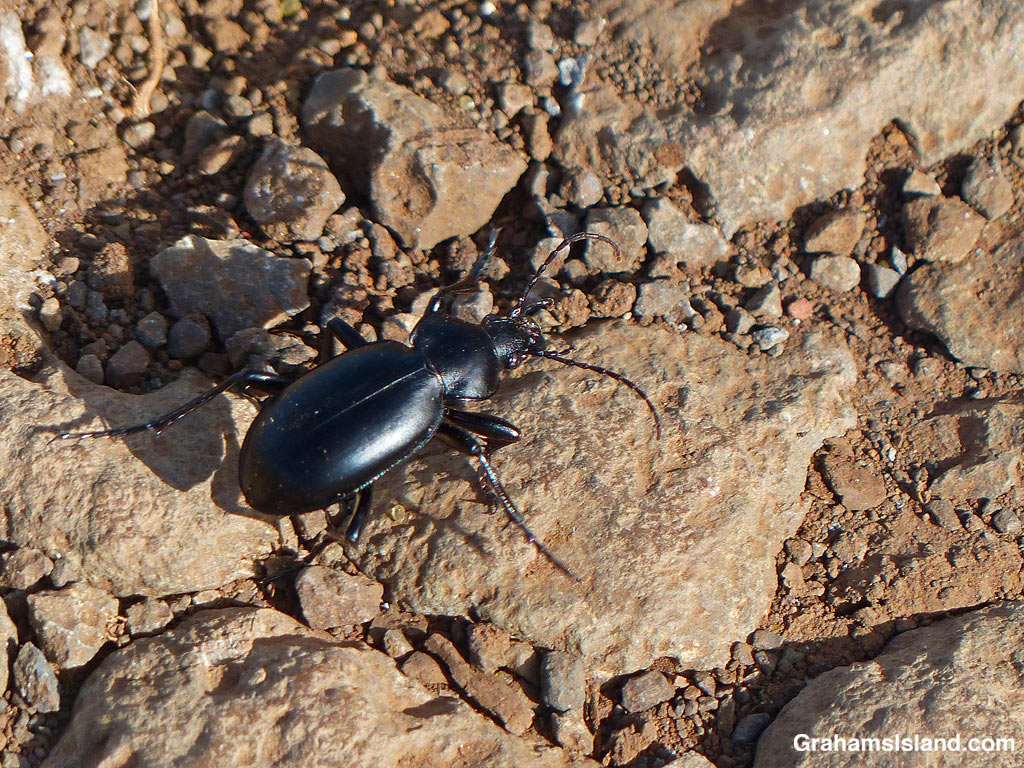
I used to see Ground Beetles all the time on my walks at Upolu, but this one was the first I’d seen in ages. I don’t think it’s because I’m becoming less observant. I think the numbers are down, for whatever reason.