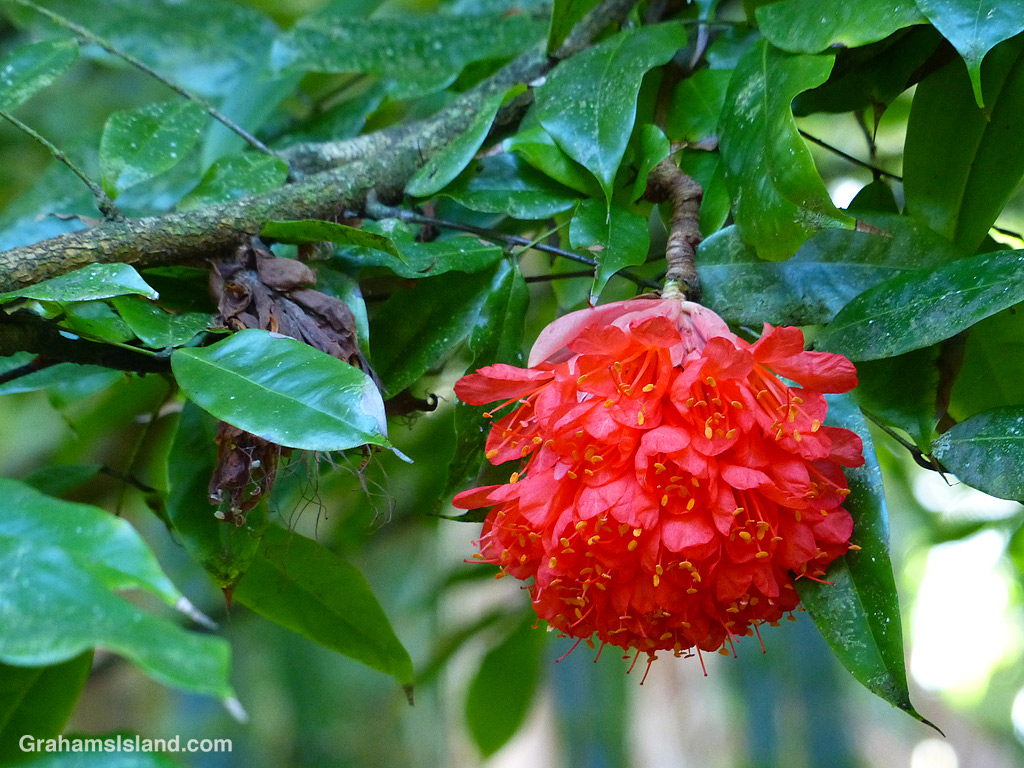
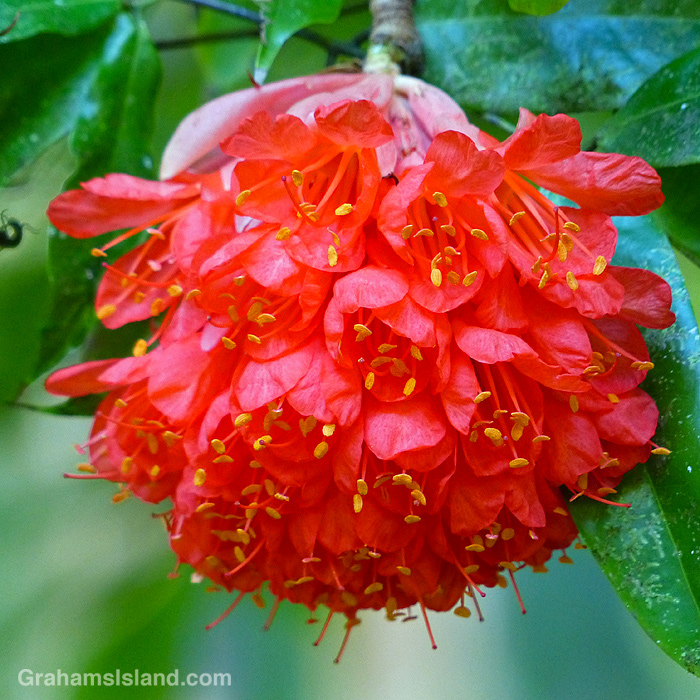
Brownea Coccinea is a native of Colombia, Ecuador and Venezuela, which is why it’s also known as the Rose of Venezuela amongst other names. The tree is a small evergreen, but the flowers are large, showy, and really quite rose-like.
This one was at Hawai’i Tropical Bioreserve & Garden. For more information about Hawai’i Tropical Bioreserve & Garden, go to htbg.com.
Ripples in the water of ʻAimakapā Fishpond at Kaloko-Honokōhau National Historical Park. It was a calm day and these weren’t wind generated, but rather from fish snatching insects off the surface of the pond.
One of the beaches at Kaloko-Honokōhau National Historical Park reveals that several people have passed this way, but none recently. I like that a lot.
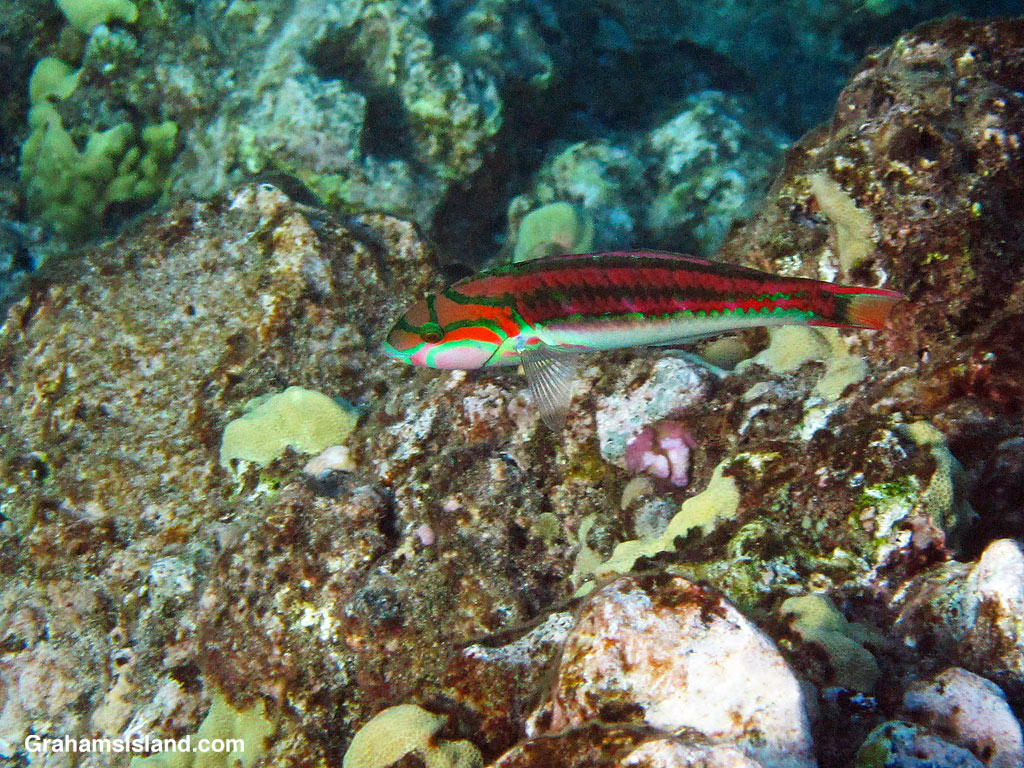
I saw this Fivestripe Wrasse just before I got out of the water recently. This one seemed a little redder than the ones I usually see, which have magenta markings, though I don’t see them that often as they’re not especially common.
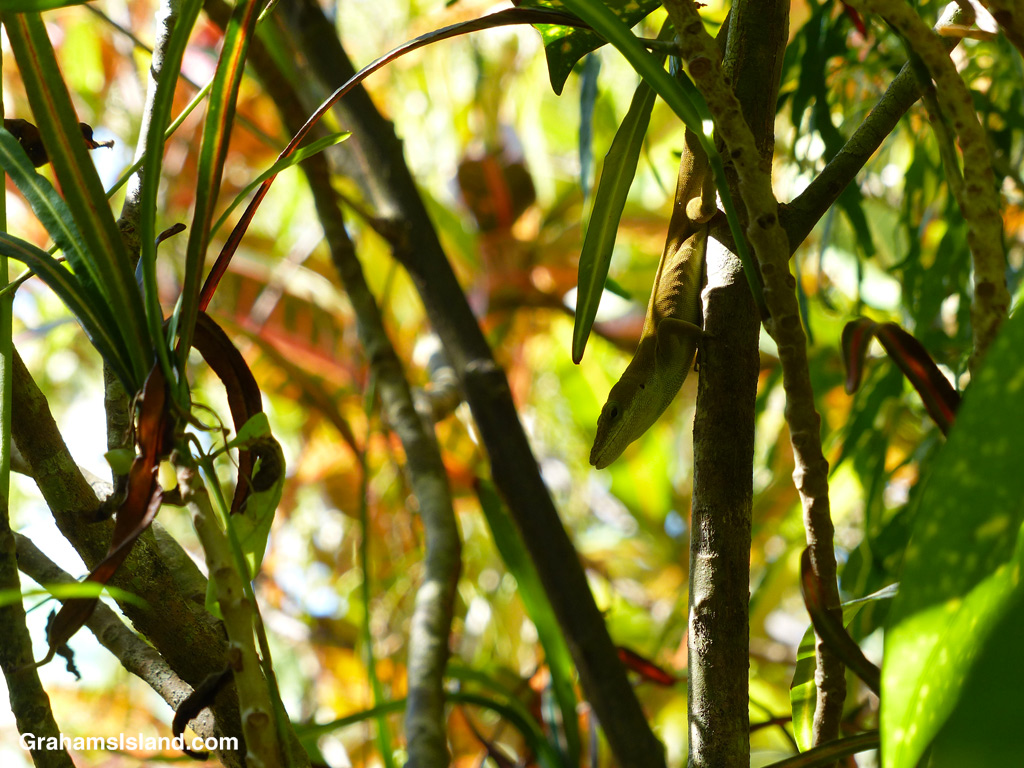
I had to go back more than a week to find my last photo for Bushboy’s Last on the Card photo challenge (see more responses here). It might not be the last photo I took, but it is the last I saved, and I’d already processed it for posting later this week. There’s really not much difference between the original (above) and the adjusted version (below). I cropped the photo a bit and lightened the shadows a bit to bring out the anole more, but it works pretty well even without that.
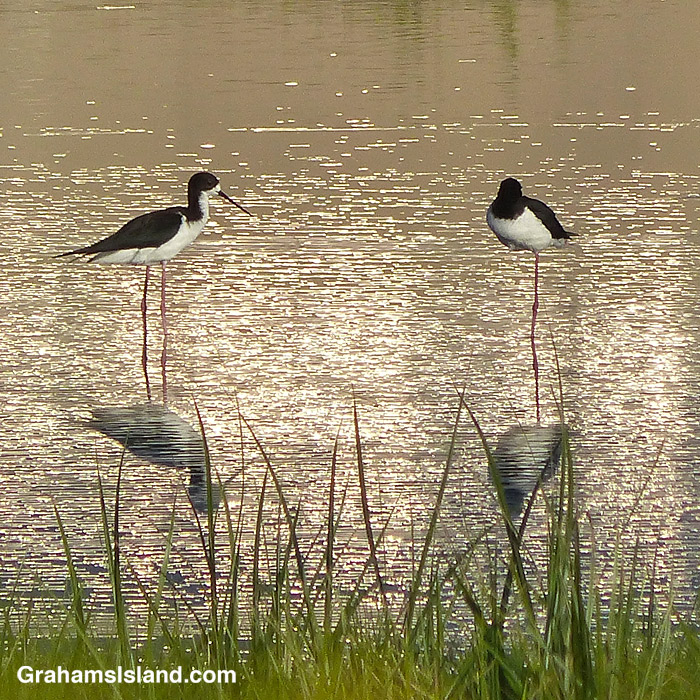
My final post in response to this month’s Becky’s Squares challenge theme of ‘Odd.’ See more responses here.
The stilts are odd enough in themselves, with their pink legs and long beaks, but it was the lighting in this image that got my attention. The sun was sinking and the shadows lengthening. But the distinctive lighting in this photo was due to the reflection from a cream-colored trailer parked beside the pond!
This week’s Sunday Stills challenge theme is ‘Fresh.’ See more responses here.
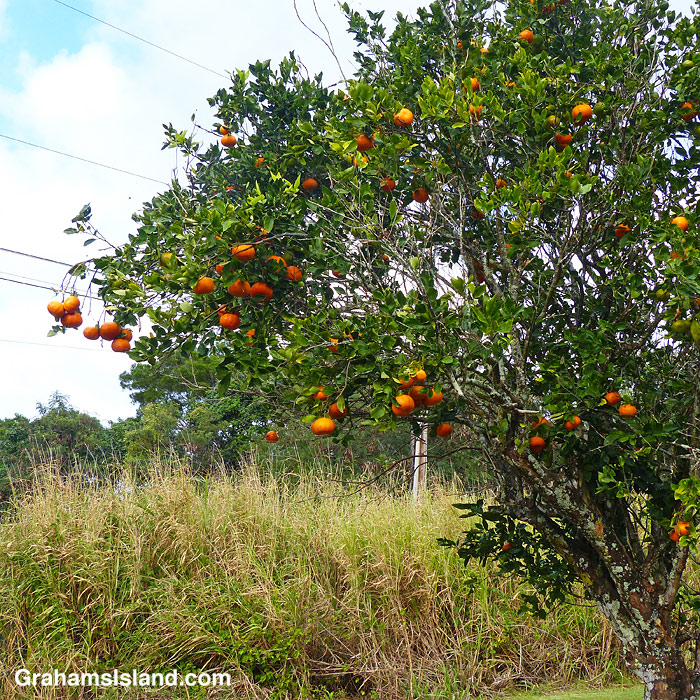
Here’s a weekly ritual of mine these days. There are two tangerine trees on the property and they constantly churn out fruit. I rarely see the flowers, though I did eventually notice that they do exist (here).
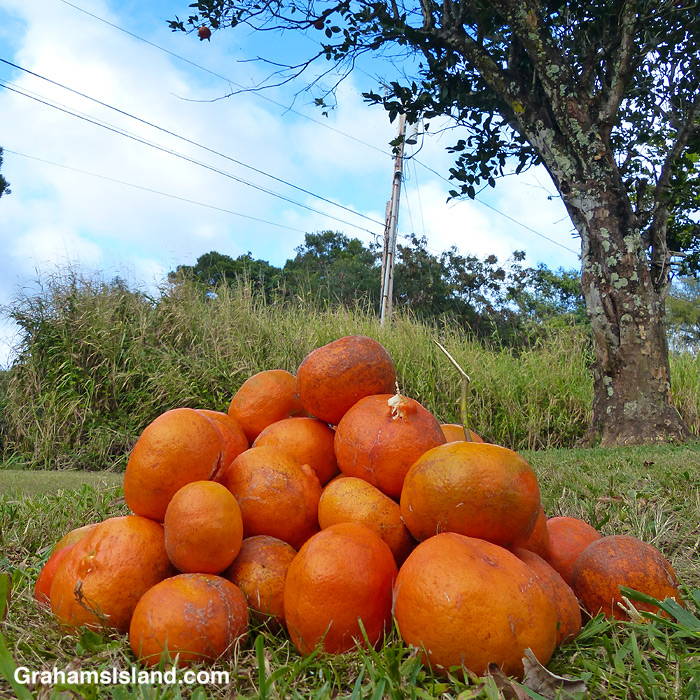
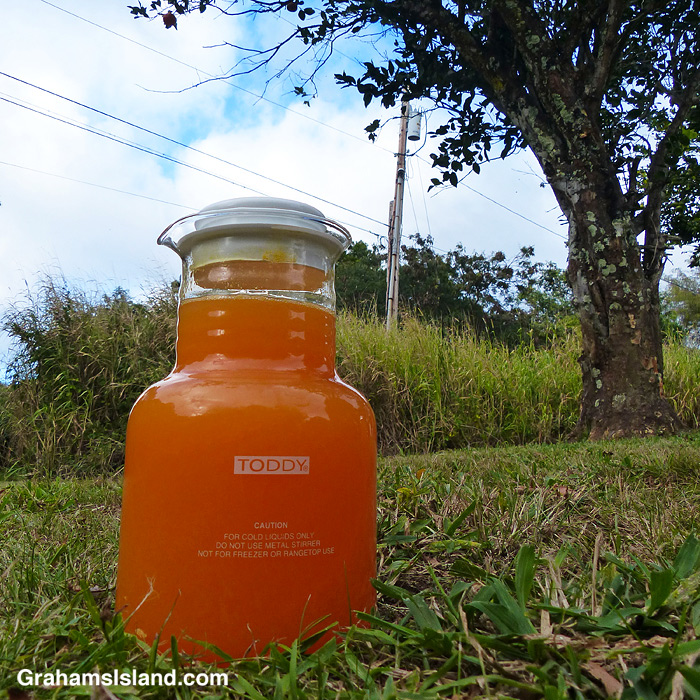
Each week, I pick a small bucket of ripe fruit. Often I can just reach up an pick enough for my needs. Sometimes I use a ladder and rake to snag the higher fruits. Then I take my bounty inside and juice it. I use a hand juicer; I tried a powered one, but it didn’t really work for me. It doesn’t take long to fill my jar. This time I used 29 tangerines, but the number varies from week to week depending on how ripe they are and how juicy.
I could juice them daily for truly fresh juice, but this still tastes pretty good to me.
Also posted in response to this month’s Becky’s Squares challenge theme of ‘Odd.’ See more responses here.
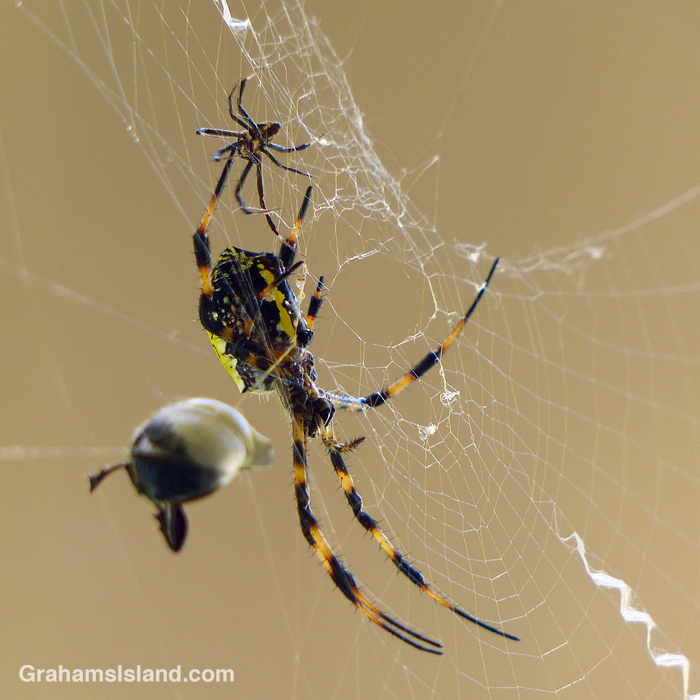
My house has been surrounded by spiders and their webs for most of the winter. One female Hawaiian Garden Spider has a web which angles across the living room window. I can follow the activities there from the comfort of the couch.
One morning, I raised the window blind and found this scene. The large, yellow-backed spider is the female. The much smaller drab, brown spider above her is the male, and when a male is seen on a female’s web there’s only one reason – he’s looking to mate with her. I’m not sure what the third character in this scene is. It might be a mango beetle, but it was securely trussed to the web.
What happened can be seen in the gallery. The male tried his mating moves, the female remained largely unmoved. Much of the time the male stayed on the relatively safe opposite side of the web to the female, but to mate he must venture to the other side. When he did, sometimes the female swung into action. Mostly, she seemed responsive, but one time the male disappeared in an instant. Then I saw him climbing back up the thread he’d dropped on. Something must have gone awry, but no harm done. Through all this activity, the beetle looked on, waving its little legs and antennae.
The presence of the beetle seemed to affect the delicate negotiations going on between the spiders. Sometimes, the male went over to the beetle and sort of prodded at it, but nothing more. In the early evening, the female lost patience. She straddled the beetle, shot out strands of threads, and rebound the beetle as she spun it with her legs. It turned like a rotisserie chicken in overdrive. I didn’t get photos of this as the light was fading.
Next morning, nothing much had changed. The female was still the central figure, the male still holding his position. The only difference is that the beetle had managed to push its legs and head through the engulfing threads and it was back to waving its little legs and antennae. Later that day, the male appeared to successfully mate with the female and escape alive. I last saw him wandering over to the next web along where he positioned himself carefully on the opposite side of the web spun by another large female.
The next day, there was still a female on the web but I think it was a different, smaller one than the one in these photos. The beetle was still there, still waving its little legs and antennae. That evening, the new female did the rotisserie chicken move on the beetle and retrussed it. Next morning, the beetle had freed its legs and head again and was waving its legs and antennae again.
The following day, only the new female spider could be seen!
Posted in response to this month’s Becky’s Squares challenge theme of ‘Odd.’ See more responses here.






 Graham's Island