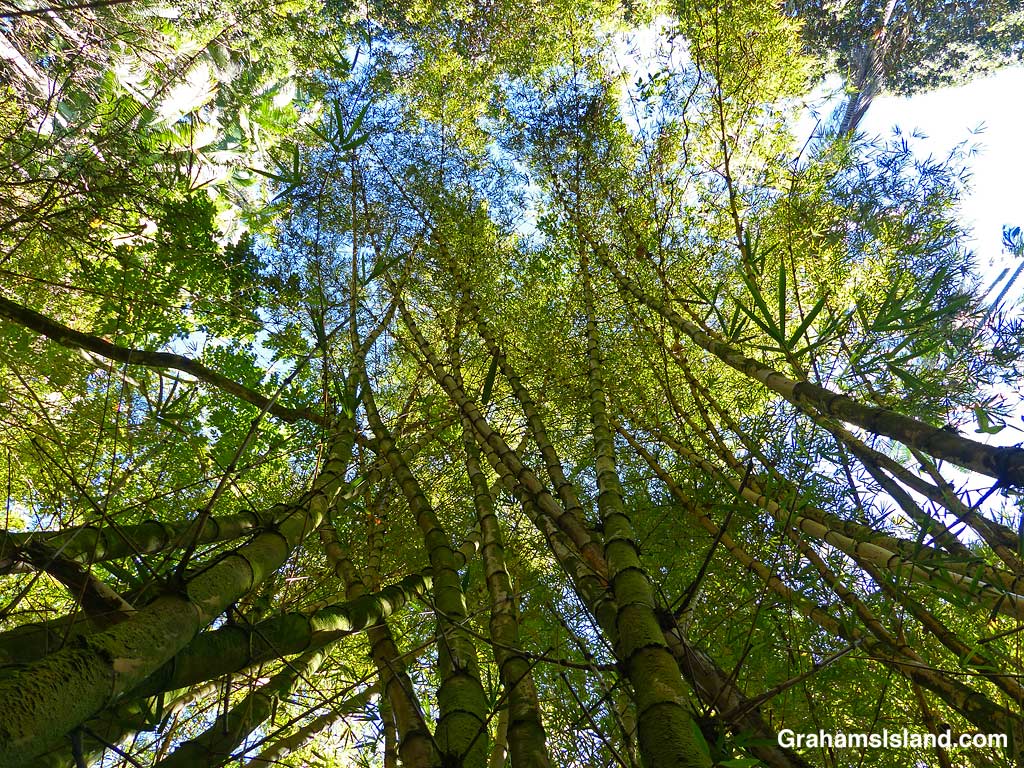
Giant stalks of bamboo arch overhead creating a delicate green umbrella under the blue Hawaiian sky.

Giant stalks of bamboo arch overhead creating a delicate green umbrella under the blue Hawaiian sky.


I was snorkeling in some fairly hazy water and lamenting that, on such a day, I wasn’t going to get any decent photos unless something swam right up to my face. Not long after, this little turtle showed up and did just that. It looped around me several times before diving lower and heading away. But it made my day and I was glad I hadn’t given up on my swim earlier when I was feeling as gloomy as the water.

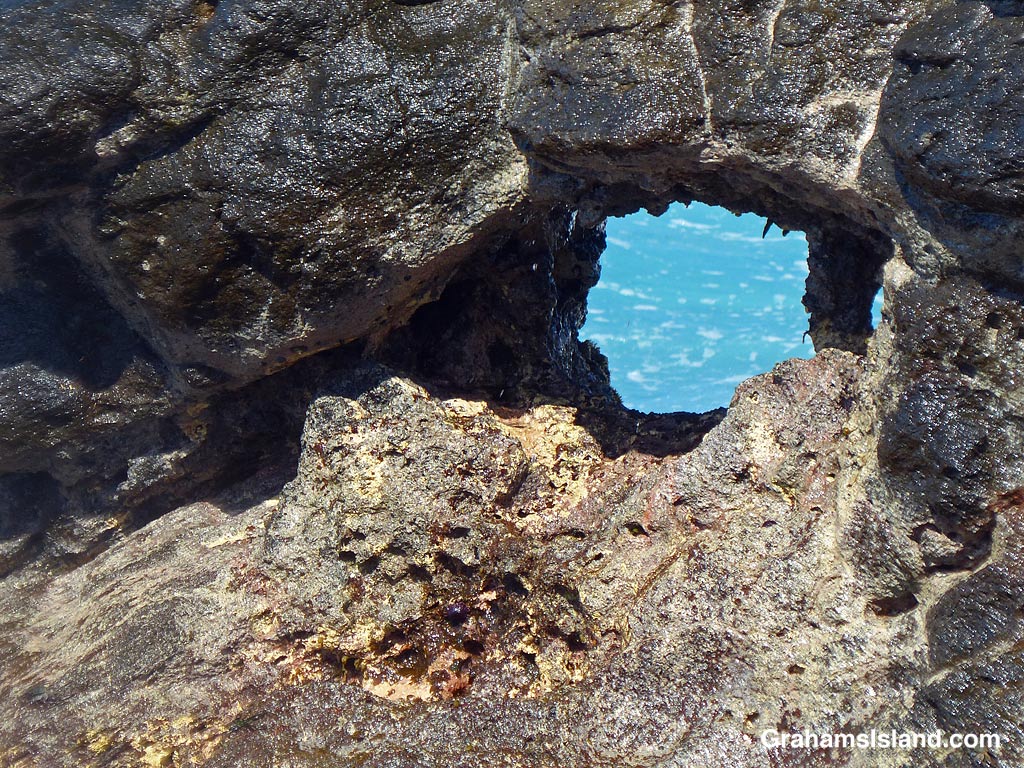
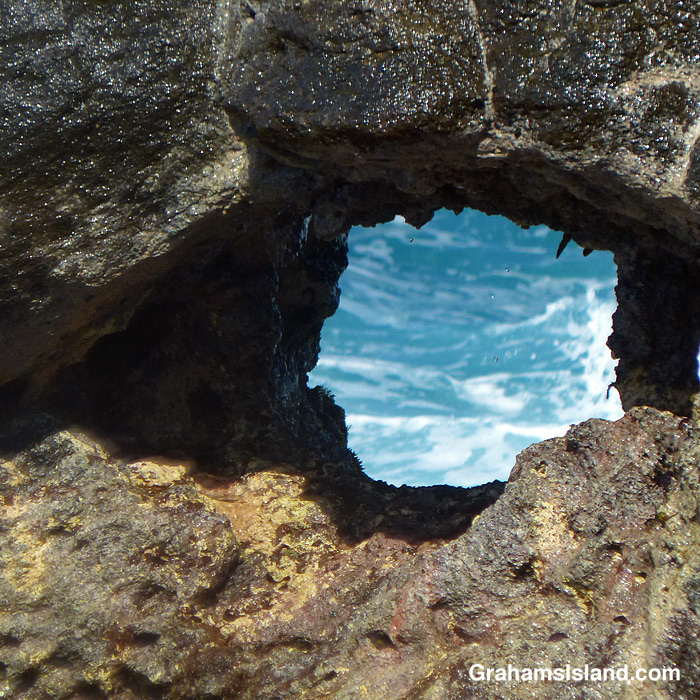
Do you see anything in that hole?
Go on, take a closer look.
Bwaaahahahahahaha!

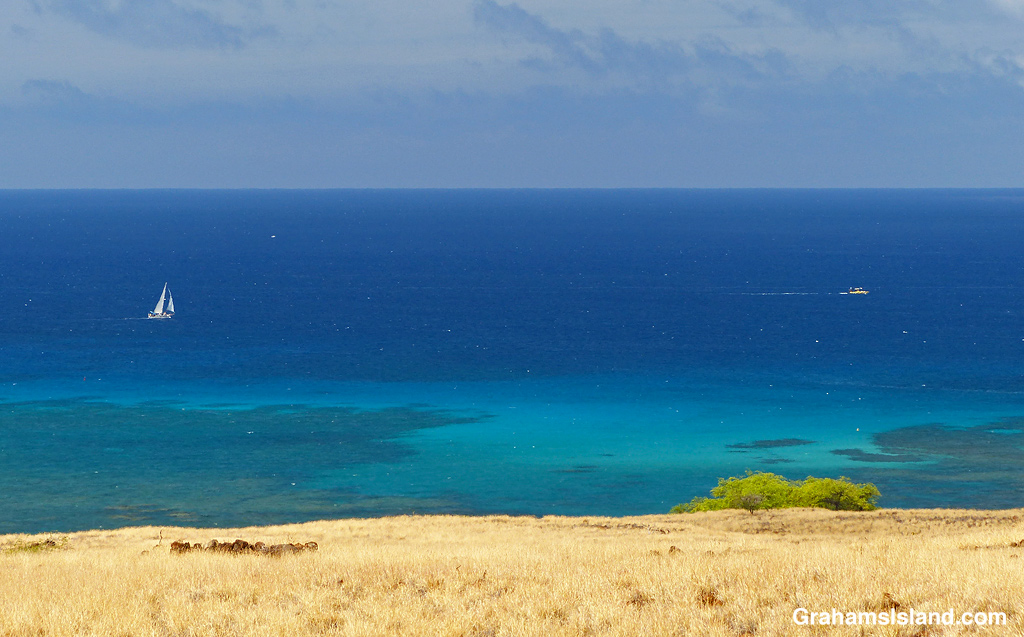
A couple of boats ply the waters off the South Kohala coast.

I spotted this shiny creature on the trunk of a mango tree, but wasn’t sure what it was. So I searched online using the striking details – iridescent green, red on legs, Hawaii – and the first result was a post on whatsthatbug.com. It was headlined, ‘Emerald Cockroach Wasp from Hawaii turns Roaches into Zombies!!!’ (link here). That got my attention! Within that posting was a link to a longer post with more details (here).
In brief, the female Emerald Cockroach Wasp (Ampulex compressa) stings a cockroach to temporarily disable its front legs. It does this to buy time to deliver a second sting to a precise spot in the cockroach’s brain that controls the roach’s escape reflex. The roach isn’t paralyzed, but it just stays where it is, that is until the wasp takes it by the antenna and leads its zombie prey back to her burrow. There she lays an egg on the roach, before walling up the burrow’s entrance. Back inside, the roach just waits while the egg hatches and the larva eats its way inside the roach and devours the roach’s organs. Four weeks later, a new wasp emerges from the roach and the burrow.
I was astonished to learn about this, in particular how, for the second sting, the wasp locates the exact spot in the roach’s brain using sensors on the stinger.
The source of the whatsthatbug.com description comes from Carl Zimmer who has a great article here. More information about this remarkable wasp can be found here, here, and here. And finally, a must see video of the wasp in action, including leading the cockroach to its lair, can be seen here.

Water shimmers down the side of an infinity pool in South Kohala.
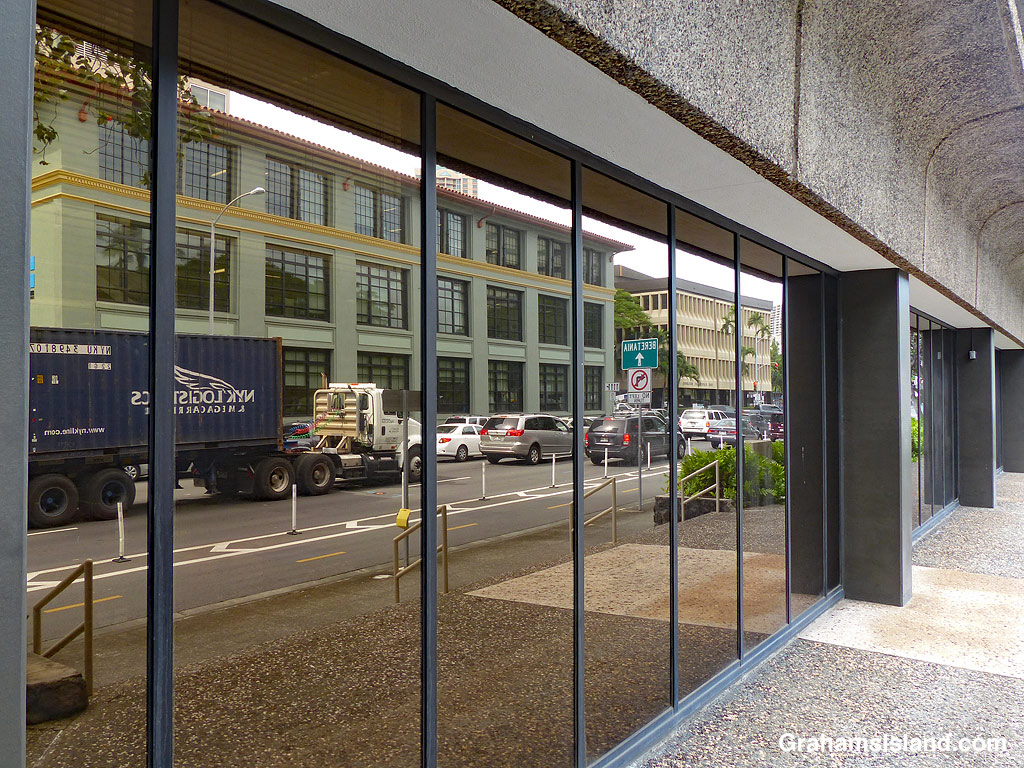
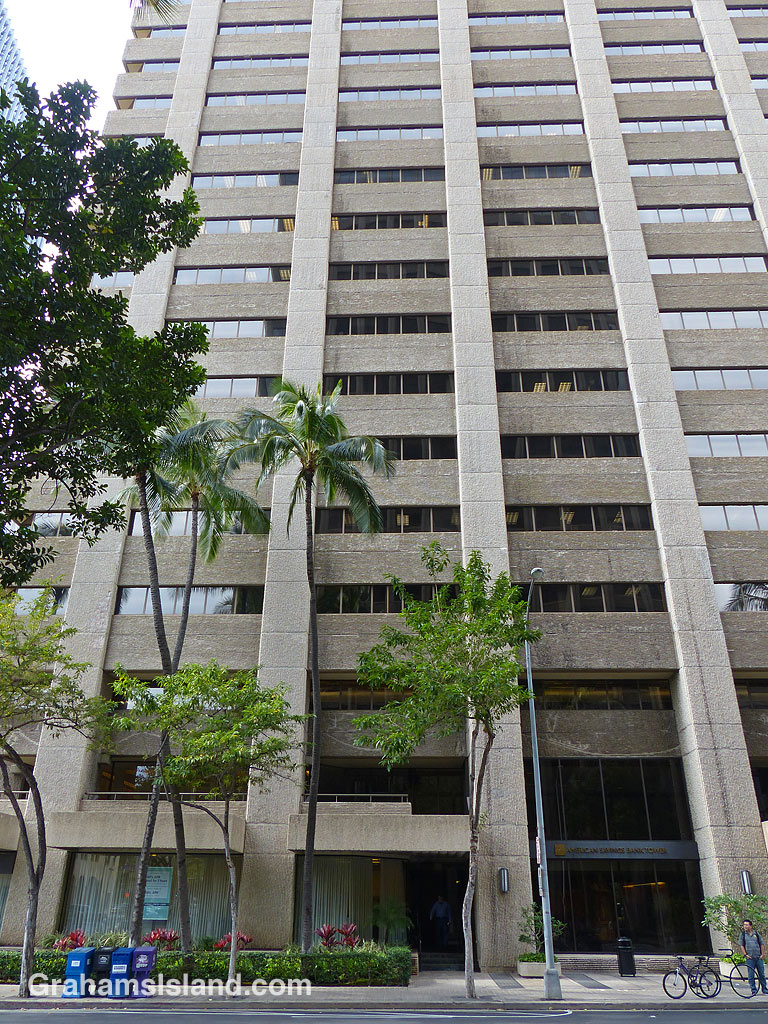
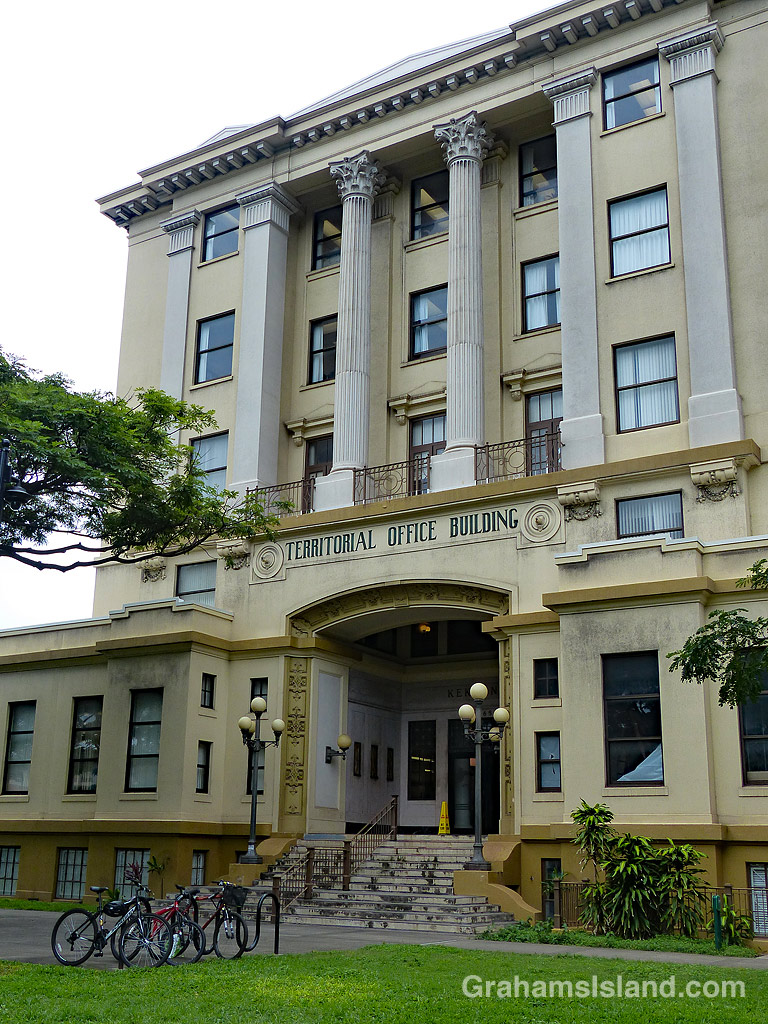
Yesterday I posted a small town response to this week’s Sunday Stills challenge theme of ‘Urban.’ See more responses here. It wasn’t until after that post went live that it occurred to me I could have used photos from my jaunt to Honolulu a few years back. It’s not the Big Island, but in Hawaii, Honolulu is by far the largest urban area.
When I got home, I had a look to see what photos I could use and came up with these images. The entire population of Hawi could fit comfortably into one of those skyscrapers.




This week’s Sunday Stills challenge theme is ‘Urban.’ See more responses here.
North Kohala is mostly rural, so in this part of the world Hawi and Kapaau are the only urban centers and pretty small ones at that.
The top photo shows downtown Hawi on a moderately busy day. Some days, the traffic and crush of visitors can make it almost impassible. Downtown is mostly shops and restaurants, though there’s a small local grocery store and, of course, real estate agents.
One kind of store you don’t get in most downtowns is Hawi’s Aloha Man which features items made in Hawaii. There’s even a hammock just out of sight to the left of the store, in case walking the two blocks of downtown is too much for you!


